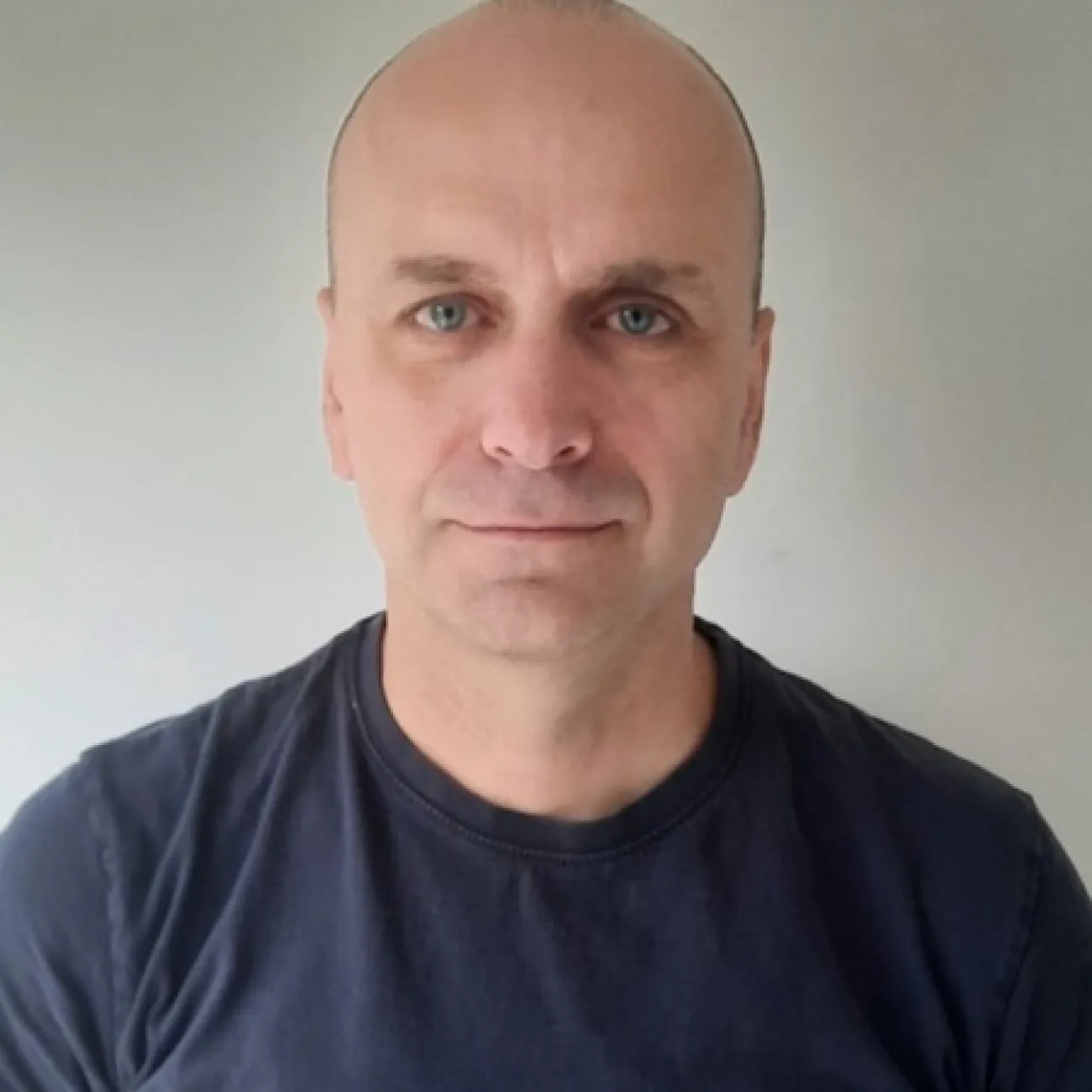
Luke J Davies is a Leverhulme Early Career Fellow in the Faculty of Philosophy at the University of Oxford. His research focuses on Kant’s moral and political philosophy, particularly exploring the interplay between duties to self and the legitimate role of the state. He previously held a fellowship in the Department of Government at the London School of Economics (2018–2022). Education: PhD in Philosophy, University of Oxford (2014–2019) BPhil in Philosophy, University of Oxford (2012–2014) BA in Philosophy, University of Toronto (2006–2011) His research interests include Kantian ethics, political philosophy, rights theory, and the philosophical foundations of state legitimacy. Current work examines how duties to self shape interpersonal moral obligations within Kantian frameworks. Key Themes in Publications: Recurring topics include Kant’s theories of property, citizenship, welfare, and cosmopolitanism, with a focus on reconciling individual autonomy with collective moral obligations. Recent work extends to the state of nature, cosmopolitan law, and active citizenship in republican frameworks. Awards: Leverhulme Early Career Fellowship (2022–2025) His academic trajectory combines rigorous engagement with Kantian texts and contemporary applications of classical philosophy to political and ethical dilemmas.
Fabio Franceschi is an Associate Professor of Ecclesiastical Law, European Ecclesiastical Law, and Law and Religion at the Faculty of Law, Sapienza University of Rome. He teaches courses including Diritto Ecclesiastico (Ecclesiastical Law), Diritto Ecclesiastico Europeo (European Ecclesiastical Law), and Law and Religion. His institutional affiliation is with the Department of Legal and Economic Studies at Sapienza University of Rome. Franceschi's research interests focus on ecclesiastical law and the relationship between law and religion in contemporary society, the history of relations between State and Church in Italy (particularly in pre- and post-unification periods), canon law, and intercultural law. His work examines religious freedom, secularism, religious confessions, and the legal frameworks governing religious institutions in increasingly multicultural and multireligious societies. His publication record includes over 60 academic works in Italian and English, with his most notable contribution being the 'Compendium of Ecclesiastical Law,' which has gone through multiple editions. His recent scholarship addresses contemporary issues such as religious freedom in MENA countries, end-of-life decisions from religious perspectives, and the financial operations of religious institutions. Franceschi is actively involved in research groups including 'DiReSom (Law and Religion in Multicultural Societies)' and the executive committee of the interdisciplinary research center 'ORFECT - Observatory on Religious Freedom in the Jurisprudence of the European Court of Human Rights.' He also coordinates the research group 'Tradizioni religiose, diritti umani e diritto interculturale' (Religious Traditions, Human Rights and Intercultural Law). He serves on the scientific committee of the legal journal 'SudEuropa. Quadrimestrale di civiltà e cultura europea' and the editorial board of 'Il Diritto ecclesiastico.' His teaching materials for attending students are available on the university's E-Learning platform, and he maintains regular office hours for student consultations.
Professor Dan Meagher is a Chair in Law at Deakin University's Faculty of Business and Law, where he leads research in constitutional law and statutory interpretation. He serves as Director of Research at Deakin Law School and actively contributes to legal scholarship through publications, editorial work, and supervision of doctoral candidates. Doctor of Philosophy, University of New South Wales Master of Laws, Monash University Bachelor of Economics, Monash University Bachelor of Laws (LLB), Monash University His research focuses on constitutional law, statutory interpretation, and human rights protections. He explores the principle of legality, responsible government norms, and the interplay between common law and statutory frameworks, often advocating for enhanced rights protections through judicial interpretation. Professor Meagher's scholarly output highlights trends in Australian constitutionalism, including proportionality in secondary legislation, non-discrimination principles, and the evolution of common law rights. His work bridges doctrinal analysis with practical implications for legislative drafting and judicial review. Elected Fellow of the Australian Academy of Law Comments Editor for the Public Law Review Director of Research at Deakin Law School He supervises doctoral research on topics like human rights protection and legislative drafting models. His professional activities include co-editing major legal texts and contributing to debates on constitutional evolution and judicial interpretation.
Gilbert Fridgen is Full Professor in Digital Financial Services and holder of the PayPal-FNR PEARL Chair at the University of Luxembourg's Interdisciplinary Centre for Security, Reliability and Trust (SnT). He leads the FINATRAX research group focusing on blockchain, digital identity, and sustainable digital solutions. His research explores decentralized technologies in finance, energy systems, and public administration. Current projects investigate blockchain applications in industrial demand response, NFT markets, EU digital identity wallets, and DeFi institutional adoption. Prof. Fridgen examines the intersection of technology with regulatory frameworks and user behavior in energy and financial systems. He collaborates extensively with industry partners including PayPal and Spuerkeess. Prof. Fridgen actively contributes to EU digital policy discussions, particularly regarding the European Digital Identity Wallet framework and decentralized finance governance.
Bunty Avieson is a Senior Lecturer in Journalism and Media at the University of Sydney's Faculty of Arts and Social Sciences. She holds a PhD and MPhil from Macquarie University, specializing in media theory and literary analysis. Her research focuses on Bhutanese media development, Wikipedia's societal impact, and the intersection of journalism with literary practices. PhD Thesis: Media development in Bhutan during its democratic transition MPhil: 'The Poetics of Paranoia' exploring self-construction through Derrida and Nagarjuna Research Interests: Her work spans media policy in Bhutan, Wikipedia's role in knowledge equity, and the ethics of memoir writing. She has published extensively on Bhutan's media evolution and co-edited volumes on memory mediation and trauma narratives. Articles Trends: Recent work examines lifestyle journalism identity, Wikipedia's pandemic-era contributions, and Bhutan's unique digital media strategies. Earlier research explored Bhutan's transition from oral traditions to social media under Gross National Happiness principles. Awards: Vice-Chancellor's PhD Commendation (2013), Ned Kelly Awards for crime fiction (2001-2003) Grants & Projects: Principal Investigator in the Bhutan-Wiki Project (DECRA-funded), co-developed the Australian Colonial Narrative Journalism Database. Received grants for Tamil diaspora storytelling and Bhutan media studies. Professional Roles: Wikimedia Australia Vice President, member of journalism education associations, and former editor of Woman's Day.
Dr Luke Garrod is a Senior Lecturer in Economics at Loughborough University's Loughborough Business School. He holds a PhD, MPhil, and BA from the University of East Anglia. His research focuses on industrial organization, competition policy, consumer policy, and behavioral economics, with a particular emphasis on modeling firm incentives in imperfectly competitive markets. He received the International Journal of Industrial Organization Best Theoretical Paper Award 2019 for his work on collusion mechanisms. His book on hub-and-spoke cartels provides critical insights into antitrust enforcement strategies. Teaching responsibilities include Principles of Microeconomics (ECA002) and Industrial Economics (ECC005). He serves as an Associate Editor for the International Journal of the Economics of Business and contributes to economic consultancy through his role at Economic Insight. His research has explored topics such as cartel damages quantification, digital market regulation, and the interplay between consumer protection and competition policies. Key awards include the 2019 Best Theoretical Paper Award, reflecting his contributions to advancing antitrust and competition policy frameworks. His work bridges theoretical economic modeling with practical regulatory applications, addressing emerging challenges in global competition dynamics and digital economy policies.
Daria Davitti is a Senior Lecturer and Associate Professor in Public International Law at Lund University's Department of Law. Her research focuses on intersections of international economic law and human rights, particularly in contexts of migration, climate breakdown, and privatized public goods. She leads major projects like the ERC-funded 'Refugee Finance: Histories, Frameworks, Practices' and the Formas-funded 'Screening for Sustainability'. Awards include the 2021 Juridiska Föreningens pedagogiska pris and the title of Docent in Public International Law. She advises on EU migration policies and environmental law compliance, and collaborates with institutions like GLAN and the International Code of Conduct Association for private security service providers. Her work examines refugee finance mechanisms, sustainable investment frameworks, and legal accountability in transnational corporate activities. Key areas include refugee entrepreneurship, EU Taxonomy sustainability criteria, and human rights due diligence in international investment. She has published extensively on topics ranging from refugee bonds to litigation finance in investment arbitration.
Dr. Max Kwiek is an Associate Professor in the Department of Economics at the University of Southampton and serves as Deputy Head of School (Education). His research focuses on applied microeconomic theory, political economy, committee design, and auctions. He teaches microeconomics modules, including principles, game theory, and advanced topics. His research interests include voting systems, game theory applications, and experimental economics. Key projects involve analyzing voting mechanisms, intermediary communication, and conclave dynamics. He has supervised PhD student Yanchi Zhang and led a project funded by the British Academy on experimental investigations of conclaves. Externally, he is a committee member of the Virtual Seminars in Economic Theory and Poleconuk Webinars. His work bridges theoretical models with real-world applications in political and economic decision-making processes.
Matthew D. Adler is the Richard A. Horvitz Distinguished Professor of Law and Professor of Economics, Philosophy, and Public Policy at Duke University. He is the founding director of the Duke Center for Law, Economics and Public Policy and holds a 3-year research fellowship at the London School of Economics. Education: B.A., Yale University (1984) J.D., Yale University (1991) M.Litt., University of Oxford (1987) - Marshall Scholar Research Interests: Adler specializes in prioritarianism, a theory that refines utilitarianism by prioritizing the worse-off. He integrates welfare economics, normative ethics, and legal theory to develop policy analysis tools like social welfare functions with distributional weights. His work spans climate change , risk regulation , health policy , and inequality measurement . Publications and Contributions: Adler has authored monographs including New Foundations of Cost-Benefit Analysis and Well-Being and Fair Distribution , and co-edited the Oxford Handbook of Well-Being and Public Policy . His recent work explores implementing prioritarianism in policy domains such as the social cost of carbon , health economics , and intergenerational equity . Scientific Awards: Marshall Scholar Ludwig M. Lachmann Professorial Research Fellow Professional Affiliations: Adler was an editor of Legal Theory until 2017 and is now an editor of Economics and Philosophy . He has held visiting professorships at Columbia, Chicago, and Virginia Law Schools.
Mika Järvinen serves as Associate Professor in the Department of Energy and Mechanical Engineering at Aalto University, leveraging fundamental sciences—physics, thermodynamics, chemistry, and numerical modeling—to address cross-sector energy challenges. His research spans sustainable bioenergy and inter-linked circular economy systems integrating energy, materials, and environmental considerations across biomass, pulp/paper, metallurgy, and waste-to-energy industries. His expertise centers on sustainable bioenergy and circular economy frameworks, utilizing numerical modeling to optimize combustion engineering and metallurgical processes. By maintaining diverse industrial engagement, he ensures research continuity during economic fluctuations while advancing black liquor spraying technologies and energy-material-environment synergies. This approach enables flexible, physics-based solutions for complex industrial energy conversion problems. Professor Järvinen's 2025 publications reveal a cohesive focus on renewable energy systems operating within planetary boundaries, spanning carbon capture (calcium looping), low-temperature heat engines, and comprehensive textbook development. His work integrates solar, wind, bioenergy, and storage technologies into holistic frameworks that balance technical innovation with ecological constraints, emphasizing system-level sustainability over isolated component optimization. His scientific recognition includes: Best Dissertation Award (2002) from Helsinki University of Technology's Department of Machine Technology for research on black liquor droplet conversion Resonate Award (2015) from Caltech University's Resnick Institute As lead of the Energy Conversion and Systems research group, he directs projects bridging fundamental modeling with industrial applications while developing educational resources for next-generation energy engineers. His laboratory work emphasizes experimental validation of numerical models across combustion, metallurgical, and biomass conversion processes.
Tim G. J. Rudner is an Assistant Professor in the Department of Statistical Sciences at the University of Toronto, a Faculty Member at the Vector Institute, and a Title A Fellow at Trinity College, University of Cambridge. He was previously an Assistant Professor and Faculty Fellow at New York University. University: University of Toronto School: Faculty of Arts and Science Department: Department of Statistical Sciences Affiliation: Vector Institute, Trinity College (Cambridge) He holds a PhD in Computer Science and an MSc in Statistics from the University of Oxford, where he was advised by Yee Whye Teh and Yarin Gal, and a BS in Applied Mathematics and Economics from Yale University. PhD: Computer Science, University of Oxford MSc: Statistics, University of Oxford BS: Applied Mathematics and Economics, Yale University His research focuses on building robust, transparent, and trustworthy machine learning systems, particularly for high-stakes applications. He develops probabilistic models that improve generalization under distribution shifts, provide reliable uncertainty estimates, and enable fair and interpretable predictions. His work spans generative models, large language models, healthcare, and biomedical discovery. The recent publications highlight a strong trend toward function-space modeling, Bayesian regularization, and AI safety. Tim's work emphasizes principled uncertainty quantification, robustness to subpopulation and semantic shifts, and the development of frameworks for AI governance and specification. His research bridges theoretical advances with real-world applications, especially in safety-critical domains like medicine and defense. Tim has received numerous accolades including being named a Rhodes Scholar, Qualcomm Innovation Fellow, and 2024 Rising Star in Generative AI. He was awarded a $700,000 Foundational Research Grant and a $30,000 Apple Seed Grant for improving LLM trustworthiness. Rhodes Scholar Qualcomm Innovation Fellow AISTATS Notable Paper Award (2024) Outstanding Paper Award, ICLR GenAI4DM Workshop (2024) Apple Seed Grant ($30,000) Foundational Research Grant ($700,000) NeurIPS Spotlight Talk 2024 Rising Star in Generative AI He actively mentors students, particularly first-generation and low-income scholars, and has contributed to major policy frameworks including the OECD AI Classification Framework and a series of CSET issue briefs on AI safety. His work demonstrates a strong commitment to responsible AI development, combining technical rigor with societal impact. Tim leads research efforts at the intersection of machine learning theory and practical deployment, with ongoing projects in generative modeling, reliable LLMs, and AI governance. His lab produces high-impact work regularly published at top-tier conferences such as NeurIPS, ICML, and AISTATS.
Terry C. Lansdown is an Associate Professor in the School of Social Sciences and Department of Psychology at Heriot-Watt University. His expertise lies in Human Factors, particularly focusing on driver safety, workload management, and attentional distraction in transportation contexts. Prior to his academic role, he worked as a senior researcher at the Transport Research Laboratory, contributing to numerous EU-funded and government-sponsored projects. His research integrates ergonomics principles with real-world applications, addressing issues like automated driving systems, social distractions in vehicles, and occupational health in construction industries. Key research interests include: Driver behavior and road safety Human factors in automated systems Workload and attentional demands in complex tasks Health and safety in small-to-medium enterprises (SMEs) He has led studies on pandemic response strategies, such as the CHARIS project analyzing behavioral adherence during the COVID-19 crisis. Lansdown’s work frequently bridges psychological theory with practical interventions, including text messaging campaigns to improve construction worker safety and experimental designs to evaluate automation failure responses. Collaborations span academic and industrial sectors, with publications addressing topics ranging from UV exposure in outdoor workers to the cognitive impacts of in-vehicle distractions. His contributions align with UN Sustainable Development Goals related to health (SDG 3) and sustainable cities (SDG 11).
Johnny Ducking is an Associate Professor in the Department of Economics at the University of Mississippi, College of Liberal Arts, where he teaches Principles of Microeconomics and Sports Economics. He joined the university in 2024, bringing over a decade of academic experience from North Carolina A&T State University. Education: B.A. in Economics, University of Mississippi (2004) B.A. in Mathematics, University of Mississippi (2004) M.A. in Economics, University of Mississippi (2006) M.S. in Economics, University of Kentucky (2007) Ph.D. in Economics, University of Kentucky (2011) Dr. Ducking's research centers on labor economics in sports, with a focus on how race, gender, and personal characteristics influence labor market outcomes. He analyzes data from major professional leagues including the NFL, NHL, MLB, NBA, and Women’s NCAA Division I Basketball. His work explores the impacts of minimum salaries and systemic biases in player compensation and opportunities. Dr. Ducking is actively involved in academic service, having served as co-editor of a special issue of the Journal of Economics, Race, and Policy on race, gender, and sports, and currently serving on the editorial board of the International Journal of Sport Finance . He advises students in the Economics B.A., B.S., M.A., and Ph.D. programs and contributes to the academic mission of the Department of Economics at Ole Miss.
Dr. Hojjat Soofi is a Lecturer in Bioethics at Sydney Health Ethics within the University of Sydney's School of Public Health (Faculty of Medicine and Health). A pharmacist by training, he holds a PhD and MRes in Bioethics from Macquarie University and an Erasmus Mundus Master of Bioethics from a consortium of European universities. His research deploys philosophical ethics and empirical methods to address ethical challenges in dementia care and aged care settings. Research Focus: Soofi's work centers on ethical frameworks for vulnerable populations, specializing in: Dignity preservation in dementia care Autonomy and consent mechanisms Vulnerability in long-term care settings Non-clinical medication ethics Research ethics for cognitively impaired individuals His scholarship critically engages with concepts from philosophers like Nussbaum, Kitwood, and Beauchamp & Childress. Awards & Grants: Recognized with the 2022 Ramy Razavian Dean’s Award for research excellence and supported by a 2023 FMH Start-up Scheme grant for early career researchers. Teaching: Coordinates core bioethics units including Clinical Ethics (BETH5204) and Medicines Policy, Economics and Ethics (BETH5209). Student feedback highlights his exceptional course organization and ability to stimulate critical reasoning. Professional Engagement: Active member of the Australasian Association of Bioethics and Health Law (AABHL) and the Sydney Bioethics Program team.
Jan Herbst is a Professor of Music at the University of Huddersfield and Director of the Centre for Research in Music and its Technologies. His academic journey includes multiple doctorates (PhD, Dr. habil.) from Leuphana University Lüneburg and research expertise in popular music studies, music production, and systematic musicology. He leads AHRC-funded projects such as 'Heaviness in Metal Music Production' and 'Songwriting Camps in the 21st Century.' His work bridges practical music production and theoretical research, with over 80 publications including books like The Cambridge Companion to Metal Music and Heaviness in Metal Music Production . Herbst’s research focuses on metal music aesthetics, record production techniques, and the cultural dimensions of music technology. He has held roles at German and Swiss universities, including teaching guitar performance and music production. His editorial roles include the Cambridge Companions series and journals like Metal Music Studies . Current projects explore blockchain in music, gear acquisition syndrome, and extreme metal vocal techniques. His academic affiliations include the IASPM UK & I executive committee and editorial boards for major musicology publications. Herbst actively engages with industry through collaborations with producers and performers, maintaining a balance between academic rigor and practical music creation.