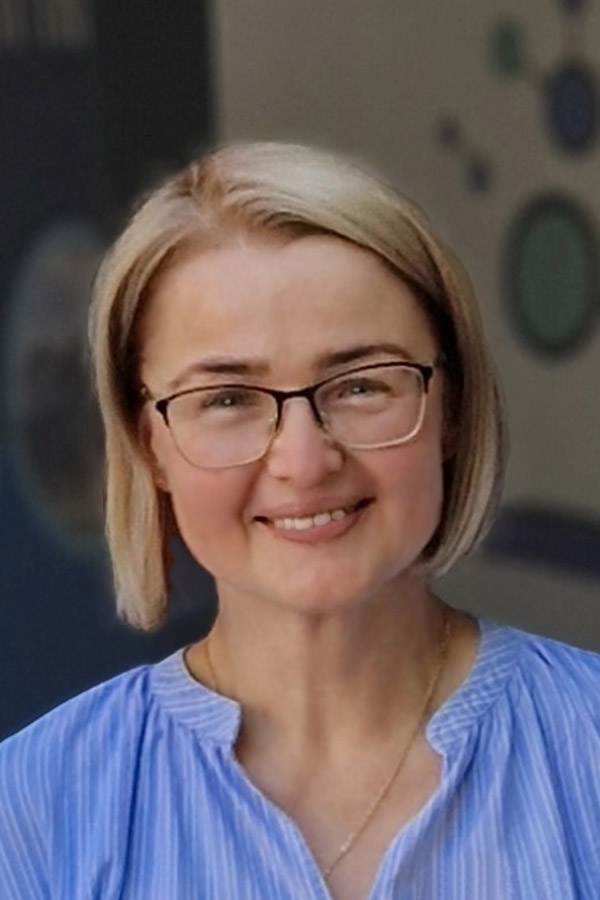
Anthony Heyes is Professor of Environmental Economics and Co-director of PhD Studies in the Department of Economics at the University of Birmingham's Birmingham Business School. His work bridges economic theory with practical environmental policy applications. BA in Economics, University of Cambridge, 1988 PhD in Economics, McGill University, 1993 Heyes specializes in environmental economics with particular expertise in environmental policy design, climate and pollution impacts on human well-being, and corporate social responsibility. His research spans environmental and health economics, urban economics, sustainability economics, regulatory economics, and behavioral economics. He employs innovative methodologies including big data analysis of internet search behavior to study environmental impacts on human behavior and health. His recent publications reveal a consistent focus on air pollution effects on human behavior and productivity, climate change impacts on economic systems, and research methodology transparency. Heyes frequently collaborates with international researchers across disciplines, producing empirical studies that combine economic theory with real-world data from diverse contexts including China, the US, and the semiconductor industry. As an enthusiastic supervisor, Heyes has guided over 10 PhD students to completion, often co-authoring research papers with them. He actively seeks students with strong econometric or data science skills interested in environmental economics topics.
Zuzana Irsova is a Professor of Economics at Charles University, Prague, with additional roles as a Senior Lecturer at Anglo-American University, Prague, and a Research Affiliate at Stanford’s Meta-Research Innovation Center. Her research focuses on meta-research, applied econometrics, labor economics, international economics, and energy/environmental economics. Her work emphasizes methodological rigor in empirical studies, addressing issues like publication bias, model uncertainty, and data precision. She has contributed to high-impact journals such as Nature Communications , Review of Economics and Statistics , and Journal of Labor Economics , with over 4,000 citations. She has received prestigious awards, including the 2024 Editor’s Prize in Experimental Economics , the Katerina Smidkova Award for top Czech female economists, and accolades from the Czech National Bank, National Bank of Slovakia, and Global Development Network. Her contributions to open science include maintaining meta-analysis.cz , a repository for meta-research data and code.
Dr. Uğur ERCAN is currently serving as an Associate Professor at Akdeniz University's Department of Informatics. He holds a PhD in Econometrics from Akdeniz University (2016) and a master's degree in Mathematics (2008), with a bachelor's degree in Computer Engineering from Mersin University (2003). PhD in Econometrics (Akdeniz University, 2016) MSc in Mathematics (Akdeniz University, 2008) BSc in Computer Engineering (Mersin University, 2003) His research focuses on statistical analysis, machine learning, data mining, and optimization, with notable applications in agriculture, public health, and consumer behavior. Recent work includes machine learning models for predicting crop quality, alcohol consumption patterns, and energy systems optimization. Scientific output trends show interdisciplinary applications of machine learning across agricultural engineering, health economics, and renewable energy. Publications include predictive models for fruit characteristics, econometric analyses of household expenditures, and optimization algorithms for solar energy systems. He has contributed to 51 publications (Scopus) and maintains active research in quantitative methods, with expertise in neural networks, regression analysis, and ensemble learning techniques. His work aligns with UN Sustainable Development Goals for responsible consumption and production.
Ewa Synówka is a researcher at the Institute of Mathematics, University of Zielona Góra , Poland. Her academic work spans interdisciplinary applications of mathematics and computer science. Research focuses on iterative methods for fixed point problems in Hilbert spaces Contributions to graph theory, particularly coloring models and combinatorial geometry Investigations into nonlinear wave propagation and stochastic equations Applications of computer science in secure data transmission and supply chain privacy She teaches advanced statistical methods, econometric modeling, and multivariate data analysis. Her work also emphasizes modern pedagogy using open-source tools for primary/secondary school outreach.
Sima Siami-Namini serves as a Lecturer at Johns Hopkins University, teaching in the MS in Applied Economics program with extensive experience in undergraduate and graduate instruction across economics, statistics, and finance disciplines. Her academic credentials include advanced interdisciplinary training: PhD in Applied Economics (minor: Statistics), Texas Tech University, 2020 Master's in Statistics, Texas Tech University, 2022 Master's in Artificial Intelligence (Machine Learning focus), University of North Texas, 2023 Her research program integrates macroeconomic theory with cutting-edge computational methods, specializing in monetary policy analysis, time series econometrics, and AI-driven forecasting. She bridges traditional economic modeling with machine learning applications, particularly in anomaly detection, data visualization, and large language model implementations for economic forecasting. Analysis of her publication trajectory (2020-2024) reveals three dominant research streams: (1) deep learning architectures (LSTM, TCN) for time series forecasting and anomaly detection, (2) monetary policy impacts on income inequality using FAVAR/SVECM models, and (3) natural language processing applications for Federal Reserve communication analysis. Her recent work increasingly incorporates large language models for domain-specific economic analysis and code generation. No documented scientific awards or major honors appear in the available records. She mentors students in the Applied Economics program with emphasis on quantitative research methods, though specific grant funding details remain undisclosed. Her teaching methodology incorporates experiential learning techniques adapted from digital forensics education frameworks. No dedicated research laboratories or institutional teams are referenced in the source materials.
Anna Simoni is a Senior Researcher at CNRS/CREST and Professor of Econometrics and Statistics at ENSAE and École Polytechnique. She is a CNRS Research Fellow and Fellow of Hi! Paris and Institut Louis Bachelier. Her research spans econometrics, machine learning, and AI, focusing on high-dimensional models and Bayesian inference. Education: PhD in Economics, Toulouse School of Economics (2009) Habilitation à Diriger de Recherche (HDR), Toulouse School of Economics (2017) Research Interests: Her work integrates econometrics with machine learning to develop statistical methods for big data, including Google search data for macroeconomic forecasting and causal inference with minimal assumptions. Grants and Awards: She received the CNRS Bronze Medal in 2019 and leads the ANR-funded project "Moment Conditions Models and Bayesian Inference for Policy Evaluation" (2021-2026).
James A. Duffy is an Associate Professor of Economics at the University of Oxford and the Andrew Glyn Tutorial Fellow at Corpus Christi College. He joined Corpus in 2016 after a postdoctoral fellowship at Nuffield College, Oxford, and holds dual appointments in the Department of Economics and his college. His educational background includes: PhD in Economics from Yale University (2014) Undergraduate studies in Economics and Mathematics at the University of Sydney Duffy's research centers on econometrics, with emphasis on macroeconometrics and time series analysis. He develops statistical methods for economic models involving nonlinear or highly persistent time series data, common in macroeconomics and finance. His work spans econometric theory , mathematical statistics , cointegration , and structural macroeconomic models , addressing inference challenges in strongly dependent processes. His 2016-2024 publications in premier journals reveal consistent innovation in time series methodology, particularly in unit root processes, fractional integration, and nonlinear cointegration. Key contributions include Tobit modeling for dynamic systems, robust inference for weakly nonstationary data, and discrete choice estimation techniques, bridging theoretical rigor with empirical applications. At Oxford, Duffy serves as course convenor for Quantitative Economics and lectures for the MPhil programme on instrumental variables, generalized method of moments, and maximum likelihood estimation. He also provides undergraduate tutorials in Microeconomics and Quantitative Economics at Corpus Christi College, integrating research insights into teaching.
Grigory Gelmutovich Kantorovich is a distinguished Research Professor at the National Research University Higher School of Economics (HSE), where he has been working since 1993. He serves as Head of the Scientific and Educational Laboratory of Macrostructural Modeling of the Russian Economy within the Faculty of Economic Sciences. He holds a tenured professorship since 2018 and has been recognized as a Distinguished Professor by HSE. With 54 years of scientific and teaching experience, Kantorovich has made significant contributions to the field of econometrics and economic modeling. His educational background includes a Candidate of Physical and Mathematical Sciences degree (1974) from Moscow Institute of Physics and Technology, where he specialized in Automatic Regulation and Control Theory. He graduated with honors from the same institution in 1971 with a degree in Flight Dynamics and Motion Control of Aircraft. His extensive professional development includes numerous international programs at Erasmus University Rotterdam, University of Paris 1 - Sorbonne, Harvard University, and the London School of Economics. Kantorovich's research spans multiple areas of econometrics, including macroeconometrics, microeconometrics, financial econometrics, and time series modeling. His work focuses on dynamic modeling of economic development, macrostructural modeling of the economy, and econometric modeling of socio-economic processes. His publications demonstrate a consistent focus on applying rigorous statistical methods to economic problems, with particular attention to risk evaluation in financial markets, structural shifts in time series, and the impact of investments on economic efficiency. Throughout his career, Kantorovich has received numerous prestigious awards including the Medal of the Order "For Merits to the Fatherland" (both I and II degrees), multiple Honorary Certificates from HSE, and recognition as Best Teacher in multiple academic years. He was awarded the "Golden HSE" Award twice for his contributions to teaching and school development. As an academic advisor, Kantorovich has supervised doctoral research and mentored students including Lana Zakharova (on economic crises determinants), Nikolai Shugal (on gross value added modeling), and Elena Nazrullaeva (on capital investments impact). He has also participated in numerous international research projects, including a World Bank project on energy price impacts and grants from the MacArthur Foundation. He leads the Scientific and Educational Laboratory of Macrostructural Modeling of the Russian Economy, where he conducts research on economic modeling and advises on policy-related economic issues. His work bridges theoretical econometrics with practical applications in Russian economic policy and education.
Jin Hoo Kim is an Associate Professor in the Department of Hospitality and Tourism Management at Sejong University's College of Hotel, Tourism and Food Service Management. He has been with Sejong University since 2011, initially as an Assistant Professor (2011-2017) and promoted to Associate Professor in 2018. His academic background includes a Ph.D. in Hospitality and Tourism Management from Purdue University (2010), an M.S. in the same field from the University of Massachusetts (2007), and a B.A. in Economics from Seoul National University (1998). Education Ph.D., Hospitality and Tourism Management, Purdue University, 2010 M.S., Hospitality and Tourism Management, University of Massachusetts, 2007 B.A., Economics, Seoul National University, 1998 Research Interests Professor Kim's research focuses on international tourism and consumer decision-making in hospitality contexts. His work examines various aspects of tourist behavior including destination selection, reservation channel preferences, spending decisions, and environmentally friendly behaviors in hotel settings. He is particularly known for applying advanced statistical and research methods to hospitality and tourism research, with expertise in spatial econometrics and moderated regression analysis. His research has significant practical implications for tourism marketing, destination management, and hotel operations, addressing contemporary issues in the digital age such as online reservation systems, live commerce in tourism, and the sharing economy's impact on traditional hospitality sectors. Research Trends Professor Kim's publication record shows a consistent research trajectory in hospitality and tourism management spanning over 15 years. His early work focused on financial aspects of hospitality firms, including hotel REITs and dividend behavior. More recently, his research has shifted toward consumer behavior in digital contexts, examining online reservation channels, social commerce, and the psychological factors influencing tourist decisions. A notable trend is his increasing focus on methodological rigor, with several publications addressing appropriate statistical techniques for tourism research. Scientific Recognition h-index of 6 based on Scopus citations 195 total citations according to institutional metrics Publications in high-impact journals including Journal of Travel Research, International Journal of Hospitality Management, and Current Issues in Tourism Academic Service Professor Kim serves as an advisor for graduate students, supervising master's and doctoral theses in the Graduate School of Hotel, Tourism, Culinary Arts, and Restaurant Management. He teaches courses including International Hotel Tourism Seminar, Cruise Management Theory, and guides students through graduation research. His industry experience at SK C&C (2000-2002) provides practical insights that inform his academic work and teaching. Research Environment Professor Kim maintains an active research laboratory at Sejong University (Gwang 505), where he collaborates with colleagues on various tourism and hospitality projects. His research group focuses on both quantitative analysis of tourist behavior and methodological advancements in hospitality research, examining contemporary issues in tourism marketing, digital hospitality, and destination management.
Salvatore Polizzi is a Researcher in the Department of Economics, Business and Statistics at the University of Palermo . His work focuses on banking, financial regulation, and corporate governance, with a particular emphasis on transparency, risk disclosure, and ESG integration in financial institutions. Research Areas : Credit risk disclosure, corruption detection, ESG factors, securitization, market discipline, and sustainable finance. Teaching : Economics and Management of Financial Intermediaries (8 CFU) in the Economics and Business Administration program. Office Hours : Tuesdays from 9:00 to 13:00 at the Department of Economics, Business and Statistics, or by appointment via email. Contact : salvatore.polizzi@unipa.it His recent publications analyze corruption disclosure in banking, ESG's impact on asset quality, and the intersection of distributed ledger technology with financial systems. His work also explores environmental disclosure gaps, risk management frameworks, and methodological approaches in banking research. Current projects address transparency mechanisms, regulatory compliance, and the alignment of sustainability claims with lending practices in European banks.
Joonki Noh serves as Associate Professor in the Department of Banking & Finance at Case Western Reserve University's Weatherhead School of Management, where he joined in 2015 after completing his finance doctorate at Emory University. His academic journey includes dual doctoral training in finance and electrical engineering, reflecting his interdisciplinary expertise. Education PhD in Finance, Emory University (2015) PhD in Electrical Engineering, University of Michigan (2007) MA in Electrical Engineering, University of Michigan (2007) MS in Electrical Engineering, University of Michigan (2005) BS in Electrical Engineering, Seoul National University (2003) Noh's research integrates quantitative finance with computational methods, focusing on empirical asset pricing , market microstructure , and textual analysis enhanced by machine learning techniques. His work examines how linguistic patterns in corporate disclosures affect market reactions, liquidity dynamics in asset pricing, and information diffusion through industry networks. Teaching responsibilities span Investment Management and Financial Modeling in Big Data for both undergraduate and Master of Finance students. His publication record demonstrates evolving expertise from early biomedical engineering research to contemporary finance applications, with recent work leveraging natural language processing on earnings conference calls and liquidity factor modeling. This trajectory highlights his unique ability to transfer methodological rigor across disciplinary boundaries. Academic Honors Shinhan Finance Investment Best Paper Award (2022) Korea America Finance Association Young Scholar Award (2019) Financial News & KAFA Top-Journal Paper Award (2018, 2022) George J. Benston Scholar Award at Emory University (2014) Outstanding Graduate Student Instructor Award (University of Michigan, 2008) Noh actively contributes to academic governance as seminar organizer for the BAFI Department Research Series and committee member for faculty recruitment. His professional service includes editorial roles for the Asia-Pacific Association of Derivatives and conference reviewing for major finance associations. He maintains strong connections with Korean financial institutions through KAFA partnerships while presenting research at premier venues including the American Finance Association and European Finance Association meetings.
Justin Benefield is a Professor and Thomas Lowder Endowed Chair in Real Estate within the Department of Finance at Auburn University, where he joined the faculty in 2012. His research has been published in leading journals including the Journal of Real Estate Economics and Finance, Journal of Real Estate Research, and Journal of Housing Research. Education PhD in Finance, University of Alabama, 2006 MA in Finance, University of Alabama, 2002 BS in Finance, University of Alabama, 2000 BS in Healthcare Management, University of Alabama, 1999 Benefield specializes in real estate brokerage, sustainable real estate, and real estate investment trusts (REITs), with significant contributions to understanding property valuation, market dynamics, and transaction outcomes. His work bridges academic rigor and practical industry applications in residential and commercial real estate sectors. Analysis of his 15 most recent publications (2024-2014) reveals a strong focus on distressed property sales, co-listing strategies, time-on-market dynamics, and green certification impacts. Key trends include innovative methodologies for addressing endogeneity in real estate research, behavioral analysis of agent-owned properties, and empirical examinations of REIT diversification strategies across economic cycles. Professional Recognition Benefield has received multiple teaching and research awards though specific award names are not detailed in source materials. His editorial role as current editor of the Journal of Housing Research for the American Real Estate Society demonstrates significant peer recognition. Academic Leadership He actively teaches undergraduate and graduate finance and real estate courses while serving in prominent roles within professional organizations including the American Real Estate Society (as Journal of Housing Research editor), American Real Estate and Urban Economics Association, and Academy of Economics and Finance. His prior teaching appointments include the University of Alabama and College of Charleston.
Majid Al-Sadoon serves as Associate Professor and Director of Research at Durham University Business School. His academic trajectory includes a PhD from Cambridge University (2011), Assistant Professorship at Universitat Pompeu Fabra, and Robert Solow Postdoctoral Fellowship at Cambridge. He maintains active research in econometrics with publications in Journal of Econometrics, Econometric Theory, and Econometric Reviews. Education and Early Career: PhD, University of Cambridge (2011) Robert Solow Postdoctoral Fellow, University of Cambridge Assistant Professor, Universitat Pompeu Fabra His research centers on Econometric Theory and Time Series Analysis , developing innovative methodologies for linear rational expectations models through spectral and linear systems approaches. Key contributions include subspace Granger causality testing, consistent estimation for panel data with sample selection, and unified frameworks for rank testing, bridging theoretical econometrics with macroeconomic and financial applications. Publication trends (2014-2024) reveal progressive methodological sophistication: early geometric causality analysis evolved into advanced rational expectations modeling, with increasing focus on spectral solutions and structural identification. His work consistently addresses core challenges in dynamic systems while expanding into high-dimensional panel data and nonlinear model specification. Scientific Awards No awards documented in available materials. Dr. Al-Sadoon supervises doctoral candidate Guangrui Li, with mentorship focused on econometric theory applications. His sustained publication record indicates successful research funding for time series methodology projects, though specific grants aren't detailed. While no formal laboratory is mentioned, his collaborations with scholars like M. Hashem Pesaran demonstrate integration into international econometrics research networks.
Anne-Sophie Robilliard serves as a Research Fellow at the French Institute for Research on Development (IRD), specializing in development economics with concentrated focus on Sub-Saharan Africa. Her research utilizes microeconomic household data to analyze poverty determinants, inequality dynamics, and women's labor market participation within demographic and household bargaining contexts. She actively contributes to academic instruction through policy impact assessment courses at Université Paris Dauphine and microsimulation technique seminars at Paris School of Economics (PSE), IEDES-Paris 1, and ENSAE-Dakar. Her research portfolio centers on poverty and inequality measurement, gendered labor economics, and public policy evaluation in developing economies. Methodologically, she integrates microsimulation modeling with household survey analysis to assess policy interventions, particularly examining how demographic shifts and intra-household dynamics influence women's economic participation. This work consistently addresses structural challenges in African development contexts through rigorous quantitative frameworks. Analysis of her 13 journal publications (1999-2023) reveals persistent thematic focus on African economic development with evolving methodological sophistication. Core research trajectories include income inequality measurement (2023), remittance impacts on Senegalese poverty (2019), gendered labor market disparities in West African cities (2011), and migration-labor market linkages (2015). Recent work increasingly incorporates spatial and temporal dimensions of poverty analysis while maintaining emphasis on microsimulation techniques for policy evaluation. Scientific awards: No scientific awards or honors were documented in the provided text. Advising and grants: The source material contains no information regarding graduate student supervision, doctoral committees, or research grant funding. Labs and teams: No institutional laboratories, research centers, or collaborative teams are specified in the available documentation.
Robert Baumann is a Professor in the Department of Economics & Accounting at College of the Holy Cross. He holds a Ph.D. from Ohio State University and teaches courses including Econometrics, Industrial Organization and Public Policy, Quantitative Macroeconomics, Macroeconomics, Microeconomics, Statistical Analysis, and Core Principles of Economics. His educational background features a doctoral degree from Ohio State University, though specific details about his dissertation or other academic milestones aren't provided in the available information. Professor Baumann's research focuses on two primary areas: Econometrics - Applying statistical methods to economic data for hypothesis testing and forecasting economic trends Labor Economics - Examining wage determination, employment patterns, and labor market dynamics While no specific publications are listed, his research profile on Research Papers in Economics (RePEc) indicates an active scholarly record. His work utilizes major data sources including the National Longitudinal Surveys of Youth, National Center for Education Statistics, U.S. Census Bureau, IPUMS at Minnesota Population Center, and Bureau of Labor Statistics. Professor Baumann demonstrates professional engagement through resources like the Stata Portal at UCLA, Gary Becker and Richard Posner Blog, Freakanomics Blog, American Economics Association, and Western Economics Association International, suggesting active participation in the economics community. As a faculty member teaching multiple core economics courses, he likely advises undergraduate students and supervises research projects, with particular emphasis on quantitative methods given his teaching of Econometrics and Statistical Analysis courses. His research approach appears data-intensive, leveraging national datasets to investigate economic questions that bridge theoretical and empirical perspectives.