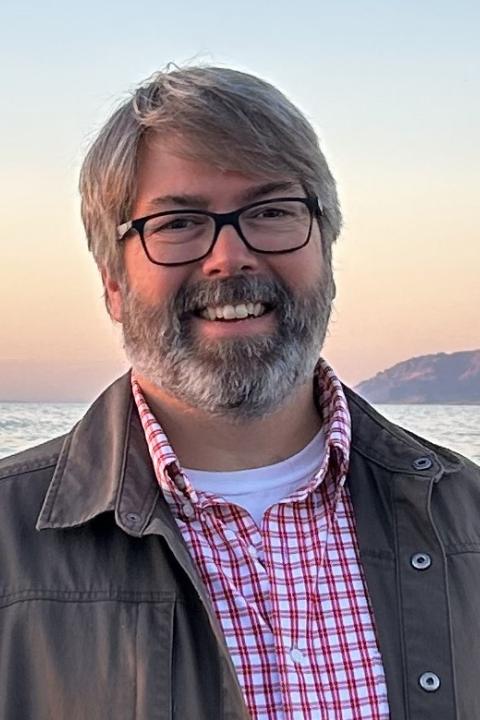
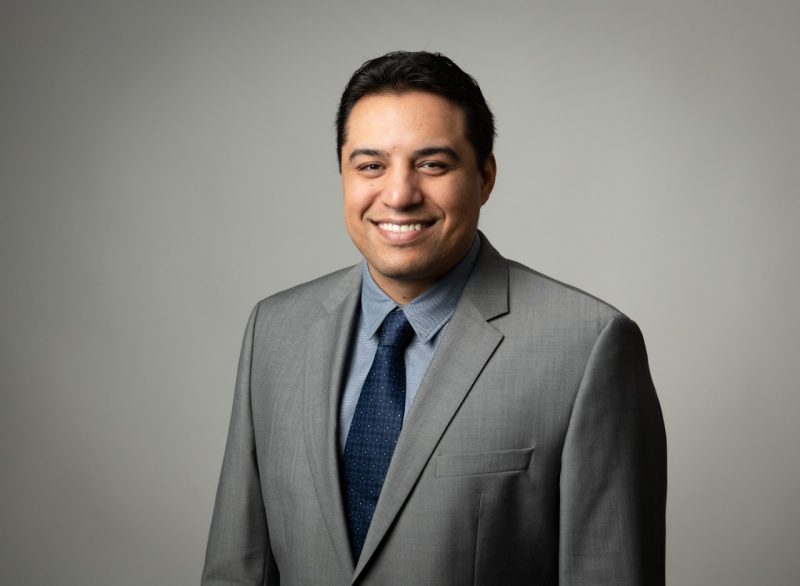
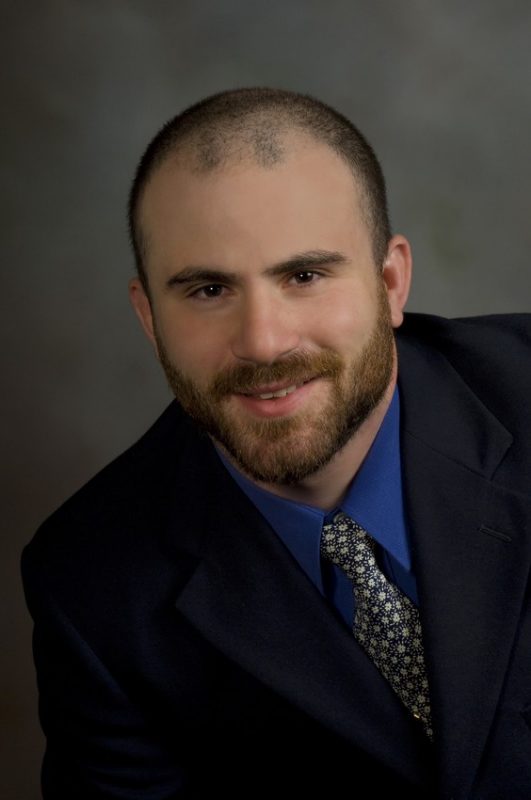
Joel Johnson is a Professor in the Department of Earth Sciences at the University of New Hampshire. He teaches courses in Earth History, Structural Geology, Sedimentology, Geotectonics, Geological Oceanography, and research-focused classes. With a Ph.D. in Geological Oceanography from Oregon State University and an M.S. in Structural Geology & Tectonics from the University of Illinois at Urbana-Champaign, his research spans gas hydrate systems, sedimentology, and methane cycling in marine environments. Ph.D., Geological Oceanography, Oregon State University M.S., Structural Geology & Tectonics, University of Illinois at Urbana-Champaign B.S., Geology, University of Minnesota Duluth His work examines gas hydrate dynamics in settings like Hydrate Ridge (Cascadia margin) and Svyatogor Ridge (Fram Strait), focusing on crustal processes , fluid flow mechanisms , and authigenic carbonate formation . Studies in the Gulf of Mexico and Indian continental margins analyze hydrate accumulation controls, while Arctic lake research explores methane emission temperature sensitivity and microbial influences . Collaborative projects include 3D seismic analysis , tectonic stress modeling , and monsoon-driven sedimentation in the Bay of Bengal and Andaman Sea. Recent publications highlight earthquake-enhanced carbon cycling in deep sediments (2023), primary deposition controls on gas hydrate reservoirs (2022), and crustal-scale methane systems in Arctic regions (2022). His 15 most recent articles span 2023-2014, emphasizing gas hydrate systems , methane seepage , sedimentary diagenesis , and tectonic influences on fluid flow. Subfields include authigenic carbonate formation , 3D seismic imaging , isotopic geochemistry , and late Quaternary climate reconstructions . Contact: Joel.Johnson@unh.edu
Nora H Prior, PhD, is a Senior Research Associate in the Psychology Department at Cornell University, focusing on sensory systems, social behavior, and neurogenomics. Her research team explores avian behavioral neuroscience, with expertise in neuroendocrinology, bioacoustics, and comparative psychology. 2020-2021: Sessional Instructor & course designer, University of British Columbia 2018-2021: Postdoctoral Associate, Avian Behavioral Neuroscience Lab (University of Maryland) 2016-2018: Postdoctoral Fellow, Center for Comparative and Evolutionary Biology of Hearing (University of Maryland) 2015: Postdoctoral Fellow, Neuroethology & Bioacoustics Lab (University of Lyon) 2009-2014: PhD Candidate (University of British Columbia) Her research combines neuroendocrinology, bioacoustics, and behavioral ecology to study avian communication, pair bonding, and neurogenomic responses to environmental stressors. Key topics include: Acoustic fine structure in zebra finch communication Neuroendocrine regulation of monogamy and aggression Effects of water restriction on vocal behavior Differential gene expression in extreme physiological states Temporal processing of vocal sequences Perceptual limitations in avian cognition While her publications span from 2010-2025, recent work emphasizes methodological rigor in neuroscience research, environmental impacts on brain development, and neurogenomic resilience in wild birds. Her 2025 paper on Science Democratization addresses systemic challenges in behavioral neuroscience.
Dr. Marcell K. Peters is a Senior Academic Councillor at the Chair of Animal Ecology and Tropical Biology (Zoology III) at the University of Bremen. His research focuses on biodiversity patterns, ecosystem functioning, and climate-land use interactions in tropical and montane environments, with extensive fieldwork in East Africa and the Amazon. He leads projects under DFG and EU funding, including the UPSCALE initiative. Habilitation in Zoology (University of Würzburg, 2018) PhD in Biology (University of Bonn, 2008) Diploma in Biology (RWTH Aachen & University of Bonn, 2003) Research spans multi-taxa community ecology, army ants and ant-following birds, DNA barcoding applications, and climate change impacts on pollination networks. Google Scholar highlights recent work on climate-agriculture interactions in sub-Saharan Africa, trait-based community assembly, and network resilience in biodiversity hotspots. His publications emphasize elevational gradients, disturbance ecology, and functional diversity across Mount Kilimanjaro studies. Current affiliations include the DFG Research Unit Kilimanjaro and EU-funded UPSCALE project. He employs advanced methods like airborne LiDAR for biodiversity prediction and investigates nutrient use by ant communities across continents.
Dr. Diego Fernandez is a Research Professor in the Department of Geology & Geophysics at the University of Utah, specializing in isotope geochemistry, mineral resource characterization, and environmental dust dynamics. His work spans four decades of academic appointments (2006–present) with expertise in strontium isotope applications for migration tracking, critical mineral assessments, and dust pollution health impacts. PhD in Thermodynamics, University of Buenos Aires (1992) Research Professor (2021–present) Research Associate Professor (2014–2021) Research Assistant Professor (2006–2014) Research focuses include: strontium isotope geochemistry for reconstructing animal migration and geological processes; critical mineral characterization of coal-bearing strata for rare earth element extraction; environmental health impacts of dust from the Great Salt Lake playa; dust source apportionment in urban settings; and magmatic system petrochronology of the Alta Stock region. Recent publications (2024–2025) demonstrate methodological innovations in LA-ICP-MS analysis, Bayesian isotope turnover modeling, and dust-metal contamination frameworks. His studies document elevated health risks from thallium, arsenic, and lead in urban dust, while proposing solutions through dust suppression and international emission reductions. 2024 Distinguished Educator Award, University of Utah College of Science Current grants include USGS-funded terminal lake geochemistry, NSF projects on critical zone dust dynamics, and Bering Sea fisheries baseline studies Teaching activities include directing SRI Research courses (2024) and mentoring interdisciplinary projects on environmental isotopes. Collaborators include institutions across North America and Europe, with fieldwork in Utah, Alaska, Wyoming, and Kenya.
Fedor Dokshin is an Assistant Professor in the Department of Sociology at the University of Toronto, Downtown Toronto (St. George) campus. His research bridges computational social science with environmental and political sociology, focusing on energy transitions, partisan dynamics, and social network structures. Key research areas include racial and income disparities in solar photovoltaic adoption, policy feedback mechanisms in renewable energy programs, and partisan influences on environmental decision-making. Fields of Study: Computational and Quantitative Methods, Environmental Sociology, Political Sociology, Social Networks Areas of Interest: Computational social science, Energy and the environment, Political polarization Research Trends: Dokshin's publications reveal a focus on energy justice, behavioral diffusion models, and political polarization. His work combines computational methods with environmental policy analysis, examining how socioeconomic factors and partisan identities shape renewable energy adoption. Articles demonstrate geographic heterogeneity in opposition to extraction projects, digital discourse analysis techniques, and institutional dynamics affecting scholarly knowledge production. Methodological Emphasis: Utilizes large-scale data analysis, spatial modeling, and automated textual analysis to explore energy-environment-society intersections. Research highlights the tension between technical solutions and social equity in energy transitions, with recurring themes of policy design, public engagement, and networked political behavior.
Oliver Krüger is a Full Professor of Religious Studies in the Department of Social Sciences at the University of Fribourg, Switzerland. Appointed in 2007, he has served as president of the Swiss Association for the Study of Religion (2011-2014) and is a Fellow of the International Centre for Advanced Studies Morphomata at the University of Cologne. His academic journey spans from studying Sociology, Archaeology and Religious Studies in Bonn to research positions at Princeton University and Heidelberg University, establishing him as a leading scholar at the intersection of religion, media, and digital culture. Dr. Krüger studied Sociology, Archaeology and Religious Studies at the University of Bonn (1994-1999), working with scholars including Werner Gephart, Karl Hoheisel, and Wolfgang Gantke. He received his doctorate in 2003 from the University of Bonn with a dissertation on "Virtuality and Immortality: The Visions of Posthumanism," which was awarded by the German Association for the History of Religion. His academic development included research at Heidelberg University's Collaborative Research Center Ritual Dynamics (2002-2005) on Wicca movement communication online and at Princeton University's Center for the Study of Religion (2005-2007) exploring alternative funeral culture in the United States. Professor Krüger's research focuses on the intersection of religion, media, and digital culture, with particular emphasis on posthumanism and transhumanism. His work critically examines how religious concepts and practices transform in digital environments, analyzing phenomena like online rituals, virtual communities, and the religious dimensions of emerging technologies. He has developed significant theoretical frameworks for understanding "virtuality" as "the availability of the unavailability" and has consistently challenged normative preconceptions in the study of religion and media. His scholarship demonstrates how religious studies frameworks can illuminate technological discourses that often present themselves as purely secular. His publications reveal a consistent trajectory from early work on internet-based religious communities to current explorations of AI, posthumanism, and digital religion. Recent works increasingly analyze the relational aspects between secular and religious interpretations of technological progress, showing how posthumanist visions often replicate traditional religious patterns while claiming scientific objectivity. Krüger's approach emphasizes dynamic, relational perspectives over static definitions of religion, contributing significantly to paradigm shifts in the field. Professor Krüger has received notable recognition for his scholarly contributions, including: Dissertation Prize from the German Association for the History of Religions (2003/2004) Fellowship at the International Centre for Advanced Studies Morphomata, University of Cologne (2012/13) At the University of Fribourg, Krüger supervises graduate students researching digital religion, posthumanism, and media theory. He has edited several special journal issues that have shaped scholarly discourse, including "Theory and Methodology" (2005), "Religion and Ecology" (2022), and "The Dynamics of Religion, Media and Community" (2022). His habilitation thesis "Media-based religion. Problems and perspectives of media research in religious studies and the sociology of knowledge" (2012) comprehensively examines the history and research field of religion and media. Professor Krüger has been instrumental in developing academic networks around digital religion and posthumanism. He co-founded and edits the journal AЯGOS (Argonauts), which focuses on innovative approaches in religious studies. At Fribourg, he leads research initiatives examining the intersection of religion, media, and technology, fostering collaborations between scholars in religious studies, sociology, philosophy, and digital humanities. He has also worked extensively on the history of religious studies, particularly on Edmund Hardy (1852-1904), contributing to a more nuanced understanding of the discipline's development.
Lisa Komoroske serves as an Assistant Professor in the Department of Environmental Conservation at the School of Earth and Sustainability, University of Massachusetts Amherst, where she leads research integrating genomics, physiology, and ecology to address conservation challenges in aquatic ecosystems. Her academic credentials include: NRC Postdoctoral Fellow, NOAA Southwest Fisheries Science Center Ph.D., University of California, Davis M.S., San Diego University B.S., Tulane University Dr. Komoroske's research program investigates how natural and anthropogenically altered environments shape animal adaptation, performance, and distribution patterns. She specializes in species of conservation concern within marine and freshwater habitats, with work structured around three interconnected pillars: understanding biological responses to global change drivers, developing science-based conservation management strategies, and elucidating mechanisms of ecological adaptation. Her interdisciplinary approach combines field studies with genomic and physiological analyses to translate fundamental discoveries into actionable conservation outcomes. No scientific awards were documented in the source material. Information regarding student mentorship, grant funding, or collaborative research teams was not provided in the available text.
Jost-Diedrich Graf Von Hardenberg is a Full Professor in the Department of Environmental, Land and Infrastructure Engineering (DIATI) at the Polytechnic University of Turin. He serves as the Energy and Climate Change Area Coordinator and is a Scientific Advisor of the HPC-AI Advisory Council. His research focuses on climate science and geophysical fluid dynamics, with significant contributions to understanding climate change impacts and Earth system modeling. Professor Von Hardenberg's research interests span multiple areas of climate science, including climate dynamics, geophysical fluid mechanics, hydrological cycle analysis, numerical climate modeling, and precipitation downscaling. His work particularly emphasizes climate tipping points and extremes, Rayleigh-Bénard convection in geophysical contexts, high-resolution Earth-system climate modeling, and stochastic approaches to precipitation downscaling. His research integrates theoretical, computational, and observational approaches to address fundamental questions about climate system behavior and change. His recent publications demonstrate a strong focus on Atlantic Meridional Overturning Circulation (AMOC) dynamics, climate extremes in Alpine regions, urban climate effects, and interdisciplinary applications of climate science to ecological and conservation challenges. His work bridges fundamental climate dynamics with practical applications for climate adaptation and environmental management. Among his notable recognitions are the Research in Paris award from the Maire de Paris (2009) and Fellowships at the London School of Economics and Political Science (2001-2002, 2004-2006). He has participated in numerous research networks including the European Geosciences Union section 'Nonlinear Processes in Geophysics' (2004-2012), the EC-Earth Consortium (2012-present), and COST Action ES0805 TERRABITES 'The terrestrial biosphere in the earth system' (2010-2014). Professor Von Hardenberg actively supervises PhD students including Marianna Albanese, Maria Clara Corda, Sara Filippini, and Jacopo Grassi, among others. He leads multiple significant research projects such as ROTurb (Resolving Ocean Macroscale Turbulence), LocClima (Impact of LOCal conditions on Italian microCLIMAtes), CRAWL (Carbon Release in A Warming cLimate), and CliMOC (Climate Impacts of the Atlantic Meridional Overturning Circulation), with funding from EU, national programs, and commercial contracts. He is a member of the Interdepartmental Center SmartData@PoliTO - Big Data and Data Science Laboratory, where he contributes expertise in climate data analysis and modeling. His collaborative work extends to multiple institutions through non-commercial agreements with the National Research Council and various international research consortia focused on climate system understanding.
Jonathan van Senten is an Associate Professor in the Department of Agricultural and Applied Economics at Virginia Tech, based at the Virginia Seafood AREC in Hampton, VA. His work focuses on aquaculture economics, particularly analyzing regulatory impacts on farm-level operations across species like baitfish, trout, shellfish, and tilapia. He also explores emerging species, aquaponics, live feed production, and financial benchmarking. His Extension program addresses industry needs in economics, business planning, and strategic marketing through workshops, webinars, and technical publications. Education: Ph.D. Aquaculture/Fisheries, University of Arkansas at Pine Bluff (2016) M.P.S., Marine Affairs & Policy: Aquaculture, University of Miami (2012) B.S. Marine Biology, Barry University (2010) Research Interests: Quantifying regulatory costs and farm efficiency Feasibility of emerging aquaculture species Economic impacts of dietary formulations Ornamental aquaculture business development Financial benchmarking for aquaculture sectors Intensive production of live feeds Publications & Awards: Over 50 peer-reviewed articles, extension publications, and infographics analyzing aquaculture regulations, economics, and industry trends. Recipient of the Distinguished Early Career Award (2020) and Best Dissertation Award (2017). Grants & Industry Impact: Collaborates with federal and state agencies to assess aquaculture viability and policy implications. Leads studies on pandemic impacts, disease economics (e.g., Edwardsiellosis), and offshore wind-aquaculture co-location. Labs/Teams: Virginia Seafood AREC serves as a hub for collaborative research and Extension activities, focusing on applied solutions for Virginia’s aquaculture sector.
Dan Catlin is an Associate Research Professor in the Department of Fish and Wildlife Conservation at Virginia Polytechnic Institute and State University (Virginia Tech), within the College of Natural Resources and Environment. His research focuses on quantitative ecology, particularly the conservation of threatened shorebirds like piping plovers and least terns. He holds a B.A. from Hamilton College (2001), an M.S. from Oregon State University (2004), and a Ph.D. from Virginia Tech (2009). Research interests include shorebird demography, habitat management impacts on survival, and the effects of climate change, human activity, and natural disasters on species recovery. Current projects involve Missouri River shorebird dynamics, Niobrara River plover habitat, and winter survival factors for piping plovers in Georgia/South Carolina. He collaborates on studies assessing hurricane-induced habitat changes and predator control strategies. Publications span over 20 years, emphasizing shorebird ecology, habitat modeling, and conservation strategies. His work integrates field data with Bayesian networks and spatial analysis tools. No scientific awards are explicitly listed, but his contributions to endangered species management are notable. Advising and grants: While no students are listed, his projects imply collaborative research teams. The Virginia Tech Shorebird Program is a key platform for his fieldwork and outreach efforts.
Eli D. Strauss is a behavioral ecologist and Postdoctoral Researcher at the Max Planck Institute of Animal Behavior and the University of Konstanz. He will transition to an Assistant Professor position at the Department of Integrative Biology, Michigan State University in late 2025. His research focuses on the evolution of stable social systems, particularly in spotted hyenas, analyzing how individual behaviors and relationships shape group-level dynamics. Strauss employs field experiments, computational techniques, and long-term observational data to study dominance hierarchies, social inequality, and the interplay between individual experiences and collective behaviors. Research Interests : Strauss investigates how societies emerge from individual interactions, emphasizing long-term perspectives. Key themes include dominance hierarchy dynamics, social inheritance, and the ecological drivers of social behavior. His work bridges behavioral ecology with computational methods, addressing questions about social structure stability and evolutionary adaptations. Key Projects : Co-director of the Mara Hyena Project in Kenya, a long-term study on hyena behavior and ecology. Developing methodologies for longitudinal studies of dominance hierarchies, including frameworks for analyzing hierarchy dynamics across timescales. His computational tools (e.g., DynaRankR ) are widely used for dominance inference. Upcoming Initiatives : Establishing a lab at Michigan State University focusing on social behavior and collective ecology. Recruiting graduate students and postdocs to study social systems, computational ecology, and animal behavior.
Professor Merideth Gattis is a cognitive psychologist at Cardiff University's School of Psychology, specializing in how interactions between individuals and their environments influence cognition and communication. She leads research on parenting cognitions during pregnancy and infancy, developmental cascades, and the role of natural environments in social interaction. Her work bridges developmental psychology with environmental and cross-cultural studies. Education: B.A. (Psychology, Gordon College, 1985); Ph.D. (Cognitive Psychology, UCLA, 1995). Academic roles include Professor (2014–present), Reader (2011–2014), and Senior Lecturer (2007–2011) at Cardiff University. Honors include Fellow of the Learned Society of Wales (2016) and completion of the Professorial Leadership Programme (2022). Research focuses on developmental cognition, parent-infant interactions, and environmental influences. Key projects include the Baby Care Questionnaire (BCQ) to measure parenting beliefs, studies on preterm birth effects, and collaborations with organizations like the Wildfowl and Wetlands Trust (WWT) to evaluate nature-based interventions. Her work emphasizes innovative methods like remote research tools and longitudinal studies. Teaching includes research design and methods at undergraduate and postgraduate levels, with a focus on developmental psychology and mixed methodologies. Supervises PhD students on topics like parenting knowledge, pro-environmental behavior shifts, and sensorimotor patterns in parent-child interaction. Grants and collaborations involve European Research Council (ERC) funding and partnerships with institutions globally. Active in academic service as a reviewer for major journals and committees including the Economic and Social Research Council (ESRC) Peer Review College.
Stephen Waterman is a Clinical Professor at the Herbert Wertheim School of Public Health & Human Longevity Science at UC San Diego. His work focuses on vector-borne disease epidemiology, particularly dengue and Zika viruses, with a strong emphasis on public health preparedness and surveillance. He has conducted extensive research in Puerto Rico and other regions, investigating transmission dynamics, risk factors, and control strategies for mosquito-borne illnesses. Key research areas include: 1) Dengue vaccine efficacy and implementation, 2) Zoonotic disease surveillance, 3) Community-based interventions for vector control, and 4) Cross-border health issues. Over 150 peer-reviewed articles document his contributions to understanding disease epidemiology, clinical outcomes, and public health policy. Recent work addresses challenges in diagnosing dengue amidst the COVID-19 pandemic, optimizing Zika surveillance strategies, and evaluating vaccination cost-effectiveness. He collaborates with CDC, NIH, and global health agencies on outbreak investigations and policy development.
Rosalind Cornforth is a Professor of Climate and Development and Director of the Walker Institute at the University of Reading, Department of Meteorology. She holds a PhD in Tropical Meteorology and has over 15 years of experience collaborating with governments and NGOs in developing nations. As Walker Institute Director, she leads strategic vision, operations, and interdisciplinary projects in climate resilience. Her roles include Senior Research Scientist at the National Centre for Atmospheric Science (NCAS) and Ambassador for the TAMSAT group. Her research focuses on African weather systems, climate early warning systems, rainfall variability, knowledge exchange, and governance for adaptation. Key projects include the Africa Climate Exchange (AfClix), AfClix Early Warning System for Sudan, and BRAVE groundwater studies. She advises on UN initiatives, including WHO/WMO, UNDP, and the African Union. Recent publications (2020–2024) address climate adaptation, flood early warning, heat stress, and transboundary resilience. She supervises postgraduate students and leads NERC-funded projects. Her work bridges science and policy, emphasizing actionable solutions for vulnerable regions.
Davin Wallace is an Associate Professor at the University of Southern Mississippi's School of Ocean Science and Engineering, where he investigates coastal and marine system responses to storms, sea-level rise, and sediment dynamics across timescales ranging from days to millennia. His research employs field observations, laboratory analyses, and numerical modeling, with active sites across the Gulf of Mexico, Bermuda, and the Philippines. Education: Ph.D. in Earth Science, Rice University (2007-2010) B.S. in Geology and German, Tulane University (2003-2006) Research Focus: Dr. Wallace's work bridges paleotempestology, coastal geomorphology, and sedimentary processes. His research examines hurricane impacts on sediment structures, barrier island resilience under sea-level rise, and Holocene coastal evolution. He specializes in reconstructing historical storm patterns using geologic proxies and assessing anthropogenic influences on coastal erosion. Publication Trends: His recent articles demonstrate interdisciplinary approaches to coastal vulnerability, combining geophysical data, machine learning, and multiproxy sediment analysis. Work consistently addresses climate change impacts, with emphasis on sedimentation mechanisms during extreme events and Quaternary landscape evolution. Scientific Recognition: No major awards documented in provided sources. Academic Leadership: Leads the USM Coastal Evolution and Hazards Research Lab, supervising field campaigns and collaborative projects. Secured grants for Gulf Coast studies from NSF and NOAA. Mentors graduate students in geological oceanography programs and coordinates international research teams across field sites.