Olga Saukh is an Associate Professor at TU Graz's Institute of Computer Engineering, leading the Embedded Learning and Sensing Systems (ELSS) group. Her research focuses on resource-efficient AI, on-device learning, and robust sensing systems for IoT and environmental monitoring applications. She holds a Dr.rer.nat. and MSc in Computer Science, with expertise in embedded systems and wireless sensor networks. Her work integrates machine learning with hardware constraints, addressing challenges in energy efficiency, real-time adaptation, and adversarial robustness. Notable projects include PCDCNet for air quality forecasting and SensorFormer for sensor calibration. She has contributed to OpenSense Zurich's air pollution monitoring and automated pollen sensing systems. Her research spans over 50 publications since 2006, emphasizing practical deployments in structural health monitoring, smart agriculture, and urban environmental sensing. She leads interdisciplinary projects combining AI, embedded hardware, and data-driven decision-making.
Andrew Corless serves as the Department Chair and Associate Professor of Biology at Vincennes University. His affiliation includes the Biology department within the university's academic structure. Contactable at acorless@vinu.edu and reachable via 812-888-4253. Research interests are inferred to align with biological sciences, though specific areas are not explicitly listed in available texts. No recent articles or grants are documented in the provided content. No scientific awards, advising records, or laboratory affiliations are mentioned in the source material.
Dr. Elaine Ferguson is a Researcher at the University of Glasgow , affiliated with the Infectious Disease Ecology group. Her email is Elaine.Ferguson@glasgow.ac.uk . Research Interests : Rabies control, vaccination campaigns, epidemiology, zoonotic diseases, statistical modeling, and public health policy. Key Collaborations : Projects in Tanzania, Bangladesh, and global health initiatives. Her recent work focuses on mathematical modeling of rabies transmission and control strategies, community engagement in vaccination campaigns, and spatio-temporal analysis of disease dynamics. She has contributed to genomic studies and public health interventions. Supervision : Supervised Luka, Martha Muthina in a project on rabies control in East Africa.
Talayeh Aledavood is a University Lecturer at the Department of Computer Science , Computational Life Sciences (CSLife) research area within Aalto University . Their work bridges computational methods with mental health research through the lens of digital phenotyping. Academic Affiliation: Aalto University School of Science Research Group: Computational Life Sciences Research Interests focus on: Digital phenotyping of mental health conditions Behavioral pattern analysis via smartphone data Chronobiology and daily rhythm analysis Social network dynamics in health contexts Temporal modeling of human behavior Scientific Contributions include: Developing methodologies for depression symptom monitoring Advancing reproducibility in data-intensive design research Mapping pandemic impacts on sleep and behavioral patterns Analyzing misinformation discourse in public health Collaborations extend to: International AAAI Conference participation RCF Academy Project on crisis narratives Academy of Finland funded research
Michele Mancusi is a Senior Research Scientist at Sony and holds a Ph.D. in Computer Science from Sapienza University of Rome, where he remains affiliated with the GLADIA research group under Prof. Emanuele Rodolà. He earned dual degrees in Physics (Quantum Information) from Sapienza, blending computational and theoretical expertise. His research focuses on deep learning applications in audio signal processing, including source separation techniques for music and ecological monitoring. Notable contributions include data-driven methods for marine biodiversity assessment via fish vocalization analysis and innovations in diffusion models for high-resolution audio generation. His work bridges academia and industry, with publications in top venues like ISMIR, ICASSP, and ICLR. Research interests emphasize generative models (autoregressive/diffusion), music technology, and interdisciplinary applications in environmental science. Recent efforts explore coherence-oriented audio representation learning (COCOLA) and inference-time optimizations for music mastering processors (ITO-Master). Publications reflect a trend toward real-world impact, such as accelerating transformer-based translation systems and developing latent diffusion techniques for timbre transfer. Collaborations include cross-disciplinary projects with marine biologists to advance biodiversity tracking through passive acoustic monitoring.
Erin E Blankenship is a Professor in the Department of Statistics at the University of Nebraska-Lincoln. Her research bridges statistical methodology with environmental and agricultural sciences, focusing on data analysis frameworks, ecological modeling, and educational tools for statistical learning. She is based in Hardin Hall (HARH 343B), reachable via phone at 402-472-7398 or email at erin.blankenship@unl.edu. Her work spans diverse applications: from ozone exposure metrics in atmospheric studies weed control timing in agricultural systems avian foraging patterns in fragmented habitats information-theoretic model selection nonlinear mixed-effects calibration pipeline plover conservation classroom data simulation pedagogy Her publications reflect interdisciplinary collaboration with agricultural and biological researchers. While no formal awards are listed, her peer-reviewed educational activities (e.g., CAUSEweb simulations) demonstrate outreach impact. She has contributed to wildlife management strategies and environmental policy through statistical analyses of ecological datasets.
Prof. Almut Heinken is a Professor at the University of Lorraine, affiliated with Campus Brabois Santé (Bât. C 2ème étage). Her research focuses on systems biology approaches to understand host-microbiome interactions, metabolic modeling, and their implications in human diseases. She leads efforts in developing computational tools like Microbiome Modeling Toolbox 2.0 and APOLLO to analyze microbiome metabolism across diverse populations and disease contexts. Her work integrates genomic, metabolomic, and clinical data to study metabolic pathways in conditions such as Alzheimer’s disease, colorectal cancer, and inflammatory bowel disease. Key contributions include identifying formate’s role in disease progression and developing personalized models for inborn errors of metabolism. She collaborates extensively on microbiome-driven drug-metabolism studies and systems pharmacology. Her lab utilizes advanced platforms like functional genomics, bioinformatics, and analytical chemistry to dissect microbial community dynamics. Recent studies highlight microbiome contributions to xenobiotic metabolism, depression biomarkers, and preterm birth prediction. Ongoing projects aim to bridge computational models with clinical applications for precision medicine. Prof. Heinken’s work is supported by interdisciplinary teams and state-of-the-art facilities, including molecular biology and bioinformatics resources at Campus Brabois Santé. Her research underscores the microbiome’s central role in health and disease, with translational potential for diagnostics and therapeutic strategies.
Emily Hodgson is a researcher at Northumbria University, specializing in fungal diversity and evolution, palaeomycology, and palaeoecology. Her work focuses on understanding historical ecological and climatic patterns through fossil records. Recent contributions include a global dataset of Cenozoic fungal fossils and studies on Middle Miocene hydrological cycles using fungal evidence. Research Interests : Fungal evolution, paleoenvironmental reconstruction, and the role of fungi in ancient ecosystems. Her articles analyze fossil records to infer past climatic conditions and ecological shifts, contributing to broader paleontological and climatological research. No awards or grants are explicitly listed in the provided texts.
David Wallin is a Professor in the Department of Environmental Sciences at Western Washington University (WWU), affiliated with the College of the Environment. His academic journey includes a B.S. in Biology from Juniata College (1978), an M.A. in Biology from the College of William and Mary (1982), and a Ph.D. in Environmental Sciences from the University of Virginia (1990). Before joining WWU in 1995, he held roles as a Research Associate and Research Assistant Professor in Forest Sciences at Oregon State University. Education: B.S. Biology, Juniata College (1978) M.A. Biology, College of William and Mary (1982) Ph.D. Environmental Science, University of Virginia (1990) Research Interests: David’s work focuses on land-use effects on forest ecosystems, employing simulation models, GIS, and remote sensing. Recent emphases include small Unmanned Aerial Systems (sUAS) for environmental monitoring, wildlife conservation (e.g., mountain goats, marten), and riparian forest dynamics. His projects often involve collaborations with agencies like the Washington Department of Fish and Wildlife and tribal groups. Advising & Grants: He has advised numerous graduate students on topics ranging from landscape genetics to eelgrass mapping. Over 50 undergraduates have contributed to his research, including Colin Shanley, who documented early project experiences. Current projects include mountain goat translocation and eelgrass monitoring in Padilla Bay. His work bridges ecological theory with applied conservation challenges. Labs & Teams: Collaborates with interdisciplinary teams on remote sensing innovations and conservation initiatives, leveraging sUAS technology for high-resolution environmental data collection.
Professor Sir David Cox is a distinguished academic serving as an Honorary Fellow at Nuffield College, University of Oxford, and affiliated with the Department of Statistics. His primary roles include advancing statistical theory, methodologies, and their practical applications across diverse fields. Research interests focus on statistical theory, methods, and interdisciplinary applications. Notable works include analyzing tuberculosis risk in badgers through statistical modeling and foundational texts like Principles of Statistical Inference . His publications bridge theoretical advancements with real-world problems in biology and public health. Publications highlight contributions to epidemiological modeling, statistical education, and methodological debates in frequentist inference. Despite no explicitly listed awards in the text, his academic prominence suggests significant recognition in statistical sciences. Advising details and grant specifics are not detailed here. Labs/teams: Associated with Nuffield College and University of Oxford's Department of Statistics research networks.
Tom Shimizu is a Professor in the Department of Physics and Astronomy at Vrije Universiteit Amsterdam and a Group Leader at AMOLF, leading the Physics of Behavior research group. He holds a Ph.D. from the University of Cambridge (2003) and completed postdoctoral work at Harvard University. His research bridges biophysical experiments, theoretical models, and data analysis to study dynamics across molecular, cellular, and organismal scales. Education: Ph.D., University of Cambridge (2003) Postdoctoral Fellowship, Harvard University Research interests focus on: Bacterial chemotaxis and signaling Fungal networks and resource allocation Multiscale biological systems Fluorescence microscopy techniques Publications emphasize interdisciplinary approaches, with recent work on plant-fungal symbiosis, bacterial motility, and adaptive sensory systems. His studies combine experimental and computational methods to uncover principles of biological organization and dynamics. Advising and grants: While specific grants are not detailed, his work reflects sustained interdisciplinary collaboration. No formal advisee names are listed in the provided text. Labs/Teams: Active in AMOLF’s Physics of Behavior group, focusing on biophysical and systems-level analyses of biological phenomena.
Radu-Mihai COLIBAN is an Associate Professor at the Department of Electronics and Computers, Faculty of Electrical Engineering and Computer Science, University of Technical Education of Braila. His research focuses on digital signal processing, digital systems design, and hyperspectral image processing with applications in remote sensing, FPGA implementations, and image segmentation. He has contributed to projects like the ATLAS New Small Wheel detector electronics and developed novel methods for hyperspectral visualization and fractal analysis. Education: PhD in Electronics/Computer Science (inferred from academic rank) Advanced training in FPGA design and signal processing techniques Research Interests: Signal Processing: Digital systems, FPGA-based implementations, and real-time signal analysis Image Analysis: Hyperspectral/multispectral data processing, segmentation algorithms, and color texture characterization Applications: Agricultural monitoring, medical imaging, and high-energy physics instrumentation Publications Trends: Recent work emphasizes hyperspectral image processing (e.g., band selection, segmentation) and FPGA-accelerated algorithms (e.g., modular arithmetic, 8b/10b encoding). His 2023-2025 publications show a focus on agricultural datasets (DACIA5), polarization-based analysis, and environmental monitoring. Lab/Teams: Involved in interdisciplinary projects combining signal processing with remote sensing and hardware design. Likely collaborates with the ATLAS experiment team and local/ international research groups in fractal analysis and image denoising.
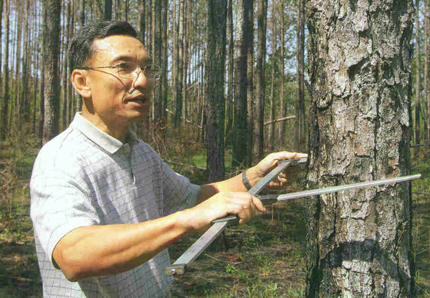
Quang Cao is a Professor in the Department of Forestry at Louisiana State University (LSU), affiliated with the College of Agriculture Renewable Natural Resources. He specializes in growth and yield modeling, applying mathematical and statistical principles to forestry challenges. His research focuses on diameter distribution analysis, stand-level projections, and self-thinning dynamics in forest ecosystems. Cao has extensive experience in developing and validating models for forest inventory, biomass estimation, and tree survival prediction. He earned his Ph.D. in Forest Biometrics from Virginia Tech in 1981, following earlier degrees in Statistics and Forestry. Cao teaches courses such as Natural Resource Measurements and Forest Biometrics, emphasizing quantitative methods in forestry education. Education Ph.D. in Forest Biometrics, Virginia Tech University, 1981 M.S. in Statistics, Virginia Tech University, 1980 M.S. in Forest Biometrics, Virginia Tech University, 1978 B.S. in Forestry, National Agricultural Institute, Saigon, Vietnam, 1973 Research Interests Dr. Cao’s work bridges statistical theory and practical forestry applications. Key areas include: Whole-stand and individual-tree growth modeling Quantile regression for survival analysis Compatibility of stand and tree-level models Self-thinning trajectories in plantation ecosystems Leaf area distribution and biomass estimation Integration of LiDAR data with traditional inventory methods Publications His recent work focuses on advancing methodologies for diameter distribution modeling, stand table projections, and self-thinning rules. Key themes include: Development of unified growth systems Application of Bayesian and quantile regression techniques Compatibility between individual-tree and whole-stand models Modeling forest dynamics in diverse ecosystems Teaching and Academic Contributions Cao contributes to LSU’s forestry curriculum through courses like RNR 2102 (Natural Resource Measurements) and FOR 3036 (Field Studies in Forest Mensuration). He has advised numerous graduate students and collaborates internationally on forestry projects.
Eduardo G. Altmann is a Professor in the School of Mathematics and Statistics at the University of Sydney. His research focuses on mathematical models and computational methods applied to complex systems, data science, and statistical laws. He is part of the Complex Systems and Data Science group and the Computational Social Science Lab, and contributes to interdisciplinary collaborations in areas like urban scaling and language dynamics. Altmann teaches courses such as MATH3076/3976/4076 (Mathematical Computing) and DATA5441 (Networks and High-Dimensional Inference). He serves on editorial boards for journals including the Journal of Statistical Mechanics and New Journal of Physics. His recent work includes studies on Monte Carlo methods for manifold triangulations, generative models for network communities, and statistical laws in complex systems. He has authored a monograph, 'Statistical Laws in Complex Systems,' published by Springer Nature, and frequently engages in academic outreach via platforms like Bluesky.
Joëlle Barido-Sottani is a postdoctoral researcher at École Normale Supérieure (ENS), focusing on developing mathematical models to study diversification processes using phylogenetic analysis. Her research integrates birth-death processes, Bayesian inference, and fossil data to understand evolutionary dynamics. She contributes to software frameworks like BEAST2 and RevBayes , enhancing tools for phylogenetic analysis and phylodynamic studies. Her work bridges evolutionary biology and computational methods, emphasizing methodological advancements in fossil integration and model development. Her research interests include phylogenetic modeling , Bayesian statistical methods , and the application of these techniques to study diversification patterns across species. She has developed computational tools such as FossilSimShiny and EvoPhylo , which facilitate simulations and data preprocessing in evolutionary studies. Her recent work highlights the importance of integrating fossil records with modern species data to improve estimates of historical diversification rates. Over the past few years, her publications have focused on enhancing phylogenetic inference through methodological innovations. For example, her work on the Multi-Type Fossilized Birth-Death model (2025) addresses heterogeneous diversification rates, while her guidelines for MCMC-based Bayesian inference (2024) provide practical frameworks for researchers. She has also contributed to epidemiological applications of phylogenetic models, extending their utility beyond traditional evolutionary studies. Barido-Sottani’s collaborations emphasize open-source software development, enabling broader accessibility to advanced phylogenetic tools. Her teaching efforts, such as organizing virtual workshops like Taming the BEAST , reflect her commitment to advancing computational training in evolutionary biology.