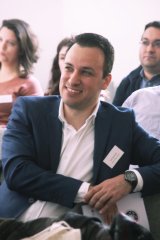
David J. Telfer is a Professor in the Department of Geography and Tourism Studies at Brock University. His research focuses on tourism and development theory, rural tourism development, heritage tourism, culinary tourism, and green tourism in rural Japan. He currently leads an ongoing project on Green Tourism in rural Japan. His work spans academic publications including books like *Rethinking Tourism and Development* (2023) and numerous journal articles in *Journal of Heritage Tourism*, *Tourism Geographies*, and *Journal of Tourism and Cultural Change*. Recent research emphasizes UNESCO World Heritage sites, cultural theme parks, and rural depopulation's tourism potential in Japan. Dr. Telfer teaches courses such as TOUR 2P30 (Culture, Heritage and Tourism) and TOUR 3P30 (Tourism Planning and Development), integrating practical and theoretical perspectives. He collaborates frequently with co-author Atsuko Hashimoto on studies of Japanese tourism landscapes and cultural heritage.
Dr Nick Naumov is a Senior Lecturer in Hospitality & Tourism Management at the University of Northampton, affiliated with the Events, Tourism & Hospitality department within the Centre for Sustainable Business Practices. His research focuses on critical heritage studies, tourism geography, and niche tourism forms, with particular expertise in post-socialist Eastern Europe, cultural heritage interpretation, and hospitality management innovations. He holds a PhD in Human Geography from King's College London, an MSc in International Tourism from the University of Bedfordshire, and an MBA in Tourism Management from Assen Zlatarov University. Education: PhD (2019), MSc (2011), MBA (2009), BSc (2007) Industry Background: Front Office Operations, F&B Management in Bulgaria/UK/USA Research interests span residents' tourism perceptions, sustainable tourism development, service quality, and qualitative methodologies. His work contributes to UN SDGs related to education and sustainable development. He teaches across undergraduate and postgraduate programs, including BA International Tourism Management and MA International Hotel Management. Recent publications explore cultural tourism dynamics, post-pandemic hospitality trends, and the socio-political dimensions of heritage. He collaborates with the Council of Europe on cultural routes initiatives and oversees academic partnerships in Greece, Singapore, Myanmar, and Sri Lanka.
Professor Tatjana Steusloff is currently a Professor of General Business Administration (especially International Marketing) at the Wiesbaden Business School of HSRM since 2021. Previously held roles include Professor of Economics/Visiting Professor of Marketing at Düsseldorf University of Applied Sciences (2016–2020) and lecturer positions at various HAW institutions (2009–2016). Her career combines academic leadership with industry experience in marketing roles at companies like McCain Foods (Senior Brand Manager, 2004–2008) and Unilever Bestfoods (Brand Manager, 2000–2004). Education: Earned a Dr. rer.oek. (Magna Cum Laude) in 2016 from Leipzig Graduate School of Management (HHL), with prior studies at TU Dresden (1996–1998) and a semester abroad in the MBA program at University of Illinois at Urbana-Champaign (1999). Research Focus: Specializes in sustainable consumer behavior, customer-centric brand management, and science communication in marketing. Recent work emphasizes eco-route choice behavior and digital nudging interventions. Has presented at ISMS Marketing Science Conference (2024), EMAC Annual Conference (2023), and KSFE Annual Conference (2023). Teaching: Leads courses in international marketing strategies, strategic marketing, and market entry case studies at both bachelor's and master's levels in International Management programs. Professional Activities: Serves on the advisory board of Marketing Club Mainz-Wiesbaden (since 2025) and as curator for wi3 Consulting e.V. (since 2023). Previously held board positions in academic organizations (2022–2024).
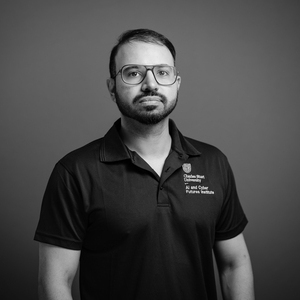
Dr. Ibrar Yaqoob serves as a Senior Research Fellow and Program Lead for the Smart and Resilient Supply Chain strand at the Artificial Intelligence and Cyber Futures Institute (AICF) at Charles Sturt University. He leads a research team comprising PhD students and postdoctoral fellows, and previously held research positions at Khalifa University in the UAE and Kyung Hee University in South Korea. Dr. Yaqoob holds a PhD in Computer Science from Universiti Malaya (2017) and has been a Visiting Academic at the University of Cambridge. His research focuses on blockchain, NFTs, and metaverse applications for healthcare, supply chain and logistics, wireless networks, IoT, and smart cities, with additional expertise in mobile edge-cloud computing and big data. Dr. Yaqoob has published over 100 research articles with more than 24,000 citations and an h-index of 58, with 98.9% of his publications appearing in Q1 journals. His recent publications demonstrate a strong trend toward practical blockchain implementations across diverse sectors including healthcare data management, sustainable supply chains, and smart city infrastructure. His work frequently combines blockchain with emerging technologies like NFTs, metaverse applications, and large language models to solve complex real-world problems in supply chain transparency, medical data security, and sustainable development. Ranked in the world's top 0.1% of researchers for three consecutive years (2023-2021) as a Highly Cited Researcher Listed among the World's top 2% scientists for five consecutive years (2020-2024) 2024 IEEE Consumer Electronics Magazine Best Paper Award (1st Place) 2024 Vice Chancellor's Researcher of the Year Commendation 2024 AICF Research Excellence Award 13 highly cited papers (top 1%) and 21 most downloaded articles Dr. Yaqoob serves as Chief Investigator on multiple significant research projects including the AgriTwins project (AUD $2.38 million), Trustworthy Operations and Supply Chain Management project (AUD $10,000), and Decentralized AI Juries project (AUD $13,875). He actively mentors PhD students and postdoctoral researchers while serving on editorial boards for prestigious journals including IEEE Network Magazine, Future Generation Computer Systems, and IEEE Access. His research team at the AICF Institute focuses on bridging emerging technologies with practical applications to address real-world challenges in supply chain resilience and sustainability.
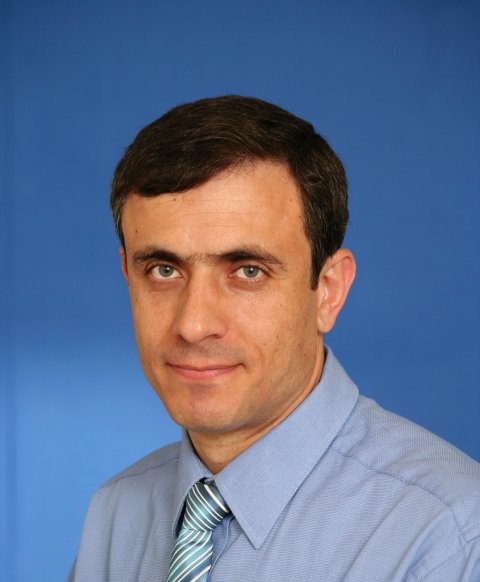
Dr. Mecit Cetin is a Professor at Old Dominion University (ODU) and Director of the Transportation Research Institute (TRI). He specializes in Intelligent Transportation Systems (ITS), connected/automated vehicles, traffic flow theory, and infrastructure resilience. His academic background includes a Ph.D. in Transportation Engineering from Rensselaer Polytechnic Institute (2002), an M.S. in Civil Engineering (1999), and a B.S. from Boğaziçi University (1995). Research focuses on big data analytics for traffic prediction, congestion pricing, and floodwater detection using LIDAR and computer vision. He has secured over $3M in grants including Federal funding for SMARTc systems and state projects on truck turnaround reduction. Notable awards include the 2011 Best Paper Award at the World Congress on Intelligent Transport Systems and multiple Shining Star Awards from ODU. Key projects include developing auction-based tolling systems for connected vehicles, enhancing traffic signal control with probe data, and modeling secondary incident impacts. His work bridges transportation engineering with emerging technologies like IoT and AI. Dr. Cetin collaborates with state agencies (VDOT) and institutions like EVMS. His lab develops tools for urban flood monitoring, eco-routing algorithms, and safety service patrol optimization using discrete-event simulation.
Neal Cahoon is a Researcher at the Faculty of Social Sciences, University of Lapland. His work focuses on tourism research with a particular emphasis on ecological pilgrimage, human-environment relations, and practice-based methodologies. He collaborates on the PROFI 7 project (2023–2028), exploring Arctic tourism, multispecies interactions, and hospitality studies. Cahoon has published widely on topics including pilgrimage rituals, hiking trail dynamics, and methodological frameworks for participatory research. His recent work bridges environmental science and cultural anthropology, emphasizing relational ethics in human-nature interactions. Education: No specific degrees listed in the provided text. Key Projects: PROFI 7: Competitive funding to strengthen university profiles (Collaborative Investigator) Research interests include the intersection of tourism with ecological preservation, pilgrimage as a mode of environmental repair, and the application of innovative methodological approaches. His articles often explore how trails, forests, and human communities intersect in contemporary socio-ecological contexts. Cahoon has organized academic events such as the SuMu Summer Day and contributed to the Relate North conference series, highlighting his role in fostering interdisciplinary dialogue. He has no listed scientific awards but demonstrates active engagement in peer-reviewed publications and conference presentations. Cahoon’s work frequently addresses Arctic regions, blending cultural geography with environmental advocacy through collaborative research practices.
Frankie O'Connell is a Reader in Air Transport Management (equivalent to Associate Professor) at the University of Surrey's Department of Hospitality and Tourism Management. He holds a PhD in Airline Strategy from Cranfield University, an MSc in Air Transport Management from Cranfield, and an MBA in Aviation from Embry-Riddle Aeronautical University. His extensive industry experience includes roles at Boeing and consultancy work with over 55 airlines globally. Research focuses on airline strategy, revenue management, environmental policies, and the impact of global events like pandemics and political conflicts on aviation. Recent work examines airline pricing psychology, blockchain applications in maintenance operations, and sustainability initiatives including passenger willingness to pay for carbon taxes. Dr. O'Connell's publications demonstrate methodological diversity, combining econometric analysis, behavioral experiments, and case studies of airlines in Southeast Asia and Europe. His research informs airline management practices, regulatory policy, and crisis response strategies in global aviation.
Manuel António Brites Salgado is an Associate Professor at the School of Tourism and Hospitality, Polytechnic Institute of Guarda (Portugal), where he has served since 2003. He directs the Degree in Tourism and Leisure (since 2011) and the Master in Management and Sustainability in Tourism (since 2009). His roles include lecturing multiple courses and leading curricular units. He is an integrated member of the Tourism Research Group (GITUR) at the Polytechnic Institute of Leiria (since 2013) and collaborator member of the Governance, Competitiveness and Public Policy (GOVCOPP) research unit at the University of Aveiro (since 2009). He actively participates in accreditation processes for tourism higher education courses through A3ES committees since 2011. Education: PhD in Tourism and a degree in Management and Planning in Tourism from the University of Aveiro. Collaborates with multiple institutions including Polytechnic Institutes of Coimbra, Leiria, and Porto. Research interests focus on tourism education, sustainable tourism development, cultural heritage preservation, rural tourism strategies, and regional tourism planning. His work emphasizes the Alva Valley and Serra da Estrela regions, exploring topics like gastronomic heritage, disaster resilience, and community-based tourism initiatives. His publications (over 50 listed) analyze tourism education systems, sustainable development in natural and cultural territories, and post-disaster tourism recovery. Recent trends include studies on low-density territories, social entrepreneurship, and gastronomy's role in regional tourism. Salgado advises on tourism policy and collaborates with higher education institutions, contributing to teaching methodologies and program accreditation. He has led projects like the Alvaland tourism strategy and the i3Social social innovation initiative. His work integrates academic research with practical applications in destination development and heritage management. Labs/Teams: Active member of interdisciplinary teams at GITUR and GOVCOPP, focusing on tourism governance and territorial development. Collaborates internationally through networks like the Lusophone Tourism Research Network (RETNL).
Assistant Professor Evren Atış works at the Department of Geography, Faculty of Humanities and Social Sciences, Kastamonu University (Türkiye). She holds a PhD in Geography of Turkey (2014), MSc in Security and Forensic Sciences (2016), and MSc in Geography Education (2006) from Atatürk University. Her research areas include Human Geography of Türkiye, Political Geography, and Economic Geography. Her scholarly work focuses on Crime geography analysis (e.g., Kağızman, Araç District) Tourism geography (e.g., Burabay National Park, Luzon Island) Socio-economic studies (Filyos Valley, Zonguldak transport) Cultural geography (Mormon communities, Molokan culture in Kars) She has received the International Science and Art Award (2017) and contributed to edited volumes on 21st-century Türkiye geography and Turkish geography research. She has collaborated extensively with Şaban Çelikoğlu (20 publications), Emin Atasoy (11 publications), and others. Her work appears in journals like GeoJournal of Tourism and Geosites and Marmara Coğrafya Dergisi , with 66 citations (h-index: 6) in academic databases.
Wlodek Kulesza is a Senior Professor in the Department of Mathematics and Natural Sciences at the Blekinge Institute of Technology in Karlskrona, Sweden. He has held academic positions since 2001, including a Professorship in Multi-sensor Systems since 2007. Research: Multisensory systems for health and security applications Teaching: Research Methodology, Philosophy of Science, and Sensors Signals and Systems Expertise: Systems engineering, sensor fusion, IoT, and measurement data handling Research Focus : His work in systems engineering emphasizes multisensor integration for applications spanning healthcare, security, wind energy safety, and subsea cable monitoring. He has pioneered approaches to stereovision calibration, localization algorithms, and real-time safety systems. Awards : Andy Chi Best Paper Award (2009, IEEE Transactions in Measurement and Instrumentation) Collaborations : Visiting Professor at Chinese and Polish universities, with extensive cross-border educational workshops and remote lab federations (e.g., PILAR/VISIR projects).
Branislav Antonić, PhD, is a Lecturer at the University of Belgrade’s Faculty of Architecture, Department of Urbanism. He earned his PhD in 2018 and has been a Teaching Assistant since 2012, following prior work as a scientific researcher fellow (2012–2017). His research focuses on urban planning, housing’s urban dimensions, and small-town development. Dr. Antonić has contributed to over 20 urban plans, spatial studies, and architectural projects, often as a researcher in international initiatives like the DANUrB+ and BOPALiM programs. He has authored over 60 scientific papers and articles in SCI-list journals, receiving awards for research projects and monograph chapters. Research Projects: Children & Family-Friendly Urban Co-Design (2022, Project Manager) COST Action BOPALiM (2024–2028, Member) DANUrB+ (2020–2022, Communication Manager) CREATIVE DANUBE (2019–2022, Technical Secretary) Awards: Award for International Research Project Best Monograph Chapter Award Academic Contributions: Dr. Antonić has organized conferences, workshops, and exhibitions, and is active in professional associations. His work bridges urban planning with cultural tourism, emphasizing sustainable solutions for small cities and towns.
Hannah Kristine Bjørke Lunde is a Research Fellow in Religious Studies at the University of Bergen's Department of Archaeology, History, Cultural Studies and Religion. She is affiliated with the Re-Storied Sites and Routes research project. Her work focuses on pilgrimage studies, cultural heritage, and material culture in Norway, combining ethnographic fieldwork with historical analysis. Her research explores contemporary pilgrimage practices, including the St. Olav Ways, Selja Island pilgrimages, and maritime pilgrimage routes. She examines how these practices reinterpret historical religious sites and integrate modern environmental and climate concerns. Key themes include spatial practices, heritagization processes, and the interplay between administrative frameworks and lived religious experiences. Lunde's publications analyze pilgrimage materialities, walking as a research method, and the role of silver objects in life transition rituals. She has presented at international conferences like SIEF2023 and contributed to radio programs discussing pilgrimage's role in Norwegian cultural identity. Her doctoral thesis (2022) investigates pilgrimage landscapes through semiotic and administrative lenses. Current projects emphasize collaborative approaches to understanding pilgrimage's evolving role in regional and national contexts.
Prof. Christiaan Both is a Professor of Animal Ecology at the University of Groningen's Faculty of Science and Engineering, affiliated with the Groningen Institute for Evolutionary Life Sciences. His research focuses on avian migration, climate change impacts, and ecological adaptation, particularly in migratory birds. He holds leadership roles in scientific advisory boards such as SOVON and the Netherlands Ornithologists Union. Both studied Biology at Wageningen, Groningen, and Oxford, completing a PhD on avian reproductive ecology in 1998. He held postdoctoral positions globally before joining Groningen in 2004. Key research themes include phenological mismatch in migratory birds, climate-driven habitat shifts, and dispersal strategies in response to environmental change. His work has been featured in Science , Nature , and Current Biology , and he has received grants from NWO, NATO, and the Prins Bernhard Fund. Notable contributions include documenting climate-related shifts in bird migration timing and population declines in long-distance migrants. Both advises on conservation policies and has engaged the public through media outlets like TIME Magazine and National Geographic. His current projects explore genetic and behavioral mechanisms enabling bird populations to adapt to global environmental changes.
Hikmet Haberal is a Lecturer at Kastamonu University's Faculty of Tourism, Department of Tourism Guidance, with full-time employment since 2021-2022. Previously, he held a part-time position at Ankara Hacı Bayram Veli University's Faculty of Tourism from 2019 to 2021. His research focuses on Sustainable Tourism , Recreation Management , and Environmental Management in Tourism , with additional interests in nature tourism, medical aromatic plants, and gastronomy. His academic work explores the intersection of tourism development and cultural preservation , particularly in Kastamonu and the Eastern Black Sea region. His recent publications and conference papers emphasize gastronomic product diversification , medicinal plants in tourism , and ecological perspectives in destination planning. He has contributed to 15 articles since 2013, including journals and conference proceedings, with keywords spanning regional development , nature-based tourism , and geographical information systems . Since 2000, Haberal has participated in 17 projects related to nature tourism and regional planning, often as project coordinator or researcher. His educational background includes a Master's in Tourism Management Education from Gazi University (2011), a Bachelor's in Tourism Management from Başkent University (2007), and an Associate Degree in Economics and Administrative Programs from Başkent University (2004). He has also authored books on topics like Regional Tourism and Medical Aromatic Plants in tourism contexts.
Dr. Laura Bissell is an Athenaeum Research Fellow and Lecturer in Contemporary Performance Practice at the Royal Conservatoire of Scotland (RCS). Her interdisciplinary work bridges performance studies, feminism, ecology, and technology, with a focus on matrescence and mobility. She holds a PhD from the University of Glasgow and is a Senior Fellow of the Higher Education Academy. Her education includes a first-class MA (Hons) in English Literature and Theatre Studies, an MPhil in Performance Studies, and a Postgraduate Certificate in Higher Arts Education. She previously taught at the University of Glasgow, Glasgow School of Art, and Transart Institute Berlin. Research interests include contemporary performance practices, technology’s role in art, eco-theatre, and feminist praxis. Her collaborative Making Routes project explores creative mobilities. She co-edits the International Journal of Performance Art and Digital Media ’s Matrescence and Media special edition, and is authoring a monograph on matrescence and performance. Recent work includes COP26-related climate performance studies and a 2023 life-writing article. Awards include the Athenaeum Research Fellowship and HEA Senior Fellowship. She advises doctoral research across video game performance, eco-queer theory, and neuroqueering dance practices. Professional roles include RCS Sustainability Committee Co-Chair and External Examiner for University of Salford and Rose Bruford College. Qualifications include Yoga teaching and Mental Health First Aid certifications.