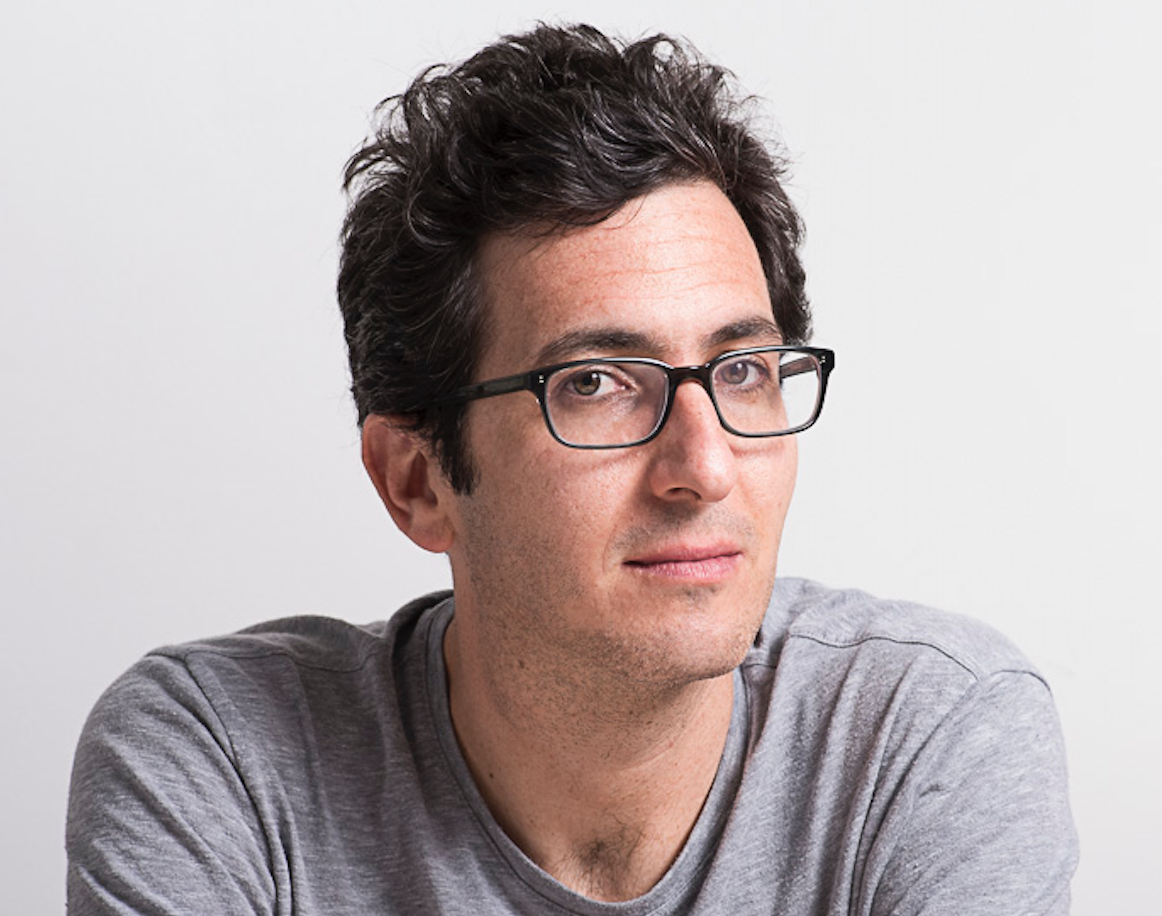
Amir Sadovnikمشاهده پروفایل
استادیار
- Computer Vision
- Machine Learning
- Deep Learning
- +۱۱ مورد دیگر
Amir Sadovnik is an Assistant Professor in the Min H. Kao Department of Electrical Engineering and Computer Science at the University of Tennessee, Knoxville. He holds a PhD in Electrical and Computer Engineering from Cornell University and a BEng from The Cooper Union. Previously, he served as an Assistant Professor at Lafayette College, where he focused on undergraduate education and curriculum innovation. His educational background includes: PhD in Electrical and Computer Engineering, Cornell University, 2014 BEng in Electrical and Computer Engineering, The Cooper Union, 2009 Amir Sadovnik's research lies at the intersection of computer vision, machine learning, and human-computer interaction, with a strong focus on human-centered problems. His work explores how humans perceive and interact with visual content, leading to research in emotion recognition, face similarity, fashion compatibility, blur detection, and reinforcement learning. He leverages deep neural networks to tackle subjective tasks that are challenging for machines but intuitive for humans. His research also extends into bioinformatics, where he applies machine learning to genome analysis and sequence similarity. The 15 most recent publications reflect a consistent trend in using deep learning for perception-driven tasks. These include emotion prediction, face and object similarity, adversarial robustness, and biomedical data analysis. His work often integrates attention mechanisms, U-Net architectures, and reinforcement learning frameworks, demonstrating a multidisciplinary approach across computer vision, signal processing, and computational biology. While no formal scientific awards are listed in the provided texts, his involvement in grant-funded projects, such as the NSF-funded 'CS for Appalachia' initiative, highlights recognition of his educational and research contributions. Amir Sadovnik is actively engaged in teaching and mentoring. He has taught graduate and undergraduate courses including ECE 517 (Reinforcement Learning), ECE 574 (Computer Vision), and COSC 525 (Deep Learning). He has also led curriculum redesign efforts to make computer science more inclusive, particularly through integrating digital humanities into introductory programming courses. His educational grants and projects emphasize interdisciplinary learning and real-world data applications. He is involved in a research-practice partnership (NSF Grant No. 1923509) aimed at bringing computer science education to K–12 schools in East Tennessee. He leads research projects such as Easy Visual Question Answering with Video and Counting, and developed the educational tool Code-A-Story to integrate computer science with literacy for elementary students. These projects reflect his commitment to both cutting-edge research and accessible, impactful education.