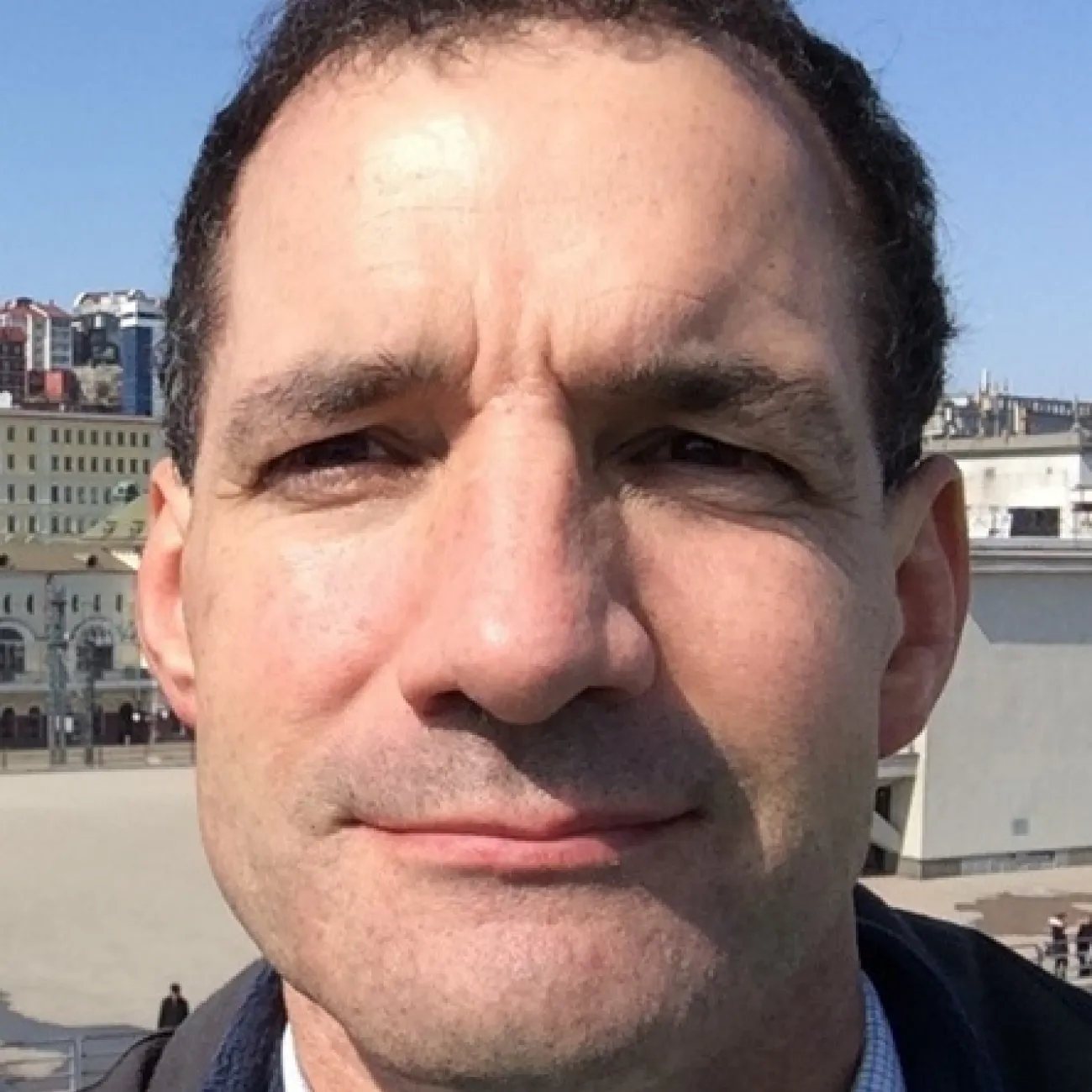
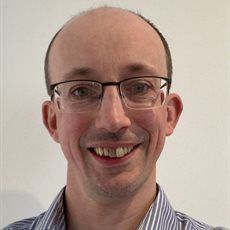
Professor Joel Smethurst holds the position of Professor of Geotechnical Infrastructure at the University of Southampton's Faculty of Engineering and Physical Sciences, where he also serves as Director of Programmes for Civil and Environmental Engineering. His research focuses on geotechnical infrastructure longevity under environmental and operational stresses, including climate change impacts on transportation earthworks and flood defenses. He completed his PhD in Geotechnical Engineering at Southampton in 2004, advancing through roles as Research Fellow, Lecturer, and Associate Professor before attaining his current rank. His educational leadership includes re-accreditation of undergraduate programs (2023-24) and integrating Engineering Council AHEP4 standards. Research has been funded by EPSRC and industry partners like Network Rail and National Highways. Notable projects include the EPSRC ACHILLES Programme Grant investigating weather-driven earthwork deterioration. Advancing geotechnical knowledge through field monitoring (e.g., 20-year slope data) and numerical modeling, his work bridges theory and practice. External roles include editorial board memberships and invited expert presentations on slope stabilization and climate effects.
Ming Lu is a Professor in the Department of Civil and Environmental Engineering at the University of Alberta, Faculty of Engineering. Specializing in Construction Engineering and Management (CEM), he leads the Construction Automation Lab (AutoLab) since 2010, focusing on integration, automation, and optimization in construction. Dr. Lu holds professional engineering licensure (PEng) in Alberta and has extensive academic experience across Canada, Hong Kong, and China. PhD in Civil Engineering (University of Alberta, 2000) B.Eng. in Road & Traffic Engineering (Tongji University, 1994) His research spans Construction Automation , Project Scheduling , and Resource Optimization , with over 150 publications in top journals. Recent work emphasizes model trees , time-window constraints , and labor cost regression . Publications appear in Automation in Construction , Journal of Computing in Civil Engineering , and ASCE Journal of Construction Engineering and Management . Notable awards include the 2022/23 CSCE Stephen G. Revay Award , Fiatech STAR Award (2013) , and multiple Best Paper Awards from ASCE. His software tools like SDESA and S3 revolutionized construction simulation and resource-constrained scheduling. Dr. Lu supervised numerous graduate students in projects involving BIM applications , earthwork optimization , and steel fabrication scheduling . He developed key courses like CIV E 406 (Construction Estimating) and CIV E 607 (Productivity Modeling), integrating simulation-based learning into construction education.
Dr. Yuhan Jiang is an Assistant Professor in the Department of Built Environment at North Carolina A&T State University's College of Science and Technology. He serves as the Founding Director of the HUD Center of Excellence for Innovation in Affordable Housing and Sustainable Communities (CIAHSC). Dr. Jiang leads a multidisciplinary research team focused on integrating robotics, artificial intelligence, and Building Information Modeling in construction operations and infrastructure management. Ph.D. in Civil Engineering from Marquette University M.M. in Construction Management from Guangzhou University Additional Construction Management degree from Guangzhou University Dr. Jiang's research primarily focuses on artificial intelligence applications in architecture, engineering, construction, and operations (AECO). His work integrates robotics and remote sensing for data collection, computer vision and machine learning for data processing, and BIM, GIS, and AR/VR for data visualization. His research enables more efficient construction operations, building inspection, and infrastructure management. Additionally, he has extensive experience in community redevelopment planning and complex systems simulation, including investigating urban village formation mechanisms. Analysis of Dr. Jiang's recent publications reveals a strong focus on applying drone technology, computer vision, and deep learning to construction and infrastructure challenges. His work spans multiple domains including façade modeling, pavement evaluation, sidewalk inspection, earthwork calculation, and 3D reconstruction. A consistent theme across his research is the development of automated systems that improve efficiency, accuracy, and safety in construction and infrastructure management through AI and robotics. N.C. A&T and CoST Junior Faculty Teaching Excellence Award 2024-25 N.C. A&T and CoST Rookie Researcher of the Year Award 2024 ASCE Journal of Architectural Engineering Best Paper Award 2022 ASCE CI & CRC Joint Conference Best Paper Award 2024 AAAS HBCU Making and Innovation Showcase 1st Place 2024 CoST SciTech Week Innovation Challenge awards (2023-2025) N.C. A&T Provost's Faculty Fellow (2023 & 2024) Dr. Jiang has successfully secured over $4.5 million in research funding as PI or Co-PI, including a $2.5 million HUD Center of Excellence grant. He has mentored students who won 1st and 3rd place in the 2023 & 2024 Sci-Tech Week Innovation Challenge competitions and 1st place at the 2024 AAAS HBCU Making and Innovation Showcase. His funded projects span AI-driven BIM education tools, smart farming with robotics, drone-based façade modeling, and digital twin applications for infrastructure management. As Founding Director of the HUD Center of Excellence for Innovation in Affordable Housing and Sustainable Communities (CIAHSC), Dr. Jiang leads a multidisciplinary team focused on innovative approaches to affordable housing and sustainable community development. His lab work integrates drone technology, computer vision, and AI to create practical solutions for real-world construction and infrastructure challenges.
David A. Randall is a Professor in the Department of Atmospheric Science at Colorado State University, where he leads the Randall Group research team. His work focuses on advancing climate modeling techniques, particularly through superparameterization approaches and high-resolution simulations. He maintains active research projects in atmospheric dynamics, cloud physics, and tropical meteorology. Randall's research explores fundamental atmospheric processes including convective organization, cloud-radiative interactions, and climate system predictability. His recent work emphasizes tropical phenomena like the Madden-Julian Oscillation and tropical cyclones, with significant contributions to understanding climate change impacts on these systems. The Randall Group develops and utilizes advanced modeling frameworks like EarthWorks and participates in major community modeling efforts including the Community Earth System Model (CESM). He currently advises graduate students including Andrew Feder, Ann Casey Hughes, and Michael Needham. The Randall Group operates computational resources for large-scale climate simulations and maintains collaborative relationships with national laboratories and international research initiatives.
Dr. Michael Charles is an Assistant Professor in the Department of Biological and Environmental Engineering at Cornell University, holding affiliate status in the American Indian and Indigenous Studies Program (AIISP) and serving as a Faculty Fellow at the Cornell Atkinson Center for Sustainability. He is also a Cornell Provost’s New Faculty Fellow (2024) and an Engaged Faculty Fellow (2024). His research focuses on computational sustainability frameworks, integrating dynamic ecological models with community-centered approaches, particularly through partnerships with Indigenous nations. He advocates for Indigenous rights in UN climate negotiations and emphasizes reciprocity and balance in environmental engineering. Charles earned his B.S. in Chemical and Biomolecular Engineering (CBE) from Cornell University and his M.S. and Ph.D. in CBE from The Ohio State University. His postdoctoral work at the Newark Earthworks Center analyzed historical ties between Land Grant Universities and Indigenous dispossession. His lab collaborates on projects such as the NORDvik database in Nunavik and participatory system dynamics modeling to address food systems inequities. He advises graduate students Lesedi Kgatla, Parsa Khayatzadeh, and Ashira Mawji, along with undergraduate researchers Pranati Patnam, Peter Thais, and Jeffrey Wang. Key research themes include spatially explicit nature-based solutions, ecosystem services for public health and well-being, and re-evaluating computing’s sustainability via the Food-Energy-Water nexus. His work bridges institutional science with Indigenous knowledge systems, aiming to transform policy and practice through actionable research. Notable awards include the 2025 Community-Engaged Practice and Innovation Award for his impactful collaborations. Advising and advocacy efforts span mentoring Indigenous STEM students and advancing equity in food systems through initiatives like the Chicago convening on racism in food systems. His lab’s partnerships with Attaniuvik, Laval University, and other institutions exemplify his commitment to community-driven science. Future work involves expanding NORDvik’s consultation workshops and deepening system dynamics models that center racial equity in environmental decision-making.
Dr. John Armstrong is a Senior Research Fellow in Engineering Economics at the University of Southampton. He specializes in railway engineering, transportation economics, and infrastructure management. His research focuses on optimizing railway systems, whole-life cost analysis of assets, and adapting infrastructure to climate change impacts. He currently teaches the Capacity, Timetabling, and Traffic Management components of the CENV3065 module. His research projects include the ACHILLES program (EPSRC-funded), analyzing railway earthworks maintenance under uncertainty, and the In2Track2 project (EU-funded), evaluating novel railway track forms. He has collaborated with industry partners like Arup and Jacobs, contributing to operational philosophy development for UK railways. Key research themes include asset lifecycle economics, timetable performance analysis, and geospatial networks of historical rail services. His work bridges engineering, economics, and environmental sustainability, addressing both technical and policy challenges in transportation systems. Current supervision includes PhD student Weiqi Wang in Engineering and the Environment. His expertise spans over 20 years in railway operations, data assurance, and transport planning, with notable contributions to noise/vibration mitigation strategies and highway economic assessments.
Simon Smith is a Reader and Director of Discipline for Civil and Environmental Engineering at the University of Edinburgh's School of Engineering. A Fellow of the Institution of Civil Engineers and Chartered Engineer, his research focuses on construction safety, earthworks, and infrastructure management. Smith investigates safety management systems, risk perception, and cost-safety dynamics in construction. His recent work employs data analytics, NLP, and 3D modeling to improve operational safety and efficiency. Research spans forensic engineering, process optimization, and organizational learning from failures. Smith's publication trends show progression toward digital construction technologies, with increasing focus on machine learning applications for safety analysis and real-time operational systems.
Dr. Yong Bai is the McShane Chair and Professor in the Department of Civil, Construction and Environmental Engineering at Marquette University. Holding a Ph.D. from North Carolina State University, he specializes in construction engineering and management, with a focus on emerging technologies like drones and deep learning for infrastructure maintenance. Ph.D., Civil/Construction Engineering, North Carolina State University M.S., Civil/Construction Engineering, Clemson University Bachelor of Engineering, Civil Engineering, Tsinghua University His research bridges construction operations efficiency , work zone safety , and AI-driven infrastructure assessment . Recent work includes automated façade modeling and sidewalk defect detection using drone imagery and convolutional neural networks. His publications (2018–2023) emphasize drone-based 3D reconstruction , real-time productivity measurement , and sustainable construction practices . Key awards include the ASCE Best Paper (2022) and Editor’s Choice recognition. NSF I-Corps grant for drone-AI façade modeling $1M HUD grant for workforce training (2025–2027) Collaborations with University of Kansas and NC A&T He mentors advisees like Yuhan Jiang and Sisi Han, contributing to student-led publications. Contact: yong.bai@marquette.edu
Ivica Papa is an Associate Professor at the University of Zagreb's Faculty of Forestry and Wood Technology, specializing in Forest Road Planning, Maintenance Optimization, and Sustainable Forestry Infrastructure. He holds a PhD and has been affiliated with the university since 2008, progressing from Assistant to Senior Assistant before becoming Associate Professor in 2019. His research focuses on improving forest accessibility through advanced technologies like UAV surveys, GIS tools, and precision measurement techniques. Key interests include soil disturbance mitigation, machinery-induced environmental impacts, and multi-purpose infrastructure design for mountainous regions. He has contributed to over 50 publications since 2007, addressing challenges in forest road construction, bark beetle management, and post-disaster timber recovery. Professor Papa teaches courses in Forest Roads in Protected Areas and advises on forestry operations in steep terrains. His recent work emphasizes integrating modern data collection methods with traditional forestry practices to enhance sustainability and efficiency. He maintains active participation in international forestry networks like FORMEC and collaborates on strategic planning projects for Croatia's forest road networks. Professional experience includes roles in optimizing primary forest road networks, assessing soil conditions for harvesting operations, and evaluating the environmental impact of mechanized logging systems. His research bridges technical innovation with ecological preservation, particularly in sensitive landscapes.
Erik Kjems is a Part-time Lecturer in the Department of the Built Environment at Aalborg University’s Faculty of Engineering and Science. His work bridges civil engineering and digital innovation, focusing on the integration of advanced technologies into infrastructure planning and management. University: Aalborg University School: Faculty of Engineering and Science Department: Department of the Built Environment Position: Part-time Lecturer Email: kjems@build.aau.dk ORCID: 0000-0002-4519-6583 His research interests are centered around digital transformation in civil infrastructure, including augmented and virtual reality (AR/VR), 3D city modeling, BIM, reality capture, data fusion, blockchain applications, and intelligent transport systems. He explores how digital tools can improve decision-making, safety, and efficiency in road and utility projects. The most recent publications (2021–2024) reflect a strong trend toward practical applications of AR/VR in subsurface utility visualization, digital twins, permeable pavement materials, and data integration for infrastructure. These works emphasize field deployment, user interaction, and reconciliation of heterogeneous data sources. His research combines technical innovation with real-world validation through collaboration with utility companies and public agencies. Erik Kjems has participated in multiple research projects, including BLING: Blockchain in Government and Integrated Project Development for Road Infrastructure Education , demonstrating sustained engagement in funded research. He has also contributed to public discourse through media appearances on road pricing and digitalization in transportation. He has supervised at least one PhD student and is actively involved in academic and professional networks. His activities include participation in workshops, conferences (e.g., buildingSMART International Standards Summit), and seminars focused on digital infrastructure and BIM. Notable labs or collaborative environments include involvement in the 3D Visual Data Mining (3DVDM) project and the Videncenter for 3D GeoInformation , indicating long-standing expertise in geospatial visualization and digital modeling.
Professor Simon Blainey is a Professor of Sustainable Transport and incoming Director of the Birmingham Centre for Railway Research and Education (BCRRE) from July 2025. He holds roles at the University of Birmingham's School of Engineering and Department of Civil Engineering. Previously, he worked at the University of Southampton as Head of the Transportation Research Group (TRG). His expertise spans rail transport systems, GIS-based modelling, and sustainable transport policy. Education: PhD in Transport Geography (University of Southampton, 2010) MSc in Transport (Imperial College London & UCL, 2006) BA (Hons) in Geography (University of Oxford, 2005) Research Interests: Simon focuses on the interdependencies between transport systems and societal/environmental factors. Key areas include rail demand modelling, GIS applications in transport, decision support systems for resilient infrastructure, and climate policy integration. His work emphasizes practical policy impact through collaboration with stakeholders. Key Projects: RATIN: Ordnance Survey-funded active travel network datasets (2022–2024) FCDO-funded decision support systems for low-income countries' transport networks (2020–2023) Awards & Memberships: Smeed Prize (2009) Fellow, Royal Geographical Society (FRGS) Member, Chartered Institution of Highways and Transportation (MCIHT) Editor-in-Chief, Transportation Planning and Technology Professional Roles: Member of the Department for Transport’s College of Experts Adviser to the House of Lords Built Environment Committee (2022) Editorial Board Member, Journal of Transport Geography Labs/Teams: Leads the BCRRE, a multidisciplinary center advancing railway innovation. Active in railway operations management education and supervises postgraduate students in sustainable transport topics.
Hung Phan is an Associate Professor and Graduate Coordinator in the Department of Mathematics and Statistics at the University of Massachusetts Lowell (UML). He holds a Ph.D. in Mathematics from Wayne State University (2011) and a B.S. in Mathematics from Can Tho University, Vietnam. His research focuses on mathematical optimization, operations research, variational analysis, and convex analysis, with applications in algorithm design and computational mathematics. He has received grants including a KCS Seed Grant and support from Autodesk, Inc. His work spans optimization algorithms, projection methods, and convex analysis, with notable contributions to Douglas-Rachford splitting, adaptive algorithms, and variational inequalities. He has co-authored patents on triangular mesh optimization and earthwork volume minimization. His teaching responsibilities include courses such as Optimization (MATH 5720), Numerical Analysis (MATH 3620), and Computational Mathematics (MATH 5630). Key research interests include: optimization algorithms, convex and nonconvex feasibility problems, projection-based methods, and applications in engineering and data science. His research has been published in leading journals like SIAM Journal on Optimization and Mathematical Programming.
Dr. Jaspreet Pooni is a Lecturer in the School of Engineering at RMIT University, located at the City Campus in Australia. Their research focuses on sustainable infrastructure solutions, particularly in road pavement engineering, soil stabilization, and the utilization of recycled materials. Key areas of interest include the application of non-standard materials, fly ash stabilization, and enzyme-based treatments for expansive soils. Dr. Pooni’s recent work emphasizes moisture management in unsealed road pavements and the development of eco-friendly stabilization techniques. Their research often bridges civil engineering and environmental science, addressing challenges such as material durability, climate adaptation, and waste reduction in construction. They are currently supervising a research project titled Predicting the vulnerability of road pavements subjected to landslides , scheduled to conclude in February 2025. Despite no explicitly listed academic awards, their contributions to sustainable construction materials have likely influenced regional and global practices in pavement engineering. Labs/teams: No specific lab or team affiliations are mentioned in the provided text.
Dr. Julio Martinez is a Professor of Civil Engineering at Purdue University's College of Engineering. His research focuses on advanced simulation techniques, 3D visualization for construction processes, and optimization of earthwork operations. He has pioneered methodologies for integrating discrete-event simulation with virtual reality and augmented reality technologies to enhance construction planning and risk management. His work emphasizes sustainable construction practices, dynamic resource allocation, and real-time user interaction in simulation systems. Notable contributions include developing the STROBOSCOPE simulation framework and the VITASCOPE visualization toolkit. He has authored over 50 papers on topics ranging from stochastic modeling to scalable scene rendering algorithms. Dr. Martinez’s research bridges engineering and computer science, applying cutting-edge visualization techniques to traditional construction challenges. His recent work explores the integration of wireless communication simulations in earthmoving operations and the validation of complex construction models through immersive visualizations. His publications consistently address practical construction scenarios, with a focus on improving operational efficiency and safety through advanced modeling and simulation approaches. Current research trends include enhancing simulation scalability, improving 3D animation realism, and applying simulation for sustainable infrastructure development.
Mehmet SAVSAR is a Professor at Uskudar University , with a career spanning multiple institutions including Kuwait University, King Saud University, and Pennsylvania State University. His work focuses on industrial engineering, optimization modeling, and simulation analysis across diverse sectors. Current roles: Head of Department (Industrial Engineering) at Uskudar University (2020–2025), Head of Department (Engineering Management) (2021–2025) Education BSc Forest Industry Engineering, Karadeniz Technical University (1975) MSc Industrial Engineering, Pennsylvania State University (1978) PhD Industrial Engineering, Pennsylvania State University (1982) Research Interests Mehmet’s research bridges operations research , simulation modeling , and optimization in industrial and healthcare contexts. His recent work includes AI-driven traffic signal optimization, waste minimization in manufacturing, and lean strategies for battery recycling. Publications highlight applications of linear programming , probabilistic networks , and Markov chain analysis . Scientific Contributions Spanning 2020–2025, his 15 most recent works cover topics from surgical scheduling to urban mobility, emphasizing cross-disciplinary solutions. Key trends include smart city infrastructure , sustainable manufacturing , and data-driven decision-making . Awards Best Paper Award, International Conference on Industrial Engineering and Operations Management (IEOM) 2020 Teaching & Projects Recent courses include Engineering System Simulation , Advanced Quality Control , and Graduation Thesis supervision. He has led projects in facility layout design, warehouse optimization, and healthcare operations.