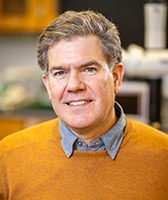
Dr. Jung-Fu Lin is a Professor of Earth and Planetary Sciences at the Jackson School of Geosciences, University of Texas at Austin, holding the Dave P. Carlton Centennial Professorship. His research focuses on understanding planetary interiors through high-pressure experiments, particularly using diamond anvil cells and synchrotron facilities. Key areas include mineral physics, Earth's core dynamics, and the role of water in mantle processes. Expertise: High-pressure mineral physics, X-ray spectroscopy, and planetary materials science. Current projects: Investigating iron alloys in Earth's core, thermal conductivity of mantle minerals, and carbon storage mechanisms. Research highlights include discoveries on iron spin transitions, elasticity of bridgmanite, and Martian core dynamics. Awards include the NSF CAREER Award and Fulbright Scholarship. Lin supervises graduate students in experimental petrology and mentors postdocs globally. Teaches courses on Earth materials and mineral physics. Active in international collaborations, including with Okayama University (Japan) and Adam Mickiewicz University (Poland). His lab develops advanced laser heating systems and Raman spectroscopy tools for high-pressure studies.
Jeroen Tromp serves as the Blair Professor of Geology and Professor of Geosciences and Applied and Computational Mathematics at Princeton University, where he also directs the Princeton Institute for Computational Science and Engineering (PICSciE). His work centers on theoretical and computational seismology with applications across Earth and planetary sciences. His research interests focus on imaging Earth's interior through advanced computational techniques. Key areas include surface waves, free oscillations, body waves, seismic tomography, numerical simulations of 3-D wave propagation, and seismic hazard assessment. His group develops open-source software for acoustic, elastic and poroelastic wave propagation, addressing problems in exploration geophysics, regional and global seismology, and helioseismology. Current research trends show strong emphasis on Mars seismology (InSight mission), iron spin crossover in the lower mantle, tilted transverse isotropy in Earth's inner core, and crosstalk-free waveform inversion techniques across multiple scales. Tromp actively mentors graduate students and leads collaborative projects involving seismic wavefield imaging across planetary bodies. His group maintains strong connections with NASA's InSight mission and develops computational frameworks for global centroid moment tensor inversions. The research team operates within the Department of Geosciences, leveraging high-performance computing resources through PICSciE to tackle large-scale inverse problems in seismology.
Peter Shearer is a Professor of Geophysics at the Institute of Geophysics and Planetary Physics , affiliated with the Scripps Institution of Oceanography at the University of California, San Diego. His research focuses on observational seismology, mantle discontinuities, earthquake location methods, source properties, and seismicity patterns. Education: B.S. in Geology and Geophysics, Yale University (1978) Ph.D. in Geophysics, UCSD Scripps Institution (1986) Research Interests Shearer's work uses large seismic datasets to study Earth's interior structure, particularly mantle transition zones, lithospheric discontinuities, and earthquake triggering mechanisms. His methods include waveform cross-correlation relocation, SS precursor analysis, and seismic wave scattering studies. Scientific Contributions His publications span 40+ years, with recent works analyzing aftershock migration, mantle discontinuities, and fault weakening. Key themes include Global mantle imaging using teleseismic data High-resolution fault zone seismicity Deep Earth structure from scattered waves Scientific Awards AGU Fellow (1999) SIO Outstanding Teaching Award (2003) Lehmann Medal (AGU, 2020) National Academy of Sciences member (2009)
Sanne Cottaar is a researcher at the Department of Earth Sciences, University of Cambridge, specializing in seismology and deep Earth structure. Her work integrates seismic waveform analysis, mineral physics, and geodynamic modeling to investigate mantle plumes, ultra-low velocity zones (ULVZs), and core-mantle boundary dynamics. Key research areas include: Seismic imaging of deep Earth heterogeneity Core-mantle boundary and mantle transition zone structure Multidisciplinary approaches with mineral physics and geodynamics Development of seismic tools like BurnMan for thermodynamic modeling Public engagement through educational initiatives such as Deep Earth Explorers Her recent publications focus on mapping ULVZs using Sdiff and Pdiff waves, resolving mantle plume origins, and benchmarking seismic methods against geodynamic constraints. She actively supervises doctoral projects in seismology and deep Earth dynamics.
Prof. Dr. Arwen Deuss is a full Professor at the Faculty of Geosciences, Utrecht University , specializing in Seismology . Her research focuses on mapping Earth's deep interior using global seismology, with particular emphasis on mantle discontinuities, core structure, and whole Earth oscillations. She integrates seismological data with mineral physics, geodynamic modeling, and geochemistry to understand planetary evolution. Key research areas: Earth's Deep Interior, Global Seismology, Mantle Discontinuities, Inner Core Anisotropy Teaches courses in Theoretical Seismology, Earth Systems, and Planetary Interior Structure Developed open-source tools like FrosPy for normal mode analysis Her recent work explores 3D mantle attenuation, tilted transverse isotropy in the inner core, and seismic wave coupling. She leads projects connecting seismic tomography with geodynamic processes and maintains active collaborations in international seismological research.
David Al-Attar is a Professor at the University of Cambridge's Department of Earth Sciences, actively involved in theoretical and computational geophysics research. He serves as a supervisor within the Cambridge NERC Doctoral Landscape Awards (Training Partnerships) program, particularly in the CREATES initiative focusing on climate and environmental science. Education: While specific educational details aren't provided in the text, his extensive publication record and professorial position at Cambridge indicate advanced training in geophysics and applied mathematics. Research Interests: Professor Al-Attar's work spans several interconnected areas within geophysics. His primary focus includes theoretical and computational problems in geophysics, with particular emphasis on continuum mechanics as applied to Earth systems. He develops new physical and mathematical theories for understanding Earth processes, including rigorous function space methods for inverse problems and uncertainty quantification. His sea level change research aims to constrain ice sheet evolution during the last glacial period to better understand modern contributions to sea level rise. Additionally, he investigates solid Earth dynamics including seismic free oscillations, body tides, and Earth rotation, contributing to our understanding of deep Earth structure and mantle dynamics. Research Themes: His publications demonstrate expertise in adjoint methods, glacial isostatic adjustment, mantle viscosity, planetary seismology, and computational methods for geophysical problems. Recent work emphasizes 3-D Earth modeling, sensitivity analysis, and the integration of satellite observations with theoretical models. Current Projects: Potential projects for students include inverse problems related to deglacial sea level change with focus on uncertainty quantification, modern sea level monitoring using satellite data, and solid Earth dynamics particularly regarding outer core viscosity in tidal and rotational dynamics. Contact: He can be reached at da380@cam.ac.uk for research inquiries and collaboration opportunities.
Gabi Laske is a Professor at the Institute of Geophysics and Planetary Physics (IGPP), Scripps Institution of Oceanography (SIO), University of California, San Diego (UCSD). She is a leading researcher in seismology and geophysics, with a focus on Earth's internal structure, crustal and mantle modeling, and ocean-bottom seismology. Her work has significantly advanced global crustal models, including CRUST5.1, CRUST2.0, and CRUST1.0. Her research interests include seismology, geophysics, Earth's internal structure, surface wave tomography, normal mode analysis, crustal and lithospheric modeling, ocean bottom seismology, mantle plumes, inner core rotation, ambient noise seismology, and earthquake signal processing. She has led major projects such as the Hawaiian PLUME and SWELL experiments, utilizing ocean-bottom seismometers to study mantle dynamics and lithospheric rejuvenation. Her work on inner core differential rotation, particularly with Guy Masters, has been published in top journals like Nature and Science . The 15 most recent publications reflect a strong trend in ocean-bottom seismology, ambient noise analysis, instrument calibration, seismic signal quality, and imaging of crustal and mantle structure. Her work combines observational seismology with advanced signal processing and modeling techniques, often in collaboration with students and international teams. She has made significant contributions to understanding seismic anisotropy, normal modes, and the structure of volcanic and tectonic regions. Funded by NSF (OCE, EAR, CSEDI, MG&G) Collaborative projects with USGS, international institutions Advisor to PhD students, including Adrian Doran Lead developer of DLOPy for OBS orientation Contributor to global reference models (CRUST1.0, LITHO1.0) Gabi Laske has made enduring contributions to geophysics through her development of global crustal models, leadership in major seismic experiments, and mentorship of the next generation of seismologists. Her work continues to shape our understanding of Earth's deep interior and surface processes.
Dr. Thanh-Son Pham is an ARC DECRA Research Fellow in the Geophysics Department at The Australian National University’s Research School of Earth Sciences. His research focuses on using seismic waves to study Earth’s interior structures, from polar ice sheets to the inner core. He has pioneered methods like teleseismic P-wave coda autocorrelation and coda correlation wavefield analysis, leading to breakthroughs such as detecting J-waves in the inner core and identifying an innermost inner core layer. His work has been featured in Science , Nature Communications , and international media. He holds a PhD from ANU (2019) and has supervised research projects on Antarctic seismology and earthquake source physics. Awards include the 2024 Zatman lectureship from SEDI. Current projects include probing Antarctic ice sheets via correlation seismology and advancing machine learning tools for deep Earth studies. Education: PhD in Geophysics (ANU, 2019), Graduate Diploma in Earth System Physics (ICTP, 2015), BSc in Applied Mathematics (Hanoi University, 2013) Research interests span seismic source inversion, Antarctic ice dynamics, and inner core anisotropy. His 2024 articles address Hunga Tonga eruption mechanics and PKIKP wave analysis using deep learning. Media highlights include BBC, NYT, and ANU press releases.
Keith D. Koper is a Professor in the Department of Geology & Geophysics at the University of Utah and serves as Director of the University of Utah Seismograph Stations (UUSS). He is also the editor-in-chief of The Seismic Record . His work integrates academic research with operational seismic monitoring and public safety initiatives across Utah and the Intermountain West. Education: PhD in Geophysics, Washington University, 1998 BA in Math, Geology, and ISP, Northwestern University, 1993 Dr. Koper's research focuses on array seismology, forensic seismology, deep Earth structure (especially the inner core), earthquake rupture imaging, ambient seismic noise, and seismic hazards in the Intermountain West, including mining-induced and urban earthquakes. His work combines observational seismology with advanced signal processing and machine learning techniques to improve detection, discrimination, and imaging capabilities. He has led or contributed to major projects involving the Wasatch Front, Yellowstone, and regional seismic networks. His recent research emphasizes machine learning for earthquake detection, high-resolution relocation of aftershock sequences (e.g., Magna 2020, Bluffdale 2019), microseism generation in lakes, and fine-scale imaging of the Earth's inner core using seismic reflections. His studies often involve interdisciplinary collaboration, particularly with mining engineering and geodesy. Dr. Koper's research has been consistently funded by federal and state agencies, including the National Science Foundation (NSF), U.S. Geological Survey (USGS), Department of Energy (DOE), Air Force Research Laboratory (AFRL), and the Utah Department of Public Safety. His publications reflect a strong trend toward integrating computational methods with traditional seismological analysis to tackle complex problems in both natural and induced seismicity. Scientific Service and Leadership: Editor-in-Chief, The Seismic Record Director, University of Utah Seismograph Stations Secretary, U.S. Air Force Seismic Review Panel Former Chair and Vice-Chair, Utah Seismic Safety Commission Dr. Koper mentors graduate students in seismology and geophysics, including recent advisees Sean Hutchings and Alysha Armstrong. His research group actively engages in both fundamental and applied seismological research, with strong ties to national labs such as Sandia. The group is involved in deploying portable seismic arrays, analyzing large datasets, and developing new algorithms for event detection and classification. The University of Utah Seismograph Stations, under his leadership, plays a critical role in monitoring seismicity in Utah and Yellowstone, producing real-time earthquake information, ShakeMaps, and public outreach materials. The station also contributes to national and international efforts in nuclear test monitoring and volcanic hazard assessment.
Dr. Peter L. Olson is a Research Professor at Johns Hopkins University's Department of Earth and Planetary Sciences. His research examines Earth's deep interior dynamics including core-mantle interactions, geomagnetic field generation, and planetary evolution processes. Research Focus: Combines theoretical models, numerical simulations, and laboratory experiments to study core dynamics, geodynamo processes, and mantle convection. Current investigations include the slow carbon cycle and polar ice shelf dynamics through interdisciplinary collaborations. Publications: Recent work explores geomagnetic reversal mechanisms, core-mantle boundary interactions, and planetary dynamo diversity using advanced computational models and fluid dynamics experiments. Education: Ph.D. from University of California, Berkeley
Joachim Ritter is apl. Professor of Geophysics at the Karlsruhe Institute of Technology (KIT) , Geophysical Institute (GPI). He has been with KIT since 2002, after completing his habilitation at the University of Göttingen. His research integrates experimental seismology with field experiments across Europe and Africa. Education Diplom in Geophysics, University of Karlsruhe (TH), 1985–1991 Doctorate (Dr. rer. nat.), Faculty of Physics, University of Karlsruhe, 1996 Habilitation, Faculty of Physics, University of Göttingen, 2002 Research Interests Ritter’s work spans experimental seismology , seismic tomography , seismic anisotropy , and induced seismicity . He operates mobile broadband arrays to image Earth’s interior, studies deformation in the mantle and lithosphere, and monitors volcanic regions such as the Eifel volcanic field and the East African Rift. Additional foci include wind-turbine-induced ground motion and urban seismology . Publication Trends Recent publications (2022–2025) concentrate on volcano-seismic monitoring in Germany and Greece, wind-energy seismic emissions , shear-wave splitting beneath Central Europe, and fault imaging of active tectonic zones. The breadth reflects both methodological advances and targeted regional studies. Scientific Awards 2017 Faculty Teaching Award, KIT Advising & Committees Ritter has supervised numerous master theses and PhD projects, and he leads the KArlsruhe BroadBand Array (KABBA). He has served on national and international committees including the European Seismological Commission, AlpArray Science Council, and the German Geophysical Society Board. Labs & Teams He heads the Working Group on Analysis of Wind Turbines and previously acted as Spokesperson for the KIT Competence Field "Geosphere and Risk Management". His team operates dense seismological networks across Germany and Europe.
Michael Thorne is an Associate Professor in the Department of Geology & Geophysics at the University of Utah, where he has been faculty since July 2014. His research focuses on using seismology to investigate Earth's structure, with specialization in mapping seismic structure of the deep mantle and developing numerical techniques for seismic wave propagation modeling. He teaches courses in geophysics, the dynamic Earth, and seismology. Dr. Thorne's educational background includes: B.S. in Physics from Indiana University Bloomington (1991-1996) Ph.D. in Geological Sciences from Arizona State University (2000-2005) His primary research interests span global seismic wave propagation, Earth's deep interior structure, and the dynamics of the core-mantle boundary region. Dr. Thorne specializes in studying ultra-low velocity zones (ULVZs), D" discontinuity structure, and seismic array processing techniques. His work combines advanced waveform modeling with seismic observations to understand Earth's deep structure and dynamics, including connections between deep mantle features and surface geology. Dr. Thorne's recent publications demonstrate a consistent focus on ultra-low velocity zones at the core-mantle boundary, with increasing sophistication in modeling techniques. His work has evolved from basic detection of ULVZs to detailed characterization of their morphology, elastic properties, and potential origins. Recent papers incorporate advanced Bayesian inversion methods and multidimensional modeling to better understand these enigmatic features and their implications for Earth's thermal and chemical evolution. Dr. Thorne actively mentors graduate students through thesis research courses and has secured numerous research grants to support his work. His current projects include: "Mapping the Lateral Variability of Groundwater Input into the Great Salt Lake Using Electrical Methods" (2024-2025) "NSFGEO-NERC: Advancing Capabilities to Model Ultra-Low Velocity Zone Properties Through Full Waveform Bayesian Inversion" (2024-2027) "The Future of Glaciers Using a Novel, Interdisciplinary Approach" (2024-2026) "Global Search for D Discontinuity Structure" (2022-2026) His research group utilizes advanced computational methods and collaborates with institutions worldwide to investigate Earth's deep interior structure using seismic observations and modeling.
Steven Jacobsen is a Professor of Earth and Planetary Sciences at Northwestern University’s Weinberg College of Arts & Sciences. He holds a Ph.D. in Geophysics, M.S. in Geology, and B.A. in Geology from the University of Colorado. His research focuses on high-pressure mineral physics, exploring the properties of materials under extreme conditions to understand Earth’s interior and develop novel energy and construction materials. Jacobsen leads studies on water cycling in the mantle, hydrous minerals, and planetary materials science, utilizing advanced facilities like the Advanced Photon Source and Sandia National Laboratories’ Z machine. He serves as Director of Graduate Recruitment, shaping the department’s graduate program. Research interests include mineral elasticity, phase transitions, and applications in geophysical and planetary contexts. Notable projects involve electrodeposition for marine construction and NASA collaborations for off-world regolith utilization. Jacobsen’s work bridges fundamental science and practical innovation, addressing low-carbon technologies and planetary exploration. His recent publications highlight advancements in ferropericlase inclusions, superdeep diamonds, and tunable materials. Collaborations with industry and space agencies underscore his interdisciplinary impact.
Dr. Oliver Plümper is an active researcher at Utrecht University's Faculty of Geosciences, specifically within the Earth Sciences department and the Structural Geology & Electron Microscopy group. His work spans multiple disciplines at the intersection of geology, chemistry, physics, and materials science, with a particular focus on understanding processes occurring at the nanoscale that influence large-scale geological phenomena. Plümper's research interests center around fluid-rock/mineral interaction, nano(geo)sciences, mineral physics, and rock deformation. He employs a multi-faceted approach that combines natural observations, experimental techniques, micro and nano-analytics, and numerical modeling to address fundamental questions in Earth sciences. His work particularly emphasizes how nanoscale processes in the Earth's interior can influence large-scale geological structures and phenomena, including mountain building, earthquake generation, and the carbon cycle. His current research portfolio includes several major projects: the ERC Starting grant 'nanoEARTH' investigating mineral-water interactions deep within the Earth; the Dutch Research Council Vidi project 'RELEASE' studying carbon cycling in subduction zones; the EU INFRAIA project 'EXCITE NETWORK' as co-Principal Investigator supporting access to advanced imaging facilities; the UIO-UU project 'serpAI' using artificial intelligence to study mantle rock alteration; and the UU-NIOZ project 'I-NANO' examining iron nanoparticles' effects on ocean biogeochemistry. These projects collectively demonstrate his focus on understanding how nanoscale processes influence planetary-scale phenomena. Plümper is a strong advocate for open science and transdisciplinary research, leading a diverse team of scientists from earth sciences, chemical engineering, mathematics, physics, and chemistry. He actively contributes to the Utrecht University Electron Microscopy Center and is involved in multiple initiatives promoting open access to analytical facilities. His collaborative approach is evident in his extensive publication record across high-impact journals including Nature Geoscience, PNAS, and Geology, with research spanning from fundamental mineral physics to applications in geothermal energy, raw material extraction, and carbon storage.
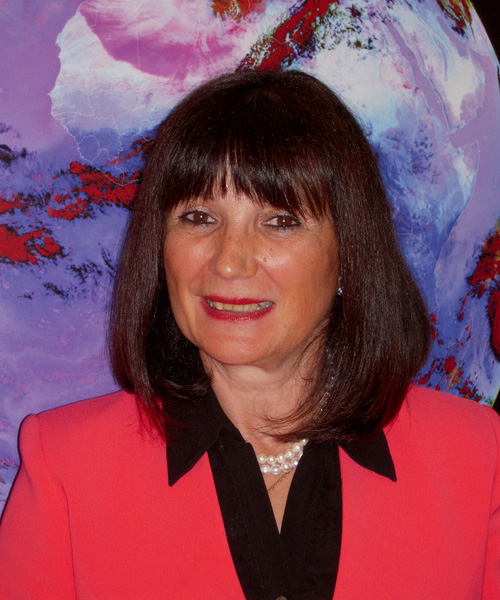
Mioara Mandea is a distinguished geophysicist currently serving as Solid Earth Programmes Manager at the French Space Center (CNES) in Paris since 2011. She maintains strong academic affiliations with Sorbonne University through her long-standing association with the Institut de Physique du Globe de Paris (IPGP), where she held multiple research positions from 1991-2011 including Head of the National Magnetic Observatory (1994-2004). Her career also includes leadership roles at the European Center for the Arctic at Versailles University and the Helmholtz Center in Potsdam. Her educational background includes dual PhDs in Geophysics (1993 from Bucharest University and 1996 from IPGP) followed by an HDR (Habilitation à diriger les recherches) in Physics of the Earth from Université Paris VII in 2001. This highest French academic qualification authorizes her to supervise doctoral candidates and apply for professorial positions. Mandea's research spans Earth observation from space, geopotential fields analysis, and geomagnetic field studies using historical archives, modern observatories, and satellite data. She specializes in adapting advanced mathematical tools to analyze magnetic and gravity data, with particular focus on Earth's deep interior, planetary magnetism (Moon, Mars, Mercury), and Arctic region geophysical changes. Her work bridges theoretical geophysics with practical space-based observation techniques. Analysis of her recent publications reveals a consistent focus on integrating satellite-derived gravity and magnetic data to understand Earth's interior dynamics. Her research shows increasing sophistication in mathematical modeling techniques, particularly wavelet analysis and multi-sensor data integration. The publications demonstrate strong international collaboration patterns, with frequent co-authorship across European institutions and the United States. Membre associé de l'Académie Royale de Belgique (2018) Medal 'Petrus Peregrinus' of European Geosciences Union (2018) Chevalier - Ordre National du Mérite (2016) Member of Academia Europaea (2015) Member of the Bureau des Longitudes (2014) International Award of American Geophysical Union (2014) Mandea has held significant leadership roles in the international geoscience community, including Secretary General of the International Association of Geomagnetism and Aeronomy since 2009, Chair of the Science Committee at the International Space Science Institute since 2016, and former Secretary General of the European Geosciences Union (2012-2016). She serves on multiple advisory boards for major research projects including EPOS and MED-SUV, and has chaired numerous award committees for the AGU and EGU. Her editorial work includes associate editor roles for Surveys in Geophysics and special issues for Physics of the Earth and Planetary Interior. Her research has been supported through leadership roles in major international space-based Earth observation initiatives, particularly through her position at CNES where she manages solid Earth science programs. She has contributed to numerous collaborative projects involving satellite missions for geomagnetic and gravity field measurements.