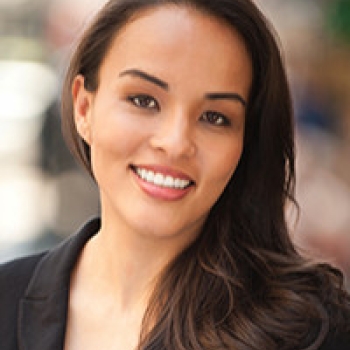
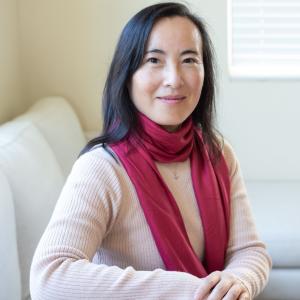
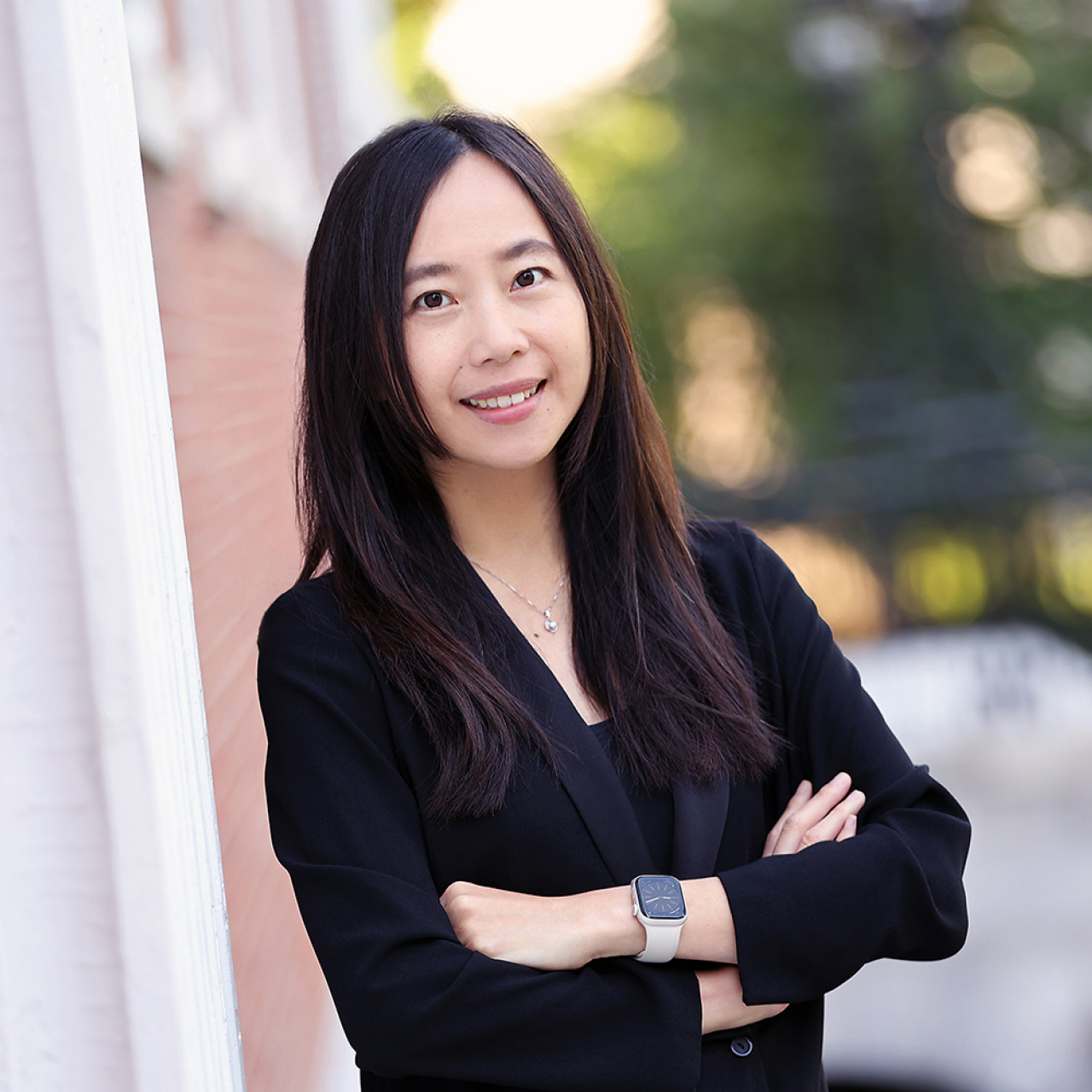
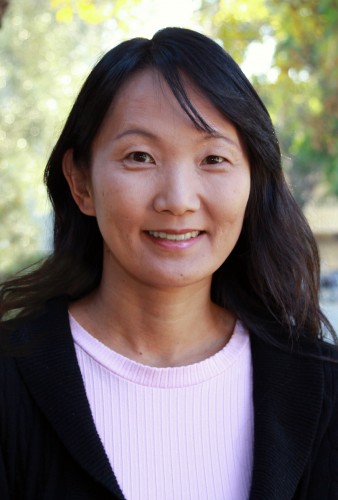
Monika Gabryś-Sławińska is a Professor at the Department of Polish Literary History , part of the Faculty of Languages, Literatures and Cultures at the University of Maria Curie-Skłodowska (UMCS). Her research spans 19th- and 20th-century Polish literature , focusing on Stefan Żeromski , historical journalism , text editing , voice emission , and museology . MA in Polish Philology (1998, UMCS) PhD in Literary Studies (2007, UMCS) Habilitation in Literary Studies (2016, UMCS) Her research interests include political commentary in historical press , media's role in cultural identity , and sociolinguistic trends . She has edited over 29 academic volumes and authored 5 monographs. Scientific awards: Bronze Cross of Merit KEN Medals (Bronze, Silver) 8 Rector's Awards (UMCS) Lublin Mayor's Medal (2019) She has participated in 5 research grants , organized 35 academic conferences , and contributed extensively to Annales UMCS as a scientific editor.
Natalie H. Brito is an Associate Professor of Applied Psychology at New York University (NYU), affiliated with the Steinhardt School of Culture, Education, and Human Development. Her research focuses on how early social and cultural contexts shape neurocognitive development in infants and toddlers, particularly in areas of attention, memory, and socio-emotional skills. Prior to NYU, she completed a postdoctoral fellowship at Columbia University Medical Center and was a Robert Wood Johnson Health and Society Scholar. Dr. Brito’s work bridges developmental psychology, neuroscience, and public policy, emphasizing the need for equitable environments that support healthy child development. She has received prestigious awards such as the APS Rising Star Award and NIH grants, reflecting her impactful contributions to understanding developmental trajectories. Her research also extends to policy implications, such as the effects of paid maternal leave on infant brain function and the role of structural inequities in maternal mental health. Key themes include early life stress, gut microbiome influences, and the neurobiological underpinnings of cognitive development. Dr. Brito has published extensively in journals like Child Development , Developmental Cognitive Neuroscience , and JAMA Psychiatry , with a focus on innovative methodologies (e.g., the OWLET gaze-tracking tool). She teaches courses on developmental psychology and the principles of applied psychology, fostering interdisciplinary approaches to human development. Her scientific accolades include recognition from the International Society of Developmental Psychobiology and the American Psychological Association, underscoring her leadership in advancing developmental science and equity-focused research.
Dr. Nienke Smit is an Assistant Professor in the Department of Education at Utrecht University's Faculty of Social and Behavioural Sciences. Her research focuses on scaffolding processes, adaptive teaching, and classroom observational research from a complex dynamic systems perspective. Specializes in teacher-student interaction Expert in adaptive instruction and observational methods Collaborates with Data Science department Develops tools for classroom observation Research interests include language learning and teaching , judgment and decision-making in education , and professional development of teachers . She leads projects like Eye Get It (joint attention in classrooms) and a replication study on adaptive instruction effectiveness. Her work applies dynamic systems theory to second language development and foreign language pedagogy. Recent publications address translanguaging in multilingual classrooms, replication studies , and process-oriented research . She teaches at Utrecht's Graduate School of Teaching and works on initiatives to reduce teacher shortages through improved training programs.
Dr. Qing Zhou is a Professor of Psychology at the University of California, Berkeley, and Director of the Culture and Family Study Lab. He received his Ph.D. from Arizona State University and specializes in understanding how cultural context, family dynamics, and temperament influence children's socio-emotional, academic, and executive function development, with a focus on immigrant families. Key research interests include: Developmental psychopathology Temperament and emotion regulation Family socialization and parenting Impact of bilingualism on child development Cultural values and migration effects on adjustment His work employs multi-method approaches, including questionnaires, behavioral observations, and neuropsychological testing, with ongoing projects like the NICHD-funded longitudinal study on dual language learners and the Chau Hoi Shuen Foundation-supported grandparent involvement research. Collaborations include scholars at UC-Davis, UC-Merced, Wellesley College, and institutions in France and Taiwan. Dr. Zhou has trained numerous students, including current doctoral candidates Xinyi Chen, Erika Roach, and Christopher Gys, as well as alumni at institutions like Harvard, Stanford, and UCSF. His lab's publications emphasize cross-cultural comparisons, longitudinal designs, and intervention implications for immigrant youth.
Professor Alison G. Salvesen (University of Oxford, Asian and Middle Eastern Studies) is a leading scholar in Early Judaism and Christianity, affiliated with the Oxford Centre for Hebrew and Jewish Studies and Mansfield College. Her work bridges textual criticism, translation history, and reception studies. Current Projects: Hexapla Institute Executive Committee (electronic database of Origen's Old Testament), monograph on Jacob of Edessa (d. 708 CE) Teaching: Septuagint studies, Patristic texts, Textual criticism, Syriac literature Specializing in ancient Hebrew Bible interpretations, she examines Greek (Septuagint), Aramaic (Targums), Syriac (Peshitta), and Latin (Vulgate) traditions. Her research spans rabbinic Judaism and early Christian exegesis. Scientific leadership includes co-editing major reference works and directing the Polonsky Fellowship. Current DPhil students include Joel Bell, Yael Krämer, and Paul Ulishney. Key grants/awards: Polonsky Fellow in Early Judaism and Christianity
Alison J. Mackey is Professor and Chair of the Department of Linguistics at Georgetown University, College of Arts and Sciences. She is a leading scholar in second language acquisition (SLA), with a focus on interaction, feedback, research methodology, and language learning across the lifespan. Her research interests include second language acquisition , task-based language teaching , research methodology , interaction and corrective feedback , and language learning in children and adults . She has published extensively in top-tier journals and book series, shaping methodological standards in the field. Her recent publications reflect a strong trend in methodological rigor , interactionist approaches , and practical applications of SLA research. Themes include data elicitation , stimulated recall , task design , and pragmatic development , spanning both theoretical and classroom-based inquiry. Mildenberg Prize (2012) for The Handbook of Second Language Acquisition American Association for Applied Linguistics Distinguished Scholarship and Service Award International Association of Task-based Language Learning and Teaching Distinguished Achievement Award CHOICE Outstanding Academic Title (2012) Alison Mackey has advised numerous scholars through co-authorship and editorial leadership. She is Editor-in-Chief of Cambridge University Press Annual Review of Applied Linguistics and Editor of the Routledge Second Language Research series, guiding the publication of cutting-edge research. While specific grants are not listed, her editorial work and high citation count (>35,000) reflect significant research impact and funding support. She leads and contributes to major research initiatives such as the IRIS Repository , promoting open-access research instruments in SLA. Her work fosters collaboration across institutions and supports methodological transparency and replication in the field.
Andrew Ollett is an Associate Professor and Director of Graduate Studies in the Department of South Asian Languages and Civilizations at the University of Chicago , where he has taught since 2019. His research focuses on the literary and intellectual traditions of South and Southeast Asia, particularly through works in Sanskrit, Prakrit, Apabhramsha, and Kannada from the first millennium CE. Co-founder and editor of NESAR (New Explorations in South Asia Research) Director of NEH-funded edition/translation of the Kavirājamārga (earliest Kannada literary manual) Expert in Prakrit and Kannada literary traditions His work explores the 'question of language'—examining how language choice shaped cultural production and change in premodern India. Current projects include a monograph on context-sensitivity in Indian language theories and a study of manuscript technology's impact on early South Asian knowledge communities. He has authored The Mirror of Ornaments (Naples: Unior Press, 2025) and Language of the Snakes (UC Press, 2017), and co-authored Lilavai (Harvard, 2021). Recent publications include interdisciplinary studies on: Sanskrit-Prakrit campū genre reevaluation Pragmatics in Mīmāṁsā interpretive concepts Manuscript literacy's influence on literary forms Historical linguistics of Middle Indic syllable reduction Philosophy of language in Śālikanātha and Kumārila Bhaṭṭa Awarded the NEH 'Scholarly Editions and Translations' grant , he teaches classical South Asian literature courses covering Sanskrit, Prakrit, and Tamil traditions. He maintains digital resources including a Prakrit Digital Texts Project and Mīmāṁsādigdarśinī digital text repository, and actively contributes to open-access scholarship.
Ying Xu is an Assistant Professor at the Harvard Graduate School of Education (HGSE), specializing in the design of AI technologies to support children's language, literacy, STEM learning, and well-being. Her research emphasizes creating AI systems that act as interactive learning companions and language partners for children while fostering human-AI collaboration with educators and families. She holds a Ph.D. in Language, Literacy, and Technology from the University of California, Irvine, and previously served as an Assistant Professor at the University of Michigan from 2022 to 2024. Her work focuses on understanding how AI can complement human interactions, particularly through conversational agents integrated into media like books and educational TV programs. Collaborations include partnerships with PBS KIDS, GBH Education, and Sesame Workshop. Funded by organizations such as the National Science Foundation and Schmidt Futures, her research bridges developmental psychology, education, and human-computer interaction. Xu's studies highlight AI's potential for personalized learning while addressing ethical considerations like AI literacy and social impact. Key achievements include numerous best paper awards and recognition as an Early Career Interdisciplinary Scholar by SRCD. Her interdisciplinary approach involves designing technologies that reflect community values and linguistic/cultural diversity, ensuring equitable access to AI-driven educational tools. Xu advocates for balanced AI integration in children's lives, emphasizing the need for transparency about AI's limitations and the importance of maintaining human connections. She explores how AI can empower stakeholders (e.g., educators, parents) to co-create technologies tailored to their needs, ensuring AI serves as a complement—not replacement—for human interaction. Current projects investigate conversational AI's design principles, children's perceptions of AI, and strategies for fostering critical evaluation of AI-generated content. She also examines how AI affects social interactions and developmental processes, advocating for ethical guidelines to maximize benefits while mitigating risks.
Yuuko Uchikoshi Tonkovich is a Professor at the School of Education, University of California, Davis, where she has served since 2004, advancing from Assistant to Associate and then to full Professor. Her work centers on language and literacy development in young dual language learners, with a focus on bilingualism, early literacy, and the role of family and media in language acquisition. Her research interests include: Early Childhood Development Multilingual Learners and Bilingual Education Language Acquisition and Literacy Parent-Child Interaction and Home Language Environment Quantitative Analysis of Educational Outcomes Educational Television and Multimedia Her recent publications span topics such as cognitive distancing in parent-child reading, morphological awareness in bilingual readers, and the impact of teacher language use in multilingual classrooms. The research consistently emphasizes longitudinal, cross-cultural, and interdisciplinary approaches, particularly focusing on Chinese American and Mexican American immigrant families. Her scientific awards include: AERA Vocabulary SIG Notable Vocabulary Researcher Award (2025) Foundation for Child Development Young Scholars Program Grant International Reading Association Dissertation Fellowship and Finalist Award Harvard Graduate School of Education Fellowships She has advised numerous research projects and secured significant funding from NIH/NICHD, the Foundation for Child Development, and other organizations. She teaches courses such as Language Development, Early Literacy, and Research on Text Comprehension. She is actively involved in national initiatives, serving on the Technical Advisory Group for the First 5 California Dual Language Learner Study and as Associate Editor of Applied Psycholinguistics . She leads the Language & Literacy Development Lab at UC Davis, which investigates the cognitive, linguistic, and socio-emotional development of dual language learners.
Professor Helena Sanson is a Full Professor of Italian, History of Linguistics, and Women's Studies at the University of Cambridge , where she is also a Fellow of Clare College and serves as Postgraduate Teaching and Examining Officer for the Italian Section. She joined Cambridge in 2005 after teaching at University College London (1998-2003) following her British Academy Postdoctoral Fellowship. PhD from University of Reading (2002) Her interdisciplinary research focuses on the intersection of Italian linguistic history , literary culture , and gender studies from the Renaissance to post-Unification period. Particular emphasis includes women's contributions to linguistic thought , conduct literature analysis , and female roles in translation networks . Her work examines how women navigated language standardization, educational access, and literary production across social strata. Recent projects include Leverhulme-funded research on women's linguistic experiences in 18th-19th century Italy and co-edited volumes on transnational travelers' accounts and early modern female education . She founded the Women and Gender in Italy (1500-1900) book series and the journal Women Language Literature in Italy . Scientific awards include: British Academy Postdoctoral Fellowship Leverhulme Research Fellowship Philip Leverhulme Prize CRASSH Early Career Fellowship Isaac Newton Trust grant Senior Visiting Fellowship at University of Bologna She supervises graduate research in topics spanning women's writing , linguistic thought , translation history , and cultural marginalization in 16th-20th century Italy. Her work bridges philology, literary criticism, and social history through rigorous textual analysis.
Dr. Ben Clarke is an Associate Professor and Department Head of Special Education and Clinical Sciences at the University of Oregon’s College of Education. His research focuses on mathematical development, assessment systems, and school-based interventions to support student achievement. He has led over 20 federally funded grants totaling ~$55 million, emphasizing early numeracy interventions and multi-tiered instructional models. Clarke’s work bridges theory and practice, with publications on mathematics instruction, assessment, and RTI frameworks. Education: PhD (2002), MA (2001) in School Psychology/Special Education from University of Oregon; BS (1997) in Psychology from Wabash College (Phi Beta Kappa). Research Interests: Mathematics intervention design and efficacy Early numeracy assessment Multi-tiered systems of support (MTSS) Technology in education Equity in mathematics education Publications highlight his focus on intervention fidelity, tiered models, and outcomes for students with learning difficulties. Awards include the AERA Special Education SIG Research Award and recognition for academic excellence. Grants and Advising: Principal Investigator on ~$55M in federal grants; advises graduate students in School Psychology and Special Education. His lab develops evidence-based tools like the KinderTEK iPad program and contributes to national practice guides (e.g., IES RTI for Mathematics). Labs/Teams: Leads research teams focused on early mathematics intervention and MTSS implementation, collaborating with schools and policymakers to scale effective practices.
Dr. Naseem Choudhury is a Professor of Psychology and Neuroscience at Ramapo College of New Jersey, affiliated with the School of Social Science and Human Services (SSHS). She holds a Ph.D. in Experimental Psychology from the University of Vermont. Her research focuses on the neural basis of infant information processing, particularly how perceptual abilities influence typical and atypical development, with an emphasis on familial and sociocultural factors. Her work spans auditory processing in infants at risk for developmental language disorders, electrophysiological studies in children with autism, and cross-cultural analyses of artistic perception. She directs the Palestroni Integrated Neuroscience Lab, exploring neural mechanisms underlying cognitive development. Dr. Choudhury has published extensively in journals like Journal of Neuroscience and Developmental Cognitive Neuroscience , with over 50 peer-reviewed articles since 2002. Her studies often involve ERP and EEG methodologies to track developmental milestones and intervention efficacy in high-risk populations. Her research demonstrates that early auditory experiences shape prelinguistic acoustic mapping and that neuroplasticity interventions improve outcomes for language-impaired children. She collaborates internationally on projects linking sensory perception to linguistic outcomes, particularly in Italian and bilingual populations. Dr. Choudhury’s contributions bridge basic neuroscience and clinical applications, emphasizing early screening and preventive strategies for developmental disorders.
Guanglei Hong is a Professor at the University of Chicago, holding tenure in the Comparative Human Development Department and the Committee on Education. She chairs the University-wide Committee on Quantitative Methods in Social, Behavioral, and Health Sciences and the Committee on Education. Her research focuses on causal inference methodologies for evaluating educational and social policies, particularly mediation and moderation effects in multi-level longitudinal studies. She developed the RMPW and MMWS methods, widely used in causal mediation analysis. Hong holds a Master’s in Applied Statistics and a Ph.D. in Education from the University of Michigan. Education: Ph.D. in Education, University of Michigan, 2004 Master's in Applied Statistics, University of Michigan, 2002 Research Interests: Hong’s work centers on causal moderation and mediation, spillover effects, and sensitivity analysis in policy evaluation. She applies these methods to assess impacts of educational programs, contextual changes, and socioeconomic factors on child/youth development. Her monograph *Causality in a Social World* (2015) is a foundational text in the field. Awards: John Simon Guggenheim Fellowship (2021–2022) William T. Grant Scholar Award (2009–2014) NAE/Spencer Postdoctoral Fellowship (2006–2007) AERA Mary Catherine Ellwein Dissertation Award (2005) Teaching & Training: Hong teaches advanced quantitative methods courses, including causal inference and mediation analysis. She leads the NSF-funded SIARM for STEM institute, training researchers in computational methods for education research. Notable courses include *Advanced Topics in Causal Inference* and *Mediation, Moderation, and Spillover Effects*. Grants & Leadership: Hong leads major grants from NSF, IES, and private foundations. Her current projects include methodological advancements for multisite trials and sensitivity analysis in mediation. She has co-authored over 60 peer-reviewed articles and edited volumes, and serves on editorial boards of leading journals. Labs/Teams: Hong directs the Quantitative Methods Group at the University of Chicago, fostering interdisciplinary collaborations in causal inference and policy evaluation. Her work integrates statistical innovation with real-world applications in education and health sciences.
University of California, Los AngelesUnited States
Patrick T. Dowling, M.D., M.P.H., is the Kaiser Permanente Endowed Professor of Community Medicine and Chair of the UCLA Department of Family Medicine. He holds dual degrees from the Medical College of Ohio (1974) and the University of Michigan School of Public Health. Dr. Dowling's career spans over four decades in family medicine, residency training, and health policy advocacy, with a focus on underserved populations. He has directed residency programs at Cook County Hospital, Brown University, and Harbor-UCLA Medical Center before leading UCLA's Family Medicine department since 1998. His research emphasizes health policy, chronic disease management, cross-cultural medicine, and integrating substance abuse treatment into primary care. He co-founded UCLA's IMG pathway program to train bilingual (English-Spanish) international medical graduates for underserved areas. Dr. Dowling has advised the National Health Service Corps and LA County Public Health Commission, and currently serves on Drew University's Board of Trustees. Publications highlight systemic barriers to healthcare access, physician practice location determinants, opioid epidemic responses, and community-based participatory research. His work bridges medical education innovation with socioeconomic health equity, reflecting lifelong commitment to universal healthcare access inspired by his early work with Cesar Chavez's United Farm Workers Clinics.
Maureen Kendrick is a Professor and Deputy Department Head in the Department of Language & Literacy Education at the University of British Columbia's Faculty of Education. Her research examines literacy and multimodality as integrated communicative practices, addressing social and cultural issues in diverse contexts with particular emphasis on visual communication and refugee/migrant education. Her research interests span digital literacies, multiliteracy and multimodality, and international perspectives on literacy education. She investigates how youth from refugee backgrounds use multimodal approaches to construct identities and engage with learning, often through digital storytelling and visual methodologies. Her work extends to health literacy in Ugandan contexts and the role of play in early childhood literacy development across Canada, Kenya, and Uganda. Analysis of her recent publications reveals consistent focus on refugee/migrant education, digital storytelling, and multimodal literacy. She examines how digital tools empower marginalized youth to express identities while addressing challenges in language learning and cultural integration. Her research also explores HIV/AIDS education through makerspaces and the intersection of arts-based practices with science literacy. Dr. Kendrick's scientific recognition includes: Canadian Committee for Graduate Students in Education (CCGSE) Mentorship Award (2024) Killam Teaching Prize (2012-13) Alan C. Purves Award (2013) She actively supervises graduate students across doctoral and master's programs, with current research focusing on refugee education and multilingual learners. Her SSHRC-funded projects include the 2025-2029 grant 'Digital Multimodal Composing-To-Learn' and the 'Language and Literacy Learning Among Refugee and Migrant Background Children' initiative, involving collaborators from UBC, York, and Western universities. Dr. Kendrick leads international research teams across Canada, Uganda, and Kenya, developing community-engaged approaches to literacy education that bridge academic research and classroom practice.