

Yunxiang Yan is a Professor in the Department of Anthropology at the University of California, Los Angeles (UCLA). His work focuses on China and Cultural Anthropology , with specific expertise in Economic Anthropology , Family and Kinship , and Individualization . Education: Ph.D. in Social Anthropology from Harvard University (1993). Yan’s research explores the intersection of social change , moral theory , and family dynamics in modern China. His ethnographic studies in rural villages provide foundational insights into exchange theory and cultural globalization . Recent publications analyze food safety , medical ethics , and moral crises in China, reflecting his interdisciplinary approach combining anthropology, sociology, and philosophy. Articles span themes like intergenerational intimacy , political oppression , and networked social structures . Scientific Awards: Guggenheim Fellowship Levenson Prize-winning Research Yan’s work bridges local Chinese studies with global anthropological discourse. He has held positions at the Chinese University of Hong Kong, Johns Hopkins University, and UCLA since 1996. His career reflects a commitment to documenting the lives of ordinary people, rooted in his early experiences as an expelled villager during Maoist China. Contact: yan@anthro.ucla.edu
جستجوی استاد راهنمای دانشگاهی
برای مسیر پژوهشیتان، استاد راهنما، استاد دانشگاه و پژوهشگر مناسب را پیدا کنید و با آنها ارتباط بگیرید.
نمایش ۱-۱۵ از ۶٬۸۰۰ استاد راهنما
اطلاعات پروفایلها از صفحات عمومی دانشگاهها گرفته شده و ممکن است بهروز نباشد.

Haiyan Lee serves as the Walter A. Haas Professor of the Humanities and Professor of East Asian Languages and Cultures and of Comparative Literature at Stanford University. She has held these positions since joining Stanford in 2009, and currently serves as Chair of the East Asian Languages and Cultures department (2020-present). Her academic journey includes previous teaching appointments at the University of Colorado at Boulder and the University of Hong Kong, along with post-doctoral fellowships at Cornell University and Harvard University. Lee's research spans multiple interdisciplinary fields with particular focus on modern Chinese literature and cultural production. Her work bridges literary studies with law, philosophy, cognitive science, affect theory, gender studies, and environmental humanities. She has developed influential theoretical frameworks including the concept of "high justice" and "low justice" in Chinese legal imagination. Her current research explores animism, cognition, and the Chinese environmental imagination, extending her longstanding interest in human-animal relations. Lee's publications reveal a consistent trajectory examining Chinese cultural production through innovative theoretical lenses. Her recent work shows increasing engagement with legal theory, environmental humanities, and cognitive approaches to literature. She has produced significant scholarship on Chinese concepts of justice, love, and the stranger, moving across historical periods from early 20th century to contemporary China. Biennial Book Prize, Honorable Mention, International Society for Chinese Law and History (ISCLH) (2024) Humanities Seed Grant, Stanford School of Humanities and Sciences (2023-2025) Bass Fellowship in Undergraduate Education, Stanford University (2022-2027) Joseph Levenson Book Prize, The Association for Asian Studies (2009) Professor Lee actively mentors doctoral students across multiple disciplines, serving as dissertation advisor, co-advisor, and committee member for students working at the intersection of Chinese studies, law, literature, and cultural theory. Her teaching includes courses across East Asian humanities, comparative literature, and interdisciplinary environmental studies. She has received significant research support including the Frederick Burkhardt Residential Fellowship from the American Council of Learned Societies and a residency at the Center for Advanced Study in the Behavioral Sciences.

Michael Kremer is a University Professor in Economics at the University of Chicago, holding positions in the Kenneth C. Griffin Department of Economics, the College, and the Harris School of Public Policy. He is the 2019 Nobel Laureate in Economic Sciences for pioneering experimental methods to address global poverty. Kremer earned his Ph.D. from Harvard University in 1992 and has been affiliated with the University of Chicago since 2020. His research focuses on development economics, field experiments, and policies impacting education, health, water, and agriculture in developing countries. He directs the Development Innovation Lab and leads the Development Economics Center at Chicago, emphasizing evidence-based solutions to poverty. Kremer’s work combines rigorous academic inquiry with practical policy applications, bridging theoretical economics and real-world interventions. Awarded the MacArthur Fellowship in 1997 and a Fellow of the American Academy of Arts and Sciences since 2003, Kremer’s contributions have shaped modern development economics. He has collaborated extensively with institutions worldwide, advocating for randomized controlled trials (RCTs) to evaluate social programs. His interdisciplinary approach integrates insights from economics, public policy, and experimental methods, fostering global partnerships to combat poverty effectively.
Eric Van Young is a distinguished Professor of History at the University of California, San Diego (UCSD), specializing in colonial and 19th-century Latin American history, particularly Mexico. He has held significant roles, including Chair of the Department of History (2000-2004) and Interim Dean of the Division of Arts and Humanities (2007-2008). His research focuses on rural history, peasant movements, cultural history, and biographical studies of key figures like Lucas Alaman. He earned his B.A. from the University of Chicago (1967), M.A. and Ph.D. from UC Berkeley (1968, 1978). Education: B.A. (University of Chicago), M.A. & Ph.D. (UC Berkeley) Roles: Professor of History, Department Chair, Interim Dean His research explores Mexico’s colonial and early national periods, emphasizing rural economic structures, popular rebellions, and the intersections of culture and politics. Current projects include a biography of Lucas Alaman and a synthetic history of Mexico (1750-1850). He has authored numerous books, including Writing Mexican History (2012) and The Other Rebellion (2001), alongside over 100 articles. His work bridges economic and cultural historiography, offering critical insights into regional dynamics and the construction of national identity. Van Young’s scholarly contributions include editorial roles for journals and book series, as well as extensive peer review for academic publishers. His interdisciplinary approach addresses themes like messianic movements, state formation, and the legacy of colonial institutions in modern Mexico.

Sophie Volpp is a Professor in the Department of East Asian Languages and Cultures and Comparative Literature at the University of California, Berkeley. Her research focuses on Chinese literature from the 16th to 19th centuries, with particular emphasis on theatricality, material culture, and literary objects. She is the author of *Worldly Stage: Theatricality in Seventeenth-Century China* (2011) and *The Substance of Fiction: Literary Objects in China, 1550-1775* (2022). Her current projects include a book on the National Peiping Library’s preservation efforts during the Sino-Japanese War and an analysis of referents in *The Story of the Stone*. Her scholarly work bridges literary analysis and cultural history, examining themes such as gender, power, and spectacle in late-imperial China. She has translated works by pre-modern women poets and dramatists, contributing to gender-centric scholarship in East Asian studies. Her publications span journal articles and edited volumes, addressing topics like Qing-era theatrical design, material circulation in classical novels, and cross-cultural influences in literary production. Her research has been published in venues such as *Harvard Journal of Asiatic Studies* and *Journal of Asian Studies*.

Beth Piatoteمشاهده پروفایل
دانشیار
Beth Piatote is an Associate Professor of English and Comparative Literature at the University of California, Berkeley. She holds a PhD in Modern Thought and Literature from Stanford University and is an enrolled member of the Confederated Tribes of the Colville Reservation (Nez Perce). Her work bridges scholarly and creative realms, focusing on Indigenous literature, law, language revitalization, and cultural studies. Education: PhD in Modern Thought and Literature (Stanford University). Research interests include Native American legal systems, Nez Perce language preservation, global Indigenous literatures, and creative writing. She co-founded and chairs Berkeley’s Designated Emphasis in Indigenous Language Revitalization and directs the Arts Research Center, where she leads the Indigenous Poetics Lab. Her publications include Domestic Subjects: Gender, Citizenship, and Law in Native American Literature (2013) and the short story collection The Beadworkers (2019), which received multiple literary recognitions. Her plays Antíkoni and Tricksters, Unite! explore Indigenous narratives through performance. Awards include MLA honorable mentions, PEN/Bingham Prize longlistings, and a 2020 Playwrights Retreat win. Current projects involve a scholarly monograph on sensory representations of Indigenous law and creative works in poetry and essays.

Emily C. Bartels is a Professor of English at Rutgers University specializing in early modern literature and culture, with particular expertise in Shakespearean and non-Shakespearean drama. She has served as director, and is now dean, of the Middlebury Bread Loaf School of English since 2010, a summer Master's program designed for K-12 English teachers. Professor Bartels received her BA from Yale University and both her MA and PhD from Harvard University. Her academic background positioned her to become a leading scholar in Renaissance literature studies. Her research examines questions of race, cross-cultural relations, gender, genre, and performance in early modern English drama. Professor Bartels is renowned for her groundbreaking work on Shakespeare's Othello and Christopher Marlowe's plays, analyzing how these texts represent cultural and racial difference. She has significantly contributed to postcolonial approaches to early modern literature, revealing how English drama engaged with global encounters and representations of the 'other' during the Renaissance period. Her scholarship demonstrates how early modern writers both reflected and shaped contemporary attitudes toward difference, particularly regarding race, religion, and national identity. Professor Bartels' publications reveal a consistent scholarly trajectory examining racial and cultural representation in early modern England. Her work spans from detailed analyses of specific plays like Hamlet and Julius Caesar to broader studies of how England conceptualized Africa and non-Christian cultures during the Renaissance. A recurring theme throughout her career is the analysis of how early English drama both reflected and shaped contemporary attitudes toward difference, particularly regarding race, religion, and national identity. Roma Gill Prize for Best Work on Christopher Marlowe (1993-94) for Spectacles of Strangeness: Imperialism, Alienation, and Marlowe Board of Trustees Fellowship for Scholarly Excellence (1993) School of Arts and Sciences Award for Distinguished Contributors to Undergraduate Education (2008 & 1993) Warren I. Susman Award for Excellence in Teaching (2008) Solmsen Fellowship at the Institute of Research in the Humanities, University of Wisconsin (1995) Black Atlantic Project fellowship from the Rutgers Center for Historical Analysis Professor Bartels has demonstrated exceptional commitment to both research and teaching excellence. She has developed innovative courses exploring the intersections of literature, history, and cultural studies, including undergraduate seminars on Othello and Hamlet, and graduate courses on Shakespeare Page and Stage. Her administrative role as dean of the Middlebury Bread Loaf School of English demonstrates her commitment to education beyond traditional university settings. Her fellowships from prestigious institutions indicate successful grant acquisition throughout her distinguished career. Professor Bartels has been actively involved with the Shakespeare Association of America and has collaborated with international scholars like Emma Smith of the University of Oxford. Her work has positioned her at the forefront of conversations about early modern literature, race studies, and postcolonial approaches to Renaissance drama, influencing how scholars understand the intersections of literature, race, and cultural identity in the early modern period.

Michele Ripplinger is a Berkeley Lecturer and Ph.D. candidate in English and Medieval Studies at UC Berkeley. Her research focuses on late medieval literature, particularly Chaucer and the reception of classical texts, with emphasis on gender studies, representational ethics, and women’s reading practices. She teaches across historical periods, integrating cultural studies and poetry analysis. Education: Pursuing a Ph.D. in English and Medieval Studies at UC Berkeley (dissertation on Chaucer and the Moralized Ovid). Research Interests: Medieval and early modern classics reception, fictionality, history of reading, women’s/gender/sexuality studies, and intersections between premodern and modern literary thought. Her publications and conference presentations highlight work on Chaucer, Hoccleve, and medieval literary methodologies. She has presented at major venues including the New Chaucer Society Congress and the International Congress on Medieval Studies. No scientific awards are listed. Advising and grants details are not provided. Office hours are by appointment.
Gilah Kletenikمشاهده پروفایل
پژوهشگر ارشد
Gilah Kletenik is a Research Fellow in Jewish Studies at the Stroum Center for Jewish Studies, University of Washington, holding the Hazel D. Cole Fellowship (2024-2026). She specializes in Jewish philosophy from medieval through modern periods with concentrated expertise in Spinoza's thought and its intellectual lineage. Her educational background includes: Ph.D. in Hebrew and Judaic Studies, New York University (2020) M.A. in Hebrew and Judaic Studies M.A. in Bible and Talmud Kletenik's research interrogates how power structures shape Western conceptions of reality, reason, and humanity, excavating alternatives in Jewish naturalism and immanence. She critically engages Spinoza's philosophy through medieval precursors (Maimonides, Gersonides), early modern contemporaries (Descartes, Anne Conway), and modern heirs (Marx, Deleuze), while situating this work within critical theory, new materialism, object-oriented ontology, affect theory, and queer theory frameworks. Her scholarship consistently bridges historical philosophical analysis with contemporary sociopolitical critique. Her public scholarship demonstrates thematic continuity across publications, examining institutional power dynamics in Jewish Studies through lenses of gender, antisemitism, and decolonization. These works reveal persistent patterns connecting medieval philosophical concepts to modern systemic issues in academia and society. Her distinguished fellowships include: Hazel D. Cole Fellow in Jewish Studies, University of Washington (2024-2026) Postdoctoral Associate, Elie Wiesel Center for Jewish Studies, Boston University Alan M. Stroock Fellow, Center for Jewish Studies, Harvard University Currently completing her monograph "Sovereignty Disrupted: Spinoza and the Disparity of Reality," Kletenik maintains active public engagement through lectures and critical commentary, advancing interdisciplinary dialogue between Jewish philosophy and contemporary theoretical movements while challenging institutional norms in academic Jewish Studies.
- Jewish Philosophy
- Spinoza Studies
- Critical Theory
- +۶ مورد دیگر
Wen-hsin Yeh is a Professor and Richard H. and Laurie C. Morrison Chair Professor of History at the University of California, Berkeley. A Distinguished Professor, her work focuses on East Asia with specialization in late imperial and modern China, Taiwan, and Maritime East Asia. BA, National Taiwan University PhD, University of California, Berkeley Her research explores the interplay of culture, politics, and economics in China’s historical development. Key areas include ideological movements, urban transformation, and regional dynamics during the late Qing and Republican eras. Yeh’s publications span theoretical and empirical analyses of modern Chinese history. The 2008 monograph Shanghai Splendor investigates economic sentiments and urban modernity, while Provincial Passages (1996) examines cultural geography and early communist movements. Her 1994 China Quarterly article on Zhejiang radicals highlights regional intellectual networks during the May Fourth Movement. Earlier work like The Alienated Academy (1990) dissects academic culture under Republican governance.
- East Asia
- Late Imperial China
- Modern China
- +۲ مورد دیگر
Kenneth Pomeranz is the University Professor of Modern Chinese History at the University of Chicago in the Department of East Asian Languages and Civilizations (EALC). Previously taught at the University of California, Irvine , his research spans late Imperial and twentieth-century China , comparative world history , and global economic systems . Research Focus: Reciprocal influences between state, society, and economy; origins of the world economy through mutual regional influences; comparative studies of labor, family organization, and economic history. Current Projects: A history of Chinese political economy from the seventeenth century to the present; a book titled Why Is China So Big? exploring China's political unity despite its vast size. Scientific Awards and Fellowships: John K. Fairbank Prize (twice) World History Association Book Prize (shared) Guggenheim Fellowship American Academy of Arts and Sciences Fellow Publications: Key works include The Great Divergence , The Making of a Hinterland , and The World that Trade Created . His articles address topics such as labor-intensive industrialization, global environmental history, and Qing state-building.
Dorothy Kimمشاهده پروفایل
استادیار
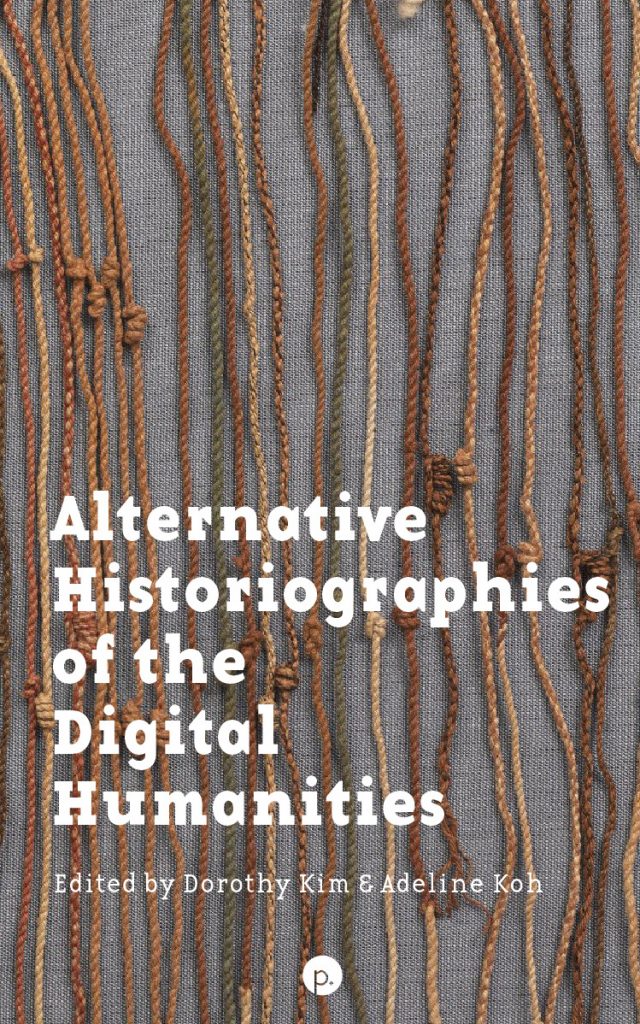
Dorothy Kim serves as Assistant Professor of English at Brandeis University with cross-appointments in the Department of Women's, Gender and Sexuality Studies and the Women's Studies Research Center. Her innovative scholarship bridges medieval literary studies, digital humanities, and critical race theory, examining how medieval history is weaponized by contemporary white supremacist movements and advocating for antiracist frameworks in academia. She earned her Ph.D. and M.A. from the University of California, Los Angeles and her B.A. from the University of California, Berkeley. Her educational trajectory reflects deep engagement with interdisciplinary approaches to literature and cultural studies. Kim's research centers on exposing the racialized foundations of medieval studies, particularly through projects analyzing digital white supremacy and medievalism's role in alt-right ideology. She pioneers methodologies connecting medieval women's literary cultures with contemporary trans feminism while interrogating Jewish/Christian difference in manuscript studies. Her work consistently challenges the field's historical whiteness and develops decolonial digital humanities practices. Her publication trends reveal a decisive shift toward critical race interventions in premodern studies, with increasing focus on database methodologies, sonic histories, and the material politics of medieval manuscript transmission. Recent works demonstrate how digital tools can either reinforce or dismantle racial hierarchies in academic knowledge production. Her distinguished honors include: 2023 Medieval Academy of America Article Prize in Critical Race Studies American Studies Association Digital Humanities Book Prize (2021) Society for Medieval Feminist Scholarship's Best Feminist Article Award (2021) AAUW Postdoctoral Fellowship (2018-2019) Folger Shakespeare Library Long-Term Fellowship (2025-2026) SSHRC, Ford Foundation, Fulbright, and Mellon fellowships Kim directs major collaborative projects including the NEH-funded An Archive of Early Middle English (161-manuscript database) and co-leads the Global Middle Ages Project. As co-director of RaceB4Race and the Reckonings Institute, she creates platforms for community archiving and social justice praxis. Her mentorship focuses on training students in critical digital methodologies through Brandeis' DH Lab while developing antifascist frameworks for humanities education. She currently leads the Brandeis University DH Lab housing her NEH project, co-edits Literature Compass's pre-1800 section, and develops two major book projects: Race, the Crusades, and the Katherine Group (based on her AAUW fellowship) and Music, Multimodal Manuscripts, and Remediating the Medieval Lyric for ArcPress.
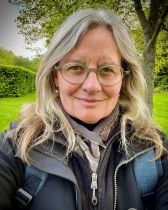
Laurie Shannon is the Franklyn Bliss Snyder Professor of English at Northwestern University, with a J.D. from Harvard Law School and a Ph.D. from the University of Chicago. She studies English literature and culture in the long sixteenth century, focusing on the history of ideas in language, stakeholdership, embodiment, and cross-species relations. She serves as convener of The Anne Lister Society and is collaborating with Oxford University Press on a scholarly edition of Anne Lister’s Journal. Education: J.D., Harvard Law School; Ph.D., University of Chicago Shannon’s research explores the political imagination in early modern literature, particularly through friendship (Sovereign Amity: Figures of Friendship in Shakespearean Contexts) and animal studies (The Accommodated Animal: Cosmopolity in Shakespearean Locales). Her current monograph, 'Frailty’s Name: Shakespeare and the Natural History of Human Being,' examines human negative exceptionalism in Renaissance thought and its implications for climate crisis ethics. Her publications span Shakespeare studies, queer theory, environmental humanities, and textual editing. Notable awards include the Elizabeth Dietz Memorial Award, Robert B. Cox Teaching Award, and Dean’s Award for Graduate Mentoring. She has held NEH, ACLS, and Guggenheim fellowships. Scientific Awards: Elizabeth Dietz Memorial Award, Robert B. Cox Distinguished Undergraduate Teaching Award, Dean's Award for Graduate Mentoring, NEH Fellowship, ACLS Fellowship, Guggenheim Fellowship Shannon contributes to the Anne Lister Diary Transcription Project and has served as English Department Chair at Northwestern. Her recent articles focus on Shakespeare’s engagement with natural history, queer cosmology, and animal sovereignty, reflecting her interdisciplinary approach.

Joshua Savalaمشاهده پروفایل
دانشیار
Dr. Joshua Savala is an Associate Professor of History at the University of Texas at El Paso (UTEP), part of the College of Liberal Arts. He holds a PhD from Cornell University (2019) and previously taught at Rollins College in Florida. His research focuses on Latin American social movements, transnational histories of the Pacific, and labor solidarity in the Andean and Southern Cone regions. Key areas of expertise include maritime workers, anarchism, public health epidemics, and border studies. Education: PhD in History, Cornell University (2019) MA in History, Cornell University (2015) MA in History, Tufts University (2012) BA in History and Sociology, University of California, Davis (2007) Research Interests: His groundbreaking work examines collaborative relationships between Peruvians and Chileans in the 19th and early 20th centuries, including studies on cholera epidemics, anarchist networks, and cross-border solidarity. Recent projects investigate cooperative urban planning on the U.S.-Mexico border and disaster responses in Valparaíso. Publications: Includes the award-winning book Beyond Patriotic Phobias (2022) and articles in Hispanic American Historical Review and Journal of Social History . His Spanish translation Más allá de la guerra (2024) is a binational publication with universities in Peru and Chile. Awards: Best Book (Social Sciences) on the Southern Cone (Honorable Mention), 2023 Flora Tristán Book Prize (Honorable Mention), 2023 José María Arguedas Prize, 2020 Teaching: Teaches courses on Modern Latin America, Pacific World histories, and borderland studies. Recent courses include Studies in Latin American History and South America Since 1810 . Labs/Teams: Engaged with UTEP's Borderlands Digital Humanities Center and the Institute of Oral History, emphasizing collaborative interdisciplinary projects.

Ilham Khuri-Makdisi serves as Associate Professor of History at Northeastern University's College of Social Sciences and Humanities, specializing in Middle Eastern history with emphasis on Ottoman Eastern Mediterranean cities during the late 19th and early 20th centuries. Her research examines global and intra-imperial connections, movements of people and ideas, and transnational radical networks across the Ottoman Empire and Mediterranean world. Her educational background includes a PhD in History and Middle Eastern Studies from Harvard University (2004). This foundational training informs her interdisciplinary approach to Ottoman studies within global historical frameworks. Professor Khuri-Makdisi's research interests center on Ottoman Eastern Mediterranean urban history, global radical movements, intellectual history, and translation studies. She investigates socialism and anarchism in Beirut, Cairo, and Alexandria through diverse social groups including intellectuals, dramatists, and workers. Current projects explore Arabic-Ottoman Turkish translations and position the nahda (Arab Renaissance) within broader Ottoman and global contexts, revealing intricate cultural exchanges that shaped modern Middle Eastern thought. Her publications demonstrate consistent engagement with transnational intellectual and social currents, particularly examining how concepts of 'the social' evolved in Arabic thought and how fin de siècle Egypt functioned as a nexus for radical networks. These works collectively emphasize the interconnectedness of Ottoman territories with global movements, challenging nationalist historiographies through meticulous analysis of cross-border ideological flows. As an educator, she teaches foundational courses including Introduction to Middle Eastern History (HIST 1185), Modern Middle East (HIST 1290), and Capstone (HIST 4701), employing diverse sources from architectural records to political speeches to examine Europe-Middle East relations, imperialism, state formation, and social movements since the 19th century.
نمایش نتایج تا ۷۵۰ مورد اول. برای یافتن نتایج دقیقتر، جستجوی خود را با فیلترها محدود کنید.