Claire Pippa Saling Burridge is a Researcher in the Department of History at the University of Oslo, focusing on early medieval health and medicine. Her work integrates textual analysis, archaeology, and codicology to study medical knowledge transmission. She is affiliated with the MINiTEXTS project examining marginal medical texts in manuscripts. Previously, she held a Leverhulme Trust Fellowship at the University of Sheffield and postdoctoral roles at the British School at Rome. Her research explores Carolingian medical practices, interdisciplinary methods, and the interplay between medical theory and practice in pre-1000 Europe. Education B.A. (Honors) in History & Medieval Studies, University of North Carolina at Chapel Hill MPhil and PhD in History, University of Cambridge Research Focus Burridge investigates medical minitexts in manuscripts, osteological evidence for dietary practices, and challenges stereotypes about early medieval surgical practices. She examines how medical knowledge was recorded in marginal notes and how religious elements influenced healing practices. Her work bridges textual analysis with material culture studies. Grants & Projects Leverhulme Trust Early Career Fellowship: 'Crossroads: The Evolution of Early Medieval Medicine' MINiTEXTS project: 'Marginalized Voices in Early Medieval Latin Culture' Labs/Teams Active contributor to the International Summer School and the MINiTEXTS research group focusing on medieval manuscript culture.
Dr. Jennifer Evans is a Senior Lecturer in History within the School of Creative Arts at the University of Hertfordshire. Her academic career spans over a decade since completing her PhD at the University of Exeter in 2011, followed by two years of teaching there before joining Hertfordshire. She serves as the founding editor of the Early Modern Medicine blog and co-directs the Perceptions of Pregnancy research network with colleagues Leanne Calvert, Sarah Fox, and Chelsea Phillips. Her research focuses on the history of the body, medicine, and gender during 1550-1750, with particular emphasis on reproductive health, infertility, and miscarriage. Her scholarly work demonstrates deep engagement with both male and female experiences of health and sexuality in early modern England. Current projects include 'Wounded Wombs and Empty Cradles: Miscarriage and Pregnancy Loss in Early Modern England c.1600-1780' (Folger Shakespeare Library, 2025-2026) and 'Foraging for Early Modern Medicines 1600-1750' (AHRC-funded). Analysis of her recent publications reveals consistent thematic concentration on bodily experiences, particularly reproductive health across genders. Her work bridges medical history with gender studies, examining how bodily functions and dysfunctions intersected with social structures. The scholarship shows increasing attention to male experiences of reproductive health alongside traditional focus on women's histories, reflecting broader historiographical shifts toward more inclusive medical history. Dr. Evans actively supervises postgraduate students including Kiran Seera (PhD: 'Domestic Disorder: Crime, Kinship, and Space in Bedfordshire, c. 1650-1790') and has completed supervision of three PhD and two MA students. Her research has received substantial external funding including AHRC Early Stage Impact Accelerator Award funding for her foraging project that explores historical medicinal plant knowledge. She directs the Perceptions of Pregnancy researchers' network which has published two major collections and hosted multiple conferences. The network brings together scholars examining all aspects of fertility, pregnancy, childbirth and early parenthood from the seventeenth to twentieth century. Her public engagement includes numerous media appearances including BBC Radio 4's 'The Food Programme' (February 2024), BBC World Service's 'The Food Chain', and multiple television appearances.
Andrew Fear is a Lecturer in Classics at the University of Manchester's Dept of Classics and Ancient History. His research focuses on Roman and Visigothic Spain, Early Christianity, the Roman Army, Roman Britain, and Alexander the Great's legacy. He has published extensively on ancient military history, religious practices, and socio-cultural dynamics in the Roman world. His notable works include analyses of Macedonian Empire strategies, medieval Spanish religious texts, and the psychological impacts of Roman military service. Fear's 2022 book on Mithras explores rituals and deity worship in the classical world, while his 2021 chapter examines the symbolic use of animals in Roman arenas. He has supervised 8 academic projects, though specific student names are not listed. No scientific awards are explicitly mentioned in the provided materials. His expertise also extends to topics like 'Romanisation' processes and Tacitus' works, reflecting a deep engagement with both primary sources and interdisciplinary methodologies.
Simon Swain is Professor of Classics and Greco-Arabic at the University of Warwick, concurrently serving as Vice-President (Engagement) at the university and Vice-President (Research and Higher Education Policy) at the British Academy. His leadership roles include former positions as Pro-Vice-Chancellor (International), Chair of the Faculty of Arts, and multiple terms as Head of the Department of Classics. His educational background includes: MA, Oxford (Pembroke College), 1980-1984 D.Phil., Oxford (Wolfson College), 1987 Swain's research centers on the reception of Greek thought in the Islamic Middle Ages and the social-cultural history of the Greek East during the Roman period. He investigates the transmission of ancient Greek science, medicine, and political thought into Islamic scholarship, employing interdisciplinary approaches that bridge Classics, History, and Islamic Studies. His work emphasizes textual transmission, cultural adaptation, and the socio-political contexts of knowledge transfer. Analysis of his publications reveals consistent engagement with Greco-Roman intellectual history and its Islamicate legacy. Key thematic trajectories include the evolution of medical knowledge from Galen to medieval Arabic texts, political theory in imperial contexts, and sociolinguistic dynamics of bilingualism. His editorial projects demonstrate increasing focus on cross-cultural transmission, particularly through critical editions of foundational texts like Ibn Abī Uṣaybiʿah's medical biographies. His honors include: Fellow of the British Academy (2015) Wellcome Trust Collaborative Investigator Award Swain supervises postgraduate research in Greek world studies, late antiquity, and Greco-Arabic scholarship. He has secured major funding from AHRC, Leverhulme, Wellcome, and EU bodies for collaborative projects examining ancient knowledge systems. Current initiatives like the "Streamlining Galen" project support early-career researchers while investigating how canonical medical texts were adapted for medieval Islamic pedagogy. He actively leads research collectives including the "Streamlining Galen" project team, which analyzes condensed medical texts that facilitated the teaching of Galenic medicine in medieval Islamic institutions. His collaborative approach extends to mentoring networks that connect Warwick with international scholars across Classics and Islamic Studies disciplines.
Professor Mary Lewis is a renowned scholar in bioarchaeology and paleopathology at the University of Reading's Department of Archaeology. Her research focuses on child and adolescent skeletal remains, particularly in understanding growth patterns, disease, and health in past populations. She is the author of influential works such as The Bioarchaeology of Children and co-editor of The Archaeology of Disease . Her academic positions include President of the Paleopathology Association (2023–2025) and convenor of courses like AR1MET (Archaeology Today) and AR3S21 (Biological Anthropology). Her research has pioneered methods for diagnosing diseases like leprosy, tuberculosis, and thalassaemia in skeletal remains. Research Interests: Puberty development, urban/industrial health impacts, non-adult osteology. Teaching: Forensic Archaeology, Biological Anthropology, Archaeology of Death. Key Projects: Studies on medieval pubertal timing, Roman-era child health, and migration patterns via skeletal analysis. Her students explore diverse topics, including child health in ancient Egypt, industrial-era diets, and the effects of famine/plague on childhood. She is a Fellow of the Higher Education Academy and actively supervises over 20 postgraduate researchers.
Scott Mandelbrote is a Fellow, Director of Studies in History, and Perne Librarian at Peterhouse, University of Cambridge. His research explores early modern intellectual history with emphasis on the history of scholarship, science, and biblical interpretation. Mandelbrote teaches courses on the history of the book, nature and knowledge, and the politics of knowledge. He serves as Editorial Director of The Newton Project and General Editor for the Oxford Bibliographical Society. His current projects include digital approaches to watermark analysis using Isaac Newton's manuscripts and studies of early modern Hebrew books in Cambridge collections. Mandelbrote has published extensively on Isaac Newton, biblical scholarship, and early modern intellectual networks. His work bridges history of science, religious studies, and book history across Europe from the Renaissance to the Enlightenment.
Silke Ackermann is the Director of the History of Science Museum at the University of Oxford, marking her as the first female director in the museum's history. Previously, she held curatorial and managerial roles at the British Museum and served as a professor at a private German university. Her research focuses on the transfer of knowledge between the Islamic World and Europe, medieval and early modern scientific instruments, and the history of astrology and calendars. Current projects include redefining the 'Islamic Science' label and co-authoring a book on 'The Star of Bethlehem – A Journey through Science and Art'. She is affiliated with the Oxford Centre for History of Science, Medicine and Technology.
London School of Economics and Political Science (LSE)United Kingdom
Professor Patrick Wallis is a Professor of Economic History at the London School of Economics and Political Science, leading the Department of Economic History since 2021. His research focuses on the economic, social, and medical history of early modern Britain and Europe, with expertise in apprenticeship systems, guilds, healthcare transformation, and labour markets. He holds a D.Phil. from the University of Oxford and has held visiting roles at Tsinghua University (Beijing) and the École des hautes études en sciences sociales (Paris). Wallis’s key research projects include the role of apprenticeship in skill development, the Lock Asylum’s historical records on eighteenth-century women, and the shift toward commercial healthcare in early modern England. His publications span monographs like *The Market for Skill* (forthcoming 2025) and co-edited volumes such as *Apprenticeship in Early Modern Europe* (2019). He has supervised 12 completed PhD students and currently guides 4 active researchers. His service roles include Editor of the *Economic History Review* (2017–21) and Judge for the Heineken Prize in History. His work bridges archival analysis with quantitative methods, emphasizing interdisciplinary approaches to historical economic trends.
Dr. Yari Perez Marin is an Associate Professor in the School of Modern Languages and Cultures at Durham University. She holds affiliations with the Institute of Medieval and Early Modern Studies and the Institute for Medical Humanities. Her research focuses on contemporary Latin American cinema and 16th-17th century Hispanic literature, particularly the history of science in transatlantic contexts. She teaches undergraduate modules on colonial gender studies, race in cinema, and postgraduate courses in translation and cultural studies. Her work is supported by grants from the Mellon Foundation and Social Science Research Council. She contributes to Durham's Zurbarán Centre for Spanish and Latin American Art, delivering lectures on colonial medical history and Latin American cultural representation. Education: BA in Romance Languages and Literatures (Harvard), MA and PhD in Hispanic Studies (Brown University). Teaching responsibilities include convening final-year modules on colonial Latin America and co-teaching race/gender in cinema. She supervises three PhD students researching colonial and contemporary cultural topics. Recorded talks include discussions of her book Marvels of Medicine and presentations on colonial medical literature at ARTES and Complutense University of Madrid.
Professor Alexander Marr FSA holds the position of Professor of Renaissance and Early Modern Art and is Head of the Department of History of Art at the University of Cambridge. He is a Fellow and Dean of Discipline at Trinity Hall, and previously taught at the University of Southern California and University of St Andrews. His research focuses on European art from 1400 to 1800, with an emphasis on intellectual and literary contexts, science, and social history. Key areas include the intersection of art and science, humanist patronage, and the transformation of ingenuity into Romantic genius. Educated at Sotheby's Institute of Art and the University of Oxford (MSt and DPhil in Modern History), Marr has directed major research initiatives such as the ERC-funded Genius before Romanticism project. His awards include the Philip Leverhulme Prize and a Senior Fellowship at the Paul Mellon Centre. Marr leads the Leonardo da Vinci Society and serves as a Trustee of the Walpole Society. His recent publications include Rubens's Spirit (2021) and Logodaedalus (2018), with an upcoming monograph on Holbein's wit. Marr's work explores topics like visual puns in Holbein's portraits, the cultural history of ingenuity, and Descartes' philosophical legacy. He directs research projects at CRASSH and collaborates with institutions like the Van Abbemuseum.
Dr Christina J Faraday FSA FRHistS is an Affiliated Lecturer in History of Art at the University of Cambridge, specializing in Tudor and Stuart visual and material culture with wider interests in Northern European art from the Middle Ages through the Renaissance. She serves as Director of Studies at Sidney Sussex, Lucy Cavendish, and Pembroke Colleges, and contributes to the Department's access and outreach programs including the Sutton Trust Summer School. BA First Class in History of Art, St John's College, Cambridge MPhil in History of Art and Architecture with Distinction PhD (AHRC-funded) on Elizabethan and Jacobean attitudes toward images Her research centers on the concept of 'liveliness' in Tudor visual culture, exploring how images and objects were perceived as vivid and realistic despite not conforming to modern notions of realism. She investigates the relationship between images, objects, literature, and music across time, with particular attention to horology in Tudor portraiture and the symbolism of timekeeping devices. Her work bridges academic scholarship and public engagement through media appearances and exhibitions. Dr Faraday's publications reveal consistent focus on Tudor visual culture, with recurring themes of materiality, presence, and the relationship between image and viewer. Her work spans book-length studies, scholarly articles in leading journals, and public-facing criticism in outlets like Apollo magazine. She demonstrates particular expertise in portrait miniatures, religious imagery post-Reformation, and the cultural significance of everyday objects. Fellow of the Society of Antiquaries (FSA) Fellow of the Royal Historical Society (FRHistS) Associate Fellow of the Higher Education Academy (AFHEA) Shortlisted for British Journalism Awards 2021 (Arts and Entertainment Category) As Director of Studies at three Cambridge colleges, Dr Faraday supervises undergraduate students across History of Art programs. She has received significant research funding including an AHRC grant for her doctoral work. Her upcoming exhibition 'Tudor Contemporary' at the Heong Gallery (2026) represents a major curatorial project bringing historical objects into dialogue with contemporary artistic responses. She also serves as Co-Director of the MSt in History of Art and Visual Culture at Madingley Hall. Dr Faraday actively participates in the Cambridge Visual Culture Seminar Series and contributes to research centers including The Ax:son Johnson Centre for the Study of Classical Architecture. Her collaborative work with contemporary artists for the 2026 exhibition represents an innovative approach to bridging historical scholarship and contemporary practice.
Dr. Elena Carrera is a Reader in Comparative Cultural History at Queen Mary University of London's School of Languages, Linguistics and Film, where she directs the Centre for the History of the Emotions. Her expertise spans Early Modern Spain, comparative European culture, and the history of emotions, madness, and autobiographical writing. She teaches modules on the Spanish Inquisition, Cervantes, and Madness Past and Present. Her research includes monographs such as Boredom (2023) and Teresa of Avila’s Autobiography (2005), alongside edited volumes on emotion and health. Public engagement includes a TED talk on nostalgia and a webinar on García Lorca. She supervises PhD candidates in Hispanic Studies and early modern history. Education: LicFil (Universidad de Zaragoza), MA (University of Nottingham), DPhil (University of Oxford). Current projects include a monograph on Female Desire and Male Jealousy in Early Modernity . Key research interests: history of emotions (fear, empathy, jealousy), Early Modern cultural history, and gender studies.
Eileen Murphy is a Professor in the School of Natural and Built Environment at Queen's University Belfast, where she is a leading figure in bioarchaeology and community archaeology. She is actively involved in research, teaching, and public engagement, with a focus on human remains, burial practices, and the archaeology of childhood and the Irish diaspora. She is Co-Director of the Centre for Community Archaeology and Chair of the University's Scholarships and Awards Group. Education: PhD in Archaeology (specific institution and year not provided in text) Additional degrees inferred through academic rank and research output, though not explicitly stated Her research interests center on bioarchaeology , particularly the biocultural analysis of Irish and Eurasian populations, deviant and minority burial practices, children's burial grounds (cillini), and the archaeology of childhood and the Irish diaspora. She is deeply committed to community archaeology , exemplified by her leadership in the Community Archaeology Programme Northern Ireland (CAPNI). Her work bridges scientific analysis and public engagement, contributing to sustainable development goals related to inclusive heritage and education. The 15 most recent publications reflect a consistent trajectory in osteoarchaeology , palaeopathology , and ethical archaeology , with increasing interdisciplinary work in medical geology and biomechanics. Themes include disability in the past, environmental health impacts, and the social dimensions of burial. Her outputs span scholarly journals, books, and public-facing media, demonstrating a strong commitment to knowledge dissemination. Scientific Awards and Recognitions: QUB Staff Excellence Award for Community Impact (2020) British Archaeological Award for Best Scholarly Book (2008) County Heritage Award (2021) Listowel Writer’s Week Nilsson Local Heritage Writing Award (2023) QUB Students' Union Most Involved Teaching Staff Member (2017) Fellow of the Society of Antiquaries of London Vice-President, Ulster Archaeological Society Chair, EAA Belfast 2023 Scientific Committee Elected Member, Royal Irish Academy (2025) Eileen Murphy has supervised numerous PhD students, both currently and in the past, covering diverse topics from Neolithic mortuary rites to medical geology. She has secured significant research output and public engagement through projects like the Ballyhanna and Ranelagh excavations. Her administrative roles include co-directing research centers and leading university committees, reflecting her leadership in both research and institutional service. She is actively involved in public outreach, including podcasts, media interviews, and science festivals, particularly through CAPNI. Her work with the Belfast Mummy (Takabuti) and the Forgotten Cemetery project highlights her ability to connect academic research with public interest. She leads major collaborative efforts across Ireland and internationally, fostering networks in archaeological research and education.
Professor Stefan Hanß is a leading scholar in Early Modern History at the University of Manchester, specializing in material culture, global history, and cultural encounters. He serves as Deputy Director and Scientific Lead of the John Rylands Research Institute (2023–2025). His work bridges humanities and sciences, employing advanced imaging and scientific analysis to study historical artifacts. Notable contributions include research on early modern featherwork, hair cultures, and the material Renaissance. Education: PhD from Freie Universität Berlin, with studies at the Warburg Institute (London) and Venice. Postdoctoral roles included positions at the University of Cambridge and Research Centre Gotha. Research focuses on material creativity, colonial encounters, and interdisciplinary methodologies. Key projects include analyzing alchemical artifacts with SEM microscopy and studying hair’s role in Reformation Germany. Awards include the Philip Leverhulme Prize and British Academy Engagement Award. Teaching spans early modern European history, material culture, and palaeography. Current courses include ‘Material Encounters in the Early Modern World’ and ‘The Stuff of History: Objects Across Borders’. Supervised numerous PhD students, many funded by AHRC and ESRC. Leadership roles include Treasurer of the German History Society and editorial positions at Cambridge Elements ‘Material Culture History’ and Huntington Library Quarterly .
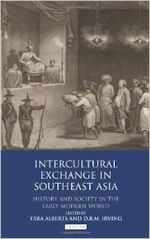
Dr. Tara Alberts is a Senior Lecturer in Early Modern History at the University of York's Department of History. Her research focuses on cross-cultural exchanges between Europe and Asia (c.1500–1700), particularly the circulation of medicines and health ideas along Southeast Asian trade routes. Before joining York in 2012, she held a Research Fellowship at Jesus College, Cambridge, and was a Max Weber Fellow at the European University Institute. She currently serves as the department's International Officer. Her teaching includes undergraduate modules like HIS00125I Historical Thinking and HIS00154H The Crossroads of the World: Southeast Asia c.1500–1750 , as well as postgraduate courses such as HIS00065M Medicine & Spiritual Healing in the Early Modern World . Her research projects explore topics like premodern medical translation, colonial religious conflicts, and intercultural exchange in Southeast Asia. Dr. Alberts has contributed to major journals like Osiris , co-editing special issues on translating medicine across premodern worlds. She leads the Translating Medicine in the Premodern World research project, investigating how medical knowledge traversed global networks between 800–1900. Her work bridges historical methods with interdisciplinary approaches to understand premodern globalization. Her activities include editorial work for Medical History and organizing workshops on medical translation. Her research emphasizes the agency of indigenous actors in knowledge exchange, challenging Eurocentric narratives of early modern global interactions.