Ying Sun is an Associate Professor at Cornell University's School of Integrative Plant Science, Soil and Crop Sciences Section. Her research integrates geospatial analysis, remote sensing, and ecosystem modeling to study agroecosystem-climate interactions across scales. Key research areas include: Remote sensing of Solar-Induced Chlorophyll Fluorescence (SIF) for photosynthesis quantification Developing high-resolution SIF datasets (OCO-2, ECOSTRESS) using machine learning Modeling carbon-water-energy fluxes in Earth System Models (ESMs) Assessing food-water-climate sustainability in China and Africa She teaches PLSCI 7203: Engineering Plant Sensors and PLSCI 5900: Master of Professional Studies Project . Her lab has produced notable work on Ethiopian land restoration (Nature Sustainability 2022) and Northwest China water depletion (Environmental Research Letters 2022).
Anna Theakston is a Professor of Developmental Psychology at the University of Manchester where she holds the position of Head of Division for the Division of Psychology Communication and Human Neuroscience. She is also Co-director of the ESRC International Centre for Language and Communicative Development (LuCiD), a major research initiative focused on language development in children. Dr. Theakston completed her undergraduate degree in Psychology at the University of Nottingham and earned her PhD through research at the University of Manchester on early language development in children aged 2-3 years. She subsequently coordinated the Manchester-based Max Planck Child Study Centre before being appointed to her current professorship. Her research focuses on children's early language and communicative development during preschool and early school years, situated within a usage-based framework that emphasizes child-environment interactions and caregiver input. Her work spans multiple areas including early gestural communication, caregiver-child interactions, grammatical construction acquisition, grammatical error origins, inflectional morphology, and syntax-semantics-pragmatics interfaces in complex language development. She frequently conducts crosslinguistic comparisons and employs diverse methodologies from corpus analysis to behavioral experiments, often collaborating with computational modelers. Analysis of her recent publications reveals strong emphasis on children's comprehension and production of complex sentence structures, particularly adverbial and complement clauses, with investigations into how information structure, iconicity, and pragmatic factors influence language development. Her work increasingly examines applications in real-world contexts including schools, nurseries, and cultural institutions, with growing attention to supporting deaf children's communication development and multilingual education. Co-Director, ESRC International Centre for Language and Communicative Development (LuCiD) Active researcher with 111 research outputs including articles, datasets, and book chapters Recipient of research funding from ESRC and Max Planck Institute Professor Theakston supervises numerous PhD students investigating various aspects of language development, with recent projects examining tag questions, cultural institutions' role in language learning for minority populations, science interventions for deaf children, and Modern Foreign Language teaching in multilingual classrooms. Her research has practical impact through tools like the Teacher Toolkit for Teaching Primary MFL in Multilingual Key Stage 2 Classrooms and initiatives supporting deaf children's social communication skills. She maintains active collaborations with researchers across multiple disciplines and institutions, as evidenced by her extensive co-authorship network. Her work contributes to UN Sustainable Development Goals related to quality education and reduced inequalities.
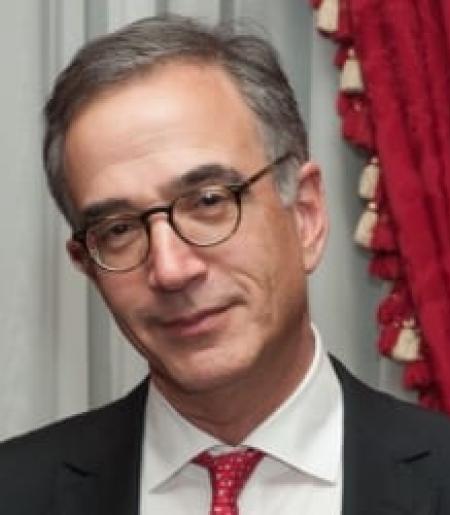
Paul Friedland is Professor of French History at Cornell University's College of Arts and Sciences and a Faculty Associate with the Latin American and Caribbean Studies program. His research focuses on the interplay between European culture, politics, and ideas during the long 18th century, with particular attention to connections between the metropole and Caribbean colonies. His educational background includes a B.A. from Brown University, an M.A. from the University of Chicago, and a Ph.D. from the University of California at Berkeley. His scholarly work bridges cultural, intellectual, legal, and political history with specializations in French Revolutionary studies and capital punishment history. Friedland's research examines the theatricality of political representation during the French Revolution, the evolution of capital punishment practices, and the transatlantic circulation of revolutionary ideas. His publications reveal interdisciplinary connections between performance studies, legal history, and colonial studies, with recent work exploring Caribbean perspectives on the French Revolution and early modern conceptions of animals. His notable awards include the David Pinkney Prize and prestigious fellowships from the American Council of Learned Societies, National Endowment for the Humanities, and Guggenheim Foundation. His scholarship has been supported by visiting fellowships at Princeton's Davis Center for Historical Studies and the Institute for Advanced Study. David Pinkney Prize (2003) American Council of Learned Societies Fellowship National Endowment for the Humanities Fellowship Guggenheim Fellowship Davis Center for Historical Studies Fellowship Institute for Advanced Study Fellowship Friedland teaches undergraduate and graduate courses including The French Revolution, Great Trials, Birth of Modern Thought, and Revolutions. His graduate seminars cover the French Caribbean, historiography of the French Revolution, and Michel Foucault's scholarship. His current research includes a manuscript on the trans-Atlantic French Revolution in the Windward Islands and a forthcoming book on animals in the Age of Humanism.
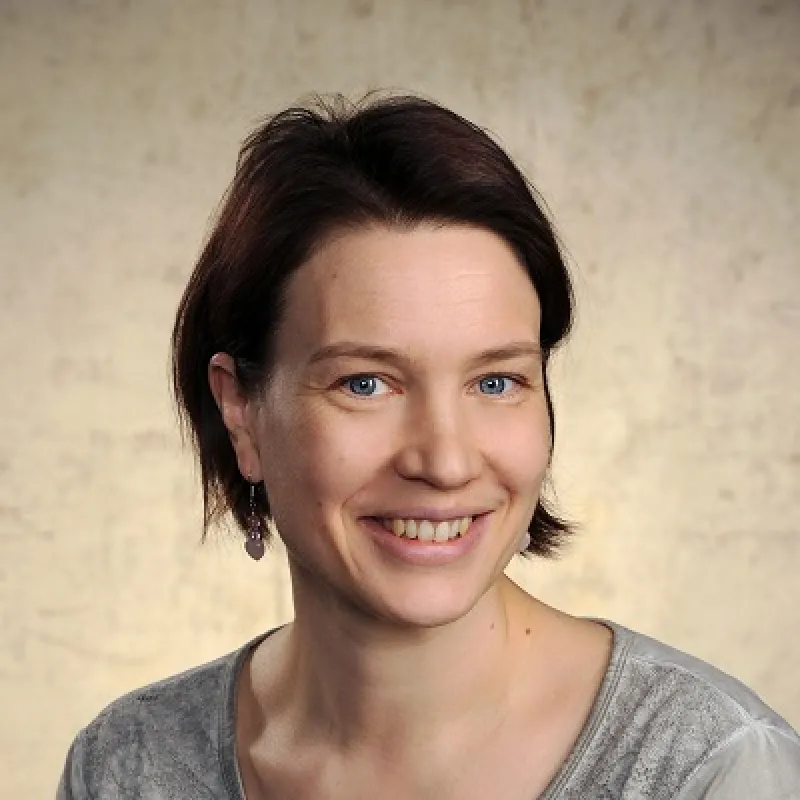
Johanna Naukkarinen is a Researcher at the School of Energy Systems at Lappeenranta University of Technology. Her work focuses on engineering education, gender dynamics in STEM, and lifelong learning competencies. Researcher, School of Energy Systems, Lappeenranta University of Technology Email: Johanna.Naukkarinen@lut.fi Her research explores: Gender disparities in engineering education and careers Pedagogical strategies for lifelong learning Mathematical skill development in first-year engineering students Technology education reform and sustainability integration Use of digital tools for competency enhancement Professional identity formation in early-career engineers Recent publications highlight trends in: Comparative studies across Belgium, Ireland, and Finland Co-creation methods in educational design Assessment of online learning environments Gendered perspectives on engineering recruitment Interdisciplinary approaches to sustainability education Workplace dynamics in technology sectors
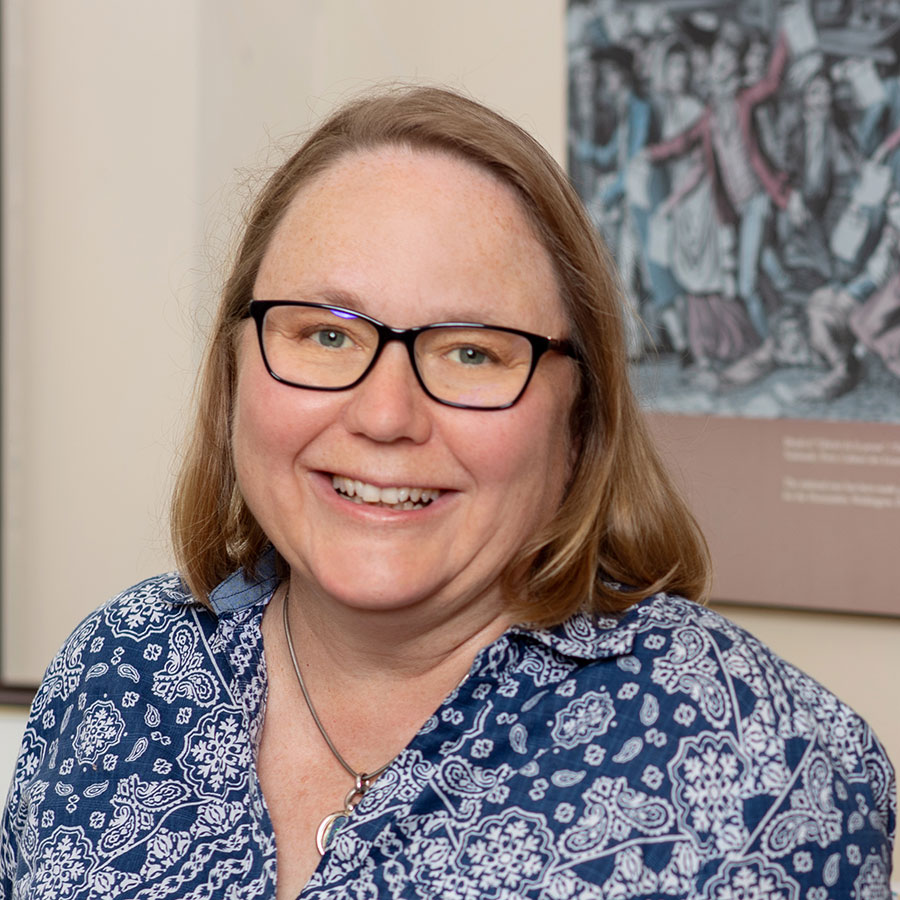
Sarah Hurlburt is a Professor of French & Francophone Studies at Whitman College. Her research focuses on historical migration networks within French Canadian and Métis communities in the Pacific Northwest and Minnesota, analyzing dual-language family correspondence and genealogical data to understand kinship structures from the 17th to early 20th centuries. She leads interdisciplinary work on: Women’s roles as 'kin keepers' in transatlantic families Preservation of French language and identity in diasporic communities Community-engaged projects like the Trois siècles de migrations francophones en Amérique du Nord (SSHRC-funded, 2019-2026) Historical analysis of settlements like Frenchtown (Walla Walla Valley) and Métis families of the CTUIR Hurlburt also contributes to pedagogical innovation, previously publishing on topics spanning Flaubert’s realism, Corneille’s theater, and digital tools for language instruction. She actively serves on the Frenchtown Historical Foundation board, bridging academic research with public history initiatives.
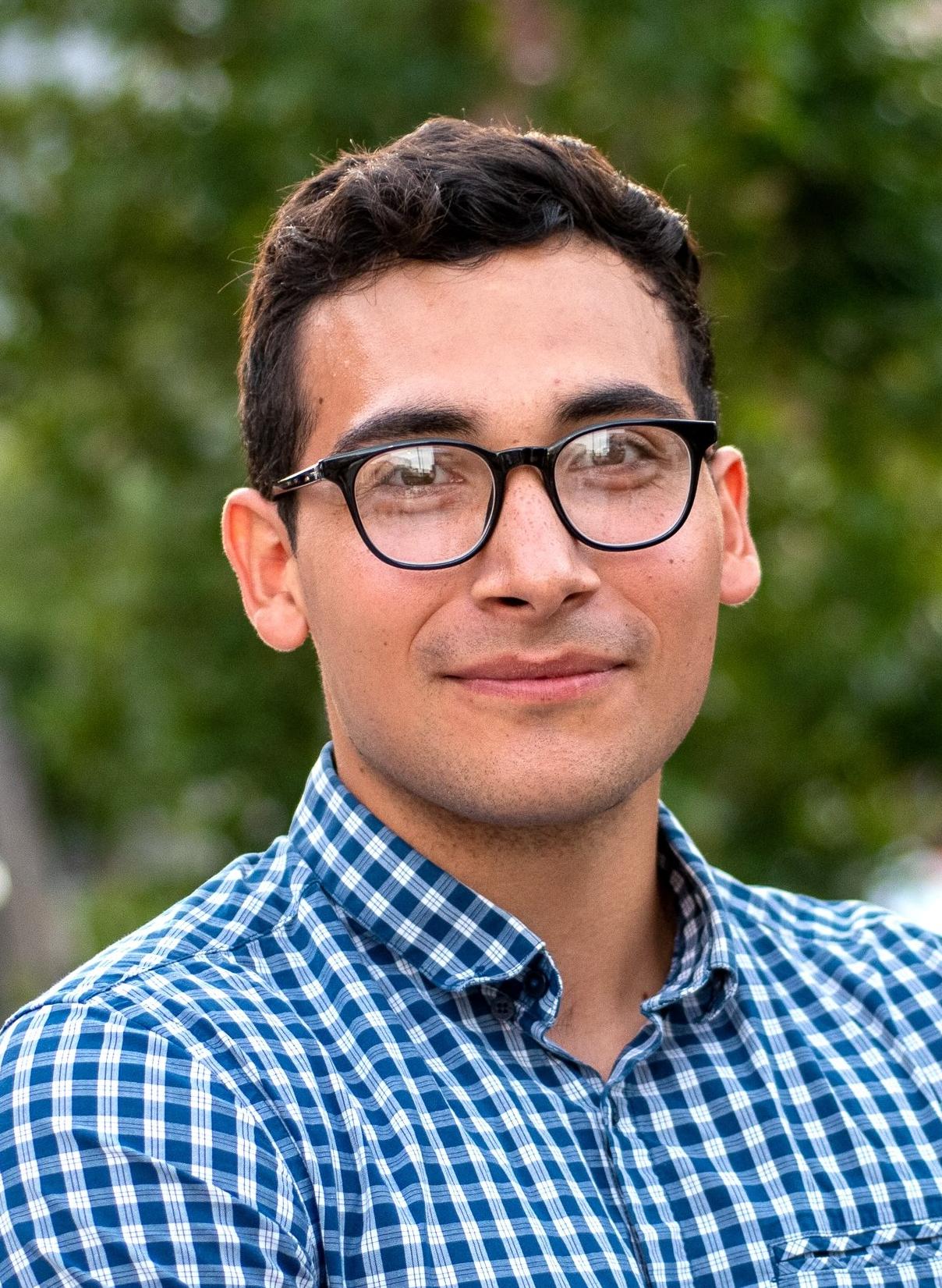
Moïse Blanchard is an Assistant Professor and Tennenbaum Early Career Professor at the H. Milton Stewart School of Industrial and Systems Engineering at Georgia Institute of Technology, having joined in August 2025. Previously, he was a Postdoctoral Fellow at Columbia University Data Science Institute. His academic journey includes a Ph.D. in Operations Research from MIT (2024), and M.Sc. and B.Sc. degrees in Applied Mathematics from École Polytechnique. Blanchard's research focuses on the intersection of machine learning theory, statistics, and optimization. His work addresses fundamental questions in universal learning, online algorithms, and convex optimization under memory constraints. His research program explores learnability under minimal assumptions, query complexity/memory tradeoffs, and decision-making in adversarial environments. This work has significant implications for theoretical computer science, operations research, and statistical learning theory. His publications reveal a strong emphasis on foundational aspects of learning theory and optimization. Recent work demonstrates expertise in universal learning frameworks, memory-constrained optimization, and probabilistic analysis of combinatorial problems. His research often bridges theoretical computer science with practical optimization challenges, particularly in contexts where traditional i.i.d. assumptions don't hold. Columbia DSI postdoctoral fellowship, 2024 INFORMS Transportation Science & Logistics (TSL) best student paper award, 2023 Air Force Office of Scientific Research Grant (AFOSR), with Prof. Patrick Jaillet, 2023 COLT 2022 Best student paper runner-up Bronze medal, Alibaba Global Mathematics Competition, 2022 Blanchard has received significant research funding including an Air Force Office of Scientific Research Grant. His work has been recognized with multiple prestigious awards, including the INFORMS TSL best student paper award for his research on the k-Traveling Salesman Problem. His extensive publication record in top venues demonstrates a strong research trajectory with impactful contributions to theoretical machine learning and optimization.
Irena Koprinska is a prominent researcher at the University of Sydney with over 150 publications from 1996 to 2025. Her work spans multiple interdisciplinary domains with significant contributions to machine learning applications in educational technology, time series forecasting, and health informatics. She maintains strong research collaborations, particularly with Kalina Yacef (38 joint publications), Mashud Rana (26 papers), and Bryn Jeffries (22 papers), indicating leadership in her research group. Her research interests focus on practical applications of machine learning across diverse domains. In educational data mining, she has pioneered methods for predicting student performance in programming courses, analyzing syntax errors, and developing automated hint generation systems. Her work in time series forecasting has made significant contributions to solar power prediction using advanced neural network architectures. Additionally, she has applied machine learning techniques to medical domains, particularly in sleep disorder detection and analysis. The analysis of her 15 most recent publications (2022-2025) reveals a continued focus on educational technology and time series analysis, with increasing attention to interpretable methods and health applications. Her work demonstrates a consistent trajectory of applying sophisticated machine learning techniques to solve real-world problems across multiple domains, with particular emphasis on creating practical tools for education and renewable energy management. Notable Research Contributions: Development of the HINTS framework for automated programming hint generation Innovative approaches to multistep-ahead time series forecasting Applications of deep learning to sleep disorder detection Methods for predicting student performance in programming education Her publication record in top venues including Machine Learning journal, AIED, EDM, and IJCNN demonstrates significant impact in both machine learning and educational technology communities. The consistent output of high-quality research over nearly three decades indicates sustained scholarly productivity and leadership in her fields of expertise.
Dr. Frankie T. K. Fong is a Lecturer in Developmental Psychology at Victoria University of Wellington, New Zealand. He also holds adjunct and guest appointments at Sunway University, Malaysia, and the Max Planck Institute for Evolutionary Anthropology, Germany, alongside an honorary research role at the University of Queensland's School of Psychology. Frankie earned his PhD from the University of Queensland and specializes in early childhood social cognitive development. His research explores how children imitate behaviors, select trusted sources, and interpret normative actions across diverse social and cultural contexts. He investigates the influence of predagogical cues, social motivations, task efficiency, and digital media on social learning outcomes. His recent work examines imitation of costly rituals, cross-cultural variations in learning modes, and the role of digital screens as social partners for children. Collaborative projects span urban and indigenous communities in East and West Malaysia. Dr. Fong contributes to academic hiring and promotion rigor through initiatives like Meta-Psychology , emphasizing generalizability in psychological research. He has secured grants from the John Templeton Foundation and The Issachar Fund to explore cultural cognition and education's impact on science and religion. Though not currently available for direct supervision, he has advised PhD candidates on topics including imitation dynamics, cumulative culture, and gender norms in matrilineal and patrilineal societies.
Rachel Midura is an Assistant Professor of Digital and Early Modern European History in the Department of History at Virginia Tech's College of Liberal Arts and Human Sciences. Her research focuses on the intersection of digital methodologies and early modern European history, particularly examining how communication networks shaped political power and intelligence gathering during the sixteenth and seventeenth centuries. Education: PhD in History from Stanford University (2014-2020) Rachel Midura specializes in digital history approaches to early modern Europe, with particular expertise in the history of information systems. Her work examines how the development of postal networks, print technology, and state intelligence operations created an 'information age' in the early modern period, long before the digital revolution of our own time. She integrates twenty-first century understanding of media and social networks with traditional historical approaches to develop new models for understanding historical communication. Her research often draws on extensive digitization projects to synthesize innovative historical perspectives on how information moved, was controlled, and shaped political power in early modern Europe. Midura's scholarly output demonstrates a consistent focus on the connections between physical travel routes, communication networks, and intelligence gathering in early modern Europe. Her work bridges traditional historical research with digital humanities methodologies, creating new pathways for understanding how information circulated in pre-modern societies. Through data-driven approaches to historical travel itineraries and postal networks, she reveals how early modern states developed sophisticated surveillance and intelligence systems that anticipated modern practices. Scientific Awards: Early Career Scholarly Impact Award (2025) Honorable Mention: Article Prize for Early Modern and Medieval History (2024) As an educator, Midura has developed innovative courses that integrate digital methodologies with historical content, including specialized offerings on espionage and surveillance in early modern Europe. Her teaching philosophy emphasizes the importance of making historical knowledge accessible through digital curation and annotation. She actively participates in professional development activities focused on inclusive teaching practices and has received funding for curriculum innovation in digital history education. Midura leads the Early Modern Digital Itineraries (EMDigIt) project, which transforms early printed itinerary books to support new data-driven approaches to the history of travel. This NEH-funded initiative represents a significant contribution to digital humanities methodology while advancing our understanding of historical mobility patterns and information networks.
Gregory Nagy is the Francis Jones Professor of Classical Greek Literature and Professor of Comparative Literature at Harvard University. He serves as Director of the Center for Hellenic Studies and oversees HarvardX MOOCs, engaging over 181,000 learners globally. His work bridges archaic Greek literature, oral traditions, and comparative metrics. Research Focus: Archaic Greek poetry, oral-formulaic theory, Indo-European metrics Publications: 15+ monographs including Ancient Greek Heroes, Athletes, Poetry (2024) and Masterpieces of Metonymy (2015) His scholarship reveals patterns in epic transmission, emphasizing performance's role in Homeric text stabilization. He pioneered the "24 Hours" methodology for analyzing heroic narratives across media. Scientific Awards: Goodwin Award of Merit (1982) for The Best of the Achaeans Nagy's HarvardX MOOC and mentorship initiatives have transformed classical education, creating intergenerational networks. He co-edited the digital Festschrift Donum Natalicium (2012) celebrating his 70th birthday.
Thad Starner is a Professor in the College of Computing at Georgia Institute of Technology and Technical Lead/Manager on Google's Glass. He directs the Contextual Computing Group (CCG), co-founded the Animal Computer Interaction Lab, and contributes to Georgia Tech's Ubicomp Group and Brainlab. A wearable computing pioneer since 1993, he has over 500 publications and 80 issued U.S. patents. Coined 'augmented reality' in 1990 Developed CopyCat for ASL learning in deaf children Invented Passive Haptic Learning for skill acquisition His research spans wearable interfaces for Deaf-hearing communication, dolphin interaction systems (CHAT), dog-handler communication (FIDO), and brain-computer interfaces for ALS patients. Current projects focus on optical aging simulation, XR input methods, and animal behavior telemetry. Recent publications (2023-2025) explore AR display ergonomics, AI-augmented reasoning, sign language recognition, and animal-computer interaction. His work has been featured in 60 Minutes, BBC, National Geographic, and Time Magazine. CHI Academy (2017) Lemelson-MIT Prize finalist White House Champions of Change finalist He advises graduate students in wearable systems and teaches AI and prototyping courses. His lab developed the Perceptive Workbench for gesture tracking and created early Eigenfaces research for face recognition.
Neda Haj Hosseini is a Senior Lecturer and Associate Professor in Biomedical Engineering at Linköping University's Department of Biomedical Engineering (IMT) . She contributes to teaching courses like TBMT56 - Medical Technology and TBME08 - Biomedical Modeling and Simulation , while leading research initiatives in AI-driven cancer diagnostics and biomedical optics. Research Focus: Development of AI methods for cancer diagnostics, optical coherence tomography (OCT) applications, and fluorescence spectroscopy in surgical guidance Affiliations: Center for Medical Image Science and Visualization (CMIV) , Analytic Imaging Diagnostic Arena (AIDA) , Swedish Medical Technology Association Recent Research Trends demonstrate expertise in applying deep learning to: Pediatric brain tumor classification using multimodal imaging Optical biopsy techniques for intraoperative decision support Automated biomarker quantification in histopathology Medical imaging data integrity and algorithm validation Scientific Awards include grants from: Joanna Cocozza Foundation (2022) Swedish Childhood Cancer Foundation (2024) Academic Leadership involves mentoring students in projects such as: "Multiple Instance Attention-based Learning for Brain Tumor Classification" "Vision Transformers for Multiclass Brain Tumor Tissue Classification" "Reaction-diffusion Models for Image-driven Tumor Simulation"
James Urquhart Allingham is a Research Scientist at Google DeepMind , working on the Gemini project. He completed his PhD in the Machine Learning Group at the University of Cambridge under the supervision of José Miguel Hernández-Lobato, with funding from EPSRC, the Michael E. Fisher Studentship in Machine Learning, and the Qualcomm Innovation Fellowship. He was also part of the ELLIS PhD program, advised by Eric Nalisnick at AMLab UvA. Current affiliation: Google DeepMind (Research Scientist) PhD: University of Cambridge (Machine Learning Group) Academic networks: ELLIS PhD program, Darwin College His research focuses on the intersection of Bayesian deep learning and probabilistic methods in deep learning. Key areas include deep generative models , zero-shot classification , prompt engineering , Monte Carlo gradient estimation , and applications to sustainability and climate change . His work has explored energy-based models , neural architecture search , and equivariance in convolutional networks . Selected scientific awards and grants include the Michael E. Fisher Studentship , Qualcomm Innovation Fellowship , and MPhil in Advanced Computer Science with Distinction . He has collaborated with institutions such as the Amsterdam Machine Learning Group (AMLAB) and University of the Witwatersrand .
Gina Bloom is a Professor of English at the University of California, Davis, with affiliations in the PhD programs in Education and Performance Studies. Her research spans Shakespeare, early modern drama, gender theory, and digital humanities, focusing on games, performance, and educational technologies. PhD, MA, and Certificate in Women's Studies from the University of Michigan BA from the University of Pennsylvania Her work includes the award-winning digital game Play the Knave and a decolonial pedagogy curriculum for teaching Shakespeare. She collaborates with UC Davis’s ModLab and DataLab, emphasizing social justice and immersive learning. Awards include Best AR/VR Game (2022) and Shakespeare Publics Award (2025). Her publications blend game studies, theater history, and feminist theory, with recent articles addressing decolonial education and digital embodiment. Winner, Shakespeare Publics Award (2025) Finalist, GEE! Learning Game Award (2023) Winner, Best AR/VR Game Award (2022)
Richard Axel is a University Professor at Columbia University, holding appointments in the Vagelos College of Physicians and Surgeons as Professor of Neuroscience, Professor of Biochemistry and Molecular Biophysics, and Professor of Pathology and Cellular Biology. He serves as Codirector of Columbia's Mortimer B. Zuckerman Mind Brain Behavior Institute and is an Investigator at the Howard Hughes Medical Institute since 1984. Dr. Axel earned his AB from Columbia College and MD from Johns Hopkins Medical School. His Nobel Prize-winning research identified over 1,000 odorant receptors in the nose that transmit olfactory information to the brain, revolutionizing our understanding of the sense of smell. His early work with colleagues developed groundbreaking gene transfer techniques that enabled the introduction of virtually any gene into any cell, leading to novel approaches for gene isolation and analysis of gene function. Dr. Axel's research focuses on understanding how olfactory information is processed in the brain to create internal representations of the external world. His work spans molecular neuroscience, neural circuitry, and the relationship between sensory input and behavioral output. He has pioneered techniques that have advanced our understanding of neural function and sensory processing mechanisms. Analysis of Dr. Axel's recent publications reveals a continued focus on olfactory processing systems, with increasing integration of computational approaches and machine learning to understand neural representations. His work spans from molecular mechanisms to circuit-level analyses, with particular emphasis on how odor information is encoded and transformed in the brain to produce meaningful perceptions and behaviors across multiple model systems. Nobel Prize in Physiology or Medicine (2004) Howard Hughes Medical Institute Investigator (1984-Present) The Royal Society Foreign Member (2014) Gairdner Foundation International Award (2003) American Philosophical Society Member (2003) National Academy of Sciences Member (1983) Richard Lounsbery Award (1989) American Association for the Advancement of Science Fellow (2018) American Academy of Arts and Sciences Fellow As Codirector of the Zuckerman Institute, Dr. Axel oversees one of the world's leading neuroscience research centers, fostering interdisciplinary collaboration across multiple departments. His lab continues to train the next generation of neuroscientists, investigating how sensory information is transformed into meaningful perceptions and behaviors. Dr. Axel's early work on gene transfer techniques laid the foundation for numerous advances in molecular biology and neuroscience, including the isolation and analysis of the CD4 gene, the cellular receptor for HIV. Dr. Axel leads the Axel Lab at Columbia University, which is part of the Zuckerman Institute. His research team investigates how organisms recognize olfactory information in the environment and transmit it to the brain, where it is processed to create internal representations of the external world. The lab employs multidisciplinary approaches combining molecular, cellular, and systems neuroscience to unravel the neural circuits underlying sensory processing and behavior, with particular focus on understanding how these representations translate stimulus features into appropriate innate and learned behaviors.