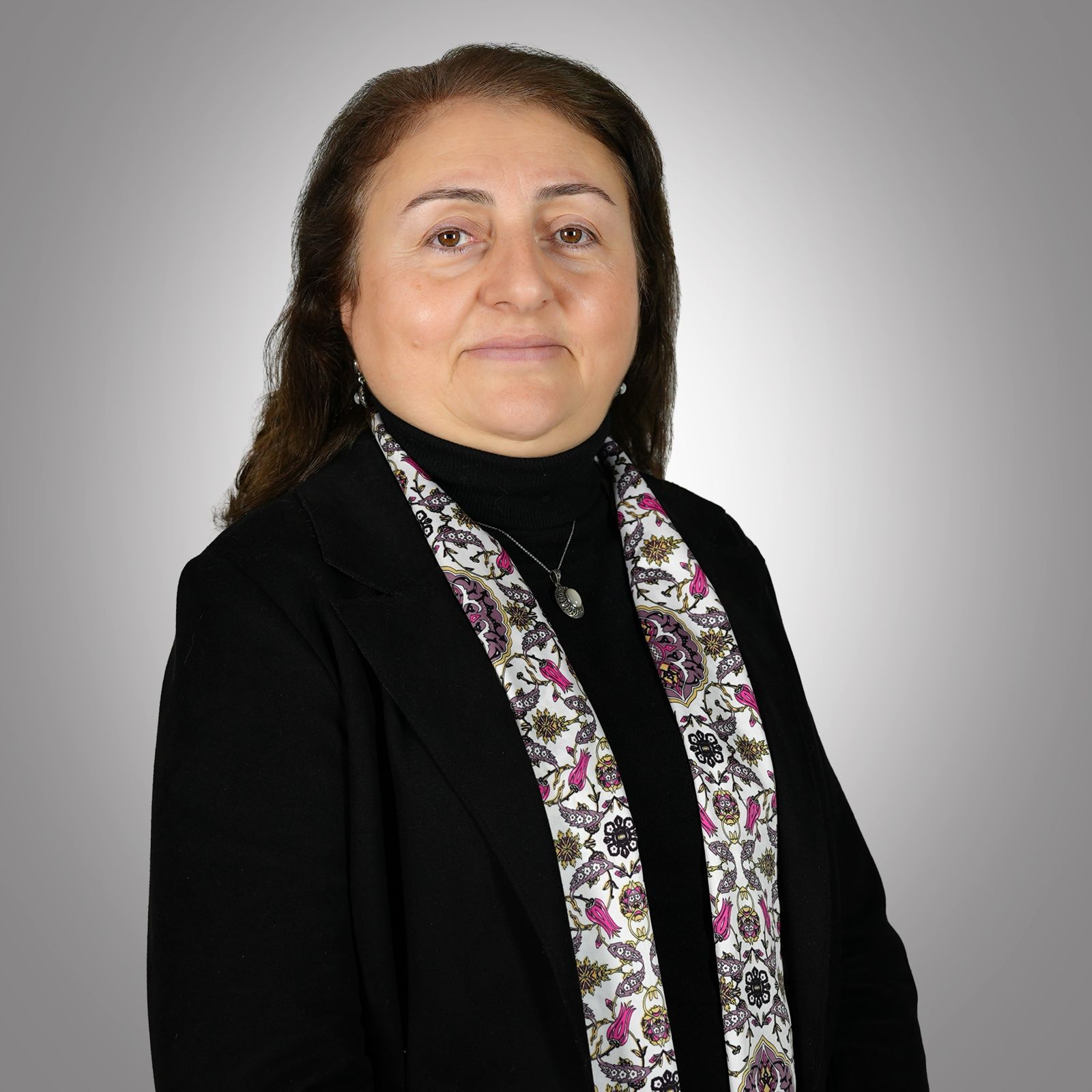
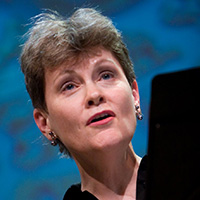
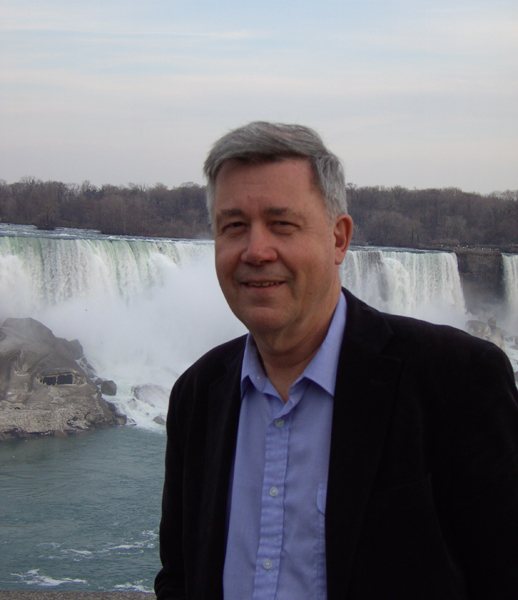
AHMET BURAK BASMACIOĞLU is a Professor at Anadolu University State Conservatory's Music Department since 2023. He has held academic positions at the same institution since 1992, including Associate Professor (2010-2023) and Lecturer (1992-2010). His work focuses on early music performance , keyboard pedagogy , and hermeneutics in historical performance . 1992: Hacettepe University undergraduate 1994-1996: Postgraduate at Anadolu University 1996-2003: Master's and PhD in Piano at Anadolu University 1998-2006: Specialization in Early Music at Strasbourg Conservatory His research areas include historically informed performance , baroque keyboard , and basso continuo . He has supervised 6 theses on topics like Bach adaptations and ornamentation systems. His recent publications analyze French Baroque ornaments (2022) and microtonal keyboards (2023), while his conference work explores hermeneutics in early music . As an active performer, he has led harpsichord and organ recitals since 1992, including collaborations with Istanbul Symphony Orchestra (2024) and Ankara Music Festival (2024). He also contributes to academic journals as Special Issue Editor for the International Journal of New Trends in Arts, Sports & Science Education (2022-2024).
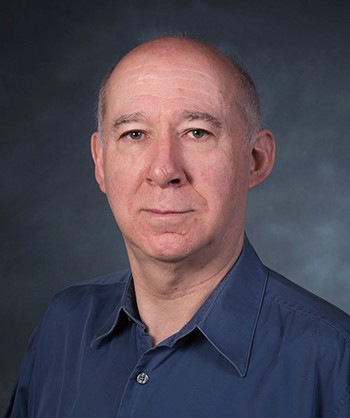
Peter Watchorn is a part-time faculty member at Boston College and affiliate lecturer at the Faculty of Divinity. An Australian-born harpsichordist with over 40 years of performance experience, he specializes in Baroque keyboard music and historical instrument construction. His research focuses on J.S. Bach's harpsichord works and 17th-century composers, with recordings of complete Bach compositions. He co-founded the Musica Omnia label and the Boston Bach Ensemble for choral performances. Watchorn teaches courses in music history including Introduction to Music, Baroque music, and specialized Bach studies. His scholarly work includes a biography of harpsichordist Isolde Ahlgrimm.
David Howie is a Lecturer in Collaborative Piano at the Sydney Conservatorium of Music, University of Sydney, where he has been affiliated since 1992. He holds a BMus and GradDipMus(Acc) in accompaniment. Prior to returning to Australia, he was Head of Keyboard Studies at King's College in Somerset, England. His career spans over three decades of teaching and performing internationally. Education: Studied piano under Sonya Hanke and Gordon Watson, later specializing in accompaniment with David Miller and Paul Hamburger. Affiliations: Sydney Conservatorium Ensemble Unit member since 1992. Research interests focus on collaborative piano techniques, chamber music performance practices, and promoting Australian contemporary repertoire through his HD Duo partnership with saxophonist Michael Duke. They released Australian Portrait (2012) and The Fairer Sax , exploring Australian composers and female composers' works. Performance highlights include collaborations with artists like Stanley Drucker, Kamahl, and Dominica Matthews across Europe, America, Asia, and Australia. Recent recordings include Bird Spirit Dreaming (2024) and Music of the Commonwealth (2021), showcasing cross-cultural musical fusions. Grants: 2017 Australian Elizabethan Theatre Trust grant for commissioning new works with HDDuo. Labs/Teams: Co-founder of HD Duo, pioneers of Australian music for saxophone and piano.
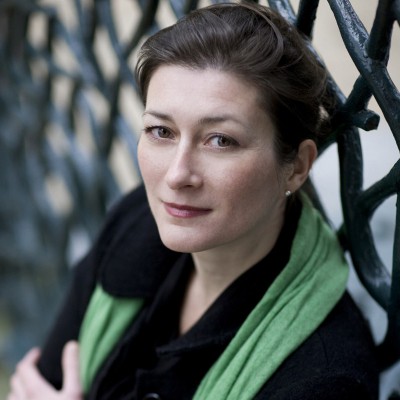
Claire Chevallier (born 1969) is a French pianist specializing in historical keyboard performance, currently teaching fortepiano at the Conservatoire Royal de Bruxelles since 2004. She maintains a significant collection of six historical pianos spanning 1842-1920 and is renowned for her expertise in period performance practice from the classical period through French masters of the 20th century. Chevallier studied piano at the musical academies of Nancy, Strasbourg (with Hélène Boschi), and Paris (with Bruno Rigutto), while simultaneously pursuing studies in mathematics and physics. She continued her musical education at the Conservatoire Royal de Bruxelles with Jean-Claude Vanden Eynden and Guy Van Waas, where she was awarded first prize in piano and chamber music. Her fascination with the fortepiano developed through a master class with Jos van Immerseel, leading her to independently study the historical background, construction, and maintenance of these instruments. As a performer, Chevallier is highly acclaimed for her solo recitals, chamber music, and concertos across major European venues including Cité de la Musique in Paris, Concertgebouw Amsterdam, and BOZAR in Brussels. She has developed significant expertise as both a fortepiano specialist and performer, bringing historical instruments to theater productions and interdisciplinary collaborations. Since 2013, she has focused research on Russian piano music and instruments, performing Moussorgsky's works on a Becker piano from 1875. Chevallier's recordings include award-winning albums dedicated to Satie (2008), Liszt (2011), and Moussorgski (2016), as well as the "Piano Works Debussy" (2020). Her work spans French composers like Ravel, Debussy, Satie, and Poulenc, with landmark recordings including Ravel's "Concerto pour la main gauche" with Anima Eterna orchestra. First prize in piano and chamber music, Conservatoire Royal de Bruxelles Member of jury, International Fortepiano Competition (2007, 2010) Member of jury, Liszt Competition Utrecht (2014) Chevallier is celebrated for her interdisciplinary collaborations with artists across dance, theater, and visual arts, including notable projects such as "Chez Bricktop" with Claron McFadden, "Mata-Hari," and "Piano Works Debussy" with dancer Lisbeth Gruwez. She has worked extensively with performing artists including Rosas, David Claerbout, Josse De Pauw, and Jan Lauwers (Needcompany), creating innovative performances that bridge historical music practice with contemporary artistic expression. Her expertise extends to piano tuning and maintenance of historical instruments, documented in her film "CLAIRE CHEVALLIER tunes." She has served as "Friend in Music" at Concertgebouw Brugge (2008-2009) and held a three-year residency at AMUZ Antwerp starting in 2009.
Eric Mentzel serves as Professor of Voice at the University of Oregon School of Music and Dance, specializing in historically-informed vocal performance. An internationally acclaimed concert soloist, he has performed with leading conductors including Andrew Parrott and Howard Arman at venues such as the Amsterdam Concertgebouw and Edinburgh Festival across Europe, Japan, and Australia. His extensive discography of nearly 60 recordings for labels like Sony and Harmonia Mundi has earned multiple international awards including the Preis der deutschen Schallplattenkritik and Diapason d'Or. Mentzel earned his Master of Fine Arts in Early Music Performance from Sarah Lawrence College (1983) and Bachelor of Music in Music Education from Temple University College of Music (1980). His academic training established the foundation for his expertise in historical performance practices spanning medieval to contemporary repertoire. His research focuses on Music Performance, Vocal Performance, Choral Studies, and Historical Performance Practice, with particular emphasis on medieval and Renaissance vocal music including works by Hildegard von Bingen and 15th-century German songbooks. He has also premiered contemporary compositions by Alfred Schnittke, Henri Pousseur, and Garrett Fisher, demonstrating exceptional versatility across historical periods. Mentzel's recent recordings (2001-2016) reveal a consistent scholarly approach to medieval and Renaissance repertoire, especially German and French sources from the 12th-15th centuries, alongside significant contemporary opera projects. His critically acclaimed Vox Iberica series and Hildegard von Bingen recordings have significantly shaped modern understanding of early music performance practices. His major awards include: Preis der deutschen Schallplattenkritik (German Grammy) Diapason d'Or de l'Annee Choc de Musique Diapason d’Or Dix de Repertoire At the University of Oregon, Mentzel mentors undergraduate and graduate students in voice performance and historical practices. He has held guest professorships at the Schola Cantorum in Basel, Royal Conservatoire in The Hague, and University of Music and Performing Arts in Stuttgart, while directing workshops at Vancouver Early Music Programme and Amherst Early Music. Mentzel founded the ensemble Vox Resonat in Germany (1998), re-forming it in Oregon (2013) for innovative programs including Day of the Dead concerts in Eugene's Masonic Cemetery. Since 2015, he has served as Artistic Director of the Seattle Medieval Women’s Choir and maintains long-standing collaborations with ensembles including Sequentia and Huelgas Ensemble.
Joyce Wei-Jo Chen serves as Assistant Professor of Historical Keyboards at the University of Oregon's School of Music and Dance, where she bridges acoustics, history of science, and historical instrument craftsmanship. A native of Taiwan and internationally active harpsichordist, she performs across the United States, Europe, and Asia while advancing research on seventeenth-century sonic epistemologies. Her academic credentials include: Ph.D. in Historical Musicology & Interdisciplinary Humanities (expected 2024), Princeton University M.A. in Historical Musicology (2020), Princeton University D.M.A. in Harpsichord Performance (2017), Stony Brook University M.M. in Harpsichord Performance (2013), Stony Brook University B.S. in Mechanical Engineering (2011), UC Berkeley Chen's research centers on the material culture of sound, examining how artisanal knowledge shaped acoustical theory through hands-on engagement with historical instruments. Her dissertation fieldwork included a four-month apprenticeship at Zuckermann Harpsichords International—the last U.S. harpsichord factory—where she constructed her own instrument while investigating sensory aesthetics in global scientific networks. Recognized with the Delaware Division of Arts' 2018 Individual Artist Fellowship and Early Music America's 2019 Emerging Artist Showcase, she also pioneers access initiatives through collaborations with HBCUs. Her upcoming solo album features English virginalist repertoire, extending her scholarly work into performance practice. Chen has previously taught at St. Joseph's University, University of Delaware, and Delaware State University, developing the HBCU Early Music Access Project with Early Music America and Princeton GradFUTURES. Her mechanical engineering background informs innovative approaches to instrument design, including a senior thesis project on self-tuning harpsichord mechanisms.
Greg Satterthwaite is an Assistant Professor of Jazz Piano and African American Studies at the University of Georgia , affiliated with the Hugh Hodgson School of Music . His work bridges jazz improvisation , Afro-Caribbean musical traditions , and African American cultural identity . Doctor of Musical Arts, University of North Texas Master of Arts in Commercial Music, Florida Atlantic University Bachelor of Music, University of Miami His research and creative output focus on jazz education , cultural hybridity in music , and African diaspora influences . He co-founded JazzSpire.org , a platform for arts advocacy and creative education. At the 2021 Jazz Education Network Conference, he presented a critical analysis of McCoy Tyner’s early recordings, reflecting his scholarly approach to jazz history. His 2023 album Savannah Blue explores Georgia’s coastal culture and Jamaican roots , while his 2024 release Crossing Lines fuses jazz improvisation with Afrobeats, reggae, and neo-soul . Recipient of South Arts 2023 Jazz Road Artist Award Collaborated with Grammy-winning artists (Terreon Gully, Delbert Felix) Performs at major festivals (Swan City Piano Festival, Denton Jazz Festival) As an educator, Satterthwaite integrates mentorship from jazz legends (Stephen Scott, Ron Miller) into his teaching, emphasizing jazz as a living tradition and a tool for cross-cultural storytelling .
Robert Woolley is a Harpsichord and Clavichord Professor at the Royal College of Music within the Historical Performance school. A leading European performer and teacher of early keyboard instruments, he has made significant contributions to the study and performance of Baroque and Renaissance music. Primary Affiliation: Royal College of Music Roles: Director of Early Music Department (1985–2006), Professor of Harpsichord and Clavichord His expertise spans solo and ensemble performance on harpsichord, organ, and fortepiano, with notable recordings of composers like Purcell, Bach, Scarlatti, and Froberger. He co-founded the Purcell Quartet in 1984 and has performed internationally at major festivals. Students under his mentorship include prominent figures in historical performance, such as Laurence Cummings (Head of Historical Performance, Royal Academy of Music) and multiple Intercollegiate Broadwood Harpsichord Competition prizewinners.
Dr Paul Rickard-Ford is a Senior Lecturer and Chair of the Piano Unit at the Sydney Conservatorium of Music, The University of Sydney. He holds a BMus from Melbourne Conservatorium, ARCM from Royal College of Music, and a PhD from the University of Adelaide on Schumann’s late piano works. His career spans international performances, recordings, and teaching, marked by awards such as the 2017 Vice-Chancellor’s Award for Excellence in Teaching and the 1988 Australia Achiever award. His pedagogical philosophy emphasizes 'Freedom and Control' in piano technique and creativity. Research interests include Romantic piano repertoire, performance practice, and pedagogy. He has recorded extensively, including Liszt’s Annees de Pelerinage and Schumann’s late works. Collaborations with Natalia Sheludiakova include world premieres like Carl Vine’s Piano Sonata for Four Hands . His students excel in global competitions, with notable wins in Sydney International Piano Competitions (2012, 2016). He tours Asia annually for masterclasses and performs on ABC Classic FM. Publications include Dr Paul's Treasure Chest | Book 1 (2018) and a chapter in Australian Pianists: A Cross-section of Performers (2010). Awards also include the Clarke Scholarship (London) and Dannreuther Prize for concerto performance. His academic roles involve examiner duties for AMEB and guest lecturing on piano pedagogy.
Bernhard Klapprott is a German harpsichordist, clavichord player, organist, and professor at the Franz Liszt University of Music Weimar, where he leads the Institute for Early Music. He specializes in historical keyboard instruments and early music performance practice, teaching at both undergraduate and graduate levels. His roles include professor of harpsichord/historical keyboard instruments and organ (early music) in the Church Music/Organ program. Education: Studied with Hugo Ruf, Bob van Asperen, and Michael Schneider. Completed concert diplomas in harpsichord and organ in Cologne and Amsterdam. Founded the ensemble Cantus Thuringia & Capella (1999) to promote Central German Baroque repertoire. Initiated the 'Thuringia Music Heritage' project to revive forgotten vocal/instrumental works. Research focuses on clavichord's role in 18th-century vocal style, South German Renaissance keyboard practices, and Silbermann organ performance. Has recorded over 30 CDs on labels like Aeolus and cpo, winning ECHO Klassik and German Record Critics' Awards. Notable recordings include Bach's Complete Organ Works on Silbermann Organs and Thomas Tomkins' complete keyboard music. Teaching emphasizes 16th–18th century repertoires, historically informed performance practices, and contemporary works for early instruments. His students have won major competitions including the International Harpsichord Competition in Bruges and the Telemann Competition in Magdeburg.
Claudia Schweitzer is a Lecturer at the Université Sorbonne nouvelle – Paris 3 and a research assistant at the Sophie Drinker Institut Bremen and the CNRS-funded project 'Staccato'. She holds dual PhDs: one in Musicology from the University of Oldenburg (2008) and another in Linguistics from the Université Sorbonne nouvelle – Paris 3 (2018). Her research focuses on intersections between music and French language, particularly in the 17th/18th centuries. Education: Studied Historical Keyboard Instruments and Church Music at Universities in Würzburg, Kassel, and Aachen. Taught Harpsichord, Thoroughbass, and Choir Direction at the HMT Leipzig (2003–2014) and Music History (Medieval to Baroque) at the Université Paul Valéry Montpellier 3 (2014–2018). Teaching in Bremen includes Music History (Early Music), Source Studies, and supervision of Master’s theses. She remains active as a harpsichordist, blending scholarly and performance practices. Research emphasizes historical connections between musical and linguistic expression in French contexts, with projects anchored in 17th/18th-century cultural frameworks.
Prof. Dr. Robert Lang is a Professor and Dean of the Faculty of Humanities and Natural Sciences at Ludwigsburg University of Education. He holds academic roles in multiple committees including the General Committee for Studies and Teaching, QM Steering Group, and the SPA Bachelor's program in Cultural and Media Education. His research focuses on music education, music theory pedagogy, and interdisciplinary approaches in art and music teaching. He completed his doctorate in musicology at the Berlin University of the Arts, specializing in Neapolitan opera of the 19th century. Lang has extensive teaching experience at institutions like the Berlin University of the Arts and the University of Bielefeld. His work emphasizes empirical studies in music education, digital media integration, and cross-disciplinary projects. Notable awards include the Comenius EduMedia Medal 2007 for his contributions to educational materials. His publications span music theory pedagogy, opera history, and interdisciplinary teaching methods. Key themes include empirical research in music education practices, the role of digital tools, and bridging music with other disciplines such as art and language. He is actively involved in textbook development and curriculum design for music education at various academic levels.
Tim Pyper serves as Lecturer in Music and College Organist at Williams College, teaching music theory, keyboard harmony, and instrumental instruction in organ, harpsichord, and piano. An accomplished performer, he is also a certified Alexander Technique instructor dedicated to promoting ergonomic health among musicians. His academic credentials: Bachelor of Music, University of Rochester (2003) Master of Music, University of Rochester (2006) Master of Arts, Cornell University (2010) Doctor of Musical Arts, Cornell University (2011) Pyper's scholarly interests center on organ performance practice, especially early 20th-century English organ music, and the application of the Alexander Technique to prevent injuries in keyboard performers. His research bridges historical performance and somatic education, resulting in workshops and a forthcoming book chapter. His significant awards include the Arthur Poister Memorial Competition First Prize (2008), the Royal Canadian College of Organists National Competition First Prize (2001), and the FRCCO diploma. Professional experience includes directing music programs at the Cathedral Church of the Redeemer in Calgary and the Church of the Holy Apostles in New York City (2017-2023), where he led nationally broadcast recordings and international choir residencies.
Marcia Young is an Instructor in Music and Director of Performance Studies at Yeshiva University's Beren Campus, located in Stanton Hall. She holds a BA from the University of St. Catherine and an MFA from the University of Minnesota. Her expertise spans applied music, performance pedagogy, voice production, and historically informed performance practices. As a performer, she is affiliated with ensembles like My Lord Chamberlain’s Consort, Duo Marchand (with Andy Rutherford), and the medieval trio Trefoil. Her performances have been featured at institutions such as The Metropolitan Museum of Art, The Cloisters, and the Folger Consort. She also collaborates with lute virtuoso Christopher Morrongiello and teaches at workshops like the San Francisco Early Music Society. Her research interests emphasize early music interpretation, vocal technique, and keyboard/harp instrumentation. She has contributed to media as a writer for Opera News, Playbill, and WQXR radio. Young’s awards include Phi Beta Kappa membership, recognizing academic excellence. Teaching responsibilities include Applied Music, Chamber Ensemble, Choral Ensemble, and courses like 'Sense of Music' and 'Intro to Music Pedagogy.' Her work bridges historical performance practices with contemporary education, fostering interdisciplinary musical scholarship.
Harald Herresthal is a Norwegian academic and Full Professor (1978-present) at the Norwegian Academy of Music in Oslo, with prior roles as Assistant Professor (1973) and Lecturer (1968) in music history. He served as Academy President (Rektor 1980-83) and organist at Majorstuen Church since 1974. His work bridges music history , organ performance , and liturgical traditions , emphasizing Nordic-German interactions and 19th-21st century Norwegian composers. Academic roles span 40+ years at Norwegian Academy of Music Specializes in church music , Scandinavian-German musical exchange , and composers like Grieg, Bull, and Svendsen Highlights include Edvard Grieg's international networks and Ole Bull's cultural diplomacy Publications focus on Nordic musical identity , nationalism in composition , and historical performance practices across 15+ books and articles since 1984. Awards include The King's Order of Merit , Lindeman Prize , and honorary doctorate from Berlin University of the Arts. His research spans liturgical organ traditions , German-Norwegian cultural ties , and modern music policy in East Germany . 1998: Paul Harris Fellow, Rotary Foundation 2003: King's Gold Medal, Lindeman Prize 2003: Dr.h.c. from Universität der Künste Berlin