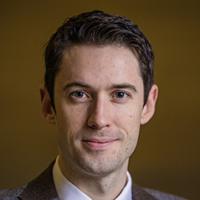
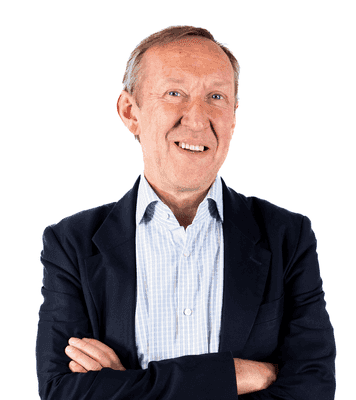
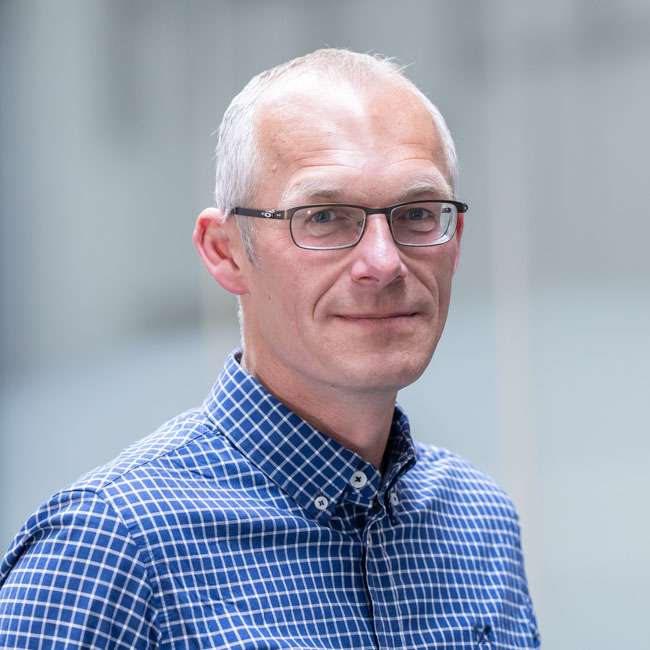
Conor J. Kelly is the Bingham Early Career Fellow in Constitutional Studies at Balliol College, University of Oxford, and teaches in the Department of Politics and International Relations. His work focuses on Irish, British, and European constitutional politics, with a primary emphasis on Northern Ireland’s constitutional future, Brexit impacts, and party stances on European integration. He holds a PhD from Birkbeck College, University of London, alongside degrees from the University of Galway, Maastricht University, and Birkbeck College. His research includes roles as Project Manager and Research Assistant at UCL’s Constitution Unit, managing projects like the Working Group on Unification Referendums and Stormont Reform. He has taught at UCL and LSE, covering modules such as British Politics, European Union Politics, and Comparative Government. His publications analyze Northern Ireland’s governance challenges, Brexit’s implications, and the Belfast/Good Friday Agreement’s evolving role. Notable works include the forthcoming book Dividing Lines in Northern Ireland: Explaining Party Stances on the EU and Brexit and articles in The Political Quarterly and Journal of European Public Policy . Kelly’s work bridges academic research with policy engagement, including parliamentary evidence submissions to the Northern Ireland Assembly and House of Commons committees. His research emphasizes institutional reform, public attitudes toward unification referendums, and the interplay between Brexit and constitutional frameworks.
Jampel Dell'Angelo is an Associate Professor with ius promovendi in Water Governance and Politics at the Department of Environmental Policy Analysis, Institute for Environmental Studies (IVM), Vrije Universiteit Amsterdam. He holds concurrent roles as a Visiting Scholar at the University of California, Berkeley's Ecohydrology Lab, and an Environmental Governance Affiliate Scholar at SESYNC, Maryland. His research focuses on multilevel dimensions of water governance, climate adaptation in African irrigation systems, and transnational land investments' impacts. He leads the EU-funded NEWAVE project, coordinating 15 Early Stage Researchers across 10 institutions. Educated with a dual PhD in Environmental Science (Autonomous University of Barcelona) and International Cooperation (Sapienza University), he also holds advanced degrees from the LSE, Sapienza, Curtin, and the University of Siena. As Editor-in-Chief of World Development , he promotes interdisciplinary research on socio-environmental systems. His work contributes to UN SDGs related to clean water, sustainable cities, and responsible production. Research interests span water grabbing dynamics, socio-ecological resilience, and policy frameworks for equitable resource management. Recent projects address Mediterranean water scarcity solutions and the socio-political implications of global land rushes. He supervises PhD candidates exploring themes like water democracy, agrifood transitions, and environmental justice. Key contributions include pioneering analysis of 'water commons grabbing' and documenting the Global Water Grab Syndrome. His documentary work complements field research, such as Working Together: Research and Water Governance on Mount Kenya . Current projects emphasize innovative governance models and climate-resilient water management in transboundary contexts.
Patrick Le Galès is a CNRS Research Professor at Sciences Po's Centre for European Studies and Comparative Politics (CEE), where he contributes to research on urban governance, public policy, and European political sociology. He was the founding Dean of the Sciences Po Urban School (2015–2022) and remains an active faculty member, teaching and leading research groups on urban transformation and state restructuring. His research interests span urban sociology, comparative public policy, political economy, and the governance of European cities. He investigates themes such as financialization of housing, digital cities, urban inequalities, and the reconfiguration of the modern state. His work combines sociological and political science approaches to analyze how cities and states adapt to economic and social change. The 15 most recent publications reflect a consistent focus on urban governance, state transformation, and European integration. These works span subfields including smart cities, policy instruments, metropolitan conflict, and institutional change, with keywords in political science, sociology, and urban studies. His research often adopts a comparative framework across European and global cities. Fellow of the British Academy (FBA) Member of Academia Europaea CNRS Silver Medal (2018) Stein Rokkan Prize (2002) Regional Studies Association Best Paper Award (2017) CNRS Bronze Medal (1996) GRALE CNRS Prize (1991) Mattei Dogan Foundation Award of Excellence (2007) Le Galès has supervised numerous PhD candidates and junior researchers, though specific advisees are not listed. He has led and participated in multiple funded research projects, including European, national, and international contracts. He has served on ERC panels and editorial boards of leading journals such as British Journal of Political Science , Socio-Economic Review , and European Urban and Regional Studies . He co-edits book series on Governance (Presses de Sciences Po) and Urban and Social Change (Wiley/Blackwell). He is involved in the 'Cities are back in town' and 'Restructuring the state' research groups at the Centre for European Studies and Comparative Politics. He also contributes to the Transversal Seminars and thematic seminar series on urban and policy transformations. His ongoing project LAC-EU (2024–2028) explores Latin American challenges in the 21st century, expanding his comparative urban research globally.
Arjan F. Kirkels is an Assistant Professor and University Lecturer in the Department of Technology, Innovation & Society within the School of Industrial Engineering and Innovation Sciences at Eindhoven University of Technology (TU/e). His work focuses on sustainability assessments, decision-making in transitions, and interdisciplinary education for sustainable innovation. His research interests include Life Cycle Assessment (LCA), Multi-Criteria Assessment (MCA), sustainability transitions, industrial ecology, and systems engineering. He applies these to emerging technologies such as batteries, hydrogen systems, and heat pumps, with a strong emphasis on integrating stakeholder values and addressing deep uncertainties in sustainability decisions. The recent articles highlight a consistent focus on assessing emerging technologies, particularly in renewable energy and circular economy applications. Trends include prospective LCA, experience curves in solar technology, socio-technical impact assessment, and educational innovations in sustainability. His work bridges technical analysis with social and governance dimensions of sustainability transitions. Best Teacher Award, 1st year Bachelor Sustainable Innovation, for course 0SV20 'Industrial Ecology' (2013) Best Teacher Award, 1st year Bachelor Sustainable Innovation, for course 0SV20 'Industrial Ecology' (2018) Best Teacher Award, 1st year Bachelor Sustainable Innovation, for course 0SV20 'Industrial Ecology' (2020) Educational award nomination, bachelor Sustainable Innovation, course 0SK30 Inter-University Sustainability Challenge (2023) Education Award 2024 - master Innovation Sciences (2025) Arjan F. Kirkels has supervised over 100 thesis students and more than 100 interdisciplinary student groups. He has developed and taught over 20 courses and co-authored 4 textbooks and 7 publications on educational innovation. He is currently supervising four researchers: Huiying Liu, Prapti Maharjan, Rishi Bhatnagar, and Seyed Mousavi. His research is supported by projects such as the EU-funded cVPP (Community-based Virtual Power Plant) and studies on Dutch sustainability transitions. He is actively involved in educational initiatives, including MOOC development and challenge-based learning, and contributes to public discourse through media appearances and workshops on sustainability education and systems thinking.
Ian Wilson is the Deputy Director of the Centre for Regional Economic and Social Research (CRESR) and a Professor of Policy Research and Evaluation at Sheffield Hallam University. He holds BA and MSc degrees, with over 20 years of expertise in applied policy research and evaluation, securing £15M+ in research funding. His work spans housing policy, urban regeneration, and social welfare, collaborating with government agencies like DLUHC, DWP, and Welsh Government. Education: BA, MSc (institutions unspecified) Roles: Deputy Director (CRESR), Professor of Policy Research and Evaluation Affiliations: Social and Economic Research Institute, College of Social Sciences and Arts Research Focus: Wilson's work centers on measuring policy impacts, housing affordability, and place-based interventions addressing social inequities. He pioneered methods like shadow pricing for regeneration outcomes and developed frameworks for valuing policy effects on communities. His expertise includes econometric analysis, cost-benefit evaluation, and innovative solutions for complex societal challenges. Grants & Projects: Key projects include evaluations of the Affordable Homes Programme (£10M agreement with DLUHC), Warm Home Prescription project, and Community Renewal’s Lifting Neighbourhoods Together initiative. He has led over 100 research outputs, including studies on housing benefit reforms, urban regeneration, and third-sector subcontractor roles in EU programs. Labs/Teams: Core affiliations with CRESR and the Social and Economic Research Institute, collaborating with interdisciplinary teams on national and international projects.
Ottmar Edenhofer serves as Director and Chief Economist of the Potsdam Institute for Climate Impact Research (PIK), Director of the Mercator Research Institute on Global Commons and Climate Change (2012-2024), Professor for The Economics and Politics of Climate Change at Technische Universität Berlin, and Chair of the European Scientific Advisory Board on Climate Change (ESABCC) since 2022. His affiliations span leading European climate research institutions and academic bodies. Edenhofer's research focuses on climate change economics, particularly the impact of technological change on mitigation costs, public finance implications of climate policy, distributional effects of carbon pricing, and governance of global commons. His work bridges theoretical economic modeling with practical policy design, emphasizing equity considerations and institutional frameworks for effective climate action. He pioneered social science research at PIK, establishing rigorous methodologies for translating scientific findings into actionable policy advice. His publication record demonstrates consistent leadership in high-impact climate economics research, with seminal contributions to IPCC assessments (serving as Co-Chair of Working Group III for the Fifth Assessment Report) and influential analyses of carbon pricing mechanisms. Recent work increasingly addresses carbon dioxide removal governance, distributional justice in climate policy, and the integration of climate action with broader sustainable development goals. His research consistently appears in top journals including Nature, Science, and Nature Climate Change. Edenhofer has received numerous scientific honors including the Romano Guardini Prize (2018), Deutsche Umweltpreis (2020), and Arthur Burkhardt-Prize (2021). He belongs to the top 1% of most cited scientists globally (2018-2022) and was ranked among Germany's top 10 economists (2019-2020). His policy influence extends to serving as Vatican consultor for the Dicastery for Promoting Integral Human Development and advising EU institutions through ESABCC. As a science-policy interface leader, Edenhofer has shaped climate negotiations leading to the Paris Agreement and continues to advise European institutions on implementing climate neutrality targets. His work emphasizes the critical role of carbon pricing with equitable revenue recycling and the strategic sequencing of climate policies to maintain political feasibility while achieving deep decarbonization.
Markus Grillitsch is Professor in the Department of Human Geography at Lund University and Director of CIRCLE (Centre for Innovation, Research and Competence in the Learning Economy). His work spans EU member states, transition economies, and developing countries with focus on spatial transformation processes. His research interests include: Economic Geography and Innovation Studies Regional Development and Knowledge Institutions Place-Based Leadership and Institutional Entrepreneurship Network Analysis and Policy Implementation Recent publications demonstrate strong focus on energy justice transitions, innovation policy limitations, and multi-scale inequality analysis. His work connects theoretical frameworks with empirical studies of regional diversification and agency-structure dynamics. Key recurring themes include sustainable development pathways, capabilities approaches, and institutional transformation processes across diverse geographical contexts. Current research projects include: Multi-level learning journeys for green and just regional transformations (Vinnova-funded) Economic resilience through Swedish hidden champions study Circular value chains and policy dynamics research Klimatneutrala städer 2030 urban climate initiative Grillitsch's work actively contributes to UN Sustainable Development Goals through research on economic growth, reduced inequalities, sustainable cities, and climate action. His fingerprint analysis shows strongest connections to Innovation (100%), Knowledge (93%), and Regional Development (66%) research domains.
Janina Grabs is Professor of Sustainability Research at the University of Basel, where she heads the subject area of Sustainability Research within the Department of Social Sciences at the Faculty of Humanities and Social Sciences. She is responsible for social science teaching in the Master's program in Sustainable Development and leads a research group investigating sustainability governance in global value chains, particularly in tropical agricultural commodities. Her academic background includes a PhD in Political Science from Westfälische Wilhelms-Universität Münster (2018), with research stays at Carleton University in Ottawa and Yale University in New Haven. Prior to her current position since June 1, 2024, she worked as an assistant professor at ESADE Business School in Barcelona (2021-2024) and as a postdoc at ETH Zurich (2019-2021). Professor Grabs' research focuses on transnational sustainability governance in global value chains, examining how states, firms, NGOs and other actors can improve environmental and social sustainability in commodity production. Her interdisciplinary work bridges political economy, regulatory governance, and business in society scholarship to investigate who defines sustainability in the marketplace, what rule-making mechanisms exist, their effectiveness, and potential unintended consequences on smallholders' livelihoods. She places special emphasis on coffee, palm oil, and cocoa sectors, exploring how global production and consumption processes can be steered toward more sustainable directions within market frameworks. Analysis of her recent publications reveals a strong focus on zero-deforestation initiatives, supply chain due diligence legislation (particularly the EU Deforestation Regulation), jurisdictional approaches to sustainable commodity governance, and the evolving role of various actors in sustainability governance. Her work spans multiple commodities but shows particular depth in coffee and palm oil sectors, examining both environmental and social dimensions of sustainability through field research in Colombia, Honduras, Costa Rica and Indonesia. Her significant contributions to the field have been recognized with prestigious awards: 2021 Organizations and the Natural Environment Book Award from the Academy of Management 2022 Lynton Keith Caldwell Award for the best book in the field of science, technology and environmental politics from the American Political Science Association Professor Grabs actively mentors doctoral students and postdoctoral researchers including Alexandra Bögner, Charline Depoorter, Lucia Casalegno, Lesly Nassila, and Philipp Dunker. Her research is supported by multiple third-party funded projects such as EXPECT-AGRI (investigating political economy of expectations in agri-food sustainability transformations), PACSMAC (examining paradoxes of climate-smart coffee production), and research on zero-deforestation commitments in the palm oil sector. She also serves as book review editor for the journal Regulation & Governance and participates in professional associations including the ECPR Standing Group on Regulatory Governance and the International Studies Association. She leads the Sustainability Research Group at the University of Basel, which conducts interdisciplinary research on sustainability governance and transformations toward more sustainable socio-economic systems, with particular focus on agri-food, energy, and mobility sectors while addressing critical questions of justice, equity, and inclusivity in sustainability transitions.
Timm Beichelt is a Professor of European Studies at the European University Viadrina, where he serves as Dean of the Faculty of Social and Cultural Sciences and Head of the Master's degree programme in European Studies (MES). His research bridges political science and social/cultural sciences, focusing on democracy and autocracy in Central/Eastern Europe, EU foreign policy, and the intersection of football and politics. Doctorate in Political Science (University of Heidelberg, 2000, summa cum laude) Junior Professor at European University Viadrina (2003) Head of MES since 2003 Director of Viadrina Institute for European Studies (2017-2022) Head of Jean Monnet Policy Network 'ValEUs' (2024) His research explores democratic consolidation in post-socialist Europe, political emotions , and the politics of football as a transnational organizational field. Recent work analyzes EU foreign policy contradictions, autocratic practices in football, and emotional dynamics in governance. Articles reveal a focus on institutional hybridity, transnational networks, and late-modern societal contradictions. Recipient of the German Political Science Association (DVPW) Dissertation Prize (2000) Board member of Brandenburgische Landeszentrale für Politische Bildung (2019) Advisory Board member of Genshagen Foundation (2014) Co-spokesperson for DGO specialist group 'Political and Social Science' (2018) Beichelt leads the EU-funded 'ValEUs' research network and has contributed extensively to debates on democracy promotion, Europeanization, and the social dimension of political emotions. His career spans teaching, research, and leadership roles, emphasizing interdisciplinary approaches to European integration and political systems.
Gary Marks is a Distinguished Professor of Political Science at the University of North Carolina at Chapel Hill (UNC-Chapel Hill) and a Part-Time Professor at the European University Institute (EUI) in Florence. His primary affiliation is with the Department of Political Science at UNC-Chapel Hill, where he holds the Burton Craige Professorship. He also serves as a Research Professor at the Robert Schuman Centre for Advanced Studies at the EUI. Marks received his Ph.D. in Political Science from Stanford University and has held visiting professorships and fellowships at institutions such as VU Amsterdam, the Free University of Berlin, and the Hoover Institution. His research focuses on comparative politics, multilevel governance, European integration, and international organization. Notable contributions include his postfunctionalist theory of governance, detailed in works like Multi-Level Governance and European Integration (2001) and A Theory of International Organization (2019). He has been awarded prestigious honors, including the Humboldt Research Prize (2010), the Daniel Elazar Federalism Scholar Award (2017), and the Martha Derthick Award (2023) for his influential scholarship. Marks co-founded the UNC Center for European Studies (1994) and the EU Center of Excellence (1998). He currently co-leads an ERC Advanced Grant (TRANSNATIONAL) investigating political polarization in Western societies. His recent research explores education-based political cleavages, transnational governance, and the implications of crises like the pandemic on solidarity and policy responses. Awards: Humboldt Research Prize, Martha Derthick Award, Daniel Elazar Award, Honorary Doctorate from Maastricht University (2024) Grants: €2.5M ERC Advanced Grant (2010–2015), Current ERC Grant on Political Polarization (2021–2026) Labs/Teams: Transnational Lab at EUI, Chapel Hill Expert Survey (CHES) project Marks’ work bridges academic and policy circles, with datasets like the CHES providing foundational insights into global governance and political dynamics.
Assoc. Prof. Dr. Volkan İpek serves as a faculty member at Yeditepe University's Faculty of Economics and Administrative Sciences within the Department of Political Science and International Relations. Holding a PhD from Bilkent University, he has been actively teaching courses including African Society and Politics, Turkish Foreign Policy, and Political Ethics since 2017, contributing significantly to international relations scholarship with a focus on Africa-Turkey dynamics. Dr. İpek completed his undergraduate studies in International Relations at Bilkent University (1999-2004) followed by an integrated PhD in Political Science at the same institution (2004-2015), where his doctoral thesis examined Morocco's quest for European Community membership through post-colonial theory. His research centers on African Studies and Turkish Foreign Policy, particularly analyzing Turkey's diplomatic engagement with Sub-Saharan Africa, migration governance, and EU-Africa relations. He employs interdisciplinary and post-colonial frameworks to investigate political identity formation, humanitarian responses, and emerging power dynamics, with notable contributions to understanding Turkey's soft power expansion in Africa. Analysis of his 2018-2024 publications reveals intensifying focus on contemporary African challenges including pandemic response (Ebola), counterterrorism strategies, sports diplomacy (FIFA World Cup), and Sahel region politics. His works demonstrate methodological diversity spanning theoretical analyses, case studies on Somalia and Ethiopia, and multi-volume regional assessments. Dr. İpek has supervised four master's theses on migration patterns, humanitarian aid comparisons, and counterterrorism approaches in Africa. He has contributed as researcher to three externally funded projects: Supporting Capacities of the Presidency of Migration Management (2023), Supporting Development of Return Counselling Capacities in Türkiye (2022), and Türkiye's Migration Management Support Project (2019-2020), all addressing EU-Turkey migration cooperation.
Shaukat Ali serves as Research Professor and Head of the Department of Engineering Complex Software Systems at Simula Research Laboratory, concurrently holding the title of Chief Research Scientist. His academic leadership drives innovation at the critical nexus of quantum computing, artificial intelligence, and software engineering, with concentrated expertise in verification, validation, and testing methodologies for complex systems including cyber-physical infrastructures and autonomous robotics. His primary research domains encompass: Verification and Validation Search-Based Software Engineering Autonomous Driving Systems Cyber-Physical Systems Engineering Digital Twin Technologies Quantum Software Engineering Analysis of recent publications (2024-2025) reveals a decisive trend toward quantum-AI convergence in software engineering, particularly through quantum software testing frameworks and AI foundation models applied to cyber-physical systems. His work systematically addresses noise mitigation in quantum hardware, uncertainty quantification in adaptive robotics, and novel testing paradigms using vision-language models for industrial robotics—demonstrating both theoretical rigor and industrial applicability. As department head, Ali spearheads strategic research directions in complex software systems, fostering cross-disciplinary collaboration while actively shaping quantum software engineering through workshops like QAI2024 and Q-SANER 2024. His invited presentations at venues including JYU Quantum Electronics and EU-Korea Quantum Forums underscore his influence in defining emerging research landscapes.
ao. Univ.-Prof. Dr. Martin Heintel is an Associate Professor at the Department of Geography and Regional Research, University of Vienna. With over 30 years of experience, he focuses on regional development, cross-border cooperation, and sustainable urban-rural linkages. His work spans Europe, Southeast Asia, and North America, emphasizing participatory governance and evidence-based policy. International guest professorships: University of New Orleans, Hebrew University, German University of Technology in Oman Recipient of Marshall Plan Chair and bm:bwk research grants Keynote speaker at conferences in Austria, Germany, Croatia, and Japan Research interests include collaborative governance, regional disparities, and transformative planning in megacities. His recent publications explore EU cohesion policy, cross-sectoral cooperation, and urban resilience frameworks. He has advised regional governments on demographic shifts and sustainable development. Notable trends in his 293+ publications: 100% focus on regional development, 75% sustainable practices, 60% cross-border governance, and 45% urbanization in the Global South. His work bridges academic theory with practical policy interventions. Scientific engagement: Editorial Advisory Board, Europa Regional (2008-2023) Speaker at 243+ international events Media coverage in Der Standard , Österreichische Medien , and public debates Leadership roles include co-founding the Austrian Association for Applied Geography (ÖVAG) and coordinating the IGEN EU project (2011-2013). He mentors young researchers through conference sessions and regional workshops.
Dr. Juan Adolfo Chica Ruiz is a Professor at the University of Cadiz, Spain, affiliated with the Department of History, Geography and Philosophy, and the Marine Research Institute (INMAR). His research focuses on coastal planning and management within the HUM117 Research Group on Coastal Planning and Management. With a career spanning over 15 years, Dr. Chica Ruiz has established himself as a leading expert in coastal geography and environmental management. He earned his PhD from the University of Seville in 2005 with a thesis titled "Conservation and development in the Spanish and Andalusian coast planning and management of protected areas," supervised by Dr. Juan Manuel Barragán Muñoz. This foundational work set the stage for his subsequent research on integrated coastal zone management. Dr. Chica Ruiz specializes in Urban Geography, Climate Change, Coastal Management, and Integrated Coastal Zone Management. His research addresses critical issues of coastal vulnerability, socio-ecological conflicts, and sustainable tourism development. He has conducted significant fieldwork in diverse geographical contexts including the Galapagos Islands, Chiloé (Chile), the Mediterranean Sea, and the Bay of Cadiz Natural Park in Spain. His work often examines the intersection between cultural heritage and environmental management, particularly in coastal settings. His recent publications (2020-2025) demonstrate a strong focus on climate change adaptation in coastal areas, marine protected area governance, and the socio-economic dimensions of coastal tourism. He has developed methodological approaches for evaluating coastal scenic value, assessing ecosystem services, and creating indices for heritage tourism potential. His research bridges theoretical frameworks with practical applications for coastal zone management. Dr. Chica Ruiz actively contributes to multidisciplinary research projects, including the European H2020 InnovaConcrete project focused on preserving 20th century concrete heritage. His work with the HUM117 research group has produced significant insights into participatory governance models for protected areas and the impacts of climate change on coastal communities.
Jannika Jahn is a Senior Research Fellow at the Max Planck Institute for Comparative Public Law and International Law in Heidelberg, where she has been working since 2020. She also serves as an Associate Fellow at Maastricht University's Globalization and Law Network and as Associate Editor at Verfassungsblog for International Law and Human Rights Protection. Her work focuses on the intersection of international law, human rights, and environmental protection, with particular expertise in business and human rights law and climate litigation. Jannika Jahn received her LL.B. in English and German Law from University College London and the University of Cologne, where she completed her first state's exam. She earned her doctorate (summa cum laude) from the University of Heidelberg with a dissertation on "The media publicity of the judiciary and its limits." Her doctoral work was conducted at the Max Planck Institute for Comparative Law and Public International Law. Jahn's research spans European and international human rights law, business and human rights law, international environmental law (particularly climate law), comparative constitutional law and theory, and interdisciplinary legal analysis. She examines how national courts can serve as guarantors of global climate protection and investigates the role of judicial independence in multi-level governance systems. Her work on supply chain regulation explores how to create effective human rights due diligence frameworks for multinational corporations. Her scholarly output demonstrates a clear trajectory from foundational work on judicial independence and media coverage of courts toward increasingly focused research on climate litigation and business and human rights. Recent publications highlight her expertise in analyzing how constitutional courts worldwide are becoming key actors in climate governance and how supply chain legislation can be designed to effectively protect human rights across global value chains. Jahn has received several prestigious honors for her academic work, including: Ruprecht-Karls-Preis awarded by the Stiftung Universität Heidelberg for the best legal doctoral thesis in 2020 Scholarship for the doctoral thesis by Friedrich-Ebert-Stiftung Scholarship for law studies by Studienstiftung des Deutschen Volkes Scholarship for LL.B. studies by Alexander-Lüderitz-Stiftung As a Senior Research Fellow, Jahn leads her habilitation project and a business and human rights project at the Max Planck Institute. She has served as a legal expert for the Consultative Council of European Judges (CCJE) of the Council of Europe regarding judicial independence and freedom of expression of judges. Her advisory work extends to policy development, as evidenced by her contributions to the German Supply Chain Act. She regularly presents her research at international conferences and teaches courses on European human rights protection, climate change challenges, and comparative constitutional law. At the Max Planck Institute, Jahn is actively involved in research teams focused on business and human rights and climate litigation. She participates in the Institute's Gender Equality initiatives as the Gender Equality Officer and contributes to interdisciplinary discussions on current challenges in international law through the Institute's research colloquia and workshops.