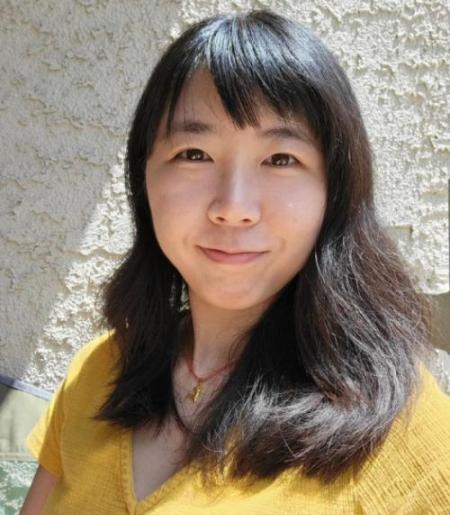
Volker J Schmid is a Professor of Bayesian Imaging and Spatial Statistics at the Department of Statistics, Ludwig Maximilian University of Munich. He leads the Bayesian Imaging and Spatial Statistics group and contributes to interdisciplinary initiatives like the Munich Center of Machine Learning. His work bridges statistical theory with applications in medical imaging and biology. PhD in Statistics (2004), LMU Munich Diploma in Statistics (2000), LMU Munich Abitur, Joseph-von-Fraunhofer-Gymnasium Cham (1993) His research focuses on Bayesian computational methods for high-dimensional data, particularly in medical imaging (MRI, DCE-MRI) and biological microscopy (e.g., 3D nuclear architecture analysis via super-resolution microscopy). Key applications include disease mapping , image segmentation , and spatio-temporal modeling . His software tools (e.g., nucim , bioimagetools , BAMP ) enable quantitative analysis in nuclear imaging and age-period-cohort modeling. His 15 most recent publications span Bayesian modeling for medical imaging , spatio-temporal epidemiology , and computational biology . Topics include co-localization metrics in fluorescence microscopy, nuclear architecture analysis, and dynamic Bayesian frameworks for MRI data. Collaborations extend to neuroimaging, oncology, and nuclear biology.
Aileen Nielsen is a Ph.D. Candidate at ETH Zurich's Center for Law & Economics and a Fellow in Law & Tech. She holds a J.D. from Yale Law School, a B.A. in Anthropology from Princeton University, and advanced degrees in Applied Physics (Columbia) and Comparative Human Development (University of Chicago). Her research focuses on regulatory and judicial responses to technological innovation, particularly in AI governance, data privacy, and medical technology. She has practiced law in NYC and worked in tech startups across healthcare and political organizations. Education: Ph.D. Candidate (ETH Zurich), J.D. (Yale), M.S. Applied Physics (Columbia), M.A. Comparative Human Development (Chicago), B.A. Anthropology (Princeton) Her work combines empirical and experimental methods to address challenges like algorithmic fairness, AI liability in medicine, and public perceptions of data markets. Recent findings explore regulatory frameworks for AI systems and the ethical implications of algorithmic surveillance. She teaches courses on algorithms and fairness, law & tech research, and authentication security. Publications span law journals, cybersecurity white papers, and AI ethics conferences, with a focus on balancing innovation with societal accountability. Her books Practical Fairness and Practical Time Series Analysis further bridge technical and legal domains.
Neelakantan R. Krishnaswami is a Professor of Computer Science at the University of Cambridge's Computer Laboratory , and a Fellow of Trinity College . His research focuses on the intersection of program verification, programming language design, and foundational topics like type theory and semantics. His work spans areas such as refinement types, parser design, separation logic for systems software, and the semantics of reactive programming. Notable contributions include the Datafun language for higher-order Datalog and the λert type theory for explicit refinement types. He has also developed foundational frameworks for verifying imperative programs using advanced type systems and logical relations. Key publications include 'Explicit Refinement Types' (ICFP 2023), 'flap: A Deterministic Parser with Fused Lexing' (PLDI 2023), and 'CN: Verifying Systems C Code' (POPL 2023). His work frequently addresses challenges in efficiency, correctness, and modularity for both functional and imperative systems. His awards include Distinguished Paper Awards at PLDI 2019 and POPL 2020. His research integrates theoretical rigor with practical tooling, exemplified by contributions to languages like Coq, Lean, and Haskell.
Dr. Ting Hu is an Associate Professor in the School of Computing at Queen's University, affiliated with the Faculty of Arts and Science. She leads the Machine Intelligence & Biocomputing (MIB) Laboratory, focusing on bio-inspired AI and bioinformatics. Her research bridges evolutionary computing, machine learning, and biomedical data analysis. Dr. Hu holds a PhD in Computer Science from Memorial University and completed postdoctoral training at Dartmouth College. She teaches courses with strong student evaluations, winning the Howard Staveley Teaching Award (2019-2020) and recognition as a Mental Health Champion (2023). Education: B.Sc. in Computational Mathematics, Wuhan University M.Sc. in Computer Science, Wuhan University PhD in Computer Science, Memorial University Postdoctoral Fellowship, Geisel School of Medicine, Dartmouth College Research Interests: Evolutionary algorithms and genetic programming Interpretable and explainable AI Biomedical data mining (metabolomics, genomics) Complex network analysis Applications in precision medicine and disease prediction Awards & Recognition: Queen's AMS Undergraduate Mentorship Award (2025) IEEE CIBCB Best Student Award (2022) Howard Staveley Teaching Award (2019-2020) NSERC Discovery Grant Reviewer (2019) Memorial University's Best Professor Award (2016) Lab & Collaborations: MIB Lab develops tools like geneDRAGNN (graph neural networks for gene-disease prioritization) Active roles in IEEE Computational Intelligence Society and EuroGP Advances include vaccination strategies via graph-RL and interpretable clustering methods
Dr. Maja Matis is a Group Leader at the University of Muenster's Center for Molecular Biology of Inflammation (ZMBE) within the Institute of Cell Biology. Her research focuses on understanding the mechanical role of microtubules in tissue morphogenesis, particularly how microtubule-generated forces contribute to tissue remodeling through coordinated cellular behaviors. She leads the Matis Lab, which employs advanced microscopy techniques and genetic approaches to study cytoskeletal mechanics in developmental contexts. Key research areas include the structural regulation of microtubules, mechanics-driven cell shape changes, and integration of forces at adherens junctions. Her interdisciplinary projects combine biophysics, developmental biology, and quantitative imaging to unravel mechanisms underlying collective cell behavior during tissue formation. Notable contributions include studies on microtubule compression dynamics in epithelial tissues and the role of PCP signaling in patterning microtubule networks. She collaborates with institutions like the Cells in Motion Cluster of Excellence and has mentored multiple PhD/MD students. Her work is published in high-impact journals such as Nat. Commun. and Nat. Cell Biol.
Jean Walrand is a Professor in the Department of Electrical Engineering and Computer Sciences (EECS) at the University of California, Berkeley. His research focuses on communication networks, performance evaluation, game theory, and stochastic networks. He has authored several influential books, including Communication Networks: A Concise Introduction and Probability in Electrical Engineering and Computer Science , and holds numerous patents in network resource management. Ph.D. in EECS from UC Berkeley IEEE Fellow and recipient of the Stephen O. Rice Prize INFORMS Lanchester Prize for operations research contributions His research interests span communication networks, queueing theory, congestion control, wireless network scheduling, and economic models for network resource allocation. Walrand's work has significantly impacted network design and optimization, particularly in distributed algorithms and game-theoretic approaches. His recent publications emphasize network architecture, delay variability reduction, and distributed optimization algorithms. Walrand has mentored over 20 Ph.D. students, including notable contributors to wireless networks and network economics. IEEE Koji Kobayashi Award (2012) ACM Sigmetrics Achievement Award (2013) INFORMS Lanchester Prize for Communication Networks book As advisor to students like Libin Jiang and Hoi-Sheung Wilson So, Walrand has shaped research in wireless MAC protocols, bandwidth trading, and network security. His technical reports and patents address practical challenges in switch fabric design, bandwidth allocation, and power management.
Cem Zafer is an academic researcher affiliated with İstanbul Okan University , specifically the Faculty of Humanities and Social Sciences . His scholarly work spans interdisciplinary topics in sociology, religious studies, and technology's societal impacts. Research Focus: Digital transformation, gender dynamics, and cultural identity. Publications: 15+ peer-reviewed articles and book contributions since 2012. Key Themes: Social media ethics, religious discourse, and labor sociology. His recent publications highlight the interplay between artificial intelligence, social justice, and historical narratives in modern Turkey. While no formal awards or grants are documented in the provided text, his academic output demonstrates sustained engagement with contemporary sociocultural challenges.
Gustavo Vulcano is an Adjunct Professor in the Department of Information, Operations and Management Sciences at the Leonard N. Stern School of Business, New York University, where he has been affiliated since 2002. He served as Assistant Professor (2002–2010), Associate Professor (2010–2017, tenured in 2012), and has held an adjunct role since 2017. His academic work bridges theoretical and applied operations management with strong industry engagement. Education: Ph.D. in Operations Management, Columbia University, 2003 M.Phil. in Operations Management, Columbia University, 2000 M.S. in Computer Science, University of Buenos Aires, 1997 B.S. in Computer Science, University of Buenos Aires, 1994 His research focuses on revenue and pricing analytics , retail operations , and supply chain management , particularly emphasizing customer choice modeling , data-driven optimization , and computational methods in network revenue management . He integrates stochastic modeling and behavioral insights to develop practical pricing and operational strategies. His work is deeply rooted in real-world applications across airlines, retail, and financial services. The analysis of his publications reveals a consistent trend in leveraging data-driven decision-making under uncertainty, with a focus on dynamic pricing, demand learning, and robust optimization. His articles span premier journals such as Operations Research and Management Science , reflecting a strong theoretical foundation combined with empirical and computational rigor. Key thematic areas include customer behavior modeling, network revenue management, and stochastic optimization for service industries. Scientific Awards and Leadership: Chair, INFORMS Revenue Management and Pricing Section (2016–2017) Associate Editor, Operations Research and Management Science Prof. Vulcano has advised numerous PhD and master’s students and has secured research grants through industry collaborations. His consulting projects with Delta Airlines, Sabre Holdings, Aerolíneas Argentinas, and ICBC demonstrate a strong commitment to translating academic research into practical solutions. He has taught core courses such as Operations Management , Pricing and Revenue Management , and Dynamic Programming across undergraduate, MBA, PhD, and MSBA programs, shaping future leaders in data-driven decision-making. He is actively involved in research labs and teams focused on operations analytics and pricing strategy , often collaborating with interdisciplinary groups at NYU Stern and industry partners. His ongoing editorial roles and consultancy reflect sustained engagement in advancing the field of revenue management and operations science.
Krishnan Bhaskaran is a Professor of Statistical Epidemiology at the London School of Hygiene & Tropical Medicine (LSHTM) , affiliated with the Faculty of Epidemiology and Population Health and the Department of Non-communicable Disease Epidemiology . He leads the Beyond Cancer research group , supported by a Wellcome Senior Research Fellowship . He co-founded the OpenSAFELY platform for real-time pandemic data analysis. Education: Background in Mathematics and Medical Statistics Research Interests: Cancer survivorship, cardiovascular and mental health outcomes in cancer survivors, pharmacoepidemiology of drug interactions, and methodological advancements in electronic health records analysis Publication Trends: His recent work focuses on long-term health consequences of cancer and its treatments, drug interactions in cardiovascular therapies, and the impact of chronic conditions on cancer risk. Many studies utilize large UK datasets and the OpenSAFELY platform. Scientific Awards: Wellcome Senior Research Fellowship Grants & Leadership: He has secured major funding from Cancer Research UK , British Heart Foundation , and Wellcome Trust to investigate cardiovascular risks post-cancer, health inequalities in endocrine therapy adherence, and drug safety in anticoagulant use.
Suyash Gupta is a Tenure-Track Assistant Professor in the Department of Computer Science at the University of Oregon, where he leads the Distopia Laboratory and co-leads the Oregon Networking Research Group. His expertise lies in distributed systems, databases, blockchain technologies, fault tolerance, and federated learning. Education: Ph.D. in Computer Science, University of California, Davis (2022) M.S. in Computer Science, Purdue University (2017) M.S. (Research) in Computer Science, Indian Institute of Technology Madras Research Focus: Dr. Gupta’s research is centered on designing efficient distributed, decentralized, and blockchain systems that are resilient to arbitrary failures and can scale across wide-area networks. His work spans consensus protocols, Byzantine fault tolerance, secure transaction processing, and federated learning systems. He has contributed foundational work in permissioned blockchain architectures and fault-tolerant distributed databases. Scientific Contributions & Awards: Best Paper Award, EuroSys 2023 Distinguished Reviewer Award, SIGMOD 2025 Best Graduate Researcher Award, UC Davis Author of Fault-Tolerant Distributed Transactions on Blockchain , Morgan & Claypool Teaching & Mentorship: He currently teaches advanced courses like CS 607: Hot Topics in Systems and CS 451/551: Database Processing . He actively mentors a diverse group of PhD and MS students, including Nihal Balivada, Shistata Subedi, Neil Sharma, and others from institutions like UC Davis and BITS Pilani. Labs & Teams: Dr. Gupta leads the Distopia Laboratory at UO and co-leads the Oregon Networking Research Group , both focused on cutting-edge research in distributed systems and secure networked architectures.
Jackson G. Lu is the General Motors Associate Professor of Management and an Associate Professor of Work and Organization Studies at the MIT Sloan School of Management. His scholarly work bridges cultural psychology with organizational behavior, examining how cultural differences manifest in AI adoption, creativity, and leadership dynamics. He serves as senior editor for Organization Science and Management and Organization Review , and associate editor for Journal of Personality and Social Psychology . Dr. Lu earned his PhD from Columbia Business School in 2018 and received tenure at MIT in 2023. His research has been published in top-tier journals across psychology, management, and general science domains, including Nature Human Behaviour , Psychological Bulletin , and Annual Review of Psychology . His work has garnered over 300 media mentions globally. Cross-Cultural Psychology AI Ethics and Creativity Leadership Emergence Stereotype Research Technological Adoption Workplace Diversity Recent research focuses on cultural tendencies in generative AI , AI's impact on creativity , and structural barriers faced by Asian professionals . He has received numerous accolades from professional societies including the Wegner Theoretical Innovation Prize and multiple Best Senior Editor Awards. 40 Best Business School Professors Under 40 Thinkers50 Radar Class of 2021 Academy of Management Award Outstanding Dissertation Award (2019) SAGE Early Career Award Dr. Lu teaches through MIT Sloan Executive Education's 5-day program Leading the AI-Driven Organization , and his findings have been featured in The New York Times , BBC , and The Economist . His editorial leadership spans multiple journals, reflecting his influence across academic networks.
Cynthia Brewer is a Professor of Geography and Information Sciences and Technology at Pennsylvania State University. She currently serves as the Associate Dean for Faculty Affairs in the College of Information Sciences and Technology (IST), a position she began in August 2024. Previously, she was a faculty member in the College of Earth and Mineral Sciences (EMS) where she served as head of the Department of Geography from 2014 to 2021. Dr. Brewer's research focuses on cartographic communication and visualization, map design, color theory, multi-scale mapping, atlas production, and topographic maps. She is especially well known for her ColorBrewer online tool for selecting map color schemes and her work on ScaleMaster for organizing multiscale mapping. Her research falls primarily within the Geospatial Big Data Analytics and Spatial Modeling and Remote Sensing research clusters at Penn State. Her publications include more than 30 peer-reviewed articles and 60 additional publications and cartographic design resources, generating over 7,000 citations. She has authored four books, including the popular 'Designing Better Maps' with the 3rd edition published by Esri Press in 2024. Carl Mannerfelt Gold Medal from the International Cartographic Association (ICA) in 2023 O. M. Miller Cartographic Medal from the American Geographical Society (AGS) in 2019 Henry Gannett Award for Exceptional Contributions to Topographic Mapping from the U.S. Geological Survey (USGS) in 2013 EMS Wilson Award for Outstanding Service in 2014 As an administrator, Dr. Brewer has extensive experience in departmental leadership, having served as head of the Department of Geography for seven years. She has also served on numerous university committees, was elected to the University Faculty Senate, and served as an Administrative Fellow shadowing the Provost. She is not currently taking on graduate advisees due to her full-time administrative role in IST.
April Wei is an Assistant Professor in the Department of Computational Biology at Cornell University, where she leads the Wei Lab in Computational Genetics. Her research focuses on developing scalable computational methods to analyze massive genomic datasets, addressing fundamental questions in evolutionary processes and human genetics. B.Sc. in Biology, Fudan University (2013) Ph.D. in Computational Biology, University of Michigan (2018) Postdoctoral Research at UC Berkeley and UCLA Joined Cornell in January 2022 The Wei Lab explores diverse areas such as population genetics , computational genetics , and natural selection , with applications in human evolution , gene conversion , and complex traits . Their work leverages graph-based data structures and deep learning to improve genomic analysis scalability. April's research trajectory, as reflected in her publications, emphasizes genomic data compression , selective sweep detection , and ancestral recombination graph (ARG) analysis . Her lab's outputs span algorithm development for biobank-scale data, evolutionary modeling of overlapping genes, and statistical frameworks for gene conversion landscapes. April mentors a team of Ph.D. students and postdoctoral researchers, including current advisees Ziqing Pan, Meera Chotai, Jinmin Li, Aditya Girish, and Lin Yuan, with notable alumni such as Siddharth Avadhanam (2023). The lab is supported by NIH and NSF grants. Lab culture prioritizes collaboration , inclusivity , and scientific curiosity , with social activities like lab barbecues, game nights, and group hikes. April is also a passionate fan of Star Wars and water sports.
Simon Rothöhler is a Professor of Visual Culture and Media Infrastructure at the Ruhr University Bochum , affiliated with the Institute for Media Studies . His research examines the intersection of digital media, archival systems, and infrastructural aesthetics. Chair: Visual Culture and Media Infrastructure Contact: simon.rothoehler@rub.de Research Focus Rothöhler investigates: Virtual image archives and their historical contexts Techno-aesthetics of digital systems Forensic visualization practices Media infrastructure studies Operational images in computational environments Epistemological dimensions of digital imagery Publications & Projects Active in publishing and organizing workshops, Rothöhler collaborates on projects like the Virtual Image Archives book and SFB-Workshops on imagelessness and virtual collections. His work bridges media theory with practical digital archiving challenges. Teaching He contributes to academic programs through lectures and supervision in media studies and digital humanities, focusing on contemporary media aesthetics and infrastructure.
Brady Robards is an Associate Professor of Sociology and Associate Dean (Research) in the Faculty of Arts at Monash University. His research focuses on youth, gender, sexuality, and digital cultures, with notable projects examining social media’s impact on employment, alcohol promotion, and LGBTQ+ digital experiences. He co-convenes the Monash Digital Cultures Research Group . Current projects include Social Media & Employment (ARC DECRA) and Scrolling Beyond Binaries (LGBTIQ+ youth studies) Recent awards: 2024 University of Bristol Visiting Fellowship, 2022 Dean’s Award for Research Enterprise Key collaborations: ARC, FARE, VicHealth, Australian Public Service His methodological innovations include the social media scroll back technique for analyzing longitudinal digital traces. Research supervision areas cover youth digital cultures, gender backlash movements, and dating technologies. He is a member of the Association of Internet Researchers (AoIR) and The Australian Sociological Association (TASA) .