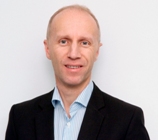
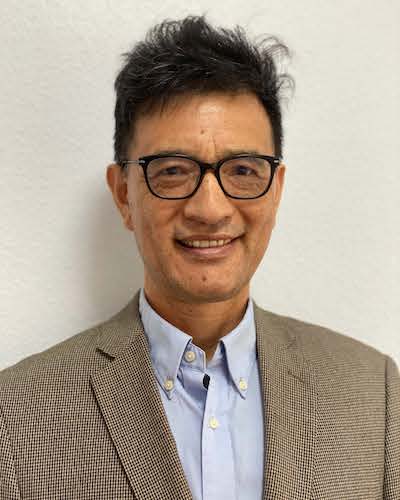
Dr. Mauro Larrá is a researcher at the Leibniz Institute for Working Environment (IfADo) in Dortmund, Germany, where he leads the Stress & Work Design Research Group. His work focuses on the interplay between stress physiology and cognitive function, utilizing neuroimaging and psychophysiological methods to investigate stress-induced neural changes and attentional modulation. Current Affiliation: IfADo (since 2018) Previous Positions: Post-Doc at University of Trier (2015-2018), Research Associate at University of Trier (2012-2015) Education: Dr. rer. nat. (summa cum laude) in Psychology from University of Trier (2015), Diploma in Psychology (University of Trier, 2009) His research spans stress neuroscience, cognitive psychophysiology, and neuroergonomics, with recent publications examining stress effects on visuospatial attention, EEG alpha asymmetry in stress regulation, and cardioafferent interactions. Key methodologies include mobile EEG applications, cytokine analysis, and neural network-based artifact correction. Contact: larra@ifado.de Research Themes Chronic stress consequences and biomarkers Cardiac-cognitive interactions Neuroergonomics for workplace assessment Stress-induced immune system modulation Neural oscillations in attention control
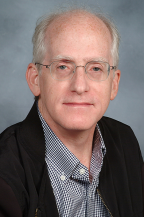
Keith Purpura is an Associate Professor of Neuroscience at Weill Cornell Medicine's Brain and Mind Research Institute. He has maintained a continuous academic appointment since 1993, progressing from Assistant Professor to Associate Professor in 2000. His research spans two primary areas of neuroscience: the role of eye movements in visual cortical processing and the therapeutic application of thalamic deep brain stimulation for cognitive disorders. Dr. Purpura received his Ph.D. from The Rockefeller University in 1988 under Drs. Robert Shapley and Ehud Kaplan, followed by post-doctoral work with Dr. Jonathan Victor at Cornell University Medical College and a visiting scientist position at the NIH's National Eye Institute (1991-1993). His undergraduate studies spanned Mannes College of Music, New York University, and Columbia College. His laboratory investigates how eye movements influence neural activity patterns across the visual cortical hierarchy, hypothesizing that these movements generate and access communication channels across cortical areas. Concurrently, in collaboration with Dr. Jonathan Baker, he develops deep brain stimulation techniques targeting the central thalamus to treat disorders of consciousness following traumatic brain injury, which affects over 2 million Americans annually. Analysis of his publication record reveals consistent focus on neural network dynamics, visual processing mechanisms, and translational applications of brain stimulation. His work bridges computational neuroscience with clinical applications, particularly in understanding how cortical networks process visual information and how brain stimulation can restore cognitive function. Searle Award (Post-doctoral support) Charles H. Revson Foundation (Post-doctoral support) McDonnel-Pew Research Program in Cognitive Neuroscience Award Visiting Scientist, National Eye Institute, NIH: 1991-1993 NIH NINDS-K04 Career Development Award 17 summers of research at Marine Biological Laboratory, Woods Hole Dr. Purpura currently serves as Principal Investigator on an NIH National Eye Institute grant (2022-2026) studying eye movements in visual processing networks and as Co-Principal Investigator on an NINDS grant (2020-2025) for central thalamic deep brain stimulation. His laboratory includes collaborators Jonathan L. Baker and Jae-Wook Ryou, and he established both the alert primate physiology laboratory and visual neurophysiology laboratory at Weill Cornell.
Corey Keller, Associate Professor at Stanford University , specializes in neuroscience, neuroimaging, and brain stimulation . His work focuses on transcranial magnetic stimulation (TMS) mechanisms, neural plasticity, and treatment-resistant psychiatric disorders. He teaches graduate research courses and advanced bioengineering labs across multiple departments. Key research areas: TMS/EEG biomarkers, depression neurophysiology, and neural network modeling Recent work emphasizes machine learning applications for predicting rTMS outcomes and decoding pain states Developed open-source tools like NaviNIBS for brain stimulation applications Scientific Contributions: Investigates cortical excitability, connectivity gradients, and non-invasive neuromodulation in depression and addiction. Combines intracranial recordings with whole-brain modeling to map stimulation effects.
Shaun Frost is a Senior Researcher at the Commonwealth Scientific and Industrial Research Organisation (CSIRO), focusing on ocular biomarkers for neurodegenerative diseases and medical imaging technology development. He holds a PhD in Psychiatry and Clinical Neurosciences from the University of Western Australia, along with advanced degrees in Applied Mathematics and Signal Processing from the University of Adelaide. PhD (Ophthalmology and Vision Science), University of Western Australia (2014) M.Sc. (Signal and Information Processing), University of Adelaide (2006) B.Sc. (Hons) (Applied Mathematics), University of Adelaide (2000) B.Sc. (Physics and Mathematics), Flinders University (1998) His research explores advanced imaging techniques for early Alzheimer's disease detection through retinal analysis, including AI-driven diagnostic systems. This work has demonstrated potential for identifying Alzheimer's pathology 20 years earlier than current methods. He also develops portable retinal cameras used in remote health settings and space missions. Scientific awards include NHMRC Research Fellowship (2016-2019), WAiTTA Merit Award (2018), Best Presentation at NNIDR Australian Dementia Forum (2017), and multiple industry awards. His publications span biomedical imaging, AI applications, and ocular diagnostics for systemic diseases like diabetes and hypertension.
Jane Aspell is a Professor of Cognitive Neuroscience at Anglia Ruskin University (ARU), affiliated with the Faculty of Science and Engineering and the School of Psychology, Sport and Sensory Science. She serves as Director of Postgraduate Research and REF Convenor for UoA 4 (Psychology, Psychiatry & Neuroscience). Aspell joined ARU in 2011 after postdoctoral positions at École Polytechnique Fédérale de Lausanne (EPFL), Goldsmiths College (London), and the University of Oxford. She holds a PhD in Neuroscience from the University of Newcastle and an MA in Biological Sciences from the University of Oxford. Her research investigates how multisensory bodily signals form the neurobiological basis of self-consciousness. Using EEG, behavioral experiments, and psychophysical methods, she studies bodily self-perception in neurotypical individuals, autistic populations, and chronic pain patients. Key interests include the integration of exteroceptive (visual/tactile) and interoceptive (e.g., cardiac) signals, and how these processes underpin higher-order self-concepts. Aspell co-leads the Body and Self Research Group within ARU's Centre for Mind and Behaviour. A review of her recent publications (2020-2024) reveals dominant themes in interoception, body image disorders, autism, and cross-cultural psychology. Her work consistently bridges clinical applications (fibromyalgia, pelvic pain) with fundamental questions about self-consciousness, employing innovative neurophysiological methods and cross-disciplinary collaborations. Finalist: Researcher of the Year (2024 Cambridge Independent Science Awards) Best PhD Supervisory Team Award (2023 & 2021) Vice Chancellor’s Award for Doctoral Supervision (2022) Faculty Research Award (2022) Vice Chancellor’s Innovation Award (2021) She actively supervises PhD candidates (e.g., Phaedra Longhurst, Azeezat Aminu) and has mentored 8+ students to completion. Major grants include a Leverhulme Trust Award (£153K, 2022), Versus Arthritis Pain Challenge (£190K, 2020), and Bial Foundation grants (2021, 2014). She directs the Self & Body Lab, pioneering VR/EEG studies on bodily self-consciousness.
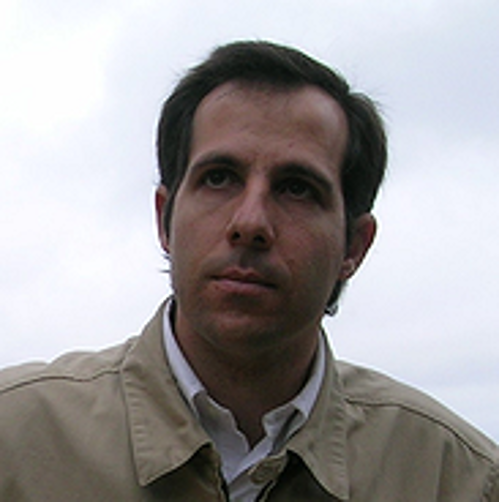
Sanam MOGHADDAMNIA serves as an Assistant Professor in the Department of Electrical and Electronics Engineering at the Faculty of Engineering, Turkish-German University, Turkey. He holds a BSc from Tabriz University (2002), and both MSc (2006) and PhD (2012) degrees in Electrical Engineering from Leibniz Universität Hannover, Germany. Prior to his current position, he worked as a Research Assistant and Postdoctoral Researcher at Leibniz Universität Hannover from 2006 to 2018. His educational background includes: BSc in Electrical and Electronics Engineering from Tabriz University, Iran (1997-2002) MSc in Electrical Engineering and Information Technologies from Leibniz Universität Hannover, Germany (2003-2006) PhD in Electrical Engineering and Computer Science from Leibniz Universität Hannover, Germany (2006-2012) His research spans wireless communications, telemetry, intelligent signal processing, and data analysis with significant applications in healthcare (including ECG-based diagnostics, sepsis prediction, and gait analysis), telecommunications, and industrial sectors. He demonstrates expertise in machine learning applications for biomedical signal interpretation and has contributed to both theoretical wireless communications frameworks and practical medical device assessments. Analysis of his 2016-2024 publications reveals a strategic pivot toward biomedical engineering applications while maintaining core wireless communications research. His work shows increasing focus on non-invasive medical diagnostics using physiological signals, machine learning for healthcare analytics, and precision assessment of medical devices, alongside continued contributions to MIMO systems and channel estimation techniques. Scientific Awards: None mentioned in source material. He actively manages and acquires collaborative research projects with industrial partners across healthcare and telecommunications sectors. No student advisement details are provided in the available documentation. His research involves interdisciplinary collaboration with industrial partners but no specific laboratory or team names are documented in the source material.
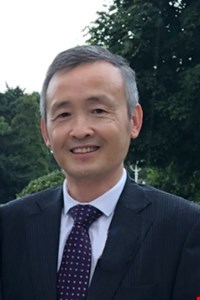
Professor Xiaohui Liu is a distinguished Professor of Computing at Brunel University London, serving within the Computer Science department of the College of Engineering, Design and Physical Sciences. He maintains his office in the Wilfred Brown Building (Room 218) and has established himself as a leading figure in intelligent data analysis and artificial intelligence research. With over 20 years of academic leadership, Professor Liu has held significant visiting appointments including Honorary Pascal Professor at Leiden University (2004), Visiting Scientist at Harvard Medical School (2005), and Visiting Professor at the Chinese Academy of Sciences (2010). Professor Liu's research spans intelligent data analysis, deep learning, dynamical systems, human factors, innovative AI applications, optimisation, statistical pattern recognition, and trustworthy decision making. His work bridges theoretical advances with practical implementations across various industries, demonstrating exceptional translational impact. He has pioneered approaches that integrate artificial intelligence with data science to enable effective data interpretation and trustworthy decision-making systems, with applications spanning healthcare, manufacturing, and business domains. Analysis of Professor Liu's recent publications reveals a strong focus on transformer architectures, transfer learning, and optimization techniques applied to real-world problems. His work demonstrates consistent innovation in neural network architectures, particularly for anomaly detection, fault diagnosis, and recommendation systems. The publications show interdisciplinary applications spanning manufacturing, healthcare, digital marketing, and network science, reflecting his commitment to solving practical challenges through advanced computational methods. Clarivate Highly Cited Researcher for 11 consecutive years (2014-2024) World's top 2% of scientists by Stanford University (2020-2024) ScholarGPS Highly Ranked Scholar – Lifetime: Neural Network (2022-2024) Daniel Berg Award (2023) Research.com United Kingdom Leader Award in Computer Science (2023-2025) IDA Founders Award (2025) Professor Liu has secured substantial research funding from diverse sources including the European Commission, Innovate UK, Royal Society, and EPSRC. His current projects include AI-assisted tax assessment, intelligent data-driven pipelines for manufacturing certified metal parts, and maintenance models for zero-unexpected-breakdowns. He leads collaborative efforts through knowledge transfer partnerships with industry partners like Veritas Advisory Limited and has directed multiple European Commission-funded initiatives focused on IoT platforms, water resource management, and predictive maintenance systems. His research group actively mentors PhD students and collaborates with international partners across multiple continents. Professor Liu leads research activities within the IEHS and CSSB research groups at Brunel University, fostering interdisciplinary collaboration between computer scientists, engineers, and domain experts. His teams integrate expertise in neural networks, optimization algorithms, and statistical pattern recognition to develop innovative solutions for complex real-world problems. The research environment emphasizes both theoretical rigor and practical application, with strong industry partnerships ensuring that research outputs deliver tangible societal and economic impact.
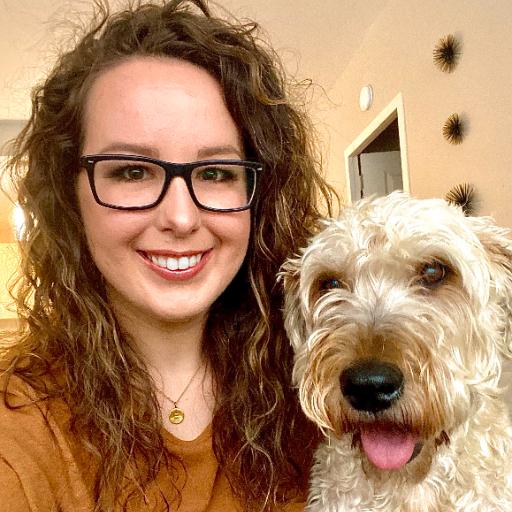
Elizabeth Teel is an Assistant Professor in the Department of Health, Kinesiology and Applied Physiology at Concordia University. Her research focuses on concussion neurophysiology and rehabilitation, utilizing neuroimaging and clinical assessments to improve brain function recovery. Education: BA (Highest Honors) in Exercise and Sport Science, University of North Carolina at Chapel Hill PhD in Human Movement Science, University of North Carolina at Chapel Hill MSc in Kinesiology, Penn State University Research Highlights: Dr. Teel directs the Concussion Neurophysiology and Rehabilitation Research Lab (CeRebRaL Lab), aiming to reduce repeat injury risk and enhance return-to-activity protocols. Her work spans concussion recovery, neuroimaging, and clinical assessment technologies. Teaching: EXCI 310 Research Methods EXCI 421 Honors Seminar: Current Topics in Health and Exercise Science EXCI612/HEXS 810 Laboratory Techniques EXCI 624/HEXS801 Special Topics Seminar Labs & Teams: Director of the CeRebRaL Lab Collaboration with CARE Consortium Investigators Research partnerships with McGill University and NCAA-DoD institutions
Juan Ignacio Arribas is a Full Professor in the Department of Signal and Communications Theory and Telematic Engineering at the School of Telecommunications Engineering, University of Valladolid. He is affiliated with the Center of Artificial Intelligence (Valladolid), Castilla-Leon Institute of Neuroscience (INCyL), and serves on the Section Board of Agriculture (MDPI) and Editorial Board of Scientific Data (Nature). His educational background includes: PhD in Electrical Engineering, University of Valladolid (2001) MSc in Electrical Engineering, University of Valladolid (1996) Dr. Arribas's research focuses on Machine Learning, Pattern Recognition, and Expert Systems applied to Cybersecurity, Computer Aided Diagnosis, Computer Vision, Bioinformatics, and Food Science. He pioneers computer vision and hyperspectral imaging for agricultural applications including weed detection, fruit quality assessment, and plant health monitoring, while also advancing medical diagnostics through EEG-based schizophrenia analysis. Analysis of his 15 most recent publications (2021-2024) reveals dominant themes in agricultural technology (70% of output), particularly non-destructive testing using hyperspectral imaging for crop monitoring and food quality. Cybersecurity applications (20%) feature network intrusion detection via novel neural architectures, with biomedical engineering (10%) represented by EEG analysis for psychiatric diagnosis. His work consistently integrates machine learning with domain-specific sensor data. Dr. Arribas supervises research through the Image Processing Laboratory (LPI) and collaborates with the Center of Artificial Intelligence. His international engagements include Visiting Research Associate roles at the University of Maryland (1998-2009) and Barrow Neurological Institute (2010). He leads the Image Processing Laboratory (LPI) research group and maintains active collaborations with the Castilla-Leon Institute of Neuroscience, driving interdisciplinary projects that bridge agricultural technology, medical diagnostics, and cybersecurity through advanced computational methods.
Hiromichi Suetani is a Professor at the Department of Co-creative Science and Engineering , Faculty of Science and Engineering , Oita University . He holds concurrent positions as an Affiliated Researcher at the International Research Center for Neurointelligence , University of Tokyo , and has previously worked at institutions including RIKEN Center for Brain Science , ATR , and Kagoshima University . His research bridges nonlinear dynamics , machine learning , and neuroscience . Education : PhD in Informatics from Kyoto University, with research at the Institute of Statistical Mathematics and graduate training in Mathematical Engineering at the University of Tokyo. Research Society Affiliations : Society for Neuroscience Japan Neuroscience Society Physical Society of Japan His research focuses on decoding brain information and controlling complex systems using techniques like reservoir computing , topological data analysis , and nonlinear modeling . He investigates human EEG individuality , collective patterns in active matter , and chaotic synchronization in dynamical systems. Recent work with collaborators explores hybrid prediction models combining anticipating synchronization and echo state networks to improve time series forecasting in chaotic systems. Earlier studies analyzed EEG consistency under noisy stimuli and applied manifold learning to map brain oscillations. His teaching includes mechanics , computational physics , and nonlinear science at Oita University. He has secured competitive funding from the Japan Society for the Promotion of Science for projects on critical computation systems , stable chaos in neural networks , and topological analysis of biological data .
Dr. Sheila Flanagan is an academic researcher affiliated with the Department of Psychology at the University of Cambridge and a Research Associate at the Centre for Neuroscience in Education since 2012. She serves as Director of Studies in Psychological and Behavioural Sciences and Bye-Fellow of Selwyn College. Ph.D. in Experimental Psychology (University of Cambridge) MSc in Music Technology (University of York) Background in psychoacoustics from engineering experience Her research focuses on auditory neuroscience, developmental dyslexia, and speech processing through neural entrainment. Key projects include the Botnar project (assisted listening tech for dyslexia), BabyRhythm project (auditory rhythm processing in infants), and studies of temporal sampling theory in speech encoding. Her work combines EEG analysis, motion capture, and computational modeling across neurotypical and atypical populations. Recent publications highlight trends in decoding speech from neural data, binaural temporal fine structure sensitivity, amplitude rise time processing, and cross-sectional studies of language development in Spanish-speaking contexts. She examines how cortical oscillations track speech rhythms across different modalities (acoustic/visual) and developmental stages. She collaborates with researchers such as Usha Goswami (PI of lab group), Kanad Mandke , and Áine Ní Choisdealbha . Her methodological expertise includes auditory perception studies, speech enhancement algorithms, and longitudinal neuroimaging.
Lars Magne Lundheim is a Professor at the Department of Electronics and Telecommunications, Norwegian University of Science and Technology (NTNU). Holding a doctorate in Electrical Engineering, he contributes to signal processing research and pedagogical innovation in engineering education. His work spans telecommunications, microgrid technology, and educational reform through project-based learning frameworks. Academic Affiliation: NTNU Research Focus: Signal Processing, Sustainable Engineering Education His publications analyze curriculum integration, mathematical foundations in engineering, and sustainable practices. Recent studies explore EEG source reconstruction and harmonics modeling in microgrids. Lundheim actively engages in disseminating findings through conferences and journals, emphasizing student socialization and creative confidence in STEM. Key trends in his research include: Development of competency-based sustainability education Optimization of wireless communication systems Mathematics-engineering interdependencies Low-density EEG channel selection
Anastasios Gounaris is a Professor at the Department of Informatics, Aristotle University of Thessaloniki, where he has been a faculty member since April 2008. He previously served as a Visiting Lecturer at the University of Cyprus (2007-2008) and held research positions at the University of Manchester and CERTH. His academic journey includes a PhD from the University of Manchester (2005), an MPhil from UMIST (2002), and a degree in Electrical and Computer Engineering from Aristotle University of Thessaloniki (1999). His research spans Distributed Databases, Autonomous Data Processing, Big Data Management, Workflow Optimization, and Data Mining . He has made significant contributions to large-scale data management systems, massive parallelism techniques, and business process analytics. His work bridges theoretical computer science with practical industrial applications, particularly in predictive maintenance and edge computing environments. His recent publications (2024-2025) demonstrate a strong focus on process mining, anomaly detection, predictive maintenance systems, and edge analytics . These works address critical challenges in handling evolving data streams, optimizing task allocation in resource-constrained environments, and developing parameter-free algorithms for real-world applications. His research shows consistent progression from foundational database systems work to cutting-edge applications in industrial IoT and healthcare analytics. Dr. Gounaris has successfully supervised numerous PhD students to completion, including Athanasios Naskos (2017), Georgia Kougka (2017), Christos Bellas (2022), Theodoros Toliopoulos (2022), Anna-Valentini Michailidou (2023), Ioannis Mavroudopoulos (2024), and Konstantinos Varvoutas (2025). His research has been supported by multiple national and European projects including DataflowOpt, PRECognition, NavGreen, CUREX, Rainbow, Lifechamps, and Trineflex. He is an active member of Datalab (formerly Delab) and has contributed to industry applications through collaborations with companies such as Comidor, Gnomon, Istognosis, Atlantis, AFS, Follow-Apps, Sboing, and Upcom. His work demonstrates a strong commitment to transferring research results to real-world applications while maintaining academic rigor.
Professor Martin Biel serves as Chair of Pharmacology at Ludwig-Maximilians-University Munich's Faculty of Chemistry and Pharmacy, Department of Pharmacy, and Center for Drug Research. His laboratory focuses on ion channel physiology in CNS and cardiovascular systems. Research centers on cyclic-nucleotide modulated channels (CNG/HCN) and endolysosomal ion channels using genetic mouse models , AAV-mediated gene therapy , electrophysiology , imaging , and telemetric monitoring of in vivo function. Key interests include retinal disorders, neuronal circuit dysfunction, and cardiovascular innervation pathologies. Recent publication analysis reveals strong emphasis on Viral entry mechanisms (Ebola) Retinal gene therapy approaches Cardiac electrophysiology Metabolic liver disease models with consistent application of molecular pharmacology and genetic engineering techniques. Current advisees include Manuela Brümmer, with notable graduate Lisa Riedmayr. Laboratory methods encompass OCT/ERG retinal analysis, telemetric EEG/ECG, and organoid systems. Contact: mbiel@cup.uni-muenchen.de | Lab Website
Wan Yao, Ph.D. is a Professor of Kinesiology at the University of Texas at San Antonio (UTSA), affiliated with the College for Health, Community and Policy (HCAP). With expertise spanning motor learning, neuromechanisms, and rehabilitation science, Dr. Yao has established herself as a prominent researcher in the field of human movement science. Dr. Yao earned her Ph.D. in Motor Learning and Control from Auburn University in 1996, following Master's and Bachelor's degrees in Kinesiology from Beijing Sport University in China. Her academic journey reflects a strong foundation in both Eastern and Western approaches to movement science. Her research primarily focuses on the effect of feedback and practice conditions on motor skill acquisition and neuromechanisms underlying muscle contractions and cross-education of motor skills . Dr. Yao's work bridges fundamental motor control principles with practical applications in rehabilitation, sports performance, and aging populations. Her recent studies have particularly emphasized motor imagery training, bilateral transfer of skills, and the impact of physical activity on various populations including children, college students, and elderly individuals. Analysis of Dr. Yao's publication record reveals a strong trajectory in understanding neural mechanisms of motor control, with increasing focus on practical applications in rehabilitation settings. Her work spans from basic motor control principles to clinical applications, showing particular interest in how motor learning principles can be applied to improve function in stroke survivors and other clinical populations. Research Fellow, Society of Health and Physical Educators (SHAPE America), 2000 Dr. Yao has been actively involved in mentoring and guiding numerous research projects, though specific students are not listed in the available information. Her work has been supported by various research grants, as evidenced by her extensive publication record spanning multiple decades. She has also contributed significantly to the academic community through conference presentations at venues including the International Conference on Kinesiology and Exercise Sciences, European Congress of Sport Psychology, and the North American Society for Psychology of Sport and Physical Activity. Dr. Yao's research has practical implications for rehabilitation protocols, sports training methodologies, and physical education programs. Her work on bilateral transfer and motor imagery training offers promising approaches for rehabilitation settings where one limb may be immobilized or impaired.