Fivos Iliopoulos is a Research Fellow specializing in Computational Neuroscience of Speech & Hearing, focusing on hyperscanning EEG and neurophysiological correlates of speech. His work bridges experimental neuroscience and biomedical engineering methodologies. His academic credentials include: Bachelor's Diploma in Physics Master's in Biomedical Engineering Dr. Iliopoulos' research integrates advanced electroencephalographic techniques with speech processing analysis, targeting neural synchronization during communication. His expertise spans hyperscanning paradigms, neural oscillation analysis, and computational modeling of auditory perception within interdisciplinary frameworks. He operates within the Computational Neuroscience of Speech & Hearing research ecosystem, which emphasizes collaborative approaches to decoding speech-related brain mechanisms through cutting-edge neuroimaging.
Liz Hirshorn is a Professor in the Department of Psychology at the State University of New York at New Paltz, where she directs the Diversity in Language Lab (DiLL). Her research employs behavioral and EEG methodologies to investigate individual differences in skilled reading and cognitive interactions, with particular focus on alternative pathways to literacy that challenge conventional reading models. Her research program centers on psycholinguistics and cognitive neuroscience, specifically examining how skilled reading develops through variable cognitive routes. Key projects include comparing English and Chinese reading processes to identify shared cognitive mechanisms between distinct writing systems, and investigating relationships between reading and face processing to understand lifelong neuroplasticity. Her work has significant implications for understanding struggling readers and developing alternative literacy interventions. Dr. Hirshorn actively advises thesis students in psycholinguistics using behavioral or EEG methodologies, with recent projects exploring music-reading skill relationships and attentional differences in video game players. Her lab emphasizes experimental approaches to cognitive psychology with applications to educational contexts. She maintains an active publication record spanning cognitive neuroscience, psycholinguistics, and reading research, with recent work focusing on holistic word processing, bilingual reading, and neuroplasticity in deaf populations. Her research demonstrates consistent methodological rigor through combined behavioral and neuroimaging approaches.
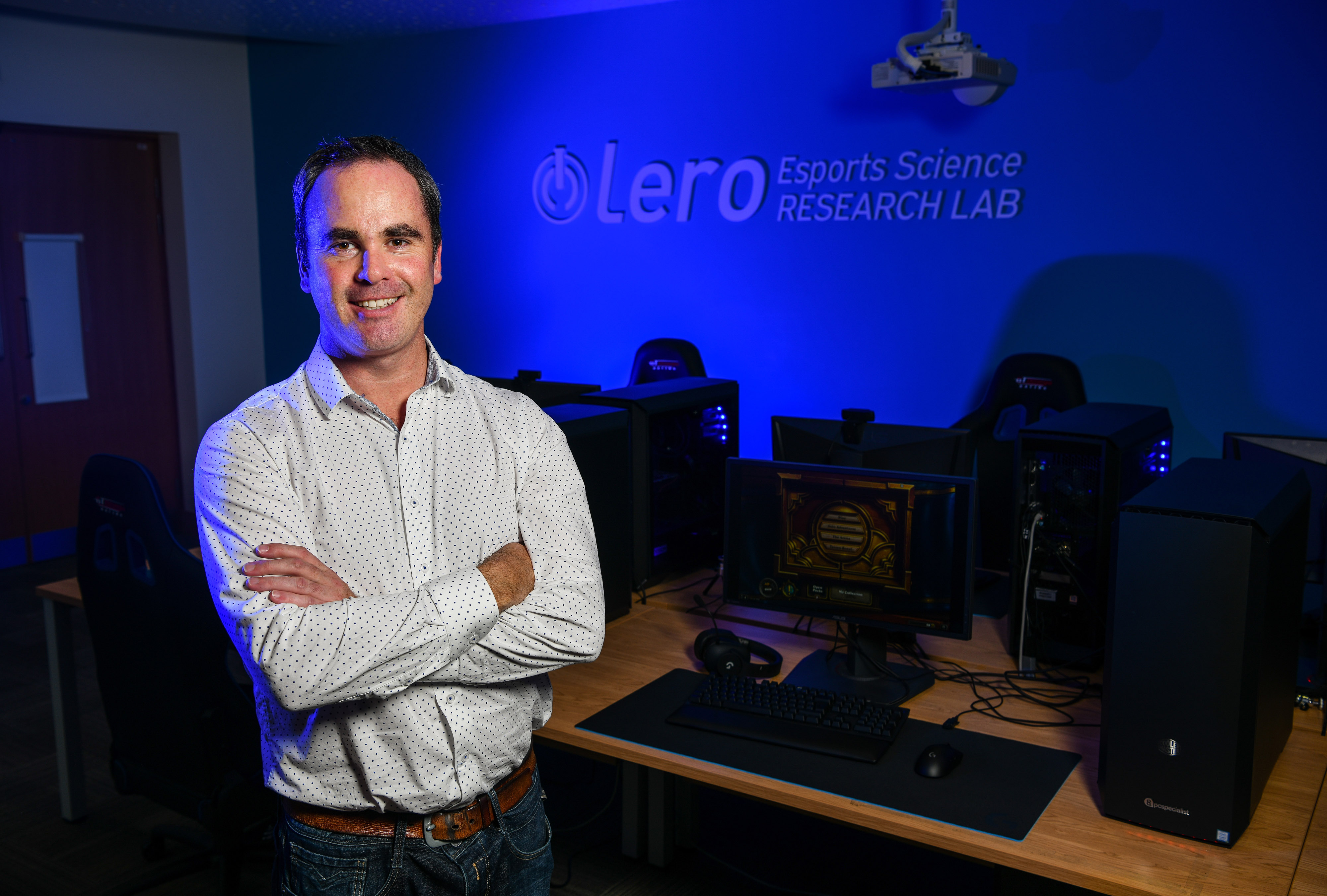
Dr. Mark Campbell serves as a Senior Lecturer at the University of Limerick and Director of the Esport Science Research Lab within Lero, the Science Foundation Ireland Centre for Software Research. His primary focus involves the scientific analysis of esports performance through the development and validation of key performance indicators. His research explores neurocognitive characteristics of expertise in skilled performers using advanced methodologies including eye tracking, pupillometry, near-infrared spectroscopy (NIRS), and electroencephalography (EEG). This interdisciplinary work integrates cognitive psychology, neuroscience, and human-computer interaction to decode the mental processes underlying elite esports performance. As a Science Foundation Ireland Funded Investigator (SFI-FI), Dr. Campbell leads research projects examining the intersection of software systems and human performance in competitive gaming environments. No information is available regarding student supervision activities. The Esport Science Research Lab under his direction provides a specialized facility for empirical esports research, equipped with state-of-the-art biometric and neuroimaging technologies to analyze cognitive and physiological responses of esports athletes during competition.
Rüştü Murat Demirer serves as an Assistant Professor in the Department of Electrical and Electronics Engineering at Işık University's Faculty of Engineering and Natural Sciences. His academic career spans decades with active teaching responsibilities including Biomedical Engineering courses such as Clinical Care Informatics, Biosignal Processing, and Medical Imaging since at least 2012 across multiple institutions including Işık University and Bahçeşehir University. His educational foundation includes: PhD in Biomedical Engineering from Boğaziçi University (1983-2002) MS in Energy from Istanbul Technical University (1980-1982) BS in Electronics and Communications Engineering from Kocaeli University (1976-1980) Dr. Demirer's research integrates Biomedical Engineering with cutting-edge computational neuroscience, focusing on Bioelectronics, Artificial Intelligence applications, and Neuroscience. He pioneers methodologies for analyzing brain dynamics through EEG/ECoG signal processing, entropy-based biomarker development, and machine learning algorithms for neurological and psychiatric conditions. His work bridges theoretical neuroscience with clinical applications in epilepsy, bipolar disorder, and brain-computer interfaces. Analysis of his publication trends reveals strong interdisciplinary convergence between neuroscience, biomedical engineering, and artificial intelligence. Key methodological themes include Hilbert transform applications, nonlinear dynamics in brain signals, entropy quantification for psychiatric diagnostics, and hybrid machine learning approaches for medical signal classification. This research trajectory demonstrates consistent innovation in translating complex brain signal analysis into clinically relevant diagnostic tools. Dr. Demirer has actively mentored 11 graduate students (10 Master's and 1 PhD) between 2013-2025. His advisees' research spans diverse applications including: Machine learning for cybersecurity threat detection Cryptocurrency market analysis using predictive modeling EEG/eye-tracking fusion for cognitive decision studies Medical diagnostics through convolutional neural networks Natural language processing for offensive language detection He maintains professional engagement as a member of the Chamber of Electrical Engineers (Elektrik Mühendisleri Odası) while teaching specialized courses across biomedical engineering, cybersecurity, and data science domains.
Dr. Cian O'Donnell is a Senior Lecturer in Data Analytics at Ulster University's School of Computing, Engineering & Intelligent Systems. He holds honorary positions at the University of Bristol and leads a computational neuroscience research group focused on synaptic plasticity, autism-related neural circuit dysfunction, and statistical methods for neural data analysis. He obtained his PhD in Neuroinformatics from the University of Edinburgh after completing a BSc in Applied Physics at Dublin City University. His research explores three primary areas: (1) mechanisms of learning and memory via synaptic plasticity models, (2) neural circuit alterations in autism using computational approaches, and (3) development of Bayesian and machine learning methods for analyzing neuroscience datasets. His group actively collaborates with institutions like the Salk Institute and UCLA. Recent publications emphasize Bayesian inference in neural systems, synaptic plasticity dynamics, deep learning applications for neural decoding, and computational psychiatry. His grants include funding from the BBSRC, Leverhulme Trust, and Medical Research Council. He received the Best Student Paper Award at UKCI 2024. Dr. O'Donnell advises multiple PhD students and postdoctoral researchers. Current projects investigate synaptic stability, neural network topologies, and autism biomarkers. His lab utilizes computational modeling, Bayesian statistics, and machine learning to address fundamental questions in neuroscience.
Mahsa Shoaran is a Tenure-Track Assistant Professor at EPFL (École Polytechnique Fédérale de Lausanne) jointly appointed at the Center for Neuroprosthetics and the Institute of Electrical Engineering . She is also the founding director of the Integrated Neurotechnologies Laboratory (INL) and contributes to several doctoral programs and teaching missions across EPFL’s School of Engineering (STI). Education: PhD in Electrical Engineering, EPFL (2015) M.Sc. & B.Sc., Sharif University of Technology Postdoctoral Fellow, California Institute of Technology (Caltech) (2015-2017) Former Assistant Professor, School of Electrical and Computer Engineering, Cornell University (2017-2019) Research Focus: Dr. Shoaran’s work sits at the convergence of integrated circuit design , machine learning , and neuroscience . Her group develops ultra-low-power, miniaturized system-on-chips (SoCs) capable of real-time neural recording , pathology detection , and closed-loop therapeutic intervention such as adaptive neurostimulation. Machine-learning algorithms running on-chip enable precise symptom detection in neurological and psychiatric disorders, while advanced circuit techniques guarantee energy efficiency suitable for long-term implantable or wearable neural interfaces. Scientific Awards & Grants: ERC Starting Grant 2021 Google Faculty Research Award in Machine Learning 2019 Swiss NSF Postdoctoral Fellowships NSF Award for Young Professionals – Smart & Connected Health MIT EECS Rising Star 2015 Doctoral Advising & Service: She currently supervises 14 PhD students in the Integrated Neurotechnologies Laboratory. Additionally, she serves on the PhD program committees for Electrical Engineering (EDEE), Microsystems & Microelectronics (EDMI), and contributes to the Neuro-X and SEL teaching programs. She is a Technical Program Committee member for IEEE CICC and serves on the Student Research Preview committee for ISSCC. Laboratory & Collaborative Teams: The Integrated Neurotechnologies Laboratory (INL) at EPFL Campus Biotech in Geneva hosts her interdisciplinary team of circuit designers, machine-learning researchers, and neuroscientists. The lab collaborates closely with clinicians to translate innovations into real-world neuroprosthetic and diagnostic devices.
Genevieve Albouy serves as a Lecturer in the Department of Human Movement Sciences at KU Leuven and is an active member of the KU Leuven Brain Institute (LBI). Her academic profile centers on the intersection of motor control, memory systems, and sleep neuroscience, with particular emphasis on neurodegenerative conditions like Parkinson's disease. She contributes to interdisciplinary research through collaborative projects examining how sleep architecture influences motor memory consolidation. Dr. Albouy's research program investigates how sleep-dependent processes mediate motor memory consolidation, with special focus on phase-specific neural mechanisms during slow-wave sleep. Her work employs multimodal approaches including fMRI, EEG, and non-invasive brain stimulation to dissect cortico-striatal-hippocampal network interactions during motor learning. Current projects explore schema-mediated memory integration, targeted memory reactivation techniques, and the impact of Parkinson's disease on online/offline learning dynamics, revealing compensatory neural mechanisms in neurodegenerative populations. Analysis of her recent publication trajectory shows concentrated investigation into sleep-motor memory interactions, with increasing emphasis on clinical translation for Parkinson's disease rehabilitation. Her work demonstrates how targeted interventions during specific sleep phases can enhance motor memory consolidation, while her Parkinson's research identifies paradoxical offline learning enhancements that may inform novel neurorehabilitation strategies. Dr. Albouy has secured significant research funding as promoter of the project 'Modulating motor memory with noninvasive brain stimulation: a multimodal neuroimaging study' (2017-2023) and co-promoter of 'Schema and Motor Memory: A Multimodal Neuroscience Study' (2019-2024) and 'Connectivity in Large-Scale Brain Networks and Sleep-Dependent Motor Memory Consolidation' (2019-2023). She serves as co-supervisor for doctoral candidates, including Reverberi's thesis on schema and motor memory, and actively collaborates with international teams studying sleep-dependent memory processes. As a core member of the KU Leuven Brain Institute, she contributes to interdisciplinary neuroscience initiatives focusing on large-scale brain networks. Her laboratory work integrates sleep monitoring, neuroimaging, and behavioral paradigms to investigate memory consolidation mechanisms, with recent expansions into clinical applications for neurodegenerative disorders through collaborations with movement disorder specialists.
Behtash Babadi is an Associate Professor in the Department of Electrical & Computer Engineering and a faculty member at the Institute for Systems Research and the Brain and Behavior Institute at the University of Maryland, College Park. He also holds affiliate appointments in the Program in Neuroscience & Cognitive Science and the Applied Mathematics & Statistics program. Education: Ph.D. in Engineering Sciences, Harvard University (2011) M.Sc. in Engineering Sciences, Harvard University (2008) B.Sc. in Electrical Engineering, Sharif University of Technology (2006) Research Interests: Dr. Babadi’s work focuses on statistical and adaptive signal processing frameworks for understanding neural systems. Key areas include: Neural signal processing and systems neuroscience Granger causality and functional connectivity analysis Dynamic modeling of neuronal assemblies Applications to auditory processing and cognitive recovery Scientific Contributions: His recent publications address cortical network dynamics, MEG source analysis, and robust causal inference. Notable methods include Network Localized Granger Causality (NLGC) for direct connectivity estimation and multitaper spectral analysis for neuronal spiking data. Awards: NSF CAREER Award (2016) E. Robert Kent Teaching Award (2019) GSAS Merit Fellowship (Harvard, 2010) Collaborations: Dr. Babadi collaborates with institutions like MIT, Harvard, and Massachusetts General Hospital, and participates in interdisciplinary initiatives such as the Brain and Behavior Initiative (BBI) and NIH BRAIN grants.
Dr Andrej Stancak is a Reader in Behavioural Neuroscience at the University of Liverpool , based in the Department of Psychological Sciences within the Institute of Psychology, Health and Society . His expertise lies in neuroimaging, electrophysiology, and the neural mechanisms of pain, decision-making, and olfaction. He leads multidisciplinary research projects and teaches extensively across undergraduate and postgraduate programs. Education: While specific degrees are not listed in the text, Dr Stancak has held prestigious fellowships including a Fulbright Fellowship (2001), DAAD Fellowship (1997), and DFG Fellowship (1998), indicating advanced training in neuroscience and neuroimaging. Research Interests: Dr Stancak’s work spans pain neurophysiology , brain imaging (EEG, MEG, fMRI) , olfactory modulation of behavior , and economic decision-making . He explores how the brain generates conscious pain experiences and how sensory inputs like odors and textures influence value-based choices, often in collaboration with industry partners such as Unilever and AstraZeneca . Research Trends: His recent publications emphasize mobile EEG applications , machine learning for pain prediction , and cross-cultural neuroscience . There is a consistent focus on translating lab-based findings into real-world contexts, such as online purchasing behavior and chronic pain management. Scientific Awards: He has received several international fellowships and honors, including: Fulbright Fellowship (USA, 2001) DAAD Fellowship (Germany, 1997) DFG Fellowship (Germany, 1998) Ludwig Boltzmann Fellowship (Austria, 1994) Teaching & Supervision: Dr Stancak is the module coordinator for Psychobiology of Pain (PSYC317) and teaches across multiple undergraduate and postgraduate modules. He has successfully supervised 8 PhD students to completion and has 1 pending submission . Labs & Teams: While no specific lab name is provided, his work is conducted in collaboration with the Department of Mathematical Sciences , Institute of Risk and Uncertainty , and international partners such as Charles University in Prague and University of Glasgow .
Kelly Bijanki, Ph.D. , is an Associate Professor at Baylor College of Medicine with primary affiliation in Neurosurgery and joint appointments in Psychiatry and Neuroscience. Her research focuses on intracranial mapping of affective neural circuits and developing neuromodulation therapies for psychiatric disorders. Baylor College of Medicine (2016-present) Director of Intracranial Monitoring Research Research Platforms: Stereotactic EEG-informed DBS, Human Electrophysiology Research Expertise : Investigates neural substrates of mood disorders using invasive brain recordings Specializes in cingulum bundle, amygdala, and salience network stimulation Develops translational models for affective dysfunction treatment Integrates advanced neuroimaging with electrophysiological data Studies autonomic and facial motor correlates of emotional states Publication Trends : Focus on socio-affective processing networks Emphasizes brain stimulation for psychiatric conditions Combines imaging and electrophysiology in depression research Explores temporal dynamics of neural circuits Develops novel analytical methods for neurostimulation data Scientific Recognition : NIH R01 MH127006 (2021-2026) - $3.6M NIH K01 MH116364 - NIMH Mentored Career Development NIH R21 NS104953 - Exploratory Brain Stimulation Research Caroline Wiess Law Fund Support Collaborative grants with institutions like Duke, UCLA, and University of Iowa Collaborative Network : Key collaborators: Dr. Sarah Heilbronner, Dr. Nader Pouratian, Dr. Nanthia Suthana Multi-institutional partnerships in biophysics and biomedical engineering Leadership in stereotactic EEG-augmented DBS for psychiatric disorders
Fabien Lotte is a Senior Researcher (Directeur de Recherche DR2) at Inria, affiliated with the University of Bordeaux. He leads the Potioc team, focusing on Brain-Computer Interfaces (BCI) and related technologies. Research Interests: Brain-Computer Interfaces (BCI) for motor imagery and neurofeedback Machine learning on Riemannian manifolds for EEG analysis Reproducibility in neural engineering research Passive BCI for cognitive/affective state estimation Neuroergonomics and adaptive systems Scientific Contributions: His recent work explores Riemannian geometry for BCI, including feature fusion, visualization techniques, and performance prediction via median nerve stimulation. He has developed open-source tools like BioPyC and contributed to large datasets for BCI reproducibility. Scientific Awards: 2023 : Nature Mentorship Award (Mid-Career Category) 2023 : Lovelace-Babbage Prize from French Academy of Science Advising and Collaborations: Supervised multiple PhD students (Léa Pillette, Jelena Mladenovic, David Trocellier) and postdocs. Leads ANR projects (STIM-BCI, BCI4IA) and ERC-funded initiatives (BrainConquest, SPEARS).
Nikunj Arunkumar Bhagat serves as an Assistant Professor in the Department of Electrical Engineering at the Indian Institute of Technology Kanpur, with a joint appointment in the Department of Biological Sciences and Biosciences. His research focuses on neural engineering, rehabilitation technologies, and biomedical instrumentation. Dr. Bhagat's research interests include Neural & Bio-signal processing, Medical Instrumentation, Brain-machine interfaces, Functional Electrical Stimulation, and Rehabilitation Engineering. His work bridges electrical engineering with neuroscience and rehabilitation medicine, developing technologies to assist individuals with neurological impairments. His publication portfolio shows a strong focus on brain-machine interfaces, rehabilitation robotics, and neural decoding techniques. The research spans from fundamental neural signal processing to practical applications in stroke rehabilitation, tetraplegia assistance, and hand movement restoration. His most recent work (2023) continues to advance state-space control approaches for neuromuscular stimulation and object detection applications for hand rehabilitation. Dr. Bhagat has established collaborative research with prominent institutions and researchers in the field of neurorehabilitation and brain-computer interfaces, as evidenced by his publications in high-impact journals such as IEEE Transactions on Human-Machine Systems, NeuroImage: Clinical, and Frontiers in Neuroscience. His academic journey includes a Ph.D. in Electrical Engineering from the University of Houston (2017), an M.Tech in Electrical Engineering from IIT Bombay (2011), and a B.E. in Electronics Engineering from Sardar Patel College of Engineering, University of Mumbai (2007).
Tanuj Gulati is an Adjunct Assistant Professor in the Department of Medicine at the University of California, Los Angeles (UCLA). His research bridges neuroscience, neuroengineering, and clinical rehabilitation, with a focus on developing advanced neuroprosthetic systems and understanding neural recovery mechanisms following stroke. He investigates cortico-cerebellar network dynamics, sleep-related neural oscillations, and closed-loop neuromodulation strategies to enhance motor rehabilitation outcomes. His work spans several interconnected domains: Neuroprosthetics & Rehabilitation : Designing systems for adaptive neural control and post-stroke functional recovery. Neural Oscillations : Studying low-frequency brain activity, sleep spindles, and NREM sleep features in health and disease. Motor Learning : Examining cortico-cerebellar coordination during skill acquisition and consolidation. Neuromodulation : Developing epidural stimulation and closed-loop devices to drive neural plasticity. Analysis of his 15 most recent publications (2017–2025) reveals dominant themes in neuroprosthetic control systems , stroke recovery biomarkers , and sleep-dependent neural processing . His research utilizes electrophysiology (EEG), neural stimulation, and computational modeling to decode motor cortex–cerebellar interactions, with translational applications in neurorehabilitation. Recurrent technical focuses include closed-loop stimulation devices, neural synchrony quantification, and behavioral assessment frameworks.
Miguel Eckstein is a Distinguished Professor at UC Santa Barbara with joint appointments in the Department of Psychological & Brain Sciences (College of Letters & Science) and the Department of Electrical and Computer Engineering (College of Engineering). He earned a Bachelor's in Physics and Psychology from UC Berkeley and a PhD in Cognitive Psychology from UCLA. His career includes prior positions at Cedars Sinai Medical Center and NASA Ames Research Center. Eckstein leads pioneering research in computational human vision, integrating behavioral psychophysics, eye tracking, EEG, fMRI, and computational modeling to study: Neural mechanisms of visual perception, attention, and learning Medical image perception for clinical diagnostics Bio-inspired computer vision systems Human-robot interaction optimization His work bridges fundamental cognitive neuroscience with applied engineering solutions. Publication analysis reveals interdisciplinary contributions spanning neuroscience, computer vision, medical imaging, and psychology. Recent work (2017-2021) emphasizes neural decoding of visual processes, 3D medical imaging limitations, human-AI perceptual comparisons, and crowd-sourced visual intelligence. Awards and honors include: Guggenheim Fellowship (2019) National Academy of Sciences Troland Award NSF CAREER Award SPIE Image Perception Cum Laude Award Optical Society of America Young Investigator Award He directs the Vision and Image Understanding Lab and co-founded the Mellichamp Initiative in Mind & Machine Intelligence, fostering cross-disciplinary AI research. Grant activities support medical imaging perception, neural computation, and human-machine collaboration projects.
Dr. Grigorios Chrysos is a faculty member in the Department of Electrical & Computer Engineering at the University of Wisconsin-Madison. His research focuses on reliable machine learning, emphasizing robustness to noise, out-of-distribution generalization, and theoretical understanding of neural/polynomial networks. Education: PhD in Machine Learning, Imperial College London (2020) M.Eng. in Electrical Engineering, National Technical University of Athens (2014) Key research interests include robustness in deep networks , inductive bias analysis , and polynomial network design for high-order input interactions. His work explores adversarial robustness, fair model generalization, and extrapolation properties in generative frameworks. Recent awards include the prestigious DAAD AInet Fellowship (2023), Best Reviewer Awards at NeurIPS (2022), ICLR (2022), and IMCL (2021), alongside Amazon Cloud Credits and Nvidia GPU donations (2019). Scientific Contributions: Advancing tensor methods in machine learning Developing polynomial networks for robustness Designing efficient EEG seizure analysis algorithms