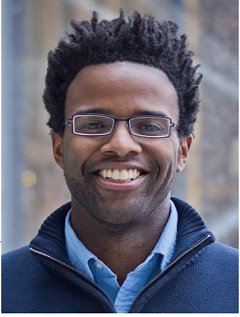
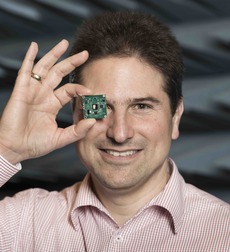
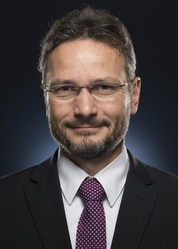
Michael Carbin is the Jamieson Career Development Assistant Professor of Electrical Engineering and Computer Science at the Massachusetts Institute of Technology (MIT) and leads the MIT Programming Systems Group. His research focuses on programming systems that address system uncertainty to enhance performance, energy efficiency, and resilience, particularly in environments involving neural networks , approximate computing , and unreliable hardware . His work spans probabilistic programming , quantum computing , and machine learning systems . Articles highlight contributions in pruning neural networks , quantum data structures , and compiler optimization , reflecting trends in deep learning , formal verification , and language-driven systems . Scientific Awards : MIT Frank E. Perkins Award (2020) Sloan Research Fellowship (2020) Facebook Research Award (2019) NSF CAREER Award (2018) Best Paper Awards at OOPSLA (2013, 2014) He has advised numerous graduate students and postdocs including Eric Atkinson, Cambridge Yang, and Charles Yuan, and served on program committees for conferences like POPL, OOPSLA, and ICLR. His group collaborates with institutions such as MIT CSAIL and explores applications in quantum algorithms and probabilistic inference .
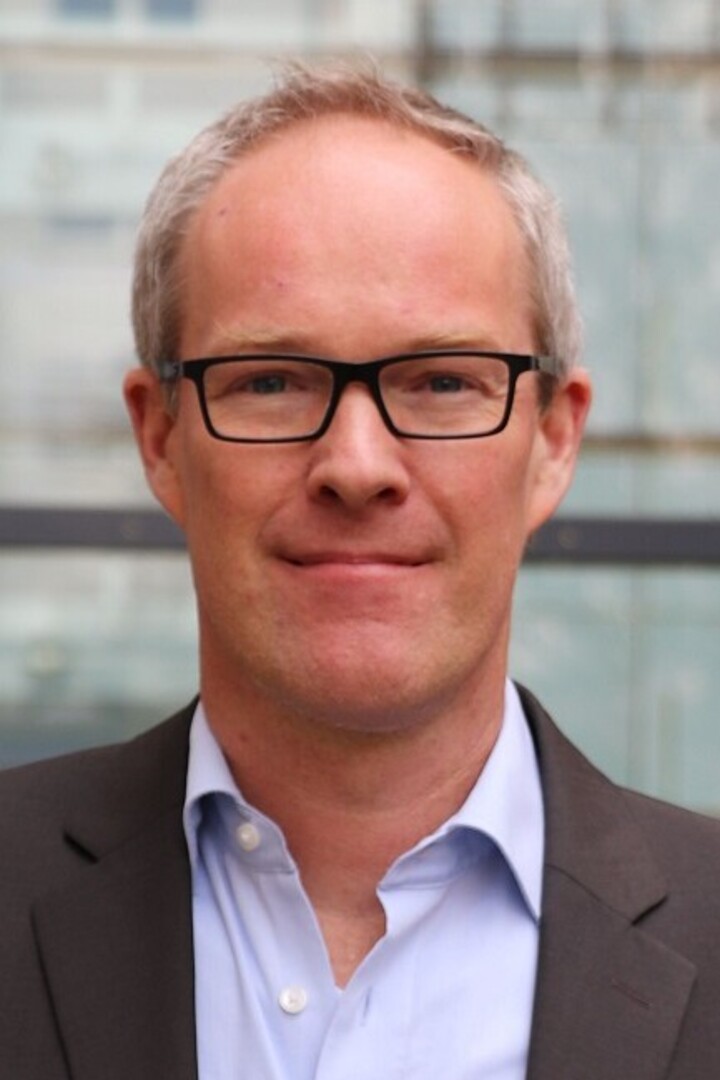
Professor Christian Bizer is a leading figure in web-based systems and data integration at the University of Mannheim , where he chairs Information Systems V: Web-based Systems . His research focuses on integrating data from multiple sources using large language models and LLM-based agents, with applications in product data extraction and DBpedia knowledge graph construction. He co-founded the DBpedia project and initiated the WebDataCommons initiative. Current research areas: Entity matching, schema matching, table annotation, information extraction, data discovery Key projects: WebMall benchmark, WInte.r integration framework, Schema.org analysis His work applies to e-commerce data integration and knowledge graph construction, with empirical studies on schema.org adoption. He supervises PhD students including Alexander Brinkmann and Ralph Peeters. Scientific Awards: Best Paper at iiWAS 2024 SWSA Ten-Year Award at ISWC 2019 Yahoo FREP Award 2015 Semantic Web Challenge winners Teaching includes courses on web data integration, web mining, large language models, and data mining for master's programs. He leads the DWS PhD colloquium and team projects on LLM agents for data integration.
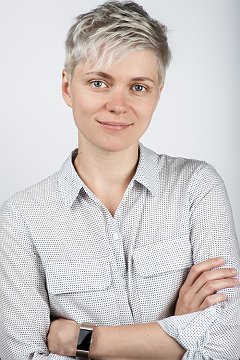
Nadia Polikarpova is an Associate Professor in the Department of Computer Science and Engineering at the University of California, San Diego . She earned her PhD from ETH Zurich in 2014 under Bertrand Meyer , followed by postdoctoral research at MIT CSAIL with Armando Solar-Lezama . Her academic contributions have been recognized with prestigious awards including the 2020 Sloan Fellowship , 2020 Intel Rising Stars Award , and 2020 NSF CAREER Award . Polikarpova's research focuses on program synthesis , program verification , and type systems . She leads the Programming Systems group at UCSD and contributes to the IFIP Working Group 2.8 on Functional Programming since 2022. Her work spans foundational research and practical tools, including projects like Synquid , SuSLik , and Laurel that combine formal methods with machine learning for code generation. Her recent publications in venues like OOPSLA , NeurIPS , and ICFP reveal trends in AI-assisted programming , live programming environments , and formal verification . She has advised numerous PhD and Master’s students including Shraddha Barke , Zheng Guo , and Tristan Knoth , many of whom have moved to prominent academic and industry positions. Notable artifacts from her lab include tools like ColDeco for spreadsheet inspection and Superfusion for eliminating intermediate data structures. 2020 : Sloan Fellow 2020 : Intel Rising Stars Award 2020 : NSF CAREER Award 2021 : Distinguished Paper at POPL 2023 : Distinguished Artifact at PLDI 2023 : Distinguished Paper at OOPSLA Polikarpova actively contributes to academic service, serving on program committees for PLDI , POPL , and OOPSLA , and co-chairing the OOPSLA Review Committee in 2023. She has delivered keynotes at APLAS'20 and PLDI'24 , emphasizing the integration of large language models with formal methods.
Professor Knut Reinert is a leading figure in algorithmic bioinformatics at the Free University of Berlin, where he holds a professorship in the Department of Mathematics and Computer Science. He also maintains a significant affiliation with the Max Planck Institute for Molecular Genetics in Berlin, where he leads the Efficient Algorithms for Omics Data group. His research spans both institutions through the Reinert Lab, which focuses on developing novel computational approaches for biological data analysis. Reinert's educational background includes a Diploma in Computer Science (1994) and a Doctorate (Dr. Ing./Ph.D., 1999, with honors) from the Max-Planck-Institut for Computer Science and Universität des Saarlandes in Saarbrücken. Prior to his professorship, he worked as a computer scientist under Prof. Gene Myers at Celera Genomics in Rockville, USA (1999-2002). His primary research interests center on algorithmic bioinformatics with specific focus on developing novel algorithms and data structures for biomedical mass data analysis. This includes creating mathematical models for genomic sequence analysis and algorithms for mass spectrometry data to detect differential protein expression between normal and diseased samples. His work bridges the gap between computational tool development and practical biological applications, with particular emphasis on NGS and proteomics data. The publications and projects led by Prof. Reinert demonstrate a consistent focus on advancing computational methods in bioinformatics. His research spans genomic sequence analysis, RNA research (particularly long non-coding RNAs), parallel computing applications, and GPU acceleration for biological data processing. The work shows increasing sophistication in handling large-scale biological datasets through innovative algorithmic approaches. Intel® Parallel Computing Center designation for his lab CUDA Research Center status DFG funding of 530 thousand Euros for RNA research de.NBI funding of 2 million Euros BMBF funded projects 'LIVE-DREAM' and 'EssBar' Prof. Reinert leads multiple significant research projects and has established strong collaborations with international partners including Texas A&M, Kings College London, Eberhardt-Karls Universität Tübingen, Robert-Koch-Institute, and various Turkish institutions. His lab receives funding from major organizations including DFG, BMBF, and Intel. The Reinert Lab maintains active teaching responsibilities at FU Berlin, offering courses at BSc, MSc, and PhD levels using both traditional and innovative learning concepts like e-learning and inverted classrooms. The Reinert Lab consists of two interconnected research groups that work closely with experimental biologists and medical researchers to develop practical computational solutions for real-world biological problems. The lab has established itself as a key player in the German and international bioinformatics community through its development of the widely-used SeqAn library and participation in national infrastructure initiatives.
Julian McAuley is a Professor in the Department of Computer Science and Engineering at the University of California, San Diego's Jacobs School of Engineering. His research spans recommender systems, machine learning, natural language processing, music information retrieval, and multimodal learning. He maintains an active research group with numerous PhD students and postdocs working on cutting-edge AI problems. His research interests focus on developing advanced algorithms for personalized recommendation systems, with particular emphasis on sequential recommendation, multimodal learning, and integrating large language models with traditional recommendation approaches. His work bridges the gap between theoretical machine learning and practical applications across multiple domains including e-commerce, music, and healthcare. McAuley has published extensively in top-tier conferences including NeurIPS, ICML, KDD, SIGIR, and ACL, with his most recent work exploring the intersection of large language models and recommendation systems. His publications reveal a strong trend toward multimodal approaches that combine text, vision, and audio for more comprehensive understanding and recommendation. He has received significant research funding from major technology companies including Google, Amazon, Facebook, Adobe, and Samsung, as well as government agencies like the National Science Foundation and Department of Defense. His work has practical applications across multiple industries, with a focus on improving user experience through better personalization. McAuley advises numerous PhD students who have gone on to successful careers at leading technology companies and academic institutions. His former students include Wang-Cheng Kang and Jianmo Ni at Google DeepMind, Chris Donahue and Zachary Lipton as assistant professors at CMU, and Ruining He at Google Deepmind.
Stephen Meisenbacher is a Research Associate at the Technical University of Munich (TUM) , affiliated with the School of Computation, Information and Technology and the Department of Computer Science, I19 . He has been part of the Software Engineering for Business Information Systems (SEBIS) chair since March 2022. His research focuses on Privacy-Preserving Natural Language Processing (NLP) , Differential Privacy , and Privacy-Enhancing Technologies (PETs) , with a particular interest in their integration into software development and business applications. His work also explores Hybrid, Expert-Driven Classification Systems and Usable Privacy solutions. Stephen’s recent publications address trends in AI Privacy Risks , Text Rewriting with DP , Legal AI Use Cases , and Data Protection Compliance . He has contributed to GDPR-related research and PETs adoption in small enterprises. His teaching includes Natural Language Processing seminars and Software Engineering lecture courses for Master’s and Bachelor’s students at TUM. He also organizes Entrepreneurship for Small Software-Oriented Enterprises seminars. Stephen holds a Master’s in Informatics from TUM (DAAD Graduate Scholarship) and a Bachelor’s in Computer Science from the University of Notre Dame, with additional studies in German Language and Literature. Contact: stephen.meisenbacher@tum.de | LinkedIn
Judy Kay is a Professor at the University of Sydney, Australia , renowned for her contributions to Artificial Intelligence in Education , User Modeling , and Ubiquitous Computing . Her work focuses on creating scrutable open learner models , enhancing collaborative learning analytics , and applying machine learning to education and health. Current research includes AI-driven misinformation detection and human-AI teaming for education. Recent projects involve virtual reality exergames and long-term physical activity tracking . Key publication trends span AI in education , data-driven learning design , and privacy-aware personalized systems . She actively collaborates with researchers in human-computer interaction and health informatics , emphasizing user control and ethical data use .
Prof. Dr. Peter Gomber is Chair of e-Finance at the Faculty of Economics and Business, Goethe University of Frankfurt, Germany. He serves as Co-Chairman and member of the Board of the 'efl – the Data Science Institute', an industry-academic partnership between Frankfurt and Darmstadt Universities and leading industry partners. Additionally, he is a member of the Exchange Council of the Frankfurt Stock Exchange, Supervisory Board of Clearstream Banking AG, and Research Fellow at the Leibniz Institute for Financial Research SAFE in Frankfurt. Prof. Gomber received his Ph.D. at the Institute of Information Systems at the University of Giessen in 1999 after graduating in Business Administration. Before joining Goethe University in 2004, he worked for five years as Director, Head of Market Development Cash Markets and Xetra Research at Deutsche Börse AG, where he developed new market models and products for cash market trading on Xetra. His research focuses on market microstructure theory, digital finance and fintech, regulatory impact on financial markets, and electronic trading systems. With over 150 publications in leading international journals, his work has significantly influenced the field, particularly his highly cited papers on the Fintech Revolution. His recent research examines market fragmentation, circuit breakers, research unbundling under MiFID II, and the application of AI in financial markets. Prof. Gomber's extensive publication record shows a clear evolution from traditional market microstructure and electronic trading systems toward digital finance, fintech innovations, and regulatory impact analysis. His work bridges technical aspects of financial markets with regulatory considerations, demonstrating how technological innovations interact with market structure and regulation. His scientific recognition includes: IBM Shared University Research Grant (2007) Reuters Innovation Award (2000) Best Paper Award of the Journal of the Association for Information Systems (2020) Best Information Systems Publications Award (2020) Top 1 and Top 3 most cited articles in Fintech research (2025 bibliometric analysis) Prof. Gomber has successfully supervised numerous PhD students, including Tino Cestonaro who won the Best PhD Paper Award 2025. He has acquired significant research funds from both public institutions and the private sector. Notably, a market model invention by Prof. Gomber was granted a patent by the United States Patent and Trademark Office, with two additional market model inventions filed for patent in Europe and the US. He leads an active research team at the Chair of e-Finance, including researchers like Benjamin Clapham, Micha Bender, and Tino Cestonaro. The team collaborates closely with the efl – the Data Science Institute and the Leibniz Institute for Financial Research SAFE, bridging academic research with practical applications in financial markets.
Prof. Dr. Michael Gröschel is a Professor of Business Informatics at the Faculty of Computer Science, Mannheim University of Technology. His expertise spans Business Process Management (BPMN, Process Mining), Digital Transformation, and innovative Business Models. He teaches courses on BPM, project management, and e-business, often collaborating with industry clients through student projects. As a consultant, he specializes in BPMN training and IT-driven business strategy. His work emphasizes practical applications of IT tools like RPA and low-code platforms. Recent publications focus on RPA bot performance evaluation, AI in automotive trade, and business model-IT alignment. Prof. Gröschel’s research bridges academic insights with real-world challenges, particularly in leveraging technology for business innovation. He has authored books and articles on business intelligence tools, mobile business strategies, and digital customer care. His consulting services include executive coaching for academic career advancement and enterprise IT management best practices. Office: Building A, Room 007c | Phone: +49 621 292-6764 | Professional website available for further engagement opportunities.
Anna Levina is an Assistant Professor for Computational Neuroscience at the University of Tübingen , affiliated with the Department of Computer Science under the Faculty of Science. Her research focuses on the self-organization of neuronal activity, critical dynamics in neural networks, and the excitation/inhibition balance in cortical circuits. Current positions: Assistant Professor (since 2018), Group Leader (2017-2018), Equality Officer (Computer Science) Previous roles: IST Fellow (2015-2017), Associated Researcher (2011-2015), Postdoc/PI (2011-2015), Postdoc (2008-2011) Her research integrates mathematical modeling , statistical physics , and computational neuroscience to study criticality phenomena, neural avalanches, and adaptive network dynamics. Key interests include: Self-organized criticality in neural systems Excitation/Inhibition balance mechanisms Network topology and dynamics Timescale analysis in neural processing Stochastic modeling of neural activity Recent publications reveal trends in understanding critical dynamics across biological and artificial networks, with applications to memory systems, sensorimotor integration, and disease modeling. She has received recognition as an IST Fellow .
Prof. Dr.-Ing. Thomas Zwick is a full professor and director of the Institute of High Frequency Engineering and Electronics (IHE) at the Karlsruhe Institute of Technology (KIT). He holds a Dipl.-Ing. (M.S.E.E.) and Dr.-Ing. (Ph.D.E.E.) from the University of Karlsruhe. His career includes roles at IBM Research (2001–2004), Siemens AG (2004–2007 managing automotive radar teams), and KIT since 2007. He leads research in high-frequency technologies, antennas, radar systems, and wireless communications. Research interests include radio wave propagation, antenna design, automotive radar architectures, and millimeter-wave systems. He has authored/co-authored over 400 papers, 20 patents, and received IEEE Fellow status (2018), honorary doctorate from Budapest University (2022), and membership in the Heidelberg Academy and acatech. His work emphasizes integrating sensing and communication systems, 3D-printed RF components, and high-frequency measurement techniques. Teaching focuses on high-frequency engineering, electronic circuits, and radar systems. He oversees the IHE’s laboratories, including the Microwave Engineering Lab and Student Innovation Lab. Recent work explores sub-THz communication, RIS-aided ISAC systems, and beamforming for reduced EMF exposure in urban scenarios.
Prof. Dr. Bernd Skiera holds the first chair for electronic commerce in Germany at Goethe University Frankfurt am Main since 1999. He serves on the board of efl - The Data Science Institute and the Schmalenbach Society, while representing Germany at the European Marketing Community (EMAC). Chair of Marketing, Goethe University Frankfurt am Main Board member, efl - The Data Science Institute National representative, European Marketing Community (EMAC) His research focuses on MarTech/SalesTech integration, customer value management, online advertising analytics, data-driven pricing models, and the economic implications of internet privacy regulations. He leads the ERC Advanced Grant project on cookie usage restrictions' economic consequences. Recent publications examine dynamic pricing in digital markets, competition visualization using big data, and AI applications in marketing analytics. The ERC Advanced Grant research has produced empirical analyses of GDPR impacts on advertising ecosystems. 2015 Journal of Marketing Best Paper Award 2013 International Journal of Research in Marketing Best Paper Award Multiple MSI/H. Paul Root Award recognitions He has mentored 17 doctoral students who became professors globally, including at London Business School and LMU Munich. His work bridges marketing analytics with financial valuation through customer equity modeling.
Prof. Dr.-Ing. Eric Sax is a Professor of Electronic Systems Engineering and Management at the Karlsruhe Institute of Technology (KIT), serving as Dean of the Department of Electrical Engineering and Information Technology (ETIT). He leads the Institut für Technik der Informationsverarbeitung (ITIV) and directs the Forschungszentrum Informatik ESS division . As Program Director of the Electronic Systems Engineering & Management (ESEM) master's program at the HECTOR School, he focuses on integrating academic and professional education. His research spans automotive systems engineering , self-learning functions , cybersecurity , and data-driven validation . Key themes include over-the-air updates, scenario-based testing, and the synergy between machine learning and automotive systems. His work addresses challenges in autonomous driving validation, software-defined mobility, and cyber-physical system security. Prof. Sax's contributions include frameworks for automotive software partitioning, cloud-enabled vehicle architectures, and methodologies for quantifying data quality impacts on perception systems. He actively collaborates with industry partners to bridge academic research with industrial application. His recent projects include OptiCAM (cloud/edge function offloading), Drive4C (autonomous driving benchmarking), and UNCOVER (data-driven security monitoring). He holds leadership roles in both KIT and the HECTOR School's technology business programs.
Prof. Dr. Peter Gomber is a Professor of e-Finance at the Faculty of Economics and Business Administration , Goethe University Frankfurt, since 2004. He co-chairs the Data Science Institute (efl) and holds adjunct professorships at the University of Bamberg (2004), Mannheim (2009), and Luxembourg (2018). His roles include board memberships at the Frankfurt Stock Exchange, Clearstream Banking AG, and advisory positions for European regulatory bodies. Education : Diplom-Kaufmann in Economics, University of Gießen (1999), PhD in Business Informatics. Research Interests focus on market microstructure , FinTech , electronic trading , and regulatory impacts on financial markets. His work explores algorithmic trading , liquidity dynamics , and AI-driven compliance . Publication Trends (15 most recent) emphasize digital finance , market fragmentation , regulatory analysis , and AI applications in trading and compliance. Key subfields include blockchain , high-frequency trading , and news-driven liquidity shocks . Scientific Awards : Reuters Innovation Award (2000) Hochschulpreis des Deutschen Aktieninstituts (1999) IBM SUR Grant (2007) Best Paper Awards (multiple conferences) Best Information Systems Publications Award (2020) Advising & Grants : Teaches in executive programs (Goethe Business School, Amsterdam Institute of Finance). Secured grants from public/private institutions, including a U.S. patent for market model innovation. Labs & Teams : Leads the e-Finance professorship and contributes to the Data Science Institute (efl) , fostering industry-academia collaborations with Deutsche Börse, Capveriant, and others.
Prof. Dr. Johanna Heitzer is a University Professor for Mathematics Education at RWTH Aachen University since 2011. She leads the Teaching and Research Area of Mathematics Education within the university's mathematics department. Her office is located in Room 352 of the Kreuzherrenstraße 2 building in Aachen. She serves as co-editor of the journal 'mathematik lehren,' co-author of the 'Mathematics - New Ways' textbook series, and holds numerous committee positions including membership in the Faculty Advisory Board and Structural Commission of the Center Council. 1989: High school diploma 1989-1994: Mathematics and Physics Teacher Training at RWTH Aachen 1994-1996: Traineeship at Aachen Teacher Training College 1997: Research assistant at University of Münster 1998-2007: Mathematics and Physics teacher at Korschenbroich Gymnasium 2007-2010: Scientific assistant and doctorate at RWTH Aachen 2011-present: University Professor at RWTH Aachen Professor Heitzer's research focuses on the training and further education of mathematics teachers, development of contemporary teaching materials, applied and interdisciplinary mathematics, and the transition from school to university. Her work emphasizes concept formation, linguistic communication in mathematics, and the historical development of mathematical ideas as teaching resources. She investigates mathematics-specific learning and cognitive processes through multiple research projects including the Aachen school-university project iMPACt. Her recent scholarly output demonstrates a strong trend toward integrating digital technologies in mathematics education, particularly 3D printing and e-learning tools. She has increasingly focused on the social relevance of mathematics, exploring concepts of fairness, sustainability, and citizen empowerment through mathematical modeling. Her work bridges theoretical mathematics education with practical classroom applications, maintaining a strong connection to both historical perspectives and contemporary educational challenges. Special prize from Sparkasse Bad Hersfeld-Rotenburg for best mathematics Abitur (1989) Borchers Plaque for doctoral examinations passed with distinction (2011) DMV honor as Mathemaker of the Month (2013) Brigitte Gilles Prize 2013 for the MINT-L4 Center Professor Heitzer has supervised numerous doctoral students, serving as primary or secondary advisor for at least nine PhD dissertations between 2016-2021. Her research projects include the School-University Project MathePlus Aachen (iMPACt), e-Learning 'Mathematics for Civil Engineers,' and the development of mathematics items for StudiChecks NRW. She has secured funding through the Quality Initiative for Teacher Education (both phases) and participates in the ComeIn project focused on digitalization in teacher training. Her grants consistently emphasize practical applications of mathematics education research with direct impact on classroom practice. As a founding member of the MINT-L4@RWTH center and initiator of the working group Mathematical Education for Sustainable Development, Professor Heitzer has established significant collaborative structures. She participates in the Subject Didactics Forum at the Teacher Training Center of RWTH Aachen and has served in leadership roles including Chair of the Center Council (2014-2016) and Board member of the Teacher Training Center (2014-2017). Her work connects with national and international networks through her membership in the Society for Mathematics Education (GDM), the German Association for Mathematics and Science Education (MNU), and the German Mathematical Society (DMV).