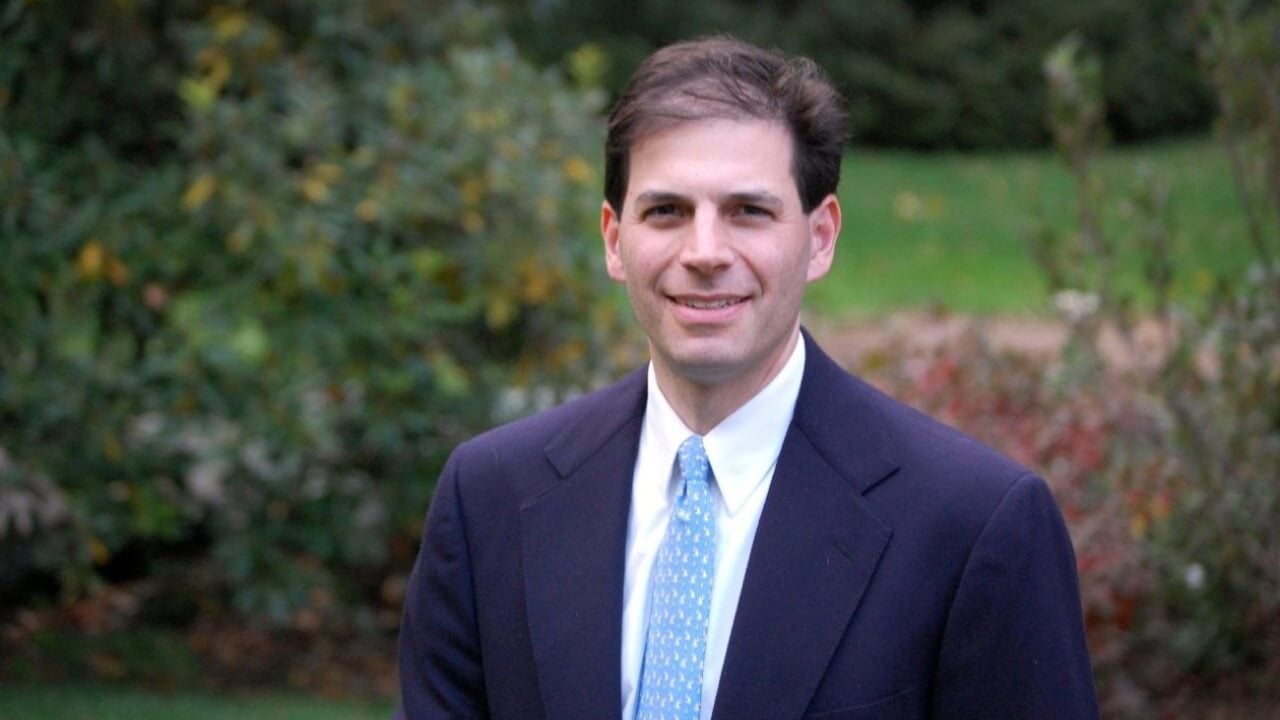
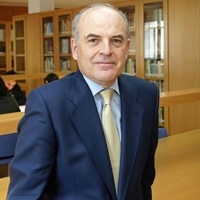
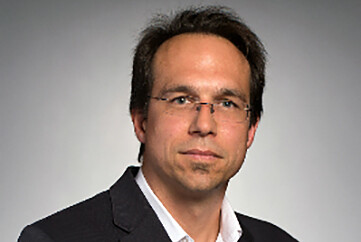
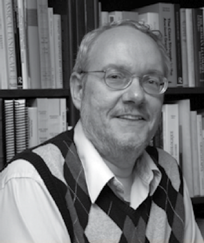
Jeffrey A. Cooper is a Professor of Law at Quinnipiac University School of Law , where he teaches courses in estate planning, wills and trusts, and taxation. He previously served as Associate Dean for Research and Faculty Development and is currently faculty adviser to the Quinnipiac Probate Law Journal . Education: AB from Harvard University, JD from Yale University, LLM from New York University Research Interests: His work focuses on tax policy , estate and gift taxation , and the intersection of federal tax law with state probate systems . He specializes in trust enforceability , uniform trust code , and historical analysis of tax legislation. Publications: Recent articles address perpetual trusts , state death tax decline , and curriculum reforms in estate planning education. His scholarship is widely published in national law journals and cited in casebooks. Scientific Awards: Academic Fellow, American College of Trust and Estate Counsel (ACTEC) Faculty Scholar, Quinnipiac University Professional Background: Before academia, Cooper practiced law for over a decade as a principal at Cummings & Lockwood, senior officer at United States Trust Company, and special counsel to Shipman & Goodwin. He also served as a senior adviser to Fiduciary Trust Company International.
Jonathan R. Lyon is Professor of History of the High and Late Middle Ages at the Institute for Austrian Historical Research within the Faculty of Historical and Cultural Studies at the University of Vienna. He maintains office hours on Thursdays from 14:00-16:00 (available via Zoom by appointment) and can be contacted at jonathan.lyon@univie.ac.at or +43-1-4277-27297. His educational background includes: B.A. in History and Latin, Colgate University (1997, Summa cum laude) Exchange year at Albert-Ludwigs-Universität Freiburg (1996) M.A. in History, University of Notre Dame (1999) Ph.D. in History, University of Notre Dame (2005) Lyon's research centers on the Holy Roman Empire during the High and Late Middle Ages, European political and social structures (1000-1500), the evolution of statehood, corruption mechanisms, medieval kinship systems, and gender dynamics with particular emphasis on masculinity. His work examines how political power, social networks, and religious institutions intersected in shaping medieval governance and community life, often challenging traditional narratives about medieval state formation through comparative analysis of German and Hungarian contexts. Analysis of his 15 most recent publications reveals consistent chronological focus on the 12th-15th centuries with increasing attention to corruption, gender, and monastic institutions since 2015. His scholarship demonstrates methodological diversity through charter analysis, prosopography, and comparative institutional studies, while maintaining thematic continuity in examining power dynamics between nobility, monarchy, and religious entities across Central Europe. His major scientific awards include: 2024 Otto Gründler Book Prize for Corruption, Protection and Justice in Medieval Europe: A Thousand-Year History 2017 John Nicholas Brown Prize for Princely Brothers and Sisters: The Sibling Bond in German Politics, 1100–1250 Lyon has secured prestigious research funding including the Fulbright Fellowship (2000-2001), DAAD Research Fellowship (2007), FWF Lise Meitner Fellowship (2013-2014), and Alexander von Humboldt Research Fellowship (2017-2018). He served as Academic Director of the Berlin Consortium for German Studies (2012-2013) and currently advises the Manchester Medieval Sources Series. His ongoing projects include editing charters of Quedlinburg abbesses and authoring an introductory text on the medieval Holy Roman Empire.
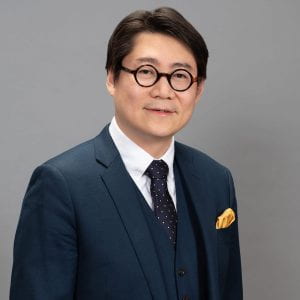
Yuhua Wang serves as the Ford Foundation Professor of Modern China Studies within Harvard University's Faculty of Arts and Sciences, Department of Government. His scholarly work establishes him as a leading authority on Chinese political development, state capacity, and historical institutional analysis across imperial and contemporary contexts. His academic foundation includes: B.A. from Peking University Ph.D. from the University of Michigan Professor Wang's research program integrates comparative politics with Chinese studies through core interests in bureaucracy , institutions , judiciary and public law , political economy & development , political geography , and state-society relations . He employs a methodological triad of historical , qualitative , and quantitative approaches to analyze China's political evolution. His work uniquely bridges macro-historical patterns with contemporary governance challenges, particularly examining how historical legacies shape modern state capacity and institutional resilience in authoritarian contexts. Analysis of his publication trajectory reveals consistent focus on state development mechanisms, with increasing sophistication in comparative historical methodology. Recent work demonstrates expanded geographic scope beyond China while maintaining analytical depth in imperial political economy. His research shows growing integration of cross-national datasets with deep historical case studies, reflecting broader trends in political science toward mixed-method designs for complex institutional analysis. His distinguished recognition includes: 2023 Lubbert Best Book Award in Comparative Politics from the American Political Science Association for The Rise and Fall of Imperial China Harvard College Professor appointment (2025) Professor Wang maintains active research leadership through extensive publication in premier journals including American Political Science Review and Comparative Political Studies , with significant contributions to theoretical frameworks like State-in-Society 2.0. His work generates substantial policy-relevant insights on corruption, judicial review, and urban governance in China. As a core faculty member in Harvard's Government Department, he contributes to the university's intellectual ecosystem through cross-disciplinary collaboration and participation in research initiatives focused on Asian political development, though specific lab affiliations are not documented in available sources.
London School of Economics and Political Science (LSE)United Kingdom
Madawi Al-Rasheed is Visiting Professor at the London School of Economics (LSE) Middle East Centre, where she conducts research on political and religious change in Saudi Arabia, particularly following the 2011 Arab uprisings. She previously held the position of Professor of Anthropology of Religion at King’s College London (1994–2013), was a Research Fellow at the Open Society Foundation, and a Prize Research Fellow at Nuffield College, Oxford. She has also taught at Goldsmiths College and the University of Oxford. Her research focuses on Saudi political development, gender policies, religious reform, and civil society. She is widely published, with major works including Muted Modernists (2015), Salman’s Legacy (2018), and A History of Saudi Arabia . Her research has been supported by fellowships from the Open Society Foundation and other institutions. Al-Rasheed is a frequent contributor to international media, including BBC, CNN, CCTV, and Al-Hura, and has published op-eds in The Guardian , Foreign Policy , Al-Monitor , and Foreign Affairs . She has given seminars at Harvard University, the University of Denver, and Casa Arabe in Madrid. Saudi Arabia GCC states Anthropology Gender Islamic Politics Political Reform Her recent publications reflect a consistent focus on authoritarian resilience, religious reinterpretation, and social change in Saudi Arabia, particularly under Mohammed bin Salman. Themes include state-led modernization, repression of dissent, gender reforms, and the manipulation of nationalist discourse. Fellow of the British Academy (2020) She has advised governments and international organizations and continues to be an influential public intellectual on Gulf affairs. Although she does not appear to supervise formal students at LSE, her extensive publications and public engagement reflect significant academic mentorship and influence. She is not part of a formal lab or research team but leads independent and collaborative research initiatives.
Hugh Kennedy , Professor at SOAS University of London within the School of Languages, Cultures and Linguistics, is a leading scholar in early Islamic history. His research spans political structures, military systems, and cultural transitions in the Islamic world. Fields of Interest : Early Islamic History, Abbasid Caliphate, Sacred Space, Historical Geography, Islamic Law. Research Trends : His work explores the evolution of Islamic political terminology, frontier interactions, and the socioeconomic impacts of Muslim rule. He has published extensively on the Ḥajj, urban development, and manuscript production in the Abbasid era. Supervised Theses : Tanaka (zandaqah), Ye (ʿAbbāsid mysticism), Habib (sacred space), Khatun (trade networks), Manstetten (madrasa origins), Lodhi (hijra law), Webb (Arab origins).
Daniel M. Smith is an Associate Professor in the Department of Political Science at the University of Pennsylvania, School of Arts & Sciences. He holds a PhD from the University of California, San Diego, and has held academic positions at Harvard University, Columbia University, and Stanford University. His research focuses on comparative politics, political economy, and political behavior, with regional expertise in Japan and Western Europe. PhD, Political Science, University of California, San Diego (2012) MA, Political Science, University of California, San Diego (2009) BA, Political Science and Italian, University of California, Los Angeles (2005) His research centers on political institutions, democratic representation, electoral systems, and political dynasties. He is the author of the acclaimed book Dynasties and Democracy (Stanford University Press, 2018), which explores the persistence of political families in democracies, particularly in Japan. His work also investigates voter behavior, gender and age in politics, distributive politics, and legislative accountability. His recent publications in top journals such as the American Political Science Review , American Journal of Political Science , and The Journal of Politics reflect a strong trend toward mixed-methods research, combining large-scale data analysis with experimental designs. His work frequently employs conjoint experiments, natural experiments, and administrative data to study political behavior and institutional effects. Winner of the 2023 Lawrence Longley Award (APSA) Winner of the 2022 Kenneth A. Shepsle Prize Honorable mention for the 2024 APSA Best Paper Award Smith has advised numerous graduate students and co-organizes the Japanese Politics Online Seminar Series (JPOSS). He has also co-edited multiple volumes in the Japan Decides series, analyzing Japanese general elections. He teaches courses on electoral rules, representation, and Japanese politics at both undergraduate and graduate levels. His research is supported by active collaborations with scholars across the U.S. and Japan, and he maintains a robust pipeline of working papers on topics such as coalition dynamics, gender bias, and constituency-building.
Prof. Dr. Miloš Řezník is a prominent historian and Professor of European Regional History at the Faculty of Philosophy, Chemnitz University of Technology. He has held this position since 2009 and served as Pro-Dean of the Faculty. From 2014 to 2024, he was Director of the German Historical Institute in Warsaw. His academic career spans institutions in Prague, Liberec, Leipzig, and Chemnitz, reflecting a deep engagement with Central and Eastern European history. PhD and Habilitation in General History, Palacký University Olomouc Extensive research on collective identities, nationalism, borderlands, and elite transformations in Central Europe Expertise in Polish, Czech, Galician, and Habsburg history Longstanding leadership roles in German-Czech and German-Polish historical commissions His research interests center on the cultural and political dynamics of regional identities in Central and Eastern Europe, especially in border regions such as Silesia, Bohemia, Pomerania, and Galicia. He explores how historical memory, nationalism, and elite strategies have shaped regional consciousness from the 18th to the 20th century. His work bridges historiography, cultural studies, and political history, with a strong focus on transnational and comparative perspectives. The 15 most recent publications reveal a consistent thematic trajectory: the interplay between regionalism, ethnicity, memory, and state formation in Central Europe. Key sub-themes include the Kashubian movement, Habsburg provincial governance, German-Czech-Polish relations, and the symbolic politics of historical figures and events. His scholarship increasingly engages with theoretical frameworks such as retrotopia, ethnoregionalism, and the institutionalization of historical science. Scientific Awards and Honors: Foreign Member, Polish Academy of Arts and Sciences (2023) Member, Scientific Advisory Board, Federal Foundation for the Study of Communist Dictatorship in East Germany (2025) Member, Scientific Council, Bundeskanzler-Helmut-Kohl-Stiftung (2022) Member, Johann Gottfried Herder Research Council (2011–present) Prof. Řezník has supervised numerous academic projects and dissertations, particularly through collaborative EU and DFG-funded initiatives focused on cross-border history. He has served as editor for multiple academic series and journals, including Journal of Modern European History (2019–2024). His institutional roles include membership in evaluation committees for the European Research Council, DFG, and Czech Science Foundation. He leads or has led several major research initiatives, including the Interreg Project: Cultural Heritage of the Vogtland and Egerland , and has organized numerous international conferences on Central European history, memory, and regionalism. His work is deeply embedded in transnational academic networks, particularly through the German Historical Institute in Warsaw and the Kompetenzzentrum Mittel- und Osteuropa Leipzig.
Nathanael Andrade is a Professor in the History Department at Binghamton University within the College of Arts and Sciences. Specializing in Greek and Roman history, with a focus on the Ancient Mediterranean and Late Antiquity, his work explores the Roman Near East, Hellenistic Syria, and cultural interactions in antiquity. Education: PhD in Greek and Roman History from the University of Michigan; BA from Wesleyan University Research Interests span the Roman and later Roman Near East, including topics like religious pluralism , urban economies , and gender dynamics in antiquity. His scholarship interrogates cultural identity, material culture, and the transmission of ideas across the Mediterranean and Indian Ocean networks. Recent Publications (2025–2009) address diverse themes: Pompey's impact on the Levant, economic circularity in Palmyra, enslaved women and children in Roman legal documents, and the interplay of Greek and Syrian identities. These works situate him at the intersection of military history , social archaeology , and comparative religion . Academic Network includes co-authorship with Rubina Raja on Palmyrene economy, editorial contributions to volumes on the Roman Near East, and affiliations with institutions like the University of Michigan and Wesleyan University.
Michael G. Chang is an Associate Professor in the Department of History and Art History at George Mason University. He specializes in the history of the Qing dynasty (1644-1911), with particular expertise in imperial touring, court studies, and the political, social, cultural and economic histories of late imperial/early modern China (1500-1800). Chang received his A.B. in sociology and East Asian Studies from Princeton University and his Ph.D. in Chinese history from the University of California, San Diego. His research focuses on the political and material cultures through which High Qing rule (1680-1820) was constituted, especially as revealed in practices of material exchange and network formation at the Qing court. His scholarly work examines the intersection of ethnic identity, imperial spectacle, and political authority in Qing China. Chang's research particularly explores how the Manchu rulers used imperial tours, court encampments, and martial displays to assert their authority while simultaneously engaging with Han Chinese political traditions. His publications reveal how seemingly mundane practices like imperial touring, feasting, and encampment construction were central to Qing political legitimacy and state formation. Chang's publications reveal a consistent focus on how the Qing court navigated the complex relationship between Manchu ethnic identity and Chinese imperial traditions. His work demonstrates how the Qianlong emperor transformed the spectacle of 'ruling from horseback' from a stigmatized sign of illegitimate military rule into a specific badge of ethno-dynastic (Manchu) discipline and diligence as well as benevolent civilian rule. Public Intellectuals Program (PIP) sponsored by the National Committee on U.S.-China Relations (NCUSCR), 2011-2013 Chang regularly teaches courses on early ('ancient'), later imperial ('traditional'), modern, and contemporary (PRC) Chinese history as well as global history, East Asian history, Chinese nationalism(s), and general historiography. His teaching reflects his research interests in connecting political, cultural, and social dimensions of Chinese history across different periods. His courses include HIST 125: Introduction to Global History, HIST 252: History of East Asia, Part 2, HIST 387: Early (Ancient) China, HIST 353: Later Imperial (Traditional) China, HIST 354: Modern China, HIST 358: Contemporary (Post-1949) China, and HIST 610: The Study and Writing of History. His scholarly presentations at major academic conferences including the Association of Asian Studies demonstrate his active engagement with the field and his research on patrimonialism, material culture at the Qing court, and the political significance of imperial tours.
Rafael Sánchez Saus is a Professor of Medieval History at the Department of History, Geography and Philosophy, University of Cadiz (Spain). With a career spanning over three decades, his work focuses on Iberian nobility structures , Andalusian frontier dynamics , and medieval genealogical networks , particularly in Seville and Jerez de la Frontera. Research Focus: Medieval kinship systems, Castilian-Trastámara political structures, Atlantic maritime expansion, and religious coexistence under Islamic rule. Projects: Principal investigator in "El mar como frontera" (PGC2018-095719-B-100) analyzing legal transgressions in Atlantic medieval frontiers. His bibliography includes seminal works on hidalguía (2018), Al-Andalus y la Cruz (2016), and Linajes Sevillanos Medievales (1989-2011). Recent publications explore Alfonso X's multifaceted governance (2023) and Córdoba's martyrdom movement (2022). Academic Engagement: Member of the HUM182 Medievalism of Cadiz research group, with extensive collaborations across Spanish and European medievalist institutions. Supervised by Dr. Miguel Ángel Ladero Quesada, he obtained his doctorate from Complutense University of Madrid in 1986.
Prof. Dr. Michaela Hohkamp serves as Professor for Early Modern History/Space and Region at Leibniz University Hannover's Faculty of Philosophy within the Department of History. Previously, she held the Christian-Gottlob-Heyne-Professorship at Leibniz University Hannover (2011-2013) and was Professor for Theory and Methods in History and Gender History at the Free University of Berlin (2008-2011). Her academic journey began with studies in Medieval and Modern History, Sociology, Political Science, and Art History at the University of Göttingen (1978-1986), followed by doctoral work completed in 1998. She earned her habilitation at the Free University of Berlin in 2007. Her career includes significant research positions at the Max Planck Institute for History in Göttingen, a visiting fellowship at Stanford University (1997), and a guest position at the European University Institute in Florence (2003/2004). Professor Hohkamp's research centers on the history of early modern violence, power structures, family and kinship networks, women's and gender history, and historiography. Her groundbreaking work examines how kinship functioned as political infrastructure among European nobility, revealing how gendered relationships shaped political authority and conflict resolution. She has pioneered analysis of the conceptual boundaries between legitimate and illegitimate violence in early modern contexts, particularly through gendered lenses. Her scholarship consistently bridges historical methodology with anthropological approaches to kinship and social organization. Analysis of her publication trends reveals a deepening engagement with spatial dimensions of historical analysis in recent years, examining how geographical frameworks shaped political authority. Her work demonstrates remarkable continuity in exploring family networks as political tools while evolving to incorporate interdisciplinary perspectives on time, space, and representation. This evolution reflects broader shifts in historical methodology toward more integrated analyses of social, political, and spatial dimensions of early modern life. Her scholarly recognition includes: Fellowship at the Center for Interdisciplinary Research (ZiF), Bielefeld (2017) Fellowship from the Dr. Jacques Körfer Foundation (2005-2006) DAAD Scholarship (1988) Max Planck Society Fellowship (1986-1995) Professor Hohkamp has supervised five doctoral candidates to completion, including Detlef Berghorn, Sven Erdner, Svenja Müller, Friederike Willasch, and Julia Heinemann. Her research has been supported by Volkswagen Foundation funding for projects on denunciation practices, and she has held significant administrative roles including Research Dean of the Faculty of Philosophy at Leibniz University Hannover (2013-2015) and Dean of Studies at FU Berlin (2011). She currently serves as BAföG representative and Alumni Representative at the Historical Seminar. She maintains active involvement in multiple scholarly networks including the Working Group for Historical Women's and Gender Studies, the Working Group on Gender History of the Early Modern Period, the Family and Kinship Network of the German Studies Association, and the Historical Commission for Lower Saxony and Bremen's working group on Early Modern Period history. These affiliations demonstrate her commitment to collaborative, interdisciplinary research within her field.
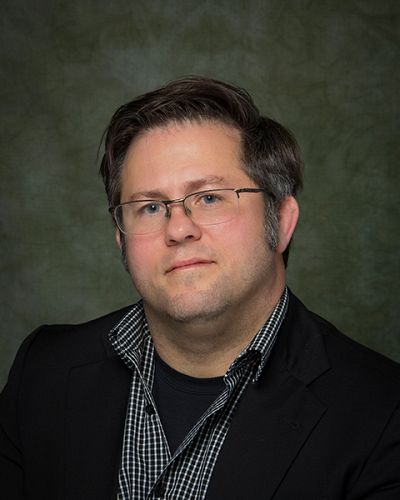
Blain Auer is a full professor in the Section of Slavic and South Asian Languages and Civilizations at the Faculty of Arts, University of Lausanne (UNIL), appointed on February 1, 2013. He previously served as a professor of Islamic studies in the Department of Comparative Religion at Western Michigan University. His academic expertise lies in South Asian Islamology and Urdu, with a focus on pre-modern Islamic history, particularly the Delhi Sultanate. His research centers on Islamic authority, expressed through Quranic interpretation, Hadith, exegesis, and historiography in medieval South Asia. A second major area involves ritual practices, modern pilgrimage, and relics associated with Islamic burial sites. He also investigates the intersections between Sufism and political power, Persianate court cultures, and interreligious encounters between Muslims and Buddhists in Central and South Asia. The thematic trends in his recent publications reveal a sustained scholarly focus on Indo-Islamic political legitimacy, Persian historiography in India, and the intellectual culture of pre-modern Islamic courts. His works often analyze how historical narratives were shaped by religious and political agendas, particularly in the context of Turkic and Afghan rule in South Asia. He has also contributed critical translations and studies of key Persian historical texts from the Delhi Sultanate era. Member, Board of the Medieval Institute, Western Michigan University Member, Center for the Humanities, Western Michigan University Blain Auer received his PhD in 2009 from Harvard University’s Department of Near Eastern Languages and Civilizations. His doctoral training has informed his rigorous textual and historical methodology. He continues to contribute actively to the academic community through publications, editorial work, and participation in scholarly networks focused on Islamic and South Asian studies.
Professor Michael Penman is a historian specializing in medieval and early modern Scottish history, affiliated with the University of Stirling's Department of History. He holds a First Class MA from the University of St Andrews (1995) and a PhD on David II of Scotland (1999). His research spans medieval lay piety, saints' cults, royal burials, and World War I history. He has led projects on Dunfermline Abbey's royal tombs (using ground-penetrating radar) and Patrick Geddes' civic planning in Dunfermline. Academic roles include Deputy Head of History & Politics and Director of Research for the Division of History, Heritage, and Politics. Awards include the Saltire Society Prize (2005). He advises on heritage projects like the Dunfermline Heritage Partnership and has authored/co-edited over 80 publications, including monographs on David II and Robert the Bruce. Research interests emphasize cross-cultural comparisons with England, Ireland, and Europe. Public engagement includes lectures on topics like the Declaration of Arbroath and medieval monuments. He supervises postgraduates on themes like medieval dynasties and royal cults. Professional memberships include the Royal Historical Society and Scottish History Society.
Peter van Minnen is a Professor of Classics at the University of Cincinnati, specializing in ancient history, Greco-Roman Egypt, and papyrology. He holds a PhD from the University of Leuven (1997) and has held fellowships at institutions including Dumbarton Oaks and the Loeb Classical Library Foundation. His research focuses on Roman economic history, papyri analysis, and urban development in antiquity, particularly in Egypt. He has directed projects such as the edition of a family archive from Hermopolis and studies of documents from ancient Alexandria. His Ph.D. from Leuven (Ancient History) and MA from Leiden (Classics) laid the groundwork for his career. He has taught globally, including in Divinity and Law schools, and edited the Bulletin of the American Society of Papyrologists since 2006. His work bridges archaeology, literature, and documents, emphasizing interdisciplinary approaches. Research interests include Roman social and economic structures, legal systems, and the transition from Republic to Empire. His publications exceed 200 works, covering papyri studies, urban history, and women in Greco-Roman Egypt. He has advised numerous PhD students who now hold academic positions worldwide. Key awards include fellowships from the Royal Netherlands Academy (1998–2001) and the Loeb Foundation (2015–2016). His work on the Cleopatra papyrus (2000–2001) gained international attention. He maintains a website translating Alexandrian documents from Augustan-era papyri, fostering accessibility in papyrological research.
Professor Teresa Grant is a full-time academic at the University of Warwick, where she serves as Professor of Renaissance Theatre and Director of the Centre for the Study of the Renaissance. She is affiliated with the Department of English and Comparative Literary Studies within the School of Arts. She teaches across undergraduate and postgraduate programs in English, Theatre, and Renaissance Studies, including the MA in English and Drama and the MA in the Culture of the European Renaissance. BA, University of Cambridge (1994) MA, University of London (1997) PhD, University of Cambridge (2001) PGCHE, University of Liverpool (2003) SFHEA (2023) Her research centers on early modern drama, particularly the works of James Shirley and the performance of classical traditions on the English stage. She has significant interests in early modern animals, staging practices, and ecocritical approaches to Renaissance literature. Her scholarship bridges textual editing, performance theory, and cultural history. The most recent publications show a strong trend in animal studies within early modern theatre, genre analysis, and editorial scholarship. Her work on James Shirley, Ben Jonson, and Mary Tudor reflects deep engagement with both canonical and marginal figures in Renaissance drama. The keywords across her articles emphasize literature, theatre, Renaissance studies, cultural history, and animal representation, with sub-fields revealing expertise in staging, genre, classical reception, and editorial practice. She has not received any listed scientific awards or fellowships, but her editorial roles—such as General Editor of The Complete Works of James Shirley —indicate high scholarly recognition. Professor Grant actively supervises both MA and PhD students, with past and current advisees working on James Shirley, Restoration drama, Caroline pageantry, pirate printers, and the afterlife of Queen Elizabeth. She has also secured collaborative research opportunities, such as co-running the Warwick/QMUL Classical Reception Research Network. While specific grants are not listed, her editorial projects and leadership roles suggest involvement in funded academic initiatives. She is a key member of the Centre for the Study of the Renaissance and contributes to interdisciplinary research teams focused on classical reception and early modern performance. Her teaching includes specialized modules such as The Development of English Drama 1558–1659 and Early Modern Ecologies , and she convenes MA programs, demonstrating leadership in curriculum development and academic mentorship.