
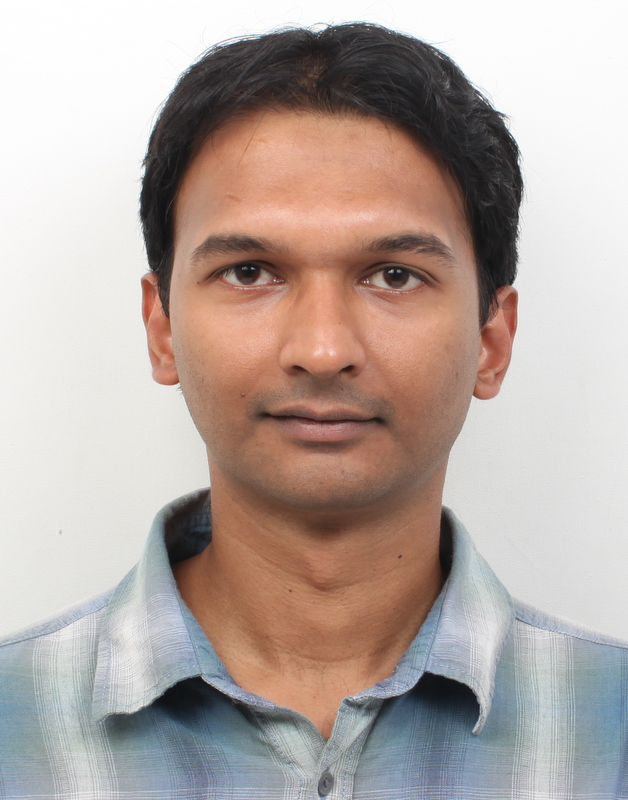
Shivaram Kalyanakrishnan is an Associate Professor at the Department of Computer Science and Engineering , Indian Institute of Technology Bombay , specialising in Artificial Intelligence and Machine Learning . His research spans sequential decision making , multiagent learning , multi-armed bandits , and humanoid robotics , with applications in robot soccer , computer games , and online advertising . He teaches advanced courses like CS 747: Foundations of Intelligent and Learning Agents and CS 748: Advances in Intelligent and Learning Agents , focusing on end-to-end system design and theoretical analysis. His scientific awards include the Best Student Paper Award at RoboCup International Symposium 2006 and nomination for Best Student Paper Award at AAMAS 2007 . His work on reinforcement learning and policy iteration has been published in leading venues such as IJCAI , ICML , and COLT , with recent contributions to railway scheduling and bandit algorithms. While no explicit list of advisees is provided, his research projects and publications suggest mentorship of students in collaborative efforts. Contact : shivaram@cse.iitb.ac.in .
جستجوی استاد راهنمای دانشگاهی
برای مسیر پژوهشیتان، استاد راهنما، استاد دانشگاه و پژوهشگر مناسب را پیدا کنید و با آنها ارتباط بگیرید.
نمایش ۱-۱۵ از ۳۹۱ استاد راهنما
اطلاعات پروفایلها از صفحات عمومی دانشگاهها گرفته شده و ممکن است بهروز نباشد.
Raj Ganesh S. Pala serves as a Professor in the Department of Chemical Engineering at the Indian Institute of Technology Kanpur. His research focuses on electrochemical engineering with particular expertise in energy storage systems, catalysis, and materials science. Dr. Pala maintains an active research program investigating fundamental electrochemical processes and their applications in energy conversion and storage technologies. Dr. Pala earned his PhD in Physical Chemistry from the University of Utah (1999-2005), followed by a Master's in Science (Biophysical Chemistry) from the Indian Institute of Science and National Center for Biological Science (1997-1998), and a Bachelor's in Chemical and Electrochemical Technology from the Central Electro-Chemical Research Institute (1992-1996). His research interests span electrochemical engineering, catalysis, and separation processes with applications in energy storage, water treatment, and sustainable chemical production. Dr. Pala's work bridges fundamental electrochemistry with practical engineering applications, particularly in battery technology and electrocatalysis. His recent publications demonstrate a strong focus on energy storage materials, particularly lithium-ion battery cathodes, and electrocatalytic processes for sustainable chemical production. The research spans from fundamental materials characterization to practical device implementation, with particular emphasis on improving efficiency, selectivity, and longevity of electrochemical systems. Dr. Pala is based in Office NL-II 304 at IIT Kanpur, where he conducts his research and teaching activities in the Department of Chemical Engineering. His work contributes significantly to IIT Kanpur's research initiatives in sustainable energy and advanced materials.
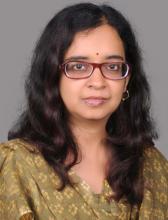
Professor Asmita Mukherjee is a faculty member in the Department of Physics at the Indian Institute of Technology Bombay (IIT Bombay), where she holds the position of Professor. She is actively engaged in theoretical particle physics research with a focus on Quantum Chromodynamics (QCD) and related phenomena. Professor Mukherjee's research interests primarily include Theoretical Particle Physics, Quantum Chromodynamics, QCD spin physics, Light-cone wave functions, and collider phenomenology. She teaches several advanced courses including Elementary Particle Physics (PH540), Mathematical Physics-I (PH407), Mathematical Physics-II (PH408), Quantum Physics and Applications (PH107), and various Quantum Mechanics courses (PH422, PH423, PH105). Her publication record shows a strong focus on gravitational form factors, transverse momentum dependent distributions, angular momentum structure of hadrons, and electron-ion collider physics. Recent work has explored gluon contributions to proton structure, dressed quark states, and azimuthal asymmetries in various production processes. Her research demonstrates expertise in light-front quantization techniques and their application to fundamental questions in hadron physics. Professor Mukherjee has received recognition for her work in High Energy Theory, with numerous publications in prestigious journals addressing fundamental questions in hadron structure and QCD dynamics. Her work provides crucial theoretical foundations for upcoming experiments at the Electron Ion Collider. Current PhD students: Sudeep Saha, Amol Pawar Graduated PhD students: Ravi Manohar, Sreeraj Nair, Vikash K. Ojha, Sangem Rajesh, Raj Kishore Postdoctoral researchers: Shaik Khatiza Banu (CFNS), Jai More, Tanmay Maji, Mariyah Siddiqah Research projects: BRNS project with Ravi Singh as Junior Research Fellow Her research group at IIT Bombay continues to explore fundamental questions in hadron physics, with ongoing projects examining the mechanical properties of protons, the decomposition of angular momentum in QCD, and the development of theoretical tools for interpreting data from next-generation colliders.

Ishan Sharma is a Professor in the Department of Mechanical Engineering at the Indian Institute of Technology Kanpur (IIT Kanpur), specializing in Mechanics and Applied Mathematics. His research focuses on granular materials, planetary science, contact mechanics and adhesion, soft materials, dynamics, structural vibrations, wave propagation, stability, and fluid-structure interaction. Dr. Sharma's research interests include modeling granular systems for geophysical and industrial applications, with specific emphasis on dynamics of granular minor planets and segregation in granular mixtures. His work bridges theoretical mechanics with practical applications in both space science and engineering contexts. The research spans multiple disciplines, connecting planetary science, materials science, and mechanical engineering through mathematical modeling and computational approaches. His scholarly contributions demonstrate significant trends in applying mechanical principles to celestial bodies and industrial processes. The work on granular materials has important implications for understanding asteroid formation, while his contact mechanics research informs material science and engineering design. His publications reveal a consistent focus on stability phenomena across different physical systems. INAE Young Engineer Award Dr. Sharma leads the Mechanics and Applied Mathematics research group at IIT Kanpur, supervising research projects that examine fundamental properties of materials under various mechanical conditions. His work combines theoretical analysis with computational methods to address complex mechanical problems with both academic and practical significance. He maintains an active research program with ongoing projects examining the mechanical behavior of granular systems in space environments. Based in office NL-102 in the Department of Mechanical Engineering, Dr. Sharma contributes significantly to the academic community through his teaching, research supervision, and scholarly publications in high-impact journals.
- Mechanics
- Applied Mathematics
- Granular Materials
- +۸ مورد دیگر
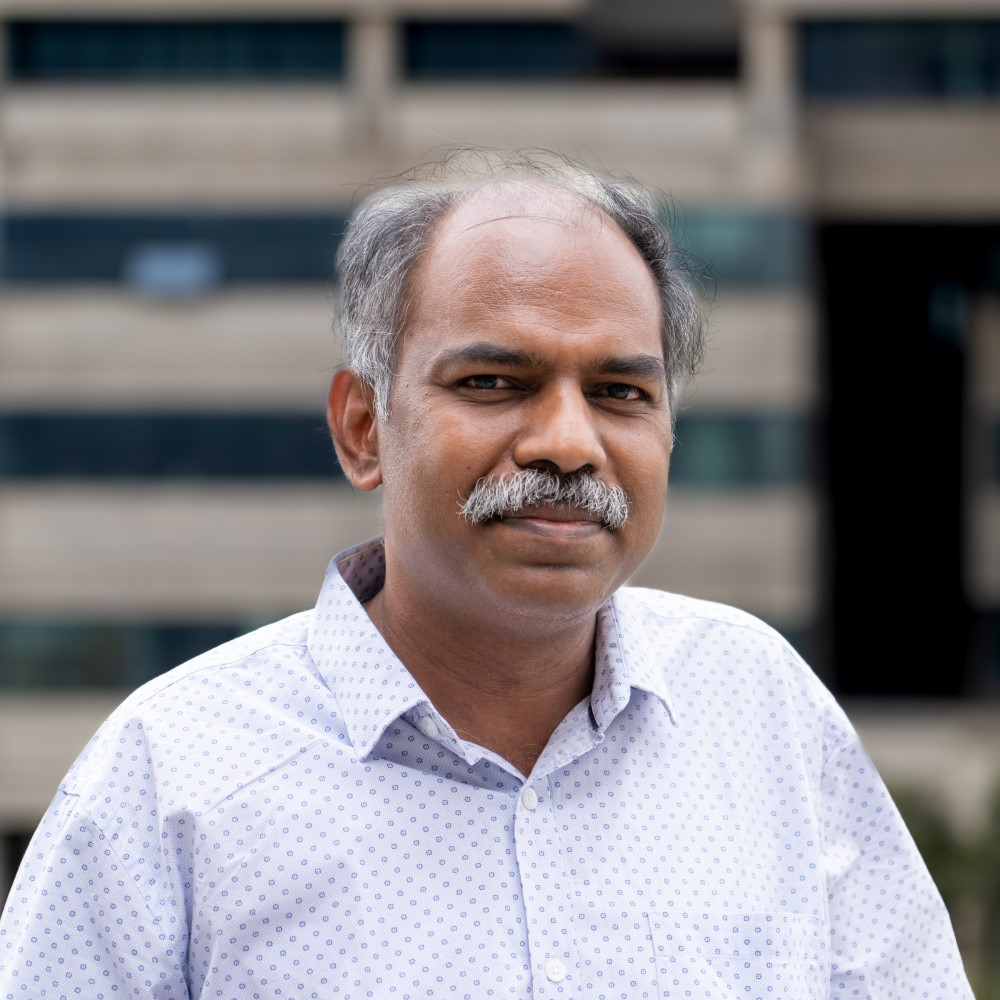
Antony Franklin is an Associate Professor and Head of the Department of Computer Science and Engineering at the Indian Institute of Technology Hyderabad (IITH), India. He leads the Networked Wireless Systems (NeWS) Lab and is actively involved in 5G research, wireless networks, and cybersecurity. He earned his Ph.D. from IIT Madras in 2010. Education: Ph.D. in Computer Science and Engineering, IIT Madras, 2010 Research Interests: His research spans wireless networks , 5G systems , mobile edge computing , low-latency transport protocols , and cybersecurity . He focuses on next-generation mobile systems, especially 5G, aiming to meet the demands of ultra-low latency, high data rates, and quality of experience for services like IoT, autonomous driving, and VR. He has been involved in developing testbeds and prototypes to validate real-world performance of 5G technologies, including network slicing, LTE-WiFi integration, and edge computing. Scientific Awards: Best Academic Demo Award, IEEE COMSNETS 2018 Second Best Paper Award, IEEE ANTS 2017 Grants & Projects: Network Slice Life-cycle Management for 5G Mobile Networks – SPARC, MHRD (2019–2021) DNS/IPv6 for IoT Security – NASSCOM (2018–2019) CCRAN: Energy Efficiency in Cloud RAN – Intel India (2018–2021) End-to-End 5G Test-Bed – DoT, GoI (2018–2021) M2SMART Smart Cities – SATREPS (2018–2023) Ultra-Reliable Low Latency Protocols – STINT, Sweden (2017–2018) Low Latency 5G Protocols – SERB ECR (2016–2019) Lab & Team: He leads the NeWS Lab (Networked Wireless Systems) at IITH, which focuses on 5G, wireless networks, and IoT systems. The lab is actively involved in developing real-world testbeds and publishing in top-tier conferences and journals.
Prof. Prita Pant is a faculty member in the Department of Metallurgical Engineering and Materials Science at the Indian Institute of Technology Bombay (IIT Bombay). She holds a Ph.D. and M.S. in Materials Science from Cornell University and a B.E. in Metallurgical Engineering from Roorkee University. Her research focuses on the mechanical behavior of advanced materials, particularly thin films and shape memory alloys. B.E., Metallurgical Engineering, Roorkee University (1997) M.S., Materials Science, Cornell University (2001) Ph.D., Materials Science, Cornell University (2004) Her research interests include mechanical behavior of thin films , dislocation dynamics , nanoindentation studies , simulation of deformation processes , and Ni-Ti based shape memory materials . She employs both experimental and computational techniques to investigate microstructural evolution and deformation mechanisms in metals. The available publications indicate a strong focus on thin film mechanics , dislocation behavior , and microstructure-property relationships , particularly under mechanical loading. Her work bridges computational modeling and experimental characterization, with applications in structural and functional materials. There are no scientific awards explicitly mentioned in the provided text. While no specific students are listed, Prof. Pant leads the Computational Mechanics and Experimental Group (CMEG@IITB) , indicating active supervision of graduate students and involvement in research grants. Her research group website suggests ongoing funded projects and collaborative work. She is affiliated with the Computational Mechanics and Experimental Group (CMEG@IITB) , which conducts research on multiscale mechanics of materials, combining simulation and experimentation to understand deformation phenomena.
Soumya Duttaمشاهده پروفایل
استادیار
Soumya Dutta is an Assistant Professor in the Department of Computer Science and Engineering at the Indian Institute of Technology Kanpur (IITK), where he leads the INSIGHT: Intelligent Scientific and Visual Computing of Big Data Research Group. He joined IIT Kanpur in October 2022 after working as a Scientist II at Los Alamos National Laboratory (LANL) from July 2019 to August 2022, and previously as a Postdoctoral Research Associate at LANL from June 2018 to July 2019. His educational background includes a Ph.D. and M.S. in Computer Science and Engineering from The Ohio State University (2011-2018), where he was part of the GRAVITY research group, and a B.Tech. in Electronics and Communication Engineering from West Bengal University of Technology, India (2005-2009). Research Interests: Dr. Dutta's research focuses on the intersection of machine learning, visual computing, big data, and high-performance computing. His primary research areas include Machine Learning for Visual Computing and Image Analysis, Big Data Visualization and Analytics, Data Science and HPC, Machine Learning for Scientific Computing, and Explainability and Interpretability of AI Models. His work addresses various big data characteristics including the 5 Vs: Volume, Velocity, Variety, Veracity, and Value. He develops techniques that make complex machine learning models more interpretable and explainable, enabling their effective adoption in real-life applications across scientific domains, social media, IoT, healthcare, and industry applications. Dr. Dutta's research group has secured multiple funded projects including: DAVi: An Intelligent Data Analytics and Visualization Framework (funded by ISRO), Intelligent Visual Computing of Extreme-scale Data for Accelerating Scientific Discovery (IIT Kanpur Initiation Grant), Enabling Interactive Big Data Analytics and Visualization at Exascale (SERB), Development of AI-Enabled National Portal for Efficient Search of Missing People (C3iHub), and Proactive and Generalized Deepfake Defense Mechanisms (C3iHub). Best Reviewer, Honorary Mention Award for IEEE Transactions on Visualization & Computer Graphics (TVCG), 2021 Best Paper Award at ISAV 2021, co-located with Supercomputing (SC) LAAP Award at Los Alamos National Laboratory, 2021 Best Paper Award at TopoInVis 2019 Best Paper Award at ISAV 2018, co-located with Supercomputing (SC) Best Poster Award in 12th Annual CSE Student Poster Exhibition, The Ohio State University, 2018 Best Poster Award in 11th Annual CSE Student Poster Exhibition, The Ohio State University, 2017 Best Paper Honorable Mention Award at IEEE Visualization Conference (IEEE VIS) 2016 Dr. Dutta actively mentors a large group of students including Ph.D., M.Tech., and B.Tech. students. His current Ph.D. students include Shanu Saklani, Sankhadeep Bhowmick, Ananya Chaturvedi, Arpita Santra, Anubhav Dixit (co-supervised), and Robin Shah. He has supervised numerous M.Tech. students with thesis topics ranging from uncertainty-aware neural networks to deepfake detection. Dr. Dutta currently teaches courses including CS360 - Introduction to Computer Graphics and CS661 - Big Data Visual Analytics. The INSIGHT research group collaborates internationally with researchers from Meta, Oak Ridge National Laboratory, and National Taiwan Normal University. The group's work focuses on building machine learning and data science-based solutions to analyze large-scale multifaceted data in a scalable way, enabling interactive and interpretable analytics of complex data from scientific simulations, social media, IoT, healthcare, and other application domains.
- Machine Learning
- Visual Computing
- Image Analysis
- +۶ مورد دیگر
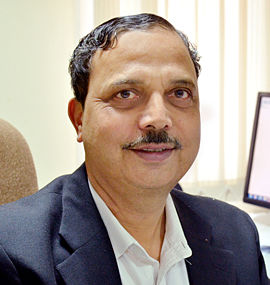
S. C. Srivastava is a Professor in the Department of Electrical Engineering at the Indian Institute of Technology Kanpur (IIT Kanpur) and serves as the Director of the IIT Kanpur-La Trobe University Research Academy, highlighting his leadership in international academic collaboration. Dr. Srivastava earned his PhD in Electrical Engineering from IIT Delhi in 1987 and completed his B.Tech from Banaras Hindu University in 1976. His research spans power system dynamics & stability studies, optimal power dispatch and state estimation, security analysis and control, smart grid technologies, and renewable energy integration including DC and AC micro-grids. His publication record shows consistent research output through 2018 with significant contributions to power system state estimation, microgrid protection, and wide area control systems. His work demonstrates a clear progression toward addressing contemporary challenges in power systems, particularly renewable integration and smart grid applications. Malaviya Award for Excellence in Power Systems (2018) Prof GK Dubey Memorial IEEE UP Section Life Time Achievement Award (2016) The Life time Achievement Award for Academic Excellence (2016) Dr. Srivastava serves in influential advisory roles including Chairman of the Expert Committee on Mission Innovation in Smart Grids (DST, New Delhi) and Member of the R&D Advisory Committee of NETRA, NTPC. His leadership in the IIT Kanpur-La Trobe University Research Academy demonstrates ongoing commitment to addressing global energy challenges through international collaboration.
Arpit Agarwalمشاهده پروفایل
استادیار
Arpit Agarwal is an Assistant Professor in the Department of Computer Science & Engineering at the Indian Institute of Technology, Bombay. He previously held postdoctoral positions at FAIR Labs (Meta) working with Max Nickel and at the Data Science Institute at Columbia University hosted by Prof. Yash Kanoria and Prof. Tim Roughgarden. He completed his PhD from the Department of Computer & Information Science at the University of Pennsylvania under the guidance of Prof. Shivani Agarwal. His research focuses on the intersection of human behavior and machine learning systems, with particular interest in learning from implicit, strategic, and heterogeneous human feedback. His work spans multiple dimensions of human-AI interaction including understanding long-term dynamics between humans and AI systems, designing responsible AI, and studying misalignment between user preferences and system objectives. His research methodology often combines theoretical machine learning with practical applications in recommendation systems and social AI. His recent publications reveal a strong focus on bandit algorithms, preference learning, and recommendation systems, with increasing attention to responsible AI design and human-centered considerations. His work demonstrates expertise in theoretical machine learning with applications to real-world problems, particularly in understanding how humans interact with and are influenced by AI systems over time. Dr. Agarwal teaches advanced courses including CS767 Theoretical Machine Learning (Autumn 2025) and CS6103 Human-Centered AI: From Learning Models to Responsible Systems (Spring 2025), which covers topics such as AI alignment, learning from pairwise comparisons, crowdsourcing, human-in-the-loop decision making, recommendation systems, interpretability, privacy, fairness, causality, and AI governance.
Dr. Arnab Bhattacharya is a Professor in the Department of Computer Science and Engineering at the Indian Institute of Technology (IIT) Kanpur since December 2020. He previously served as Associate Professor (2014–2020) and Assistant Professor (2007–2014) at IIT Kanpur. Education: PhD in Computer Science (2007), University of California, Santa Barbara MS in Computer Science (2007), University of California, Santa Barbara Bachelor of Computer Science and Engineering (2001), Jadavpur University Research Focus spans Databases , Data Mining , Information Retrieval , and Artificial Intelligence . His work emphasizes graph analytics , skyline queries , probabilistic data , and knowledge graph management . Article Trends reveal expertise in graph neural networks , trajectory-aware systems , statistical significance in databases , and legal/medical data mining . His methodologies often integrate chi-square statistics , approximate indexing , and provenance tracking . Scientific Awards: IBM Faculty Research Award Yahoo! Faculty Research and Engagement Program Award Best Paper at COMAD 2011 Best Student Paper at COMAD 2010 Top-Five Student Paper at ICDM 2005 ICDM Student Travel Award sponsored by IBM Contact: Office RM 409, Department of Computer Science and Engineering, IIT Kanpur Email: arnabb@iitk.ac.in | Phone: +91-512-259-7650
- Databases
- Data Mining
- Information Retrieval
- +۲ مورد دیگر

Malay Banerjee is a Professor in the Department of Mathematics and Statistics at the Indian Institute of Technology Kanpur (IIT Kanpur) . His academic career is anchored in mathematical ecology and nonlinear dynamics, with a focus on modeling ecological and epidemiological systems. Education: Ph.D. (2005), University of Calcutta, India M.Sc. (1998), University of Calcutta, India Research Interests: His research spans Mathematical Ecology , Eco-epidemiology , and Nonlinear Dynamics . He applies differential equations and stochastic modeling to understand predator-prey dynamics, phytoplankton competition, and the impact of allelopathy and Allee effects on ecosystem stability. Publications Overview: His recent publications (2011–2014) focus on advanced modeling of ecological systems, including stochastic phytoplankton dynamics, bifurcation in predator-prey systems, and spatial self-organization. These works are published in leading journals like Mathematical Biosciences , Ecological Complexity , and Theoretical Ecology . Awards and Honors: Junior Research Fellowship (JRF), CSIR India Contact & Office: Office: FB-526, Department of Mathematics and Statistics, IIT Kanpur, Kanpur 208016 Phone: 0512-259-6157 (O) Email: malayb@iitk.ac.in

Rahul Mangalمشاهده پروفایل
دانشیار
Rahul Mangal serves as an Associate Professor in the Department of Chemical Engineering at the Indian Institute of Technology Kanpur (IIT Kanpur). His academic profile demonstrates expertise in polymer physics, colloids, complex fluids, nanocomposites, active matter, and liquid crystals. Dr. Mangal completed his PhD at Cornell University in 2016, followed by a post-doctoral fellowship at the University of Wisconsin Madison (2016-2017). He earned his B Tech-M Tech dual degree from IIT Kanpur in 2010. Prior to his academic career, he gained industry experience as a Manager at Reliance Industries Limited in Jamnagar, Gujarat from July 2010 to July 2012. His research program focuses on the experimental investigation of colloid-polymer interactions in nanocomposite systems. Specifically, his group studies how colloids (1-1000 nm) interact with polymeric hosts to influence fundamental properties including phase behavior, rheology, and colloidal diffusion. His work explores the novel properties that emerge when colloids are added to polymer melts, block copolymers, and liquid crystals, with applications in energy devices, photonics, and bio-medicines. Dr. Mangal's research has produced significant publications in high-impact journals including Nature Communications, Langmuir, and Macromolecules, demonstrating his contributions to understanding polymer-nanoparticle systems and their applications in energy storage technologies. Outstanding Graduate Teaching Assistant, Robert Frederick Smith School of Chemical and Biomolecular Engineering, Cornell University (2016) McMullen Fellowship, Robert Frederick Smith School of Chemical and Biomolecular Engineering, Cornell University (2012) His work bridges fundamental polymer physics with practical applications, particularly in developing advanced materials for energy storage solutions. Dr. Mangal maintains an active research program that continues to explore the complex behavior of polymer-nanoparticle systems to engineer materials with precisely controlled properties for targeted applications.
- Polymer physics
- colloids
- complex fluids
- +۳ مورد دیگر

Sivasurender Chandran is an Assistant Professor in the Department of Physics at the Indian Institute of Technology Kanpur, specializing in Polymer and Soft Matter Physics. His research focuses on fundamental aspects of polymer behavior, particularly in non-equilibrium states and thin film systems. Education: PhD, Indian Institute of Science, Bengaluru (2014) M.Sc., Anna University, Chennai (2008) B.Sc., Muthurangam Government Arts College, Vellore (2006) Dr. Chandran's research centers on polymer physics with emphasis on non-equilibrium states, thin film behavior, and crystallization kinetics. His work investigates how processing pathways affect molecular-level polymer properties, stress relaxation in polymer films, and cooperative processes in polymer melts. He employs experimental techniques to study fundamental aspects of polymer dynamics and material properties. His publication record demonstrates expertise in polymer thin films, non-equilibrium states, and material processing. His research shows particular strength in understanding how sample history affects polymer crystallization and how segmental rearrangements influence stress relaxation in nonequilibrated systems. The 2019 paper selected as ACS editor's choice highlights his significant contributions to understanding molecular-level polymer properties. Dr. Chandran maintains an active research program in polymer physics at IIT Kanpur, where he continues to investigate fundamental questions about polymer behavior in various states and configurations. His work bridges theoretical understanding with practical material science applications.
Y. N. Singh is a Professor in the Department of Electrical Engineering at Indian Institute of Technology Kanpur . He holds a PhD and M.Tech from IIT Delhi and a B.Tech from REC Hamirpur . Education PhD, IIT Delhi (1997) M.Tech, IIT Delhi (1992) B.Tech, REC Hamirpur (1991) His research focuses on telecom networks , optical networks , complex networks , and wireless sensor networks , with significant contributions to network protection protocols, rumor propagation modeling, and optical memory design. His work on p-cycles has advanced telecom network survivability techniques. Selected publications include key papers in IEEE/OSA Journal of Lightwave Technology and Acta Physica Polonica B . He has received the AICTE Young Teacher Award (2002) and the Dr. M.N. Saha Memorial Award (2006). Contact details Office: EE/ACES, IIT Kanpur, UP, India-208016 Phone: 0512-[679/392/259]-7944 (O) Lab: 0512-[679/392/259]-7841, 7070 Fax: 0512-259-0063
- Telecom Networks
- Optical Networks
- Complex Networks
- +۲ مورد دیگر

Manjesh Kumar Singh is an Associate Professor in the Department of Mechanical Engineering at Indian Institute of Technology Kanpur. He holds a PhD in Polymer Science from ETH Zurich and has postdoctoral experience at the Max Planck Institute for Polymer Research and ETH Zurich. Education: PhD (2016) - ETH Zurich, Switzerland ME (2011) - Indian Institute of Science, Bangalore BE (2009) - IIEST Shibpur His research focuses on Tribology, Soft Matter, and Rheology , with expertise in molecular dynamics simulations, AFM techniques, and polymer brush systems. Key projects include studying cross-linked polymer brushes under shear, solvation behaviors of elastin-like polypeptides, and tribological responses of disentangled polymer melts. Recent publications highlight his work in polymer tribology, solvation mechanisms, and shear dynamics. He has received multiple scholarships for international conferences and a Best Oral Presentation award at IndiaTrib-2019. Awards & Fellowships: Thailand 2020 International Nanotribology Forum Scholarship IndiaTrib-2019 Best Oral Presentation Kerala 2014 International Nanotribology Forum Scholarship 2012 Gordon Research Conference Travel Grant 2011 Vietnam International Nanotribology Forum Scholarship He works in the Himanshu Hatwal Nonlinear Mechanics Lab at IIT Kanpur.
- Tribology
- Soft Matter
- Rheology
- +۴ مورد دیگر