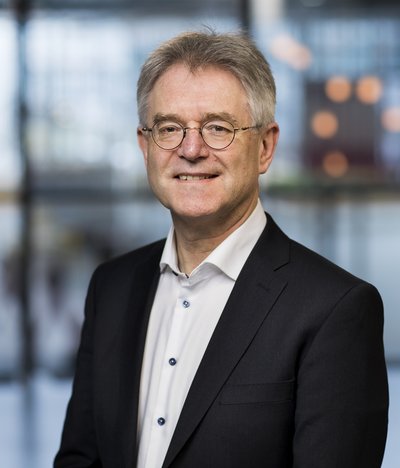
Michael Bader is a Professor in the Department of Computer Science at the Technical University of Munich (TUM), part of the TUM School of CIT. He leads the research group on hardware-aware algorithms and software for high-performance computing at the Leibniz Supercomputing Center. His work focuses on developing efficient algorithms and software for supercomputing platforms, particularly in geosciences and simulation of earthquakes and tsunamis. His research interests include high-performance computing, simulation software development (e.g., SeisSol and ExaHyPE), parallel numerical algorithms, adaptive mesh refinement, and large-scale geophysical simulations such as earthquake dynamics and tsunami modeling. He emphasizes optimizing algorithms for modern supercomputing architectures to handle complex computational challenges. Professor Bader has supervised numerous PhD students, including Lukas Krenz, Ravil Dorozhinskii, and Sebastian Wolf, among others. His research has been supported by grants from the EuroHPC JU, BMBF, DFG, and other institutions. Notable projects include ChEESE-2P for exascale computing in solid earth sciences and the targetDART project for adaptive task distribution on exascale systems. He is actively involved in teaching, offering courses such as Numerical Algorithms for High Performance Computing and Scientific Computing 1 . His group collaborates extensively with institutions like the Leibniz Supercomputing Center to advance computational methods for simulating natural disasters and geophysical phenomena.
Fayssal Benkhaldoun is a Professor at Université Paris 13, affiliated with the LAGA laboratory (UMR7539). He has held leadership roles including former Head of the MCS team (Modeling and Scientific Computing) at LAGA and former President of the Scientific Council at IUT Villetaneuse. He is also the Project Leader of the International Office at IUT Villetaneuse. His research focuses on numerical methods for partial differential equations, particularly finite volume schemes for hyperbolic and elliptic problems. Key areas include shallow water equations, flow in porous media, mesh adaptation, and combustion front propagation. He has organized major conferences such as the International Symposium on Finite Volumes for Complex Applications (FVCA), initiating its first edition in 1996. Recent work emphasizes advanced numerical techniques like stabilized meshless methods, GPU acceleration, and parallel computing for CFD applications. His contributions span environmental modeling (flood simulation, sediment transport) and industrial applications (phosphate slurry rheology). Students advised include Jan Karel (2014, streamer propagation) and Saida Sari (2013, multilayer shallow water equations). He co-organized conferences since 1996 and has been an invited speaker at numerous institutions globally.
Professor Tianfeng Lu is a faculty member in the School of Engineering at the University of Connecticut, where he joined as an Assistant Professor in 2008 and was appointed as the United Technologies Associate Professor of Engineering Innovation in 2016. His research focuses on computational fluid dynamics, combustion chemistry, and turbulent flow simulations. He earned his B.S. and M.S. in Engineering Mechanics from Tsinghua University and his Ph.D. in Mechanical and Aerospace Engineering from Princeton University. Dr. Lu's work emphasizes reducing complex chemical mechanisms for efficient simulations of multidimensional turbulent flows and engineering systems. His contributions include advancements in ignition dynamics, detonation modeling, and plasma-assisted combustion. Key projects involve exascale simulations through initiatives like PELE and collaborations on real-fuel combustion models for engines. His articles highlight breakthroughs in combustion diagnostics, engine efficiency, and pollutant reduction, with recent efforts addressing hydrogen-methane mixtures and low-temperature combustion strategies. Awards include his endowed chair position, reflecting recognition of his impactful contributions to combustion science.
Dr. Yasuhide Yoshitake is an Honorary Associate Professor at the School of Human Movement and Nutrition Sciences , University of Queensland (UQ), with a focus on biomechanics and neuromuscular physiology. His research spans sports biomechanics, muscle dynamics, and motor control, often integrating advanced imaging and physiological measurement techniques. Primary Email: y.yoshitake@uq.edu.au Research Themes: Recent work emphasizes swimming kinematics, corticospinal excitability, muscle shear modulus, and myofascial force transmission. Key subfields include front crawl hydrodynamics, motor imagery neurophysiology, and respiratory muscle activation during controlled tasks. Collaborations: Yoshitake collaborates with researchers in sports science, neuroscience, and musculoskeletal engineering, including co-authors from institutions in Japan and Australia.
J. Daniel Gezelter is a Professor and Chair of the Department of Chemistry & Biochemistry at the University of Notre Dame within the College of Science. His research focuses on theoretical and computational studies of complex condensed-matter systems, particularly using molecular dynamics simulations to understand emergent behavior at interfaces. Ph.D. in Chemistry, University of California, Berkeley (1995) CPS in Chemistry, University of Cambridge, UK (1990) B.S. in Chemistry & Philosophy, Duke University (1989) Gezelter's research interests lie at the intersection of physical chemistry, statistical mechanics, and computational science. His group develops novel algorithms for molecular dynamics simulations to study energy and mass transport across interfaces. Key areas include thermal transport in nanoparticles, enantiomeric separation via shear flow, electrostatic interactions in condensed phases, and dynamics at ice-water interfaces. The lab combines analytical theory with state-of-the-art simulations, often developing open-source software like OpenMD to advance the field. The most recent publications demonstrate a strong trend toward understanding interfacial transport phenomena—particularly thermal and momentum conductance—using reverse non-equilibrium molecular dynamics (RNEMD) methods. The work spans applications from gold nanoparticle heat dissipation to chiral molecule separation and ice surface physics, reflecting a unifying theme of emergent dynamics in complex systems. Methodological innovations in electrostatics (e.g., damped shifted force) and implicit solvent modeling (e.g., Langevin Hull) underpin these investigations. His scientific awards include: Provost's Award for Teaching Excellence in the Core Curriculum (2023) Shilts/Leonard Award for Outstanding Teaching (2020) Rev. Edmund P. Joyce Award (2013, 2020) National Science Foundation CAREER Award (2002) Camille and Henry Dreyfus New Faculty Award (1999) National Science Foundation Graduate Research Fellowship (1990–1993) Churchill Scholar (1989–1990) Gezelter advises graduate students and leads an active research group supported by the National Science Foundation, the Camille & Henry Dreyfus Foundation, the Alfred P. Sloan Foundation, and the University of Notre Dame. His lab emphasizes open science, making software and data freely available. He has held leadership roles including Associate Dean for Undergraduate Studies (2020–2023) and Senior Associate Dean for Education & Undergraduate Programs (2023–2025), underscoring his commitment to academic administration and education. The Gezelter Laboratory develops and maintains OpenMD , an open-source molecular dynamics engine, and contributed to the early development of Jmol , a widely used computational chemistry viewer. The lab collaborates with both experimental and theoretical groups and promotes inclusivity and diversity in science.
Vincent E. Debets is a Researcher at the Applied Physics and Science Education department of Eindhoven University of Technology, specializing in Non-Equilibrium Soft Matter . His work bridges physics and computational methods to study complex material behaviors. Education : Master's thesis on Collective Cell Dynamics in Cancer Metastasis (2019), supervised by Dr. C. Storm and Dr. L. M. C. Janssen. Research Interests : Debets focuses on soft matter systems near non-equilibrium states, utilizing machine learning and deep learning to analyze glassy dynamics , active matter , and memory effects in materials. His recent studies examine structural properties of amorphous systems and correlation functions in dense active fluids. Article Trends : His publications emphasize computational approaches (machine learning, deep learning) to model non-equilibrium phenomena in soft matter, particularly glassy and active systems. Topics include structural aging, particle classification, and chiral fluid dynamics, with applications in materials science and biophysics. Collaborations : Works with international researchers like Dr. L. M. C. Janssen (Eindhoven), Prof. H. Löwen (Bochum), and Dr. T. Voigtmann (Aachen). Frequent media engagement on topics like 'glassy materials' and 'cancer cell modeling'. Labs/Teams : Affiliated with the Non-Equilibrium Soft Matter group at Eindhoven University of Technology, contributing to cross-disciplinary research in physics and biomedical applications.
Dr. Adria LeBoeuf is an Associate Professor at the University of Cambridge , leading the Laboratory of Social Fluids within the Department of Zoology. Her research explores the evolution of social life through socially exchanged fluids , focusing on social insects like ants. Undergraduate: College of Creative Studies, University of California Santa Barbara PhD: Neuroscience and Biophysics, The Rockefeller University Postdoctoral work: University of Lausanne (Switzerland), Weizmann Institute of Science (Israel) Her interdisciplinary work bridges neurobiology, behavior, and metabolomics , revealing how social fluids regulate development and physiology in insect colonies. Recent studies highlight metabolic division of labor and social circulatory systems . Key awards include the PRIMA Grant (2019) , HFSP Grant (2022) , and the Best Paper Award (2021) . The lab has attracted media attention and supports open science initiatives like the Social Transfer Network (STN) . Adria mentors PhD and MPhil students, including Arthur Matte and Zitong Zhao , and fosters interdisciplinary collaboration through her science-entertainment collective The Catalyst , which uses improvisation for research communication.
Prof. Dr. Karsten Niehaus serves as Head of the Proteome and Metabolome Research Group at the Center for Biotechnology (CeBiTec) and Faculty of Biology, University of Bielefeld. His research focuses on proteomics and metabolomics applications in plant-microbe interactions, bacterial stress responses, and disease model systems. His laboratory employs advanced mass spectrometry imaging and cell phenotyping technologies to investigate molecular responses in crops like sugar beet and grapevines under abiotic stress conditions, as well as in cancer models where differentiation therapy impacts tumor malignancy. The group also explores microbial biotechnology through Xanthomonas campestris studies on xanthan production and stress adaptation. Selected publications highlight innovations in 3D microfluidics for biomarker detection and bioinformatics platforms like MetHoS for metabolomics data analysis. His work appears in journals covering Frontiers in Plant Science , Scientific Reports , and Journal of Experimental Botany . Contact: kniehaus@cebitec.uni-bielefeld.de | Office: UHG W7-117
Martien Hulsen is an Associate Professor at the Department of Mechanical Engineering , Eindhoven University of Technology (TU/e) . His research focuses on Computational Rheology , with applications in Polymer Processing , Microfluidics , and Additive Manufacturing (3D Printing) . Academic background: PhD in Mechanical Engineering (Delft University of Technology, 1988) Specializes in Numerical Methods for viscoelastic flow simulation Key applications: External Gear Pumps , Cell Sorting , and Micro-rheology Recent research trends: Interface Rheology , Particle Dynamics , and Thermal-Viscous Coupling His work has been published in top journals like Journal of Non-Newtonian Fluid Mechanics and Physics of Fluids . Martien serves on the editorial board of the Journal of Non-Newtonian Fluid Mechanics. Contact: m.a.hulsen@tue.nl
Mary Hannah Wood is an Assistant Professor at the University of Copenhagen's Niels Bohr Institute, specializing in the Theoretical High Energy, Astroparticle and Gravitational Physics department. With a background in physical and surface chemistry, her research focuses on applying advanced techniques like neutron reflectometry to understand complex bioelectronic interfaces and electron transport mechanisms. Her work addresses energy and chemical supply challenges through bioelectronic systems and interfacial analysis . Publications highlight collaborations in electrochemistry , biophysics , and microfluidic engineering , with recent studies in Journal of the American Chemical Society and Langmuir . Mary's research spans photosynthetic membranes , lipid bilayer dynamics , and environmental chemistry . She utilizes neutron reflectometry and atomic force microscopy to explore bioelectronic interfaces and mineral surface interactions.
Gary Hunt serves as the Dyson Professor of Fluid Mechanics at the University of Cambridge, affiliated with the Energy, Fluids and Turbomachinery academic division and Fluids research group. His work bridges fundamental fluid dynamics with practical engineering applications, focusing on sustainable building design and energy efficiency through experimental and theoretical approaches. Hunt's research centers on industrial and environmental fluid dynamics, particularly buoyancy-driven flows, turbulent plumes, and natural ventilation systems in buildings. He combines laboratory experiments in water-filled visualization tanks with theoretical modeling to investigate heat and contaminant transport mechanisms, revealing critical flaws in contemporary 'low-energy' building designs like glazed atria. His findings demonstrate that current ventilation guidance often misrepresents fluid behavior, leading to ineffective energy consumption despite buildings accounting for nearly half of urban energy use. The professor conducts experimental work in a dedicated fluid dynamics laboratory utilizing advanced flow visualization techniques to study complex phenomena including turbulent entrainment across density interfaces, plume dynamics, and environmental stratification. This setup enables precise observation of small density difference effects that significantly impact building ventilation efficiency, human comfort, and energy requirements for heating/cooling systems.
Angelika Manhart is an Assistant Professor in the Department of Mathematics at the University of Vienna's Faculty of Mathematics. With 26 publications spanning from 2014 to 2025, she has established herself as a leading researcher at the intersection of mathematical modeling and biological processes. Her work bridges rigorous mathematical analysis with biological insight to address fundamental questions in cellular mechanics and dynamics. Dr. Manhart's research focuses on mathematical biology, particularly the mechanics of cellular processes including cell movement, cytoskeletal dynamics, and tissue morphogenesis. She specializes in developing computational frameworks that capture the intricate interplay between physical forces and biological functions at the cellular level. Her work explores how mathematical models can elucidate complex phenomena such as actin network dynamics, nuclear positioning in muscle cells, and epithelial tissue formation. She employs techniques from partial differential equations, dynamical systems theory, and computational mathematics to address biological questions across multiple scales. Her publication record reveals a consistent trajectory of increasingly sophisticated modeling approaches, with recent work incorporating machine learning techniques and multiscale modeling. The research spans diverse biological contexts including wound healing, muscle development, microbial communities, and epithelial morphogenesis, demonstrating the versatility of mathematical approaches in biological inquiry. Several of her papers have received significant citations, with 'Nuclear Scaling Is Coordinated among Individual Nuclei in Multinucleated Muscle Fibers' (2019) accumulating 49 citations and 'Intracellular Fluid Mechanics: Coupling Cytoplasmic Flow with Active Cytoskeletal Gel' (2018) receiving 83 citations. Dr. Manhart actively collaborates with experimental biologists across institutions, as evidenced by her co-authorship with researchers from various biological disciplines. Her work has been presented at conferences including talks on 'Alignment processes in cells - From individual interactions to collectivity' (December 2024) and earlier presentations on 'Model and Simulation of Actin-dependent Cell Movement' (2014), reflecting her continued engagement with both theoretical and applied aspects of her field.
Anouar Soufiani is an active researcher specializing in radiative heat transfer, computational fluid dynamics, and plasma physics. His work focuses on complex thermal systems involving coupled radiation-convection phenomena, molecular gas radiation, and high-temperature spectroscopy. Research Interests: Soufiani's investigations span: Fundamental studies of Rayleigh–Bénard convection under radiation effects High-temperature gas radiative properties (CO 2 , argon plasmas) Development of numerical models for turbulent participating media Experimental spectroscopy at extreme temperatures (up to 6000K) Applications in aerospace thermal protection and geological systems Publication Trends: His recent articles (2024-2025) predominantly explore coupled heat transfer mechanisms in confined geometries, with frequent examination of: Radiation-convection interactions in cubical cavities Validation of reduced-order models against experimental data Molecular radiation effects in plasma environments Advanced measurement techniques for radiative properties This consistent focus demonstrates expertise in multiscale thermal transport modeling.
Professor S. Jon Chapman is a faculty member at the Mathematical Institute, University of Oxford, holding the position of Professor of Mathematics and its Applications. He is affiliated with the Oxford Centre for Industrial and Applied Mathematics research group. His educational background includes a DPhil, MA, and BA. Research interests span diverse areas of applied mathematics and scientific modeling: Industrial mathematics and mathematical modeling Partial differential equations and asymptotic methods Fluid dynamics and turbulence theory Biophysical applications including tumor growth and tissue modeling Electromagnetic scattering and superconductivity Materials science and energy systems Publication analysis reveals two primary trends: Recent work (2025) focuses on electrochemical systems (battery modeling, gas-induced bulging) and biological applications (organoid models). Earlier influential publications established expertise in pattern formation, fluid dynamics (ship waves, spiral waves), and transport phenomena in biological systems. Mathematical techniques consistently feature multiscale analysis, asymptotic methods, and nonlinear modeling. Awards and honors recognizing scholarly contributions: Naylor Prize (2015) Julian Cole Prize (2002) Whitehead Prize (1998) Richard C. DiPrima Prize (1994) Johnson Mathematical Prize (1992) No information is available regarding student advising, grants, or laboratory affiliations.
Professor Philip Steinberg is a distinguished academic at Durham University, serving as a Professor in the Department of Geography within the Faculty of Social Sciences and Health. He also holds leadership positions as the Director of the Northern Ireland / Northeast England Doctoral Training Partnership (NINE DTP) and Durham Arctic Director. Additionally, he is an Associate Fellow in the Institute of Advanced Study at Durham. Steinberg earned his MA and PhD from Clark University's Graduate School of Geography (1990-1996). Prior to joining Durham in 2013, he spent sixteen years at Florida State University's Department of Geography, with research interludes at the New York Public Library's Cullman Center (2002-2003), the University of California, Santa Cruz (2005-2006), and Royal Holloway, University of London (2012-2013). He also taught briefly at Bucknell University in 1997. His research focuses on the historical and ongoing projection of social power onto spaces resistant to state territorialization, particularly the world-ocean, the Arctic, and electronic communications. Steinberg explores how these spaces challenge conventional notions of territory, sovereignty, and governance. His current research concentrates on Wet Ontologies and Ocean Governance and Arctic Politics and the Liveliness of Sea Ice , examining how liquid and frozen maritime environments complicate traditional geopolitical frameworks. Analysis of Steinberg's recent publications reveals a sophisticated interdisciplinary approach that bridges political geography, ocean studies, and Arctic research. His work consistently challenges conventional land-based territorial concepts by examining fluid, dynamic maritime spaces. Key themes include the politics of ocean privatization, Arctic sovereignty complexities, oceanic epistemologies, and the interplay between technological imaging and marine governance. His scholarship demonstrates a commitment to rethinking spatial concepts through watery and frozen environments, with significant implications for international law, environmental policy, and geopolitical theory. Among his notable professional contributions, Steinberg served as editor-in-chief of Political Geography (2016-2019) and has directed several significant research centers including IBRU: Durham University's Centre for Borders Research, the Durham Arctic Research Centre for Training and Interdisciplinary Collaboration (DurhamARCTIC), and the Northern Ireland / Northeast England Doctoral Training Partnership (NINE DTP), which supports approximately 150-200 PhD students annually across seven universities. Steinberg has supervised numerous doctoral students, including Joaquim Gaignard. His leadership in interdisciplinary doctoral training, particularly through DurhamARCTIC and NINE DTP, has secured substantial funding for Arctic research and social science doctoral education. His work with IBRU has facilitated boundary dispute resolution and advanced understanding of border areas through professional training and research initiatives. As Director of IBRU, Steinberg leads Durham University's Centre for Borders Research, which offers training courses on boundary delimitation and supports research on sovereignty, territory, and the political organization of space. His leadership of DurhamARCTIC has facilitated Arctic research collaborations across disciplines, building on a six-year grant that trained 15 PhD students across seven disciplines. Through these centers, Steinberg fosters innovative approaches to understanding geopolitical spaces that challenge conventional land-based territorial frameworks.