Prof. Dr.-Ing. Elisabeth Clausen is a Professor and Director of the Chair and Institute for Advanced Mining Technologies at RWTH Aachen University. She holds key roles in the Specialist Group for Raw Materials and Disposal Technology, serves as a rectorate representative, and leads the Commission for EU Research Funding. Her research spans Underground mining automation Acoustic emission diagnostics Sustainable mining systems Space resource extraction Advanced sensor technologies Her recent publications focus on autonomous mining machinery, underground communication systems, and acoustic emission analysis across 15+ studies from 2013–2025, with particular emphasis on Ultra-wideband positioning Thermographic detection Crack monitoring in planetary gearboxes Explosive atmosphere safety Mineral processing diagnostics Digitalization trends Prof. Clausen contributes to mining education reform through initiatives like CDIO™ and has developed innovative learning spaces in underground mines. She coordinates international educational labs and integrates sustainability into mining engineering curricula, with publications on Adaptive ventilation systems Mining education frameworks Future-proof mineral extraction Entrepreneurial mindset in engineering
Amin Barari is an Adjunct Professor at the School of Engineering, RMIT University, Australia. His research focuses on geotechnical and offshore engineering, particularly in foundation systems for offshore wind turbines, soil-structure interaction, and seismic liquefaction mitigation. He has extensive experience in experimental and numerical analysis of pile foundations, bucket foundations, and caisson structures. His work integrates advanced computational methods (e.g., machine learning, finite element modeling) to predict foundation behavior under extreme conditions. Research interests include: offshore wind energy foundations, soil liquefaction, cyclic stability diagrams, and probabilistic hazard assessment frameworks. He has supervised multiple PhD/Masters projects on topics like resilient foundations in calcareous deposits and pile foundation dynamics in expansive soils. His publications span over 147 research outputs, emphasizing geotechnical challenges in coastal and offshore environments. Dr. Barari collaborates with international institutions and has expertise in experimental testing (e.g., large-scale load testing, centrifuge modeling) and advanced AI-driven frameworks for geohazard prediction. His work contributes to sustainable infrastructure design and risk mitigation strategies for renewable energy systems.
Professor Hing-Ho Tsang is the Chair in Civil and Structural Engineering at the University of Dundee, with over a decade of academic experience in Australia and Hong Kong. His research focuses on advancing sustainable infrastructure solutions, earthquake resilience, and green technologies to enhance building and infrastructure safety against natural disasters. He holds a Chartered Professional Engineer (CPEng) certification and advises governments and industries on building codes and seismic design guidelines. Tsang chairs the Global Network for Geotechnical Seismic Isolation (GSI) and serves as the Australian National Delegate to the International Association for Earthquake Engineering (IAEE). His expertise spans geotechnical seismic isolation, recycled materials in construction, and structural dynamics, contributing to UN Sustainable Development Goals (SDGs) like resilient infrastructure, circular economy, and climate action. With over 200 publications and a career-long impact ranking in Civil Engineering, Tsang has received prestigious awards including the R W Chapman Medal and Research Impact Award. Research Focus: Seismic design, sustainable construction, bio-inspired materials, and geotechnical isolation systems. Awards: Top Cited Article (2021–2022), Teaching Excellence Award (2022), and multiple international recognitions. Leadership Roles: Editorial board member for Geosynthetics International , organizer of the 18th World Conference on Earthquake Engineering technical session. His work emphasizes equity-driven engineering solutions, fostering inclusive and disaster-resilient communities. Current projects include innovative modular building systems and AI-driven seismic response models.
Yuxia Hu is a Professor at the University of Western Australia, affiliated with the School of Engineering (Civil, Environmental and Mining Engineering) and the School of Social Sciences, Planning and Transport Research Centre. Her research focuses on geotechnical engineering, particularly in large deformation FE analysis, offshore foundation systems, and soil-structure interaction. She has contributed to advancements in suction caissons, plate anchors, and computational mechanics, with applications in offshore wind energy and infrastructure stability. Research Interests: Large deformation FE analysis of soils, soil-structure interaction, offshore foundation systems, soil mechanics, and pavement engineering. Awards: Telford Premium, British Geotechnical Association Prize, and Significant Junior/Senior Paper Award. Grants: Leads projects on offshore anchors, carbon capture in pavements, and road maintenance optimization. Her work addresses challenges in geotechnical design and sustainable infrastructure, with a focus on numerical modeling and experimental validation. Collaborations span academia and industry, emphasizing practical solutions for complex soil-structure systems.
Professor Ana Ivanovic is a Personal Chair (equivalent to Full Professor) in the School of Engineering at the University of Aberdeen, specializing in Geotechnical Engineering with a focus on offshore applications. She holds a MEng in Civil Engineering with major in Geotechnics and Foundations from Belgrade and a PhD in Geotechnical Engineering from the University of Aberdeen (2001). She is a Chartered Civil Engineer (CEng) and Member of the Institution of Civil Engineers (MICE) since 2008. MEng Honours degree, 1st class, in Civil Engineering with major in Geotechnics and Foundations, School of Civil Engineering, Belgrade, Yugoslavia (1997) Ph.D. in Geotechnical Engineering, School of Engineering, University of Aberdeen (2001) Professor Ivanovic's research spans two major streams: the dynamic behavior of ground anchorage systems and the impact of trawling gears on the seabed ecosystem. Her work combines numerical modeling with physical experimentation to address critical challenges in offshore renewable energy, subsea pipelines, and marine environmental protection. She has developed sophisticated models for rock-steel interfaces, pipeline buckling, and seabed disturbance from fishing activities, with applications in offshore wind, oil and gas, and sustainable fisheries. Her recent publications reveal a strong focus on offshore renewable energy foundations, particularly rock anchor systems for wind turbines, and the environmental impact of marine activities. Her research consistently bridges theoretical geotechnics with practical engineering applications, often incorporating large deformation numerical analysis and physical testing under realistic seabed conditions. NERC Industrial CASE studentship (2016-2018) examining biogeochemical effects of benthic trawling Innovate UK KTP project (2016-2018) developing 'DeepBuoy' pumpable buoyancy technology EU FP7 BENTHIS grant (2012-2016) studying benthic ecosystem fisheries impact Fisheries Innovation Scotland grant (2015) modeling physical impact of demersal fishing gears EPSRC grant (2008-2011) investigating anchorage head design for multi-strand anchorages Professor Ivanovic supervises numerous PhD and MSc students and serves as External Examiner for Strathclyde and Napier Universities. She regularly reviews manuscripts for leading journals including International Journal of Rock Mechanics and Mining Sciences, Journal of Geotechnical and Geoenvironmental Engineering, and Ocean Engineering. Her work with the Scottish Universities Geotechnical Network (SUGN) and the Society for Underwater Technology's Offshore Site Investigation and Geotechnics Committee demonstrates her commitment to advancing geotechnical knowledge in marine environments.
Dr Benjamin Cerfontaine is an Associate Professor in Geotechnical Engineering at the University of Southampton. His research focuses on geotechnical solutions for offshore renewable energy infrastructure, particularly floating and bottom-fixed offshore wind turbines. He specializes in numerical and physical modeling techniques such as finite elements, DEM, and centrifuge testing, aiming to uncover fundamental mechanisms governing foundation behavior. Education: PhD in Geotechnical Engineering from the University of Liège (2014), followed by postdoctoral research at the University of Dundee (2017–2020). Research Interests: Offshore renewable energy systems, constitutive modeling of geomaterials, and innovative anchoring solutions. Projects: Leads the ROBOCONE and TAILWIND projects, focusing on robotic ground characterization and sustainable anchor designs. Key achievements include the Geotechnical Research Medal (2023) and the Bright Spark Lecture Award (2023). He supervises three PhD students and actively collaborates with industry partners on offshore energy infrastructure. Dr. Cerfontaine is part of the Infrastructure Group and the Southampton Marine and Maritime Institute, contributing to interdisciplinary research on ocean energy and coastal communities.
Dr. Amir Mofidi is an Associate Professor in the Department of Engineering at Brock University. He holds a P.Eng. license in Ontario and has held academic roles at Newcastle University (2019–2022), Concordia University (2018–2019), and McGill University (2012–2018). His research focuses on sustainable construction, particularly using advanced materials like FRP composites and bio-based solutions to extend infrastructure lifespans. He has published over 40 peer-reviewed articles, achieving an h-index of 13 and 1,000+ citations. Education: B.Sc. in Civil Engineering from Iran’s University of Science and Technology; postgraduate degrees from Concordia University and ÉTS (University of Quebec). Research Interests His work emphasizes three pillars: 1) rehabilitation of existing structures, 2) durable materials integration, and 3) bio-based structural elements. Key areas include FRP composites for shear strengthening, ETS/NSM methods, bamboo-based sustainable columns, and reliability analysis of bond strength models. Publications Recent works include studies on bamboo composites, FRP anchor models, and reliability-based calibration for FRP-RC beams. His research bridges theoretical models with practical applications in civil infrastructure.
Professor Dave White is a leading academic in Infrastructure Geotechnics at the University of Southampton's School of Engineering. He specializes in offshore geotechnical engineering with a focus on renewable energy infrastructure, seabed characterization, and subsea systems. His work bridges fundamental research with industry applications, contributing to design codes and innovative technologies such as robotic soil testing devices. University Affiliation: University of Southampton Current Roles: Professor of Infrastructure Geotechnics, Research Group Leader (Infrastructure Group), Member of Southampton Marine & Maritime Institute Research Focus: Offshore wind energy, geotechnical modeling, seabed anchor systems, pipeline stability Recent research includes advanced mooring line-seabed interaction studies, dynamic anchor reliability analysis, and spatial planning for offshore wind farms. He leads major projects like the EU-funded MARITEC-X initiative and the UKRI-supported TAILWIND program. Key achievements include over 250 publications, development of PIV analysis software, and roles in technical committees like the Royal Academy of Engineering. Awards include the Telford Gold Medal and Fellowships from multiple engineering institutions. Active in PhD supervision across geotechnical engineering topics, with current advisees including Amin Rashidimehrabadi and Shengqi Xia. Collaborates with industry partners on projects involving subsea cable protection and floating offshore wind technologies.
Katherine Kwa is a Senior Research Fellow at the University of Southampton's Civil, Maritime and Environmental Engineering Department, focusing on offshore renewable energy infrastructure. She leads projects funded by the Royal Academy of Engineering (RAEng) and the EPSRC, advancing station-keeping design for floating systems through geotechnical innovations. Her research integrates geotechnical engineering with marine infrastructure, emphasizing seabed-anchor dynamics. She holds a BEng and PhD from the University of Sydney (2019), specializing in soil mechanics and shipped metallic ores liquefaction. She is affiliated with the Supergen Offshore Renewable Energy Hub and RAEng's Intelligent & Resilient Ocean Engineering Centre. Katherine supervises two PhD students and collaborates on projects like 'Station-Keeping Solutions for Floating Offshore Renewables' and 'NextGen Anchor Design'. Her recent articles explore mooring systems, surrogate models for soil behavior, and anchor capacity in offshore wind applications. She has received the RAEng Research Fellowship, recognizing her contributions to ocean engineering. Her work bridges geotechnical analysis with renewable energy systems, aiming to enhance efficiency and resilience of floating offshore infrastructure.
Raad Azzawi is a Professor of Instruction in Civil Engineering at the University of Texas at Arlington (UTA), College of Engineering. He holds a PhD in Civil Engineering from the University of Baghdad (2000) and an MBA in Projects Finance and Investment from UTA (2021). With over two decades of academic experience, he progressed from Assistant Professor to full Professor within UTA's Civil Engineering Department, while maintaining industry engagement through consulting roles with firms including Transtech Co. and Miad Construction Co. Education: MBA in Business Administration, University of Texas at Arlington (2021) PhD in Civil Engineering, University of Baghdad (2000) MS in Civil Engineering, University of Baghdad (1995) BS in Civil Engineering, University of Baghdad (1989) Azzawi's research centers on sustainable structural engineering solutions with emphasis on fiber-reinforced concrete systems and energy-efficient construction . His experimental work investigates seismic retrofitting techniques, steel-fiber reinforced concrete (SFRC) behavior under eccentric loading, concrete breakout strength of anchors in FRC, and innovative applications of expanded polystyrene (EPS) for insulating concrete forms. He actively explores composite steel-concrete systems for bridge decks and structural components, combining laboratory testing with numerical simulations to advance sustainable infrastructure design. His 15 most recent publications reveal a strong focus on experimental validation of novel concrete composites (particularly SFRC), sustainable construction materials (EPS-based systems), and structural connection behavior under dynamic loading. The research trajectory shows consistent progression from fundamental material testing (2020-2021) toward applied sustainable solutions (2023-2024), with increasing industry collaboration evident in recent conference presentations. Scientific Awards: Outstanding Civil Engineering Teaching Award, University of Texas at Arlington (2020) Outstanding Teaching Award, CE/UTA (December 13, 2019) Azzawi has advised over 35 graduate students across thesis committees and dissertation roles, demonstrating significant mentorship impact. His current research includes a $2,000 UTA-funded grant (January-April 2024) on EPS blocks for energy-efficient construction. He serves on multiple committees including ABET accreditation, department promotion guidelines, and UG curriculum development, while maintaining active industry partnerships through the Timber Strong competition and structural engineering associations. As a member of ASCE, AISC, ACI, and AWC, Azzawi integrates professional practice with academic work. His teaching portfolio spans structural design courses (concrete, steel, timber, masonry) and advanced topics including BIM and nonlinear analysis, reflecting comprehensive expertise across civil engineering subdisciplines.
Professor Susan Gourvenec is a Royal Academy of Engineering Chair in Emerging Technologies – Intelligent & Resilient Ocean Engineering and Professor of Offshore Geotechnical Engineering at the University of Southampton. She serves as Deputy Director of the Southampton Marine & Maritime Institute (SMMI). Her expertise spans offshore geotechnical engineering, marine spatial planning, and renewable energy systems, with a focus on advancing technologies for sustainable ocean infrastructure. She holds a PhD (1998) and BEng from the University of Southampton. Her research addresses challenges in offshore wind energy, including seabed characterization, floating turbine anchoring, and spatial planning for large-scale installations. She co-authored textbooks on offshore geotechnics and chairs ISO committees for marine standards. Awards include Fellowships from the Royal Academy of Engineering, Institution of Civil Engineers, and Institution of Engineers Australia. Collaborating with industry, she leads projects on resilient ocean engineering and advises on emerging technologies. Her work integrates geotechnical innovation with environmental sustainability, aiming to unlock ocean resources while minimizing ecological impacts.
Muhammad Shazzad Hossain is a Professor at the University of Western Australia , School of Earth and Oceans. With over 15 years of experience in offshore geotechnical engineering, his work focuses on foundation solutions for marine infrastructure and environmental sustainability initiatives. PhD (University of Western Australia, 2009) Australian Research Council (ARC) Future Fellow Core member of ISO TC67/SC7/WG7/P4 His research addresses: Seabed deformation mechanics Novel spudcan foundation design Dynamically installed fish anchors Repurposing decommissioned flowlines Plastic pollution mitigation Cutting-edge projects include computational modeling of calcareous soils and centrifuge testing for offshore applications. Industry collaborations span Korea (Daewoo, Samsung, POSCO), USA (Delmar Systems), Norway (NGI), France (TOTAL), and Singapore (Subsea 7). Scientific recognition includes: 2015 Vice-Chancellor’s Mid-Career Research Award 2013 Woodside Early Career Scientist of the Year 2012 ASCE Best Civil Engineering Paper Award 2012 Outstanding Young Investigator Award Secured $3.4M in research funding as lead investigator, including ARC Linkage Projects with contributions from Daewoo Engineering, Daewoo Shipbuilding, and Keppel Offshore. Delivered 33 invited seminars across China, Korea, Singapore, and USA.
Conleth O'Loughlin is a Professor at The University of Western Australia (UWA), holding positions in the School of Earth and Oceans and the UWA Oceans Institute. He is the Director of the National Geotechnical Centrifuge Facility (NGCF), a globally recognized infrastructure for geotechnical centrifuge modeling. His expertise spans offshore geotechnics, centrifuge modeling, and anchoring systems, with a focus on offshore renewable energy developments. O'Loughlin has secured over $37.9M in research funding, including $20.8M in competitive grants and $17.1M in industry partnerships, leading to over 200 peer-reviewed publications. His work contributes to sustainable energy goals (UN SDGs: Energy, Oceans, Built Environment). Education: PhD from College of Dublin (Coll.Dub.). Research Interests: Geotechnical aspects of offshore renewable energy, centrifuge modeling, soil characterisation, and anchoring systems. His research has informed industry standards, design guidelines, and commercial software, with applications in offshore wind and pipeline infrastructure. Grants & Collaborations: Over 50 grants, including leadership in ARC-funded projects on floating wind energy and digital engineering. Collaborations span global institutions like Helmut-Schmidt-University and Ocean University of China. Awards: Telford Gold Medal (2021) C. A. Hogentogler Award (2017) Thomas Telford Premium Award (2017) Telford Premium Prize (2016) Best Paper for Q2 2015 in Géotechnique Letters Labs & Teams: Director of NGCF, leading centrifuge-based research for offshore geotechnics. Active in editorial roles for journals like International Journal of Physical Modelling in Geotechnics and Géotechnique Letters .
Dr. K.G. Gavin is a Professor at Delft University of Technology's Faculty of Civil Engineering and Geosciences, specializing in Geo-engineering. He leads research in geotechnical engineering, with a focus on offshore foundations, pile dynamics, and soil-structure interaction. His work integrates experimental testing (e.g., centrifuge models) and numerical simulations to address challenges in pile installation, driveability, and seismic response of offshore structures. Research interests include pile design in sand and clay, suction piles, drag anchors, and glauconite soils. He contributed to projects like the InPAD and SICMOG initiatives, advancing understanding of monopile behavior and installation techniques. His editorial roles for Canadian Geotechnical Journal and leadership in ISSMGE reflect academic influence. Notable recognition includes the 2018 TRA Senior Researcher Rail Award. Education: Details not explicitly provided in text. Key Projects: Rhizome (autarkic design for off-Earth habitats), InPAD (pile axial capacity), SICMOG (monopile installation in glauconite soils). Lab/Teams: Collaborates with TU Delft's geotechnical centrifuge and field testing groups. Recent publications (2025) highlight advancements in hammer impact analysis, clay stiffness effects on offshore piles, and installation stress impacts. His work bridges geotechnical innovation with sustainable infrastructure solutions for offshore wind energy and seismic resilience.
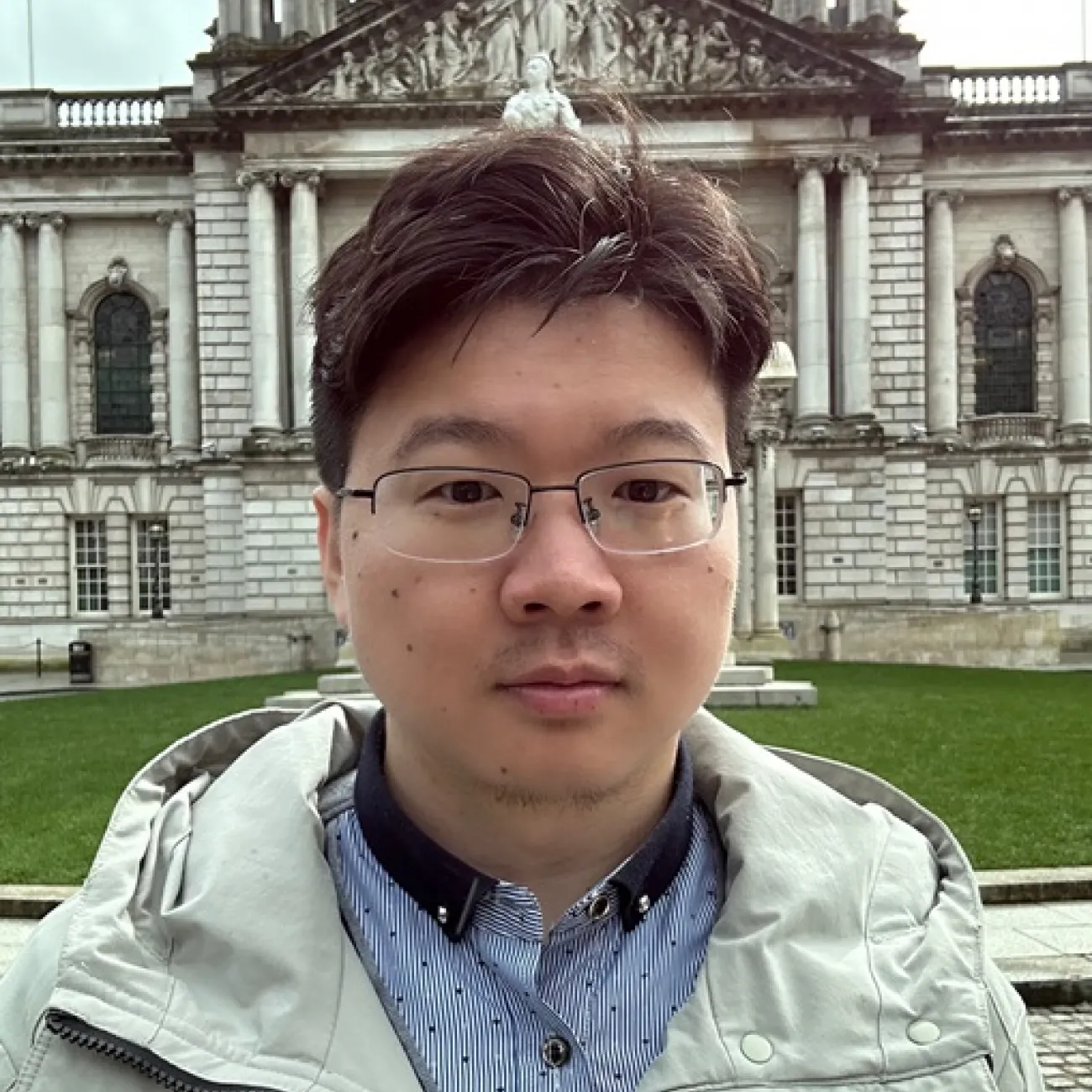
Dr. Kai Wen is a Postdoctoral Research Fellow in Offshore Geotechnics at the University of Southampton's Department of Civil, Maritime, and Environmental Engineering. Appointed in 2023, he leads the ROBOCONE project funded by EPSRC-SFI and contributes to the Royal Academy of Engineering's Centre of Excellence for Intelligent & Resilient Ocean Engineering (IROE). BSc (2016) - Tianjin University MPhi (2019) - Zhejiang University PhD (2023) - Imperial College London Specializing in offshore foundation optimization, Dr. Wen focuses on seabed-structure interaction, computational geomechanics (FEM/PFEM), and performance-based design of foundations in challenging geomaterials like dense sands and chalk. His work combines finite element modeling, machine learning, and Python scripting for high-cycle loading analysis. Recent article trends show expertise in: 1) Computational modeling of offshore foundations in chalk and sand 2) Robotic site investigation tools 3) Lateral/torsional loading mechanics 4) Load transfer models for offshore piles 5) Wind turbine anchoring systems 6) Time-dependent soil capacity analysis. Marie Skłodowska-Curie Postdoctoral Fellowship (2024) EPSRC Supergen ORE Hub Early Career Researcher Fund Active in technical committees (ISSMGE TC102, TC209) and journal peer-review (Géotechnique, Ocean Engineering, etc.), Dr. Wen collaborates with Professors Dave White and Susan Gourvenec on advancing offshore geotechnical methodologies.