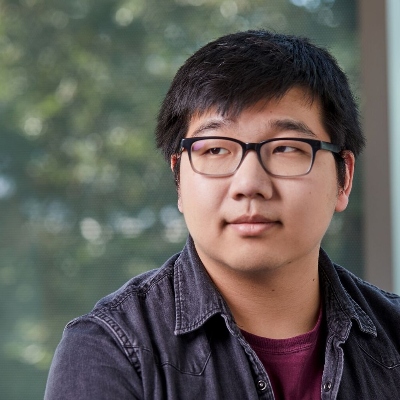
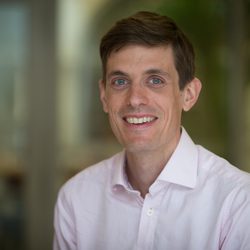
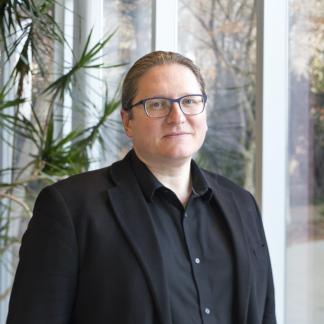
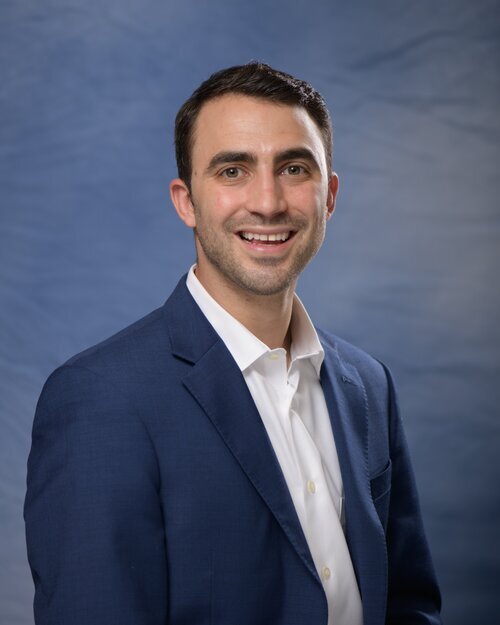
Jiatao Gu is an Assistant Professor in the Department of Computer and Information Science (CIS) at the University of Pennsylvania, with a part-time role as Staff Research Scientist at Apple (MLR). He holds a Ph.D. in Electrical and Electronic Engineering from the University of Hong Kong (2018) and a B.Eng. in Electronic Engineering from Tsinghua University (2014). His research focuses on generative machine learning and AI agent interaction with the physical world, emphasizing multi-modal systems spanning language, images, videos, and 3D. Key themes include efficient modeling , flexible architecture design , and scalable decision-making frameworks . 2025: ICLR paper on DART framework 2024: TMLR work on GFlowNet alignment 2023: NeurIPS research on diffusion stability 2022: ACL papers on speech translation Recent publications explore diffusion models for text-to-image synthesis, 3D reconstruction, and efficient sampling techniques. His work addresses fundamental challenges in attention mechanisms, entropy collapse, and multi-stage distillation while advancing non-autoregressive translation and vision-language reasoning . Prospective students can apply through his recruitment process at UPenn. Prior affiliations include Meta AI (FAIR Labs) and academic collaborations with institutions like New York University's CILVR Lab.
Michael A Osborne is Professor of Machine Learning at the University of Oxford and leads the Bayesian Exploration Lab . He serves as Director of the EPSRC Centre for Doctoral Training in Autonomous Intelligent Machines and Systems and co-directs the Oxford Martin AI Governance Initiative. His research focuses on Bayesian optimization, Gaussian processes, and probabilistic numerics with applications in quantum devices, battery modeling, and AI governance. Key Positions: Professor of Machine Learning, University of Oxford Official Fellow, Exeter College Co-founder of Mind Foundry Lead Researcher, Oxford Martin Programme on Technology and Employment Research Themes: Probabilistic modeling for quantum systems Uncertainty quantification in energy storage AI safety and societal impact analysis Automated experimental design Quantum device calibration Probabilistic numerical methods Technical Contributions: Bridging reality gap in quantum devices Efficient Bayesian quadrature techniques Personalized neurostimulation algorithms Automated measurement protocols Quantum-classical hybrid ML
Joseph Kable is the Jean-Marie Kneeley President's Distinguished Professor of Psychology at the University of Pennsylvania's Department of Psychology within the School of Arts and Sciences. His research integrates experimental economics, cognitive neuroscience, and personality psychology to investigate the neural and psychological mechanisms underlying decision-making. He explores how subjective value is represented in the brain, deviations from rational choice theory, and individual differences in decision processes. His lab employs fMRI and interdisciplinary methods to study topics like risk tolerance, impulsivity, and neural plasticity. Education: BS in Chemistry from Emory University (undergraduate), PhD in Neuroscience from the University of Pennsylvania (doctoral). Research focuses on behavioral and cognitive neuroscience mechanisms of choice, including studies on temporal predictions, value signals, and brain structure-function relationships. His recent work examines how neural markers correlate with decision-making variability across individuals. He currently advises graduate students in Psychology and has post-doctoral researchers in his lab. Associated with MindCORE, Penn's hub for integrative mind research. Lab activities include undergraduate research programs and active studies exploring decision neuroscience and neuroeconomics.
Jiaxuan You is an Assistant Professor at the Siebel School of Computing and Data Science, University of Illinois at Urbana-Champaign, leading the U Lab focused on achieving Artificial General Intelligence (AGI) in digital environments. His research spans graph neural networks (GNNs), relational data, foundation models, and machine learning systems. PhD and MS in Computer Science from Stanford University (2021) Developed GraphGym and PyTorch Geometric (PyG) for graph learning Core member at Kumo AI (2021-2023) His research explores: Graph-enhanced LLMs: Integrating relational structures into foundation models AGI Development: Self-optimizing AI agents and tool utilization ML Systems: Scalable architectures and redundancy-free computation Interdisciplinary Applications: Financial networks, crop yield prediction, and metro systems Recent publications focus on temporal reasoning, multi-agent dynamics, and hybrid architectures for LLMs. He actively develops open-source tools like DBGYM and GraphRouter. Scientific recognition includes: JPMC PhD Fellowship Baidu Scholarship Best Student Paper at AAAI 2017 World Bank Big Data Innovation Challenge winner He mentors PhD and intern students, emphasizing machine learning systems expertise. His lab collaborates on AGI workshops (e.g., ICLR 2024) and industry projects.
Shanique Brown serves as Assistant Professor of Management at the Zicklin School of Business, City University of New York (CUNY), where she investigates cognitive processes impacting organizational team dynamics and decision-making. Her research bridges industrial-organizational psychology with practical applications in extreme environments. Her academic foundation includes: Ph.D. in Industrial-Organizational Psychology from DePaul University M.A. in Industrial-Organizational Psychology from Southern Illinois University, Edwardsville B.Sc. in Psychology from the University of the West Indies Dr. Brown's research centers on decision-making mechanisms and team cognition within organizational contexts, with specialized focus on extreme environments like space missions. She examines how cognitive styles, working memory, and team composition influence performance in isolated, confined, and high-stakes settings. Her work integrates psychological theory with actionable frameworks for optimizing team effectiveness across virtual and physical workspaces. Analysis of her publication history reveals evolving expertise in team science, particularly regarding virtual team leadership, polycultural organizations, and NASA-relevant analog research. Recent work emphasizes selection-optimization-compensation models for team performance and psychosocial factors in extreme environments, demonstrating consistent contribution to organizational psychology literature. Her scientific recognition includes: Editorial Fellowship from Group Dynamics (2022) Wayne State University Faculty Accessibility Fellowship (2022) Teaching Innovation Development Excellence Award (2020) Faculty Teaching Award (2020) University Research Grant (2019) Robert A. Daugherty Memorial Award (2011) Dr. Brown actively collaborates on NASA-funded research through the Human Research Program, developing crew composition models for long-duration space missions. She serves on Baruch College's PhD Admissions and Interdisciplinary Business Major committees while maintaining leadership roles in the Society of Industrial-Organizational Psychology, including Task Force Chair and Conference Committee positions. Her grant work focuses on translating team dynamics research into operational frameworks for extreme environments. She leads interdisciplinary collaborations with NASA researchers and international scholars on projects including virtual escape room studies for team performance assessment and CREWS (Crew Recommender for Effective Work in Space) development, demonstrating commitment to solving real-world team challenges in high-consequence settings.
Professor Mohammad FARD is a faculty member at RMIT University's School of Engineering, specializing in Mechanical Engineering and Intelligent Systems. He leads research in autonomous vehicles, crash safety, and driver monitoring using AI. His industry experience includes six years at Nissan Technical Centre, focusing on vehicle body design. He holds a PhD from Tohoku University and has collaborated across Engineering, Health, and Science disciplines, achieving international media coverage for work on driver drowsiness and road safety. Research Interests: Autonomous Vehicles Advanced Crash Safety Driver State Monitoring AI in Noise/Vibration Human Factors/Ergonomics Teaching & Projects: Teaches Advanced CAE, Vehicle NVH, and research supervision in areas like crash simulation and vibration control. Current projects include Formula One safety barriers and driver education for autonomous vehicles. Awards & Labs: No awards listed. Active in cross-disciplinary teams and labs addressing automotive innovation and safety.
Salvatore Callesano is an Assistant Professor of Hispanic Linguistics at the University of Illinois Urbana-Champaign (UIUC), affiliated with the Department of Spanish and Portuguese and the College of Liberal Arts & Sciences. His research focuses on sociolinguistics, particularly bilingual communities in the U.S., language perception, and digital media representations of bilingualism. He employs both quantitative and qualitative methods to investigate how language variation interacts with identity, media, and social structures. Dr. Callesano collaborates on Project 16 of the Asociación de Lingüística y Filología de América Latina, addressing linguistic aspects of Latin American diaspora communities. His work bridges traditional sociolinguistic inquiry with modern digital practices, analyzing how social media shapes perceptions of language use among Latinx populations. Recent research highlights include studies on code-switching in Miami's linguistic landscape, dialect perception, and the role of media in mediating language attitudes. His publications span peer-reviewed articles and book reviews, emphasizing empirical rigor and interdisciplinary connections between language, culture, and society.
Byron Yu is a Professor in Electrical & Computer Engineering and Biomedical Engineering at Carnegie Mellon University, with affiliations to the Neuroscience Institute and Robotics Institute. He is a core faculty member of the Center for the Neural Basis of Cognition. Research focuses on computational neuroscience , neural dynamics , and brain-machine interfaces . Key contributions include dimensionality reduction techniques and neural population activity analysis. Recent publications explore topics such as neural dynamics during motor imagery, BCI optimization, and attentional processing. His work has appeared in Nature Neuroscience , Neuron , and eLife , often as cover articles. Awardees include the Gerard G. Elia Career Development Professorship and AIMBE Fellowship . His lab has mentored numerous PhD and postdoctoral researchers, many now in academic and industry leadership roles.
Dr. Haneen Farah is an Associate Professor in the Department of Transport & Planning at Delft University of Technology and co-director of the Traffic and Transportation Safety Lab. She also serves as head of the Traffic Systems Engineering section. Her research focuses on road infrastructure design, road user behavior, and traffic safety, integrating transportation engineering, human factors, and econometrics. Prior to TU Delft, she was a postdoc at KTH Royal Institute of Technology and earned her M.Sc. and Ph.D. in Transportation Engineering from the Technion-Israel Institute of Technology. Her work includes national/international projects like SAMEN (mixed automated/human traffic implications), AfroSAFE (road safety in Africa), and XCARCITY (sustainable city mobility). She teaches undergraduate and graduate courses on road design and traffic safety, including online programs for low/middle-income countries. Farah supervises multiple PhD and Master students in her research areas, contributing to over 50 peer-reviewed publications. Key research themes include infrastructure design for automated vehicles, driver behavior modeling, cyclist safety, and policy implementation of the Safe System approach. Her interdisciplinary approach bridges engineering and psychology to enhance traffic safety and efficiency through advanced analytics and simulation models.
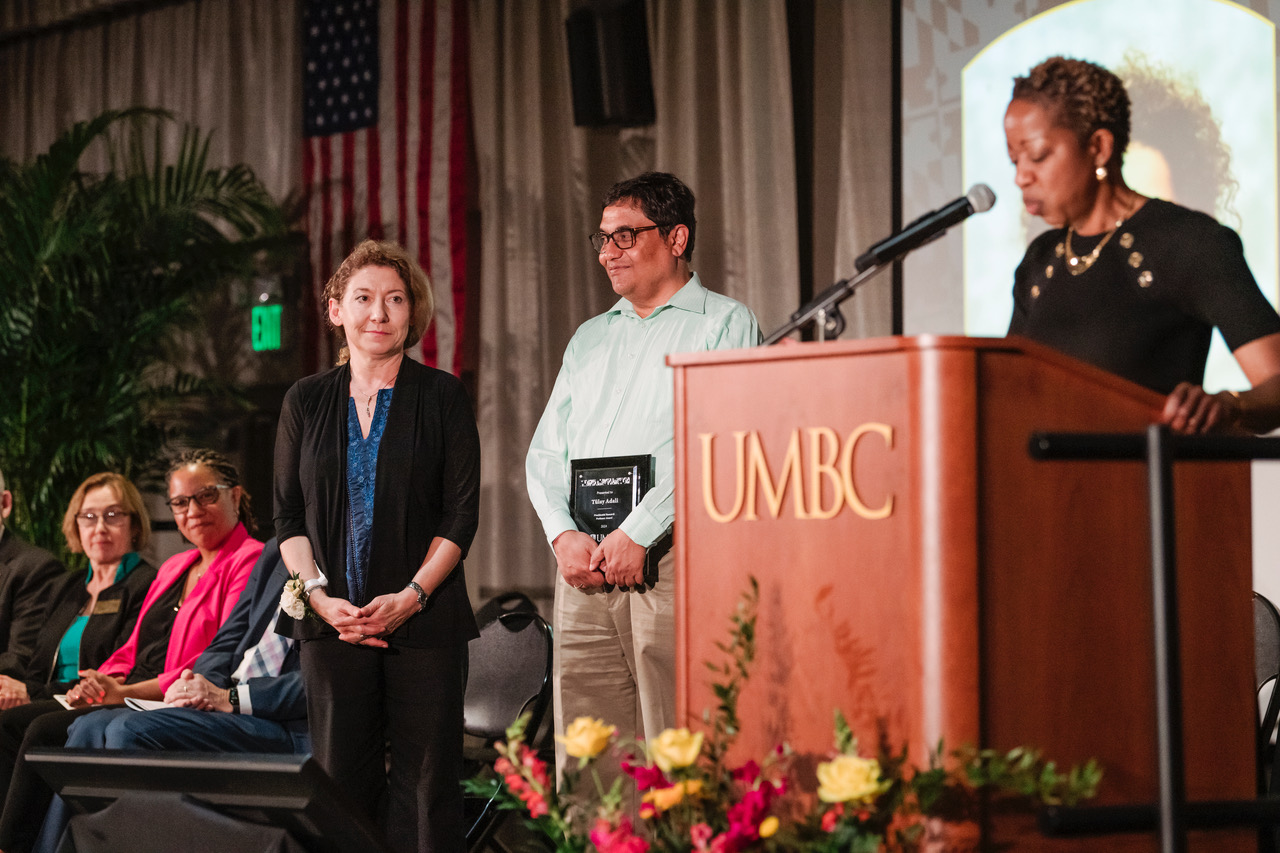
Tülay Adali is a Professor in the Department of Computer Science and Electrical Engineering at the University of Maryland, Baltimore County (UMBC). She has held this position since 1992 and was named a Distinguished University Professor in 2015 for her contributions to statistical signal processing and machine learning. Currently serving as Editor-in-Chief of the IEEE Signal Processing Magazine, she has also held leadership roles in IEEE committees and conferences. Her research focuses on statistical signal processing, machine learning, and their applications in medical imaging and data fusion. Dr. Adali earned her Ph.D. in Electrical Engineering from North Carolina State University in 1992. Her work integrates foundational signal processing techniques with biomedical applications, addressing challenges in neuroimaging analysis. She leads the Machine Learning for Signal Processing laboratory, supported by grants from NSF and NIH. Her lab develops algorithms for analyzing complex signals in medical contexts, emphasizing reproducibility and interdisciplinary collaboration. Recognition includes IEEE Fellow, AIMBE Fellow, AAIA Fellow, Humboldt Research Award, and NSF CAREER Award. She has authored numerous papers on fMRI analysis, independent component analysis, and multimodal data fusion. Her editorial leadership and service to technical communities reflect her commitment to advancing signal processing and education. Education: Ph.D. in Electrical Engineering, North Carolina State University (1992) Grants: NSF, NIH-funded projects on medical imaging and signal processing Awards: SPS Meritorious Service Award, SPIE Pioneer Award
Dean Eckles is an Associate Professor of Marketing at MIT Sloan School of Management and serves as an Associate Director of the MIT Institute for Data, Systems, and Society (IDSS). He is also affiliated with the MIT Schwarzman College of Computing through the Institute for Data, Systems & Society and its Statistics and Data Science Center. Additionally, he leads the analytics research area at the Initiative on the Digital Economy and organizes the annual Conference on Digital Experimentation (CODE@MIT). His educational background includes a BA in philosophy, BS and MS in cognitive science, MS in statistics, and PhD in communication, all from Stanford University. Prior to joining MIT, Eckles worked as a scientist at Facebook, where he contributed to areas including News Feed, messaging, advertising, tools for randomized experiments, and survey methods. He previously held research positions at Nokia and Yahoo. Eckles's research primarily focuses on social influence mediated by interactive technologies, examining how communication technologies mediate, amplify, and direct social influence. His work spans multiple specific areas including social interactions, contagion, and interventions in networks; experimental design and inference in networks; and methods for causal inference. His research often combines social science with advanced statistical methods. His notable publications include research on long ties in social networks and their relationship to economic prosperity, how network structure affects social contagions, and algorithmic transparency in social media platforms. His work has appeared in prestigious journals including PNAS and Nature Human Behaviour, and he has provided expert testimony before the US Senate on algorithmic ranking. Long ties, disruptive life events and economic prosperity (PNAS) Long ties accelerate noisy threshold-based contagions (Nature Human Behaviour) Algorithmic transparency and assessing effects of algorithmic ranking (Senate testimony) Eckles actively shares his research through social media platforms including Bluesky, Twitter, and Mastodon, as well as through his blog and contributions to the Gelman et al. blog. His work bridges academic research with practical applications in technology and policy.
Abhijit Banerjee is the Ford Foundation International Professor of Economics at MIT and Director of the Abdul Latif Jameel Poverty Action Lab (J-PAL). A 2019 Nobel laureate in Economic Sciences, his research focuses on development economics, political economy, and poverty alleviation. He co-authored influential books like Poor Economics and Good Economics for Hard Times , emphasizing evidence-based policies and randomized controlled trials. Banerjee’s work addresses global challenges such as education, health, and social welfare, with notable contributions to microfinance, public health interventions, and anti-poverty programs. He holds leadership roles in global initiatives like the Global Education Evidence Advisory Panel and has advised governments worldwide. His research spans topics from police resource allocation in India to the impact of information during crises like demonetization and the pandemic. Education: Bachelor’s in Statistics, Presidency College, Kolkata M.A. in Economics, Jawaharlal Nehru University PhD in Economics, Harvard University Key Contributions: Co-founder of J-PAL, promoting evidence-based poverty reduction strategies. Pioneer in using randomized controlled trials (RCTs) for policy evaluation. Research on microfinance, education reforms, and health interventions in developing countries. Awards: Nobel Prize in Economics (2019), Infosys Prize in Social Sciences (2009), Member of the National Academy of Sciences (2020). Grants/Advisory Roles: Collaborations with institutions like the World Bank, UN, and governments on poverty, health, and education policies. Labs/Teams: J-PAL global network, Abdul Latif Jameel Poverty Action Lab.
A. Michael Knemeyer is a Professor of Logistics at The Ohio State University's Max M. Fisher College of Business, where he contributes to research and teaching in supply chain management. His work focuses on supply chain relationships, risk and resilience, vendor relations, and sustainability integration. Educational Background: PhD from the University of Maryland, BSBA from John Carroll University Research Areas: Supply chain relationships, international logistics, sustainability, vendor relations, risk management Key Awards: 2013 IJPDLM Outstanding Paper Award, 2013 Bernard J. La Londe Best Paper Award Knemeyer's publications in journals like Harvard Business Review and Journal of Business Logistics explore critical themes in logistics outsourcing relationships, supply chain integration, and sustainable practices. His work often examines cross-cultural dynamics and institutional factors affecting supply chain performance. Selected Courses: Strategic Supply Chain Management, Contemporary Issues in Supply Chain Management, Logistics and Supply Chain Decision Making
Christopher Potts is Professor and Chair of Linguistics at Stanford University, with a courtesy appointment as Professor of Computer Science. He serves as Director Emeritus of the Stanford Center for the Study of Language and Information (CSLI) and leads the Pragmatic Enrichment & Contextual Interface Lab. His work bridges theoretical linguistics and computational approaches to language understanding. Education: B.A. in Linguistics from New York University (1999) Ph.D. in Linguistics from University of California, Santa Cruz (2003) Potts' research focuses on how computational methods can illuminate linguistic phenomena, particularly in the areas of semantics, pragmatics, and sentiment analysis. His work explores how emotion is expressed in language and how linguistic production and interpretation are influenced by context. He has made significant contributions to understanding conventional implicatures, sentiment analysis frameworks, and the application of neural networks to linguistic problems. His recent work has increasingly focused on the interpretability of large language models and the development of frameworks like DSPy for building reliable AI systems. An analysis of Potts' recent publications reveals a strong trend toward the intersection of linguistic theory and practical AI applications. His work spans theoretical linguistics (e.g., compositionality, preposing constructions), neural network interpretability, and practical NLP systems (e.g., ColBERT, DSPy). The research demonstrates consistent focus on making language models more transparent, controllable, and linguistically informed, with particular attention to how context shapes meaning. Scientific Awards: Best Paper Award at 2024 ACL for 'Mission: Impossible Language Models' Outstanding Paper Award at 2024 ACL for 'CausalGym' ACL Test of Time Award 2023 Dean's Award for Distinguished Teaching (2015-2016) Best New Data Set or Resource Award at 2015 EMNLP Potts has secured numerous research grants as PI or Co-PI from major organizations including Google, Amazon, NSF, Office of Naval Research, and Stanford's HAI institute. His current projects focus on evaluation of retrieval-augmented generation systems, LLM-mediated communication in organizations, interpretability techniques for language models, and frameworks like DSPy for building next-generation AI systems. He has mentored numerous researchers who have gone on to make significant contributions in NLP and computational linguistics. As Director of CSLI (2013-2020) and current Chair of Linguistics at Stanford, Potts has played a key leadership role in shaping interdisciplinary research at the intersection of language, computation, and cognition. His Pragmatic Enrichment & Contextual Interface Lab continues to be a hub for innovative research combining formal linguistic theory with cutting-edge computational methods.
Zhun Deng is a tenure-track Assistant Professor at the Department of Computer Science, University of North Carolina at Chapel Hill. His research bridges machine learning, statistics, and theoretical computer science, focusing on rigorous frameworks for responsible AI systems. He previously held postdoctoral positions at Columbia University and completed his Ph.D. at Harvard's Theory of Computation group under Cynthia Dwork. Ph.D. in Computer Science, Harvard University (2022) B.Sc. in Mathematics, Chu Kochen Honors College, Zhejiang University His research spans theoretical foundations of machine learning, including: Quantile-based risk control and conformal prediction Fairness guarantees in algorithmic decision-making Uncertainty quantification for LLMs Copyright frameworks for generative AI Physics-informed hybrid models Multi-agent reinforcement learning with constraints Recent work analyzes LLM alignment through distribution-free methods (ICML 2025), explores performativity challenges (ICML 2025), and develops calibration techniques (ICLR 2024). Collaborations include research interns from Stanford, MIT, and NYU. Students in his group include: Ruomeng Ding (Ph.D., UNC) Xiaowei Yin (Ph.D., UNC) Kaicheng Zhang (Ph.D., UNC)