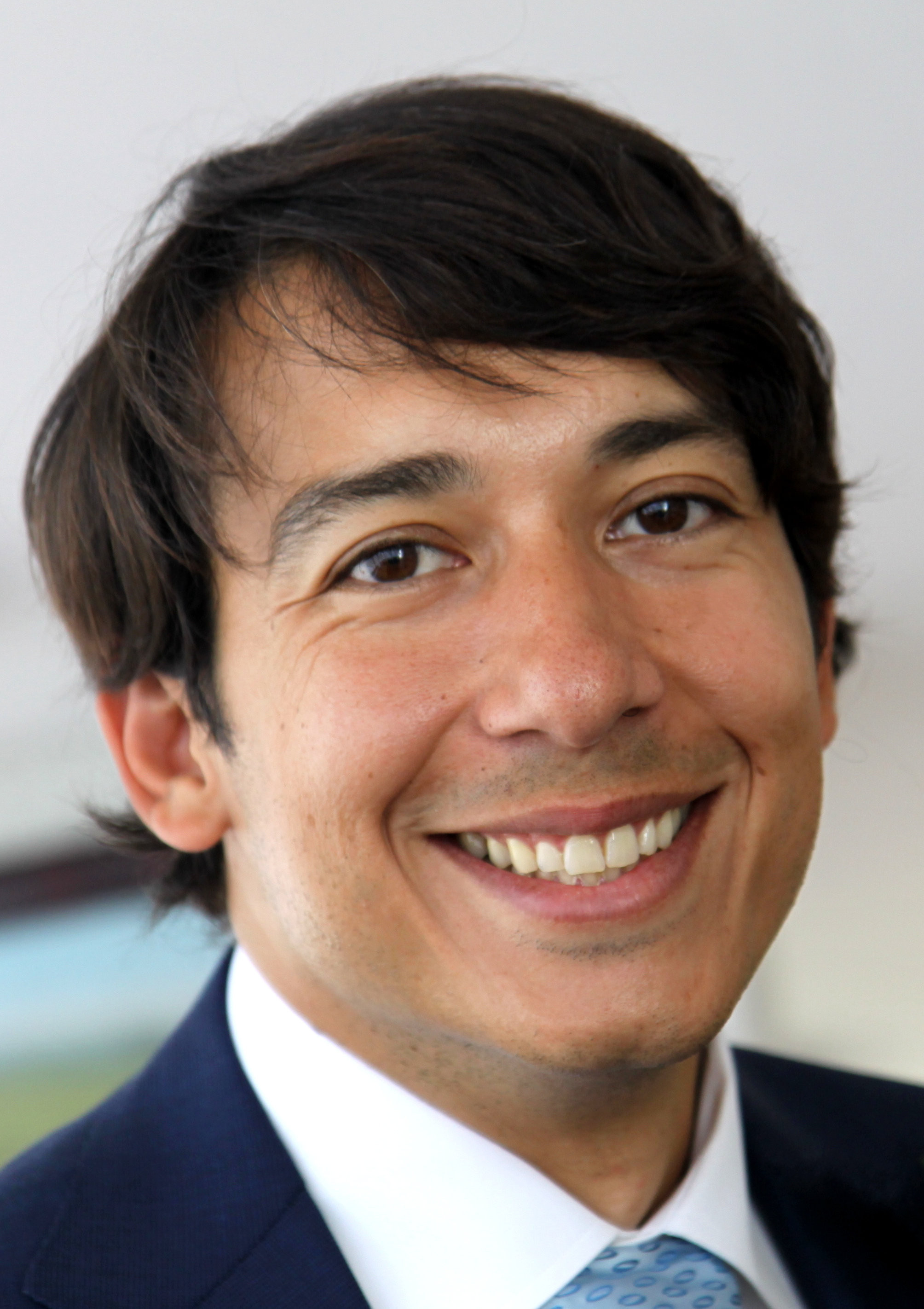
Alejandro Russo is a Professor at Chalmers University of Technology , specializing in Information Flow Control (IFC) , Secure Programming Languages , and Functional Programming . His research bridges theoretical foundations and practical implementations, focusing on mitigating timing channels , covert channels , and data leakage in concurrent systems. Developed novel frameworks for Differential Privacy with provable accuracy bounds Pioneered COWL integration for browser security and instruction-based scheduling to prevent cache timing attacks Led major projects like HIPSTER (hybrid static/dynamic IFC) and AppFlow (practical IFC deployment) His publications reveal expertise in security libraries for Haskell and Python , with a focus on faceted execution , label manipulation , and mechanized security proofs . Students under his supervision have explored topics ranging from secure eDSLs to privacy-preserving compilation techniques . Scientific awards : Google Research Award (2011) for Python taint analysis Advising and grants : Principal Investigator for VR , STINT , and Google Research Award Supervised 12+ PhD and Master’s students in security and functional programming research
Evangelia (Eva) Kalyvianaki is a Senior Lecturer (equivalent to Associate Professor) in the Department of Computer Science and Technology at the University of Cambridge , where she is also a member of the Systems Research Group / netos group . Previously she held faculty positions as Lecturer at City University London and as post-doctoral researcher at Imperial College London. Education Ph.D. in Computer Science, Computer Laboratory (SRG/netos group), University of Cambridge M.Sc. in Computer Science, University of Crete, Greece B.Sc. in Computer Science, University of Crete, Greece Research Interests Her research spans the broad areas of Cloud Computing , Big Data Processing , Autonomic Computing , and Distributed Systems . A central theme is the design and management of next-generation, large-scale cloud applications, with an emphasis on applying mathematical reasoning—particularly control-theoretic techniques such as Kalman and H-infinity filtering—to address the complexity and uncertainty inherent in modern distributed infrastructures. Topics of active investigation include adaptive CPU and resource provisioning for virtualized servers, fairness and overload management in federated stream-processing systems, explicit state management for big-data frameworks, and distributed optimization algorithms for large-scale networked systems. Publications & Research Impact Across more than thirty peer-reviewed papers, her work demonstrates a consistent trajectory toward bridging rigorous control theory with practical systems challenges in the cloud. Signature contributions include the THEMIS framework for fair federated stream processing, dynamic block-sizing algorithms for data-stream engines, and robust resource-provisioning schemes based on advanced filtering techniques. Recent publications extend these ideas to fully distributed, finite-time coordination protocols that operate under quantized communications and time-varying delays, reflecting an expanding scope toward large-scale networked control systems. Scientific Awards No specific awards or fellowships are listed in the provided material. Advising & Funding While individual student names are not disclosed, her extensive publication record with numerous co-authors indicates active supervision of doctoral and master’s researchers. Funding acknowledgements in papers suggest support from UK research councils, EU projects, and industrial partnerships, although explicit grant details are not provided. Labs & Teams She is affiliated with the Systems Research Group (netos) within the Cambridge Computer Laboratory, a leading collective focused on networked and operating systems research, providing a collaborative environment for experimental cloud and distributed-systems work.
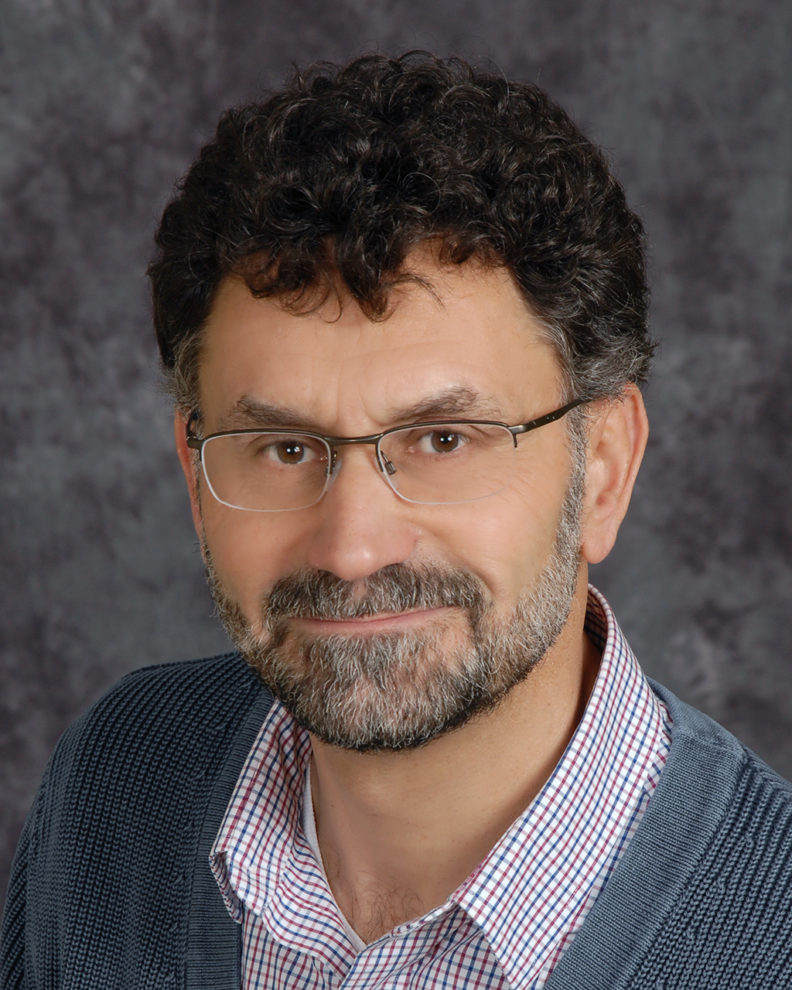
Darlene C. Chisholm is a Professor of Economics at Suffolk University in Boston, MA, holding this position since 2006. She has previously served as Associate Professor (2001-2006) and Assistant Professor (1991-1997) at Suffolk University, and has held academic positions at Tufts University, Lehigh University, and the Massachusetts Institute of Technology. University of Washington - Ph.D. Economics (1991) University of Massachusetts - B.A. Economics (1987) Princeton University - Electrical Engineering and Computer Science (1982-1984) Her research focuses on Industrial Organization, Applied Microeconomic Theory, and Spatial Competition within the U.S. Motion-Picture Industry. Her work examines product differentiation, contract structures, and strategic timing in entertainment markets, with over 20 years of publications in leading journals like the American Economic Review and Journal of Law, Economics, & Organization. Key publication themes include: Contract theory in motion pictures Spatial competition models Product line dynamics Game theory applications Technological change in cinema Asset specificity in long-term contracts Scientific awards: Visiting Yip Fellow at Magdalene College, University of Cambridge (2022) She has served as a reviewer for the National Science Foundation and as a referee for journals including the RAND Journal of Economics and Review of Economics and Statistics. Her work involves empirical analysis of movie markets, contract design, and strategic competition among theaters.
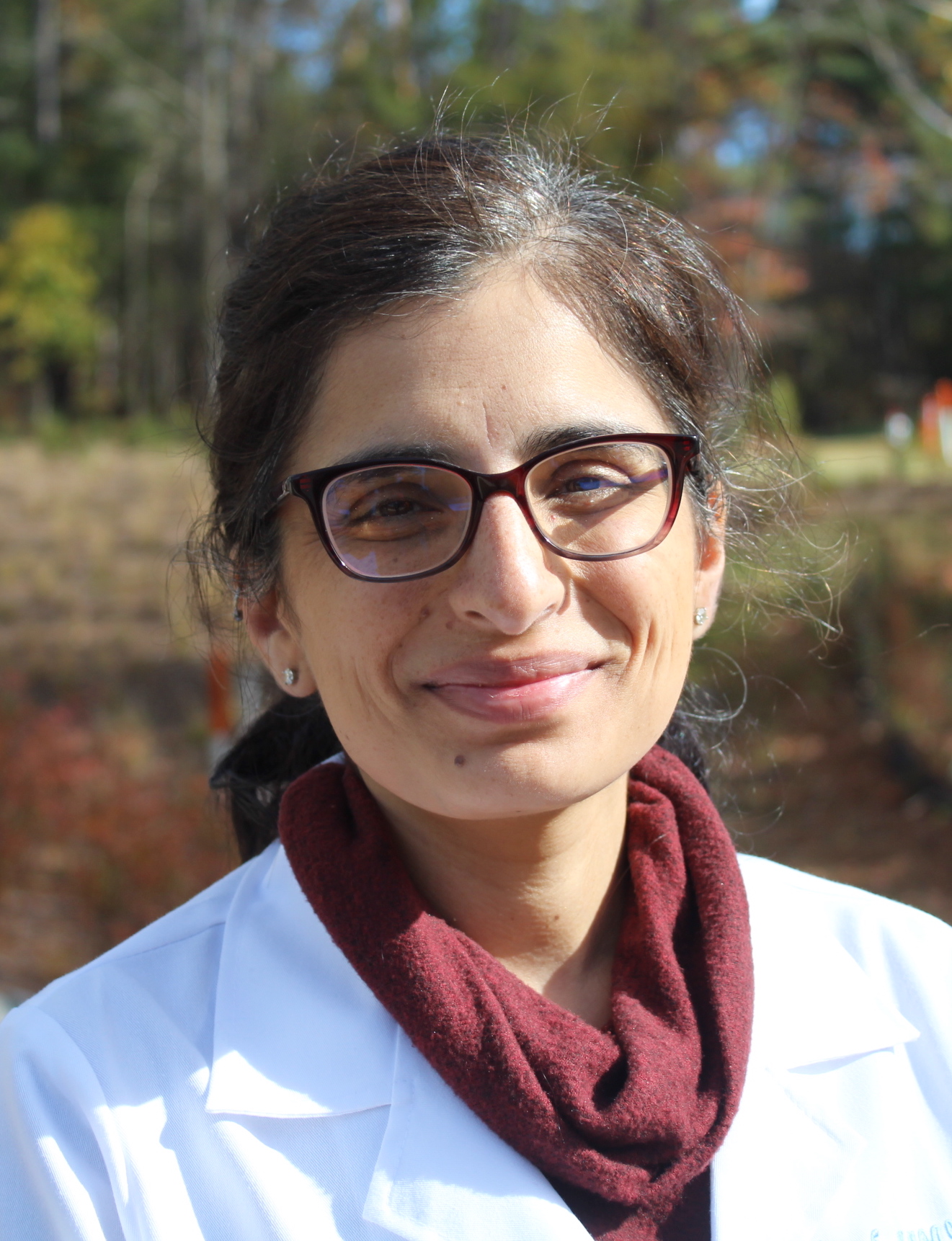
Shifali Arora, MD is an Assistant Professor of Medicine at the UNC School of Medicine , currently serving as Vice Chief of Clinical Operations for the Division of Gastroenterology and Hepatology. She also holds the position of Medical Director of Gastroenterology Clinics at UNC. Completed AAAS Policy Fellowship and NIH Mobile Health Training Key affiliations: Center for Esophageal Diseases and Swallowing , UNC Hospitals Value Care Action Group , UNC Clinician Leadership Program Research Focus spans three main areas: Quality Improvement in GI care through electronic health record optimization and standardized clinical templates Esophageal Motility Disorders and GI manifestations of systemic diseases Health Policy and Health Informatics including mHealth security and Affordable Care Act implications Scientific Contributions include: Operational innovations in endoscopy scheduling and patient education Clinical research on bowel preparation, pharmacological effects on GI function, and rare disease presentations Education & Training : Undergraduate : University of Illinois at Chicago (Biology & Psychology) Medical School : University of Illinois at Chicago Residency : Duke University Fellowship : Rush University (Gastroenterology & Hepatology) Policy Training : American Association for the Advancement of Science
Mario Harper is an Assistant Professor in the Department of Computer Science at Utah State University. His research emphasizes Machine Learning, Data Science, Robotics, and their intersections with Finance and Artificial Intelligence. He specializes in autonomous systems, energy-efficient robotics, and AI-driven solutions for transportation and urban sustainability. His work includes developing tools like simulators for electric vehicle systems and stealth-centric navigation algorithms inspired by biological systems. Key research areas include multi-robot coordination, reinforcement learning applications in robotics, and algorithmic approaches to environmental and economic challenges. He has contributed to projects like POSEIDON-SAT for satellite-based fishing vessel detection and electrified transportation equity analysis in urban settings. His publications span topics from trajectory planning in legged robots to AI modeling for economic systems. Beyond research, he designs interactive visualization tools to support policy decisions on sustainable transportation infrastructure. No scientific awards are explicitly listed in the provided information. Mario Harper’s advising and grants focus on robotics, energy systems, and AI applications, though specific student advisees or grant details are not detailed here. He collaborates on projects involving lab tools such as the Unknown Building Exploration Simulator (UBES) and Stealth Centric Autonomous Robot Simulator (SCARS), advancing robotic autonomy in unstructured environments.
Renata Medeiros de Carvalho is an Assistant Professor at Eindhoven University of Technology (TU/e), affiliated with the Process Analytics and EAISI Health groups. She holds a PhD in Computer Science from Federal University of Pernambuco (Brazil), an MSc and BSc in Computer Engineering from University of Pernambuco, and has conducted postdoctoral research at UQAM (Canada). Her research focuses on adaptive and declarative business processes, with particular emphasis on healthcare and data privacy. Education: PhD in Computer Science, Federal University of Pernambuco (2015) MSc in Computer Engineering, University of Pernambuco BSc in Computer Engineering, University of Pernambuco Research Interests: Flexible business processes and Process Mining Declarative modeling (e.g., OCBC language) Healthcare process optimization GDPR compliance frameworks Key Projects: PATIENCE 2 : Patient-centric healthcare through nomadic sensing BPR4GDPR : GDPR compliance toolkit Awards: Xerox University Affairs Committee Grant NSERC Engage Grant Teaching & Leadership: Local coordinator for EIT Digital Data Science and Erasmus Mundus BDMA master programs Teaches courses like Advanced Process Mining and DBL Data Challenge
Markus Keller is a **Château Ste. Michelle Distinguished Professor** in the **Department of Horticulture and Landscape Architecture** at **Washington State University (WSU)**, affiliated with the **Prosser Irrigated Agriculture Research and Extension Center (IAREC)**. His research focuses on grapevine physiology, viticulture production systems, and environmental stress management. He holds a **Ph.D. (1995)** and **M.S. (1989)** in Agricultural Engineering from the **Federal Institute of Technology (ETH Zurich), Switzerland**. **Research Interests**: Dr. Keller’s work addresses crop physiology, irrigation strategies, cold hardiness, berry shrivel, and mechanized viticulture. His projects include developing deficit irrigation frameworks, understanding water movement in berries, and predicting frost damage risks using machine learning. He collaborates with industry partners like the USDA and Washington wine producers. **Key Contributions**: His studies on grapevine water relations, berry development disorders, and cold tolerance have advanced sustainable viticulture practices. He leads teams investigating precision agriculture tools for vineyards, including hyperspectral imaging and decision-support systems. **Grants & Funding**: Supported by grants from USDA, Washington wine tax, and juice processors. His work integrates applied research with grower education on frost protection and yield optimization. **Lab & Collaborations**: Directs research at WSU’s Viticulture and Enology program, collaborating with international teams on climate resilience and grapevine health. Mentors Ph.D. and M.S. students in experimental design and field studies.
Zhen Xie is an Assistant Professor in the Department of Computer Science at Binghamton University (SUNY), serving as Director of the Parallel Computing and Intelligent System (PCIS) Lab. He holds a PhD from the Chinese Academy of Sciences and a BA from Wuhan University of Technology. His research focuses on high-performance computing (HPC), machine learning, and their intersections, particularly optimizing performance for HPC and AI/DL applications across heterogeneous architectures. Research Highlights: Dr. Xie’s work emphasizes system-level performance optimization for ML and HPC, including GPU acceleration, memory optimization, and AI accelerator selection. His team has won the ACM Gordon Bell Special Prize (2022) for their GenSLMs project predicting SARS-CoV-2 evolution. Recent grants include a 2024 gift from OpenAI for AI testbed initiatives. Awards: ACM Gordon Bell Special Prize (2022), Impact Argonne Awards (2023) Lab: PCIS Lab explores middleware for parallel computing, targeting scientific simulations and big data analytics. Collaborations include Argonne National Lab and Lawrence Berkeley National Lab. Teaching: Teaches Distributed Systems (CS 457/557) and oversees independent studies. Previously trained researchers at Argonne’s ATPESC program. Grants & Collaborations: Subcontract with Lawrence Berkeley Lab (HEVI-LOAD), Argonne testbed expeditions, and OpenAI-funded projects. Active in DOE labs like Summit and Aurora supercomputers.
Stella Kapodistria is an Associate Professor at Eindhoven University of Technology's Department of Mathematics and Computer Science, specializing in Stochastic Operations Research. She holds roles as EAISI High Tech Systems Associate Professor and editorial board member of journals like MCAP and PEIS. Her research focuses on data-driven decision-making, stochastic systems optimization, and maintenance policies, with applications in renewable energy, critical infrastructure, and cryptocurrency networks. She has secured grants including NWA-ORC, NWO Big Data, and TKI WoZ, and collaborates with industry partners in the Brainport region. Education: BSc (2003), MSc (2006, Hons.), and PhD (2009, summa cum laude) in Mathematics from the University of Athens. Postdoc at TU/e, followed by roles at Groningen University and TU/e's Stochastic Operations Research group. Teaching includes courses on Optimal Decision Making, Stochastic Performance Modeling, and Financial Mathematics. Research interests emphasize real-time learning, system resilience, and scalable algorithms for complex networks. Recent work addresses maintenance logistics, blockchain confirmation times, and wind energy prediction. She has published over 40 peer-reviewed articles and contributed to the 4TU Resilience Engineering Center. Awards include editorial leadership roles and grant funding. Advised 32 academic works and oversees industrial projects bridging theory and practice. Her labs and collaborations focus on adaptive systems, predictive analytics, and sustainable engineering solutions.
Krzysztof Czarnecki is a Professor at the University of Waterloo's Department of Electrical and Computer Engineering, with a cross-appointment to the School of Computer Science. He serves as leader of the Waterloo Intelligent Systems Engineering Lab and holds the title of University Research Chair. His research focuses on generative software development, model-driven engineering, and autonomous systems, particularly in automotive cybersecurity and perception safety. Education: Doctorate in Computer Science, Technical University of Ilmenau (1999) Master of Science in Computer Science, Technical University of Ilmenau (1995) Bachelor of Science in Computer Science, California State University (1994) Research Interests: Dr. Czarnecki's work spans generative programming, software product lines, and safety-critical AI for autonomous vehicles. Recent projects address robust perception systems, uncertainty quantification in neural networks, and strategic driving behavior modeling. He co-authored Generative Programming (Addison-Wesley, 2000), a foundational text in the field. Publications Trends: Recent work emphasizes multimodal AI integration (e.g., LEO-MINI), 3D object detection improvements (OV-SCAN), and safety assurance frameworks for autonomous systems. His research bridges theoretical software engineering with applied robotics challenges. Awards: Premier’s Research Excellence Award (2004) British Computing Society’s Upper Canada Award (2008) University Research Chair, University of Waterloo (2023) Teaching & Leadership: Teaches courses like ECE 495 (Autonomous Vehicles) and ECE 651 (Software Engineering Foundations). Oversees WatCAR initiatives and collaborates on industry projects through the NSERC Bank of Nova Scotia Industrial Research Chair (previous). Labs & Teams: Directs the Waterloo Intelligent Systems Engineering Lab, focusing on AI-driven solutions for autonomous systems and safety-critical software. Active in cross-disciplinary collaborations with automotive and robotics partners.
Ronald Graham is a Professor in the Computer Science and Engineering Department at the University of California San Diego (UCSD), affiliated with the Jacobs School of Engineering. He also serves as Chief Scientist at the California Institute for Telecommunications and Information Technology (Calit2). Graham’s career spans academia and industry, including a 37-year tenure at Bell Labs and leadership roles at AT&T Labs. He is renowned for contributions to combinatorics, Ramsey theory, scheduling algorithms, and discrete mathematics. His Erdős number of 1 underscores his collaborative ties to Paul Erdős, a legendary mathematician. Education: Graham earned his PhD in Mathematics from UC Berkeley in 1962. Research Interests: Graham’s work focuses on combinatorics, graph theory, number theory, computational geometry, scheduling theory, and quasi-randomness. He has also explored recreational mathematics, notably through his book Magical Mathematics (2011), which intertwines card tricks with mathematical principles. His research has influenced internet infrastructure design, including foundational work on routing algorithms and the development of Akamai Technologies. Notable Achievements: Graham has received the Steele Prize for Lifetime Achievement (2003), Euler Medal (1994), and Polya Prize in Combinatorics (1972). His concept of “Erdős numbers” revolutionized academic collaboration tracking, later adapted into Hollywood’s “Six Degrees of Separation” game. Advising & Grants: Graham mentors students and faculty, inspiring future generations through teaching and mentorship. The UCSD CSE Department established the Ronald L. Graham Chair in Computer Science in 2015 to honor his legacy, funded by an $18.5M alumni donation. Labs & Collaborations: As Calit2’s Chief Scientist, Graham advises on strategic directions, emphasizing interdisciplinary research in information technology and communications. His work bridges theoretical mathematics and applied computing, shaping global technological advancements.
Eric Balkanski serves as Assistant Professor of Industrial Engineering and Operations Research at Columbia Engineering, Columbia University, and is an Affiliated Member of the Foundations of Data Science Institute. His academic home integrates theoretical computer science with operations research methodologies. Balkanski earned his PhD in Computer Science from Harvard University, establishing foundational expertise in algorithmic theory before joining Columbia's faculty. His research pioneers algorithms with predictions —a transformative paradigm blending machine learning insights with classical optimization. Key thrusts include exponentially faster submodular optimization for data summarization and recommendation systems, strategyproof mechanism design incorporating predictive advice, and fairness-aware online algorithms . This work bridges theoretical guarantees with real-world applications in network analysis and decision-making under uncertainty, often yielding breakthroughs in computational efficiency. Recent publications (2022-2025) reveal a dominant trend toward prediction-augmented frameworks across scheduling, correlation clustering, and facility location. His submodular optimization advances enable orders-of-magnitude speedups, while fairness-oriented work introduces novel cost-free fairness models for online settings. The consistent focus on theoretical foundations of learning-augmented algorithms positions him at the forefront of this emerging field. His accolades demonstrate exceptional scholarly impact: ACM SIGecom Doctoral Dissertation Honorable Mention Award Google PhD Fellowship Smith Family Graduate Science and Engineering Fellowship Best Paper Award at CIAA 2013 Andrew Carnegie Society Scholar Balkanski co-founded Robust Intelligence (an AI security startup), translating theoretical work into practical cybersecurity applications. His NSF-funded collaborative research on 'Mechanisms with Predictions' indicates active grant leadership, though specific student advising details remain unpublicized. The absence of formal lab descriptions suggests integration within Columbia's broader data science and operations research ecosystems. As an early-career researcher, Balkanski demonstrates remarkable productivity with 15+ high-impact publications since 2022, primarily in top-tier venues like STOC, NeurIPS, and EC. His trajectory suggests continued leadership in bridging algorithmic theory with machine learning applications.
Esther Maier is an Associate Professor at the Lazaridis School of Business and Economics, Wilfrid Laurier University. Her work focuses on the intersection of organizational processes, media production, and corporate sustainability. She specializes in analyzing how budgeting, creativity, and control intersect in large-scale creative projects, particularly in television and digital media industries. Her research explores topics such as sustainability reporting in corporate crises, media framing of scandals, and the economic mechanisms behind cultural production. She has published extensively on creative industry management, including studies on budget allocation in film/TV production and the role of calculative practices in artistic projects. Dr. Maier’s work bridges sociology and media studies, offering critical insights into how organizations navigate the tension between artistic vision and financial constraints. Her recent research emphasizes the ethical dimensions of corporate sustainability claims, particularly in the wake of environmental disasters like the Deepwater Horizon oil spill. Her articles reflect a consistent focus on interdisciplinary methodologies, combining organizational behavior theory with media production case studies. No specific awards or grants are listed in the provided materials, though her active publication record indicates sustained academic engagement.
Donald Sull is a Professor of the Practice at MIT Sloan School of Management, where he directs the Strategic Agility Project and Culture 500 initiatives. He specializes in competitive strategy, strategy execution, and organizational culture. Formerly a professor at Harvard Business School and London Business School, Sull holds degrees from Harvard University. His research focuses on leadership, corporate culture transformation, and the interplay between strategy and execution. He co-founded CultureX, leveraging AI to measure and improve corporate culture, and advises global organizations including Fortune 500 companies and startups like Betterworks and eToro. Recognized as a leading management thinker, Sull’s work on 'active inertia' has shaped business theory, and he has authored five books and over 100 articles, including best-selling Harvard Business Review pieces. Education: Bachelor’s, Master’s, and Doctorate from Harvard University. Prior Experience: Strategy consultant at McKinsey & Company, management-investor at Clayton, Dubilier & Rice. Affiliations: Chairman of FilmFish, advisor to startups, and contributor to MIT Sloan Management Review. Research Interests: Sull’s work centers on organizational agility, corporate culture dynamics, and leadership strategies. His projects like CultureX apply AI-driven analytics to diagnose and enhance culture. He emphasizes practical frameworks for strategy execution, addressing challenges like toxic workplace environments and aligning culture with strategic goals. Recent studies explore AI’s role in organizational self-awareness and data-driven decision-making. Advisory & Grants: Advised over 50 Fortune Global 500 companies and non-profits like the Bill & Melinda Gates Foundation. His executive education programs, such as the Global CEO Program (MIT Sloan-IESE alliance), focus on leadership and global business strategy. Labs/Teams: Leads the Strategic Agility Project and Culture 500, collaborating with industry partners to analyze organizational resilience and cultural health.
Dr. Yiqun Pan is a Special Faculty at Carnegie Mellon University's Center for Building Performance and Diagnostics, and a Visiting Professor at Lawrence Berkeley National Laboratory. With 25+ years of experience, she specializes in building performance simulation, energy efficiency, and sustainable design. Her work integrates machine learning and big data to enhance building performance and occupant well-being. Research focuses include low-carbon building technologies, energy flexibility optimization, and carbon reduction strategies. She has led projects funded by the China National Science Foundation and U.S. Energy Foundation. Dr. Pan has authored six books and over 150 publications, including 42 English journal papers. Teaching includes courses on LEED certification, green infrastructure, HVAC systems for low-carbon buildings, and building energy systems integration. Awards include IBPSA Fellow and ASHRAE Membership. She chaired the 2023 Building Simulation Conference, demonstrating global leadership in building science. Her contributions span tool development (e.g., DeST 3.0 simulation platform) and interdisciplinary collaborations. Current work bridges academic research with practical applications, advancing sustainable urban development and zero-carbon building practices.