Dr. Yaqing Jin is an Assistant Professor of Mechanical Engineering at the University of Texas at Dallas (UTD) , affiliated with the Erik Jonsson School of Engineering and Computer Science . His research focuses on fluid dynamics, turbulence control, and renewable energy systems, particularly in the context of wind turbine aerodynamics and boundary layer dynamics. He leads the Fluids, Turbulence Control & Renewable Energy Lab , exploring advanced strategies for optimizing energy systems through experimental and computational methods. Research interests include: Fluid-structure interactions in complex flows Turbulence control via riblet designs and wake steering Wind farm optimization and power maximization Sediment dynamics in vegetated environments Aeroelastic behaviors of flexible structures Recent work emphasizes wind turbine performance under yaw misalignment, multi-scale riblet drag reduction, and the dynamics of flexible vegetation canopies. He has pioneered extremum-seeking control algorithms for wind farm efficiency and explored novel configurations for turbine arrays. Publications highlight advances in understanding unsteady aerodynamic loads, wake dynamics, and sediment transport. Ongoing projects address offshore wind farm integration and smart material applications in renewable energy systems.
Dr. Stephen Tullis is an Associate Professor at the Department of Mechanical Engineering , McMaster University . His research integrates fluid mechanics and CFD with applications in nuclear thermalhydraulics , metallurgical flows , sports hydrodynamics , and wind turbine aerodynamics . Research interests include: Complex flows with multiphase, heat transfer, and chemical interactions Modeling of CANDU reactor corium dynamics and molten salt reactors Hydrodynamic optimization of rowing, canoe, and sailing equipment Vertical axis wind turbines with dynamic stall analysis Particulate flow modeling and turbulent combustion Recent publications focus on nuclear accident containment , metallurgical process optimization , and sports biomechanics through coupled fluid-structure simulations. The Fluids Research Lab under his supervision develops advanced synthetic turbulence generation methods and investigates fluid-structure interaction in both industrial and biological systems. Contact: stullis@mcmaster.ca
Manuel Keßler is an apl. Prof. Dr. and Adjunct Professor at the University of Stuttgart's Institute of Aerodynamics and Gas Dynamics , serving as Deputy Head of the Institute and Head of the Helicopters and Aeroacoustics working group. His research focuses on Helicopter Aeromechanics , Aeroacoustics , and High-Fidelity CFD Simulations . He leads projects involving rotorcraft noise reduction, computational fluid dynamics validation, and advanced simulation frameworks like the FLOWer solver. His work integrates experimental and numerical methods, with applications in compound helicopters (e.g., Airbus Helicopters' RACER), eVTOL systems (Volocopter), and distributed propulsion demonstrators. Keßler's technical expertise includes programming in C++, Python, and various assemblers, alongside experience with microcontroller systems (AVR, ARM7, etc.). He oversees the Institute's HPC-cluster (Prandtl) and teaches courses on Fluid Mechanics, Aeroacoustics, and programming optimization. His research spans rotor-fuselage interactions, dynamic stall mitigation, and aeroelastic phenomena, with a strong emphasis on validating numerical models against flight-test data. Notable contributions include numerical investigations of noise sources in distributed propulsion systems, CFD simulations of rotorcraft in ground effect, and aeroacoustic studies of counter-rotating open rotors. His interdisciplinary approach bridges computational methods with real-world engineering challenges, advancing rotorcraft design and noise mitigation strategies.
Dr. Mohammad Omidyeganeh is a Senior Lecturer and Deputy Head of Engineering at City, University of London, where he has been employed since 2013. He previously served as a Lecturer (2013-2022) and has held various administrative roles including Programme Director for Mechanical Engineering and Aeronautics (2019-2021) and Admission Tutor (2014-present). His academic career began with a Post-doctoral Fellowship at Queen's University in Canada following completion of his PhD. Dr. Omidyeganeh's educational background includes: PhD in Mechanical Engineering, Queen's University, Canada (2013) MSc in Chemical Engineering (Environmental Engineering), University of Calgary, Canada (2008) BSc in Electrical Engineering, Sharif University of Technology, Iran (2005) Joint BSc in Petroleum Engineering, Sharif University of Technology and Petroleum University of Technology, Iran (2005) His primary research interests focus on computational fluid dynamics, particularly large-eddy and direct numerical simulations. He specializes in immersed-boundary methods and fluid-structure interaction, with applications in environmental fluid dynamics, geophysical flows, and aerofoil design. His work spans from river flows and sediment transport to quiet aerofoil development and brain modeling, demonstrating a broad interdisciplinary approach to fluid dynamics problems. Analysis of Dr. Omidyeganeh's recent publications reveals a strong focus on canopy flows, aeroacoustic optimization, and fluid-structure interactions. His work frequently employs computational methods to study turbulent flows over various geometries, with particular attention to drag reduction and flow control mechanisms. The research shows increasing collaboration with international teams and application to both environmental and engineering challenges. Dr. Omidyeganeh has supervised multiple PhD students including Alessandro Monti (primary supervisor), Carlo Suardi, Marco Rosti, and others working on topics related to turbulent flows, aerofoil design, and computational fluid dynamics. His research has been supported by projects including the PELSKIN project, which investigated surface coatings in aeronautics. He leads the Computing 2 Course in module ME2111 and has been instrumental in developing computational approaches to fluid dynamics problems, particularly those involving complex geometries and fluid-structure interactions. His laboratory work focuses on numerical simulations of environmental flows and aerofoil design optimization.
Professor Alfredo Pinelli holds a PhD in Applied Mathematics from École Polytechnique Fédérale de Lausanne (1994) and has held academic positions at multiple institutions. He is currently Professor of Fluid Simulation at City, University of London (2013–present) and previously served as Associate Professor at Complutense University of Madrid (2004–2013), Head of the Numerical Simulation Unit at CIEMAT (2000–2013), and Associate Professor at Carlos III University of Madrid (1999–2004). BSc in Aeronautical Engineering, Politecnico di Milano (1988) Master in Fluid Mechanics, Von Karman Institute for Fluid Dynamics (1989) PhD in Applied Mathematics, École Polytechnique Fédérale de Lausanne (1994) His research focuses on Direct numerical simulations , Computational fluid dynamics , Immersed-boundary methods , and Fluid structure interaction . Recent work explores Deep reinforcement learning for turbulent flow control and High performance computing applications in fluid mechanics. Publications emphasize Flow dynamics , Aerodynamics , and Environmental flows , with a particular interest in Turbulent flow regimes and Flow control techniques . Key articles demonstrate expertise in Wall-bounded turbulent flows , Canopy flow analysis , and Lattice Boltzmann methods . His scientific awards include the Marie Curie postdoctoral fellowship , and he has participated in numerous national and European research projects with international collaborators in Canada, Japan, and the US.
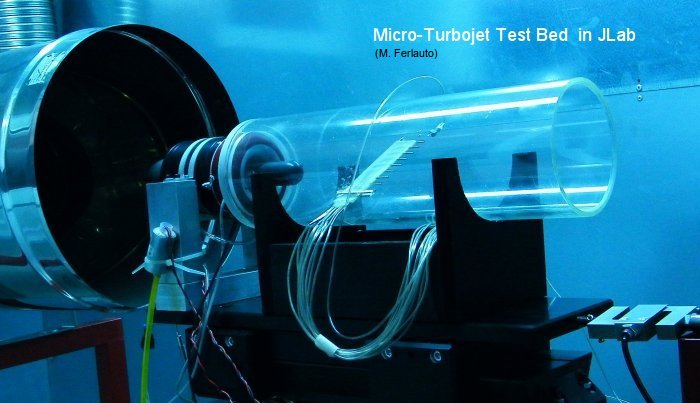
Michele Ferlauto serves as an Associate Professor in the Department of Mechanical and Aerospace Engineering (DIMEAS) at the Polytechnic University of Turin. His academic career spans over a decade, during which he has consistently contributed to doctoral education in Aerospace Engineering from the 27th cycle (2011/2012) through the current 40th cycle (2024/2025). He holds teaching responsibilities for Advanced Aerospace Propulsion, Computational Fluid Dynamics of Propulsion Systems, and Fluid Dynamics of Turbomachinery courses at the master's level, along with contributions to the Space Environment, Access and Operations course in Engineering and Management. Professor Ferlauto's research focuses on aerospace propulsion systems with particular emphasis on fluid dynamics phenomena. His primary research interests include aerospace propulsion, aero-thermal design, computational fluid dynamics, nonlinear inverse problems, and turbomachinery design. His work spans both theoretical and experimental aspects of propulsion systems, with extensive publications in high-impact aerospace journals. His research lines encompass Active Flow Control of propulsive systems and Thrust Vectoring, Compressor instabilities simulation and control, Rotating stall in compressors, gas turbine engine testing, control and simulation, Optimal Aerothermal design of Turbomachinery components, and Solution of inverse problems using Adjoint methods. Analysis of his recent publications reveals a strong concentration on fluidic thrust vectoring techniques, particularly through differential throttling in aerospike nozzles. His work demonstrates a sophisticated integration of computational fluid dynamics with experimental validation, showing increasing incorporation of artificial intelligence techniques for flow control and system diagnostics. The research trajectory indicates a progression from fundamental fluid dynamics studies toward more applied aerospace propulsion systems with practical implementation considerations. Professor Ferlauto actively supervises doctoral students including Jehangir Hassan, Chengxin Liu, and Emanuele Resta, whose research focuses on fluidic thrust vectoring, non-invasive state recognition technology, and advanced propulsion systems. He has led significant research projects including AEROJET (2007-2011), a numerical and experimental environment for simulating conventional and innovative propulsion systems, and commercial consulting projects related to aerodynamics and heat exchange. His research group, the Aerospace Propulsion Group at DIMEAS, maintains strong connections with industry partners and contributes to sustainable propulsion technologies aligned with UN Sustainable Development Goals 7 (Affordable and clean energy), 11 (Sustainable cities and communities), and 13 (Climate action).
Jonathan E Cooper holds the RAEng Airbus Sir George White Professorship in Aerospace Engineering at the University of Bristol's School of Civil, Aerospace and Design Engineering, with an international reputation spanning 30 years in aeroelasticity, structural dynamics, and sustainable aircraft design. His work directly addresses Net Zero Aviation through industry collaborations focused on fuel-burn reduction and next-generation wing technologies. His research centers on novel loads control systems, structural/control system nonlinearities, high-aspect-ratio wings with folding wingtips, uncertainty quantification, and multidisciplinary design optimization. Key initiatives include developing efficient prediction methods for aeroservoelastic behavior and structural performance certification, emphasizing practical industry applications. Analysis of his 2021-2025 publications reveals dominant themes in folding wingtip dynamics, gust load alleviation, landing gear design optimization, and nonlinear aeroelastic modeling. His work increasingly integrates data-driven methods with traditional aerospace engineering to address complex fluid-structure interactions in flexible aircraft configurations. Honors include: Fellow of the American Institute of Aeronautics and Astronautics (2018) Fellow of the Royal Academy of Engineering (2019) Journal of Sound and Vibration Doak Award (2019) Fellow of the Royal Aeronautical Society Professor Cooper supervises 16 research students and leads major projects including 'Development of Advanced Wing Solutions 2' (2024-2026) and 'ONEHeart' (2023-2025), funded by Airbus and EU programs. His work is conducted within the Fluid and Aerodynamics Dynamics and Control research group, focusing on experimental validation and computational modeling. He actively contributes to national aerospace strategy through the Aerospace Technology Institute (2015-2019) and Royal Aeronautical Society (Chair 2015-2018), bridging academic research with industrial implementation in sustainable aviation.
Professor Yutaka OTA is a distinguished faculty member at Waseda University's School of Fundamental Science and Engineering, Department of Applied Mechanics and Aerospace Engineering. With a Doctor of Engineering degree from Waseda University, he has established himself as a leading expert in fluid machinery and turbomachinery research. His academic career spans several decades with significant contributions to compressor technology and fluid dynamics. Professor OTA's research primarily focuses on fluid machinery, numerical fluid dynamics, aerodynamic noise, and unsteady aerodynamics. His work has particular emphasis on centrifugal and axial compressors, investigating phenomena such as rotating stall, surge, vortex dynamics, and noise generation mechanisms. His research integrates experimental approaches with computational fluid dynamics to address complex flow phenomena in turbomachinery systems. His 15 most recent publications demonstrate a consistent research trajectory centered on compressor performance, flow instability, and noise reduction. The articles reveal a progression from fundamental flow visualization studies to practical applications in compressor design optimization. Key themes include vortex control techniques, diffuser design modifications, and understanding the complex interplay between surge and rotating stall phenomena in both centrifugal and axial compressors. Best Visualization Award of ASV2011 ASME Aerospace Division Best Paper Award (2002) Japan Society of Mechanical Engineers Award Research Encouragement Award (1990) Professor OTA has secured multiple research grants from the Japan Society for the Promotion of Science, including projects on shock tube experiments for compressor stall analysis and active control techniques. His work has practical implications for gas turbine design, compressor stability enhancement, and noise reduction in fluid machinery systems. He has supervised numerous graduate students and maintains active collaborations with industry partners in the turbomachinery field. His laboratory focuses on advanced flow measurement techniques and computational modeling of complex fluid phenomena in rotating machinery.
Nobumichi Fujisawa is an Associate Professor at Waseda University, School of Fundamental Science and Engineering, specializing in Fluid Engineering and Turbomachinery . His research focuses on unsteady flow phenomena in centrifugal and axial compressors, including stall inception mechanisms, tip leakage vortices, and vortex-induced noise reduction strategies. Current affiliations: Waseda University (2024–present), Leibniz Universität Hannover (Visiting Researcher, 2025–2026) Past roles: Waseda University (2015–2024) Research interests span computational fluid dynamics (CFD) applications in turbomachinery, flow separation analysis, and aerodynamic stability enhancement through geometric modifications like tapered diffuser vanes and bleed slots. His work reveals flow blockage dynamics in diffuser passages and their correlation with stall development. Scientific awards include: 2024 Turbomachinery Society of Japan Best Paper Award 2021 JSME Paper Award 2018 ASME Turbo Expo Best Paper 2016 Turbomachinery Society Young Researcher Award
Ion Paraschivoiu is a Full Professor in the Department of Mechanical Engineering at Polytechnique Montréal, with a distinguished career spanning several decades in aerospace engineering and renewable energy research. His academic journey began at the Polytechnic University of Bucharest where he earned his B.Sc.A., M.Eng., and Ph.D., and has flourished at Polytechnique Montréal where he has established himself as a leading researcher in his fields. Professor Paraschivoiu's research interests focus on aircraft aerodynamics, particularly aircraft icing phenomena, dynamic stall characteristics, and wind energy systems with emphasis on vertical axis wind turbines (Darrieus type). His work bridges theoretical analysis, computational fluid dynamics, and practical applications in both aviation safety and sustainable energy production. His research has significant implications for improving aircraft safety in icing conditions and optimizing wind turbine performance for renewable energy generation. His publication record demonstrates consistent scholarly productivity with 124 documented publications including journal articles, conference papers, and book chapters. His recent work (including a 2025 publication) continues to advance knowledge in wind turbine ice dynamics and aerodynamic modeling. Professor Paraschivoiu has supervised 24 graduate students (3 doctoral and 21 master's), mentoring the next generation of engineers in aerospace and mechanical disciplines. 2005 - Doctorat honoris causa - Université Constantin Brâncuși 2002 - Doctor honoris causa - Université d'Oradea 1999 - Prix de la ministre de l'Éducation, du Loisir et du Sport - Gouvernement du Québec 1997 - Doctorat honoris causa - Université Polytechnique de Bucarest Professor Paraschivoiu's research has been consistently supported through grants that have enabled his work on aircraft icing simulation, wind turbine aerodynamics, and heat transfer applications. His collaborations with researchers like Frédérick Gosselin (as noted in a 2023 press review in La Presse) demonstrate ongoing engagement with contemporary challenges in wind energy technology. His educational materials have been recognized by the Quebec government for their quality and contribution to French-language engineering education.
Tony Wong is a Professor in the Department of Systems Engineering at École de technologie supérieure (ÉTS), specializing in aeronautics, autonomous systems, and industrial automation. He holds affiliations with three key research laboratories: the Control and Robotics Laboratory (CoRo), LARCASE (Aeronautical Research), and SYNCHROMEDIA (Multimedia Communication). His work bridges theoretical optimization and practical applications, particularly in UAV design, renewable energy, and blockchain logistics. Research interests span: Aeronautics/Aerospace : Morphing wing optimization, computational fluid dynamics, UAV performance enhancement. Intelligent Systems : Robotic automation, machine learning for predictive maintenance, low-code industrial solutions. Sustainable Technologies : Hybrid energy systems, IoT for resource optimization, edge computing deployments. Dr. Wong mentors 47+ graduate students, with recent projects including wind-tunnel validations of morphing wings, AI-driven supply chains, and solar energy forecasting. His publication record (31+ journal articles since 2021) demonstrates consistent contributions to aerodynamic design and computational intelligence. While no awards are documented, his leadership in collaborative labs underscores institutional recognition. Laboratory engagements focus on experimental validation and industrial partnerships, utilizing ÉTS facilities like the Price-Païdoussis Wind Tunnel and advanced flight simulators. Current projects prioritize sustainability, including aerodynamic drag reduction and blockchain-enabled cost optimization.
C.J. Simao Ferreira is a Professor at Delft University of Technology's Faculty of Aerospace Engineering, where he specializes in Wind Energy research. He is affiliated with the TU Delft Wind Energy Institute (DUWIND), a leading center for wind energy research in Europe. His academic credentials include a Dr.ir. degree from TU Delft, and he has established himself as a prominent researcher in wind turbine aerodynamics. Professor Ferreira's research focuses on wind turbine aerodynamics, with particular expertise in vertical axis wind turbines, unsteady flow phenomena, and airfoil design. His work addresses critical challenges in wind energy harvesting, including dynamic stall characteristics, wake interactions in wind farms, and high-density wind farm layouts. His research combines experimental approaches (using PIV and other advanced measurement techniques) with computational modeling to advance understanding of complex aerodynamic phenomena. His recent publication trends show consistent output in high-impact journals, with multiple 2025 publications examining advanced topics in wind turbine aerodynamics, propeller aeroacoustics, and regenerative wind farming concepts. His work spans both fundamental aerodynamic research and practical applications for improving wind energy systems. 199 total research outputs including 85 articles, 57 conference contributions, and 46 conference articles 19 datasets published through TU Delft-4TU.ResearchData 14 supervised students or junior researchers Publications in Wind Energy, AIAA Journal, Journal of Aircraft, and Wind Energy Science Professor Ferreira actively supervises graduate students and maintains research collaborations both within TU Delft and internationally. His research group conducts experimental work using advanced facilities including wind tunnels and PIV systems, and develops computational models to analyze wind turbine performance. His recent work on regenerative wind farming demonstrates innovation in wind energy system design, exploring novel approaches to maximize energy capture from wind resources.