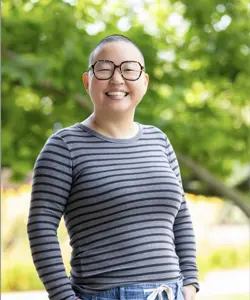
Erica Mason is an Assistant Professor in Special Education at the University of Illinois Urbana-Champaign's College of Education. Her research bridges special education and mathematics education, focusing on teachers’ conceptions of disability and capability through research-practice partnerships. She employs critical special education frameworks and investigates classroom autonomy dynamics between general and special educators. Department of Special Education, College of Education Assistant Professor since 2019 Her research interests include: Anti-deficit mathematics instruction for students with disabilities Teacher autonomy and job satisfaction dynamics Deficit language persistence in inclusive education Equity-driven mathematics pedagogy Progress monitoring frameworks for special education Recent publications examine: Autonomy-satisfaction relationships in special education (2023) Racial consciousness in mathematics instruction (2023) Math intervention intensity models (2022) Disability studies in education (2025) Scientific contributions include: Co-developer of mathematics intervention frameworks Critical analyses of inclusionary practices Quantitative studies on teacher satisfaction Qualitative investigations of student camouflaging
Dr. Cheng Yin is a Lecturer in Computing Science at Ulster University's School of Computing, based at the Belfast campus (Room BB-02-010, 2-24 York Street). She specializes in wireless communications and security, with research encompassing AI-driven network optimization, reconfigurable intelligent surfaces (RIS), and UAV-assisted systems. Her work bridges theoretical models and practical implementations in 5G/6G networks. Education: PhD from Queen's University Belfast (2016-2019), focusing on Physical Layer Security for Wireless Networks under Unreliable Backhaul Connections . Research Focus: Wireless Security & Privacy: Developing anti-eavesdropping techniques and secure backhaul solutions. AI for Networks: Machine learning applications in resource allocation and signal optimization. Reconfigurable Intelligent Surfaces: Enhancing IoT medical devices and UAV communication reliability. Semantic Communication: Efficiency improvements in next-generation networks. Publications: Her recent work (2021-2025) emphasizes AI-enhanced security, RIS applications in healthcare IoT, and robust resource allocation for UAV networks, reflecting interdisciplinary collaboration across computing, engineering, and biomedical fields. Awards: Best Student Paper Award at INISCOM'19 (2019) Projects & Activities: Leads the 'Resource Management for 6G Internet-of-Vehicles Networks' project (2024-2025). Active in peer review (IEEE journals), invited talks (e.g., Dronetastic Workshop), and promotes women in engineering. Recognized as a Fellow of the Higher Education Academy (FHEA).
Rongqing Hui is a Professor in the Department of Electrical Engineering and Computer Science at the University of Kansas. His work bridges optical communication systems, photonic device innovation, and biomedical applications such as biosensors and bioimaging. Education : Ph.D. in Electrical Engineering (1993, Politecnico di Torino, Italy); M.S. (1988) and B.S. (1982) in Electrical Engineering from Beijing University of Posts & Telecommunications, China. Research Interests include: Optical/RF Measurement and Biosensors Novel Photonic Devices Optical Communication Systems Publication Trends highlight advancements in coherent lidar, distributed Raman amplification, quantum dot lasers, and digital subcarrier multiplexing for high-speed networks. His work often integrates nonlinear optics, femtosecond lasers, and signal processing. Awards : Miller Award for Distinguished Research (2002) Bellow Scholar Award for Distinguished Research (2012) He has authored two textbooks: Fiber Optic Measurement Techniques (2009) and Introduction to Fiber-Optic Communications (2019). His industrial experience spans roles at Bell-Northern Research, US Naval Research Laboratory, and Italian telecommunication institutes.
Marissa Diener is a Professor in the Department of Family & Consumer Studies at the University of Utah. Her research focuses on youth optimal development, parent-child relationships, and the broader contexts shaping these dynamics, particularly in health-related settings. She has held leadership roles as Director of the Certificate in Infant and Early Childhood Mental Health (since 2022) and Director of the LEAP Learning Communities (2017–2023). Education: BA in Psychology from Georgetown University MS in Developmental Psychology from University of Michigan PhD in Developmental Psychology from University of Illinois at Urbana-Champaign Dr. Diener’s research integrates traditional methodologies and community-based participatory approaches to study child development, family dynamics, and autism spectrum disorder. Her work emphasizes youth mental health, telehealth interventions, labor exploitation, and socioemotional development. Her recent publications highlight trends in mental health prevention programs, rural healthcare disparities, and autism transition planning. She has explored topics such as tele-ABR testing, community reintegration post-brain injury, and parent-youth vision alignment for autistic adolescents. Scientific Awards: Excellence in Mentoring Award (2018, College of Social and Behavioral Science) Distinguished Service Award (2011, University of Utah) Distinguished Teaching Award (2010, University of Utah) Borchard Fellowship (2009, Lowell Bennion Community Service Center) Dr. Diener has taught courses such as Thesis Research (Masters/PhD) , Infant Mental Health I , and Foundations of Research . She has secured grants including the CSBS Interdisciplinary Seed Grant (2015) and collaborations with Primary Children’s Hospital. Her service includes mentoring youth through University Neighborhood Partners, working with refugee families, and developing technology-based programs for autistic youth. She actively bridges academia with community needs through vocational training and family-centered interventions.
Katherine Narr is an Associate Professor at the University of California, Los Angeles (UCLA) , affiliated with the Department of Neurology Psychiatry and Biobehavioral Sciences and the Brain Research Institute . Her work focuses on neuroimaging in psychiatric disorders, particularly depression and neurodevelopmental consequences of prenatal exposures. Neuroimaging biomarkers for antidepressant response Effects of electroconvulsive therapy (ECT) and ketamine on brain structure Developmental impacts of prenatal alcohol/HIV exposure in South African cohorts Her research integrates structural and functional MRI with machine learning to predict treatment outcomes. Collaborations span institutions in the U.S., South Africa, and Europe. Scientific Awards: No specific awards mentioned. Advising & Grants: No explicit student advisement or grant details provided. Key publications highlight collaborations on ECT, ketamine, and developmental neuroimaging studies. Labs & Teams: Collaborates with the Global ECT MRI Research Collaboration (GEMRIC) and South African birth cohort research groups.
Professor Zafar Ali Khan Mohammed is affiliated with the Department of Electrical Engineering at Indian Institute of Technology Hyderabad . His research spans advanced wireless communications, cyber-physical systems, and commensal radar technologies. Ph.D. from Indian Institute of Science, Bengaluru Visiting Professor at UC Irvine (2014), University of Southampton (2015) His research interests focus on: 6G Communication Systems Cyber-Physical Systems (CPS) Security Commensal Radar Applications Dynamic Spectrum Allocation Scientific Awards include: INAE Young Engineer Award (2006) Visvesvarya Young Faculty Research Fellowship (2015-2017) IEEE COMSOC/SP Chapter Appreciation Award (2013-2014) His projects involve JICA-funded M2Smart and multiple DST/DeiTy-funded initiatives in cognitive radio and CPS security. Publications highlight innovations in massive MIMO detection , cooperative spectrum sensing , and communication infrastructure sensing .
Professor Hyung Seok Kim is a distinguished academic at Sejong University, currently serving as Professor in the Department of AI and Robotics. He also holds significant administrative positions including Dean of the College of Software Convergence at Sejong University. Professor Kim leads the MINES LAB (Mobile Intelligent Embedded Systems Lab), located in Room 211, Chungmu Hall at Sejong University, where he directs research in cutting-edge AI and embedded systems technologies. Professor Kim's educational background includes: Bachelor of Engineering: Department of Electrical Engineering, Seoul National University Master of Engineering: Department of Electrical and Computer Engineering, Seoul National University Doctor of Engineering (Ph.D.): Department of Electrical and Computer Engineering, Seoul National University Professor Kim's research spans multiple domains at the intersection of artificial intelligence and embedded systems. His work focuses on AI robots, wearable AI devices, Large Language Models (LLMs), and on-device AI technologies . His research group develops innovative solutions for emotion recognition, medical imaging analysis, and IoT applications. The MINES LAB specifically targets the integration of AI with embedded systems to create efficient, low-latency solutions for real-world problems ranging from healthcare monitoring to industrial applications. Analysis of Professor Kim's recent publications reveals a strong focus on medical AI applications, federated learning for IoT networks, and multimodal emotion recognition . His work demonstrates consistent innovation in applying deep learning techniques to medical imaging (particularly ophthalmology and cardiology), developing efficient edge-AI solutions for wearable devices, and creating novel network optimization approaches for industrial IoT. The publications show a clear trajectory toward more integrated, privacy-preserving AI systems that can operate effectively on resource-constrained devices. While specific awards to Professor Kim aren't detailed in the provided information, his research group has achieved notable recognition: Dr. Song Seung-hwan, a Ph.D. candidate at the lab, received the Presidential Industrial Service Medal Professor Kim has mentored an extensive number of students throughout his career, with alumni pursuing diverse career paths at leading organizations worldwide. His former students have secured positions at major technology companies including Samsung Electronics, LG Electronics, Kakao, and Amazon, as well as academic positions at universities globally. The MINES LAB currently supports multiple graduate students, post-doctoral researchers, and research assistants working on various AI and embedded systems projects. Professor Kim's research appears to be well-funded, with connections to industry partners including Hyundai Motor Company and Samsung Electronics, though specific grant details aren't provided in the text. The MINES LAB serves as the central hub for Professor Kim's research activities, focusing on AI robots, wearable AI devices, and LLM applications. The lab maintains active collaborations with industry partners and has produced numerous commercial applications through its alumni network. Current research directions include developing low-latency emotion recognition systems, medical imaging analysis tools, and efficient network protocols for IoT applications. The lab environment appears highly collaborative, with both full-time and part-time researchers contributing to various projects across the AI and embedded systems spectrum.
Oh-Young Song is a Professor in the Department of Software at Sejong University's Ocean Humanities College, where he has been a faculty member since 2006. He also serves as a Researcher at the eXtended Reality Research Center and directs the Sejong University Graphics Lab, which focuses on natural phenomena simulation and related applications in special effects and animation. Sejong University, Department of Software (2006-present) Adobe Systems, Visiting Professor (2013-2014) Seoul National University, Automation and Systems Research Institute (2004-2006) Song earned his educational credentials from Seoul National University: B.S. (1998), M.S. (2000), and Ph.D. (2004), all in Electrical Engineering and Computer Science. His research spans computer graphics, VR/AR/MR, physics-based animation, fluid simulation, and deep learning . His work bridges theoretical computer graphics with practical applications in healthcare, IoT, and special effects. Song has developed physics-based animation techniques used in movies and games, with particular expertise in fluid simulation where he holds a US patent for simulating detailed fluid movements using derivative particles. His recent research increasingly integrates AI and deep learning approaches with traditional computer graphics techniques. Analysis of his 15 most recent publications (2021-2024) reveals a strategic expansion of his research into healthcare applications, with significant work in medical image analysis, gastrointestinal disease detection, and secure patient data transmission. His research shows strong interdisciplinary collaboration, particularly between computer graphics and medical informatics, with consistent publication in high-impact journals across computer science and healthcare domains. Song's scholarly achievements include 49 research outputs with 1922 citations and an h-index of 20. His most notable scientific achievement is the US-patented technique for simulating detailed fluid movements using derivative particles, with related papers published in ACM Transactions on Graphics. US Patent for Method of Simulating detailed movements of fluids using derivative particles 49 research publications across computer graphics, VR/AR, and medical AI domains 1922 total citations with h-index of 20 As an educator, Song teaches courses including Advanced Computer Graphics, Algorithms and Practice, and Physics Coding for General Public. He advises graduate students through Master's thesis research and Graduation Research and Career courses. His lab, the Sejong University Graphics Lab, actively collaborates with industry on physics-based animation techniques for special effects and animation in movies and games. Current research directions indicate growing emphasis on integrating extended reality technologies with healthcare applications, particularly in medical simulation and diagnostic support systems.
Professor John Hurley is a credentialed mental health nurse and academic at Southern Cross University within the Faculty of Health and Nursing Department . Holding a PhD in Nursing and serving as School Director for Higher Degree Research in the School of Health and Human Sciences, he combines clinical practice with academic leadership through roles at Headspace Coffs Harbour. With over 100 peer-reviewed publications and an international reputation, his work bridges mental health nursing, emotional intelligence, and healthcare workforce development. Education: B(Counselling) (UNE), PGDip(MentalHlthNurs) (JCU), MSc(Nursing) (USQ), PhD(Nursing) (USQ) His research focuses on mental health nursing , emotional intelligence , and health education , using qualitative methods and realistic evaluation to explore clinical practice, workforce training, and trauma-informed care. Recent publications examine: Mental health nursing workforce readiness Intimate partner violence screening in emergency departments Emotional intelligence in clinical decision-making Rural mental health service delivery Equine parasite management (cross-disciplinary work) His scientific awards include: Fellow of the Australian College of Mental Health Nursing Senior Fellow of the Higher Education Academy John supervises research students using adult learning principles and maintains clinical ties through work with young people at Headspace Coffs Harbour.
Dr. Mukesh Prasad is an Associate Professor at the School of Computer Science , University of Technology Sydney (UTS). With expertise in Machine Learning , Artificial Intelligence , and Computer Vision , his research addresses applications in healthcare, biomedical science, and smart infrastructure. He holds a Ph.D. in Computer Science from National Chiao Tung University, Taiwan, and an M.S. in Computer and Systems Sciences from Jawaharlal Nehru University, India. Key research areas: Machine Learning, AI, Brain-Computer Interfaces, IoT, and Evolutionary Computation Industry experience: Principal Engineer at TSMC (2016-2017), Postdoctoral Researcher at National Chiao Tung University Dr. Prasad has secured competitive grants for AI applications in disaster response, conversational agents, and medical diagnostics. His work has been published in high-impact venues like IEEE , ACM Transactions , and Springer Nature , with over 200 peer-reviewed papers. He serves on editorial boards for journals including Frontiers in Neurorobotics and ACM Computing Surveys . Scientific Awards: Vice Chancellor Teaching and Learning Citation Award (2019) Alumni Fellowship for Ph.D. (2014) Golden Bamboo NCTU Fellowship (2010) Professional Members: IEEE (2011), ACM (2019)
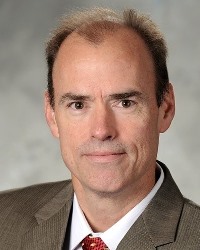
John R. Barry is a Professor at the School of Electrical and Computer Engineering, Georgia Institute of Technology. He holds a Ph.D. in Electrical Engineering from UC Berkeley (1992) and previously worked at Bell Communications Research, IBM, Hughes Aircraft, and General Dynamics. His research spans communication theory , wireless systems , optical communications , and magnetic recording , with a focus on modulation, coding, synchronization, and equalization . Education : B.S., State University of New York at Buffalo (1986) M.S., University of California at Berkeley (1987) Ph.D., University of California at Berkeley (1992) His recent journal and conference publications address multi-cell MIMO , polar codes for recording , two-dimensional magnetic recording , and joint radar-communication systems . Articles span IEEE Transactions on Magnetics , IEEE Transactions on Communications , and Globecom conferences, covering topics like timing recovery at low SNR , iterative equalization , and space-time coding . Scientific Awards : David J. Griep Memorial Prize (1992) Eliahu Jury Award (1993) NSF Research Initiation Award (1993) IBM Faculty Development Award (1993) Senior Member, IEEE He has advised 15 Ph.D. students and 2 M.S. students, including Hyuncheol Park , Chen-Chu Yeh , and Elnaz Sadeghian , all pursuing careers in academia and industry. His lab has received grants for iterative timing recovery , multi-input multi-output (MIMO) systems , and optical wireless communication . Professor Barry's research group has contributed to patents in timing recovery and MIMO detection, with applications in wireless and optical systems. He served as Guest Editor for the IEEE Journal on Selected Areas in Communications and Technical Program Chair for IEEE Globecom 2013 .
Prof. Rosario Nunzio Mantegna is a Full Professor in the Department of Physics and Chemistry - Emilio Segrè at the University of Palermo (Unipa), Italy. He has held office hours in Building 18, Viale delle Scienze, focusing on appointments via email at rosario.mantegna@unipa.it. Research Interests: Econophysics, Complex Networks, Financial Market Dynamics, Air Traffic Systems, and Statistical Physics Applications. Methodological Expertise: Network Validation, Correlation Filtering, Hierarchical Clustering, and Stochastic Modeling. His work bridges physics, finance, and data science through network-based approaches to complex systems. Key contributions include analyzing financial indices, market lead-lag relationships, and air traffic networks. Publications span interdisciplinary topics from autism spectrum disorders to volcanic impact on ATM systems.
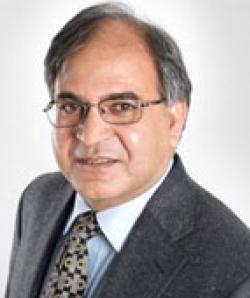
Kamlesh Mathur is a Professor and Chair of the Operations Department at the Weatherhead School of Management, Case Western Reserve University. He has been affiliated with the institution since his initial appointment in 1980 and contributes to supply chain logistics, vehicle routing, and service center location optimization. Education: PhD (Case Western Reserve University, 1980), MS (Wayne State University, 1976), MTech (IIT Kanpur, 1975), BE (Engineering College Jodhpur, 1972) His research focuses on supply chain distribution, emphasizing vehicle routing efficiency and service center location strategies . Recent publications highlight stochastic optimization, multi-echelon logistics, and reverse supply chain design, with applications in manufacturing and telecommunications. Key trends in his work include location-allocation modeling , heuristic algorithm development , and interactive software systems for operations research problems, reflecting interdisciplinary applications from biomedical engineering to radio frequency management. Dr. Mathur teaches courses in business statistics, predictive modeling, and global supply chain logistics. He serves on the editorial review board of the Journal of Business Logistics and is a long-standing member of INFORMS.
Shigeru Shimamoto is a Professor at Waseda University's School of Fundamental Science and Engineering, Faculty of Science and Engineering. His research spans wireless communication systems, biomedical sensing technologies, and intelligent transportation solutions. Since 2014, he has led the Communication and Computer Engineering department at Waseda University, previously serving as Director of the Global Information and Telecommunication Institute (2020-2024). 2008: Visiting Professor at Stanford University's Electrical Engineering 2000-2002: Research Assistant at University of Electro-Communications Key research areas include: Wireless Communication: OTFS modulation, NOMA, RIS-aided systems, and microwave-based vital sensing Smart Healthcare: Non-contact blood pressure monitoring, SpO2 estimation using microwave reflection Transportation Optimization: On-street parking analysis, traffic flow modeling, and energy-efficient vehicular networks Awarded the 2024 Commendation for Science and Technology from MEXT, his work demonstrates strong interdisciplinary impact combining communication engineering with medical applications. Recent publications focus on machine learning integration in gesture recognition, vehicular detection, and resource allocation for autonomous systems.
Prashant Krishnamurthy is a Professor at the University of Pittsburgh's School of Computing and Information , where he teaches foundational and advanced courses in wireless networks and cryptography. As a cofounder of the national Center of Academic Excellence (CAE) in Information Assurance Education and Research, he has driven curriculum development and secured over $5 million in grants from the National Science Foundation and the Commonwealth of Pennsylvania. Research Focus: Wireless network security, location-based systems, spectrum policy, and privacy-preserving technologies Grants: Served as PI/co-PI for major NSF and state-funded initiatives Labs: Cofounder of the Laboratory for Education and Research in Security Assured Information Systems (LERSAIS) His work bridges technical innovation with policy implications, including spectrum virtualization, secure IoT frameworks, and combating decentralized finance (DeFi) vulnerabilities. Recent publications highlight interests in quantum network routing, digital twins for smart homes, and machine learning applications in network design. The most recent 15 articles reveal expertise in quantum networking , DeFi security , IoT privacy , and resilient wireless architectures . Topics span zero-trust frameworks, spectrum sharing, and dynamic task assignment in smart environments. While no specific scientific awards are listed, his grants and lab leadership underscore significant contributions to cybersecurity education and research.