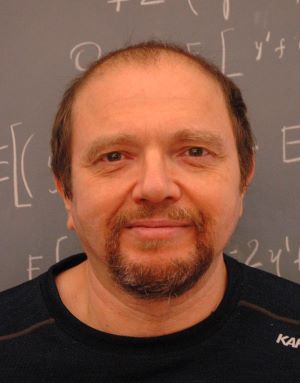
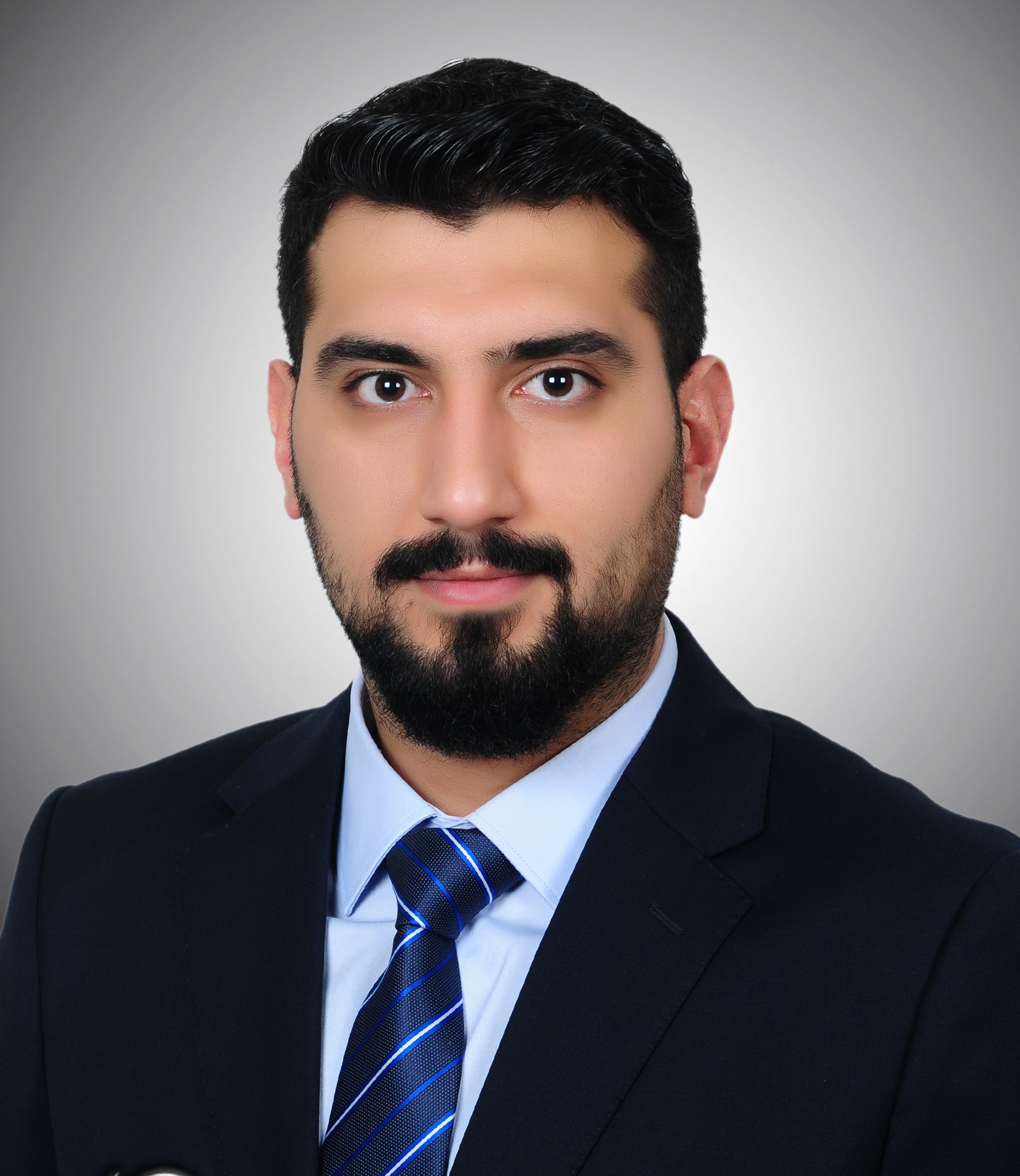
Mohamed Nabil Lokbani is a Lecturer and Chief of Laboratories (IT Director) at the Department of Computer Science and Operational Research within the Faculty of Arts and Sciences at the University of Montreal . Holding a Ph.D. in Automatic and Signal Processing (1993) from Paris-XI University, he has been teaching since 1999 and managing the department's technical support team since 2007. Education : Doctorate in Automatic and Signal Processing (1993), Paris-XI University Master's (DEA) in Automatic and Signal Processing (1990), Paris-XI University Electrical Engineering Degree (1989), Houari Boumedienne University Research Interests span speech recognition algorithms, bi-text alignment tools, cross-platform software portability, and programming education. He developed the Aladin translation memory tool and focuses on practical software solutions for linguistic and engineering challenges. Teaching includes courses like: Advanced C++ Programming , Big Data Processing , Android Mobile Development , and foundational Java/Python courses. His lecture notes for these courses are frequently updated. Publications reflect expertise in speech recognition, software portability, and translation technology, with technical reports dating from 1990 to 2023. Professional Roles : Chief of Laboratories (IT Director) at DIRO since 2007 Technical Support Team Member (2000-2007) Graduate Studies Committee member since 2004 Researcher at L2S Supelec and CNET France Telecom
Brennan Klein is an Assistant Teaching Professor in the Department of Physics at Northeastern University, with dual affiliations at the Network Science Institute and the Institute for Experiential AI. He concurrently serves as Data for Justice Fellow at Harvard University's Institute on Policing, Incarceration, and Public Safety within the Hutchins Center for African and African American Research. As director of the Complexity & Society Lab (&-Lab), he leads interdisciplinary research bridging network science, complex systems theory, and social justice applications. Education: PhD in Network Science, Northeastern University (2020) BA in Cognitive Science & Psychology, Swarthmore College (2014) Dr. Klein's research program integrates two complementary strands: developing theoretical frameworks for characterizing dynamics, structure, and scale in complex networks, and applying these tools to analyze systemic inequalities in public health and criminal justice systems. His work combines information theory, Bayesian inference, and network science to uncover emergent mechanisms driving social phenomena while developing practical interventions for more equitable systems. Analysis of his recent publications reveals a strong trajectory connecting fundamental network theory with real-world societal challenges. His work spans sports analytics, pandemic response modeling, criminal justice reform, and consciousness studies, demonstrating both methodological innovation and practical impact across diverse domains. The publications consistently feature interdisciplinary collaboration and emphasize both theoretical advancement and social application. Scientific Recognition: Best paper award for 'Spin glass systems as collective active inference' (2023) Dr. Klein actively mentors PhD students and postdoctoral researchers through the Complexity & Society Lab, fostering collaborations across physics, data science, sociology, and public policy. His research has secured funding for projects addressing criminal justice reform, public health infrastructure, and sports analytics applications, demonstrating the practical relevance of his theoretical work. The Complexity & Society Lab operates at the intersection of theoretical network science and social impact, with current projects examining urban infrastructure networks, criminal justice disparities, sports performance analytics, and neural network structures. This integrative approach reflects Dr. Klein's commitment to advancing both scientific understanding and social progress through network science.
Associate Professor İlkay Doğan is affiliated with Gaziantep University, Faculty of Medicine as an Associate Professor in the Department of Basic Medical Sciences . His academic journey includes a PhD in Biostatistics from Eskişehir Osmangazi University (2015), an MSc in Statistics from Afyon Kocatepe University (2012), and a Licence in Mathematics from Balıkesir University (2010). Current Position: Associate Professor, Gaziantep University Academic Rank: Associate Professor Research Interests span biostatistical methodology, medical informatics, structural equation modeling, and sports analytics. He investigates: Statistical models in clinical research Artificial intelligence applications in healthcare Game statistics in professional sports Public health data analysis Bioinformatics in disease diagnosis Sports science and athlete performance Recent Article Trends reflect his expertise in medical AI literacy, structural modeling comparisons, and sports/health data analysis. His work appears in journals like Journal of Medical Screening and European Journal of Therapeutics . Scientific Awards include a TÜBİTAK Domestic Doctoral Scholarship (2015) . He has contributed to 16 funded projects and served as editor for European Journal of Therapeutics .
Dr. Borysław Paulewicz is an Assistant Professor in the Department of Experimental Psychology at Jagiellonian University's Faculty of Philosophy. Previously taught cognitive psychology and psychometrics at SWPS University for a decade. His work bridges cognitive psychology, mathematical methodology, and meta-theoretical foundations of psychology, with a focus on metacognition and causal inference. Current affiliations: Jagiellonian University, Faculty of Philosophy, Department of Experimental Psychology Past affiliations: SWPS University of Social Sciences and Humanities Research Interests: Specializing in causal/Bayesian inference applications, development of hierarchical generalized linear models, and formal definitions of measurement invariance. His projects explore metacognition, consciousness, and placebo mechanisms through National Science Centre grants (MAESTRO, HARMONIA, SONATA BIS/SONATA programs). Academic Contributions: Created R libraries for psychometric models, formulated causal-theoretical measurement frameworks, and authored a GitHub-hosted book on mathematics for psychologists. Published extensively in metacognition, signal detection theory, and causal modeling. Projects: Key investigator in studies on pain unlearning, metacognitive mechanisms, and cognitive control. Collaborated with Agata Blaut on emotional disorder biases, Michał Wierzchoń on consciousness, and Marta Siedlecka on metacognition.
Dr. Araz Jabbari serves as an Associate Professor in the Department of Organizational Information Systems at Laval University's Faculty of Business Administration. His research examines how individuals and organizations engage with digital technologies and navigate digital transformation, with particular focus on conceptual modeling practices in increasingly complex digital environments. Dr. Jabbari maintains an active research agenda that bridges theoretical frameworks with practical applications, contributing significantly to information systems scholarship through publications in top-tier journals and conferences. Dr. Jabbari's academic foundation includes: Ph.D. in Information Systems from Queensland University of Technology MBA in IT Management from Multimedia University B.Sc. in Mathematics from University of Urmia Dr. Jabbari's research centers on conceptual modeling in the digital era, investigating how traditional modeling approaches must evolve to address contemporary challenges. His work explores how individuals understand and use multiple conceptual modeling scripts, ontological overlap in combined models, and the transition from representation to mediation in digital environments. Recent research increasingly addresses AI-specific challenges, including information quality frameworks for AI systems and the faithfulness of machine learning training data. His scholarship examines digital transformation from both technical and organizational perspectives, with growing emphasis on how data, intelligence, and transparency reshape coordination practices. Dr. Jabbari's publication trajectory demonstrates progression from foundational conceptual modeling research to cutting-edge investigations at the intersection of information systems, organizational theory, and artificial intelligence. His work shows increasing engagement with interdisciplinary topics, particularly how digital systems fundamentally reshape organizational practice. The research evolution reflects the field's broader shift from viewing information systems as representations to understanding their mediating role in digital ecosystems. Dr. Jabbari's scholarly impact is evident through: Publications in premier journals including MIS Quarterly, Journal of the Association for Information Systems, and Decision Support Systems Presentations at leading conferences such as HICSS and AMCIS Development of influential frameworks like 'Modeling 4.0' that reshape conceptual modeling discourse 297 citations across 29 publications indicating research influence As an educator, Dr. Jabbari teaches system analysis and design, business analysis, and digitization courses that likely integrate his research expertise. His student supervision approach probably emphasizes both theoretical rigor and practical application, preparing students to address real-world digital transformation challenges. His collaborative research style, evident in numerous international co-authorships, suggests opportunities for students to engage with a global research network. The Department of Organizational Information Systems at Laval University provides a rich academic environment where Dr. Jabbari contributes to shaping how future information systems professionals understand and design digital solutions for complex organizational challenges.
Michael Norrish is an Associate Professor at the School of Computing, Australian National University (ANU) , specializing in formal methods, programming language semantics, and interactive theorem proving. His career spans roles at NICTA, Data61, and ANU, with a focus on mechanised mathematics and verified systems. PhD in Computer Science (University of Cambridge, 1999) Undergraduate degree from Victoria University of Wellington His research bridges interactive theorem-proving (ITP) systems like HOL4 with real-world systems verification, particularly in programming languages and compilers. He leads the CakeML project, developing a verified compiler for functional languages. His work intersects formal verification with practical system design, including projects on reproducibility debt in scientific software and verified processors. Recent publications highlight verified compilation techniques, reproducibility challenges, and Kolmogorov complexity formalization. He actively participates in conference program committees (e.g., CPP, PLDI) and promotes trustworthy systems development through tools like HOL4. Current affiliations: ANU, CakeML Project, Trustworthy Systems Research Group (UNSW) Collaborations: Chalmers University (postdoc opportunities), seL4 microkernel ecosystem
Xin Xia is a Qiushi Distinguished Professor at the College of Computer Science and Technology, Zhejiang University. Previously, he served as the Chief Expert and Director of the Software Engineering Application Technology Lab at Huawei Technologies, China from 2021 to 2025. His academic career spans software engineering research with a focus on AI applications in the field. Ph.D. from Zhejiang University (2014) Supervised by Prof. Xiaohu Yang and Prof. Jianling Sun Visiting student at Singapore Management University (2012-2014) under Prof. David Lo Xin Xia's research primarily focuses on applying data science techniques to software engineering problems. His work spans AI for Software Engineering, Mining Software Repositories, Empirical Software Engineering, and Large Language Models for code understanding and generation. He employs data mining, information retrieval, natural language processing, search-based algorithms, and program analysis to transform software engineering data into automated tools and insights. His recent publications show a strong trend toward leveraging Large Language Models for various software engineering tasks, including code generation, vulnerability detection, and test generation. He has been exploring how to make these models more effective, reliable, and practical for real-world software development scenarios, with a particular focus on Java and Python ecosystems. ACM SIGSOFT Early Career Researcher Award (2022) ACM Distinguished Member 16 best or distinguished paper awards, including nine ACM SIGSOFT Distinguished Paper Awards Recipient of the IEEE Transactions on Software Engineering 2021 Best Paper Award Runner-Up Xin Xia has advised numerous students who have gone on to publish in top software engineering venues. His research has been supported by grants from both academic institutions and industry partners, particularly during his time at Huawei. He actively collaborates with researchers worldwide, especially with David Lo at Singapore Management University. At Zhejiang University, Professor Xia leads research in the intersection of AI and Software Engineering. His work has practical applications in improving developer productivity through automated tools that analyze software repositories and provide actionable insights.
Shangwen Wang is an Assistant Professor in the School of Computer Science at National University of Defense Technology (NUDT) in Changsha, China. He earned his Bachelor's degree in June 2017, Master's degree in December 2019, and Ph.D. in December 2023, all from NUDT. During his graduate studies, he was supervised by Professor Xiaoguang Mao. From May 2022 to July 2023, he was a visiting student at Southern University of Science and Technology under Professor Yepang Liu. His educational background includes: Ph.D. in Software Engineering, NUDT (2020.3-2023.12), supervised by Prof. Xiaoguang Mao Visiting Scholar, SUSTech (2022.5-2023.7), supervised by Prof. Yepang Liu M.A. in Software Engineering, NUDT (2017.9-2019.12), supervised by Prof. Xiaoguang Mao B.A. in Software Engineering, NUDT (2013.9-2017.6) Wang's research focuses on program repair, program comprehension, mining software repositories, software maintenance and evolution, software testing, and AI for Software Engineering. His work bridges traditional software engineering techniques with modern AI approaches, particularly leveraging large language models for various software engineering tasks. He has made significant contributions to automated program repair, fault localization, vulnerability detection, and code generation. His research demonstrates a strong emphasis on empirical validation and practical applicability to real-world software development challenges. His recent publications show a clear trend toward integrating large language models with traditional software engineering tasks. The 15 most recent articles reveal a focus on applying LLMs to program repair, fault localization, vulnerability detection, and code generation, while maintaining strong empirical foundations. His work spans both theoretical advancements and practical tool development, with applications in software security, testing, and maintenance. His notable achievements include: CCF Outstanding Doctoral Dissertation (CCF优博) 2024 Outstanding Doctoral Graduates, NUDT, 2023 Multiple distinguished paper awards including ACM SIGSOFT Distinguished Paper Award (ISSTA'24) and IEEE TCSE Distinguished Paper Awards (ICSME'22, SANER'22) Prestigious scholarships from NUDT throughout his academic career As an active member of the software engineering community, Wang serves on numerous program committees for top conferences including ICSE, ASE, ESEC/FSE, and ISSTA. He has also contributed to teaching as a teaching assistant for courses such as Compiler, Python Programming, Discrete Mathematics, and C++ Programming. His research group appears to be actively mentoring students, as evidenced by his role as corresponding author on multiple student-led publications. Wang maintains an active research presence with collaborations across multiple institutions in China. His work demonstrates a clear trajectory from traditional program analysis techniques toward integrating cutting-edge AI approaches, particularly large language models, into software engineering practices.
Yao Wan is an Associate Professor at the School of Computer Science and Technology, Huazhong University of Science and Technology (HUST) in Wuhan, China. He leads the ONE Lab, focused on empowering machines to interact with the physical world through unified natural language interfaces (Language + X paradigm). He obtained his Ph.D. from Zhejiang University and has research visiting experience at Chinese University of Hong Kong, University of Technology Sydney, and University of Illinois Chicago. His research bridges Artificial Intelligence and Software Engineering, with core interests in: Natural Language Processing for code intelligence Large Language Model applications Multimodal learning across code, vision, and UI domains Program analysis and code generation Software engineering automation His publications demonstrate strong focus on applying transformer-based models to software engineering challenges, with recent work expanding into multimodal applications. Research spans code model security, GUI generation, data visualization, and compiler understanding, predominantly using deep learning approaches. Awards: IEEE TCSE Distinguished Paper Award for SANER 2025 publication He actively mentors students through the ONE Lab and serves on program committees for top conferences including ASE, ISSTA, and ICSE. He is seeking highly-motivated undergraduate researchers to join his team. The ONE Lab conducts cutting-edge research at the intersection of programming languages and artificial intelligence, with ongoing projects in code intelligence, multimodal learning, and LLM applications for software engineering.
Stéphane Ducasse serves as Research Professor and Team Leader of EVREF at Inria, where he also manages the Moose and Pharo platforms from his office at Building B, Haute Borne. His work bridges theoretical research and practical tool development in software language engineering. Research Focus Core expertise in dynamically typed languages and reflection mechanisms Specialization in virtual machine architecture and legacy system migration Pioneering work on object-oriented system analysis through the Moose platform Current emphasis on resource-efficient software development techniques Ducasse's research program consistently addresses industrial-strength challenges in language design, with particular attention to adaptability in evolving systems and security implications of reflective capabilities. His team's contributions enable practical transformation of complex information systems. Academic Leadership With over 20 supervised PhD theses spanning from 2015 to 2024, Ducasse has mentored researchers tackling critical problems in language virtualization, dynamic updating, and code migration. His advisees have produced significant work including Fortran modernization frameworks, polyglot VM architectures, and frugal software profilers. Platform Development As founder and lead of the Pharo project, Ducasse drives innovation in pure object-oriented environments, while his stewardship of the Moose analysis platform provides industry-standard tooling for software comprehension. These open-source initiatives demonstrate his commitment to bridging academic research and real-world software engineering practice.