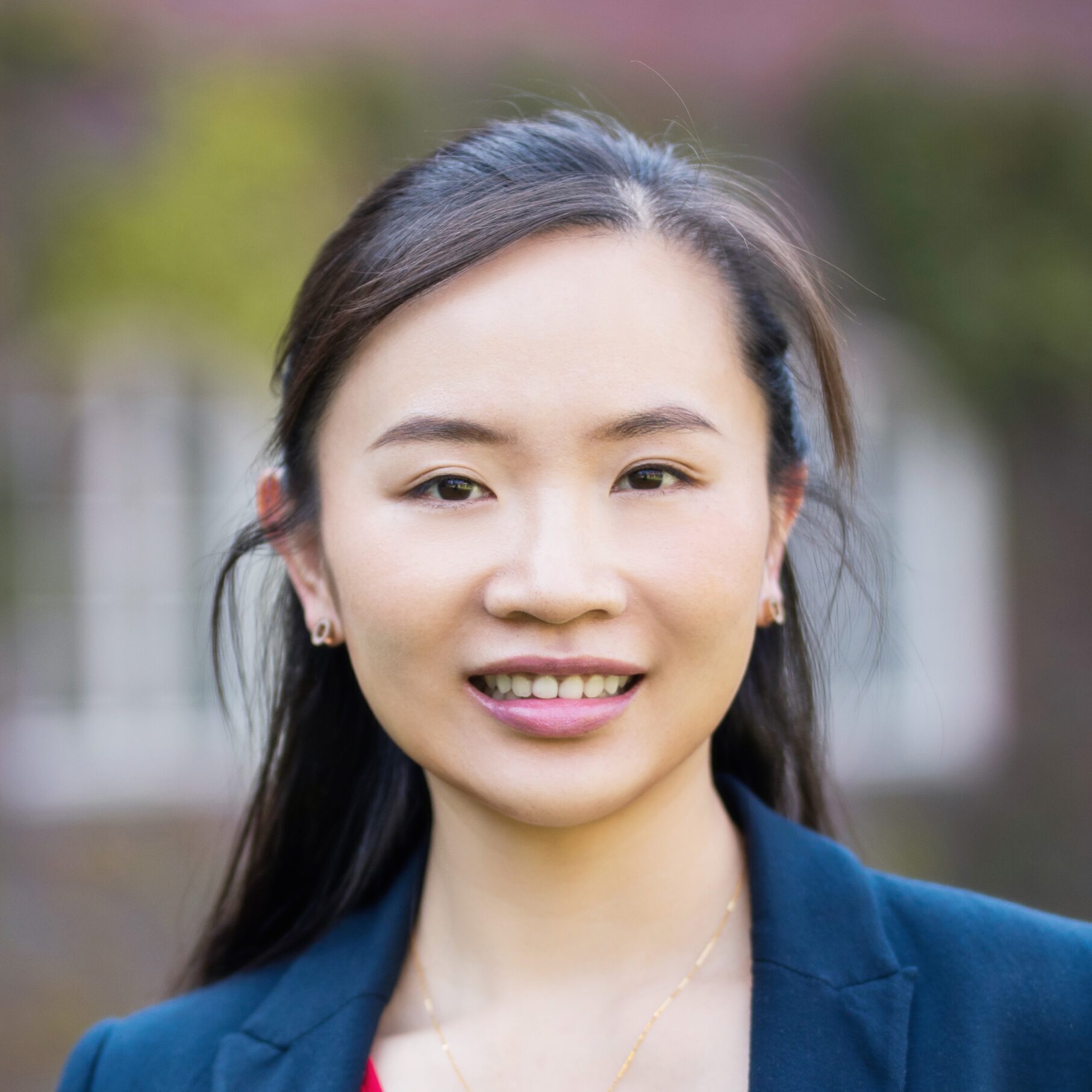
Kiran Satheeshchandran is a Post-Doctoral Researcher at the Department of Fluid Mechanics, KTH Royal Institute of Technology in Stockholm, Sweden. He currently assists in teaching the courses Fluid Mechanics, Basic Course (SG1217) and Mechanics II (SG1140) . His research focuses on advanced fluid dynamics topics including turbulence modeling, computational simulations, and multiphase flow systems. While specific educational background details are not provided in the text, his affiliation with KTH’s fluid mechanics department suggests expertise in theoretical and applied mechanics. No scientific awards or grants are explicitly mentioned, though his role as a postdoc indicates active research involvement. He is based at Osquars Backe 18 in Stockholm, occupying room 2522. His work likely contributes to KTH’s broader engineering and applied physics research initiatives.
Chong Qi is an Associate Professor in the Department of Physics at KTH Royal Institute of Technology. His research focuses on theoretical nuclear physics, many-body systems, and computational physics. He has contributed to studies on nuclear structure, alpha/cluster decay, and shell-model calculations. Key roles include editorial positions at journals like European Physics Journal A and Frontiers in Physics, as well as leadership in the Swedish Physics Society. He has received awards such as the Göran Gustafsson Prize and World Scientific's Distinguished Reviewer recognition. Education: PhD (2009, Peking University), Postdoc (2009-2011, KTH), Docent (2015, KTH). Extensive teaching in theoretical nuclear physics, computational methods, and modern physics courses. Research Interests: Nuclear force dynamics, pairing correlations, nuclear astrophysics, and large-scale shell-model techniques. Collaborations include researchers at KTH and international institutions. Recent Work: Recent publications explore neutron drip-line effects on r-processes, seniority symmetry in Rh-95/Ru-94, and computational tools like PairDiag. His work bridges theoretical frameworks with experimental data, addressing collective nuclear phenomena and decay mechanisms. Awards & Grants: Multiple reviewer accolades, editorial leadership, and grants supporting computational infrastructure and international collaborations. Active in organizing workshops on nuclear decay and many-body physics. Advising: Supervises master/bachelor projects on topics like r-process nucleosynthesis and Geiger-Nuttall law validation. Hosts visiting students and promotes interdisciplinary research.
Sean Roshan Ghias is a Researcher at the Department of Nuclear Science & Engineering at KTH Royal Institute of Technology. He holds a role as a Research Engineer and is actively involved in teaching and course management. His professional responsibilities include instructing courses on nuclear safety, reactor dynamics, and sustainable energy technologies. He contributes to academic leadership through roles such as course manager for 'Leadership for Safety in Nuclear Operations' and as a teacher in courses like 'Compact Reactor Simulator' and 'Sustainable Energy Conversion Technology.' His work integrates theoretical reactor kinetics with practical safety protocols in nuclear operations. No scientific awards or grants are explicitly mentioned in the provided information. His research interests are inferred from his teaching portfolio, focusing on nuclear safety mechanisms, reactor dynamics optimization, and sustainable energy systems. Laboratory or team affiliations are not detailed in the text, but his involvement in course development suggests contributions to educational infrastructure in nuclear engineering fields.
Nicusor Timneanu is a Senior Lecturer/Associate Professor in Biophysics at the Department of Physics and Astronomy, Uppsala University, and Head of the X-ray Photon Science Division. He holds a PhD in Elementary Particle Physics (2002) and a Docent in Physics (2009). His research focuses on ultrafast X-ray science, including X-ray laser-induced molecular dynamics, protein structure determination, and radiation damage mechanisms. He is also a Distinguished University Teacher, actively involved in pedagogical development and program coordination for the Master’s Programme in Biophysics. Affiliations: Head of Division for X-ray Photon Science Senior Lecturer/Associate Professor in Biophysics Programme Coordinator for the Master’s Programme in Biophysics M ember of the Biophysics Network at Uppsala University Research Interests: Combines experimental and computational approaches to study ultrafast phenomena in biomolecules using X-ray free-electron lasers. Key areas include nonthermal radiation effects, protein imaging, and radiation damage mitigation. His work bridges physics, biophysics, and computational science. Publications & Grants: Authored over 100 peer-reviewed articles (h-index 40) and secured funding from the Swedish Research Council, STINT, and European XFEL. Notable contributions include the 'diffraction-before-destruction' method for protein structure analysis and studies on ultrafast water heating. Teaching & Awards: Led courses in Quantum Mechanics and Free Electron Laser Science, and developed teacher training programs. Recognized with the Thalen Prize (2015) and Distinguished University Teacher title (2023). Supervised 9 PhD students and multiple Master’s theses. Labs & Collaborations: Involved with European XFEL facilities and international networks. Active in developing MolDStruct, a computational tool for simulating X-ray laser interactions with matter.
Tomas Ekeberg is a Researcher at the Department of Cell and Molecular Biology; Molecular Biophysics at Uppsala University, part of the Faculty of Science and Engineering. His work focuses on advanced imaging techniques using X-ray free-electron lasers (XFELs) and coherent diffraction imaging to study biological macromolecules, nanoparticles, and heterogeneous samples. He specializes in applying machine learning and computational methods to improve phase retrieval, noise reduction, and 3D reconstruction in single-particle imaging. Ekeberg's research addresses challenges such as background noise impact, orientation estimation in particle imaging, and high-throughput analysis of nanoparticle ensembles. He has contributed to innovations like 3D-printed sample delivery systems for XFEL experiments and unsupervised learning approaches for heterogeneous sample characterization. His work bridges experimental biophysics, computational science, and materials engineering. Key projects include imaging single proteins with ultrafast X-ray diffraction, resolving shape variations in gold nanoparticles, and developing tools like the Condor simulation framework for flash X-ray imaging. His research has implications for structural biology, nanotechnology, and the advancement of X-ray photon science.
Örjan Bodin is a Professor and Head of Subject at Stockholm University, affiliated with the Stockholm Resilience Centre and the Digital Futures Faculty. He specializes in integrating social, ecological, and governance systems through network analysis and mixed methods. His research focuses on collaborative governance, institutional fit, and ecosystem resilience, addressing challenges such as environmental policy coordination and smallholder farming dynamics. Key projects include the Dragons initiative on algorithmic governance and TAELabs, which explores agroecological innovations. Bodin has contributed to high-impact publications in Policy Studies Journal and Nature Communications, analyzing topics like political attention’s role in governance networks and spatial resilience in marine ecosystems. His work bridges theory and practice, emphasizing interdisciplinary solutions for sustainability.
Dejiu Chen is an Associate Professor in the Unit of Mechatronics at KTH Royal Institute of Technology's Digital Futures Faculty. His research focuses on trustworthy human-compatible Cyber-Physical Systems (CPS), with applications in automotive and medical domains. He holds a Docent title and leads projects addressing system reliability, self-management, and safety assurance. Research interests include embedded control systems, anomaly detection, formal modeling, and AI integration for CPS. Key projects include TRUSST-E (trustable embedded systems), SALIENCE4CAV (autonomous vehicle safety), and SocketSense (IoMT wearable sensors). Publications span over 100 peer-reviewed articles, emphasizing topics like graph neural networks, digital twins, and fault management. He collaborates with industry partners through initiatives like the Mechatronics Twin Framework and condition monitoring methodologies. Teaches courses such as Embedded Systems Design and Smart CPS for Sustainability. Active in grants and industrial partnerships, with a focus on advancing CPS resilience and industrial relevance.
Wei Liu is an Assistant Professor at KTH Royal Institute of Technology and a member of Digital Futures, a cross-disciplinary research center focused on developing digital technologies to address societal challenges. He serves as a Former PI of the C3.ai DTI project 'AI-based prediction of urban climate and its impact on built environments' and Co-PI of the project 'Faster-than-real-time and high-resolution simulation of fluid flow in engineering applications: indoor climate as a pilot.' His research interests center on leveraging AI and computational methods to model urban climate, optimize built environments, and simulate fluid dynamics for engineering applications. Digital Futures, his affiliated institution, collaborates with Stockholm University and RISE Research Institutes of Sweden to advance industrially relevant innovations. Contact information: +46 8 790 86 71 | wei.liu@byv.kth.se | Osquars Backe 5, Floor 2, 100 44 Stockholm, Sweden
Ingo Sander is a Professor in Electronic Systems Design at KTH Royal Institute of Technology, affiliated with the Digital Futures Faculty and the Division of Electronics and Embedded Systems. He joined KTH in 1993 and has held his current professorship since 2018. His research focuses on formal system design methodologies like ForSyDe, emphasizing embedded systems, mixed-criticality applications, and design automation. He co-founded the cross-disciplinary Digital Futures research center, which addresses societal challenges through digital technology innovation. Education: MSc in Electrical Engineering (Technical University of Braunschweig, 1990), PhD and Docent at KTH (2003, 2009). Professional experience includes work at Ericsson (1991–1993). Research Interests: Design methodologies for embedded systems, models of computation (MoCs), formal verification, and cyber-physical systems. Key contributions include the ForSyDe framework and design space exploration techniques for multiprocessor platforms. His work bridges theoretical foundations with practical implementations, targeting safety-critical and high-performance embedded systems. Teaching: Ingo Sander supervises numerous master’s degree projects in computer engineering, electrical engineering, and ICT innovation. He leads courses on embedded software, systems design, and simulation. Labs & Projects: Digital Futures collaborates with Stockholm University and RISE, advancing innovations in digital technologies. Sander’s projects include the SAFEPOWER initiative for energy-efficient mixed-criticality systems and CONTREX for control systems design.
Ruoli Wang is an Associate Professor at the Department of Engineering Mechanics, KTH Royal Institute of Technology. She holds a BEng (2004) from Southeast University and MSc/PhD (2007/2012) in Engineering Mechanics from KTH. Her research focuses on biomechanical methodologies for neuromusculoskeletal systems, combining medical imaging, musculoskeletal modeling, and optimization. She leads projects on digital twins for neurorehabilitation and PelvicMIM for childbirth-related injuries. She is a member of the Promobilia MoveAbility Lab and affiliated with the Division of Paediatric Neurology at Karolinska Institutet. Awards include the ISB Clinical Biomechanics Award (2023) and Docent title in Biomechanics (2022). Her research interests include in vivo muscle morphology quantification, neural-muscle interaction, and wearable sensor technologies. She teaches courses like Biomechanics of Human Movement and oversees degree projects in Engineering Physics and Mechanics. Major grants include funding from Stiftelsen Promobilia, Carlssons Stiftelse, and the Swedish Research Council. Her lab develops non-invasive methods to estimate muscle neuromechanics, with applications in clinical assessment and biofeedback-based rehabilitation. Current projects address personalized medicine in neurorehabilitation and real-time musculotendon parameter estimation.
Magnus Wiktorsson is a Professor at KTH Royal Institute of Technology's Department of Sustainable Production Development within the Digital Futures Faculty. His work focuses on smart production logistics, sustainability, and digital transformation in manufacturing systems. He explores applications of machine learning, IoT, blockchain, and digital twins to enhance supply chain visibility, optimize production processes, and achieve circular economy goals. His research integrates technical and socio-technical perspectives, addressing challenges in human-robot collaboration, data-driven decision-making, and Industry 4.0/5.0 transitions. Key themes include material efficiency, real-time data utilization, and participatory modeling in urban and industrial logistics. Recent work emphasizes frameworks for adaptive scheduling, explainable AI in logistics, and blockchain-based collaboration models. Wiktorsson collaborates with industry partners to validate frameworks through case studies, pilot projects, and simulation-based methodologies. His contributions span academic publications and contributions to strategic innovation programs like Produktion2030, focusing on sustainability and resilience in manufacturing systems.
Johan Hoffman is a Professor of Numerical Analysis at KTH Royal Institute of Technology, Stockholm, Sweden, and Deputy Head of the Division of Computational Science and Technology. He leads research in computational science, with a focus on fluid dynamics, biomedical engineering, and numerical methods. His work integrates fundamental mathematics with applied research in aerodynamics, urban planning, renewable energy, and biomedicine. Hoffman is a founder of the FEniCS open-source software project and a partner in the EU’s GENEX project on digital twins. Education: Ph.D. in Applied Mathematics, Chalmers University of Technology Postdoctoral Fellow, Courant Institute, New York University Visiting Researcher at Oxford University, Stanford University, and others Research Interests: Hoffman’s research spans computational fluid dynamics, turbulence modeling, finite element methods, and biomedical applications such as cardiovascular simulations. He develops adaptive numerical methods and high-performance computing frameworks for complex systems. Publications Trends: Recent work emphasizes fluid-structure interaction in biomedical contexts (e.g., mitral valves), turbulence analysis, and multiphysics simulations in renewable energy. His methods prioritize stability, adaptivity, and scalability for large-scale problems. Awards: ERC Proof of Concept Grant (2015) Ingvar Carlsson Award (2005) Leslie Fox Prize (2005) Bill Morton Prize (2001) Advising & Grants: Hoffman’s funding includes grants from the Swedish Research Council, ERC, and EU Horizon 2020. He supervises research on digital twins, turbulence modeling, and biomedical simulation. His lab collaborates with industry and academic partners globally. Labs/Teams: Core contributor to the FEniCS project and leader of computational fluid dynamics teams at KTH, advancing open-source tools for multiphysics simulation.
Robert Lindroos is a Research Fellow at KTH Royal Institute of Technology, specializing in computational neuroscience and brain-inspired computing. He transitioned from a culinary background to academia, earning degrees in civil engineering, engineering physics (KTH), and a PhD in neuroscience (Karolinska Institutet). His research focuses on understanding neural mechanisms underlying cognition, particularly in olfactory processing and Parkinson's disease, conducted within the dBRAIN and Digital Futures initiatives. Key research interests include computational models of basal ganglia circuits, neuromodulation effects (dopamine/choline), and age-related sensory decline. Lindroos has explored odor identification deficits, synaptic plasticity in spiny projection neurons, and the neurocomputational basis of perceptual errors. His work bridges engineering principles with biological systems, aiming to develop brain-like computing paradigms. Publications span computational neuroscience (2011–2025), with recent emphasis on olfactory system modeling and neuromodulatory dynamics. His early work included lunar communication system design, showcasing interdisciplinary technical expertise. Lindroos collaborates with dBRAIN and Digital Futures at KTH, advancing computational approaches to neurological disorders and neural network simulation.
Hans Kaimre is a Researcher and Doctoral Student at Chalmers University of Technology, affiliated with the Department of Microtechnology and Nanoscience. His research focuses on vertical-cavity surface-emitting lasers (VCSELs), particularly addressing temperature dependence and high-speed optical communication applications. Kaimre’s work aims to enhance the performance and stability of VCSELs across extended temperature ranges, contributing to advancements in photonics and semiconductor technologies. His research interests center on optoelectronics, semiconductor laser design, and thermal management in photonics systems. Kaimre has published extensively on VCSEL optimization, including articles in IEEE Photonics Technology Letters and conference proceedings, as well as a Licentiate thesis on wide-temperature VCSEL behavior. His studies explore detuning effects, material science, and device engineering to improve laser performance for optical communication systems. While no scientific awards are explicitly noted, his publications reflect a strong focus on applied photonics research with implications for telecommunications and data transmission technologies. No advising roles or grants are detailed in the provided materials.
Lars-Gunnar Johansson is a Full Professor in the Department of Chemistry and Chemical Engineering at Chalmers University of Technology. His research focuses on high-temperature corrosion, materials degradation, and the development of corrosion-resistant alloys. He investigates oxidation, nitridation, and chloride-induced corrosion mechanisms in advanced materials, with applications in energy systems and industrial environments. Key research areas include the behavior of alumina-forming alloys, Mo(Si,Al)₂ composites, and FeCrAl-based materials under extreme conditions. His work employs advanced characterization techniques like neutron reflectivity and in-situ environmental SEM. He also explores protective coatings and surface engineering solutions to mitigate corrosion in biomass-fired boilers, solid oxide fuel cells, and other high-temperature applications. Publications highlight his contributions to understanding corrosion mechanisms, alloy optimization, and the interplay of environmental factors (e.g., H₂O, KCl, SO₂) on material durability. His research bridges fundamental science with industrial applications, aiming to improve material lifetimes in harsh environments.