- Theory of Deep Learning
- Kernel and random feature methods in high-dimension
- Non-convex optimization, implicit regularization, landscape analysis
- +۲ مورد دیگر
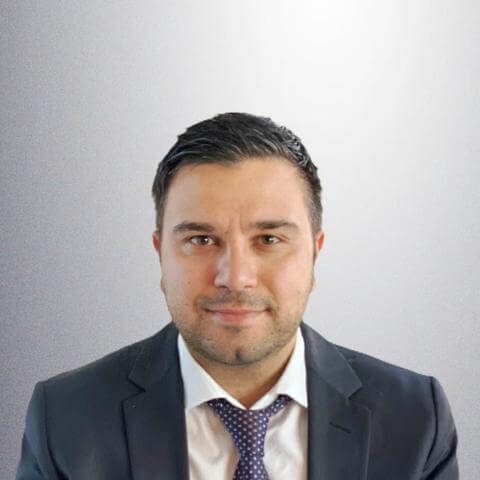
Theodor Misiakiewicz serves as an Assistant Professor in the Department of Statistics and Data Science at Yale University, based in Room 1049 of Kline Tower, New Haven, Connecticut. His research bridges statistics, machine learning, probability theory, and computer science with a core focus on developing theoretical foundations for deep learning algorithms. His academic background includes: PhD in Statistics from Stanford University under Prof. Andrea Montanari M.Sc. in Theoretical Physics from Ecole Normale Superieure de Paris B.Sc. in Mathematics from Ecole Normale Superieure de Paris Dr. Misiakiewicz's work centers on fundamental theoretical questions in machine learning, particularly examining deep learning through the lenses of kernel methods, random feature models, non-convex optimization landscapes, and high-dimensional probability. His approach integrates rigorous mathematical analysis with practical machine learning challenges to establish provable guarantees for modern algorithms. His publication record (2019-2025) demonstrates consistent contributions to understanding generalization in kernel methods, SGD dynamics in neural networks, and dimension-free bounds for deep learning models. These works collectively advance the mathematical framework for analyzing learning algorithms in high-dimensional regimes using tools from random matrix theory and statistical physics. He actively recruits PhD students through Yale's program and plans to hire postdoctoral scholars starting Summer 2025, while also welcoming undergraduate and graduate visitors to his research group. His mentorship focuses on training the next generation of theoretical machine learning researchers. Dr. Misiakiewicz leads a dedicated research team within Yale's Statistics and Data Science department that investigates the mathematical principles underlying artificial intelligence, maintaining an active seminar series and collaborative projects with international researchers.