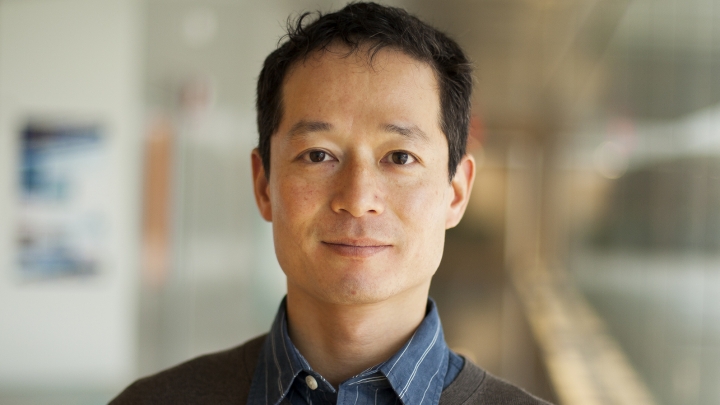
Professor Mohammad FARD is a faculty member at RMIT University's School of Engineering, specializing in Mechanical Engineering and Intelligent Systems. He leads research in autonomous vehicles, crash safety, and driver monitoring using AI. His industry experience includes six years at Nissan Technical Centre, focusing on vehicle body design. He holds a PhD from Tohoku University and has collaborated across Engineering, Health, and Science disciplines, achieving international media coverage for work on driver drowsiness and road safety. Research Interests: Autonomous Vehicles Advanced Crash Safety Driver State Monitoring AI in Noise/Vibration Human Factors/Ergonomics Teaching & Projects: Teaches Advanced CAE, Vehicle NVH, and research supervision in areas like crash simulation and vibration control. Current projects include Formula One safety barriers and driver education for autonomous vehicles. Awards & Labs: No awards listed. Active in cross-disciplinary teams and labs addressing automotive innovation and safety.
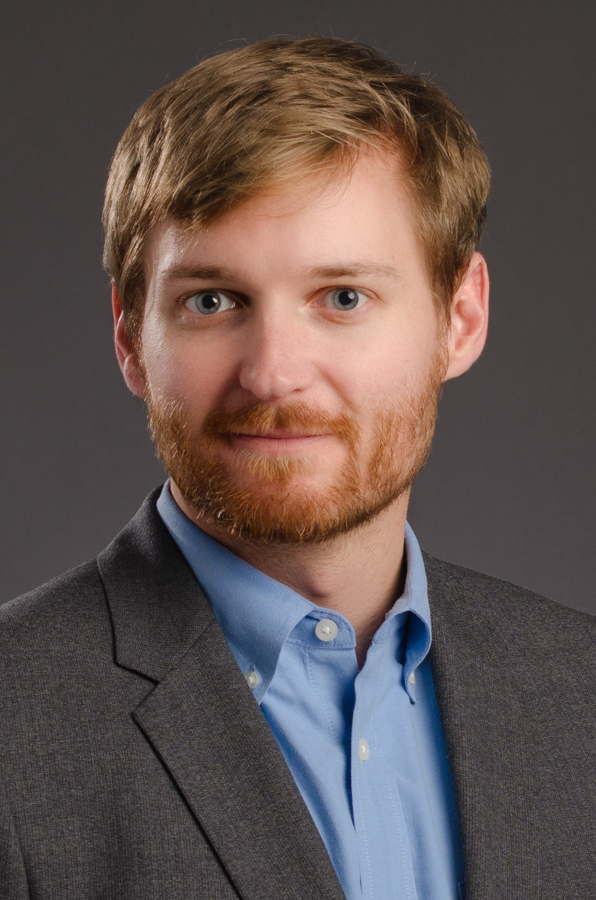
Brian Lawrence is an Assistant Professor in the Department of Mathematics at the University of Wisconsin–Madison, currently on leave as of 2025. Previously, he held positions at UCLA, the University of Chicago, and Columbia University, following doctoral studies at Stanford University under Akshay Venkatesh. His educational background includes: PhD in Mathematics from Stanford University (advisor: Akshay Venkatesh) Lawrence's research centers on arithmetic geometry, specializing in Diophantine problems through p-adic methods. His work develops innovative approaches to Mordell's conjecture, Shafarevich-type results, and rational point distribution using p-adic Hodge theory, étale cohomology, and period mappings. He bridges theoretical number theory with computational frameworks, particularly in algorithmic solutions for Diophantine equations. His publication trends reveal sustained focus on foundational Diophantine geometry problems, with recent work emphasizing conditional algorithms for the Mordell problem and sparsity phenomena in integral points. Collaborations with leading mathematicians like Venkatesh and Sawin demonstrate interdisciplinary engagement across number theory and algebraic geometry. Lawrence actively mentors undergraduate researchers, supervising projects on resultants, Hodge theory, and symmetric polynomials by students including Pramana Saldin, Yuchen Chen, Anuj Sakarda, and Spencer Dembner. His organizational roles include founding the Crystalline Cohomology seminar at Columbia and co-organizing the University of Chicago Number Theory Seminar, fostering collaborative research environments. He contributes extensively through expository notes on schemes, polynomials on lattices, and Fibonacci numbers modulo p, reflecting commitment to mathematical education and knowledge dissemination across multiple institutions.
Prof. Laura Leal-Taixé is a Professor at the Technical University of Munich (TUM) in the Department of Informatics, leading the Dynamic Vision and Learning group. She holds the Rudolf Mößbauer Tenure Track Assistant Professorship, promoted to W3 Associate Professorship in 2022. Her research focuses on computer vision and machine learning, particularly video analysis, multi-object tracking, and autonomous driving applications. Education: B.Sc./M.Sc. in Telecommunications Engineering (Technical University of Catalonia, UPC) Ph.D. in Information Processing (Leibniz University of Hannover, Germany) Postdoctoral Research at ETH Zürich (Switzerland) and TUM Research Interests: Laura’s work addresses challenges in video analysis, including motion analysis, semantic segmentation, and integrating social dynamics into urban traffic modeling. Her project socialMaps , funded by the Sofja Kovalevskaja Award, explores decoupling vehicle and pedestrian traffic using dynamic maps. Her research combines optimization techniques, deep learning, and sensor data for real-world applications like autonomous systems. Recent Trends: Her publications highlight advancements in multi-object tracking, 3D LiDAR segmentation, and trajectory forecasting, emphasizing neural networks and geometric approaches. Collaborations with industry and academia underscore her work’s practical impact. Awards: 2017 Sofja Kovalevskaja Award (€1.65M, Humboldt Foundation) 2017 DAAD Australia-German Joint Research Grant Travel grants from Women in CV, CVPR Doctoral Consortium, and Vodafone Foundation Labs & Projects: Leads the Dynamic Vision and Learning group at TUM, focusing on vision-based AI for autonomous systems and environmental monitoring. Active in developing datasets like DynamicEarthNet for semantic change analysis.
Angjoo Kanazawa is an Assistant Professor in the Department of Electrical Engineering and Computer Sciences (EECS) at the University of California, Berkeley. She leads the Kanazawa AI Research (KAIR) lab under the Berkeley Artificial Intelligence Research (BAIR) umbrella and serves on the advisory board of Wonder Dynamics. Her research focuses on the intersection of computer vision, computer graphics, and machine learning, with a particular emphasis on 4D reconstruction of dynamic scenes, neural radiance fields (NeRF), and systems that model human-environment interactions from 2D visual data. Education : Ph.D., Computer Science (2017), University of Maryland, College Park BA, Mathematics and Computer Science (2012), New York University (NYU) Her work aims to build systems that can capture, perceive, and understand complex 3D/4D worlds from photographs and videos, enabling applications in scene reconstruction, motion analysis, and generative modeling. She has pioneered techniques for scaling NeRFs across GPUs (NeRF-XL), developing open-source tools like nerfstudio and gsplat. Her recent publications focus on topics like self-occluded avatar recovery (SOAR), decentralized diffusion models, and 4D reconstruction of articulated objects for robotics. Kanazawa's research has been recognized with prestigious awards including the IEEE CS TCPAMI Young Researcher Award (2024) , Sloan Research Fellowship (2023) , and Google Faculty Research Award (2021) . Her lab has trained numerous students who now hold positions at leading institutions and companies like Anthropic, Meta Reality Labs, and Luma AI. Key Scientific Awards : IEEE CS TCPAMI Young Researcher Award (2024) Sloan Research Fellow (2023) Hellman Fellow (2022) Bakar Fellows Spark Award (2022) Google Faculty Research Award (2021) Her KAIR lab collaborates extensively with industry partners and academic institutions, including the Max Planck Institute and Google Research. She has served as an advisor for PhD students and postdocs who now lead teams at UC Berkeley, MIT, Stanford, and Luma AI, while her teaching includes graduate courses like CS 280A (Computer Vision) and CS 294-173 (Learning for 3D Vision).
Harvey Reall is a Professor of Theoretical Physics at the University of Cambridge , affiliated with the Department of Applied Mathematics and Theoretical Physics (DAMTP) and a Fellow of Trinity College . His research focuses on General Relativity and Effective Field Theory , particularly in the context of black hole mechanics , higher-dimensional gravity , and cosmic censorship . He has held prestigious positions including a Royal Society University Research Fellowship from 2005 to 2013. Education: PhD from DAMTP, University of Cambridge. Previous Appointments: Lecturer at the University of Nottingham (2005-2007); Postdoctoral positions at the Kavli Institute (2003-2005), Queen Mary University of London (2000-2003), and University of California, Santa Barbara (2003-2005). Reall's work explores the uniqueness and stability of black holes , causality in gravitational theories , and effective field theory approaches to gravity . His recent publications address nonperturbative second law formulations , event horizon dynamics , and axisymmetry theorems in extended theories of gravity. He has supervised numerous researchers including Aidan McSharry (2025-) , Maxime Gadioux (2022-) , and Iain Davies (2020-24) , contributing to the training of the next generation of physicists. Scientific Awards: Royal Society University Research Fellow (2005-2013)
Karl Gustafsson is a Professor at Stockholm University within the Department of Economic History and International Relations. His work bridges security studies , collective memory , and digital research methods in international relations. Current Role: Professor of International Relations, Stockholm University Previous Positions: Post-Doc at Lund University, Researcher at Swedish Institute of International Affairs Visiting Appointments: University of Tokyo, Osaka University, Keio University, Academia Sinica, Nordic Institute of Asian Studies Research Focus: Karl specializes in memory politics , ontological security , and anxiety-driven international dynamics , particularly in Sino-Japanese relations and digital platforms . His studies explore how historical narratives and online memory construction influence state identity and policy. Awards & Grants: Recipient of the Wang Gungwu Prize (2014) and Stockholm University Association’s award (2011). Holds Swedish Research Council and Marianne & Marcus Wallenberg Foundation grants for projects on apologies in international politics and digital memory in East Asia . Publications: His work appears in journals such as International Studies Quarterly , European Journal of International Relations , and Memory Studies , addressing topics like narrative power in East Asia, anxiety’s role in policy change , and digital humanities applications in IR.
Bo Li is an Associate Professor at the University of Illinois at Urbana-Champaign, affiliated with the Siebel School of Computing and Data Science. Her research focuses on trustworthy machine learning, emphasizing robustness, privacy, and security in AI systems. She leads the Secure Learning Lab (SL²), exploring adversarial attacks and defenses across digital and physical domains. Key contributions include foundational work on adversarial examples, robust learning frameworks, and privacy-preserving techniques. Her academic roles include advisory board positions at the Center for Artificial Intelligence Innovation (CAII) and membership in the Information Trust Institute (ITI). She collaborates with institutions like the Advanced Digital Science Center (ADSC) and the Quantum Information Science and Technology Center (IQUIST). Notable recognitions include the IJCAI Computers and Thought Award (2022), MIT Technology Review's 35 Innovators Under 35 (2020), and multiple best paper awards. Recent work addresses AI safety through frameworks like ShieldAgent and AutoRedTeamer, aiming to enhance system resilience against adversarial threats. Her research spans theoretical guarantees, practical defenses, and ethical AI deployment. Students advised include Chulin Xie, Linyi Li, and Boxin Wang, who have received prestigious fellowships such as the IBM PhD Fellowship and Rising Stars in ML Awards. Advising: Guides PhD students in adversarial ML, privacy, and security. Labs/Teams: Secure Learning Lab (SL²), collaboration with ALERT program. Grants/Funding: NSF CAREER Award, Amazon/Google Faculty Awards, and industry partnerships.
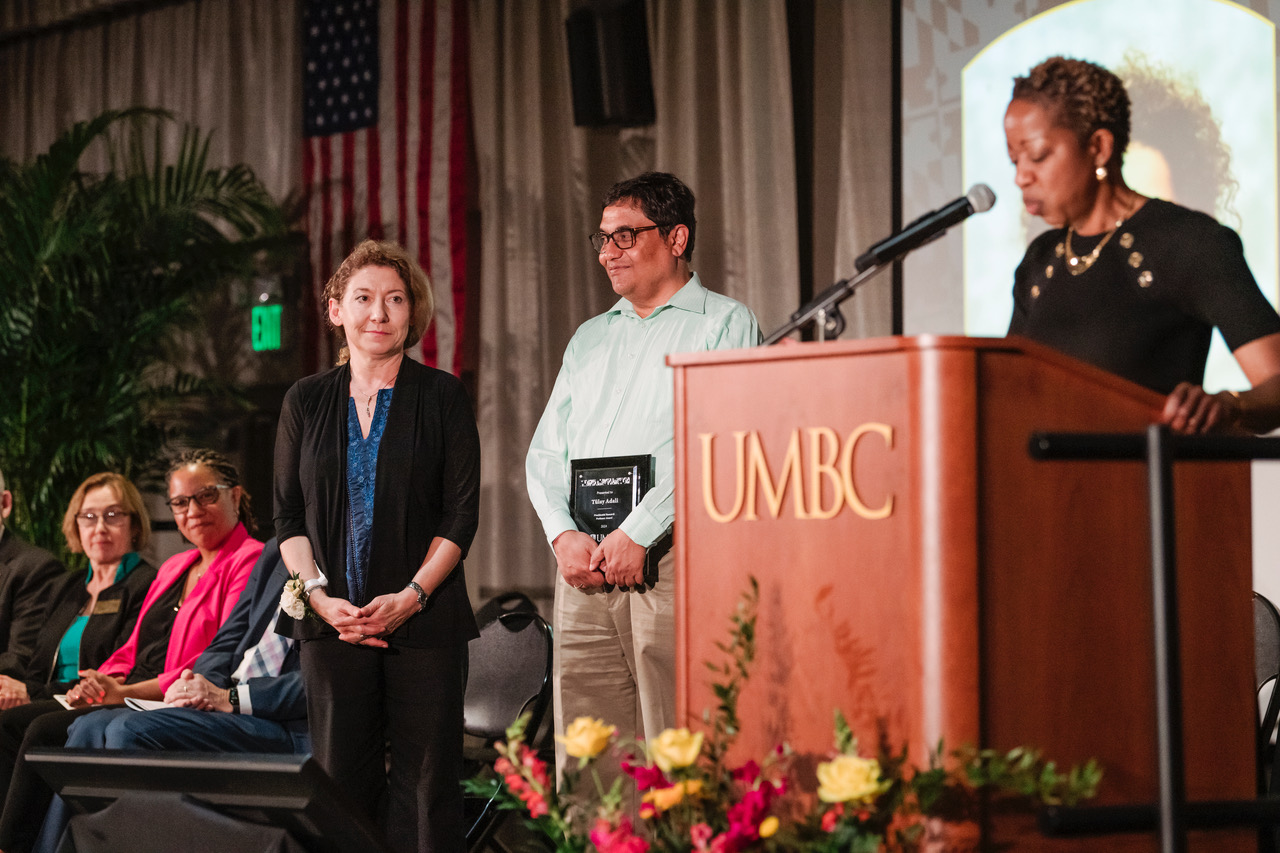
Tülay Adali is a Professor in the Department of Computer Science and Electrical Engineering at the University of Maryland, Baltimore County (UMBC). She has held this position since 1992 and was named a Distinguished University Professor in 2015 for her contributions to statistical signal processing and machine learning. Currently serving as Editor-in-Chief of the IEEE Signal Processing Magazine, she has also held leadership roles in IEEE committees and conferences. Her research focuses on statistical signal processing, machine learning, and their applications in medical imaging and data fusion. Dr. Adali earned her Ph.D. in Electrical Engineering from North Carolina State University in 1992. Her work integrates foundational signal processing techniques with biomedical applications, addressing challenges in neuroimaging analysis. She leads the Machine Learning for Signal Processing laboratory, supported by grants from NSF and NIH. Her lab develops algorithms for analyzing complex signals in medical contexts, emphasizing reproducibility and interdisciplinary collaboration. Recognition includes IEEE Fellow, AIMBE Fellow, AAIA Fellow, Humboldt Research Award, and NSF CAREER Award. She has authored numerous papers on fMRI analysis, independent component analysis, and multimodal data fusion. Her editorial leadership and service to technical communities reflect her commitment to advancing signal processing and education. Education: Ph.D. in Electrical Engineering, North Carolina State University (1992) Grants: NSF, NIH-funded projects on medical imaging and signal processing Awards: SPS Meritorious Service Award, SPIE Pioneer Award
Jenna Wise DiVincenzo is an Assistant Professor at the Elmore Family School of Electrical and Computer Engineering at Purdue University. She specializes in research areas such as software verification, formal methods, and programming languages, with a focus on gradual verification techniques that combine static and dynamic analysis. Her work emphasizes usability and scalability in verification tools, and she has contributed to projects like Gradual C0 and gradual null-pointer analysis. Dr. DiVincenzo earned her PhD in Software Engineering from Carnegie Mellon University (2023) and a BS in Mathematics and Computer Science from Youngstown State University (2017). She has interned at IBM Research, MIT Lincoln Laboratory, and the Software Engineering Research and Empirical Studies Lab at YSU. Her awards include the Google PhD Fellowship, NSF GRFP Fellowship, and 2022 Rising Star in EECS. Her research projects span theoretical advancements in gradual verification, empirical studies on usability, and practical tool development. She advises PhD students (e.g., Craig Liu, Conrad Zimmerman) and collaborates on initiatives like gradual verification for Rust and educational tools to teach verification concepts. Her work also explores leveraging large language models for specification generation and enhancing verification tool soundness through formal proofs.
Kazuhiro Saitou is a Professor of Mechanical Engineering at the University of Michigan, affiliated with the College of Engineering. His research focuses on computational design synthesis, topology optimization, and manufacturing process integration. He leads the Algorithmic Synthesis Laboratory (ASL), advancing algorithms for automated design and optimization of mechanical systems. Education: Ph.D. (1996), MIT; M.S. (1992), MIT; B.Eng. (1990), University of Tokyo. He has held tenured positions since 1997, including roles as Founding CEO of Comnext, Inc. (2007–2012) and visiting professorships at École Centrale Paris and Donghua University. Research interests include multi-material topology optimization (M^3 TO), AI-driven design, and sustainable manufacturing. Key projects address additive manufacturing, composite structures, and energy-efficient production systems. He has pioneered methods for manufacturability-driven design and assembly optimization. Notable awards include IEEE Fellow (2018), ASME Kos-Ishii Award (2015), and NSF CAREER Award (1999). He serves as Editor-in-Chief for IEEE Transactions on Automation Science and Engineering and holds leadership roles in ASME and IEEE societies. Teaching includes courses on design optimization, CAD, and global product development. His lab has advised over 30 students, with alumni in academia and industry. Current research explores biomechanical modeling, traffic flow optimization, and medical image registration algorithms.
Takuya Ooura is an Assistant Professor at the Research Institute for Mathematical Sciences (RIMS) at Kyoto University, specializing in numerical analysis and mathematical software development. His work bridges theoretical mathematics with practical applications in scientific computing and software development. Dr. Ooura earned his educational credentials through a rigorous academic path: he graduated from Hokuriku High School in 1987; completed his undergraduate studies at Nagoya University's School of Science in 1992; earned his Master of Engineering from the Department of Applied Physics at the University of Tokyo in 1994; and completed his PhD (Engineering) from the same department in 1997. His academic journey continued with a Research Fellowship from the Japan Society for the Promotion of Science (1997) followed by a position as Research Associate at RIMS, Kyoto University (2000). Dr. Ooura's research focuses on numerical integration algorithms, particularly his groundbreaking double exponential formula for Fourier-type integrals, which has been incorporated into Mathematica's NIntegrate function. He has also developed a high-speed FFT library that's utilized in Google Chrome browser (visible in chrome://credits). His work on continuous Euler transformation for accelerating convergence of slowly decaying integrals represents significant innovation in numerical analysis. His research spans both theoretical development and practical implementation of mathematical algorithms with real-world applications. His publication record demonstrates consistent contributions to numerical analysis, with particular emphasis on quadrature methods, integral transforms, and high-precision computation. His work shows a clear progression from theoretical foundations to practical implementations, with several algorithms achieving widespread adoption in commercial and open-source software. Paper prize awarded by JSIAM (2000) for 'A continuous Euler transformation and its application to Fourier transforms of slowly decaying functions' Paper prize awarded by JSIAM (2001) for 'Improvement of the PI Calculation Algorithm and Implementation of Fast Multiple-Precision Computation' Paper prize awarded by JSIAM (2005) for 'An Improved Convergence Test for the Double Exponential Formula' Japan Society for Industrial and Applied Mathematics 4th Achievement Award (2014) for 'Pioneering and practical development of the double exponential numerical integration method' Dr. Ooura has developed several widely used mathematical software packages including the double exponential integral formula, Clenshaw-Curtis numerical integration rule, and a general-purpose FFT library. His FFT package is particularly notable for its speed and accuracy, with benchmark tests showing superior performance compared to other implementations. His software has been incorporated into major projects including Google Chrome and SETI@home, demonstrating the practical impact of his theoretical work. His future research directions include further development of numerical computation libraries and applying his methods to various computational problems.
Dr. Fei Teng is an Associate Professor in the Department of Electrical and Electronic Engineering at Imperial College London and Director of Education at the Energy Futures Lab, a pan-university hub for interdisciplinary energy research. He holds visiting positions at MINES ParisTech, PolyU Hong Kong, and KTH Sweden. His research focuses on software-defined power networks, stability-constrained optimization, cyber-resilient decision-making, and privacy-preserving data exchange in low-inertia grids. Dr. Teng has authored over 100 publications in top-tier journals and conferences, with funding from EPSRC, Innovate UK, the Royal Society, and industry partners like Hitachi and National Grid ESO. His work addresses critical challenges in grid stability, cybersecurity, and renewable energy integration. He has received prestigious awards, including the IEEE Early Career Award and Royal Society Kan Tong Po Fellowship. Research interests include high-penetration power electronics, uncertainty modeling in power systems, and data privacy in smart grids. His interdisciplinary approach integrates machine learning, quantum computing, and cyber-physical systems to enhance grid resilience and efficiency. Key contributions include frameworks for stability-constrained optimization, cyber-resilient control, and synthetic inertia from electric vehicles. He advocates for software-defined grids to revolutionize decision-making frameworks for NetZero systems.
Dean Eckles is an Associate Professor of Marketing at MIT Sloan School of Management and serves as an Associate Director of the MIT Institute for Data, Systems, and Society (IDSS). He is also affiliated with the MIT Schwarzman College of Computing through the Institute for Data, Systems & Society and its Statistics and Data Science Center. Additionally, he leads the analytics research area at the Initiative on the Digital Economy and organizes the annual Conference on Digital Experimentation (CODE@MIT). His educational background includes a BA in philosophy, BS and MS in cognitive science, MS in statistics, and PhD in communication, all from Stanford University. Prior to joining MIT, Eckles worked as a scientist at Facebook, where he contributed to areas including News Feed, messaging, advertising, tools for randomized experiments, and survey methods. He previously held research positions at Nokia and Yahoo. Eckles's research primarily focuses on social influence mediated by interactive technologies, examining how communication technologies mediate, amplify, and direct social influence. His work spans multiple specific areas including social interactions, contagion, and interventions in networks; experimental design and inference in networks; and methods for causal inference. His research often combines social science with advanced statistical methods. His notable publications include research on long ties in social networks and their relationship to economic prosperity, how network structure affects social contagions, and algorithmic transparency in social media platforms. His work has appeared in prestigious journals including PNAS and Nature Human Behaviour, and he has provided expert testimony before the US Senate on algorithmic ranking. Long ties, disruptive life events and economic prosperity (PNAS) Long ties accelerate noisy threshold-based contagions (Nature Human Behaviour) Algorithmic transparency and assessing effects of algorithmic ranking (Senate testimony) Eckles actively shares his research through social media platforms including Bluesky, Twitter, and Mastodon, as well as through his blog and contributions to the Gelman et al. blog. His work bridges academic research with practical applications in technology and policy.
A. Michael Knemeyer is a Professor of Logistics at The Ohio State University's Max M. Fisher College of Business, where he contributes to research and teaching in supply chain management. His work focuses on supply chain relationships, risk and resilience, vendor relations, and sustainability integration. Educational Background: PhD from the University of Maryland, BSBA from John Carroll University Research Areas: Supply chain relationships, international logistics, sustainability, vendor relations, risk management Key Awards: 2013 IJPDLM Outstanding Paper Award, 2013 Bernard J. La Londe Best Paper Award Knemeyer's publications in journals like Harvard Business Review and Journal of Business Logistics explore critical themes in logistics outsourcing relationships, supply chain integration, and sustainable practices. His work often examines cross-cultural dynamics and institutional factors affecting supply chain performance. Selected Courses: Strategic Supply Chain Management, Contemporary Issues in Supply Chain Management, Logistics and Supply Chain Decision Making
Hans Beck serves as Professor of Greek History at the University of Münster (Westfälische Wilhelms-Universität) since 2018, with an additional appointment as Adjunct Professor in the Faculty of Arts at McGill University. His academic career includes previous positions as Professor of Ancient History and Director of Classical Studies at McGill University (2005-2018), Heisenberg Fellow at Goethe-Universität Frankfurt (2004-2005), and Research Assistant at the University of Cologne (1997-2004). Beck earned his academic training through doctoral studies at the Universities of Erlangen, Canterbury, and Cambridge (1989-1996), followed by a fellowship at the Center for Hellenic Studies in Washington, DC (2001-2002). His educational background reflects a strong international foundation in classical studies. His research spans multiple interconnected fields within ancient history, with particular emphasis on the history and culture of ancient Greece, historical geography of Greece, environmental studies of the ancient Greek world, political culture of the Roman Republic, and ancient historiography. Beck's work consistently explores themes of localism, federalism, and political structures across ancient societies, with notable contributions to understanding Greek city-states, regional identities, and comparative political systems. His approach often bridges geographical, historical, and cultural perspectives to examine how ancient communities organized themselves politically and maintained regional identities within larger frameworks. Analyzing his recent publications reveals a sustained focus on local political structures within broader contexts, particularly examining how Greek city-states maintained autonomy while participating in federal leagues. His work increasingly incorporates comparative approaches, connecting Greek political structures with those of Rome and even ancient China, reflecting his editorial work on cross-cultural studies. Beck demonstrates particular expertise in analyzing how physical landscapes shaped political organization and how religious practices reinforced regional identities. Fellow of the Royal Society of Canada (2018) Anneliese Maier Research Award from Alexander von Humboldt Foundation (2014) Heisenberg Fellowship from Deutsche Forschungsgemeinschaft (2004) Doctoral scholarship from German Academic Exchange Service (1995) Doctoral scholarship from Hanns Seidel Foundation (1994) Beck has supervised numerous doctoral students including Jordan Christopher (2022), Chandra Giroux (2021), Wentian Fu (2020), Rebecca Robinson (2017), Alex McAuley (2015), and François Gauthier (2015), covering diverse topics from ancient Qin and Macedon to cult practices in ancient empires. His academic leadership extends to directing research projects B3-49 'Belonging in/to Lakonia' and B3-40 'Localism and Religion in Ancient Greece' within the Excellence Cluster focusing on 'Religious Diversity and Legal-Political Unity.' As head of the project 'Belonging in/to Lakonia' and 'Localism and Religion in Ancient Greece,' Beck leads interdisciplinary research teams examining archaeological and historical evidence from the Sanctuary of Apollo at Amyklai and its surroundings. His work integrates textual analysis with material culture studies, creating comprehensive approaches to understanding ancient regional identities and religious practices. Beck's leadership in these projects demonstrates his commitment to bridging traditional disciplinary boundaries in classical studies.