Michelle Doas is an Associate Professor of Nursing at Chatham University 's College of Health Sciences , where she has been actively contributing since 2007. Her expertise spans clinical nursing, education, and interdisciplinary research applications. Ed,D., MSN, BSN, RN Research Interests Dr. Doas focuses on critical thinking development in nursing education , adult literacy in healthcare , and reminiscence therapy . Her work bridges clinical practice with pedagogical innovation, exploring how techniques from service industries (e.g., Disney's hospitality model) can enhance patient satisfaction and communication in healthcare settings. Article Trends Her publications and presentations demonstrate a consistent emphasis on improving clinical outcomes through structured interventions like mind mapping for education, relaxation therapy for post-operative care, and concept mapping for knowledge organization. Key themes include patient safety , workplace culture , and interdisciplinary applications in nursing. Scientific Awards She is a member of the prestigious Sigma Theta Tau International Honor Society , recognizing her contributions to nursing scholarship. Additional Contributions Dr. Doas has served on the Business Faculty Search Committee (2008) and presented on diverse topics such as food handling safety in environmental science contexts and nursing career advocacy at high school outreach events.
Professor Jeevan R. Sharma serves as Chair of South Asia and International Development and Co-director of the Centre of South Asian Studies at the University of Edinburgh's School of Social and Political Science. An elected General Secretary of the Britain Nepal Academic Council (BNAC), he brings extensive field research experience from Nepal, India, Sri Lanka, and Malawi to his work in development and political anthropology. His current Wellcome Trust-funded transdisciplinary project examines health and well-being of South Asian migrant workers through collaboration with medical scientists and social anthropologists at Aga Khan University and Kathmandu Medical College. Sharma's research interests span labor migration, border-crossing, Maoist conflict, humanitarianism, human rights documentation, and health policy with particular focus on gender dynamics and social transformation. His fieldwork has investigated community health volunteers, maternal and child health, and international research collaboration in South Asia. He has previously worked at Feinstein International Centre at Tufts University (2009-2011) and Save the Children UK (2007-2009), bringing practical development experience to his academic work. His publication trends reveal consistent focus on migration, health policy, and political transformation in South Asia, with increasing attention to transnational health issues and pandemic impacts on vulnerable populations. Recent work examines Covid-19's effects on migrant workers, mental health policy in Nepal, and cross-cultural health measurement tools, demonstrating his commitment to bridging academic research with practical health interventions. Elected General Secretary of the Britain Nepal Academic Council (BNAC) Co-editor of HIMALAYA Journal (2019-2025), transitioning to Editor-at-large from January 2025 Associate Editor of 'South Asia: Journal of South Asian Studies' Co-editor of Routledge Edinburgh South Asia Series Member of ESRC GAP panel C (2024-2025) Member of the commissioning panel for the ESRC Centres Competition 2018 Sharma has secured significant research funding including a Wellcome Trust grant for migrant worker health research, ESRC funding for projects examining low-income migrant workers' access to services in India, and NERC funding for flood resilience research in Nepal's Terai region. His collaborative approach is evident in projects involving multiple institutions across South Asia and the UK, with particular emphasis on transdisciplinary work that bridges social science and medical research. He has served as Principal Investigator on six completed projects and currently leads an active Wellcome Trust-funded initiative. As Co-director of the Centre for South Asian Studies in Edinburgh, Sharma contributes to one of the UK's leading institutions for South Asian research, fostering academic collaboration and knowledge exchange between scholars in the UK and South Asia. His work with the Britain Nepal Academic Council strengthens bilateral academic relations, while his editorial roles with HIMALAYA Journal and South Asia: Journal of South Asian Studies position him at the forefront of scholarly discourse on the region.
Professor Tim Lenton is the Chair in Climate Change / Earth System Science at the University of Exeter and founding Director of the Global Systems Institute. With over 25 years of research experience, his work focuses on modeling biosphere-climate interactions, biogeochemical cycles, and climate tipping points. He has contributed to global climate governance frameworks, including the Global Tipping Points Report 2023 launched at COP28. Education: PhD in Environmental Sciences (University of East Anglia, 1998), BA Honours in Natural Sciences (University of Cambridge, 1994). His research spans Earth system science , climate change modeling , and ecological tipping points , emphasizing risks from nature loss and opportunities for societal transformation via positive tipping points . Recent activities include co-hosting the 2025 Global Tipping Points Conference and advising policymakers on net-zero strategies. Leadership: Directed the Global Systems Institute (2017–2023). Collaborations: Partnered with Bezos Earth Fund and institutions like Potsdam Institute for Climate Impact Research. Tim actively bridges climate science and governance, advocating for risk mitigation and socially just transitions through his work on planetary boundaries and system dynamics.
Professor Vedran Dunjko is a faculty member at the Leiden Institute of Advanced Computer Science (LIACS), Leiden University, with affiliations to the Leiden Institute of Physics (LION). He leads the Applied Quantum Algorithms group and co-founded the Quantum@LIACS initiative, focusing on the intersection of quantum computing, machine learning, and artificial intelligence. His research interests include quantum machine learning, quantum-enhanced reinforcement learning, quantum heuristics, and the application of AI to quantum computing challenges. Dunjko's work bridges theoretical foundations with experimental implementations on near-term quantum devices, exploring both quantum advantages in learning and the use of classical AI for quantum system design. The recent publications show a strong trend toward proving quantum advantages in learning tasks, optimization, and topological data analysis, with publications in Nature , Nature Communications , and NeurIPS . Key themes include quantum policy gradients, quantum TDA, and reinforcement learning for quantum circuit optimization. ERC Consolidator Grant (2024) PNAS Cozzarelli Prize (2018) Editor’s Suggestion in Physical Review Letters (2014, 2018) Featured in Physics (American Physical Society) (2014, 2018) Dunjko advises several PhD candidates and postdocs, including Rahul Bandyopadhyay, Sofiene Jerbi, and Lea Trenkwalder. He has received competitive grants, most notably the ERC Consolidator Grant in 2024. His group fosters international collaborations with institutions across Europe and industry partners. The Applied Quantum Algorithms group and the Quantum@LIACS team combine theoretical investigations with practical implementations on quantum hardware, focusing on scalable quantum algorithms and AI-driven quantum discovery.
Colm McLaughlin is a Professor of Employment Relations at the UCD School of Business. He serves as Vice-Principal for Equality, Diversity and Inclusion at the College of Business, Co-Director of the UCD Centre for Business and Society (CeBaS), and UN Principles for Responsible Management Education (PRME) Coordinator. He holds a PhD from the University of Cambridge and has held academic roles at the University of Auckland and postdoctoral positions at Cambridge, alongside industry experience in local government and hospitality. Education : BA and MComm (University of Auckland), PhD (University of Cambridge). Research Interests : Comparative employment relations, institutional regulation, gender equality, training systems, and low-paid work. Professional Appointments : Research Associate at Cambridge’s Centre for Business Research, Visiting Fellow at the University of Sydney and Victoria University Wellington. His recent research focuses on immigration policy as a skills supply mechanism in liberal market economies, trade union legitimation politics, and reflexive regulation frameworks. He has examined how ideational power resources shape labour relations and contributed to debates on corporate social responsibility and sustainable HRM practices. His work bridges theory and practice, particularly in case method pedagogy reform. Colm has received multiple awards, including the AMLE Best Article Winner (2017), Academy of Management Dark Side Case Competition Winner (2013), and University Teaching Excellence Awards (2020). His publications appear in prestigious journals such as Industrial Relations , Journal of Industrial Relations , and Academy of Management Learning and Education . He has served on editorial boards for Industrial Relations: A Journal of Economy and Society and Journal of Industrial Relations , and held leadership roles in committees like BITCI Leadership for Sustainability and the SDG Engagement Working Group.
Nathan G. Swenson is a Professor in the Department of Biological Sciences at the University of Notre Dame and serves as the Gillen Director of the Environmental Research Center (UNDERC). He has held prior academic positions at the University of Maryland and Michigan State University, advancing from Assistant to full Professor. His research integrates genomics, ecology, and evolutionary biology to understand forest biodiversity and dynamics. Research Interests: Ecology and Environmental Biology Evolutionary Biology Genetics and Genomics Global Change Biology Forest Ecology Functional and Phylogenetic Ecology Tree Physiology and Demography His research focuses on leveraging intra- and interspecific variation in tree performance to predict forest biodiversity patterns. He employs integrative approaches from genomes to forest canopies and utilizes large-scale global datasets. Recent publications emphasize intraspecific trait variation, transcriptomic responses to drought, ecological forecasting, and functional group dynamics in tropical and temperate forests. Scientific Awards: Winner of 2017 British Ecological Society John Harper Prize (awarded to J. Zambrano; Swenson was senior author) Advising and Grants: Dr. Swenson has mentored numerous researchers, including M.N. Umana, S.J. Worthy, and J. Yang, who frequently co-author high-impact papers. His lab receives substantial research funding, evident from large collaborative projects and participation in global networks like ForestGEO and the TRY plant trait database. He has secured support for long-term ecological research, genomic studies, and international fieldwork. Labs and Teams: He leads the Swenson Lab, which conducts research on woody plant ecology in dynamic environments. The lab emphasizes community transcriptomics, functional trait analysis, and large-scale ecological modeling. It collaborates widely across institutions and is involved in major initiatives such as ForestGEO and NEON.
Chao Liu is a Research Scientist at CNRS (French National Center for Scientific Research) since 2008, affiliated with the DEXTER team and the Department of Robotics, LIRMM at University of Montpellier, France. He earned his Ph.D. in Electrical & Electronic Engineering from Nanyang Technological University, Singapore (2006). Current research focuses on surgical robotics , haptics , teleoperation , and nonlinear control theory with applications in computer vision. His work addresses challenges in robotic-assisted telesurgery, including: Stable and transparent human-robot interaction through wave variable compensators and passivity filters Physiological motion compensation using spatio-temporal LSTM and dual Kalman filters EMG-based motion recognition for surgical skill assessment 3D soft-tissue reconstruction with stereo-endoscopes and deep learning Dr. Liu leads European and French projects like: TS2RT (CNRS-funded): Safer teleoperation with motion compensation ROBACUS (ANR-funded): Needle positioning with MPC control HaTUMoCo (CNRS-funded): Haptic teleoperation with uncertainty handling ARAKNES (EU-funded): Microrobotic systems for endoluminal surgery Scientific honors include Senior Member of IEEE and Member of Sigma Xi . He supervises Ph.D. and Master's students working on topics such as concentric tube robot optimization, haptic teleoperation, and EMG-based force estimation. Dr. Liu serves on IEEE Technical Committees for Telerobotics and Haptics , and as Technical Editor of IEEE/ASME Transactions on Mechatronics.
Professor Jing Meng is a leading academic at University College London's Bartlett School of Sustainable Construction, holding the position since 2023 after progressing from Lecturer (2019-2021) to Associate Professor (2021-2023). She concurrently serves as a fellow at the Cambridge Centre for Environment, Energy and Natural Resource Governance and maintains active editorial roles as Executive Editor of the Journal of Cleaner Production and Associate Editor for Journal of Geophysical Research: Atmospheres. Her research spans three interconnected domains: Energy Transitions and Technology Innovation (examining cost forecasts and structural emission declines in China), Climate Change Policies (analyzing South-South trade effects and multinational enterprise emissions), and Emission-Health-Socioeconomics Nexus (assessing air pollution impacts and integrated co-mitigation strategies). This interdisciplinary approach is reflected in her publication record across Nature family journals and PNAS. Analysis of her recent publications reveals a consistent focus on global carbon accounting methodologies, with increasing attention to subnational (city-level) analyses, health co-benefits of climate policies, and technological innovation pathways for hard-to-abate sectors. Her work frequently employs multi-regional input-output modeling to trace emissions through complex supply chains. AGU Global Environmental Change Early Career Award (2023) MIT Technology Review Innovators Under 35 Asia Pacific (2022) Clarivate Highly Cited Researcher (2020-2024) Nature Communications Top 50 Earth Sciences Article (2018) MDPI Emerging Sustainability Leader Award (2020) Environmental Research Letters Best Early Career Article (2017) Professor Meng has secured substantial funding from diverse sources including NERC, the British Council, Quadrature Climate Foundation, The Royal Society, and UCL internal grants. She leads an interdisciplinary research group focused on technology innovation and climate policy, with particular emphasis on China's role in global emissions systems. Her work directly supports Sustainable Development Goal 13 (Climate Action) through actionable policy insights.
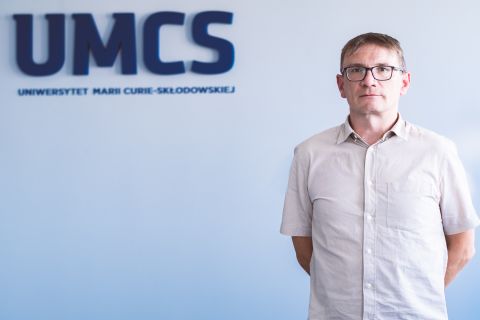
Dr. Bartosz Bojarczyk is a Lecturer at the Department of International Political Relations within the Faculty of Political Science and Journalism at Maria Curie-Skłodowska University (UMCS) in Lublin. He specializes in international relations with regional expertise in the Middle East, Central Asia, and Caucasus regions. Education: PhD in Political Science (UMCS, 2006) - Dissertation on Iran's international political adaptation MA in Contemporary Iranian Studies (School of International Relations, Tehran, 2003) MA in International Relations (UMCS, 2001) Research Focus: His work centers on geopolitical dynamics in transitional regions, particularly: International security frameworks and threat analysis Iranian foreign policy formulation and implementation Regional integration mechanisms in the Persian Gulf Terrorism as a transnational security challenge Energy security and nuclear policy intersections Publication Trends: Bojarczyk's scholarly output demonstrates consistent focus on evolving security architectures in post-Soviet spaces and the Middle East. His 15 most recent works (2007-2016) analyze power projection, regional organizations, and energy politics through geopolitical and institutional lenses, with particular emphasis on Iran's strategic positioning.
Marco Bernardi is a Professor of Applied Physics, Physics and Materials Science at the California Institute of Technology (Caltech). His research focuses on theoretical and computational materials physics , developing first-principles methods to investigate electron transport, ultrafast dynamics, and light-matter interactions in materials. His work has applications in electronics, optoelectronics, ultrafast spectroscopy, energy technologies, and quantum devices. Education : Ph.D. in Materials Science from MIT (2013), M.S. from University of Rome Tor Vergata (2008), B.S. from University of Rome La Sapienza (2004). Research Interests : Electron-phonon interactions, polarons, spin relaxation and decoherence, nonequilibrium electron dynamics, quantum materials, and software development for materials simulations ( PERTURBO code). Scientific Awards : NSF CAREER Award (2018) AFOSR Young Investigator Award (2017) Psi-K Volker Heine Young Investigator Award (2015) Intel Ph.D. Fellowship (2013) Franco Strazzabosco Award (2020) Teaching : Offers graduate courses at Caltech including Structure and Bonding in Materials (MS 131) , Computational Solid State Physics (APh/MS 256) , and Introduction to Computational Methods (APh/MS 141) . Group Members : Mentors current graduate students and postdocs in developing advanced computational techniques for materials research, with former advisees now in academic and industry positions.
Barbara Penner is Professor of Architectural Humanities at University College London's Bartlett School of Architecture, where she serves as Co-Director of the MA Architectural History program and supervises PhD students. Her academic appointments include Senior Lecturer positions at UCL since 2000 and previous roles at University of East London, Middlesex University, and Chelsea College of Art. Her educational background comprises a PhD from Birkbeck College (2003), MSc from University College London (1996), and BA from McGill University (1994). Penner's research focuses on the social and cultural dimensions of everyday spaces, examining how domestic environments, urban infrastructure, and commercial architecture shape social identities. Her interdisciplinary approach integrates architectural history with anthropology, literary theory, and cultural studies, particularly exploring gender dynamics in spaces like bathrooms, kitchens, hotels, and housing. Her publications reveal consistent engagement with themes of gender, domesticity, and infrastructure across historical periods. Key works include Bathroom (2013), Newlyweds on Tour (2009), and co-edited volumes on public toilets and gender. Recent scholarship examines social scientific research in home design, urine diversion systems, and historical housing models. RIBA President’s Award for Outstanding University-Located Research (2014) Leverhulme Major Fellowship (2021-2023) Provost Teaching Award, UCL (2013) Council of Editors of Learned Journals Best New Journal Award (2009) Penner actively supervises doctoral research on topics including Billy Butlin’s holiday camps and Gulf female shoppers' impact on London retail. She has completed twelve PhD supervisions and examined nearly thirty theses internationally. Her professional activities include serving on the Architectural Association Publications Committee, as North American Editor for Architectural History, and as External Examiner at University College Dublin. She participates in the 'Insurgent Domesticities' research group at Columbia University and contributes to Places Journal as a contributing editor.
Ariel Rogers serves as an Associate Professor in the Department of Radio/Television/Film at Northwestern University's School of Communication, where her research investigates the historical and theoretical dimensions of cinema and emerging media technologies with critical attention to spectatorship and technological change. Her academic credentials include a PhD in Cinema and Media Studies from the University of Chicago and a BA in Film Studies and Philosophy from Columbia University. Rogers' scholarship interrogates how historical contexts shape technological adoption and cinematic experience, challenging assumptions about media evolution through case studies spanning 1950s widescreen systems, digital cinema transitions, and contemporary virtual reality. Her work bridges film history, media archaeology, and screen theory to analyze dynamic relationships between technology, form, and audience engagement across diverse media landscapes. Publication trends reveal a sustained trajectory from historical analyses of screen technologies (2013-2019) toward immersive media frameworks, with recent scholarship (2022-2024) focusing on VR's reconfiguration of cinematic framing and spatial mediation—demonstrating continuity in examining how technological shifts redefine perceptual and narrative paradigms. Her research excellence has earned significant recognition: NEH Fellowship from the National Endowment for the Humanities (2022-2023) Clarence Simon Award for Outstanding Teaching and Mentoring (2019) ACLS Fellowship from the American Council of Learned Societies (2016-2017) Professor Rogers teaches foundational courses including RTVF 220 (Analyzing Media Texts), RTVF 312 (History of Film I), and RTVF 413 (Cultural History of New Media), integrating her research into undergraduate and graduate curricula. Her Clarence Simon Award highlights exceptional mentorship, while NEH/ACLS fellowships provided critical support for her monograph research. Current projects include a third book examining cinematic framing in virtual reality contexts. Affiliated with Northwestern's School of Communication, Rogers contributes to the Radio/Television/Film department's academic mission. The available documentation indicates no specific laboratory affiliations or team-based research initiatives beyond departmental collaborations.
Professor Andrew Klevan is a leading scholar in film aesthetics and close cinematic analysis, holding a professorial position at the University of Oxford's Faculty of English and serving as a Non-tutorial Fellow at St Anne's College. His work focuses on film form, performance, critical methodology, and pedagogy, advocating for detailed close analysis as a core practice in film studies. Research interests include the interplay between film medium and narrative structure, particularly exploring 'undramatic' forms that capture mundane experiences. He has authored monographs on film performance (e.g., Barbara Stanwyck studies), aesthetic evaluation frameworks, and the philosophy of film criticism. Recent work critiques theoretical approaches in film studies and develops 'ordinary language film studies' to emphasize practical criticism over abstract theory. Publications span over two decades, with notable contributions to journals like Movie , Film-Philosophy , and Aesthetic Investigations . His edited collection The Language and Style of Film Criticism (with Alex Clayton) remains influential in critical discourse. Teaching focuses on advanced film analysis and methodology. No formal academic awards are listed, though his contributions to film scholarship are widely recognized. He supervises Master’s and DPhil students in film studies, emphasizing close textual analysis and critical writing. His academic affiliations include the St Anne's College community and the broader Oxford film studies network.
Professor Tatiana Damjanovic is a Professor of Economics at the University of Durham's Business School since 2015. She holds a PhD from the Stockholm School of Economics (supervised by Lars Ljungqvist) and prior roles include Associate Professor at the University of Exeter and positions at the University of St. Andrews. Her research focuses on Macroeconomics, Monetary Policy, Banking, and Public Economics. Notable contributions include studies on fiscal policy design, financial intermediation, and gender equality's interplay with economic growth. Affiliations: Business School, Department of Economics, University of Durham. Education: BSc in Functional Analysis (Moscow State University), MSc from New Economic School, PhD (Stockholm School of Economics). Research Interests: Her work bridges macroeconomic policy analysis with institutional frameworks, emphasizing monetary policy's welfare impacts, banking sector dynamics, and fiscal frameworks. Recent studies explore heterogeneous firms, loan-to-collateral ratios, and gender equality's macroeconomic dimensions. Esteem Indicators: 2019: MMF Committee Member (Money Macro and Finance Research Group). 2019: FCT Evaluation Panel Member (Portuguese Science Funding Agency). 2017: Academy of Finland Review Panel Member (Economics). Publications Trends: Over 30 peer-reviewed articles since 2003, with a focus on monetary policy design, banking stability, and fiscal frameworks. Recent work highlights include 2024's analysis of heterogeneous firms in monetary policy, 2021's Ramsey policy contributions, and 2020 studies on financial bailouts and gender equality. Advising & Grants: While specific student names are not listed, her work implies significant academic mentorship. Grant details are not explicitly mentioned in the text. Labs/Teams: No dedicated lab affiliations noted, but collaborative work with institutions like the MMF Group and FCT suggests active network engagement.
Professor Bruce Jefferson is a Professor of Water Engineering at Cranfield University's Water Science Institute. He holds visiting positions at RMIT and the University of New South Wales in Australia. With a BEng and PhD from Loughborough University, he joined Cranfield in 1997, progressing through roles including Senior Research Fellow (2003) and Senior Lecturer (2006). His research focuses on optimizing water and wastewater treatment technologies, particularly resource recovery, anaerobic processes, and advanced oxidation. Key interests include low-energy nutrient removal, control of NOM and algae, and sustainable water production techniques like slow sand filter skimming. Education: BEng (Chemical Engineering) and PhD from Loughborough University. Research spans innovative treatment methods, such as microbubble applications in ozonation and coagulation strategies for PFAS removal. He collaborates with major water utilities (e.g., Anglian Water, Thames Water) and agencies like the EPA. Current projects include NextGen circular water solutions, pollution resilience in rivers, and phosphorus removal via wetlands. Advises six doctoral students and oversees research teams at Cranfield's Water Institute. Labs/Teams: Cranfield Water Science Institute, leading research groups in wastewater treatment, resource recovery, and environmental engineering.