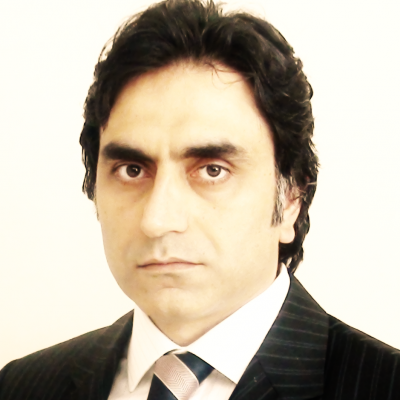
Prof. Dr. Halis Aydemir is a Professor at the Department of Basic Islamic Sciences in Dumlupınar University's Faculty of Theology. He holds concurrent administrative roles including Vice Rector (2015–2019), Dean of the Faculty of Islamic Sciences (2015–2020), and Head of the Hadith Department. His academic journey includes a BSc in Electrical Engineering (Istanbul Technical University, 1995) and a PhD in Basic Islamic Sciences (Uludağ University, 2004). His research focuses on applying probability theory to Hadith transmission systems, developing mathematical models for inheritance calculations in Islamic law, and Arabic language education. Notable projects include the 'Al-Musnad al-Sahih' manuscript verification (2002–2012) and multiple inheritance calculation software projects. He has authored over 80 publications including critical editions of Hadith collections and theoretical works on Hadith reliability. Awards: No scientific awards explicitly mentioned. Administrative roles include leadership in religious affairs projects and educational software initiatives. Research highlights include probabilistic analysis of narrator reliability, isnad model evaluation, and digital tools for Islamic legal calculations. His work bridges traditional Islamic scholarship with modern quantitative methods.
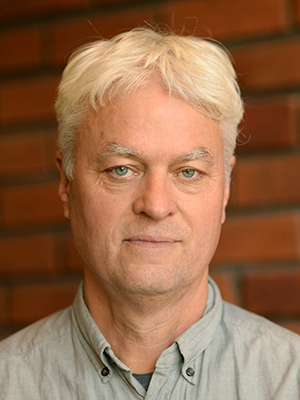
Dag Henrik Tuastad is a Professor of Middle East Studies at the Department of Culture Studies and Oriental Languages (IKOS) at the University of Oslo. His research focuses on kinship dynamics in Palestinian politics, rebel governance (notably Hamas rule in Gaza 2007–2023), political representation crises, and the intersection of sports and politics in the Middle East. Current projects include senior research at Football and Religion in the Middle East (FORM) , funded by the Norwegian Research Council (2021–2026) Former project leader for Rebel Governance in the Middle East (2017–2021) PhD in Social Anthropology (2008) on kinship in Palestinian politics His recent publications analyze Hamas’s symbolic authority, football’s role in Jordanian-Palestinian identity formation, and the erosion of legal frameworks in the West Bank. He critiques media bias (e.g., in Qatar World Cup coverage) and explores how football culture reflects broader political tensions. Teaching: Courses on Middle East history, cultural anthropology, and conflict resolution Regional Focus: Palestine, Jordan, Gaza, and the Levant
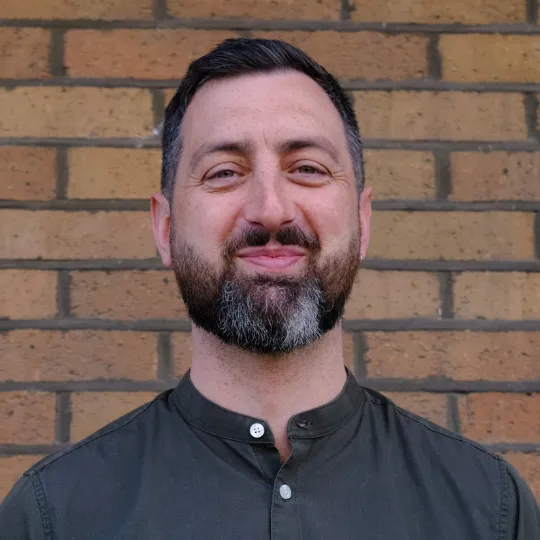
Dr Jamie Woodcock is a Senior Lecturer in Digital Economy at King's College London, based in the Department of Digital Humanities within the Faculty of Arts & Humanities. He holds a PhD in sociology from Goldsmiths, University of London, and has held academic positions at institutions including the University of Leeds, University of Manchester, LSE, and the Open University. His research focuses on labour processes, platform work, gig economy dynamics, and worker organizing, with a particular emphasis on critical global capitalism and digital culture. Woodcock’s research interests include the games industry, unionization strategies, and resistance to algorithmic management. He is an editorial board member of Notes from Below and Historical Materialism , and contributes to interdisciplinary initiatives such as the Research Centre for Digital Culture and the Critical Global Capitalism Studies Collective at King’s. His work has been widely covered in media and he frequently speaks on digital labour issues. He has authored influential books like The Fight Against Platform Capitalism and The Gig Economy: A Critical Introduction , co-authored Guerrilla Democracy: Mobile Power and Revolution in the 21st Century , and published extensively on topics ranging from delivery platform strikes to gamification critiques. His recent recognition includes a 2025-26 Digital Futures Institute Fellowship.
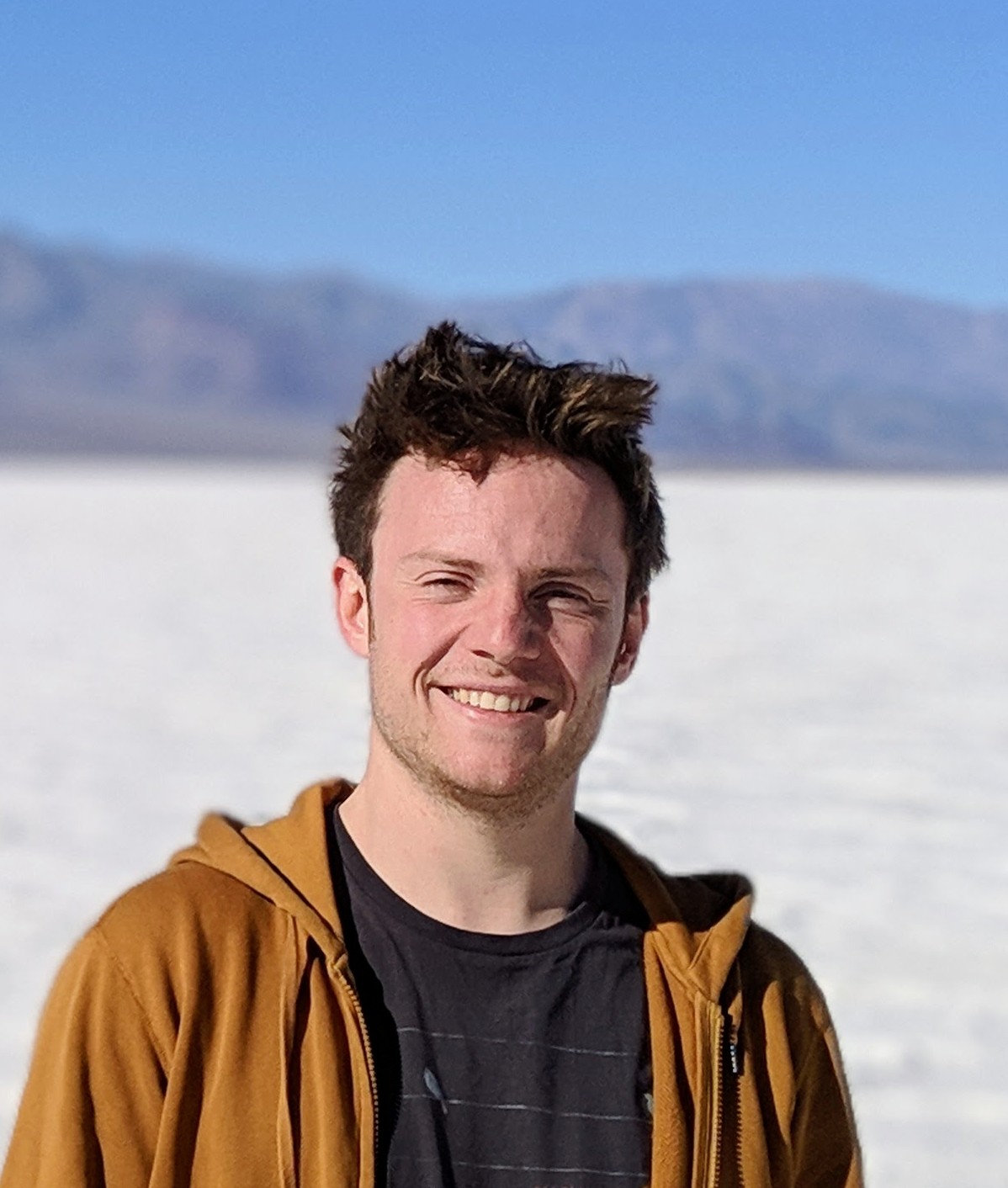
Florian Schäfer is an Assistant Professor at the School of Computational Science and Engineering at Georgia Tech. His research spans numerical computation, statistical inference, and competitive games, with applications in materials science, turbulence modeling, computer graphics, and computational geometry. He will join the Courant Institute at NYU in September 2025. PhD in Applied and Computational Mathematics, Caltech Bachelor’s and Master’s in Mathematics, University of Bonn His work focuses on information geometric mechanics to design structure-preserving numerical methods for continuum mechanics. This includes: State-of-the-art solvers for elliptic PDEs via Gaussian elimination and conditional independence Efficient multi-agent optimization algorithms Information geometric regularization for compressible fluid dynamics Enabling the first compressible fluid simulation exceeding 100 trillion grid cells His recent research trends integrate: Machine learning for materials science (e.g., active learning, Bayesian approaches) Stochastic modeling of microstructures and phase-field problems Neural operators for super-resolution fluid dynamics Generative models for polycrystalline material datasets Optimal transport and diffusion models for conditional density transformations High-performance computing at extreme scales Florian collaborates with researchers including Houman Owhadi, Jessie Liu, Spencer Bryngelson, Tamer Zaki, and Ali Mani. He actively presents at conferences like SIAM and UCLA seminars, and is recruiting PhD students for work at the Courant Institute starting 2025.
Arthur Weststeijn is an Assistant Professor in Political History at Utrecht University, specializing in the history of the Dutch Republic and its colonial empire, the history and contemporary politics of Italy, and the history of Spain and Latin America. He is affiliated with the Department of History and Art History within the Humanities faculty and is part of the Research Institute for History and Art History, focusing on International and Political History. Dr. Weststeijn's educational background includes: PhD in History, European University Institute, Florence (2010) RMA in History, European University Institute, Florence (2006) MA in Philosophy, University of Amsterdam (2005) MA in History, University of Amsterdam (2004) Erasmus Exchange, Universidad de Sevilla (2000-2001) His research focuses on the intellectual history of power, particularly examining ideas that express and contest political authority through two main themes: colonialism (how ideas have shaped European colonialism and resistance against it) and republicanism (how resistance to autocratic rule has given rise to ideas of liberty, citizenship, and democracy). His work spans early-modern Dutch colonialism, anticolonial thought, the history of democracy, and connections between ancient and modern forms of settler colonialism. He has published extensively on early modern republicanism, the political uses of classical heritage, and the making of modern Italy. Weststeijn's scholarly output demonstrates a consistent focus on the intersections between political thought, colonial history, and republican theory. His work often examines how historical ideas continue to shape contemporary political discourse, particularly regarding democracy, citizenship, and colonial legacies. He frequently engages with both European and transatlantic intellectual traditions, showing particular expertise in Dutch and Italian political thought. His notable awards and fellowships include: Fellow, Huntington Library, San Marino, California (Summer 2022) Fellow, John Carter Brown Library, Providence, Rhode Island (Spring 2019) Director of Historical Studies, Royal Netherlands Institute in Rome (2011-2017) Dr. Weststeijn has served as a visiting researcher at prestigious institutions including the Cambridge Centre for Political Thought, University of Southern California, University of Wisconsin at Madison, and University of Padua. He frequently appears as an expert commentator on Italian culture and politics in Dutch media and maintains an active public intellectual presence. He is involved in multiple research initiatives including the IOS research themes on Contesting Governance, Futures of Democracy, and Longtermism and Institutional Change. His work often involves interdisciplinary collaboration with archaeologists, classicists, and scholars from various humanities disciplines.
Dr. Fabian Schulz is a Senior Researcher in Ancient History at the University of Tübingen, where he works in the Department of History within the Faculty of Humanities. He leads a prestigious Junior Research Group under the Emmy Noether Programme of the German Research Foundation (DFG), titled 'Power and Influence: Influencing Emperors between Antiquity and the Middle Ages.' His academic profile also includes association with the Collaborative Research Center (SFB) 923 'Threatened Order - Societies under Stress' and active participation in the 'Tübingen Theosophy' research group. Previously, he contributed to the Heidelberg Academy of Sciences and Humanities project on John Malalas' Chronicle and the University of Tübingen's DFG project 'East and West 400-600 AD.' Dr. Schulz earned his PhD in Classics from Freie Universität Berlin (2006-2010), where he also served as a teaching assistant. During his doctoral studies, he was a Pensionnaire étranger at the École Normale Supérieure Paris. Prior to that, he completed an MA equivalent degree in Classics at Freie Universität Berlin, with time spent as a visiting student at the University of Oxford (1999-2005). His early career included teaching Latin and Greek at a grammar school in Lübeck (2006). His research specializes in power structures and influence mechanisms in ancient societies, with particular focus on how advisors shaped imperial decisions in Late Antiquity. He has made significant contributions to understanding councils of elders in Archaic Greece (especially the Spartan Gerousie), Byzantine chronography (particularly John Malalas' works), and the complex dynamics between Eastern and Western Roman empires during the 5th and 6th centuries. His methodological innovation lies in applying modern sociological models of interpersonal influence to historical analysis of ancient political culture, bridging literary representation with political reality in pre-modern monarchical states. Young researchers award for 'Ratgeber, Experten, Manipulatoren: Einfluss als Machtfaktor und Diskursobjekt in der Antike' As principal investigator of his Emmy Noether project, Dr. Schulz has secured substantial research funding from the German Research Foundation. His collaborative work includes multiple edited volumes on Late Antique history and Byzantine chronography, reflecting his strong international scholarly network. He currently serves as a deputizing member (non-professorial academic staff) on the faculty board of Humanities at the University of Tübingen. His research often intersects with contemporary concerns about power dynamics, political influence, and historical memory, as evidenced by his work on video game representations of ancient history. Dr. Schulz is an active contributor to the online commentary project on John Malalas' chronicle, specifically editing sections of Book XVIII. His work frequently involves detailed textual criticism and analysis of historical sources, with particular attention to how narratives are transmitted and reinterpreted across different cultural contexts. His scholarly approach combines philological precision with broader historical and sociological perspectives.
Dan A. Dixon is a Professor and Associate Director of Community Outreach and Engagement at the Winthrop P. Rockefeller Cancer Institute, University of Arkansas for Medical Sciences (UAMS), where his research focuses on post-transcriptional gene regulation mechanisms in cancer pathogenesis. His academic credentials include: Ph.D. from Northwestern University B.A. from Augustana University Dr. Dixon's research centers on RNA-binding proteins (notably HuR and tristetraprolin) and their role in destabilizing oncogenic mRNA networks. His laboratory investigates how dysregulation of these post-transcriptional controllers permits overexpression of tumor-promoting genes involved in proliferation, angiogenesis, and metastasis. Key focus areas include colorectal cancer mechanisms, autophagy regulation via Rab27B, stress granule dynamics in mutant p53 contexts, and extracellular vesicle-mediated tumor microenvironment activation. Analysis of his 2022-2025 publications reveals intensifying work on XPO1 inhibition for colorectal cancer chemoprevention, Rab27B-autophagy axis characterization, and mutant p53 vulnerabilities. His studies consistently employ molecular techniques, mouse models (APC Min/+ ), and translational approaches to identify biomarkers and therapeutic targets. Dr. Dixon maintains active laboratory facilities at WPRCI 947 and 951, directing research that bridges fundamental RNA biology with clinical oncology applications. His leadership in community outreach complements his bench-to-bedside research philosophy.
Hadi Esmaeilzadeh is an Associate Professor at the University of California, San Diego in the Department of Computer Science and Engineering . He previously served as an Assistant Professor at Georgia Tech (2013-2017) and holds the Halicioğlu Chair in Computer Architecture . As founder/director of the Alternative Computing Technologies (ACT) Laboratory and associate director of UCSD's Center for Machine Integrated Computing and Security (MICS) , his research drives cross-stack solutions for next-generation computer systems. Early tenure recipient at UCSD Coined the term "dark silicon" in computer architecture Developed Tabla/DnnWeaver open-source frameworks Research Interests span: Approximate Computing Neural Acceleration FPGA/ASIC Hardware Design Machine Learning Systems Dark Silicon Challenges Security/Privacy in Accelerated Systems Scientific Recognition : 4 CACM Research Highlights 4 IEEE Micro Top Picks Distinguished Paper Award (HPCA 2016) Inducted to ISCA Hall of Fame (2018) Teaching : Developed courses on accelerator design (CSE 240D) and alternative computing (CS 8803 ACT) Advocates for hands-on FPGA-based learning in Processor Design with FPGAs courses
Zhijian Liu is a Research Scientist at NVIDIA with a PhD from MIT, advised by Song Han. His work focuses on efficient machine learning and systems through sparse computation and hardware-aware neural network design. Rising Star in Data Science (UChicago/UCSD) Rising Star in ML and Systems (MLCommons) Qualcomm Innovation Fellowship awardee Research highlights include: SPVCNN++ for LiDAR segmentation HAQ framework in Intel OpenVINO TorchSparse framework for 3D CNN efficiency His recent publications explore: Efficient visual language models (NVILA) Contextual sparsity in LLM fine-tuning (SparseLoRA) Training-free acceleration of diffusion LLMs Query-aware visual sparsity mechanisms Contact: zhijian@mit.edu
Dimitra Psychogiou is a Full Professor of Microwave Engineering at University College Cork and Principal Investigator at Tyndall National Institute's CONNECT Centre in Cork, Ireland. She leads the Advanced RF Technology Group, driving innovation in reconfigurable RF systems for next-generation wireless networks. Her academic credentials include: Dipl.-Eng. in Electrical and Computer Engineering, University of Patras (2008) Ph.D. in Electrical Engineering, ETH Zurich (2013) Prof. Psychogiou's research pioneers reconfigurable microwave filters , non-reciprocal RF components , and additive manufacturing for antenna systems . Her work bridges theoretical microwave engineering with practical implementations in 5G/6G front-ends, emphasizing sustainability through hyperflexible filtering architectures that reduce hardware complexity and energy consumption. Key innovations include acoustic-wave resonator filters and 3D-printed RF components enabling unprecedented miniaturization. Analysis of her 2022-2025 publications reveals a strategic shift toward multifunctional RF integration , where filtering coexists with isolation, amplification, and switching in single modules. This trend addresses critical industry needs for compact, software-defined radio front-ends in satellite communications and IoT networks, with increasing emphasis on reflectionless topologies and spatiotemporal modulation techniques. Her scientific recognition includes: 2023 MTT-S Outstanding Young Engineer Award 2021 Roberto Sorrentino Prize 2021 SFI Research Professorship 2020 NSF CAREER Award 2020 URSI Young Scientist Award UC Boulder Junior Faculty Research Award Prof. Psychogiou actively shapes her field through leadership roles as Chair of IEEE MTT-13 Committee and Secretary of USNC-URSI Commission D, while serving as Associate Editor for IEEE MWCL and IJMWT. Her group collaborates extensively with semiconductor foundries and wireless infrastructure companies to transition lab innovations to commercial applications. The Advanced RF Technology Group operates state-of-the-art facilities for GaAs MMIC prototyping, 3D-printed RF component fabrication, and full-wave electromagnetic characterization, supporting Ireland's strategic position in European telecommunications research.
Christophe Ancey is an Associate Professor at the École Polytechnique Fédérale de Lausanne (EPFL), where he serves in the School of Architecture, Civil and Environmental Engineering (ENAC), specifically in the Institute of Civil Engineering (IIC) and the Environmental Hydraulics Laboratory (LHE). He also holds teaching appointments in SGC-Teaching and EDME-Teaching departments at EPFL. His office is located at GC A1 401, Station 18, 1015 Lausanne, Switzerland. Dr. Ancey holds both a PhD and engineering degree from Ecole Centrale de Paris and Grenoble National Polytechnic Institute. After completing his doctoral work (1994-1997) on rheology of granular flows under Pierre Evesque, he worked as a researcher at Cemagref before joining EPFL in 2004. He directs the Environmental Hydraulics Laboratory and serves as associate editor for Water Resources Research, a leading journal in hydrology. Dr. Ancey's research spans fluid dynamics, rheology, and hydraulics with emphasis on geophysical flows and natural hazards. His work focuses on three interconnected themes: rheology of concentrated suspensions (particularly granular flows in avalanches and mudflows), inverse problems in rheology (determining microscopic behavior from macroscopic measurements), and particle entrainment in turbulent suspensions (erosion and sediment transport processes). His recent publications (2022-2025) demonstrate continued innovation in sediment transport modeling, experimental techniques like PIV for complex flows, and integration of machine learning approaches. The research shows progression from fundamental fluid mechanics to practical applications in natural hazard assessment and river engineering, with particular attention to granular segregation, avalanche-obstacle interactions, and river morphodynamics. Associate Editor, Water Resources Research Co-founder of Toraval, an engineering consulting firm specializing in avalanche risk management Dr. Ancey teaches courses on Fluid Mechanics, Flood and Dam Break Waves, Hydrological Risks and Structures, and Similarity and Transport Phenomena in Fluids. He has supervised numerous PhD students whose work spans environmental hydraulics, granular flows, and sediment transport, with current students including Chen Yanan, Farazande Sofi, and Giboulot Axel Loïc among others.
Claudia R. Binder is Full Professor at EPFL's School of Architecture, Civil and Environmental Engineering, leading the Laboratory for Human-Environment Relations in Urban Systems (HERUS) since 2016. Previously, she held professorships at the University of Munich (2011-2016), University of Graz (2009-2011), and University of Zurich (2006-2009). She served as Dean of EPFL's ENAC School from 2020-2023 and holds advisory roles with Swiss federal institutions including the Mercator Foundation since 2024. Her academic foundation includes a Biochemistry degree and PhD in Environmental Sciences from ETH Zurich, followed by postdoctoral research at the University of Maryland. This interdisciplinary background underpins her research approach spanning natural and social sciences. Professor Binder's work centers on urban sustainability transitions, examining urban metabolism dynamics through systems science frameworks. She investigates energy-food-transport interdependencies in cities using transdisciplinary methods that integrate material flow analysis, spatial modeling, and socio-technical assessments. Her research particularly emphasizes regulatory mechanisms and transformation drivers in human-environment systems, with case studies across Swiss and global urban contexts. Recent publications reveal evolving focus from foundational urban metabolism studies toward actionable transition strategies. Her 2024-2025 work increasingly addresses social tipping dynamics, circular decarbonization, and spatially explicit waste management, demonstrating methodological innovation through geo-referenced material flow analysis and participatory backcasting frameworks. Key thematic clusters include energy innovation diffusion, plastic waste governance, and demand-side flexibility in residential systems. She actively mentors 7 current PhD candidates while supervising 11 graduates since 2018, with research spanning urban metabolism modeling, sustainability assessment, and transition governance. Her leadership extends to Swiss National Science Foundation committees and National Research Program 71 on energy consumption management. At EPFL, she directs the HERUS laboratory which develops the Sustainability Solution Space methodology for urban assessment. The lab operates at the intersection of data science, environmental engineering, and social theory, maintaining strong field connections in Switzerland, Indonesia, and Germany for empirical validation of transition models.
Alexis Berne is an Associate Professor at the Environmental Remote Sensing Laboratory (LTE) within the School of Architecture, Civil and Environmental Engineering (ENAC) at École Polytechnique Fédérale de Lausanne (EPFL). He co-directs the SSIE-GE program and serves as a member of the CDS (Commission for Doctoral Studies) . His research spans radar meteorology, precipitation microphysics, polar precipitation, and geostatistics, with a focus on mountainous and polar regions. Current Positions Associate Professor, LTE, EPFL (2013–present) Co-Director, SSIE-GE, EPFL PhD Program Committee Member, EDCE-GE, EPFL Research Interests include the remote sensing of precipitation, particularly snowfall and ice production mechanisms, using radar and geostatistical methods. His work addresses atmospheric processes in extreme environments like Antarctica and the Swiss Alps, leveraging machine learning and numerical modeling for climate analysis. Teaching encompasses courses on remote sensing, atmospheric processes, and climate change, emphasizing interdisciplinary approaches and spatiotemporal variability. He advises current PhD students such as Heather Anne Corden and Gionata Ghiggi, alongside mentoring past students like Jacopo Grazioli and Timothy Hugh Raupach.
Timothy R. Tangherlini serves as the Elizabeth H. and Eugene A. Shurtleff Chair in Undergraduate Education and Professor in the Department of Scandinavian and the School of Information at the University of California, Berkeley. A distinguished folklorist and ethnographer, he has pioneered computational approaches to folklore studies, bridging traditional humanities scholarship with cutting-edge digital methods. His research expertise spans multiple interconnected domains: Digital humanities and computational folkloristics Danish and Scandinavian cultural traditions Network analysis of narrative structures Machine learning applications in cultural analysis Conspiracy theory formation and transmission Korean cultural studies and K-Pop analysis Tangherlini's work focuses on how stories circulate across social networks and how individuals use narratives to negotiate ideology within their social groups. He has been instrumental in developing the field of Culture Analytics, co-directing a three-year program at the NSF's Institute for Pure and Applied Mathematics and leading the NEH's Institute for Advanced Topics in Digital Humanities on Network Analysis for the Humanities. His research combines ethnographic depth with computational sophistication, creating novel methodologies for analyzing large cultural corpora. His scholarly contributions have earned him significant recognition: Fellow of the American Folklore Society Fellow of the Royal Gustav Adolf Academy (one of Sweden's Royal Academies) Elizabeth H. and Eugene A. Shurtleff Chair in Undergraduate Education Tangherlini has secured substantial funding from prestigious organizations including the NEH, NSF, NIH, AFOSR, Mellon Foundation, Nordic Council of Ministers, and Google. His work on conspiracy theories, K-Pop choreography analysis, and historical Danish folklore has garnered media attention, demonstrating the public relevance of his research. With extensive international experience including appointments at the University of Copenhagen, University of Iceland, and Harvard University, he maintains a global scholarly perspective while contributing significantly to undergraduate education at Berkeley.
Benjamin Mako Hill is an Associate Professor in the University of Washington Department of Communication and an Adjunct Associate Professor in Human-Centered Design & Engineering , the Paul G. Allen School of Computer Science & Engineering , and the Information School at UW. He is a Faculty Associate at the Berkman Klein Center for Internet and Society at Harvard University and a Fellow at the Center for Information Technology Policy at Princeton University during the 2023–2024 academic year. Educational Background : PhD in an interdepartmental program at Massachusetts Institute of Technology (MIT) , involving the MIT Sloan School of Management and the MIT Media Lab , advised by Eric von Hippel, Yochai Benkler, Tom Malone, and Mitch Resnick. MS in Media Arts and Sciences from MIT. B.A. in Technological and Legal History from Hampshire College . Research Interests span peer production, online communities, collective action, cooperation, learning, and computer-mediated communication. His work explores how communication and information technologies shape social outcomes in collaborative environments like Wikipedia and Linux, focusing on governance, moderation, anonymity, and educational platforms such as Scratch. Article Trends : His publications analyze peer production dynamics, privacy in open collaboration, and computational thinking in youth. Topics include underproduction in open source software, algorithmic fairness, taboo knowledge production, and legitimate peripheral participation in online communities. Methodologies combine big data, quasi-experimental, and comparative analyses. Scientific Awards : Dordick Award for Best Dissertation (2013). CHI '22 Best Paper Honorable Mention (2022). CSCW '18 Best Paper Honorable Mention (2018). CHI '17 Best Paper Honorable Mention (2017). CSCW '13 Best Paper Award (2013). CHI '11 Best Paper Honorable Mention (2011). Advising and Grants : He co-founded the Community Data Science Collective and collaborates with researchers like Aaron Shaw. Grants include multiple National Science Foundation awards for studies on digital knowledge commons, anonymous participation, and collaborative success, as well as a Sloan Foundation grant for modeling underproduction in peer production. Labs and Teams : He leads the Community Data Science Collective , an interdisciplinary research group studying online communities, and contributes to open-source projects like Debian and Ubuntu . He actively edits Wikimedia projects and participates in the Cascadia Wikimedians User Group .