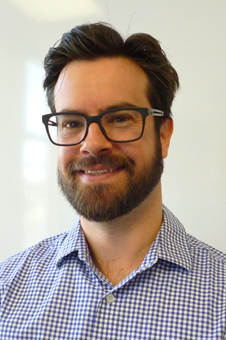
Zsofia Zavecz is a Research Associate at the University of Cambridge Department of Psychology. Her work focuses on the neurophysiological mechanisms underlying sleep and memory consolidation, with particular emphasis on electrophysiological correlates of lucid dreaming and sleep-dependent learning. Research highlights include: Investigation of EEG functional connectivity during statistical learning Study of transcranial stimulation effects on probabilistic learning Analysis of sleep restriction impacts on hormonal regulation Exploration of cognitive reserve mechanisms in sleep disorders Her neuroscientific investigations span procedural memory systems, neural oscillations, and cross-population studies in both healthy individuals and pediatric sleep-disordered breathing patients.
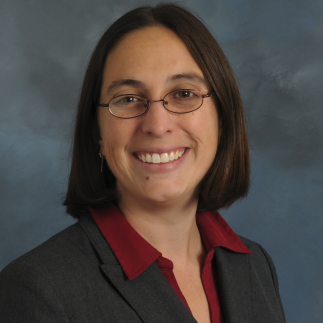
Dr. Angelina Vernetti is a Research Scientist at Yale University's Child Study Center, affiliated with the Social and Affective Neuroscience of Autism (SANA) Program. She holds a PhD in Developmental Neuropsychology from Birkbeck, University of London, and completed postdoctoral training at Yale. Her research focuses on social attention, reinforcement learning, and emotional regulation in children with autism, using advanced methodologies like eye-tracking and physiological recordings. Education: PhD in Developmental Neuropsychology, Birkbeck, University of London (2018) MSc in Neurosciences and Neuropsychology, University of Toulouse (2010) BSc in Cell Biology, University of Angers (2008) Research Interests : Dr. Vernetti investigates the neural and behavioral foundations of social difficulties in autism, including social attention mechanisms, emotional regulation abnormalities, and language processing deficits. Her work integrates experimental paradigms with neuroimaging and physiological measures to identify biomarkers for early intervention. Collaborations: She collaborates with prominent researchers like Katarzyna Chawarska and Suzanne Macari, focusing on neurodevelopmental mechanisms and translational research. Her team explores innovative approaches to autism assessment, including live eye-tracking and puppet-based interventions. Labs & Affiliations: Member of the Chawarska Lab and the Center for Brain & Mind Health. Active in training undergraduate, postgraduate, and doctoral students in autism research methodologies.
Dr. Todd D. Murphey is a Professor of Mechanical Engineering at Northwestern University's Robert R. McCormick School of Engineering and Applied Science. He serves as Director of Transformative Research and Director of the Master of Science in Robotics Program at Northwestern, leading initiatives in computational dynamics, control systems, and robotics. His work bridges engineering, neuroscience, and biomedical applications, with a focus on developing systems that interact effectively with humans and their environments. Dr. Murphey received his Ph.D. in Control and Dynamical Systems from the California Institute of Technology in 2002, with a thesis titled "Control of Multiple Model Systems." Prior to that, he earned a B.S. in Mathematics, summa cum laude, from the University of Arizona in 1997. Dr. Murphey's research centers on computational methods in dynamics and control, with applications spanning neuroscience, health science, robotics, and automation. His work in the Interactive & Emergent Autonomy Lab focuses on computational models of embedded control, biomechanical simulation, dynamic exploration, and hybrid control. The group develops mathematical approaches that lead to orders of magnitude improvement in computational efficiency for real-time implementation. Key application areas include assistive exoskeleton control, stabilization of energy networks, bio-inspired active sensing, entertainment robots, robotic exploration, and software-enabled stroke rehabilitation. Analysis of Dr. Murphey's recent publications reveals a strong emphasis on human-swarm interaction, algorithmic matter, and control of cyber-physical systems in uncertain environments. His work increasingly integrates information theory with physical systems, exploring how both autonomous and biological systems interact with environments to learn and improve behaviors. Recent trends show growing applications in rehabilitation technology, with particular focus on human-machine interaction in biomedical devices and embodied intelligence. Dr. Murphey has received numerous honors and awards for his contributions to robotics and engineering: Named Director of Transformative Research at Northwestern University (2025) Appointed IEEE Robotics and Automation Society Vice President of Publication Activities (2022) Co-recipient of Best Paper Award for IEEE Transactions on Robotics (2020) Appointed to Air Force Scientific Advisory Board (2019) Recipient of ABB Best Student Paper Award for CPL-SLAM research (2019) Cole-Higgins Award from Northwestern Engineering (2015) Dr. Murphey has supervised numerous graduate students including Taosha Fan, Giorgos Mamakoukas, and Ian Abraham, with research spanning robotic exploration using electrosense and mechanical contact, human-in-the-loop control, and shared control for rehabilitation devices. His lab has secured significant funding from the National Science Foundation, DARPA, and industry partners including Siemens and Ekso Bionics, supporting research in algorithmic matter, emergent behavior, and human-swarm collaboration. The Interactive & Emergent Autonomy Lab, led by Dr. Murphey, investigates how both autonomous systems and biological systems interact with their environments to learn and improve behaviors. Current projects include active learning and data-driven control, active perception in human-swarm collaboration, algorithmic matter and emergent computation, control for nonlinear and hybrid systems, cyber physical systems in uncertain environments, harmonious navigation in human crowds, information maximizing clinical diagnostics, reactive learning in underwater exploration, robot-assisted rehabilitation, and software-enabled biomedical devices. The lab collaborates with researchers across Northwestern and institutions including Georgia Tech, MIT, and industry partners.
Mickaël CAMPO is an Associate Professor at the University of Burgundy (Université Bourgogne Franche-Comté) in Dijon, France, specializing in sports psychology. He is affiliated with the Faculty of Sports and Physical Education (UFR STAPS) and the Socio-Psychology and Sports Management Laboratory (Laboratoire Psy-DREPI). His educational background includes a Doctorate in Sports Psychology. Prior to his current position, he served as an Associate Professor at Université de Rouen Normandie from 2013 to 2015 and completed his PhD studies at Claude Bernard University Lyon 1 from 2007 to 2010. Dr. CAMPO's research focuses on the interpersonal emotional process (IEP), particularly examining: Relationships between social psychological variables such as social identity and emotions in group contexts Interpersonal emotion regulation in sports settings Emotional contagion phenomena in team sports Psychological adaptation processes in performance and learning contexts Emotional intelligence development and application in sports His work primarily centers on team sports, with a special emphasis on rugby. He has developed theoretical frameworks like the Interpersonal Emotional Process (IEP) model and has conducted extensive research on how emotions affect performance in competitive sports environments. Dr. CAMPO has received recognition for his research, including the 1st Young Researcher Prize in 2010. His scientific contributions span numerous publications in prestigious journals, with his work focusing on the intersection of social psychology and sports performance. As an academic, Dr. CAMPO has supervised multiple research projects and has been invited to present at various conferences, including the clinical medico sport congress in Lyon. His work bridges theoretical research with practical applications for athletes, coaches, and sports psychologists.
Dr. Jatin P. Ambegaonkar is a Professor in the School of Kinesiology, College of Education and Human Development at George Mason University, where he serves as Associate Dean for Research. He holds a PhD from the University of North Carolina Greensboro and is a Certified Athletic Trainer and Occupational Therapist. His translational research bridges laboratory science and community engagement to enhance performance, reduce injury risk, and improve health outcomes across populations. Research Focus: Dr. Ambegaonkar's work centers on interdisciplinary approaches to human movement, with emphasis on: Performing artists' health and injury epidemiology Biosensor applications in sports and dance Neuromechanical assessment and concussion management Falls prevention and quality of life in older adults Community-based health interventions for underserved populations His research vision— "Arts and Health for the Physically Active, Physical Activity for Health and Artists" —drives initiatives like the SMART Laboratory (co-founded in 2006) and the SHARe Consortium. Publications: His 80+ articles demonstrate consistent focus on injury mechanisms, dance science, and aging research, with recent emphasis on kinesiophobia (2024), multifactorial fall interventions (2024), and longitudinal dancer fitness (2023). Methodologies span systematic reviews, RCTs, biomechanical analyses, and community trials. Leadership & Grants: As founding co-director of the SMART Laboratory, he leads projects including: ACHIEVES: Free athletic healthcare for underserved students POISED: Falls prevention in older adults SHARe Consortium: Multidisciplinary injury prevention for artists He has secured $6.4M across 30 grants from the National Endowment for the Arts, Potomac Health Foundation, and others. Editorial Roles: Editor-in-Chief of the Journal of Dance Medicine & Science ; Editorial Board member for the Journal of Athletic Training ; reviewer for 25+ scientific journals.
Dr. Andrew Erwin is an Assistant Professor in Mechanical Engineering at the University of Cincinnati, focusing on robotics, human-robot interaction, and rehabilitation engineering. He holds a PhD and MS from Rice University (2018, 2014) and a BS from the University of Massachusetts Amherst (2012). Prior to UC, he was a postdoc at the University of Southern California and the Jet Propulsion Laboratory. His research explores how forces and movements are executed in healthy individuals, and how robotic devices can assist or restore function post-injury. Key areas include rehabilitation robotics, bio-inspired systems, haptic interfaces, and motor learning. He has received prestigious awards such as the NASA Postdoctoral Program Fellowship (2018) and the IEEE/ASME Transactions on Mechatronics Best Paper Award (2017). Dr. Erwin’s work integrates biomechanics, control systems, and neurophysiology. His lab develops devices like the SE-AssessWrist for wrist assessment and explores planetary seismometers for space missions. He maintains an active Google Scholar profile with over 25 publications. Education: PhD, Mechanical Engineering, Rice University, 2018 MS, Mechanical Engineering, Rice University, 2014 BS, Mechanical Engineering, University of Massachusetts Amherst, 2012 His current research emphasizes curriculum design for robotics learning, human-robot collaboration, and adaptive control systems. He offers a PhD position for Fall 2025 focusing on these areas.
Rob van Beers is an Assistant Professor at the Faculty of Behavioural and Movement Sciences at Vrije Universiteit Amsterdam, with affiliations to Neurocontrol, IBBA, and AMS - Sports. His research focuses on human motor control, spatial perception, and computational modeling using Bayesian approaches to understand sensory-motor integration under uncertainty. He holds ancillary roles as a Researcher at Radboud University (Nijmegen) since 2015 and serves on the Editorial Board of the Journal of Neurophysiology since 2015. His work contributes to UN Sustainable Development Goals related to health and well-being. Key research interests include motor learning dynamics, sensorimotor adaptation, and the neural basis of spatial orientation. Recent studies explore Alzheimer’s impacts on motor adaptation and Bayesian inference in vestibular path integration. Teaching responsibilities include courses on linear systems dynamics, physical measurement techniques, and motor systems regulation. His work spans 42 peer-reviewed articles, with datasets published on platforms like Dryad and Zenodo.
Antonino Vallesi is a Full Professor in Neuropsychology and Cognitive Neuroscience at the University of Padua. He holds a master's degree in Psychology (University of Padua, 2003) and a PhD in Neuroscience (SISSA, Trieste, 2007). He has held roles as Assistant and Associate Professor at SISSA and the University of Padua before achieving his current rank. His research focuses on executive functions, cognitive aging, and temporal processing, employing neuroimaging, EEG, and experimental psychology methods. He has supervised over 10 PhD students, 13 postdocs, and 65 trainees. Education: PhD in Neuroscience, SISSA, Trieste (2007) Master's in Psychology, University of Padua (2003) Research Interests: The anatomo-functional organization of executive functions, cognitive aging, temporal processing, and neuropsychological methodologies. His work explores these areas through advanced techniques like EEG, neuroimaging, and neuromodulation. Awards: Bertelson Award (2011) Outstanding Young Person Award (2011) SIPF Prize (2017) ERC Starting Grant (2013) Advising & Grants: Supervisor of over 10 PhD students and 13 postdocs. Secured significant funding including an ERC grant. Involved in grant reviewing for EU programs (e.g., Horizon 2020) and international agencies. Labs & Teams: Leads the Executive Function Lab at the University of Padua, focusing on cognitive neuroscience and clinical applications.
Peter Fino is an Assistant Professor in the Department of Health, Kinesiology, and Recreation within the College of Health at the University of Utah. He directs the Neuromechanics and Applied Locomotion Lab, which is situated within the Cognitive and Motor Neuroscience research theme. His research focuses on understanding and improving mobility in individuals with neurological dysfunction, particularly those with brain injuries, using core concepts from biomechanics and motor control to develop better diagnostic tools and rehabilitation approaches. Dr. Fino's research explores how humans maintain stability during everyday activities that require complex motor control. His primary areas of investigation include: Foot placement control during walking and turning on uneven surfaces Balance recovery mechanisms following perturbations Effects of neurological conditions like concussion and Parkinson's disease on gait Development and application of inertial sensor technology for clinical assessment Neuroanatomical correlates of motor dysfunction after brain injury Nonlinear dynamics approaches to understanding human movement His lab employs a multidisciplinary approach, collaborating with engineers, clinicians, physical therapists, and neuroscientists to translate research findings into practical applications that improve people's lives. Current projects examine mobility in populations with traumatic brain injury, Parkinson's disease, and other neurological conditions, with particular focus on turning gait, dual-task performance, and objective measurement of balance recovery using wearable sensor technology. Dr. Fino actively mentors a diverse research team comprising PhD students, MS students, research coordinators, and undergraduate researchers. His lab has produced numerous graduates who have gone on to academic positions, clinical research roles, and healthcare professions. He maintains strong collaborative relationships across the University of Utah and with external institutions including Oregon Health & Science University, University of Nebraska Omaha, and US Army-Baylor Physical Therapy. The lab participates in outreach through National Biomechanics Day and partnerships with high school programs to introduce students to biomechanics and neuroscience.
Ju Lu serves as an Assistant Professor at Lehigh University with office location in Iacocca Hall (room 0111), contactable via phone (610.758-3687) and email (jul724@lehigh.edu). Her academic position reflects active engagement in neuroscience research and education within the university's life sciences framework. Education Background: Ph.D. in Neurobiology from Harvard University (2008) B.Eng. in Microelectronics from Tsinghua University (2002) Research Focus: Dr. Lu's work pioneers investigations into neural circuit dynamics and synaptic plasticity mechanisms using advanced optical imaging technologies. Her research spans: Cortical circuit reorganization during motor skill acquisition across species Stress-induced synaptic alterations mediated by microglia in prefrontal circuits Therapeutic applications of psychedelic compounds for neural circuit restoration Development of three-photon microscopy for deep-brain imaging Genetically-encoded neurotransmitter sensors for in vivo studies This multidisciplinary approach bridges molecular neuroscience, systems-level circuit analysis, and translational mental health applications. Publication Trends: Analysis of Dr. Lu's 15 most recent publications (2016-2023) reveals an evolving trajectory from foundational studies on dendritic spine plasticity toward translational neuroscience. Early work emphasized optical imaging methodology and basic plasticity mechanisms, while her 2021-2023 publications increasingly focus on stress-related circuit disruptions and psychedelic therapeutics. A consistent thread involves combining high-resolution in vivo imaging with behavioral models to establish causal links between neural circuit dynamics and cognitive functions. Honors and Awards: No scientific awards or fellowships were documented in the provided materials. Mentorship and Funding: While specific student mentees and grant funding details are not specified in the source text, her extensive collaborative publication record indicates active supervision of research personnel and successful acquisition of research support. Research Infrastructure: Her methodological expertise in advanced microscopy suggests utilization of specialized imaging facilities, though no dedicated laboratory or research team is explicitly identified in the available documentation.
Margaret Greenwald serves as Associate Professor and Ph.D. Coordinator in the Department of Communication Sciences and Disorders (CSD) within Wayne State University's College of Liberal Arts and Sciences. Previously department chair (2014-2020), she is a Licensed and Certified Speech-Language Pathologist (CCC-SLP) recognized in 2022 as Wayne State's Outstanding Graduate Mentor in the health sciences. Her academic credentials include: M.A. in Speech-Language Pathology (University of Florida) Ph.D. in Communicative Sciences and Disorders (University of Florida) Post Doctoral Research Training in Cognitive Neuropsychology (University of Maryland, Department of Neurology) Dr. Greenwald's research centers on adult neurogenic communication disorders , specializing in aphasia, traumatic brain injury, and stroke rehabilitation through cognitive neuropsychology. Her work employs Magnetoencephalography (MEG) to map brain-behavior relationships during language and musical processing tasks, revealing critical insights for rehabilitation. She actively bridges clinical practice with neuroscience to develop evidence-based interventions. Analysis of her recent publications shows consistent focus on neuroimaging applications for understanding language disorders, with growing emphasis on telepractice implementation and the cognitive effects of musical training. Her work demonstrates strong translational value, connecting basic neuroscience to clinical rehabilitation protocols while maintaining rigorous methodological standards. Her scientific recognition includes: Outstanding Graduate Mentor in the Health Sciences, Wayne State University (2022) As an educator, Dr. Greenwald teaches graduate courses in aphasia, neuromuscular speech disorders, research methods, and doctoral seminars, plus undergraduate speech-language pathology instruction. She supervises doctoral research as Ph.D. coordinator and mentors students through clinical research projects. Her teaching integrates current neuroscience findings with clinical practice standards. She maintains active professional engagement through memberships in the American Speech-Language Hearing Association (ASHA), Academy of Aphasia, and International Neuropsychological Society, contributing to both clinical guidelines development and research community advancement.
David Mann serves as an Associate Professor at Vrije Universiteit Amsterdam in the Faculty of Behavioural and Movement Sciences, with additional appointments at the Institute for Brain and Behavior Amsterdam (IBBA) and Amsterdam Movement Sciences - Sports (AMS). His research focuses on the intersection of vision science, sports performance, and cognitive processes, particularly examining how visual impairments affect athletic performance and everyday functioning. Dr. Mann's research interests center on visual impairment in athletes, gaze behavior during sports performance, visual search patterns, and talent identification. His work spans multiple disciplines including sports psychology, cognitive neuroscience, and adaptive sports, with particular emphasis on how visual field and acuity limitations impact performance in basketball, football, and ball sports. His fingerprint analysis reveals strong expertise in Visual Impairment (100%), Athletes (91%), Visual Acuity (67%), Visual Field (53%), Visual Search (37%), and Gaze Behavior (33%). His recent publications demonstrate a consistent focus on understanding the relationship between visual perception and sports performance. Key research trends include examining quiet eye duration in basketball shooting, the effects of vision loss on naturalistic search, the role of cognitive skills in youth football performance, dynamic anticipation in sports, and how people with vision impairment use gaze to hit balls. These studies employ methodologies including eye tracking, cognitive testing, and performance analysis across various sports contexts. Dr. Mann currently serves as Director of the International Paralympic Committee (IPC) Classification Research and Development Centre for Athletes with Vision Impairment, demonstrating his leadership in this specialized field. He is also active in teaching as Course Coordinator for Talent and Talent Identification. His research portfolio includes an active project titled "Developing sensory-cognitive predictors of everyday functioning with visual impairment" running from January 2023 to December 2025, which he conducts with colleague C. Olivers. Dr. Mann has supervised 6 PhD theses and teaches courses including Master Research Project, Talent and Talent Identification, and Talent Identification and Development.
Steven Livingstone is an Associate Professor in the Department of Computer Science at Ontario Tech University, Faculty of Science. His research focuses on affective data science, applying machine learning and statistical modeling to understand emotion and its disorders. He leads the Affective Data Science Lab (ADSL), specializing in emotion recognition technologies using physiological data like EEG and motion capture. Livingstone holds a PhD from The University of Queensland (2008) and has published over 70 peer-reviewed papers, with over 2,400 citations. His RAVDESS dataset is widely used in speech emotion recognition research. His research interests span data science, affective computing, and music's role in emotion. Recent work emphasizes data provisioning for deep learning applications. Livingstone teaches courses including Scientific Data Analysis and Information Visualization. He actively mentors undergraduate and graduate students in his lab, focusing on research assistantships in emotion technology development. Key contributions include studies on musical tempo’s physiological effects, Parkinson’s disease facial mimicry deficits, and ensemble performance dynamics. His work has been featured in The Atlantic, NBC Today, and on the cover of Informatik Spektrum. The ADSL lab collaborates on projects combining data analytics with human-computer interaction to advance emotion-aware systems.
Dr. Kelly Lynn Mulvey is an Associate Professor in the Department of Psychology at North Carolina State University. She holds a Ph.D. from the University of Maryland and prior degrees from Duke University, with teaching experience in public schools. Her research focuses on social-cognitive development, particularly in STEM equity, stereotypes, and intergroup dynamics. She currently leads federally funded projects by the National Institute of Justice and National Science Foundation. Her work examines children’s moral reasoning, peer exclusion, and bias, alongside initiatives to broaden STEM participation for underrepresented groups. She runs the Mulvey Social Development Lab , collaborating on projects like the World Smarts STEM Challenge and interventions addressing gender stereotypes in motor skills. Recent studies explore refugee inclusion, transgender identity development, and bystander responses to bias-based bullying. Dr. Mulvey’s research bridges developmental psychology and education, emphasizing participatory methods and real-world applications. She investigates how school climates and informal learning sites influence STEM engagement, particularly for marginalized youth. Ongoing projects address pandemic-era media literacy, disaster-impacted students’ STEM identity, and antiracist curricula in schools. Funding: National Institute of Justice, National Science Foundation Labs/Teams: Mulvey Social Development Lab Key Themes: Equity in STEM, Social Justice, Child Development
Robert J Zatorre is a cognitive neuroscientist at the Montreal Neurological Institute (MNI) of McGill University . He earned his PhD in experimental psychology from Brown University in 1981 under Peter Eimas and completed postdoctoral research at MNI with Brenda Milner. His work focuses on the neural mechanisms underlying auditory perception, music cognition, and brain plasticity, utilizing techniques such as fMRI and non-invasive brain stimulation. Key Research Areas : Neural substrates of auditory processing, dopamine’s role in musical reward, congenital amusia, and sensory-motor learning. Recent publications highlight his expertise in decoding brain activity related to developmental disorders, auditory perception, and the neural basis of musical reward. He actively contributes to journals like Frontiers in Neuroscience and Proceedings of the National Academy of Sciences as an editor and reviewer. Editorial Roles : Chief Editor for Auditory Cognitive Neuroscience, Frontiers in Neuroscience Guest Associate Editor for Frontiers in Systems Neuroscience and Frontiers in Human Neuroscience