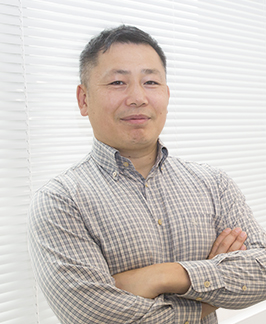
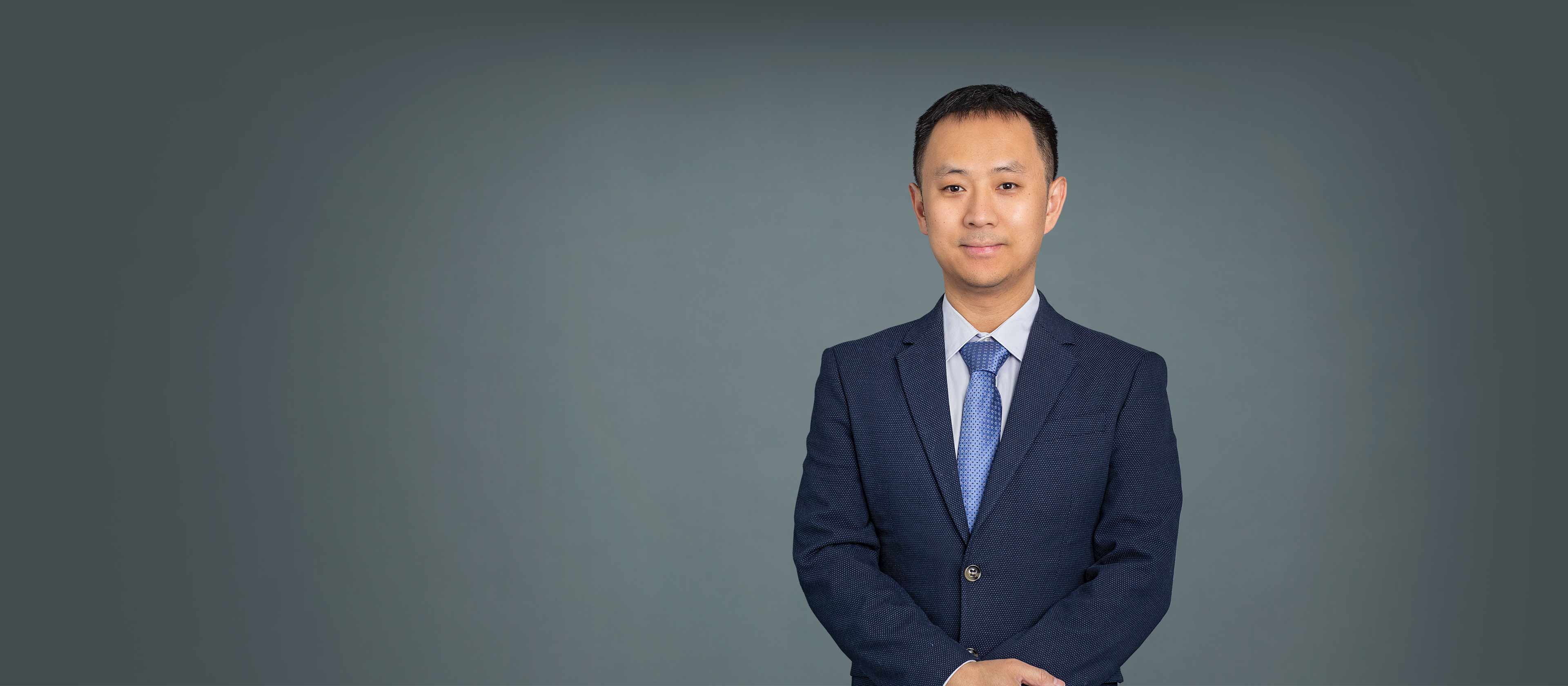
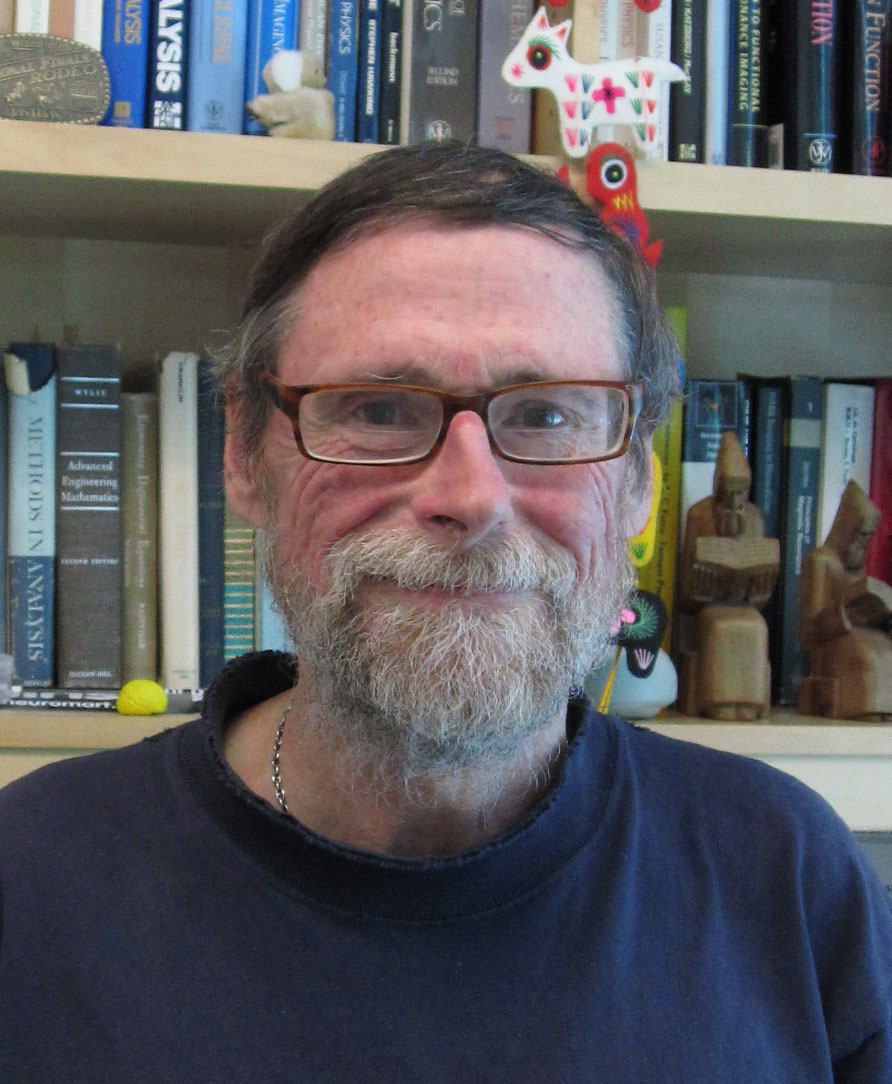
Professor Jonathan Leach leads the Quantum Optics and Computational Imaging group at Heriot-Watt University's School of Engineering & Physical Sciences. His experimental quantum optics research develops novel methods for generating, manipulating, and detecting quantum states of light for secure communication and ultra-sensitive sensing. Work bridges quantum information science and computational imaging, with applications including high-dimensional entanglement systems, quantum state measurement techniques, and fundamental limits of super-resolution imaging. Publications demonstrate advanced quantum imaging techniques, with recent focus on single-photon lidar enhancement, quantum ghost imaging, and structured light manipulation. Research consistently integrates quantum phenomena with computational methods. Switched On Award for Most Engaging Lecturer (2015) Group investigates quantum technologies for achieving performance advantages in computation, communication, and imaging beyond classical limits.
Dr. L. Tugan Muftuler is a Professor at the Medical College of Wisconsin, specializing in MRI technology development. His research focuses on advancing MRI techniques for neuroimaging, musculoskeletal imaging, and quantitative analysis of intervertebral disc degeneration. With a PhD in Electrical Engineering from Orta Dogu Technical University and postdoctoral training at UC Irvine, he has led innovations in diffusion MRI, non-Cartesian sampling methods, and RF coil design. He is Director of the MR Engineering and MREIT division (previously at UC Irvine) and has pioneered techniques like mean apparent propagator MRI and optimized SENSE imaging. His academic credentials include a UNESCO Fellowship, NATO postdoctoral award, and multiple awards from the International Society for Magnetic Resonance in Medicine, including 2006 Engineering Award and 2014 musculoskeletal MRI prize. His work addresses clinical challenges through collaborations across engineering and medical disciplines, with notable contributions to understanding post-concussion brain changes and spinal degeneration mechanisms. Key research themes include fast imaging protocols, spinal MRI biomarkers, and MRI-based electrical impedance tomography (MREIT). His lab develops both hardware (RF coils) and software (image reconstruction algorithms), with recent focus on machine learning for SMS reconstruction optimization. He has authored over 50 peer-reviewed papers, spanning topics from 7T cardiac imaging to fighter pilot spine biomechanics.
Jack Baker is a Professor of Civil & Environmental Engineering and Associate Dean for Faculty Affairs at Stanford University's Doerr School of Sustainability. His research focuses on quantifying and managing disaster risk and resilience using probabilistic and statistical tools. He has contributed to risk analysis of spatially distributed systems, earthquake ground motion characterization, and post-disaster recovery modeling. He is the author of the textbook Seismic Hazard and Risk Analysis , directs the Stanford Urban Resilience Initiative, and serves as Editor-in-Chief of Earthquake Spectra . Education: B.A. in Mathematics/Physics from Whitman College (2000), M.S. in Civil & Environmental Engineering (2002), M.S. in Statistics (2004), and Ph.D. in Civil & Environmental Engineering (2005) from Stanford University. Research interests include disaster risk analysis, infrastructure resilience, probabilistic modeling, and the integration of machine learning in hazard assessment. His work bridges engineering principles with societal impacts, emphasizing practical applications in policy and disaster preparedness. Publications highlight advancements in seismic fragility modeling, atmospheric river flood risk, and post-disaster recovery simulations. His articles underscore interdisciplinary approaches, combining statistical methods with geospatial data to address complex challenges like urban resilience and climate adaptation. Award-winning scholar recognized for contributions to earthquake engineering, risk analysis, and teaching excellence. Leads initiatives such as the Stanford Catastrophe Modeling & Resilience Program, fostering collaboration between academia, industry, and policymakers to enhance community resilience.
Kate Leary, PhD, is an Assistant Professor of Hydrology in the Earth & Environmental Science department at New Mexico Tech. She holds a Ph.D. in Geology from Arizona State University’s School of Earth and Space Exploration. Her research focuses on bedform kinematics, fluvial geomorphology, and sediment transport, with a particular emphasis on experimental approaches and field investigations in the Colorado River (Grand Canyon). She collaborates with the U.S. Geological Survey on projects involving high-resolution bed elevation data analysis. Beyond academia, Leary actively engages in science communication through AGU’s Earth & Planetary Surface Processes social media platforms, including the #WisdomWednesday initiative and EPSP Connects virtual seminars. Her work bridges field observations, analog modeling, and numerical computations to elucidate Earth’s surface processes. Research Interests: Leary’s experimental studies explore particle trajectories and 3D bedform dynamics, while her fieldwork integrates spatially resolved data from rivers to understand sediment transport mechanisms. Her recent studies address topics like paleohydrology, coastal aquifer dynamics, and the geomorphic impacts of rapid sedimentation. She emphasizes interdisciplinary approaches, linking fluid dynamics and sediment transport to stratigraphic records. Articles Trends: Her publications (2014–2024) consistently investigate bedform behavior, sediment transport quantification, and paleohydraulic reconstructions. Key themes include 3D bedform evolution, spatiotemporal transport patterns, and the influence of splat events on flow structures. Recent work (2022–2024) explores modern applications like coastal seawater entrapment and high-resolution bedload mapping via acoustic surveys. Awards: No specific scientific awards mentioned in the text. Grants and funding sources are not detailed here. Lab/Teams: Collaborates with USGS Grand Canyon Monitoring & Research Center on fluvial projects. Engages with AGU communities for science outreach. Part of 500WomenScientists and 500QueerScientists advocacy networks.
Morten Rieger Hannemose is an Assistant Professor at the Department of Applied Mathematics and Computer Science, Technical University of Denmark (DTU). His research focuses on computer vision, medical imaging, 3D reconstruction, and AI-driven healthcare solutions. He is actively involved in projects like 'Fighting Cancer with Generative AI' and 'Decision support AI for Skin Lesions,' supervising multiple PhD students in these domains. His work contributes to UN Sustainable Development Goals related to health and innovation. Research interests include neural networks, medical image analysis, and computational imaging. Notable achievements include developing methods for digitizing material appearances and estimating diagnostic difficulty in skin lesion diagnosis. He collaborates internationally on topics such as monocular 3D pose estimation and multimodal data fusion. Morten has supervised PhD students in areas like crowd counting through remote sensing, generative AI for cancer diagnostics, and diffusion models for image segmentation. His projects often bridge theory and application, such as creating the 'Sportspose' 3D sports pose dataset. His email is mohan@dtu.dk , and his website is mortenhannemose.github.io .
Dr. Dimitris Tzionas is an Assistant Professor at the University of Amsterdam leading research at the intersection of Computer Vision, Computer Graphics, and Machine Learning. His work focuses on modeling human appearance, motion, and interactions within physical environments. His research explores: 3D reconstruction of humans and objects from images/video Modeling whole-body interactions with scenes Developing novel representations for articulated motion Creating realistic digital avatars for AR/VR applications Recent publications demonstrate consistent focus on human-object interaction modeling, 3D reconstruction under challenging conditions, and the development of novel datasets. Work frequently appears in top-tier venues like CVPR, ICCV, and ECCV. Awards & Recognition: Outstanding Reviewer - CVPR 2021 Outstanding Reviewer - CVPR 2023 Best Paper Finalist - CVPR 2022 Current PhD students include George Paschalidis and Dimitrije Antic. Research is supported by grants including BMBF funding for 'Machine Learning for Interacting Human Avatars'. The lab maintains collaborations with MPI-IS Tübingen and develops novel capture systems for human motion analysis.
Dr. Tajdari is a distinguished researcher at Delft University of Technology, specializing in interdisciplinary fields at the intersection of robotics, control systems, and biomedical engineering. His work focuses on advanced control methodologies, non-rigid registration techniques for medical imaging, intelligent transportation systems, and personalized product design through digital fabrication. He has contributed significantly to the development of adaptive controllers for robotics systems, including Stewart platforms and surgical robots, as well as innovative approaches to 3D/4D human mesh registration for applications in healthcare and biomechanics. Key Research Areas: Autonomous Vehicles, Medical Robotics, Intelligent Transportation, 3D Reconstruction, and Human-Motion Analysis His recent research emphasizes integrating machine learning with traditional control theory to address challenges in traffic management, spinal deformity prognosis, and human-centered design. Collaborations include projects on smart infrastructure systems and personalized medical devices. Over 25 peer-reviewed articles demonstrate his expertise in both theoretical and applied engineering domains.
Raquel Urtasun is a Full Professor in the Department of Computer Science at the University of Toronto and Founder & CEO of Waabi , a leading AI-driven autonomous driving company. She is also a co-founder of the Vector Institute for AI . Her research focuses on machine learning, computer vision, and robotics, with a particular emphasis on self-driving cars and remote sensing. Urtasun holds a Ph.D. from the Ecole Polytechnique Fédérale de Lausanne (EPFL) and has held roles including Chief Scientist at Uber ATG and visiting professorships at ETH Zurich and MIT. Education: Bachelor's in Computer Science, Universidad Pública de Navarra (2000) Ph.D. in Computer Science, EPFL (2006) Postdoctoral research at MIT and UC Berkeley Research Interests: Her work bridges theoretical machine learning with practical applications in autonomous systems. Key areas include deep structured models, end-to-end learning for perception, and scalable optimization for real-time systems. She is known for developing the KITTI benchmark for autonomous vehicle evaluation, which became a global standard. Articles Trends: Recent publications emphasize multi-modal fusion, efficient neural architectures, and robust uncertainty estimation for autonomous systems. Her work at CVPR, ICCV, and ECCV conferences highlights advancements in 3D scene understanding and decision-making under uncertainty. Awards: NSERC EWR Steacie Fellowship (2017) NVIDIA Pioneers of AI Award (2016) Three Google Faculty Research Awards UPNA Alumni Award (2018) Chatelaine Woman of the Year (2018) Advising & Grants: Supervises over 20 graduate students and has led major projects funded by NSERC, NVIDIA, and industry partners. Her lab has been an NVIDIA NVAIL member and received grants from the Ministry of Research & Innovation and Connaught Foundation. Labs & Teams: Leads the Urtasun Lab at UofT, collaborating with Waabi and the Vector Institute. Teams focus on interdisciplinary projects combining AI, robotics, and large-scale data systems.
Maani Ghaffari is an Assistant Professor in the Department of Naval Architecture and Marine Engineering and Robotics at the University of Michigan. His work focuses on robotics, autonomous systems, and the integration of applied mathematics with machine learning. He leads the Computational Autonomy and Robotics Laboratory, advancing research in sensor fusion, state estimation, and geometric control. Ghaffari teaches courses such as NA/EECS 568: Mobile Robotics and ROB 101: Computational Linear Algebra . His research interests include robotic perception, planning under uncertainty, and invariant filtering techniques for navigation systems. He has developed frameworks like GPS-DRIFT for marine robotics and contributed to SLAM algorithms for surgical and underwater applications. Ghaffari's work emphasizes robustness in dynamic environments, leveraging Lie algebraic methods and equivariant neural networks. Notable contributions include correspondence-free point cloud registration, Bayesian semantic mapping, and energy-based terrain modeling for legged robots. His research bridges theory and practice, with applications in surgery navigation, autonomous vehicles, and industrial anomaly detection.
Roles & Affiliations: Professor of Computer Graphics at the Department of Computer Science, University of Hong Kong (since 2020). Previously at University of Edinburgh (2006-2020), City University of Hong Kong (2002-2020), and RIKEN (2000-2002). Holds a BSc, MSc, and DSc in Information Science from the University of Tokyo. Research Interests: Focuses on physically-based animation, character animation, 3D modeling, cloth animation, and robotics. Recent work emphasizes machine learning integration into animation synthesis. Notable projects include MotionNet (3D motion reconstruction), neural state machines for character interactions, and fracture simulation with material points. Publications: Over 100 peer-reviewed papers spanning SIGGRAPH, Eurographics, and IEEE journals. Recent work emphasizes deep learning applications in animation, medical imaging analysis, and physics-based simulations. Key trends include neural networks for motion synthesis, transformer-based models for 3D gestures, and topology-aware shape reconstruction. Awards: Royal Society Industry Fellowship (2014), Google AR/VR Research Award (2017). Recognized for contributions to physically-based animation and medical imaging AI. Labs & Collaborations: Leads research groups in computer graphics and AI at HKU. Collaborates with institutions on robotics, VR/AR, and medical imaging projects. Active in organizing SIGGRAPH and Eurographics conferences.
Xin Chen is an Associate Professor of Computer Science at the University of Nottingham, School of Computer Science. He is an IEEE Senior Member with expertise in medical image analysis, computer vision, and machine learning. His educational background includes BEng and PhD degrees, though specific institutions are not mentioned in the provided text. Chen's research focuses on medical image processing with particular emphasis on image segmentation, registration, and motion analysis. His work applies computer vision and machine learning techniques to solve medical challenges in areas such as wrist injury analysis, diabetes care, breast cancer screening, and MRI reconstruction. His team develops algorithms for 2D/3D image segmentation, image registration, statistical shape/motion modeling, and CT & MRI image reconstruction. His recent publications (2023-2025) show a strong focus on deep learning approaches for medical image analysis, particularly segmentation and registration tasks. These works often incorporate innovative techniques like fuzzy systems, transformer networks, and uncertainty modeling to address challenges in medical image analysis. IEEE Senior Member Chen has successfully supervised multiple PhD students to completion and currently mentors several PhD candidates. His research is supported by significant grants from Wellcome Leap, MRC, ERC, NIHR/NHSx, Weston Brain Institute, British Heart Foundation, and Precision Imaging Beacon. His team, the Intelligent Modelling & Analysis Group, focuses on translating computer vision and machine learning research into practical medical applications. The group maintains active collaborations with medical researchers and clinicians, developing software tools for 2D/3D interactive image segmentation and automatic nerve fiber quantification in corneal confocal microscopy images.
Dr. Timon Hilker is a Reader in the Department of Physics at the University of Strathclyde, United Kingdom, within the Faculty of Science. He is actively engaged in cutting-edge research in quantum simulation and ultracold atom physics, with a focus on quantum gases, optical lattices, and high-temperature superconductivity. He is the Principal Investigator of the ERC-funded project FORBQ, running from 2025 to 2030. His research interests span quantum many-body systems, Fermi-Hubbard models, wave turbulence in quantum gases, and the engineering of quantum simulators. His work combines experimental precision with theoretical insight to explore strongly correlated quantum matter. The recent publications highlight a strong trend in using cold atoms to simulate complex condensed matter phenomena, particularly stripe formation, doping effects, and Hamiltonian engineering in quantum simulators. His work frequently appears in high-impact journals such as Nature and Physical Review Letters . Dr. Hilker is accepting PhD students and leads a significant research project funded by the European Commission under Horizon Europe, indicating active grant support and research leadership. He is part of a collaborative network involving leading institutions in quantum science, working with experts in quantum simulation and condensed matter theory. His lab focuses on building and controlling fermionic quantum simulators for exploring novel quantum phases.
Li Feng, PhD, is an Associate Professor in the Department of Radiology at NYU Grossman School of Medicine, New York University, where he also serves as Director of Rapid Imaging. He earned his PhD from New York University, specializing in advanced medical imaging techniques. His research focuses on accelerating and optimizing Magnetic Resonance Imaging (MRI) through novel computational methods. Key areas include: Rapid imaging protocols for abdominal and liver diagnostics Deep learning-based reconstruction of dynamic MRI data Quantitative mapping techniques for tissue characterization Motion-robust acquisition methods for clinical applications Recent publications demonstrate his leadership in developing GPU-accelerated reconstruction algorithms, non-contrast-enhanced vascular imaging, and AI-driven quantitative MRI techniques applied to neurology, oncology, and metabolic disorders. His work consistently bridges technical innovation with clinical translation. Dr. Feng leads multiple clinical trials including: 3D Free-Breathing Fat and Iron Corrected T1 Mapping Rapid Motion-Robust DCE-MRI for Liver Perfusion Quantification Rapid Structure-Function MRI of the Lung for Post-COVID-19 Management
Gary H. Glover is Professor of Radiology at Stanford University School of Medicine, with courtesy appointments as Professor of Electrical Engineering and Professor of Psychology. He also holds professorships in the Neurosciences and Biophysics programs and serves as Director of the Radiological Sciences Laboratory at the Lucas Center. His academic career spans over five decades with significant contributions to medical imaging physics. Dr. Glover earned his B.S. (1964), M.S. (1965), and Ph.D. (1969) in Electrical Engineering from the University of Minnesota, where his dissertation focused on "Millimeter-wave interaction with an InSb Magnetoplasma." His educational background laid the foundation for his pioneering work in MRI physics and engineering. Dr. Glover's research focuses on the physics and mathematics of Magnetic Resonance Imaging, particularly rapid MRI scanning methods using spiral and other non-Cartesian k-space trajectories for dynamic imaging of brain function. His work develops pulse sequences and processing methods for mapping cortical brain function by imaging metabolic responses to stimuli, with applications in basic neuroscience and clinical settings. His research has significantly advanced the understanding of hemodynamically driven increases in oxygen content in activated cortex, using pulse sequences sensitive to paramagnetic behavior of deoxyhemoglobin. Analysis of Dr. Glover's recent publications reveals a consistent focus on improving fMRI techniques, with particular emphasis on physiological noise correction, spiral imaging methods, and BOLD signal analysis. His work spans technical MRI physics, physiological monitoring, and clinical applications in neuroimaging and breast imaging. The publications demonstrate his continued leadership in addressing fundamental challenges in MRI acquisition, reconstruction, and physiological confound effects. General Electric Company Steinmetz Award (1985) Fellow, American Institute for Medical and Biological Engineering (1997) President, ISMRM (1998) Gold Medal, ISMRM (2000) RSNA Outstanding Researcher Award (2001) Member, National Academy of Engineering (2006) Outstanding Teacher Award, ISMRM (2010) ISMRM Lauterbur Lecturer (2018) Dr. Glover has advised numerous graduate students and postdoctoral researchers, with his research group including members such as Hyemin Han, Emily Ferenczi, and Haisam Islam. His laboratory has received substantial funding from NIH and other sources to advance MRI technology. The Radiological Sciences Laboratory under his direction has been a hub for innovation in MRI physics, developing techniques like spiral-in/out imaging, physiological noise correction methods (RETROICOR), and specialized software tools for fMRI analysis. The Radiological Sciences Laboratory at the Lucas Center, directed by Dr. Glover, has maintained a collaborative research environment focused on developing advanced MRI techniques. The lab has produced numerous software tools including the fmriutil package for fMRI analysis, retroicor for physiological noise correction, and specialized reconstruction algorithms. Dr. Glover's team has consistently bridged engineering physics with clinical applications, maintaining strong collaborations across Stanford and with external institutions.
David Blinder is a Professor at the Vrije Universiteit Brussel (VUB) in the Department of Electronics and Informatics (ETRO), where he maintains a dual affiliation with the imec research institute. He concurrently holds a JSPS International Research Fellow position at Chiba University, leveraging over a decade of cross-institutional expertise in optics, signal processing, and computer science to advance computational holography and photonics. His research program centers on signal processing in photonics and holography, with emphasis on numerical diffraction, time-frequency analysis, data compression, and computational imaging. As lead editor of the JPEG Pleno Holography standard, he drives innovation in holographic data representation and transmission. His work integrates optical setups, holographic displays, and high-performance computing to solve complex problems in 3D visualization and inverse methods. Recent publications demonstrate a cohesive trajectory toward efficient computational frameworks for holographic systems, with recurring themes in numerical diffraction algorithms, polygon-based hologram generation, and asymmetric point-spread function optimization. These advances directly enable next-generation holographic displays and computational imaging applications across medical visualization and augmented reality. Blinder's contributions have been recognized through significant honors: Editor's Pick award (October 2024) Editor's Pick award (September 2024) Suzuki-Okada Memorial prize (June 2024) OSA Outstanding Reviewer recognition (2018) He has mentored master's students including A. Ouahabi (2015, Motion Estimation for Dynamic Holography) and F. Suarez Groen (2017, GPU-optimized Computer-Generated Holography). His research is sustained by major grants: FWOAL1100: Advanced dynamic computer-generated holography (2024-2026) FWOAL1101: Computational Incoherent holographic plenoptic camera (2024-2027) FWOTM1099: Chirplet-based diffraction framework (2022-2027) Tech4Health: Future health technologies (2024-2025) As a core member of VUB's ETRO department and imec, Blinder leads interdisciplinary teams in projects like GEAR and Tech4Health, developing holographic visualization systems for medical applications while advancing fundamental optical computing methodologies.