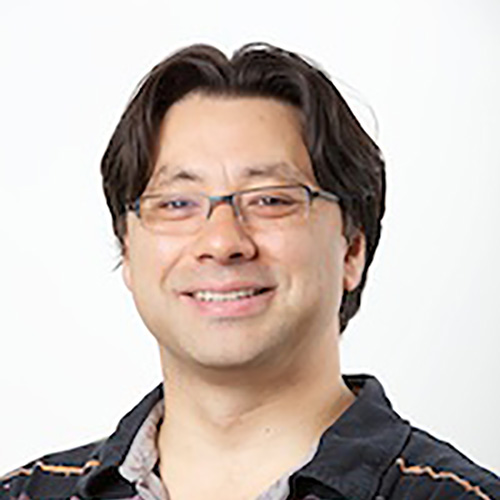
Wei Li is an Associate Professor at the Vancouver School of Economics , part of the Faculty of Arts at the University of British Columbia . Their research focuses on asymmetric information, incentives, and communication protocols in economic and political environments. Ph.D., Massachusetts Institute of Technology M.A., Harvard University Research interests include: Contract Theory Applied Game Theory Information Economics Social Network Dynamics Strategic Communication Bounded Rationality in Learning Recent publications explore: Optimal targeting to counter misinformation in social networks Cognitive constraints in network learning Dynamic influence strategies Principal-agent problems under limited commitment Drive signaling in career concerns models Teaching activities and affiliations are centered around theoretical economics frameworks. In personal time, they engage in reading, yoga, and arts appreciation.
Dr. Joukje Swinkels is an Assistant Professor in Sociology at the Vrije Universiteit Amsterdam's Faculty of Social Sciences and Humanities. She specializes in social gerontology, focusing on informal caregiving dynamics, spousal caregiver burden, and aging populations. Her research employs longitudinal datasets like the Longitudinal Aging Study Amsterdam (LASA) and TOPICS-MDS, integrating sociological theories with stress process models. She is affiliated with the Social Gerontology Research Group and the VU Centre of Enterprise Family Research (CEFR), contributing to both academic and applied projects for Dutch governmental and non-governmental organizations. Education: PhD in Sociology (2022, VU Amsterdam) with a thesis on spousal caregiver burden, Master’s in Sociology (cum laude, 2013, VU Amsterdam). Research interests include caregiver stress adaptation, gender disparities in caregiving, and policy impacts on elderly care networks. Methodologically, she emphasizes longitudinal analysis and mixed-methods approaches. Key projects include FAMCARE (family care networks) and IN-CARE (international care system comparisons). Publications span 16 peer-reviewed articles in journals like The Gerontologist and Aging and Mental Health , focusing on care networks, wellbeing associations, and self-determination theory applications. Applied work includes the annual Nationaal Vrijheidsonderzoek and evaluations for the Ministry of Social Affairs. Teaching roles include statistical courses for sociology and enterprise family programs. Awards include two NWO mini-grants (2015/2016) and the Van der Zouwenprijs 2013. She collaborates on initiatives like SHARESTATS, an open educational resource for statistics instruction. Labs/Teams: Active in the Social Gerontology Research Group, ROEF program, and CEFR. Current projects include LASA cohort updates and cross-country care system comparisons under IN-CARE.
Peihan Miao is an Assistant Professor in the Department of Computer Science at Brown University, affiliated with the Theory Group. She holds a PhD from UC Berkeley (2019) under Sanjam Garg and a BS from Shanghai Jiao Tong University. Prior to Brown, she was at the University of Illinois Chicago (2020–2022) and Visa Research (2019–2020). Her research focuses on cryptography and security, particularly secure multi-party computation (MPC), with applications in genomics and privacy-preserving machine learning. She has received NSF, Meta, Google, and Amazon awards. Her work bridges theoretical foundations and practical implementations, addressing challenges in private set intersection (PSI), updatable encryption, and federated learning. Teaching includes courses on cryptography and secure computation at Brown and UIC. She mentors PhD students and postdocs, leading collaborative projects in privacy-enhancing technologies. Her lab explores MPC protocols, privacy-preserving techniques, and interdisciplinary applications in bioinformatics. Key awards include the NSF CAREER Award and Google/Amazon Research Scholarships. Grants support projects like privateQTL for genomic data analysis and secure PSI protocols. Her service includes program committees for CRYPTO, TCC, and ASIACRYPT.
Laura Redmond serves as an Associate Professor of Civil Engineering at Clemson University's College of Engineering, Computing and Applied Sciences, where she heads the Clemson Advanced Structures Laboratory (CASL). Her research spans civil, mechanical, and aerospace applications with a focus on advanced simulation techniques and model validation. Education: B.S., Civil Engineering, 2010, Georgia Institute of Technology M.S., Civil Engineering, 2012, Georgia Institute of Technology Ph.D., Civil Engineering, 2015, Georgia Institute of Technology Dr. Redmond's research expertise centers on creating models for complex material and structural behavior with experimental validation. Her work spans seismic behavior of concrete and masonry structures, test-validated finite element simulations for bridge health monitoring, modeling of rigid-flex PCB robotics for extreme environments, and Bayesian calibration techniques for finite element models. She has developed innovative approaches for drive-by health monitoring of bridges using vehicle-mounted sensors and has contributed to NASA's Mars 2020 mission through her work on sample tube sealing mechanisms. Her recent publications reveal a strong emphasis on structural health monitoring, robotics, and computational modeling across civil, mechanical, and aerospace applications. The research shows increasing integration of Bayesian methods, machine learning, and advanced computational techniques to solve complex engineering problems in structural dynamics, materials science, and planetary exploration. Dr. Redmond actively mentors numerous graduate and undergraduate students across various research projects, including drive-by bridge monitoring, rigid-flex robotics, lightweight grout for masonry, and buckling-restrained braced frames. Her research is supported by multiple funding sources including the National Science Foundation, NASA, South Carolina Space Grant Consortium, Precast/Prestressed Concrete Institute, National Concrete Masonry Association, and U.S. Army DEVCOM GVSC. Her laboratory, CASL, focuses on creating new models to analyze complex material and structural behavior while utilizing experiments to validate these models for diverse engineering applications. Current projects include design and analysis of rigid-flex PCB robots for extreme impact resistance, drive-by health monitoring using Bayesian model updating, buckling-restrained braced frames in precast structures, lightweight grout research, and end-to-end validation of autonomy-enabled ground vehicles.
Dr. Anh Tu Hoang is a Postdoctoral Researcher at TU Hamburg's Institute for Data Engineering, specializing in privacy-preserving systems, blockchain technologies, and knowledge graph anonymization. He holds a PhD from the University of Insubria, Italy, and degrees from Vietnam National University. His research addresses data security challenges in machine learning, federated learning, and decentralized systems. Education: Bachelor of Information Technology, University of Science, Vietnam National University (Ho Chi Minh City) Master of Information Systems, University of Science, Vietnam National University PhD in Computer Science, University of Insubria, Italy (2020) Research Focus: His work centers on developing mechanisms to protect privacy and security during data sharing, machine learning training, and blockchain operations. Key contributions include time-aware anonymization for knowledge graphs and blockchain-based federated learning frameworks. Projects include CDL-BOT and Orchid, focusing on decentralized learning and privacy-aware systems. Publications: Over 12 peer-reviewed articles in top venues like IEEE ICDE, ACM TOPS, and IEEE TDSC, with a focus on anonymization techniques, federated learning, and cryptographic protocols. Recent work explores zero-knowledge proofs for self-sovereign identity and proximity marketing privacy. Expertise: Combines cryptographic methods with data privacy principles to address modern challenges in distributed systems, social networks, and collaborative AI environments.
Dr. Jenni Brooks is an Associate Professor of Social Policy at the Sheffield Institute of Social Sciences, part of the University of Sheffield Hallam. She specializes in sociological and policy-oriented research focusing on social care systems, ageing populations, and the lived experiences of individuals with health conditions or impairments. Her work addresses critical issues such as dementia care, personal assistance in workplaces, and barriers to public involvement in universities. Teaching responsibilities include modules on applied research methods, qualitative research, and sociology at the undergraduate and postgraduate levels. Courses she teaches encompass BA Sociology, MRes Social Science, and BSc Public Health. She also supervises dissertations and postgraduate research in qualitative studies related to social care and ageing. Her research highlights include the project Living alone with dementia , which investigates service navigation challenges for people with dementia living independently. Other projects examine workplace dynamics for physically disabled individuals and low-pay issues in Sheffield’s labor market. She actively contributes to initiatives like the NIHR Research Programme for Social Care and the Sheffield Dementia Strategy Implementation Group. Key research themes include the socio-political dimensions of care systems, disability rights in employment, and inclusive policy design. Her work bridges academic inquiry with practical applications, emphasizing participatory methodologies and stakeholder engagement.
Erin Stewart Mauldin serves as the John Hope Franklin Chair of Southern History and Associate Professor in the Department of History at the University of South Florida (St. Petersburg campus), where she holds a named professorship reflecting her scholarly prominence in southern historical studies. Her academic foundation includes a Ph.D. from Georgetown University (2014), establishing her expertise in interdisciplinary historical methodologies. Her educational trajectory demonstrates rigorous training in environmental and southern history frameworks. Dr. Mauldin's research pioneers the integration of environmental science with historical analysis to reframe foundational questions about 19th-century U.S. southern history. She examines how ecological transformations intersected with slavery's capitalist structures, the Civil War's environmental consequences, emancipation's agricultural impacts, and industrialization's role in urban racial segregation. Her work consistently centers race, economic inequality, and environmental justice within southern historical narratives, utilizing geographic information systems, ecological data, and sociological frameworks to reconstruct historical landscapes and power dynamics. This interdisciplinary approach has established new paradigms for understanding the Cotton South's development. Her scholarly output reveals a sustained focus on environmental determinants of historical change, with publications increasingly addressing environmental injustice and the health impacts of industrialization. The trajectory shows deepening engagement with disease ecology and military-environmental interactions while maintaining core commitments to southern agrarian history and racial justice frameworks. Her research excellence has been recognized through: 2019 Wiley-Silver Book Prize for Unredeemed Land CHOICE Outstanding Academic Title designation (2018) As an educator, Mauldin transforms historical pedagogy by shifting student focus from factual memorization to question-driven historical inquiry. She implements interactive and field-based learning strategies across courses spanning 19th-20th century U.S. history, environmental history (global and American), military history, and food history, consistently emphasizing race, place, and social justice dimensions. Her mentorship extends to developing historical methodology skills through specialized courses and graduate seminars. She actively shapes her field through editorial leadership as Co-Editor of the Environmental History and the American South book series (University of Georgia Press) and co-editorship of the forthcoming updated Companion to Global Environmental History (2025).
Dr. Chandramallika Basak is an Associate Professor in the School of Behavioral and Brain Sciences at The University of Texas at Dallas, where she directs the Lifespan Neuroscience and Cognition (LiNC) Lab. She holds affiliations with the Center for Vital Longevity, focusing on neurocognitive mechanisms of memory, attention, and skill learning across the lifespan. Her research emphasizes cognitive training strategies, aging-related changes in neural and cognitive functions, and the impact of cardiovascular health on cognitive vitality. Dr. Basak earned a PhD in Experimental Psychology from Syracuse University and held prior positions at Rice University and the University of Illinois at Urbana-Champaign. Education: PhD - Experimental Psychology, Syracuse University (2005) M.S. - Applied Statistics, Syracuse University (2002) M.Sc. - Psychology, University of Calcutta (1998) B.Sc. - Mathematics, Bethune College, University of Calcutta (1996) Research Interests: Her work combines behavioral experiments and neuroimaging (fMRI, DTI, fNIRS) to study working memory, attentional control, and neuroplasticity in aging populations. Key areas include video game-based cognitive interventions, the role of cardiorespiratory fitness in cognitive health, and predictors of skill acquisition in older adults. Key Achievements: Recipient of the Early Career Researcher Award (2007) and Beckman Institute Fellowship (2005–2008) Lead researcher on grants from Alzheimer’s Research Fund ($165K over 3 years) Co-author of over 40 peer-reviewed publications on cognitive neuroscience and aging Grants & Lab: The LiNC Lab investigates interventions to mitigate cognitive decline, including studies on strategy-based video games and cardiovascular health’s impact on brain structure/function. Collaborations include the University of Iowa and IIT Bombay.
Alexa Tompary serves as Assistant Professor in the Department of Psychological and Brain Sciences at Drexel University. Her academic foundation includes a BA in Psychology from the University of Chicago (2010), MA (2014) and PhD (2017) in Psychology from New York University, followed by postdoctoral training at the University of Pennsylvania. Her research centers on the neural mechanisms underlying episodic memory and conceptual knowledge, specifically examining how these systems interact through memory consolidation processes. The Memory and Concepts (MAC) Lab employs fMRI and TMS to investigate how the brain transforms long-term memories into new knowledge, how prior knowledge shapes new memories, and how conceptual knowledge updates through experiences. Current work explores connections to higher-order cognition including decision-making and creative problem-solving. Dr. Tompary's publication record spans premier journals including Neuron, Journal of Neuroscience, and PNAS, with recent work focusing on memory distortions, category knowledge integration, and neural representational dynamics. Her research trajectory shows consistent emphasis on hippocampal-prefrontal interactions and memory-system transformations. She teaches undergraduate PSY365: Memory and graduate PSY512: Cognitive Psychology, emphasizing clinical applications and real-world relevance of memory principles. Her NIH-funded research program demonstrates strong translational potential for memory-related disorders. The MAC Lab operates as an integrated cognitive neuroscience unit investigating memory-concept interactions through multimodal approaches. Future work will expand into how memory interactions underpin complex cognitive processes like future planning and creative problem-solving.
Summary Dr. Dariush Motazedian is a Full Professor of Engineering Seismology at Carleton University's Department of Earth Sciences within the Faculty of Science. He has held academic roles since 2003, including Department Chair (2016-2019). His research focuses on stochastic and hybrid earthquake fault modeling, seismic microzonation, and seismic soil dynamics. He leads collaborative projects with institutions like the Geological Survey of Canada (GSC), Hydro Quebec, and international partners. Key contributions include the EXSIM earthquake modeling technique, Ottawa's first seismic microzonation maps, and dynamic studies of Champlain Sea clays. Education Ph.D. in Engineering Seismology, Carleton University (2002) M.Sc. in Geophysics/Seismology, Tehran University (1995) B.Sc. in Applied Physics, Shiraz University (1988) Research Interests His work addresses earthquake ground motion prediction, crustal velocity modeling, and seismic hazard mitigation. He developed the EXSIM method, validated globally by institutions like the Southern California Earthquake Center. His team's Ottawa microzonation studies influenced updates to the National Building Code of Canada (NBCC). Current projects include seismic risk screening tools for existing buildings and dynamic properties of postglacial sediments. Grants & Collaborations Recipient of NSERC Strategic Research Network funding for Canadian Seismic Research. Led the POLARIS geophysical consortium deploying observatories across Canada. Collaborates with GSC, Laval University, and industry partners like Hydro Quebec. Labs & Teams Leads Carleton's Earthquake Modeling and Microzonation group. Data from the POLARIS project supports student research and international studies. Active in developing seismic tools for emergency preparedness and infrastructure resilience.
Dr. Jan Tünnermann is a Research Fellow at the Philipps-Universität Marburg , affiliated with the Department of Cognitive Psychophysiology within the Faculty of Psychology. His research focuses on Visual Foraging, Temporal-Order Perception, and Artificial Visual Attention Systems , with particular emphasis on cognitive modeling and Bayesian estimation techniques. He investigates how attentional mechanisms guide human behavior in naturalistic and experimental settings, including foraging tasks, game-like experiments, and human-computer interaction scenarios. Research Interests : Visual Attention Dynamics and Template Switching Temporal-Order Judgment and Psychophysics Cognitive Models of Attentional Resource Allocation Artificial Visual Systems Inspired by Human Perception Recent work highlights attention's role in optimizing search strategies across oculomotor and manual tasks, revealing trade-offs between speed and accuracy. He collaborates on interdisciplinary projects, such as developing sensory substitution devices for visually impaired individuals and virtual cycling environments for human-in-the-loop experiments. His publications span journals like Journal of Experimental Psychology and Cognitive Computation , with a focus on advancing computational theories of visual attention. Key Contributions : Pioneering use of the Theory of Visual Attention (TVA) in real-world experiments Model-based analysis of temporal-order judgments Development of saliency detection algorithms for artificial systems No scientific awards explicitly listed, though his work has received attention for methodological innovations in attention research.
Dr. Edward Apeh is a Professor and Principal Academic in Computing at Bournemouth University, affiliated with the Faculty of Science and Technology’s Department of Computing and Informatics. With over 20 years of industry experience, he leads projects in cyber security, data analytics, and web technologies funded by Innovate UK and Great Western Research. He organizes academic/industry workshops on data analytics and cyber-security, reviews for journals, and holds a patent in signal analysis/processing. His research focuses on cyber analytics, machine learning, and adaptive systems. He earned his M.Sc. (Intelligent Systems, UCL, 2003), M.Phil. (Computational Intelligence, Bournemouth, 2009), and PhD (2013) from Bournemouth University. Education: M. Sc. in Intelligent Systems, University College London (2003) M. Phil. in Computational Intelligence, Bournemouth University (2009) PhD. in Computational Intelligence, Bournemouth University (2013) Research Interests: Cyber analytics and security frameworks Data mining and machine learning applications Intelligent systems design Knowledge discovery in socio-technical systems Adaptive systems for digital twinning Grants & Projects: Innovate UK-funded projects in cyber security and data analytics Great Western Research collaborations Labs/Teams: Collaborates across interdisciplinary teams focusing on cyber-security, digital twinning, and adaptive technologies.
Dr. Angus Grandison is a Senior Lecturer in the School of Computing and Mathematical Sciences at the University of Greenwich, within the Faculty of Engineering and Science. His research focuses on fire and evacuation modeling, with expertise in the development and application of EXODUS and SMARTFIRE software. He has contributed to EU-funded projects such as FIREDASS (1997-2000), FIREPROOF (2009-2012), and GETAWAY (2011-2014), and has advised on maritime fire safety for IMO certification. His work spans aviation, maritime, and railway sectors, including analyses of Swissair Flight 111 and airborne transmission of pathogens like SARS-CoV-2 in aircraft cabins. Education: BSc(Hons), MSc, PhD. Teaching responsibilities include delivering courses in Mathematics and Computer Science, organizing the annual Principles and Practice of Fire Modelling short course, and developing online e-learning programs. Research interests emphasize CFD, parallel computing for large-scale simulations, and risk-based fire safety design. He leads the development of parallel versions of EXODUS and SMARTFIRE, enhancing computational efficiency. Recent work includes aerosol dispersion modeling for cruise ships and trains, with a focus on public health implications of airborne pathogens. Grants and consultancy include Home Office-sponsored parallel EXODUS implementation (2005-2008) and forensic fire modeling for Lloyd’s Register (2019-2020). His peer-reviewed contributions span journals like Fire Technology and Safety Science . Labs/Teams: Active in EXODUS and SMARTFIRE software development, collaborating with international clients and regulatory bodies.
Dr. Evan Piermont is a Senior Lecturer (Associate Professor) in Economics at Royal Holloway, University of London. His research program centers on decision theory and its applications, with particular focus on modeling awareness, uncertainty, and context-dependent reasoning. Methodologically, he integrates tools from game theory, formal logic, and experimental economics. His publications explore themes of unforeseen contingencies, unawareness in strategic environments, and representations of causal reasoning. Recent work examines how contextual factors shape belief formation and risk perception. Dr. Piermont develops novel frameworks for understanding how agents make decisions when facing vague or incomplete information structures. He holds editorial positions at leading economic theory journals and maintains active collaborations with computer scientists and philosophers on foundations of rational choice.
Doowon Kim is an Assistant Professor in the Min H. Kao Department of Electrical Engineering and Computer Science at the University of Tennessee, Knoxville. He holds a PhD in Computer Science from the University of Maryland, College Park (2020) and has held academic positions including research internships at Symantec Research Labs and Korea Electronics Technology Institute. Education: PhD, Computer Science, University of Maryland (2020) MS, Computer Science, University of Utah (2013) B.E., Computer Science and Engineering, Hankuk University of Foreign Studies (2011) Research Interests: Computer Security: Data-driven security, usable security, phishing analysis, and PKI abuse. Network Security: Internet measurement, TLS protocols, and threat intelligence sharing. Web Security: Client-side vulnerabilities, phishing kits, and anti-Asian racism in social media. AI in Security: Adversarial attacks on code generation models and poisoned AI suggestions. Recent Trends in Publications: Focus areas include phishing detection mechanisms, AI-driven code exploitation, and PKI security. Recent work explores visual similarity-based phishing detection, backdoor attacks on code completion models, and longitudinal studies of client-side vulnerabilities. Awards: NSA Best Scientific Cybersecurity Paper (2017) Ann G. Wylie Dissertation Fellowship (2019) Best Student Paper at WISA 2022 Advising & Grants: Advises 14+ graduate/undergraduate students (e.g., Kyungchan Lim, Fujiao Ji). Secured travel grants for students at Web Conf and NDSS. Recipient of NSF proposal review panelist roles. Labs & Teams: Actively leads research in cybersecurity with a focus on phishing, PKI, and AI ethics. Collaborates with global institutions like KAIST and Samsung Research.