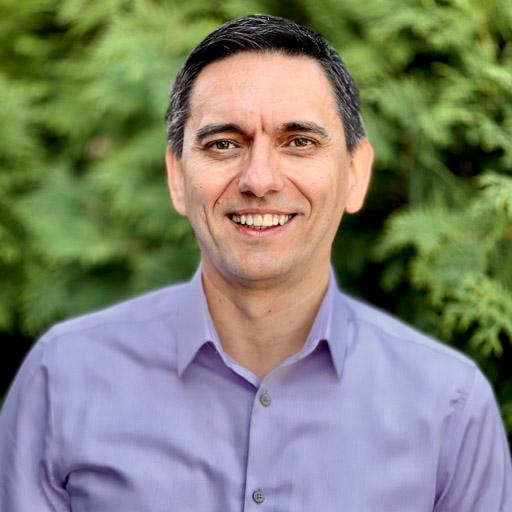
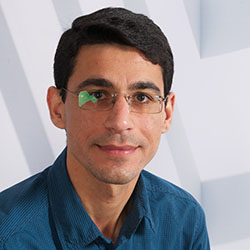
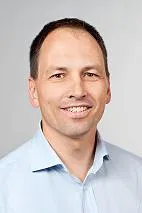
Ben A. Chaouch is a Professor of Management Science at the Odette School of Business, University of Windsor. He holds a Ph.D. from the University of Waterloo, an M.A. in Operations Research from Stanford University, and a B.A. in Mathematics and Statistics from the University of Algiers. His research focuses on inventory management, stochastic models, production and operations management, and operations research. Notable contributions include work on optimal stocking policies under uncertainty, surgical scheduling optimization, and heuristic algorithms for complex logistical problems. Chaouch has been a faculty member at the University of Windsor since 1987, progressing from Assistant Professor (1987–1995) to Associate Professor (1995–2014) before attaining his current rank in 2014. He has secured multiple grants, including funding for studies on operating room scheduling, inventory systems, and healthcare logistics. His publications span prestigious journals like International Journal of Production Research , European Journal of Operational Research , and Health Care Management Science . He has presented research at conferences such as the CORS/INFORMS International Meetings and the Administrative Sciences Association of Canada.
Prof. Marcus Brandenburg is a Professor of Business Administration at the Department of Economics, Flensburg University of Applied Sciences. His research focuses on Sustainable Supply Chain Management, Supply Chain Performance Management, and Production Economics. He holds a habilitation in economics and serves on the Editorial Review Board of the International Journal of Operations & Production Management (IJOPM) since 2017. Key research interests include sustainability in logistics, automotive supply chains, and maritime operations. He leads the university's Sustainability Network and contributes to Data Science and AI initiatives in production planning. His work bridges theoretical frameworks and practical applications, emphasizing interdisciplinary collaboration and real-world impact. Teaching responsibilities include courses in Business Administration and Supply Chain Management. He advises students and collaborates with industry partners on projects like GrønBusiness, focusing on sustainable practices in emerging markets such as Ethiopia's textile sector. Recent publications address supply chain resilience during the pandemic, automation challenges in container terminals, and sustainability certifications in apparel industries. Awards: Editorial Board Membership (IJOPM, 2017) Responsibilities: Committee for Research & Knowledge Transfer, Director of the Sustainability Network Key Projects: System Dynamics modeling for supply chain sustainability, AI/ML in production planning
Prof. Tuba Yakıcı Ayan is a Professor of Econometrics at Karadeniz Technical University (KTU), Faculty of Economics and Administrative Sciences, where she has served since 1994. She currently acts as Deputy Head of the Department of Econometrics and coordinates both the Erasmus and Farabi exchange programmes for her faculty. Education Doctorate (1997–1999) – Atatürk University, Business Administration (Quantitative Methods) Postgraduate (1988–1990) – Karadeniz Technical University, Business Administration Undergraduate (1981–1986) – Istanbul Technical University, Business Engineering Undergraduate (1989–1992) – Karadeniz Technical University, Civil Engineering Research Interests Her scholarly work centres on econometrics , operational research and statistics , with particular emphasis on fuzzy decision-making models , efficiency and performance analysis , transportation optimisation , financial risk modelling , and energy-economic policy evaluation . A recurring theme is the application of advanced quantitative and artificial-intelligence techniques to socio-economic and managerial problems. Publication Trends Across more than thirty-nine refereed articles (2002-2024), a clear evolution emerges: early studies focused on Turkish banking efficiency and export performance; recent contributions integrate fuzzy logic, neural networks and gravity models into tourism demand, health-system benchmarking, sovereign credit rating, and sustainable-development assessments. Scientific Awards & Recognition Editorial board member and frequent reviewer for several SSCI/SCI journals (e.g., American Journal of Operations Research, Uluslararası İktisadi ve İdari İncelemeler Dergisi) Organiser and scientific committee member of 18th International Symposium on Econometrics, Operations Research and Statistics (2017) Advising & Grants Prof. Yakıcı Ayan has supervised five completed theses (one PhD and four master’s) on topics ranging from public-transport route optimisation to adaptive neuro-fuzzy credit-rating systems. She has participated in one funded TÜBİTAK-supported symposium project and regularly mentors students within the Erasmus and Farabi mobility programmes. Laboratories & Teams While no dedicated laboratory is listed, she actively leads the research group on quantitative methods within the Department of Econometrics, collaborates with colleagues across Turkey and Europe on multi-criteria decision-making projects, and supports data-driven policy analysis for regional development agencies.
R. R. K. Sharma is a Professor in the Department of Management Sciences at the Indian Institute of Technology Kanpur , with a career spanning over three decades since joining in 1989. His work bridges Operations Research , Supply Chain Management , and Strategic Management . Specialization in Operations Research and Strategic Alignment Education: Fellow in Management (IIM Ahmedabad, 1988), BE in Mechanical Engineering (VNIT Nagpur, 1980) Research focuses on mathematical formulations for warehouse location, lot sizing, and supply chain optimization, with empirical studies comparing algorithmic approaches. His work extends to organizational culture-strategy alignment , ERP implementation , and technology management in manufacturing and retail contexts. Recent publications (2018-2023) emphasize sustainable supply chains , horizontal strategy in conglomerates, and IOT integration in retail formats. Earlier works (1991-2018) developed foundational methods in MRP performance , Benders' decomposition , and genetic algorithm applications . Key collaborations include work with researchers in Germany, Thailand, China, and India on manufacturing-flexibility interplay , TQM implementation , and retail analytics . His extensive 781 working papers cover diverse topics in management science, though no formal awards or student advisement details are listed in the provided text.
Dr. Robert Neidigh is an Assistant Professor in the Finance and Supply Chain Management Department at Shippensburg University’s John L. Grove College of Business. His academic background includes a BSBA in Decision Science (1998), an MMM (1999), and a PhD in Supply Chain Management (2006), all from Penn State University. Research & Teaching Interests: Supply chain management Production scheduling Math programming Statistical analysis His scholarly work focuses on optimizing lot sizing, modeling nonlinear production rates, and enhancing pedagogical methods in statistics and supply chain education. Recent publications include studies on multi-machine production environments (2017), classroom-based process improvement techniques (2016), and nonlinear inventory systems (2013). He has also contributed extensively to spreadsheet-based statistical education (2012, 2010) and IBM warehouse operations analysis (2011). Scientific Awards include multiple recognitions as Supply Chain Management Professor of the Year by Alpha Kappa Psi (2013, 2011, 2010, 2007). He secured internal research grants in 2007 and 2006 for collaborative student-faculty projects. Dr. Neidigh has served as SCM Search Committee Chair (2012-2013) Acting Department Chair (2009-2010) University Curriculum Committee member (2011-2013, 2010-2011) and has provided consulting services in Six Sigma and Lean Manufacturing to organizations like Volvo and IBM.
Roberto Rossi is a Professor holding the Chair in Uncertainty Modelling at the Business School of the University of Edinburgh, UK. His research spans automated reasoning, decision-making under uncertainty, and cross-disciplinary applications in artificial intelligence, supply chain management, and operational research. BEng and MEng from University of Bologna, PhD from University College Cork Active in mathematical programming, constraint programming, and stochastic modeling Key leadership roles: Co-Head of Group, Director of PG Programmes, Convener of PG Board of Examiners Recipient of Fellow of the Higher Education Academy (FHEA) Develops robust systems for uncertainty quantification in complex environments His recent work combines algorithmic design with real-world applications, particularly in inventory routing, lot-sizing, and stochastic optimization. He leads the Edinburgh Strategic Resilience Initiative and contributes to the Culture, Accounting & Society Research Network. Scientific Awards & Honors Fellow of the Higher Education Academy (FHEA) Personal Chair in Uncertainty Modelling
Ross James serves as Dean of Academic Governance and Deputy Vice-Chancellor - Academic at the University of Canterbury since November 1995, holding ORCID identifier 0000-0002-4889-4854. His office is located in Matariki Level 2, with contact number +6433693583 and email ross.james@canterbury.ac.nz. His research focuses on combinatorial optimization problems including scheduling algorithms, multi-dimensional knapsack problems, subset sum problems, and search heuristics. Specializing in mathematical programming approaches, his work bridges theoretical operations research with practical applications in production planning, resource allocation, and decision modeling. Key methodological contributions include entropy-based optimization techniques, neighborhood search heuristics, and surrogate constraint methods. Analysis of his publication history (29 entries through 2014) reveals consistent contributions to top operations research journals with significant impact in capacitated lot-sizing (89 citations), redundancy allocation (102 citations), and knapsack problem methodologies. His research demonstrates progression from fundamental combinatorial problems toward integrated systems modeling and knowledge discovery approaches for understanding algorithm performance. Professional activities include extensive journal reviewing for International Journal of Production Research, Annals of Operations Research, and Journal of Combinatorial Optimization. He has served on the Operational Research Society of New Zealand (ORSNZ) Council since 1996 with multiple terms, including Canterbury Branch Chair positions, and was on the Editorial Advisory Board for Computers and Operations Research from 1997-2002. Additional institutional service includes membership on the UC 360 point Degree Working Party and ongoing participation in ORSNZ activities, reflecting his commitment to academic governance and professional development in operations research.
Dr. Onur Kuzgunkaya is an Associate Professor in the Department of Mechanical and Industrial Engineering at Concordia University. He holds a Ph.D. in Manufacturing Systems Engineering from the University of Windsor, Canada (2007), and postdoctoral experience at the Intelligent Manufacturing Systems (IMS) Centre. His research focuses on flexible manufacturing systems, supply chain resilience, and decision-making under uncertainty. He has contributed to areas such as reconfigurable manufacturing systems, cost of quality analysis, and robust optimization models for healthcare and industrial networks. Dr. Kuzgunkaya’s academic journey includes B.Sc. and M.Sc. degrees from Galatasaray University, followed by a postdoctoral fellowship at the University of Windsor. His teaching spans mechanical and industrial engineering disciplines, emphasizing practical applications of systems analysis and optimization. His recent work integrates system dynamics and stochastic modeling to address supply chain disruptions, quality management, and congestion-related challenges. Key research themes include: Design and analysis of flexible manufacturing systems Multi-criteria decision-making methodologies Lean manufacturing and supply chain strategies Risk mitigation in capacitated networks His publications highlight innovative approaches to supply chain resilience, cost-benefit analysis of quality decisions, and contingency planning under uncertainty. Dr. Kuzgunkaya’s research bridges theoretical frameworks with real-world applications in healthcare and industrial systems.
Kolliopoulos Stavros is a Professor in the Department of Informatics and Telecommunications at the National and Kapodistrian University of Athens. His work focuses on theoretical computer science, algorithms, and combinatorial optimization. He has contributed to scheduling theory, network optimization, and approximation algorithms. His research addresses problems like resource allocation, disjoint paths in graphs, and facility location. Key research interests include the design and analysis of algorithms for NP-hard problems, with applications to scheduling, network flow, and operations research. He explores techniques such as linear programming relaxations and greedy algorithms to achieve approximation guarantees. His recent publications (2023–2025) emphasize time-sharing scheduling, linear-time graph algorithms, and IoT resource management. Earlier work (1997–2013) includes foundational contributions to unsplittable flow, facility location, and selfish routing in networks. His work bridges theoretical insights with practical algorithmic solutions. Notably, he has developed FPTAS algorithms for tardiness minimization and established tight bounds for Lovász-Schrijver rank in facility location problems. His research often combines graph theory with optimization principles to solve real-world network and scheduling challenges.
Dr. Andrea Visentin is a Lecturer and PhD Programme Director at University College Cork's School of Computer Science & IT. He is a Funded Investigator at the SFI Insight Centre for Data Analytics and Principal Investigator for the DATAMITE Horizon Europe project. His academic background includes: BSc and MSc in Computer Engineering (University of Padua) PhD from Insight Centre for Data Analytics (UCC) He maintains affiliations with Tyndall National Institute and the TAILOR research network. Visentin's research integrates: optimization and artificial intelligence across domains: Stochastic inventory control and lot sizing Time series forecasting applications Biomedical optics and spectroscopy Trustworthy AI development His work demonstrates strong interdisciplinary collaboration with healthcare and energy sectors. Recent publications highlight diverse applications: Electricity market forecasting methods Medical spectroscopy for tissue differentiation AI-driven occupational safety systems Road infrastructure monitoring solutions Historical document analysis techniques This breadth reflects his commitment to impactful real-world applications. Visentin contributes significantly to AI ethics frameworks: Co-developed Assessment List for Trustworthy AI (ALTAI) for EU High-Level Expert Group Contributed to TAILOR Handbook of Trustworthy AI His work helps make AI concepts accessible to non-technical audiences. Honored with the UCC President's Award for Excellence in Teaching (2023/24) for his innovative pedagogy in Data Analytics, Data Mining, and Digital Humanities courses.
Professor Kerem Akartunali is a faculty member at the Department of Management Science, Strathclyde Business School, University of Strathclyde, where he joined as the John Anderson Research Lecturer (JARL) in Optimization in 2010. He holds a PhD in optimization from the University of Wisconsin-Madison (2007) and served as a postdoctoral research fellow at the University of Melbourne. He is also a Visiting Professor at the Institute of Mathematics and Computer Science (ICMC-USP) of the University of São Paulo since 2017. His expertise spans operational research, mathematical optimization, integer programming, robust optimization, network optimization, and applications in production planning, transportation logistics, healthcare (e.g., radiation treatment planning), and energy (e.g., offshore windfarm installation). His research has been funded by EPSRC, SFC, and industry partners like Capita and the US Air Force. Key awards include the 2020 Best Reviewer Award and a Postdoctoral Research Fellowship (2007). He teaches courses such as Data Analytics in Practice and Optimization for Analytics and has contributed to strategic online learning initiatives. His professional roles include membership in EPSRC Peer Review College, the Isaac Newton Institute Management Committee, and the OR Society Research Panel. Award-winning research projects include production planning under uncertainty, multi-level robust optimization, and logistics for offshore windfarm installations. He collaborates with organizations like NHS, Scottish Power, and Technip on industry-research partnerships.
Mahdi Doostmohammadi is a Lecturer (Assistant Professor) in Operational Research at the Department of Management Science, Strathclyde Business School, University of Strathclyde since 2018. He holds a B.Sc. and M.Sc. in Applied Mathematics from the University of Isfahan (2004, 2007) and a Ph.D. in Operational Research from the University of Aveiro (2014). Prior roles include Post-Doctoral positions at Strathclyde and Instituto Superior Técnico (Lisbon), and a Lecturer position at the University of Edinburgh's School of Mathematics. Education: B.Sc. Applied Mathematics (Computer Science), University of Isfahan, 2000–2004 M.Sc. Mathematics (Optimization and Optimal Control), University of Isfahan, 2005–2007 Ph.D. Operational Research (Distinction), University of Aveiro, 2009–2014 Research Interests: Focus on Mixed Integer Optimization , Polyhedral Theory , Network Optimization , and their applications in production planning, transportation, and metabolic engineering. His work bridges theoretical developments with practical challenges in supply chains, healthcare, and renewable energy systems. Publications Trends: Recent articles emphasize optimization algorithms for supply chain design, healthcare decision-making, renewable energy infrastructure, and metabolic engineering. Methodological strengths include mixed-integer programming and system dynamics modeling. Scientific Awards: First Award of B.Sc. graduates in Mathematics, 2004 Ph.D. with Distinction in Operational Research, 2014 Advising & Grants: Directs MSc programs in 'Data Analytics' and online 'Operational Research'/'Business Analysis and Consulting'. Active in peer review for journals like Journal of the Operational Research Society and Computers & Operations Research .
Magnus Lie Hetland is an Associate Professor in the Department of Computer Science at the Norwegian University of Science and Technology (NTNU) . His research focuses on algorithms, data structures, and Python programming. Primary research areas: Algorithms, Metric Indexing, Python Programming, Fair Allocation Teaches TDT4120 - Algorithms and Data Structures , DT8123 - Advanced Computing , and TDT4125 - Algorithm Construction His recent publications emphasize fair allocation problems (2024), metric indexing (2020, 2015), and Python programming guides (2024, 2014, 2008). Key trends include algorithmic fairness, proximity search optimization, and accessible programming education. Scientific contributions are spread across algorithm design , database optimization , and multi-agent resource distribution . Teaching activities include foundational and advanced courses in algorithms and computing.
Professor Regina Berretta is an Honorary Professor at the University of Newcastle's School of Information and Physical Sciences, specializing in Computing and Information Technology. With expertise spanning computer science, mathematics, and applied optimization, she has established herself as a leading researcher in metaheuristic methods for solving complex combinatorial problems. Currently serving as a Chief Investigator at the ARC Training Centre for Food and Beverage Supply Chain Optimisation, she applies her mathematical modeling skills to address critical challenges in food industry supply chains, with the Centre receiving over $2 million in funding to train next-generation researchers. Professor Berretta earned her PhD, Master of Engineering (Electrical), Bachelor of Mathematics, and Teachers Certificate from Universidade Estadual de Campinas in Brazil. Her educational background in computational and applied mathematics has provided the foundation for her extensive research career focused on integer programming and metaheuristic approaches to optimization problems. Her academic journey includes progression from Lecturer at the University of Newcastle (2003-2007) to various leadership positions including Head of Discipline of Computer Science and Software Engineering (2011-2014) and Assistant Dean of Equity, Diversity and Inclusion (2019-2022). Her research expertise centers on the design of mathematical models and development of efficient computational techniques to tackle large and complex combinatorial optimization problems across diverse application areas. Professor Berretta has made significant contributions to bioinformatics through her work on genetic signature identification from gene expression datasets, and to supply chain optimization through her research on perishable food inventory management, lot sizing, and scheduling problems. Her methodological specialties include memetic algorithms, evolutionary computation, and integer programming approaches that have proven effective for problems that are otherwise computationally intractable. Analysis of her recent publications reveals a strong interdisciplinary focus, with optimization techniques increasingly applied to food supply chain challenges while maintaining connections to bioinformatics applications. Her work demonstrates a consistent pattern of translating theoretical optimization methods into practical solutions for industry problems, particularly in the agricultural sector. Additionally, her more recent publications show growing engagement with gender equity issues in STEM fields, reflecting her leadership in relevant initiatives. Co-founder of HunterWISE, promoting girls and women in STEM Leader of Google CS4HS project for five consecutive years Recipient of over $4 million in research funding through 35 grants Author of more than 80 papers and book chapters Chief Investigator at ARC Training Centre for Food and Beverage Supply Chain Optimisation Professor Berretta has demonstrated exceptional leadership through her administrative roles and community initiatives. As co-founder of HunterWISE, she has developed a comprehensive approach to increasing female participation in STEM through school programs and professional networking events. Her leadership of the Google CS4HS project has directly impacted high school computer science education in the Hunter region. Her research collaborations span multiple disciplines and institutions, reflecting her ability to bridge theoretical computer science with practical industry applications, particularly in the food supply chain sector where her optimization models have demonstrated significant cost and waste reduction potential.
Prof. Dr. Martin Grunow is a Professor in Production and Supply Chain Management at the TUM School of Management, Technical University of Munich , where he leads the Production and Supply Chain Management Group. With previous roles as Professor in Operations Management at the Technical University of Denmark and Assistant Professor at Technical University of Berlin, his career spans academia and industry research at Evonik AG. Education: Habilitation (2005), PhD (1999, summa cum laude), Master of Industrial Engineering (1993), and Management (1988) from Technical University of Berlin and Dublin City University Research Interests include smart manufacturing , perishable supply chains , and sustainability optimization . His work addresses dynamic assembly layouts , climate risk inventory systems , and RFID applications across industries. Recent publications focus on automotive production transitions to electric vehicles, deep reinforcement learning for ameliorating inventory , and stochastic lot sizing in food supply chains. He has secured grants from DFG, EU, and NSF, among others. Scientific Leadership Editor-in-Chief of OR Spectrum (2008–2021) Area Editor, Flexible Services and Manufacturing Journal Head of GOR Working Group on Supply Chain Management He oversees 10 doctoral candidates and 7 external doctoral researchers , with significant contributions to pharmaceutical market launch planning , semiconductor scheduling , and milk concentrate lifecycle assessments .