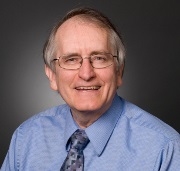
Gary Rochelle is the Carol and Henry Groppe Professor in Chemical Engineering and a faculty member at the University of Texas at Austin . His research focuses on developing fundamental insights into kinetic and mass transfer phenomena in aqueous technologies for air pollution control and acid gas treating, particularly for carbon dioxide and mercury removal. Education: Ph.D. in Chemical Engineering from UC Berkeley (1977), M.S./B.S. from MIT (1971) His work addresses critical challenges in CO2 capture using amine scrubbing, including process design optimization, solvent degradation mitigation, and pilot plant validation. Recent studies emphasize energy efficiency, oxidation inhibition, and environmental impacts such as amine aerosol emissions. The Texas Carbon Management Program , which he contributes to, aims to improve amine scrubbing technologies for retrofitting power plants and enabling geological sequestration or enhanced oil recovery. His group has validated concentrated aqueous piperazine (PZ) with an advanced flash stripper as the most efficient open-literature system.
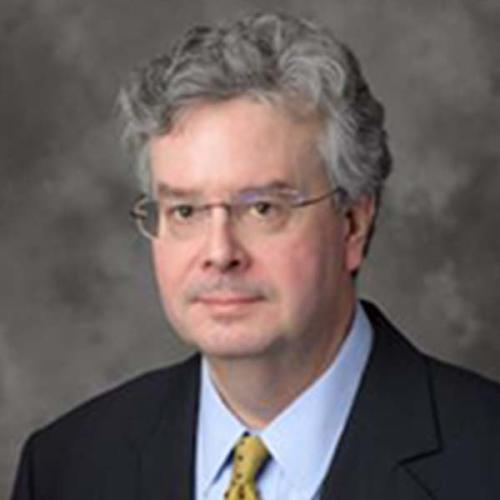
Thomas Hacker is a Professor in the Department of Computer and Information Technology at Purdue Polytechnic Institute, Purdue University. His research focuses on cloud computing, high-performance computing, operating systems, computer networking, and cyber infrastructure . He holds a Ph.D. and M.S. in Computer Science & Engineering from the University of Michigan, along with dual B.S. degrees in Computer Science and Physics from Oakland University. Education: PhD (Computer Science & Engineering), University of Michigan (2004) MS (Computer Science & Engineering), University of Michigan (1993) BS (Computer Science, Mathematics Minor), Oakland University (1989) BS (Physics), Oakland University (1989) Dr. Hacker's research spans cloud and grid computing, operating systems, and distributed systems , with applications in earthquake engineering data systems and AI-driven infrastructure analysis. His recent work explores extended layer 2 networking for bare-metal provisioning ( 2023 IEEE Cloud Summit ) and machine-supported bridge inspection using artificial intelligence ( Transportation Research Record, 2023 ). Notable scientific contributions include 15+ publications on topics like cyberinfrastructure for earthquake engineering, container-based virtualization, and data-intensive systems. His work has been recognized with awards such as the NSF CAREER Award (2010) and multiple Purdue Seed for Success Awards . Key Scientific Awards: NSF CAREER Award (2010) Purdue Seed for Success Awards (2008-2013) ASEE Information Systems Division Best Paper Award (2012) College of Technology Outstanding Faculty in Discovery Award (2010) He has held leadership roles at Purdue, including Department Head (2018-2021) and Interim Department Head (2011-2016) . His career spans academic positions at Indiana University, University of Michigan, and industry roles at Storage Technology Corporation.
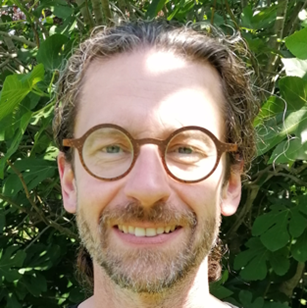
Dr. Seyyed Hamed Hosseini Nasab is a Lecturer at the Department of Health Sciences and Technology at ETH Zürich, affiliated with the Institute for Biomechanics and the Laboratory for Movement Biomechanics. His research focuses on biomechanical analysis of musculoskeletal systems, particularly knee mechanics, implant design, and ligament behavior in total knee arthroplasty. He integrates experimental, computational, and clinical approaches to improve surgical techniques and prosthetic design. Key research interests include knee joint loading, ligament elongation patterns, and the influence of implant conformity on post-surgical outcomes. He has contributed to standardized methods for measuring tibiofemoral implant loads and kinematics, earning the European Society of Biomechanics SM Perren Award in 2022. His publications emphasize computational modeling, in vivo testing, and finite element analysis to address challenges in orthopedic engineering. Recent work explores artificial neural networks for real-time knee contact force estimation and the biomechanical implications of surgical procedures like posterior cruciate ligament substitution.
Frank L. Hammond III serves as Assistant Professor at Georgia Tech's Woodruff School of Mechanical Engineering since April 2015, directing the Adaptation Robotic Manipulation (ARM) Laboratory. A Carnegie Mellon PhD graduate, he previously held postdoctoral positions at MIT and Harvard as a Ford Fellow. His interdisciplinary work bridges mechanical engineering, biomedical applications, and computational design. Education Ph.D. in Mechanical Engineering, Carnegie Mellon University M.S. in Mechanical Engineering, University of Pennsylvania M.S. in Electrical Engineering, University of Pennsylvania B.S. in Electrical Engineering & Biomedical Engineering, Drexel University Hammond's research pioneers adaptive robotic manipulation (ARM) systems that operate in unstructured human environments through bioinspired computational design. His lab develops xenomorphic (non-biomorphic) robots using soft pneumatic actuation, flexible electronics, and machine learning to achieve biological-level versatility. Key application domains include wearable human augmentation devices , haptic-enabled surgical teleoperation , and autonomous soft platforms for medical and industrial use. The ARM methodology integrates empirical biomechanics characterization with simulation-driven optimization and rapid prototyping. Analysis of his 15 most recent publications (2023-2025) reveals three dominant trends: (1) Medical rehabilitation breakthroughs through intention-driven exoskeletons with soft bioelectronics, (2) Novel locomotion strategies for soft robots in complex environments (sand, water, cluttered spaces), and (3) Advanced haptic feedback systems leveraging multimodal sensory substitution for proprioceptive restoration. These works consistently bridge biomechanics, control theory, and human factors. Awards Ford Postdoctoral Research Fellowship at Harvard School of Engineering Hammond actively mentors graduate researchers including PhD candidates Lucas Tiziani (soft actuators) and Bangyuan Liu (earthworm robotics), and Master's student Alex Hart (pediatric haptics). His lab secures research funding for projects like tunable mechanical interfaces for neuropathy treatment and cognition-focused wearable devices, with strong industry and clinical partnerships evident in co-authored medical device publications. The ARM Lab maintains robust collaborations across Georgia Tech's robotics, neuroscience, and biomedical engineering communities. The Adaptation Robotic Manipulation Laboratory operates from Whitaker Building Room 4102, housing specialized facilities for soft robot fabrication (3D printing, shape deposition manufacturing) and biomechanics testing. Current projects include pediatric haptic feedback displays, biomimetic swimming robots, and kirigami-skinned earthworm robots for subsurface locomotion. The lab emphasizes translational research with multiple pending medical device patents and active participation in K-12 STEM outreach programs.
Prof. Dr. Pinar Yolum Birbil is a leading researcher in Responsible AI at the Faculty of Science , Utrecht University . Her work bridges Artificial Intelligence , Privacy and Data Protection , and Software Agents , focusing on Human-Centered AI and Trustworthy Systems . She is part of the AI & Data Science and Responsible AI research groups. PhD in Computer Science, North Carolina State University (2003) MS in Computer Science, North Carolina State University (2000) BSc in Computer Engineering, Marmara University (1998) Her research explores Privacy Preservation in collaborative systems, Computational Theory of Mind for human-agent coordination, and Norm-Based AI Systems . Recent projects include the Hybrid Intelligence Center and tools like PANOLA for privacy support. She investigates how AI can balance user autonomy , ethical norms , and societal values in applications ranging from urban planning to healthcare. Her scientific publications (2023-2025) span topics like Explainable Privacy , Trust in Hybrid Teams , and AI for Diabetes Management , appearing in venues such as JAIR , AAMAS , and ACM TOIT . She emphasizes collaborative AI , with contributions to multiagent simulations and privacy-preserving mechanisms . Scientific Awards : NC State University Alumni Hall of Fame (2017) Woman Entrepreneur of the Year (Microsoft Turkey & KAGIDER, 2017) Bogazici University Academic Encouragement Award (multiple years) Best Paper Award at ESAW 2009 She supervises a dynamic research group with PhD students working on Hybrid Intelligence , Computational Ethics , and Privacy Modeling . Her projects often involve interdisciplinary collaboration with institutions like TNO and the Transforming Cities Hub .
Prof. dr. Nico Van de Weghe is a full Professor of GIScience at the University of Ghent (UGent), affiliated with the CartoGIS research unit. His work bridges computer science, social science, and natural science through geospatial information studies, focusing on enabling machines to reason spatially (GeoAI). Since 2004, he has specialized in knowledge-based AI, particularly spatiotemporal reasoning and moving object analysis, with applications in animal behavior, criminology, healthcare, mobility, and sports. Van de Weghe's research emphasizes hybrid GeoAI systems combining knowledge-driven and data-driven approaches. Keywords include GeoAI, GIScience, Spatiotemporal Analysis, Moving Objects, and Data Mining. Recent publications highlight urban road network analysis, hybrid trajectory modeling, BIM semantic enrichment, and cycling safety studies using virtual reality.
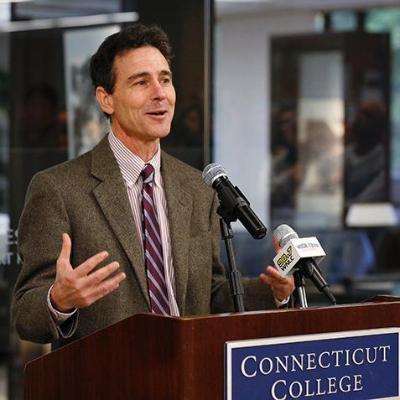
Jeff Moher is an Associate Professor of Psychology and Co-Chair of the Department of Psychology at Connecticut College, where he has been teaching since 2017. He also serves as the Data, Information, and Society Pathway Co-Coordinator, demonstrating his leadership within the institution. His educational background includes a Ph.D. and M.A. from Johns Hopkins University and a B.S. from the University of Michigan. This strong academic foundation has prepared him for his research and teaching career in cognitive psychology. Moher's research focuses on cognitive psychology and cognitive neuroscience, particularly visual attention and cognition in action. His work investigates why distractions occur, when they are likely to arise, and what mechanisms humans can harness to avoid them. He has found that humans employ various cognitive mechanisms to minimize distractions based on explicit knowledge, task goals, object properties, and recent experience, though he has also discovered surprising limitations in attentional selection. His research is particularly relevant given that over 3,000 people are killed annually in the United States from distracted driving. His recent publications show a consistent trajectory examining attentional mechanisms, distraction, and visual processing across different contexts. His work frequently employs sophisticated methodologies to measure both cognitive and motor responses to distractions, revealing how seemingly minor distractions can accumulate to induce serious performance costs. Moher's research is currently funded by grants from the National Science Foundation and the National Institutes of Health, indicating the significance and quality of his work. He likely mentors numerous students through the department's research groups, contributing to their development as researchers. He directs the CAMELab (Center for Attention, Movement, and Embodied Learning), which utilizes multiple methodologies including eye-tracking, electroencephalography, three-dimensional reach-tracking, and psychophysics to approach questions about attention and distraction. Current projects in his lab explore why salient distractors cause people to give up quickly during visual search, the brain mechanisms involved in learning to ignore distractions, how internal distractions impact physical interactions with the world, and how hand movement paths reveal information about attentional processes.
Professor Eugene O'Brien serves as Professor of Civil Engineering within the School of Civil Engineering at University College Dublin's College of Engineering and Architecture. His research focuses on critical structural assessment methodologies for long-span bridges, with particular expertise in traffic load modeling and bridge safety evaluation. His research interests center on structural engineering challenges related to bridge infrastructure, specifically traffic load assessment for long-span bridges , structural health monitoring systems , and sustainable infrastructure management . Professor O'Brien pioneered camera-based monitoring techniques to overcome limitations of traditional Weigh-in-Motion sensors during congested traffic conditions, enabling more accurate safety assessments of aging bridge infrastructure. His work addresses the critical gap in quantifying traffic loading on bridges with spans up to 2 kilometers, where conventional methods fail during stop-and-go traffic scenarios. Analysis of his 15 most recent publications reveals a consistent research trajectory focused on probabilistic modeling of traffic loads, with increasing sophistication in handling extreme events and long-term infrastructure performance. His work spans fundamental statistical methods for load effect prediction, practical applications in real-world bridge assessments, and environmental considerations regarding infrastructure carbon footprints. The research demonstrates strong methodological evolution from basic traffic modeling to comprehensive lifetime assessment frameworks incorporating sustainability metrics. As co-founder and director of Roughan O'Donovan's subsidiary Innovative Solutions (ROD-IS), Professor O'Brien has translated research into practice through significant projects including the Malahide Railway Viaduct assessment (2009), EU-funded bridge lifespan simulation tools (2011), vibration reduction systems for bridge cables, and structural assessments for major international projects including the Ting Kau Bridge in Hong Kong, the Forth Road Bridge in Scotland, and the Chacao Channel Bridge in Chile. His consultancy work demonstrates direct application of academic research to critical infrastructure challenges worldwide. Professor O'Brien's research group operates at the intersection of structural engineering and sustainable infrastructure management, with particular emphasis on extending bridge service life through accurate safety assessment. Their work on the Chacao Channel Bridge demonstrates practical implementation of traffic monitoring systems using toll data to manage truck loads, while their environmental impact analysis shows how accurate safety assessments reduce unnecessary bridge replacements, thereby lowering the carbon footprint of transportation infrastructure through extended service life of carbon-intensive materials like concrete and steel.
Abigail Scholer is a Professor specializing in self-regulation and motivation. Her research explores how motivational orientations influence decision-making, self-control conflicts, and adaptive change. She holds a BA from Gettysburg College and a PhD from Columbia University. Her work bridges educational, social, and cognitive psychology, with a focus on understanding the mechanisms behind human triumphs and failures in facing life's demands. Key research themes include metamotivational processes, goal pursuit dynamics, and the interplay between motivation and emotional regulation. Her lab, the Self-Regulation and Motivation Lab , investigates practical applications of these theories in academic and organizational settings. Publications span topics like motivational affordance, risk preferences, and the impact of threat on stereotyping. While no awards are listed, her contributions to motivational science are reflected in high-impact journals such as Journal of Personality and Social Psychology and Psychological Science . No advising or grant details are provided, though her lab's activities suggest active research participation.
Dr. Rene Ferdinands is a Lecturer at the University of Sydney's School of Health Sciences, specializing in sports biomechanics, particularly in cricket and golf. He leads research programs focused on optimizing techniques and minimizing injury risks, such as lumbar load analysis in fast bowlers and spin bowling biomechanics. His work includes developing 3D models for analyzing bowling actions and spin delivery mechanics. Education: MSc and PhD from the University of Waikato. Research Themes: Cricket biomechanics, golf swing dynamics, equine biomechanics, and injury prevention. Professional Roles: Editor of the Cricket Coaching Information service for the International Society of Biomechanics in Sports, Honours Committee Member. His research interests span biomechanical analyses of sports techniques, including the development of smart cricket balls for performance assessment and injury mitigation. Key contributions include refining bowling action legality criteria and advancing understanding of lumbar kinetics in elite athletes. He actively supervises Honours and PhD students in biomechanics research across cricket, golf, and other sports. Notable grants include studies on hydration status in cricket performance (2008), lumbar injury prevention (2013), and biomechanical modeling of fast bowling (2009). His work bridges applied research with practical applications in sports technology and athlete development. Dr. Ferdinands collaborates with the Biomechanics Research Team at the University of Sydney, focusing on innovative tools like smart balls and advanced motion analysis techniques to improve sports performance and safety.
Christopher D.P. Baxter is a Professor and Department Chair of Civil and Environmental Engineering at the College of Engineering, University of Rhode Island , with expertise in geotechnical engineering, offshore wind energy, and coastal resilience. He holds a Ph.D. in Civil Engineering from Virginia Tech (1999), an M.S. from Purdue University (1994), and a B.S. from Tufts University (1990). Research Focus: Geotechnical characterization of marine sediments, liquefaction resistance analysis, fiber-optic sensing for infrastructure monitoring, and coastal protection systems. Recent Publications: 15+ articles (2011–2025) covering topics like shear wave velocity, offshore wind foundation dynamics, and tsunami hazard modeling. Grants: Led projects on offshore wind monitoring (2019–2024) and fiber-optic seismic sensing (2021–2023). Key Collaborations: Work with teams on submarine landslide analysis, coastal dune reinforcement, and Rhode Island infrastructure resilience. His work bridges experimental geomechanics with practical coastal engineering solutions.
Evangelos Katsanos is an Associate Professor in the Department of Civil and Mechanical Engineering at the Technical University of Denmark (DTU), where he contributes to research and education in structural engineering and safety. He is affiliated with the Structures and Safety research group and actively supervises PhD students. His work spans advanced computational methods for structural monitoring and risk assessment. Research Interests: His expertise lies in structural dynamics, modal analysis, state estimation, and structural health monitoring of civil and offshore infrastructure. He applies physics-informed models and data-driven techniques to assess structural response under extreme loading conditions such as earthquakes, storms, and wave impacts. His research integrates finite element modeling with Kalman filtering methods for enhanced system identification and damage detection. The recent publications highlight a strong trend toward physics-informed and data-driven structural health assessment, particularly for offshore and wind energy infrastructure. Topics include joint input-state estimation, slamming loads on offshore jackets, and damage identification using Kalman filters. These works emphasize robust modeling under uncertainty and real-world applicability in extreme environments. Scientific Awards: No specific awards are mentioned in the provided text. Advising and Grants: Evangelos Katsanos is the main supervisor of PhD student Al-Hagri, A., and co-supervisor or collaborator on several research projects. He is Principal Investigator (PI) or co-PI on multiple funded research initiatives, including projects on physics-informed structural health assessment of offshore infrastructures, residual bearing capacity of damaged concrete beams, and quality assurance for construction 3D printers. These projects reflect his leadership in interdisciplinary and applied research with societal impact. Labs and Teams: He is part of the research environment at DTU Construct, specifically within the Structures and Safety group, which focuses on resilience, risk assessment, and advanced monitoring of civil and mechanical systems. His collaborations extend to national and international partners in offshore and wind energy engineering.
Paulo Blikstein serves as Associate Professor of Communications, Media and Learning Technology Design at Columbia University. Previously, he was Assistant Professor of Education and (by courtesy) Computer Science at Stanford University and co-founded the Lemann Center for Brazilian Education (2008-2018). Education: Ph.D. in Learning Sciences, Northwestern University (2009) M.A. in Media Arts & Sciences, MIT Media Lab (2002) M.Eng. in Electronic Engineering, University of São Paulo (2000) B.S. in Metallurgical Engineering, University of São Paulo (1998) His research pioneers constructionist learning environments through digital fabrication, educational robotics, and tangible interfaces—focusing on equitable access for underserved communities. Inspired by Paulo Freire and Seymour Papert, he develops open-source tools like the GoGo Board robotics platform and leads the global FabLab@School initiative establishing fabrication labs in schools across four continents. Current work emphasizes multimodal learning analytics to study student interactions in maker-centered classrooms. Publications reveal strong focus on democratizing invention through maker education, with recurring themes in constructionist theory application, multimodal assessment, and context-specific technology adaptation. Brazilian education reform and low-cost computational solutions form significant threads, particularly in 2016-2017 publications. Scientific Awards: Two Google Faculty Awards National Science Foundation Early Career Award (highest U.S. government honor for early-career scientists) Blikstein directs the Transformative Learning Technologies Lab (TLTL) and co-founded Stanford's Center for Educational Entrepreneurship and Innovation in Brazil. His FabLearn conference established the first academic forum on Maker Movement applications in education. While specific grant details aren't listed, the NSF CAREER Award signifies major federal research funding. He spearheads the FabLab@School project deploying advanced fabrication labs in K-12 institutions worldwide and founded the FabLearn conference series. His work integrates teams of engineers, educators, and designers to create scalable solutions for resource-constrained learning environments.
Robert Pilawa-Podgurski is a Professor in the Electrical Engineering and Computer Sciences Department at UC Berkeley and founding director of the Berkeley Power and Energy Center (BPEC). He earned BS, MEng, and PhD degrees from MIT. His research focuses on power electronics, including renewable energy systems, electric vehicles, and high-efficiency power converters. He has received prestigious awards such as the IEEE Fellow (2024), Bakar Fellows Spark Award (2024), and the IEEE Richard M. Bass Outstanding Young Power Electronics Engineer Award (2014). His work emphasizes experimental validation through hardware prototypes. Education: BS in Physics and EECS (MIT, 2005), MEng (MIT, 2007), PhD in EECS (MIT, 2012). Research interests include power electronics for renewable energy, electric vehicles, energy harvesting, and advanced converter topologies. His lab has developed high-power density converters and innovative control techniques for flying capacitor multilevel converters. Recent publications focus on hybrid switched-capacitor architectures, voltage balancing, and ultra-high-current applications. Awards include over 17 IEEE prize papers and teaching accolades like the 2023 UC Berkeley EECS Outstanding Teaching Award. His group has advised numerous students, including postdocs and PhD candidates working on cutting-edge power electronics projects. Labs/Teams: Pilawa Research Group at UC Berkeley, collaborating on power electronics for clean energy and high-performance computing.
Meng Wu is an Assistant Professor in the School of Electrical, Computer and Energy Engineering (ECEE) at Arizona State University, specializing in advanced optimization, control, and machine learning methods for integrating distributed energy resources (DERs) into power systems. Her work addresses critical challenges in power system planning, operations, stability, and electricity markets under high DER penetration. Education: Ph.D. in Electrical and Computer Engineering, Texas A&M University, 2017 M.Eng. in Electrical and Computer Engineering, Cornell University, 2011 B.Eng. in Electrical Engineering & Automation, Tianjin University, China, 2010 Research Interests: Dr. Wu's research focuses on DER integration through transmission-distribution coordination , spatio-temporal price forecasting , and optimal market participation strategies. Key areas include: Physics-guided machine learning for DER-penetrated distribution systems Computational algorithms for wholesale-distribution market coordination Dynamic modeling of DERs and composite loads for voltage stability Optimal bidding strategies for energy storage and DER aggregators Publication Trends: Her 2021-2024 publications reveal a concentrated effort on DER market integration using parametric programming and deep learning, with emphasis on real-time locational marginal price forecasting, transmission-distribution coordination, and degradation-aware energy storage operations. Scientific Awards: Best Paper Award, IEEE PES General Meeting (2021) Best Conference Paper Award, North American Power Symposium (2019) Invited Participant, US Frontiers of Engineering Symposium, NAE (2021) Advising and Grants: Dr. Wu mentors multiple PhD and Master's students, including recent graduates Zhongxia Zhang (PhD) and Sayyid Mohssen Sajjadi (MS). Her group secured PSERC funding for projects on DER aggregation and adaptive transmission-distribution modeling, with industry partnerships at ISO New England and Quanta Technology. Research Group: Leading an active research team at ASU, she collaborates with the Power Systems Engineering Research Center (PSERC) on DER integration challenges, advising students through FURI, MORE, and Barrett Honors College programs.