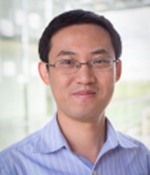
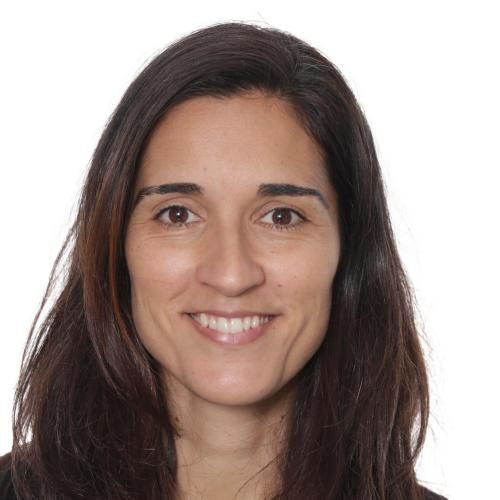
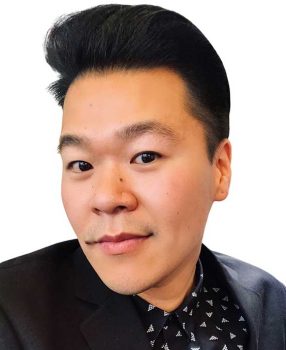
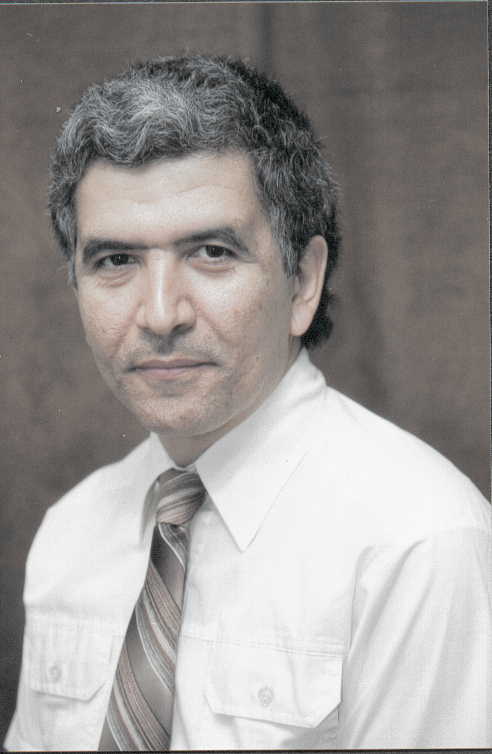
Dong Li is an Associate Professor at the University of California, Merced , where he directs the Parallel Architecture, System, and Algorithm Lab (PASA) and co-directs the High Performance Computing Systems and Architecture Group . He co-founded Yotta Labs Inc. and previously held research roles at Oak Ridge National Laboratory (2011-2014) and a PhD from Virginia Tech. Research Interests: Dong's work focuses on High performance computing (HPC) Memory heterogeneity and non-volatile memory Systems for machine learning and AI Fault tolerance in large-scale systems His innovations include heterogeneous memory optimization for recommendation models and GNNs, CXL memory integration, and persistent memory debugging tools. Recent Publications highlight advancements in CXL-based inter-node communication Memory tiering for laminography reconstruction ML-guided memory optimization for DLRM and GNN Fault tolerance benchmarks and error analysis Awards & Recognition: NSF CAREER Award (2016) Oracle Research Award (2022) ASPLOS Distinguished Artifact Award (2021) Virginia Tech Early Career Alumni Award (2023) Advising & Funding: Dong has mentored 22 students (8 PhD, 6 Master’s, 8 undergraduates) and secured grants from NSF, NVIDIA, Meta, and national labs (Argonne, Lawrence Berkeley, Lawrence Livermore). Collaborations include Microsoft (DeepSpeed, Intel PMDK), AMD, SK Hynix, and Intel/MICRON hardware donations.
Silvia Santa Maria Newell serves as Director of Michigan Sea Grant and Professor at the University of Michigan School for Environment and Sustainability (SEAS), where she leads critical research on freshwater ecosystems. Her work bridges academic scholarship with practical environmental management through federal partnerships and stakeholder engagement initiatives focused on the Great Lakes region. Education Ph.D. in Geosciences, Princeton University M.A. in Geosciences, Princeton University A.B. in Biogeochemistry, Smith College Newell specializes in nutrient biogeochemistry and microbial ecology, with primary focus on how excess nutrients from agricultural and wastewater sources drive harmful algal blooms (HABs) in freshwater systems. Her research integrates field studies of nitrogen cycling, mercury methylation processes, and climate change impacts on eutrophication. She develops stakeholder-driven solutions for nutrient reduction in watersheds through interdisciplinary collaboration with farmers, policymakers, and environmental managers. Analysis of her 15 most recent publications reveals dominant research themes in Great Lakes HABs mitigation, nutrient cycling dynamics (particularly nitrogen-phosphorus interactions), and emerging contaminants like mercury. Her work consistently connects microbial processes to ecosystem-scale phenomena, with strong emphasis on practical applications for water resource management across North American and international freshwater systems. Scientific Awards Excellence in Grantsmanship (2022) for securing $1M+ research funding AGU Top 10 Most Downloaded Paper (2021) Limnology & Oceanography Outstanding Reviewer (2021) ASTRA Fellow, Estonia Education (2019-2020) Newell actively mentors the next generation of environmental scientists as primary advisor to PhD candidates Berk Durutürk and Ran Jin, and Master's student Monica Woodruff. Her current $1.2M+ research portfolio includes NSF-funded projects on Lake Erie HABs mitigation (DISES CHABS: $150K), mercury-nitrogen cycling interactions (GEOTRACES: $378K), and Ohio wetland monitoring (H2Ohio: $500K). She directs major collaborative initiatives including the Great Lakes Commission HABs Collaboratory and Lake Erie Area Research Network. As Director of Michigan Sea Grant, Newell oversees a federal-state partnership that funds research, outreach, and education programs addressing critical Great Lakes challenges. Her leadership connects university resources with community stakeholders through the Maumee River watershed engagement project and international collaborations studying nutrient pollution impacts from Lake Erie to Lake Taihu in China.
Gema Barrientos Vicho is an Adjunct Professor at the Faculty of Education, Universidad de Extremadura, specializing in Physical Education and Sport. She is affiliated with the HEART Health, exercise physiology and training research group and previously worked with GIADES (Investigación en actividad física, deporte y salud), a consolidated research unit of Castilla y León. Education: PhD in Physical Education and Sport Sciences from Universidad de Extremadura (2012), with a thesis on physiological changes in endurance athletes during competitive seasons. Research Focus: Her work explores trace mineral dynamics, hormonal adaptations, and oxidative stress in endurance athletes. Key areas include erythrocyte fatty acid profiles, metal excretion patterns during training, and nutritional biochemistry related to performance. Publication Trends: Recent articles analyze seasonal physiological adaptations, acute exercise effects on antioxidant systems, and longitudinal impacts of training on trace metal concentrations. These studies bridge sports nutrition, exercise physiology, and metabolic regulation. Contact: Email: gbarrientosvi@upsa.es
Dr. Sean Arayasirikul (they/them) is an Associate Professor in the Department of Health, Society, and Behavior at the University of California, Irvine (UCI) Program in Public Health. They serve as Associate Director of the UCI-affiliated University of California Global Health Initiative Center for Gender and Health Justice and hold leadership roles in the Society for Implementation Research Collaboration and Robert Wood Johnson Foundation Interdisciplinary Research Leaders Program. Doctorate in Sociology, University of California, San Francisco B.A. in Asian American Studies, University of California, Los Angeles Their research examines health inequities among sexual and gender minoritized (SGM) communities through community-engaged methodologies, with a focus on: Health disparities among trans women, BIPOC, and intersectionally marginalized groups Digital health interventions and implementation science Participatory surveillance approaches for health justice Recent publications emphasize digital HIV care navigation tools, structural barriers to STI/HIV prevention, and intersectional analyses of mental health risks. They have secured grants for structural racism studies and developed homegrown interventions within the House and Ballroom community. Scientific Awards Robert Wood Johnson Foundation Interdisciplinary Research Leaders Fellow (2021-2024) Inter-CFAR Implementation Science Fellow (2020-2021) AMA Minority Fellow (Cohort 38) NIAAA T32 Pre-Doctoral Fellow NIH Loan Repayment Program Awardee (2018-2021, 2022-2023) Dr. Arayasirikul's applied experience includes public health work with HIV-positive youth, STI testing programs, and federal-level health literacy initiatives. They advocate for data democratization and community-driven solutions to address systemic inequities.
Mustapha C.E. Yagoub is a Full Professor at the School of Electrical Engineering and Computer Science, University of Ottawa, with over 500 publications in RF/microwave CAD, RFID systems, neural networks, and applied electromagnetics. He leads research in the ELEMENT Laboratory and RFM Research Group , focusing on wireless communication systems and nonlinear device modeling. PhD in Electronics (Institut National Polytechnique de Toulouse, 1994) Magister in Telecommunications (École Nationale Polytechnique d'Alger, 1987) Dipl.-Ing. in Electronics (École Nationale Polytechnique d'Alger, 1979) His research bridges Microwave Circuit Design with Artificial Intelligence , including applications in Energy Conservation and Telecommunication Systems . Key trends in his publications include hybrid modeling techniques combining Neural Networks with Computational Electromagnetics for optimizing Antenna Design and RF Components . He is a Senior Member of IEEE and licensed with the Professional Engineers of Ontario and Ordre des Ingénieurs du Québec . His lab teams focus on High-Tc Superconducting Devices and Directional Antenna Optimization for RFID networks.
Julian Fierrez is a Full Professor at the School of Engineering, Universidad Autonoma de Madrid. With an h-index of 74 and over 20,000 citations, his work spans biometrics, signal/image processing, artificial intelligence, and human-computer interaction. Key research areas include: Biometric anti-spoofing and DeepFakes detection Mobile and behavioral biometrics Bias/fairness in AI systems Biometric applications in e-health and education Security in multimodal biometric systems His recent publications show strong focus on deep learning applications for biometric security, with specific subfields including fake detection, keystroke authentication, facial analysis for Parkinson detection, and privacy-preserving AI. He serves as Associate Editor for multiple IEEE and Elsevier journals. Scientific distinctions include: IAPR Young Biometrics Investigator Award (2017) Miguel Catalan Award to Best Researcher under 40 (2017) EURASIP Best PhD Award (2012) EBF European Biometric Industry Award (2006) Prof. Fierrez leads the BiDA Lab and supervises students like Ruben Tolosana and Aythami Morales. Current projects include BBforTAI (Biometrics and Behavior for Unbiased & Trustworthy AI) and PRIMA (Privacy Matters). He also contributes to standardization efforts in biometric evaluation.
Prof. Dr.-Ing. Richard Membarth is a Research Professor for System-on-a-Chip and AI at the Edge Computing at Technische Hochschule Ingolstadt (THI). He is affiliated with the Hardware-Software Co-Design group and holds a secondary position at the German Research Center for Artificial Intelligence (DFKI) Saarbrücken. Co-creator of DSL frameworks like AnyDSL and Hipacc Key contributor to MetaDL (AI metaprogramming) and PRIME (predictive rendering) His research bridges GPU computing , domain-specific languages , and compiler technology , with recent work on Vulkan SPIR-V compilation and device-driven SpMV algorithms . Notable awards include the HiPEAC Paper Award (2018) and multiple Best Paper Awards for his compiler frameworks.
Pamela P Martinez serves as an Assistant Professor at the University of Illinois Urbana-Champaign within the College of Liberal Arts & Sciences, holding concurrent appointments in Microbiology, Statistics, and the Center for Latin American and Caribbean Studies. Her research program integrates computational modeling with epidemiological data to address critical questions in infectious disease dynamics. Her primary research focuses on the interplay between ecological and evolutionary processes in pathogens, specifically investigating how climatic and demographic factors shape spatial-temporal disease patterns and how pathogen diversity influences public health interventions. She employs mathematical and computational approaches applied to longitudinal time-series data, with particular emphasis on SARS-CoV-2, dengue, malaria, and rotavirus. Her work bridges theoretical epidemiology with practical public health applications, often incorporating climate science and socioeconomic variables. Analysis of her 15 most recent publications (2021-2025) reveals consistent themes across computational biology, climate-infectious disease interactions, and pandemic response. Key trends include the development of novel modeling frameworks for pathogen evolution (e.g., ortholog refinement algorithms), quantification of climate drivers on tropical diseases, and rigorous assessment of intervention strategies during the COVID-19 pandemic. Her research demonstrates increasing integration of high-resolution mobility data, immune history analysis, and equity considerations in infectious disease modeling. No scientific awards are documented in the available information. Details regarding student mentorship, grant funding, laboratory infrastructure, or collaborative research teams are not provided in the source materials.
Ryozo Nagamune is a Professor in the Department of Mechanical Engineering within the Faculty of Applied Science at the University of British Columbia (UBC). His research focuses on control engineering with specific expertise in floating offshore wind turbines, integrated solar thermal systems, and metal additive manufacturing processes. He maintains active collaborations with NSERC, MITACS, and industry partners including Ascent Systems Technologies. Dr. Nagamune received his B.Sc. and M.Sc. degrees from Osaka University, followed by a Ph.D. from the Royal Institute of Technology in Stockholm, Sweden. His educational background laid the foundation for his expertise in control systems theory and applications. His primary research interests center on control engineering, with particular emphasis on the control of floating offshore wind turbines and wind farms, integrated solar thermal systems, directed energy deposition metal additive manufacturing processes, engine aftertreatment systems, and data-driven modeling and control of dynamical systems. His work addresses critical challenges in renewable energy, manufacturing, and automotive applications, focusing on optimization, robustness, and efficiency improvements. The research spans theoretical developments in control algorithms to practical implementation in real-world systems. Analysis of Dr. Nagamune's recent publications reveals a strong focus on floating offshore wind turbine control, which constitutes approximately 40% of his recent work. Another significant portion (30%) addresses automotive control systems, particularly selective catalytic reduction for emissions control. The remaining publications cover diverse applications including haptic interfaces, spacecraft control, and precision manufacturing systems. His research demonstrates a consistent pattern of applying advanced control methodologies to solve practical engineering problems across multiple domains. Dr. Nagamune leads the Control Engineering Laboratory at UBC (located in KAIS 3104) and actively seeks collaborations with industry partners, research clusters, and interdisciplinary teams. His research is supported by major funding agencies including NSERC and MITACS, as well as industry partnerships. He is available for supervision of graduate students and expresses interest in working with undergraduate students on research projects. Dr. Nagamune welcomes interdisciplinary research opportunities and is particularly interested in collaborations that bridge multiple engineering domains.
Bhushan Gopaluni is a Professor in the Department of Chemical and Biological Engineering at the University of British Columbia, where he also serves as Associate Dean for Education and Professional Development in the Faculty of Applied Science. He holds associate faculty positions in multiple interdisciplinary institutes including the Institute of Applied Mathematics, Institute for Computing, Information and Cognitive Systems, Pulp and Paper Center, and Clean Energy Research Center. He previously held the Elizabeth and Leslie Gould Teaching Professorship from 2014 to 2017. Education: Ph.D. in Chemical Engineering, University of Alberta (2003) Bachelor of Technology in Chemical Engineering, Indian Institute of Technology, Madras (1997) Research Interests: Professor Gopaluni's research spans several critical areas at the intersection of chemical engineering, machine learning, and process control. His primary focus includes the development of advanced process control strategies using reinforcement learning and machine learning techniques. He has made significant contributions to battery technology research, particularly in capacity estimation and remaining useful life prediction for lithium-ion batteries. His work also encompasses sustainable energy systems, industrial process monitoring, fault diagnosis, and the application of digital twin technology in chemical processes. His research methodology emphasizes the integration of data-driven approaches with fundamental process understanding, leading to practical solutions for complex industrial challenges. This includes the development of interpretable machine learning models for industrial applications, real-time optimization strategies, and advanced monitoring systems for process industries. Publications and Research Impact: Professor Gopaluni's recent publications demonstrate a strong focus on cutting-edge applications of machine learning in chemical engineering. His work prominently features battery technology and energy systems, with multiple papers addressing lithium-ion battery capacity estimation and management. He has also contributed significantly to process control applications, including drilling process monitoring, greenhouse gas reduction in marine transport, and renewable carbon tracking in biofuel processing. His research extends to advanced computational methods including deep learning, reinforcement learning, and causal discovery in industrial processes. Awards and Recognition: Killam Teaching Prize (University of British Columbia) Dean's Service Medal (University of British Columbia) D.G. Fisher Award in Process Control (Canadian Society for Chemical Engineers) Elizabeth and Leslie Gould Teaching Professor (2014-2017) Professional Service and Editorial Roles: Professor Gopaluni currently serves as Associate Editor for three prestigious journals: Journal of Process Control, The Journal of Franklin Institute, and Results in Control and Optimization. His service to the academic community extends through his role as Associate Dean for Education and Professional Development, where he oversees educational initiatives across the Faculty of Applied Science. Industry Experience: From 2003 to 2005, Professor Gopaluni worked as an engineering consultant at Matrikon Inc. (now Honeywell Process Solutions), where he designed and commissioned multivariable controllers for British Columbia's pulp and paper industry and implemented controller performance monitoring projects across oil & gas and chemical industries.
Professor Jordan Taylor is affiliated with Princeton University as a faculty member in the Department of Biomedical Engineering within the School of Engineering and Applied Science. His research focuses on unraveling computational processes in motor control and learning, with particular emphasis on interactions between explicit cognitive strategies and implicit motor adaptation during skill acquisition. Taylor leads the Intelligent Performance and Adaptation Laboratory , aiming to develop optimal training protocols for motor rehabilitation post-stroke or disease. Research Interests : Taylor investigates how humans learn motor skills through dual mechanisms of declarative strategy formation and implicit neural adaptation. His work explores the neural systems underlying these processes and their functional consequences, especially in pathological conditions like cerebellar degeneration. Current studies examine working memory constraints, reward modulation of implicit adaptation, and plan-based generalization of motor learning. Publication Trends : Recent articles analyze dual mechanisms in sensorimotor learning, reward-driven adaptation, and contextual influences on motor memory. His computational neuroscience approach combines behavioral experiments, neural imaging, and theoretical modeling to study cognitive-motor interactions across various tasks.
Osman Kaya is a Professor in the Department of Civil Engineering at Muğla Sıtkı Koçman University's Faculty of Engineering, Turkey. He has extensive experience in structural engineering, earthquake engineering, and composite materials for retrofitting applications. His educational background includes a PhD in Civil Engineering from Boğaziçi University (2010), with prior degrees from Boğaziçi University (MS, 2003) and Pamukkale University (BS, 1998). Education : PhD (Boğaziçi University, 2010), MS (Boğaziçi University, 2003), BS (Pamukkale University, 1998). Dr. Kaya's research focuses on seismic retrofitting of concrete structures using composite materials (CFRP), torsion analysis of reinforced concrete members, structural rehabilitation techniques, and earthquake resilience. His work includes analytical and experimental studies on beam-column joints, full-scale testing of concrete beams, and FRP-based reinforcement systems. His recent publications (2003-2025) emphasize composite retrofitting solutions, epoxy repair methodologies, torsion behavior in concrete beams, and seismic upgrading of existing structures. Key trends include CFRP sheets for shear-deficient joints and columns, chemical epoxy for joint rehabilitation, and full-scale experimental testing. Scientific Awards : Not explicitly mentioned. Dr. Kaya has supervised 6 graduate theses on topics like base isolation systems, torsion testing, and steel fiber applications in concrete. He has led 2 research projects funded by higher education institutions and participated in TÜBİTAK and other initiatives. He teaches advanced courses in structural analysis, reinforced concrete, and composite systems.
Dr. Alireza Ahmadian Fard Fini is an Associate Professor at the University of Technology Sydney within the Faculty of Design and Society. With over 23 years of experience in the construction industry, his work bridges professional practice, teaching, and research, focusing on construction automation and workforce management . His research aims to enhance construction productivity through digital technologies and personalized workforce solutions. Education: PhD, University of New South Wales, Australia MEng, University of Calgary, Canada MSc, Iran University of Science and Technology, Iran BSc, Shiraz University, Iran Dr. Fini’s research spans construction automation (off-site processes, digital integration) and workforce management (skill development, safety). His recent publications highlight deep learning applications for progress monitoring, drone technology in material handling, and sustainable practices in timber construction. Collaborative projects with industry partners emphasize data analytics and cloud-based deployment for practical outcomes. Scientific grants include the CRC-P Industrialization of Nail-Laminated Timber , Beverly Homes’ Industrialization of Dowel Laminated Timber , and Edwards Scholarship for prefabricated timber systems . His teaching portfolio includes Design Team Management , Site Establishment , and Time Management at UTS. Future work will focus on standardizing timber panel stability , expanding UAV applications , and aligning mental health research with policy frameworks.
Professor Mohammed Salamah is a distinguished faculty member in the Computer Engineering Department at Eastern Mediterranean University's Faculty of Engineering. He maintains an office in room 114 and can be contacted at +90 392 630 1149/1334 or via email at muhammed.salamah@emu.edu.tr. His academic website provides additional resources for students and colleagues. Dr. Salamah earned his BS, MS, and PhD degrees in Electrical and Electronics Engineering from Middle East Technical University in 1988, 1990, and 1996 respectively, establishing a strong foundation for his career in network communications and wireless systems. His research interests span multiple critical areas in modern networking, with particular expertise in Wireless Sensor Networks, Internet of Things (IoT) security, Mobile Communications, and Energy Efficiency in network protocols. Professor Salamah has made significant contributions to the understanding of network security mechanisms, trust management systems, and optimization of wireless communication protocols. An analysis of his recent scholarly output reveals a strong focus on security challenges in IoT communication systems, controller placement optimization in software-defined wireless sensor networks, and trust-based malicious node detection schemes. His work demonstrates consistent attention to practical network performance issues while addressing emerging challenges in next-generation communication technologies. Throughout his academic career, Professor Salamah has demonstrated exceptional commitment to student mentorship, supervising numerous graduate students through their research journey. His administrative contributions include service as an associate editor, reviewer, and session chair for academic conferences. His laboratory work focuses on practical implementations of wireless communication protocols, with emphasis on energy efficiency, security mechanisms, and performance optimization for various network architectures including cellular networks, cognitive radio systems, and wireless sensor networks.
Orit Shaer is a Professor and co-Chair of Computer Science at Wellesley College , where she founded and directs the Human-Computer Interaction (HCI) Lab . Her work bridges tangible interaction, human-AI collaboration, and mixed-reality interfaces, focusing on transforming work and learning environments through embodied technologies. Education : B.A. from Academic College of Tel-Aviv, M.S. and Ph.D. in Computer Science from Tufts University Research interests center on novel human-computer interaction paradigms : Human-AI collaboration frameworks Tangible and embodied interface design Mixed-reality applications for productivity Genomics collaboration tools STEAM education technologies Recent publications highlight human-AI co-creation (CHI 2024), temporal dynamics in automated work (CHIWork 2024), and pandemic-era remote interaction studies (IEEE Pervasive Computing 2021). Awarded: NSF CAREER Award Agilent Technologies Research Award Google App Engine Education Award Pinanski Prize for Excellent Teaching Best Paper Honorable Mention (ACM CHI 2014) Honorable Mention (CHIWork 2022) She co-founded the international CHIWork Symposium and chairs the ACM TEI conference. Her NSF IRES grant (2022) supports US-German collaboration on human-automation interaction.