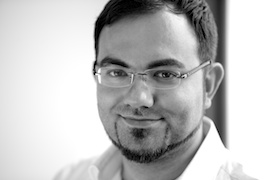
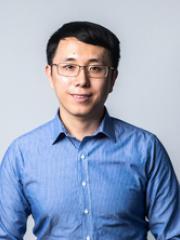
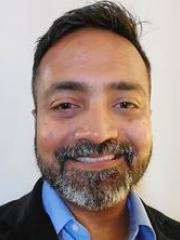
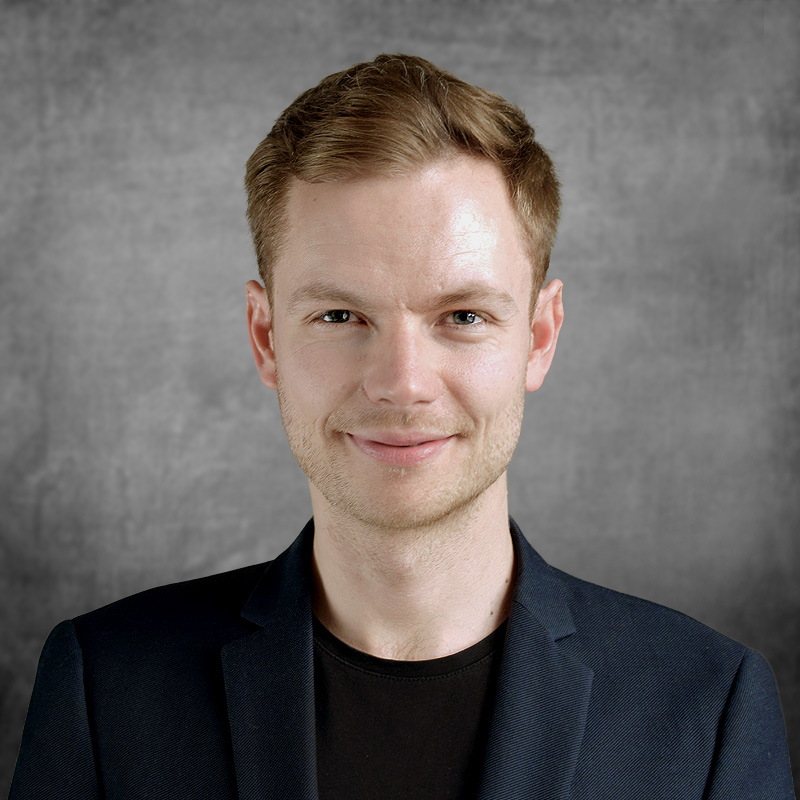
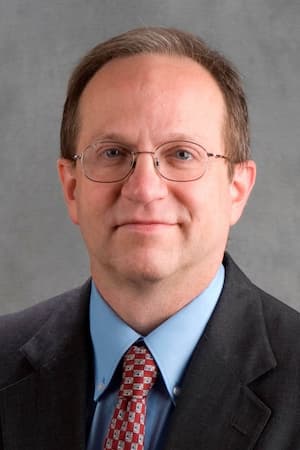
Dr. Daniel Pietschmann is a Researcher at the Institute for Media Research , Faculty of Philosophy, Chemnitz University of Technology . His work focuses on the psychological and physical aspects of user experience in virtual environments, with particular emphasis on spatial presence , embodiment in VR/AR , and digital game studies . He serves as a reviewer and editorial board member for multiple journals. Research Interests : Spatial presence formation in virtual environments Human-computer interaction with natural interfaces Transmedia storytelling analysis Psychophysiology of media reception Evolutionary psychology perspectives on digital games Scientific Contributions : Developed validated scales for player-avatar interaction (cPAX) Created stereoscopic ability tests for immersive media Keynote speaker on evolutionary game psychology Best Paper awards at ACHI 2017 and VAMR 2015 Academic Service includes editorial board membership for the Journal of Media Psychology and International Journal of Gaming , as well as conference reviewing for ICA and ECREA. His research has been funded through the DFG Graduate Program "Crossworlds" from 2012-2015.
Dr. Amin Askarinejad is an Associate Professor of Experimental Soil Mechanics at Delft University of Technology (TU Delft), specializing in geotechnical safety and renewable energy foundations. He holds a PhD from ETH Zurich (2013) and previously worked as a postdoctoral researcher at ETH Zurich before joining TU Delft in 2014. He currently serves as Director of the Research Programme at the Dams Safety Section of the Swiss Federal Office of Energy (SFOE). Research Focus: seismic safety of embankment dams, landslide early warning systems, soil-structure interaction for renewable energy structures Projects: BLUE Piling, MIDAS, GEOLAB, MAGIC, TRAMM, SafeLand, COST Action TU1202 Leadership Roles: President ad interim of ICOLD working group on small dams, Technical Committee member of ISSMGE (TC208 and TC104) His research integrates geotechnical physical modelling, advanced sensing, and numerical methods. Recent work examines offshore wind turbine foundations, monopile behavior in sand, and flood protection dam seepage. He has contributed to EU-funded projects and large-scale experiments like the Dutch Dike failure test in 2014. Scientific Awards: George Stephenson Medal (2022) R.M. Quigley Award (2019) Bright Spark Lecturer award (2018) Best Teacher Awards (2017-2018) Best Paper Award (2019) Dr. Askarinejad serves on editorial boards for the Journal of Landslides (Springer) and the International Journal of Physical Modelling in Geotechnics (ICE UK). His work aligns with UN Sustainable Development Goals related to climate resilience and sustainable infrastructure.
Megan Zirnstein is an Assistant Professor in the Department of Linguistics and Cognitive Science at Pomona College, part of The Claremont Colleges. She has been with the institution since 2019, contributing to interdisciplinary research and teaching in cognitive science and bilingualism. Her educational background includes a Ph.D. and M.A. from the University of California, Davis, and a B.A. from the University of Memphis. Megan Zirnstein’s research lies at the intersection of cognitive science, cognitive neuroscience, and psycholinguistics. Her work investigates how bilingualism influences cognitive control, reading comprehension, and neurobiological health across the lifespan. She employs multimodal methods including eye-tracking, EEG, ECG, and pupillometry to study language processing, cognitive ability, and emotional regulation in bilingual individuals. A major focus is on how parallel language activation affects comprehension and how cognitive and linguistic factors shape humor appreciation. The recent publications reflect a strong trajectory in bilingual cognition, with emphasis on lexical access, prediction mechanisms, cognitive control, and cross-language activation. The research spans populations from young adults to older adults and includes both hearing and deaf bilinguals, demonstrating methodological rigor and theoretical depth. Scientific Awards and Honors: Kavli Summer Institute in Cognitive Neuroscience Fellow (2017) Kavli Summer Institute in Cognitive Neuroscience Fellow (2018) National Science Foundation Grant (PI), $198,088, 2014–2018 NSF PIRE Postdoctoral Fellowship, Pennsylvania State University, 2012–2014 Megan Zirnstein has served as Principal Investigator on competitive grants, indicating active research funding and leadership. She advises on research within her lab and contributes to training students in cognitive neuroscience methods. She teaches core courses such as Introduction to Cognitive Science, Bilingual Cognition, and Cognitive Neuroscience with Lab, integrating research and pedagogy. Her work is embedded in a collaborative, interdisciplinary environment, often co-authored with leading scholars such as Judith F. Kroll. While no formal lab name is mentioned, her research group likely engages in behavioral and neurocognitive studies of language and cognition.
Dr. Da Chen is an Honorary Research Fellow at the School of Civil Engineering, The University of Queensland. His research focuses on composite structures, material mechanics, and structural analysis with applications in mechanical and civil engineering. Key Research Areas: Functionally graded porous materials, graphene reinforcement, multiscale modeling, thermal buckling, vibration analysis, and additive manufacturing. Publications: 28 journal articles, 4 book chapters, and 4 conference papers since 2014. Recent work includes machine learning applications for structural analysis and inverse design of porous systems. Email: d.chen@uq.edu.au
Professor Anand Veeraragavan is a leading expert in hypersonics and combustion at the University of Queensland's School of Mechanical and Mining Engineering. As Centre Director of the Centre for Hypersonics and Associate Editor of the AIAA Journal of Spacecraft and Rockets, he drives international research initiatives and technical standards. B.Tech (IIT-Madras), MS/PhD (University of Maryland) Co-Director, Centre for Hypersonics Mid-Career Advance Queensland Research Fellow (2017-2020) His research spans supersonic combustion of hydrocarbons, hypersonic aerothermodynamics , advanced optical diagnostics (PLIF, FLDI), and microcombustion power systems . Current projects focus on Boundary Layer Transition (BOLT II) simulations and scramjet cavity optimization for supersonic combustion. Recent publications emphasize fuel injection dynamics in hypersonic flows, cavity flameholding mechanisms, and thermal management for scramjets. His team develops 3D numerical models and experimental diagnostics for shock-turbulence interactions. Best Thesis Award, University of Maryland (2009) Associate Editor, AIAA Journal of Spacecraft and Rockets (2021-present) Advance Queensland Mid-Career Fellowship (2017-2020) Supervising PhD researchers on topics including cavity flame holders, hypersonic boundary layer transition, and turbulent transport mechanisms. Collaborations with UQ's Centre for Hypersonics, MIT, and GE Energy inform his work.
Jeff Loewenstein is a Professor and Area Chair of Organizational Behavior/Business Law at the Gies College of Business, University of Illinois at Urbana-Champaign. He also holds a professorship in Biomedical and Translational Sciences and serves as a Faculty Scholar at the Center for Professional Responsibility in Business and Society. Loewenstein's research centers on creativity, negotiation, and analogical reasoning. His work explores how perspective shifts enhance creative idea recognition, how analogical encoding improves ethical decision-making, and the dynamics of negotiation processes. His research fingerprint reveals key areas including Creativity Assessment (100%), Plot Structure (92%), Analogical Encoding (78%), Knowledge Transfer (71%), Perspective Shift (65%), Negotiators (61%), and Negotiation Skills (52%). He has developed influential frameworks for understanding creativity evaluation and knowledge transfer in organizational contexts. His recent publications demonstrate consistent focus on creativity assessment processes, negotiation dynamics, and ethical decision-making. Notable works include 'My Department or My Company?' (2024), which examines identity configurations in organizations; 'Hidden costs of text-based electronic communication' (2022), which investigates communication media effects; and 'Analogical Encoding Fosters Ethical Decision Making' (2021), which has received significant scholarly attention with 36 citation indexes. Creativity Assessment (100%) Plot Structure (92%) Analogical Encoding (78%) Knowledge Transfer (71%) Perspective Shift (65%) Loewenstein teaches courses including BADM 314 - Leading Negotiations, BADM 508 - Leadership and Teams, BADM 588 - Business Practice Immersion, BADM 590 - Negotiations, and MBA 552 - Fostering Creative Thinking. His teaching emphasizes practical applications of negotiation strategies, leadership development, and creative problem-solving techniques. His scholarly output includes 47 research publications with significant impact across organizational behavior, psychology, and business ethics domains.
Miguel Costas Piñó serves as Associate Professor in the Department of Structural Engineering at the Norwegian University of Science and Technology (NTNU), where he has been faculty since 2017 and was promoted to Associate Professor in 2021. His research bridges computational mechanics with practical engineering applications in structural safety and material behavior. Education PhD in Civil Engineering, University of A Coruña (2016), thesis: "Crashworthiness analysis and design optimization of hybrid impact energy absorbers" (awarded Cum Laude, International Distinctions, and Extraordinary Doctorate Award) Master of Science in Civil Engineering, University of A Coruña (2011), specialization in Structural Engineering Research Focus Dr. Costas's work centers on computational and experimental solid mechanics , with particular expertise in metal plasticity , aluminium structures , and crashworthiness under extreme loading conditions. His laboratory investigates ballistic penetration phenomena and structural optimization for energy-absorbing systems, utilizing advanced finite element methods and physical testing protocols. Current projects integrate machine learning with traditional mechanics to model complex failure modes in multi-material systems. Publication Trends His 2020-2025 publications reveal three dominant trajectories: (1) ballistic resistance of additively manufactured metals for defense applications, (2) crash safety of electric vehicle battery systems, and (3) advanced modeling of mechanical joints. These works consistently combine experimental validation with computational innovation, particularly in neural network applications for large-scale structural simulations. Awards Cum Laude Doctorate International Distinctions (PhD) Extraordinary Doctorate Award Professional Activities Dr. Costas actively collaborates with industry partners on structural safety projects and serves as principal investigator for multiple NTNU research initiatives. His teaching includes graduate courses in materials mechanics, and he maintains dual professional engagement as a classical pianist with Norway's collaborative music community. Current work focuses on AI-driven crash simulation frameworks and next-generation armor materials.
Dr. Sophie Oudman is an Assistant Professor at the Department of Education, Utrecht University, within the Faculty of Social and Behavioural Sciences. Her work bridges academic research with practical applications in primary and secondary education, focusing on teacher-student interactions and student self-regulated learning. University: Utrecht University School: Faculty of Social and Behavioural Sciences Department: Education Academic Rank: Assistant Professor Research Interests center on improving teachers' and students' judgment accuracy, metacognition, and adaptive instruction. She employs advanced multilevel models and quantitative methods to address educational challenges in mathematics and classroom dynamics. Recent Publications (2017–2024) span topics like metacognition, peer dynamics, and cue utilization in primary education. Key trends include feedback mechanisms, self-assessment strategies, and the role of teachers in shaping social-emotional outcomes. Teaching includes courses such as Educational Psychology, Design of Learning Environments, and Interaction in the Classroom, primarily in the ALPO program and Educational Sciences bachelor's/master's degrees. She supervises PhD candidate Stephanie Hepner on text comprehension judgments. Projects include collaboration with secondary school teachers to enhance basic mathematics skills via the Werkplaats Onderwijs en Onderzoek Oudenbosch initiative.
Dr. Andrés Modesto Alonso is an Associate Professor in the Department of Statistics at Universidad Carlos III de Madrid, affiliated with the Energy Analytics research group and Flores de Lemus Institute. His work spans computer science, economics, and statistics through advanced time series analysis and energy forecasting methodologies. Primary affiliation: Department of Statistics, UC3M Research groups: Energy Analytics, Flores de Lemus Institute His research focuses on time series analysis , energy forecasting , and statistical clustering with applications in electricity markets, smart grids, and environmental data. Recent publications emphasize deep learning models for energy prediction, dynamic factor models, and market-based distance metrics. Scientific output trends show 15 recent articles (2018-2024) covering topics like: Electricity market price forecasting Smart grid optimization through clustering Adaptive control charts for industrial processes Precision matrix estimation in high-dimensional statistics Extreme value analysis for environmental monitoring Dr. Alonso has supervised multiple theses on time series modeling and classification techniques, while collaborating on grants related to stochastic optimization and responsible AI applications in economic forecasting.
Stacey A. Combes is a Professor in the Department of Neurobiology, Physiology and Behavior at the University of California, Davis, and leads the Combes Lab focused on biomechanics and behavioral ecology of flying insects. Her work bridges lab-based biomechanics with field ecology to study insect flight performance in natural environments. She is affiliated with the Center for Neuroscience and graduate groups in Animal Behavior, Entomology, and Neuroscience. Ph.D. in Zoology, University of Washington (2002) B.A. in Integrative Biology, University of California, Berkeley (1994) Research interests include: Biomechanics of flexible insect wings Flight in complex environments (turbulence, cluttered spaces) Behavioral ecology of pollinators and predators Impact of wing damage on flight performance Recent publications analyze trends in insect flight adaptation to turbulence , energetic efficiency under loads , and 3D trajectory tracking . Articles explore sub-fields like pollination mechanics, collision mitigation, and environmental interaction. Scientific Recognition: 2019 Chancellor's Fellow NSF CAREER grant recipient Combes advises graduate students and postdocs, with notable alumni including James Crall (now Assistant Professor at UW Madison) and Nicholas Burnett (2017-2023 postdoc). Her lab develops innovative tools like BEEtags for tracking and DeepLabCut for flight analysis.
Susanne S. Renner is an Honorary Professor of Biology at Washington University in St. Louis, where she pursues integrative research that merges plant systematics, phylogenetics, ecology, and evolutionary biology. Her work explores the deep-time evolution of plants and their interactions with animals, especially mutualisms involving ants, bees, moths, and hummingbirds. Research Interests Plant systematics and molecular phylogenetics Evolution of plant–animal mutualisms (ants, bees, moths, hummingbirds) Biogeography and long-distance dispersal Plant sexual systems and sex-chromosome evolution Domestication genomics of crops such as watermelon, cucurbits, and walnuts Phenological responses to climate change History of biological collecting and biodiversity informatics Her recent publications (2023–2025) reveal a strong emphasis on genomics-enabled insights into crop domestication, the genomic architecture of plant sex chromosomes, co-evolutionary dynamics between plants and insects, and the application of AI and large-scale databases to biodiversity research. These studies collectively advance understanding of how plants adapt, diversify, and interact with their biotic environments across evolutionary timescales. Scientific Awards & Honors No specific awards are listed in the provided material. Advising & Grants While the text does not enumerate current students or funded projects, her extensive publication record with numerous international collaborators suggests active mentoring and sustained grant support. Laboratories & Teams She is associated with the Department of Biology at Washington University in St. Louis, but no dedicated laboratory name is provided in the supplied text.
Dr. Robert Pralat is a Researcher in the Department of Public Health and Primary Care at the University of Cambridge, affiliated with Sidney Sussex College. His work bridges medical sociology, reproductive health, and LGBTQ+ studies, focusing on how cultural changes and medical advancements shape family-making decisions among marginalized groups. BSc in Psychology, University of Leeds MA in Gender Studies, University of Leeds PhD in Sociology, University of Cambridge Research interests include: Reproductive decision-making among LGBTQ+ individuals and people living with HIV Moral judgments in public healthcare funding Intersection of sexual desire and medical intervention demand His publications (2010–2025) span topics like: HIV and parenthood Queer family dynamics End-of-life care policy Male reproductive health Pleasure-based HIV prevention Awards: Leverhulme Trust Early Career Fellowship (2018) British HIV Association Research Award (2014) Teaching roles: MPhil in Health, Medicine and Society (medical sociology subject manager) Human, Social and Political Science Tripos (sociology of gender and health) Medical Sciences Tripos (social context of health/illness) MPhil in Population Health Sciences Key affiliations: THIS Institute (Healthcare Improvement Research) Reproductive Sociology Research Group (ReproSoc) Sidney Sussex College British HIV Association
Allen I. Huffcutt is an Associate Professor of Management at the Austin E. Cofrin School of Business , University of Wisconsin-Green Bay, specializing in employee selection and industrial-organizational psychology . Prior to UW-Green Bay, he served as a faculty member at Bradley University, teaching HR-related courses and statistics. His academic journey includes a Ph.D. in Industrial & Organizational Psychology from Texas A&M University, following a Bachelor’s degree in engineering from UW Madison and five years in engineering roles at General Electric. Dr. Huffcutt’s research focuses on structured employment interviews , interview validity , and meta-analytic techniques . His work has been cited in major media outlets like Forbes and the Chronicle of Higher Education . He is a Fellow of both the Society for Industrial and Organizational Psychology (SIOP) and the American Psychological Association (APA). His research has resulted in over 40 years of peer-reviewed publications spanning psychometrics , range restriction , and cognitive ability assessment . He actively involves students in his research, with over 40 students participating in 14 conference presentations since 2011. Several students have co-authored journal publications, reflecting his commitment to undergraduate research mentorship . His current work explores behavioral consistency and neuroscience applications in HR contexts. Scientific Awards : Top 2% most influential authors by textbook citations Fellow, Society for Industrial and Organizational Psychology (SIOP) Fellow, American Psychological Association (APA)
María Aurora García Ruiz is a PhD holder in Hispanic Philology from the University of Zaragoza (2021) and a Doctor from the University of Jaén (2016). She is affiliated with the Faculty of Philosophy and Letters at the University of Zaragoza and has contributed extensively to chivalric literature studies, academic writing pedagogy, and digital humanities. Education: PhD in Hispanic Philology (University of Zaragoza, 2021); Doctorado en Filología Hispánica (University of Jaén, 2016). Research Themes: Medieval/Renaissance Spanish literature, chivalric codes, gender roles in Golden Age texts, academic writing challenges, digital educational tools. Her publications focus on the Amadisian saga, particularly Florisando (1510), analyzing paratextual ideologies, theological arguments, and gender dynamics. She explores how digital platforms like Instagram can disseminate literary knowledge and how neurolinguistic studies inform textbook design. Key collaborations include projects with Alberto Montaner Frutos and José Julio Martín Romero. Her work bridges textual studies with modern pedagogical practices.
Dr. Jiaxin Ling serves as a Research Fellow in Digital Twin and AR/VR for Heritage Buildings at The Bartlett School of Sustainable Construction, University College London. His work bridges digital innovation with sustainable construction practices, focusing on heritage preservation in complex urban environments. Academic background includes: PhD in Civil Engineering, Tongji University (2018-2024), recognized as an Outstanding Graduate of Shanghai Bachelor's in Civil Engineering, Wuhan University (2014-2018) His research spans Digital Twin for tunnels/buildings, Building Information Modeling (BIM) , and AI/ML applications in construction engineering. He pioneers AR/VR solutions for fire safety, tunnel lighting optimization, and intelligent infrastructure, directly supporting UN Sustainable Development Goals 11 (Sustainable Cities) and 9 (Industry Innovation). Analysis of recent publications reveals a cohesive trajectory in applying digital twin technology to solve critical challenges in tunnel safety, energy efficiency, and real-time construction monitoring through hybrid knowledge-data approaches. Key recognition: Outstanding Graduate of Shanghai (top doctoral honor) Dr. Ling contributes to major research initiatives funded by the European Union Horizon Programme and National Natural Science Foundation of China (NSFC) , collaborating across international teams to advance sustainable construction methodologies. His work operates within UCL's interdisciplinary research ecosystem, focusing on heritage building preservation through cutting-edge digital workflows and sensor-integrated monitoring systems.