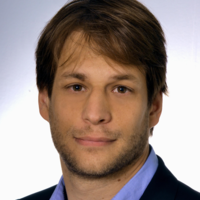
Olaf Ronneberger is an associate professor at the Albert-Ludwigs-Universität Freiburg and works at Google DeepMind . His research focuses on deep learning architectures , AI applications to scientific problems , and protein structure prediction . He leads seminars on deep learning and 3D image analysis, emphasizing vision-language integration and generative models. His publications include foundational work on U-Net architectures for biomedical image segmentation, AlphaFold 3 for biomolecular interaction prediction, and Gemini models for multimodal AI systems. Key subfields span medical imaging , protein folding , and vision-language models . Co-developer of U-Net , a widely used biomedical image segmentation framework. Contributor to AlphaFold 3 for structural biology. Research on Gemini 1.5/2.5 models for multimodal reasoning.
Johannes Zimmermann is Professor of Differential and Personality Psychology at the Institute of Psychology, University of Kassel, Germany. His work integrates personality science, psychopathology research, and advanced assessment methods, with particular expertise in dimensional models of personality disorders and the Hierarchical Taxonomy of Psychopathology (HiTOP). Education and Career Diploma in Psychology, University of Koblenz-Landau (2007) Doctorate, University of Heidelberg (2011) Post-doctoral fellow, German-Chilean Graduate School, Heidelberg University (2007–2010) Research Associate, University of Kassel (2010–2015) Professor for Methodology and Psychological Diagnostics, Berlin School of Psychology (2015–2018) Professor of Differential and Personality Psychology, University of Kassel (since 2018) Research Interests Prof. Zimmermann's research centers on personality assessment , psychopathology , and psychotherapy outcomes . He develops and validates instruments for measuring personality functioning and maladaptive traits, advances the Hierarchical Taxonomy of Psychopathology (HiTOP) framework, and employs ambulatory assessment to capture dynamic processes in daily life. Key themes include: Dimensional classification of personality disorders and psychopathology Ecological momentary assessment of affect and behavior Validation of German-language assessment tools (e.g., LPFS-BF, PID-5, HiTOP-SR) Long-term effectiveness of psychodynamic and cognitive-behavioral therapies Digital mental health and smartphone-based data collection Scientific Awards ISSPD Young Investigator Award (2019) – International Society for the Study of Personality Disorders SITAR Jerry Wiggins Student Award (2010) – Society for Interpersonal Theory and Research Advising & Collaborative Networks Prof. Zimmermann mentors doctoral and post-doctoral researchers through his roles in the German-speaking psychological community. He collaborates with international consortia including the HiTOP consortium, the PsyChange Network, and the London Personality and Mood Disorder Research Consortium, serving as principal investigator or co-investigator on projects funded by the German Research Foundation (DFG) and other bodies. Labs & Teams He leads the Differential Psychology Research Group at the University of Kassel, which focuses on measurement development, ambulatory assessment, and applied psychopathology research. The group maintains active collaborations with clinical centers across Germany and Europe for data collection and intervention studies.
Prof. Dr. Wolfgang Lutz is a Full Professor and Head of the Department of Clinical Psychology and Psychotherapy at the Faculty of Psychology, University of Trier, Germany. He also serves as Director of the Outpatient Clinic and Postgraduate Clinical Training. Additionally, he holds an Adjunct Professor position at the University of Western Australia and is a Fellow of the Association for Psychological Science (APS). Dr. Lutz's research focuses on advancing clinical psychology and psychotherapy through precision mental health care, treatment personalization, and feedback-informed psychological therapy. His work emphasizes using data-driven approaches to optimize treatment outcomes, with particular attention to depression, anxiety disorders, and PTSD. He has pioneered the development of the Trier Treatment Navigator (TTN), a system for feedback-informed treatment that helps match patients to the most effective therapeutic approaches. His recent publications reveal a strong emphasis on integrating technology and artificial intelligence into psychotherapy research and practice. This includes developing algorithms for personalized therapy, using large language models to analyze therapy sessions, and implementing routine outcome monitoring systems. His research shows how temporal dynamics in therapy processes affect outcomes and how clinical microskills can predict therapeutic alliance and success. Fellow of the Association for Psychological Science (APS) Editor of Psychotherapy Research He leads initiatives to develop a European Psychotherapy Consortium (EPoC) to standardize outcome measurement across countries and promote cooperation in psychotherapy research. His laboratory focuses on precision mental health care, developing tools for treatment personalization, and investigating the mechanisms of change in psychotherapy.
Prof. Jalal Etesami is an Assistant Professor in the Department of Computer Science at Technical University of Munich (TUM), leading the Decision Sciences & Systems group. He holds a Ph.D. in Industrial and Systems Engineering from the University of Illinois at Urbana-Champaign and was a Postdoctoral Fellow at EPFL in Switzerland. His research focuses on machine learning, causal inference, multi-agent systems, and game theory, with applications to systemic risk modeling and market design. He teaches advanced courses such as Causal Inference in Time Series , Algorithmic Game Theory , and Optimization, Learning, and Market Design . Notable contributions include work on causal structure learning, stochastic optimization, and non-Gaussian causal models. Recent research explores causal effect identification under confounding, neural networks for market analysis, and optimal experiment design. Prof. Etesami’s work appears in top venues like NeurIPS, AAAI, and IEEE journals. He actively contributes to the academic community, organizing seminars and workshops on topics ranging from causal reasoning to computational social choice.
Prof. Dr. Steffi Pohl holds the Chair of Methods and Evaluation/Quality Assurance at the Faculty of Education and Psychology, Freie Universität Berlin since 2019. Previously, she was a Junior Professor (2013-2019) and researcher at institutions including Friedrich-Schiller University Jena and University of Bamberg. She earned her PhD in Psychometrics from Friedrich-Schiller University Jena (2010) and holds a Diplom in Psychology (2004) from Freie Universität Berlin. Her research focuses on advanced statistical methods in educational and psychological testing, including response time modeling, missing data mechanisms, and causal inference in assessment. She has pioneered work on test engagement detection via response patterns and log数据分析. Awards include the 2020 Psychometric Society Early Career Award and 2011 Gustav A. Lienert Dissertation Prize. Pohl serves on editorial boards of Psychometrika , Journal of Educational and Behavioral Statistics , and Zeitschrift für Psychologie . She chairs the Berlin School of Mind and Brain faculty and holds governance roles in academic senates. Her research projects include the National Educational Panel Study (NEPS) and collaborations on test design innovations. Current teaching includes advanced courses in empirical research methods, multivariate statistics, and educational measurement. She actively develops methodologies for analyzing log数据 from digital testing platforms and improving assessment reliability in large-scale studies.
Marie-Christine Düker is an Assistant Professor in the Department of Statistics and Data Science at Friedrich-Alexander University (Germany). Her research focuses on high-dimensional statistics, time series analysis, functional data analysis, and extreme value theory with applications in economics, psychology, chemistry, and ecology. Previously, she was a postdoctoral associate at Cornell University's Department of Statistics and Data Science under David Matteson. She earned her PhD in Mathematics from Ruhr-University Bochum under Herold Dehling and spent part of her doctoral studies at the University of North Carolina at Chapel Hill with Vladas Pipiras. Current Position: Assistant Professor, Department of Statistics and Data Science, Friedrich-Alexander University Previous Academic Affiliation: Postdoctoral Associate, Cornell University Education: PhD in Mathematics, Ruhr-University Bochum; Part-time research at University of North Carolina Research Interests: Her work spans high-dimensional time series under long-range dependence and nonstationarity, discrete data modeling, nonlinear dynamics, dimension reduction, and change-point analysis. Applications include econometrics, neuroscience, chemical data analysis, and ecological forecasting. Recent Publications: Her 2025-2024 work covers Hilbert space-valued linear processes, kernel estimation for nonlinear dynamics, confidence interval approximations, and latent Gaussian count time series. Earlier papers address simultaneous diagonalization, long-run variance matrices, and transition rate estimation challenges. Contact: marie.dueker@fau.de
Fabian Gans is a Researcher at the Max Planck Institute for Biogeochemistry, affiliated with the Department Biogeochemical Integration led by Prof. Dr. M. Reichstein. He leads the Scalable Spatiotemporal Data Structures and Analytics (SSDSA) research group and is actively involved in the Empirical Inference of the Earth System group under Dr. Miguel D. Mahecha, as well as the Energy and Earth System group under Dr. A. Kleidon. His work is central to advancing data-driven methodologies in Earth system science. His research focuses on Earth system dynamics, particularly through the development and application of Earth System Data Cubes (ESDCs), which integrate multivariate spatiotemporal datasets for robust analysis. He employs machine learning, remote sensing, and hybrid modeling to study carbon and water fluxes, climate extremes, and ecosystem responses. His work bridges observational data with modeling frameworks to improve understanding of biosphere-atmosphere interactions. The 15 most recent publications highlight a strong trend toward data integration, scalability, and the use of artificial intelligence in Earth sciences. Key themes include the FLUXCOM framework for upscaling carbon fluxes, the development of Earth System Data Cubes, analysis of compound climate extremes, and hybrid modeling approaches. His research consistently emphasizes open science, reproducibility, and the need for integrated data platforms to tackle global environmental challenges. Scientific Awards: No awards listed in the provided text. Advising and Grants: No formal advisees or students are listed. No specific grants or funding sources are mentioned, though his involvement in large collaborative projects like FLUXCOM and Earth System Data Cubes suggests participation in significant research initiatives. Labs and Teams: Fabian Gans leads the Scalable Spatiotemporal Data Structures and Analytics (SSDSA) group and is a key member of the Empirical Inference of the Earth System team. He is also involved in the DeepESDL platform, an open collaborative environment for Earth system research, indicating leadership in developing research infrastructure and fostering interdisciplinary collaboration.
Prof. Dr. Jilles Vreeken is tenured faculty at the CISPA Helmholtz Center for Information Security , where he leads the Exploratory Data Analysis group. He also serves as an Honorary Professor at Saarland University . Research focuses on causal inference, machine learning, and data mining Develops unsupervised methods for robust, interpretable models PI on grants like HAICU's Neuro-Explicit Models and Crushing Antimicrobial Resistance His recent work spans causal discovery in non-stationary time series ( SPACETIME ), federated binary matrix factorization, interpretable neural search patterns, and data modification rule mining from event logs. He applies information-theoretic approaches to address hidden confounding, selection bias, and multi-environment causal modeling. Key trends in his publications include: Integrating causal inference with machine learning via algorithmic Markov conditions Advancing federated learning for privacy-preserving causal discovery Creating interpretable pattern mining frameworks for graphs, sequences, and high-dimensional data Developing MDL-based methods for reliable dependency and rule discovery Scientific Recognition: 2018 - IEEE ICDM Tao Li Award 2018 - IEEE ICDM Best Paper 2015 - UdS-CS Busy Beaver Teaching Award 2011 - ACM SIGKDD Best Student Paper 2010 - ACM SIGKDD Doctoral Dissertation Runner-Up 2009 - ECML PKDD Best Student Paper As an educator, he has supervised 15+ PhD/MSc students and taught courses like Topics in Algorithmic Data Analysis and Information-Theoretic Machine Learning . His research group pioneers methods for trustworthy information processing and causal anomaly detection , with applications in materials science, epidemiology, and cybersecurity.
Michel Besserve is a Senior Research Scientist in the Empirical Inference department at the Max Planck Institute for Intelligent Systems in Tübingen, Germany. His research bridges machine learning theory with applications in neuroscience and complex systems analysis. He leads a research group focused on developing causal machine learning tools to uncover the internal structure and transformations of complex artificial, physical, and socioeconomic systems. Dr. Besserve's primary research interests center on causal machine learning and its applications to understanding complex systems. His work investigates how causality can provide principled ways to study and improve AI algorithms, particularly focusing on the identifiability of causal models and the principle of Independence of Causal Mechanisms (ICM). He develops theoretical frameworks and practical tools for causal inference in complex equilibrium systems, neural circuits, and socioeconomic contexts. His research has significant implications for building trustworthy and interpretable AI systems that can reliably handle real-world complexity. Analysis of Dr. Besserve's recent publications reveals a strong focus on causal representation learning, with significant contributions to independent mechanism analysis and the identifiability of nonlinear generative models. His work spans both theoretical foundations and practical applications, connecting machine learning with neuroscience to understand brain function through causal inference. The interdisciplinary nature of his research is evident in publications spanning top machine learning conferences (NeurIPS, ICML, ICLR) and leading neuroscience journals (Nature, PLOS Biology). Dr. Besserve has established productive collaborations across multiple institutions, particularly with researchers at the Max Planck Institute and ETH Zurich. His work demonstrates how integrating causal principles with machine learning can address fundamental challenges in AI robustness and interpretability, with applications ranging from brain network analysis to economic modeling. His research group focuses on developing the Causal Computational Model (CCM) framework, which aims to create digital representations of real-world systems that integrate data, domain knowledge, and interpretable causal structure. This work has potential applications in climate modeling, industrial digital twins, and economic simulation.
Bernard Haasdonk is a Professor at the University of Stuttgart, affiliated with the Institute of Applied Analysis and Numerical Simulation (IANS), part of the Faculty of Mathematics and Computer Science. His research focuses on model reduction techniques for parametrized partial differential equations (PDEs), kernel-based methods, numerical analysis, and machine learning applications in scientific computing. He leads a research group in numerical mathematics and has contributed to software tools like RBMatlab and KerMor. Affiliations: Institute of Applied Analysis and Numerical Simulation, University of Stuttgart Roles: Academic Researcher, Software Developer, Grant Principal Investigator His work bridges numerical simulation, machine learning, and reduced basis methods, addressing challenges in optimal control, fluid dynamics, and biomechanics. Haasdonk has held multiple funded projects, including those on kernel methods for model reduction and certified RB-ML-ROM surrogate models. Research Interests: Model reduction for PDEs, kernel methods, greedy algorithms, numerical analysis, optimal control, and applications in fluid dynamics and porous media. He emphasizes structure-preserving methods for Hamiltonian systems and data-driven approaches for surrogate modeling. Publications: Over 200 articles in journals like SIAM, BIT Numerical Mathematics, and Physica D, focusing on convergence analysis, kernel-based approximation, and reduced-order modeling. Recent trends include adaptive greedy algorithms, symplectic model reduction, and energy-conserving surrogates. Awards: IEEE PerCom 2017 Best Paper Award, Teaching Excellence Awards (2012-2017), and early-career research grants. Grants: DFG-funded projects on model reduction, SimTech Cluster contributions, and collaborations on fuel cells and biomechanics. Teams: Leads the Numerical Mathematics Research Group at IANS, collaborating with interdisciplinary teams on projects like MORCOS (Model Order Reduction of Coupled Systems) and KerMor (Kernel Methods for Model Reduction).
Benjamin Nagengast is Professor of Educational Psychology and Deputy Director of the Hector Institute for Empirical Educational Research at the University of Tübingen. His work focuses on educational psychology, quantitative research methods, and motivation theory, with a particular emphasis on academic self-concept, intervention programs, and causal analysis in educational settings. He previously served as co-director of the LEAD Graduate School & Research Network and head of the LEADing Research Center until June 2022. His research spans topics including: Educational effectiveness and policy evaluation Motivational dynamics and value-belief interactions Multilevel modeling of educational outcomes Personality-achievement correlations Longitudinal studies of developmental trajectories While not explicitly listing scientific awards, his publications highlight methodological innovations and large-scale empirical studies. He mentors students through collaborative research projects, though individual advisees aren't named. His work frequently appears in top journals like Psychological Science and Journal of Educational Psychology , with recent articles examining detracking effects, twin comparison processes, and the interplay between self-concept and achievement. He maintains active collaborations with institutions like the University of Oxford and University of Jena.
Daria Katharina Benden serves as a Postdoctoral Researcher at the University of Bonn's Bonn Center for Teacher Education (BZL) within the Empirical Educational Research and Educational Psychology research group led by Prof. Dr. Fani Lauermann. She also holds a Postdoctoral Fellowship at the College for Interdisciplinary Educational Research (CIDER). Her academic journey includes bachelor's and master's degrees in Mathematics and Physics Teacher Education from the University of Bonn, followed by a summa cum laude Ph.D. in Psychology from TU Dortmund University in 2022. Her research focuses on critical aspects of educational psychology in STEM contexts, particularly examining student motivation trajectories, educational and occupational choices in math-intensive fields, and teachers' professional competencies. She investigates how digital self-testing and self-reflection tools can support students in postsecondary education transitions, along with assessing digital competencies required by both students and instructors in modern educational environments. Her work reveals important gender differences in motivational variability and identifies early warning signs of academic disengagement through short-term motivational assessments. Benden's publication portfolio demonstrates strong methodological rigor through longitudinal analyses, random intercept cross-lagged modeling, and network analysis approaches applied to large datasets from math-intensive study programs. Her research consistently addresses the critical challenge of student retention in STEM fields through examination of expectancy-value dynamics, test engagement factors, and motivational alignment patterns. Notably, her work shows that greater motivational alignment between expectancy and value beliefs can paradoxically indicate disengagement in challenging academic contexts. International awards for young scholars from European Association for Research on Learning and Instruction (EARLI SIG-8) International awards for young scholars from American Educational Research Association (AERA MotSIG) As an active researcher, Benden regularly presents at major international conferences including AERA and EARLI, with upcoming presentations scheduled through 2025. Her collaborative work spans multiple institutions including TU Dortmund University and involves significant contributions to theoretical frameworks in educational psychology, particularly regarding situated expectancy-value theory applications in higher education STEM contexts.
Jing Jiang is a prominent researcher at Singapore Management University, specializing in Natural Language Processing (NLP), Computational Linguistics, and Artificial Intelligence. His work spans diverse areas including Vision-Language Models, Machine Translation, Knowledge Graph Reasoning, Sentiment Analysis, and Social Media Discourse Modeling. Key contributions include frameworks for consistent client simulation in mental health counseling and counterfactual contrastive prefix-tuning for many-class classification. He has pioneered methods in zero-shot VQA with interpretable reasoning graphs , cross-lingual understanding with universal syntax , and modularized zero-shot architectures . His research often combines theoretical insights with practical implementations, as seen in works on stereotypical bias in vision-language models (VLStereoSet), tensorized self-attention for dependency modeling, and collaborative relation-augmented attention for knowledge graph completion. Jing Jiang's collaborations span global experts in NLP and AI, with co-authors from institutions like SMU, Waseda University, and Microsoft Research.
Prof. Ali Ünlü is a full professor in Methods of Empirical Educational Research at the Technical University of Munich (TUM), affiliated with the TUM School of Social Sciences and Technology. His research focuses on mathematical and statistical methods in behavioral sciences, educational measurement, and large-scale assessment. He earned his mathematics degree from TU Darmstadt (2000), a doctorate in psychometrics from TU Graz (2004), and habilitation in statistics from the University of Augsburg (2009). Awards include the 2005 Memorial Guest award from Purdue University. His work emphasizes latent variable models for knowledge assessment and has been published in journals like Methodology and Journal of Mathematical Psychology . He has held visiting professorships and led the Center for International Comparative Educational Studies (2011–2016). His recent studies explore β-cell biology and diabetes mechanisms, reflecting interdisciplinary research interests. Education: PhD in Psychometrics/Mathematical Psychology (2004) Habilitation in Statistics (2009) Research emphasizes quantitative methodologies applied to educational and behavioral sciences. Key themes include: Statistical modeling in large-scale assessments Latent variable models for competence diagnostics Interdisciplinary cell biology studies (e.g., β-cell dynamics) Recent publications highlight cellular mechanisms in diabetes and pancreatic development. His work bridges educational measurement and biomedical research, leveraging advanced statistical techniques. Awards: Winner Memorial Guest, Purdue University (2005) Grants and advisory roles include leadership at the Center for International Comparative Educational Studies. Collaborations span institutions like UC Irvine and Purdue University.
Frederick Solt is a Professor in the Department of Political Science at the University of Iowa, specializing in comparative political behavior, public opinion, and political economy. His research focuses on how economic inequality shapes citizen attitudes and behaviors across nations, with significant contributions to cross-national methodology. His primary research interests include income inequality dynamics , comparative public opinion , and computational methods for cross-national research . Solt pioneered the Standardized World Income Inequality Database (SWIID), providing comparable inequality metrics for global research, and leads the Dynamic Comparative Public Opinion (DCPO) Lab which generates Bayesian estimates of opinion trends across thousands of surveys. Recent publications reveal consistent focus on democratic support measurement, inequality's impact on protest participation, and gender egalitarianism across cultures. His work demonstrates methodological innovation through latent variable modeling and advanced estimation techniques for cross-national comparability. Solt maintains active research leadership through the DCPO Lab and SWIID database project, developing tools that enable rigorous analysis of global inequality and opinion trends. His collaborative work spans multiple continents with frequent co-authorship patterns indicating strong international research networks.