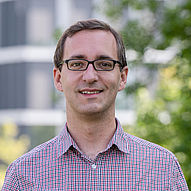
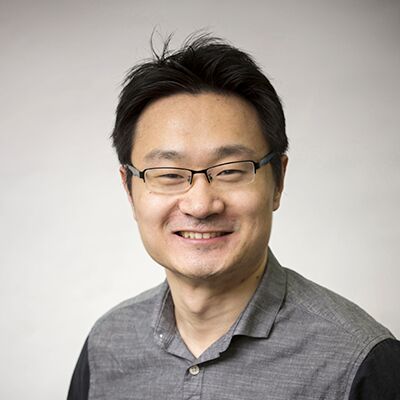
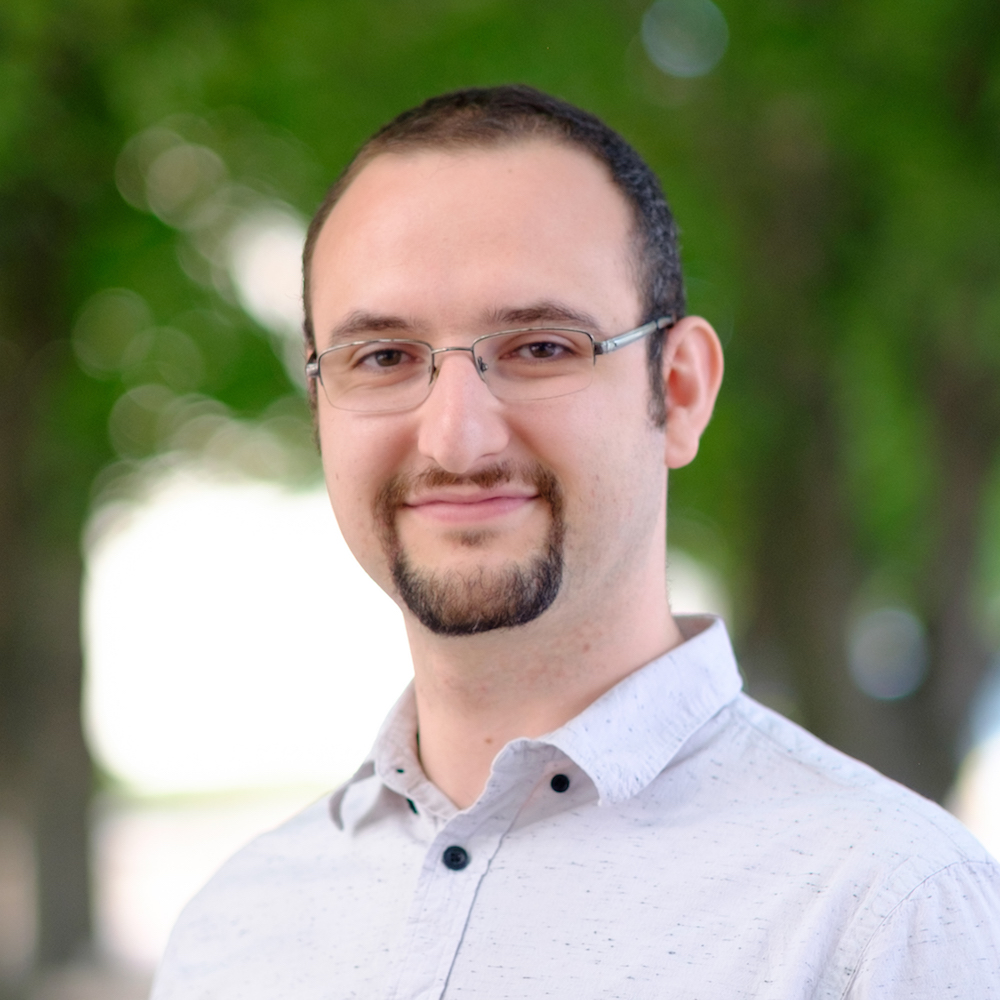
Niels Henze is a Professor at the Chair of Media Informatics within the Faculty of Languages, Literature and Cultural Studies at the University of Regensburg, where he has been serving since May 2018. His research centers on human-computer interaction, with a strong focus on predictive models in interactive systems, mobile interaction, augmented and virtual reality, and attention-aware computing. His research interests include: Human-Computer Interaction (HCI) Predictive modeling for runtime adaptation Mobile and wearable interaction Augmented and Virtual Reality (AR/VR) Attention-aware and context-sensitive systems Sociocognitive aspects of interactive technologies The analysis of his recent publications reveals a consistent focus on leveraging user behavior and contextual cues to build intelligent, adaptive interfaces. His work integrates machine learning with interaction design, emphasizing real-time model updates, implicit feedback, and cognitive load awareness to improve usability and user experience across mobile and immersive platforms. Scientific awards: No awards mentioned in the provided text. Niels Henze leads research in adaptive interactive systems and advises students in the field of media informatics. He has previously held a junior professorship at the University of Stuttgart and completed his doctorate at the University of Oldenburg under Susanne Boll. He is actively involved in advancing the theoretical and practical foundations of predictive and attention-aware computing. Grants and funding sources are not specified in the text. He is associated with the Institute for Information and Media, Language and Culture (I:IMSK) at the University of Regensburg, contributing to a multidisciplinary environment that bridges informatics with cultural and linguistic studies.
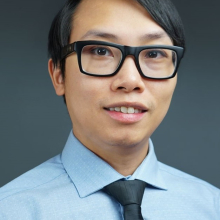
Dr. Steven H. H. Ding is an Assistant Professor at McGill University's School of Information Studies, specializing in cybersecurity, machine learning, and data mining. His research focuses on AI-driven solutions for malware detection, software vulnerability analysis, and reverse engineering. He holds a PhD from McGill University and has been supported by BlackBerry Cylance and DRDC. His work bridges theoretical advancements with practical applications in military systems and avionics cybersecurity. Dr. Ding earned his PhD in 2019 with notable awards including the FRQNT Doctoral Research Scholarship and McGill's Dean’s Graduate Award. His educational background includes degrees from McGill, Concordia University, and the University of Shanghai for Science and Technology. His research interests span cybersecurity domains such as zero-day malware identification, code obfuscation countermeasures, authorship verification for digital forensics, and AI applications in avionics anomaly detection. He actively contributes to open-source tools like the Kam1n0 MapReduce-based assembly clone search system. Recent work emphasizes adversarial machine learning for evasive malware generation, transformer-based anomaly detection in avionics, and automated SBOM generation for firmware analysis. His publications reflect a focus on real-world cybersecurity challenges in both civilian and defense sectors. Dr. Ding leads the L1NNA Lab and collaborates with industry partners on cutting-edge projects. His contributions include novel techniques for phishing detection leveraging large language models and innovative approaches to reverse engineering software composition in JavaScript applications.
Prashant Mehta is a Professor of Mechanical Science and Engineering at the University of Illinois at Urbana-Champaign , affiliated with the Coordinated Science Laboratory . His research focuses on controlled interacting particle systems and machine learning applications , particularly in human activity recognition using motion sensors. Education: Ph.D. in Mathematics, Cornell University (2004) M.S. in Electrical & Computer Engineering, University of Massachusetts Amherst (1996) B.E. in Electrical & Electronics Engineering, Birla Institute of Technology & Sciences (1993) Mehta's work has pioneered the feedback particle filter (FPF) algorithm for nonlinear estimation, applied in robotic systems and gesture recognition. His research spans control of combustion instabilities in jet engines, mean-field games , and dynamical systems in aerospace engineering. His publications emphasize nonlinear control theory and stochastic filtering , with recent trends in sensor data pattern recognition and cyber-physical systems . He has received multiple scientific awards , including the MURI award for the Cyberoctopus project and Excellence in Undergraduate Advising Awards . Scientific Honors: MURI Award (2019) for Cyberoctopus Excellence in Undergraduate Advising (2010, 2008) Outstanding Teaching Assistant Award (1994) Senior Member, IEEE Control Systems Society Member, ASME Energy Systems Subcommittee Member, SIAM Dynamical Systems Group Mehta has supervised students like Jin Kim (IEEE CDC Best Student Paper, 2019) and co-founded the startup Rithmio , acquired by Bosch Sensortec . His laboratory develops gesture-detection filters for applications in soft robotics and human-machine interfaces .
Valerie Viet Triem Tong is a Research Professor at the Paris Institute of Electrical and Electronic Engineering, School of Electrical and Electronic Engineering. She has established herself as a leading researcher in cybersecurity with a particular focus on information flow control systems, Android security, and malware analysis. Her work spans both theoretical foundations and practical security tools development. Her research interests center on Information Flow Control , where she has developed frameworks for monitoring and enforcing security policies at both operating system and application levels. She has made significant contributions to Android Security , creating tools for detecting malicious behavior in mobile applications and addressing privacy concerns in smartphone environments. Her work in Malware Analysis includes developing advanced techniques for tracking and visualizing malware behavior, with emphasis on evasive Windows malware and Android malware in the wild. She also investigates Peer-to-Peer Network Security , focusing on Sybil attack resistance and distributed identity management. Analysis of her publication record reveals a consistent trajectory from foundational work in information flow theory to increasingly applied security research. Her recent work shows a strong emphasis on practical security tools (DaViz, GUI-Mimic, BAGUETTE), security evaluation methodologies (Digital twin, CERBERE), and addressing contemporary challenges in malware analysis (debiasing datasets, handling obfuscated applications). A notable trend is her integration of visualization techniques with security analysis to make complex security data accessible to both experts and machine learning systems. As an advisor, she has mentored numerous researchers who have become first authors on significant publications, including Radoniaina Andriatsimandefitra, Tomás Concepcion Miranda, and Cedric Herzog. Her research has been supported by multiple grants focused on cybersecurity infrastructure, though specific grant details are not provided in the available information. Dr. Tong is actively involved with the CIDre security research group in Rennes, contributing to collaborative projects that bridge theoretical security models with practical implementation challenges. Her work on information flow monitoring has evolved from basic research to applied systems that address real-world security concerns across multiple platforms.
Timo Minssen is Professor of Law at the University of Copenhagen (UCPH) and the Founding Director of UCPH's Center for Advanced Studies in Bioscience Innovation Law (CeBIL). He also holds affiliations as an LML Research Affiliate at the University of Cambridge and an Inter-CeBIL Research Affiliate at Harvard Law School's Petrie-Flom Centre. With extensive expertise in Intellectual Property, Competition, and Regulatory Law, Minssen focuses on the legal aspects of emerging health and life science technologies, including genome editing, big data, artificial intelligence, and quantum technology. His educational background includes a German law degree (Staatsexamen) from Georg-August-University in Göttingen, and Swedish biotech & IPR related LL.M., LL.Lic., and LL.D. degrees from Lund University and Uppsala University. His PhD thesis on the patentability of biopharmaceutical technology in the US & Europe received the prestigious Swedish King Oscar award. 2024: TUM Global Visiting Professor, Technical University of Munich (Germany) 2016: Visiting Research Fellow, University of Cambridge (UK) 2014: Visiting Research Fellow, University of Oxford (UK) 2013-14: Visiting Scholar, Harvard Law School (US) 2012: LL.D. - Doctor of Laws (Swedish "juris doktor"), EU/US patent law, Lund University, Sweden Minssen's research spans AI & Big Data in Health & Life Sciences, Sustainable and responsible innovation & tech transfer, Pharmaceutical-, Life Science- & Biotech Law, Comparative European & US Patent Law, Intellectual Property Law & Open Innovation, and EU Competition- & US Antitrust Law. His work addresses legal issues throughout the lifecycle of health and life science products and processes, from R&D regulation to technology transfer and commercialization. His extensive publication record includes 7 books and over 200 articles and book chapters published in leading journals such as Science, Nature Biotechnology, JAMA, and Harvard Business Review. His research has been featured in The Economist, Financial Times, and other major media outlets. Minssen's recent work shows a strong focus on AI regulation, quantum technology law, and data governance in health contexts, reflecting the evolving landscape of technology and law. Scientific Awards and Recognition King Oscar award for best Jur. Dr. thesis (2014) Jorcks Fonds Forsknings Pris (Jorck's Foundation Research Prize) (2017) Awapatent Research Prize (2009) Max Planck Research Scholarship (2005) Visiting Scholar appointments at Harvard Law School, University of Oxford, and University of Cambridge Recipient of a Novo Nordisk Foundation Grant for a "Collaborative Research Program in Biomedical Innovation Law" (2018) As an advisor, Minssen serves international organizations including the WHO, WIPO, and EU Commission. He has supervised numerous PhD students in areas including pharmaceutical law, biotechnology patents, and antimicrobial resistance. His current research projects include the Novo Nordisk Foundation's International Collaborative Bioscience Innovation & Law (Inter-CeBIL) Programme (50 million DKK), CLASSICA: EU Horizon Project on AI-assisted surgery, and AI@Care: Law and Ethics and Algorithmic Bias in Healthcare. Minssen leads the Center for Advanced Studies in Bioscience Innovation Law (CeBIL), which serves as a hub for interdisciplinary research on the intersection of law, technology, and innovation in the health and life sciences. The center collaborates with institutions worldwide to address pressing legal challenges in emerging technologies.
Daniel Razansky is a Full Professor at the Department of Information Technology and Electrical Engineering, ETH Zurich, leading the Professorship for Biomedical Imaging. His research spans engineering, physics, biology, and medicine, focusing on developing advanced in vivo imaging tools like optoacoustic tomography and ultrasound neuromodulation. His recent work emphasizes multi-scale functional and molecular imaging , with applications in neuroscience , Alzheimer’s disease , and stroke diagnostics . Collaborations include National Tsing Hua University and the EU Horizon consortium SWEEPICS. Current projects target hybrid imaging systems (e.g., MRI-MSOT) and image-guided neuromodulation. Scientific awards include the IPPA James Smith Prize for his contributions. His lab has secured significant grants, including a $2.5M NIH award and SNSF funding. He mentors PhD students like Quanyu Zhou and Eva Remlova, who have received accolades for their research. The Razansky Lab at ETH Zurich’s Preclinical Imaging Center explores medical microrobotics , dynamic fluid flow imaging , and neuroimaging techniques , aiming to bridge engineering with clinical applications.
Konstantinos Karapiperis is a Tenure Track Assistant Professor at EPFL's Laboratory of Multiscale Modeling of Materials (LMD), within the School of Architecture, Civil and Environmental Engineering (ENAC). His research integrates mechanics , multiscale modeling , and data science to study geomaterials and structural materials. PhD in Applied Mechanics (minor in Applied Mathematics), Caltech Postdoctoral Researcher & Lecturer, ETH Zürich (Marie Skłodowska-Curie Fellowship) Research focuses on granular materials , architected materials , and nonlocal modeling using techniques like Level-Set Discrete Element Method (LS-DEM) and machine learning . Recent work explores fracture control via graph neural networks and thermodynamics-informed models. Selected scientific award: Marie Skłodowska-Curie Fellowship Teaches courses in Soil Mechanics and Multiscale Modeling . PhD students include Thomas Henzel and Hrishikesh Gopakumar Menon. His Data-Driven Mechanics Laboratory (LMD) develops predictive tools for granular and structured material behavior.
Prof. Dr.-Ing. Lars Linsen is a full Professor of Computer Science at the Westfälische Wilhelms-Universität (WWU) Münster, leading the VISualization & graphIX (VISIX) group. His primary affiliation is the Institute of Computer Science within the Faculty of Mathematics and Computer Science. He holds adjunct professorships at Jacobs University, Bremen, and has held previous academic roles including Full Professor at Jacobs University (2012–2017) and Associate/Assistant Professor roles in Germany and the U.S. His research focuses on interactive visual analysis, medical visualization, and scientific visualization, with applications in life sciences and engineering. Education: PhD (Dr.-Ing.) in Computer Science from Universität Karlsruhe (2001), M.Sc. (Diplom) in Computer Science (1997), B.Sc. (Vordiplom) in Computer Science (1994). Awards: IEEE Visualization Design Contest Winner (2008, 2022, 2018), Preis des Fördervereins des Forschungszentrum Informatik (2002). Research Highlights: Develops visualization tools for medical imaging (e.g., mass spectrometry imaging, MRI data analysis) and physical simulations (e.g., wildfire spread analysis, asteroid impact modeling). Active in EU-funded projects like Pig-Pro-QuO (surface coatings) and cells-in-motion initiatives. Supervised over 20 PhD/MS advisees, including notable graduates in medical visualization and simulation ensemble analysis. Publications: Over 100 peer-reviewed articles in top venues like IEEE Transactions on Visualization and Computer Graphics, Computers & Graphics, and EuroVis. Key works include SciVis contest-winning wildfire analysis frameworks and medical visualization tools for stenosis detection. Teaching: Offers courses on visualization, computer graphics, and computational science. Actively involved in thesis supervision and curriculum development at both WWU Münster and Jacobs University. Grants & Collaborations: Principal investigator on DFG-funded projects (e.g., hemodynamics simulations, ensemble visualization) and industry collaborations (e.g., Tascon GmbH for coating quality analysis). Member of the Cells-in-Motion Interfaculty Centre and CDH board at WWU.
Dr. He Wang is an Associate Professor in the Department of Computer Science at University College London (UCL), affiliated with the Virtual Environment and Computer Graphics (VECG) group and the UCL Centre for Artificial Intelligence. He holds a Visiting Professorship at the University of Leeds and previously served as an Associate Professor and Lecturer there, as well as a Senior Research Associate at Disney Research Los Angeles. His research focuses on computer graphics, vision, and machine learning, with notable contributions to crowd simulation, generative models, and physics-informed neural networks. Dr. Wang earned his BEng from Zhejiang University and his PhD from the University of Edinburgh, followed by postdoctoral work at the University of Edinburgh's School of Informatics. He has been recognized as a Turing Fellow and serves as an Academic Advisor to the Commonwealth Scholarship Council and an Associate Editor of Computer Graphics Forum . His research spans cutting-edge topics including 3D reconstruction, adversarial attacks on motion recognition, and AI-driven groundwater modeling. He has supervised six PhD students to completion and actively engages in collaborative projects, consultancy, and grant evaluations. His lab welcomes students through dedicated recruitment channels.
Sunder Kekre is the Vasantrao Dempo Professor of Operations Management at Carnegie Mellon University’s Tepper School of Business , where he has held academic appointments since 1984. His research focuses on manufacturing systems, global supply chains, and healthcare operations management. Research Expertise : New product development structures, strategic costing, lean innovation, knowledge sharing in enterprise networks, and business analytics for coordinated supply chains. Key Publications : Contributions to journals like Management Science , Operations Research , and Production and Operations Management , with work on LNG storage valuation, RFID logistics, and healthcare disparities. Scientific Recognition : Dempo Chair Professorship Bosch Chair Professorship Best Paper Award (1995) Teaching : Courses in Operations Management, Strategic Management of the Enterprise, and Information Systems Project. Non-Academic Experience : Prior engineering roles at Tata Steel (1974-1980) and consulting engagements with Fortune 500 firms like Bosch, Caterpillar, and IBM.
Professor Göran Broström works at the Department of Marine Sciences at the University of Gothenburg . His research focuses on physical oceanography, marine turbulence, tidal energy systems, and biophysical processes in marine ecosystems. Current research themes include methane emissions from ocean infrastructure, turbulence in tidal flows, and wave-current interactions He utilizes advanced numerical modeling (e.g., Large Eddy Simulation, Bayesian inversion) and field observations Recent publications emphasize climate impacts (methane plumes), tidal energy innovations, and marine ecological connectivity His work appears in high-impact journals like Nature , Molecular Ecology , and Frontiers in Marine Science . Collaborative projects span oceanographic modeling, environmental monitoring, and marine renewable energy. No specific student advising information appears in the provided text.
Onur Varol is an Assistant Professor at Sabanci University's Computer Science Department and leads the VIRAL Lab, which focuses on computational social science, network science, and machine learning. He has affiliations with the Center of Excellence for Data Analytics. His research spans social bot detection, misinformation analysis, and online behavior modeling.
Dr. Todd D. Murphey is a Professor of Mechanical Engineering at Northwestern University's Robert R. McCormick School of Engineering and Applied Science. He serves as Director of Transformative Research and Director of the Master of Science in Robotics Program at Northwestern, leading initiatives in computational dynamics, control systems, and robotics. His work bridges engineering, neuroscience, and biomedical applications, with a focus on developing systems that interact effectively with humans and their environments. Dr. Murphey received his Ph.D. in Control and Dynamical Systems from the California Institute of Technology in 2002, with a thesis titled "Control of Multiple Model Systems." Prior to that, he earned a B.S. in Mathematics, summa cum laude, from the University of Arizona in 1997. Dr. Murphey's research centers on computational methods in dynamics and control, with applications spanning neuroscience, health science, robotics, and automation. His work in the Interactive & Emergent Autonomy Lab focuses on computational models of embedded control, biomechanical simulation, dynamic exploration, and hybrid control. The group develops mathematical approaches that lead to orders of magnitude improvement in computational efficiency for real-time implementation. Key application areas include assistive exoskeleton control, stabilization of energy networks, bio-inspired active sensing, entertainment robots, robotic exploration, and software-enabled stroke rehabilitation. Analysis of Dr. Murphey's recent publications reveals a strong emphasis on human-swarm interaction, algorithmic matter, and control of cyber-physical systems in uncertain environments. His work increasingly integrates information theory with physical systems, exploring how both autonomous and biological systems interact with environments to learn and improve behaviors. Recent trends show growing applications in rehabilitation technology, with particular focus on human-machine interaction in biomedical devices and embodied intelligence. Dr. Murphey has received numerous honors and awards for his contributions to robotics and engineering: Named Director of Transformative Research at Northwestern University (2025) Appointed IEEE Robotics and Automation Society Vice President of Publication Activities (2022) Co-recipient of Best Paper Award for IEEE Transactions on Robotics (2020) Appointed to Air Force Scientific Advisory Board (2019) Recipient of ABB Best Student Paper Award for CPL-SLAM research (2019) Cole-Higgins Award from Northwestern Engineering (2015) Dr. Murphey has supervised numerous graduate students including Taosha Fan, Giorgos Mamakoukas, and Ian Abraham, with research spanning robotic exploration using electrosense and mechanical contact, human-in-the-loop control, and shared control for rehabilitation devices. His lab has secured significant funding from the National Science Foundation, DARPA, and industry partners including Siemens and Ekso Bionics, supporting research in algorithmic matter, emergent behavior, and human-swarm collaboration. The Interactive & Emergent Autonomy Lab, led by Dr. Murphey, investigates how both autonomous systems and biological systems interact with their environments to learn and improve behaviors. Current projects include active learning and data-driven control, active perception in human-swarm collaboration, algorithmic matter and emergent computation, control for nonlinear and hybrid systems, cyber physical systems in uncertain environments, harmonious navigation in human crowds, information maximizing clinical diagnostics, reactive learning in underwater exploration, robot-assisted rehabilitation, and software-enabled biomedical devices. The lab collaborates with researchers across Northwestern and institutions including Georgia Tech, MIT, and industry partners.
Zakir Durumeric is an Assistant Professor of Computer Science at Stanford University, leading the Stanford Empirical Security Research Group. His research focuses on Internet security, trust, and safety, emphasizing large-scale network measurement and open-source tool development. He founded Censys, a platform providing global Internet device data, and maintains tools like ZMap, ZGrab, and Retina. Research interests include cybercrime prevention, censorship analysis, disinformation tracking, and platform governance for online harassment. Notable contributions include studies on the Mirai botnet, TLS certificate ecosystems, and vulnerabilities like Heartbleed and Logjam. Awards include the IRTF Applied Networking Research Prize (2015) and a Test of Time Award (2022). Teaches courses: CS155 (Computer & Network Security), CS356 (Systems & Network Security), and CS249i (Modern Internet). Advises over 20 students, including Catherine Han, Kimberly Ruth, and Liz Izhikevich. Develops open-source software such as ZMap Toolkit and ASdb, and maintains datasets like CrUX Top Million Websites. Recent work explores toxic online behavior, misinformation ecosystems, and regional censorship mechanisms in China. His lab’s tools are widely adopted in academia and industry for security research and policy guidance.
Wing Ng serves as Alumni Distinguished Professor and Chris C. Kraft Endowed Professor in Virginia Tech's Department of Mechanical Engineering within the College of Engineering. His career spans over four decades with continuous contributions to aerospace thermal systems and fluid dynamics research since joining Virginia Tech in 1984. Dr. Ng's academic foundation includes: Ph.D. in Mechanical Engineering from Massachusetts Institute of Technology (1984) M.S. in Mechanical Engineering from Massachusetts Institute of Technology (1980) B.S. in Mechanical Engineering from Northeastern University (1979) His pioneering research focuses on aeroacoustics of drones and jet engines, where he develops advanced diagnostics for turbine flow measurements and investigates transonic turbine blade aerodynamics. Current work explores aerothermal particle interactions in gas turbines and clean energy applications for wind turbines. His experimental approach bridges fundamental fluid dynamics with practical aerospace engineering solutions, particularly in cooling systems for high-temperature components. Analysis of recent publications (2024-2025) reveals three dominant research thrusts: turbine cooling optimization (film/phantom cooling configurations), particle dynamics in gas paths (impact/rebound mechanics), and novel measurement techniques (strain sensors, multiphase flow diagnostics). These studies consistently target performance enhancement and durability improvement in turbomachinery through experimental validation. Dr. Ng's exceptional contributions are recognized through: Virginia Tech Faculty Entrepreneur Hall of Fame (2017) William E. Wine Award for teaching excellence (2014) Multiple Certificates of Teaching Excellence (1985,1988,2011,2014) Dean's Award for Research Excellence (2013) Consecutive Best Paper Awards from ASME/AIAA (2001-2013) Fellow of ASME (1996) and Associate Fellow of AIAA (1992) As director of the Ng Lab, he maintains active collaborations with industry partners through Techsburg, Inc. (where he serves as Chairman) to translate research into commercial applications. His work on drone aeroacoustics and turbine diagnostics directly informs next-generation propulsion systems while addressing critical challenges in particle ingestion and thermal management.