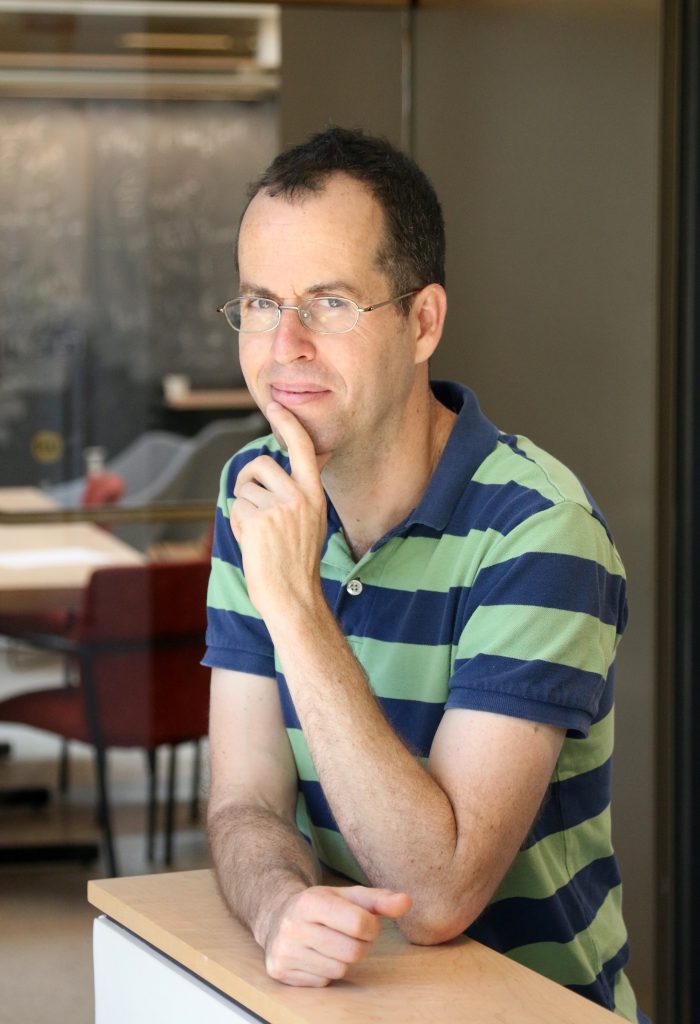
Hamidreza Mahyar is an Assistant Professor at the Faculty of Engineering , McMaster University , and an Associate Member of the Computing and Software department. His academic journey includes postdoctoral work at Boston University and TU Wien , and a Ph.D. in Computer Science from Sharif University of Technology . Research Focus: Mahyar's work bridges machine learning and network science , emphasizing graph neural networks for applications in social networks , recommendation systems , drug discovery , and generative AI . His research spans industrial AI (Industry 4.0 projects at Infineon Technologies), biomedical engineering (organoid morphology analysis), and semiconductor manufacturing (wafermap modeling). Scientific Recognition: McMaster Teaching Merit Award (2022) Vector Scholarship in AI (2023) NSERC USRA Award (2022) Google Cloud Platform for Research Award (2018) Best Paper Selection, Complex Networks (2018) Academic Leadership: He mentors PhD students (Taraneh Ghandi) and MSc students (Reza Namazi, Mohammad Khodadad, Ali Shiraei), while leading AI initiatives at Mind Lab 56 and BrainMaven . Former mentees include industry leaders at Google, Accenture, and ETH Zurich.
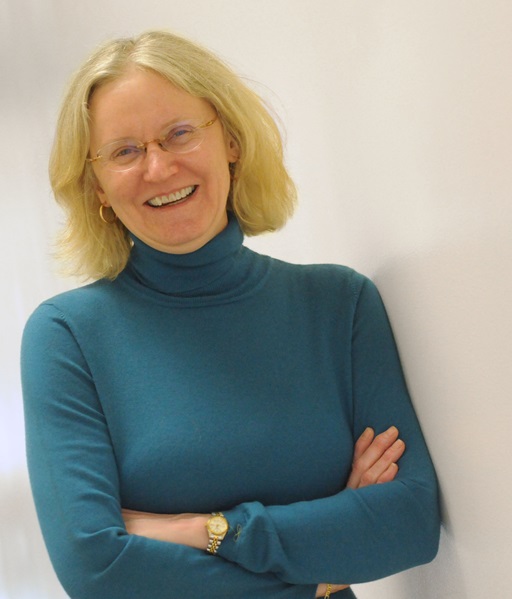
Søren Eilers is a Professor at the Department of Mathematical Sciences , University of Copenhagen. His research focuses on Operator Algebras , particularly the classification of C*-algebras related to discrete and low-dimensional structures. He is a member of the FNU network 'Automorphisms and Invariants for Operator Algebras' and advocates for experimental mathematics using computational methods in pure mathematics. Education: MS in Mathematics and Computer Science, University of Copenhagen (1993) PhD in Mathematics, University of Copenhagen (1995) Research Interests: Operator Algebras K-theory Symbolic Dynamics Discrete Mathematics Experimental Mathematics Recent Publications (2016-2024) demonstrate expertise in graph C*-algebras , symbolic dynamics , and computational approaches to pure mathematics, with key collaborations in Denmark, Japan, Canada, and the U.S. Scientific Leadership: President, Danish Mathematical Society (2006-2008) Principal Investigator, Villum Fonden (2012-2016) Main Organizer, Mittag-Leffler Institute Program (2016) Advisory Roles: Supervised 28 master's theses and mentored 9 PhD students/postdocs (2003-2022) across institutions in Denmark, Canada, Japan, and the U.S.
Jorge Louçã is a Full Professor in the Department of Information Science and Technology at ISCTE-IUL, where he has been a faculty member since 2000. He is also an Integrated Researcher at ISTAR-Iscte, the Research Center in Information Sciences, Technologies and Architecture, and leads the research group The Observatorium . He holds a PhD in Computer Science and Artificial Intelligence from Université Paris Dauphine and the University of Lisbon, and completed his Aggregation in Complexity Sciences in 2019. PhD in Computing – University of Lisbon & Université Paris-Dauphine (2000) Master’s in Informatique: Intelligent Systems – Université Paris-Dauphine (1995) Aggregation in Complexity Sciences – ISCTE-IUL (2019) His research centers on computational modeling of social systems, focusing on data-intensive analysis of human communication, knowledge generation in large networks, and the dynamics of complex systems. He founded the Doctoral Program in Complexity Sciences and has been instrumental in advancing the field through international collaborations such as the UNESCO Unitwin network for the Complex Systems Digital Campus and participation in the Conference on Complex Systems (CCS/ECCS). The recent publications highlight a strong interdisciplinary focus, combining network science, data analysis, and social theory. Key themes include the modeling of malaria transmission, information diffusion in social media, structural inequality in education, and the dynamics of opinion and popularity. His work often employs agent-based models, temporal network analysis, and entropy-based measures, reflecting a deep integration of computational and theoretical approaches. Research Methods for Doctorate in Complexity Sciences Advanced Topics in Complexity Sciences Data Science Fundamentals Development for the Internet and Mobile Applications Web Interfaces for Data Management Advanced Network Analysis Jorge Louçã has supervised over a dozen doctoral and master’s students, with completed theses on topics such as malaria modeling, information diffusion, temporal networks, and social inequality. His research has been supported by projects like NESS (Non-Equilibrium Social Science in ICT and Economics), reflecting his leadership in interdisciplinary science. He has held significant academic management roles, including Director of the Department of Information Science and Technology and head of multiple degree programs. His work continues to bridge computer science, social science, and policy, positioning him as a key figure in the global complexity science community.
Sergi Abadal Cavalle is a distinguished Professor in the Department of Computer Architecture at the Universitat Politècnica de Catalunya (UPC), affiliated with the Escola Tècnica Superior d'Enginyeria de Telecomunicació de Barcelona (ETSETB). He leads a dynamic research group focused on revolutionary computing architectures through wireless chip-scale networks and quantum interconnects. His work is supported by prestigious grants including an ERC Starting Grant and an ERC Proof of Concept Grant. Education: PhD in Computer Architecture, Universitat Politècnica de Catalunya (2016) MSc in Telecommunication Engineering, UPC (2011) BSc in Telecommunication Engineering, UPC (2010) Sergi's research focuses on overcoming the limitations of traditional wired interconnects in computing systems by pioneering wireless communication at the chip and package level. His work spans terahertz communications, graphene-based antennas, reconfigurable metasurfaces, and quantum-coherent networks. He has led major EU projects such as WINC, EWiC, QUADRATURE, and WiPLASH, aiming to revolutionize classical and quantum computing architectures. His research integrates electromagnetics, materials science, and computer architecture to enable ultra-fast, scalable, and energy-efficient systems. His recent publications demonstrate a strong trend toward integrating wireless technologies within computing systems, particularly using novel materials like graphene and software-defined metasurfaces. The articles highlight advancements in on-chip wireless communication, channel modeling, and the application of these technologies in 6G and quantum computing. His work bridges theoretical modeling with experimental validation and practical emulation. Scientific Awards: ERC Starting Grant (2022) ERC Proof of Concept Grant (2024) ACM NanoCom Outstanding Milestone Award (2022) NanoComNet Young Investigator Award (2019) UPC Outstanding Thesis Award (2016) IN-NOVA Award to Best Master Thesis (2021) IBM Award to Best Academic Record (2021) Medal from Real Academia de la Ingeniería (2024) IEEE Senior Member (2025) Sergi actively mentors a large group of PhD and Master's students, many of whom have received awards for their thesis work. He leads the N3Cat research group and collaborates with institutions such as IBM Research, NEC Labs Europe, RWTH Aachen, EPFL, University of Nottingham, and Intel Labs. His lab is at the forefront of experimental validation of wireless interconnects and quantum architectures, with ongoing projects focusing on emulation and commercialization of chiplet communication technologies.
Mattia Bianchi is a Lecturer at the Department of Information Technology and Electrical Engineering, ETH Zurich, Switzerland. He is affiliated with the Automatic Control Laboratory under Prof. Florian Dörfler, with office location at ETL I 34, Physikstrasse 3, Zurich. His research focuses on developing distributed, efficient, and robust methods for decision and control problems in complex network systems, including power grids and cognitive radio networks. Bachelor’s degree in Information and Communication Engineering (2016), University of L’Aquila, Italy Master’s degree in Systems Engineering (2018), University of L’Aquila, Italy PhD in Systems and Control (2018–2023), TU Delft, The Netherlands Postdoctoral researcher (2023–present), ETH Zurich, Switzerland His methodological approach integrates operator theory, learning algorithms, game theory, and data-driven control. Key research themes include uncovering common structures in optimization and control algorithms, with applications in distributed feedback optimization, Nash equilibrium seeking, and stabilization of constrained systems. Current work explores partial-decision information frameworks and linear convergence guarantees. For detailed information on his publications, visit his Google Scholar profile . Mattia actively supervises Master’s theses and semester projects, inviting candidates to contact him with their academic credentials.
Associate Professor Zhidong Li is a prominent researcher at the Data Science Institute within the Faculty of Engineering and Information Technology at University of Technology Sydney (UTS), Australia. With over a decade of experience in data science and machine learning, he leads impactful research bridging theoretical advancements with practical applications across multiple critical infrastructure domains. Dr. Li earned his PhD from the University of New South Wales, Sydney, Australia, and previously served as a senior engineer at Data61, CSIRO (Commonwealth Scientific and Industrial Research Organisation), Australia's federal government agency for scientific research. His research spans machine learning, data mining, pattern recognition, image processing, and human-computer interaction with applications in water, gas, traffic, urbanization, visitor economy, agriculture, environment, finance, property market, railway, law, electric and health sectors. His work particularly focuses on developing interpretable AI models, temporal point processes, and practical applications for smart infrastructure management. His extensive publication record reveals strong thematic consistency in applying advanced machine learning techniques to infrastructure management problems, with particular emphasis on water systems. His research demonstrates progression from fundamental algorithm development toward increasingly sophisticated applications with real-world impact, especially in temporal modeling, graph neural networks, and fairness in AI systems. Scientific Awards 2022 R&D Excellence Award NSW Water Award 2021 UTS Medal for Research Impact for the Vice-Chancellor's Awards for Research Excellence 2018 Australian Museum Eureka Prize for Excellence in Data Science 2019 Victorian iAwards - Industrial & Primary Industries Merit for 'Predictive Analytics for Water Pipe Maintenance' Multiple AWA research innovation awards (NSW, National, QLD) Dr. Li actively supervises Masters and PhD students and leads numerous funded research projects across diverse sectors. His collaborative approach is evident through partnerships with water utilities, transport agencies, and various CRC projects focusing on Food Agility, Digital Finance, and Smartcrete. His work on the world's first independently-audited ethical talent AI in partnership with Reejig demonstrates his commitment to translating research into real-world solutions that address societal challenges while maintaining ethical standards.
Dr. Ralf Herwig is a computational biologist at the Max Planck Institute for Molecular Genetics in Berlin, Germany. His work focuses on statistical methods for integrative analysis of gene expression, proteomics, and metabolomics data to model biological processes in human diseases like cancer and diabetes. He develops tools such as ConsensusPathDB for molecular interaction networks and IsoTools for long-read RNA-seq analysis. Education: Diploma in mathematics (Free University of Berlin), PhD in mathematics/statistics (FU Berlin) on clustering algorithms and information-theoretic methods. Research Interests include computational network biology, multi-omics data integration, machine learning for cancer survival predictions, and alternative splicing analysis. His group pioneered network propagation frameworks to explain drug toxicity and black-box ML models. Key Publications cover deep learning in drug combinations, long-read sequencing for cancer isoforms, and systems biology approaches to metabolic disorders. Tools developed by Herwig's lab are widely cited (~2,500 citations for ConsensusPathDB). Labs & Collaborations: Leads the Herwig Lab, collaborating on projects involving cancer, diabetes, and cardiotoxicity. The lab maintains critical computational resources for the biomedical community.
Dr. Stuart Marshall serves as Associate Dean of Academic Development in the Faculty of Science and Engineering at Victoria University of Wellington - Te Herenga Waka, where he also holds the academic rank of Senior Lecturer. Previously, he served as Head of School for the School of Engineering and Computer Science from 2015-2021 after joining the institution as a Lecturer in 2003. His academic journey includes completing his BSc, MSc, and PhD in Computer Science at Victoria University of Wellington, with his doctoral research focusing on software reuse. Marshall's research interests center on information and data visualization, particularly exploring how visualization can function as collaborative tools in team environments rather than single-user applications. He also investigates explainable AI and mobile user interface design with emphasis on promoting healthy device usage patterns. His work bridges theoretical computer science with practical applications in education and environmental analysis. Analysis of his publication record reveals a consistent focus on visualization techniques, with recent work shifting toward immersive analytics and virtual reality applications for complex data analysis, particularly in ecosystem services. Earlier publications concentrated on mobile learning applications grounded in transactional distance theory, software visualization for large codebases, and graph layout algorithms. Marshall has supervised six PhD students and eight Masters students to completion, with current doctoral supervision spanning immersive environments for reading assistance, medical diagnosis interfaces, and cardiac procedure simulation. His grant portfolio includes multiple ACM ISS 2022 projects with industry partners including Sensor Holdings Limited, Niantic, Autodesk, and Northeastern University, along with an Australian Research Council grant for digital games preservation. Teaching responsibilities encompass foundational programming, safety-critical systems, human-computer interaction, and data visualization across undergraduate and graduate courses. He teaches subjects including SWEN326 (Safety-Critical Systems), CGRA151 (Introduction to Computer Graphics and Games), and DATA301 (Data Science in Practice), with teaching assignments scheduled through 2026.
Sonia Lopez Alarcon is an Associate Professor in the Department of Computer Engineering at the Kate Gleason College of Engineering, Rochester Institute of Technology (RIT). She has been a faculty member since 2009, teaching core courses like Computer Organization and developing quantum computing curricula including the new CMPE-257 undergraduate course and CMPE-757 graduate course. Her research bridges computer architecture and quantum computing with emphasis on practical quantum circuit implementation. Her educational background includes a Bachelor of Physics and Master's in Device Physics from the University Complutense of Madrid (2002), followed by a PhD in Computer Engineering (2009) where she researched cache hierarchy in simultaneous multithreaded architectures. During her studies, she gained industry experience at Lucent Technologies and Fundetel working on integrated circuit design. Dr. Lopez Alarcon's primary research focuses on Quantum Computing and heterogeneous hardware solutions, specifically quantum circuit compilation processes, scalability challenges, and error resilience techniques. She investigates how to translate theoretical quantum algorithms into executable circuits while managing noise and resource constraints, with applications in optimization problems and physics simulations. Her work connects computer engineering principles to emerging quantum technologies. Analysis of her publication timeline shows a strategic shift from traditional computer architecture (2015-2018 cache/HLS research for GPU/heterogeneous systems) to quantum computing (2019-2021). Recent work explores quantum algorithms for combinatorial optimization (Grover's), quantum simulation of physical systems, and machine learning applications, reflecting her adaptation to the rapidly evolving quantum landscape while maintaining her architectural expertise. Her teaching excellence has been recognized through multiple awards: Kate Gleason College of Engineering Exemplary Performance in Teaching Award (2016, 2017, 2020) Computer Engineering Most Effective Teacher Award (2016) She actively mentors graduate students including Mark Danza (MS Computer Engineering candidate 2025), with whom she collaborated on quantum machine learning research featured in Quantum Zeitgeist (May 2025). She contributes to RIT's quantum information science minor launched in 2022, developing curriculum and supervising student research in this emerging field. Dr. Lopez Alarcon leads quantum computing research efforts within RIT's Department of Computer Engineering, collaborating with colleagues like Cory Merkel on quantum algorithm applications. Her work is supported through her personal research website and integration into university-wide quantum initiatives, positioning her at the forefront of academic quantum computing education and research.
Elchanan Mossel is a Professor of Mathematics at the Massachusetts Institute of Technology (MIT), with a joint appointment at the Institute for Data, Systems, and Society (IDSS). His research focuses on probability, combinatorics, statistical inference, and their applications to computer science and social choice theory. He earned his B.Sc. from the Open University of Israel, and both his M.Sc. (1997) and Ph.D. (2000) in Mathematics from the Hebrew University of Jerusalem. Before joining MIT in 2016, he was a faculty member at UC Berkeley and held visiting positions at the Weizmann Institute and the Wharton School of the University of Pennsylvania. Mossel's work bridges theoretical foundations and applied problems, including computational complexity, randomized algorithms, Markov random fields, and evolutionary biology. He has made significant contributions to the theory of social choice, game theory, and the mathematical underpinnings of machine learning. Notable achievements include resolving the Majority Is Stablest conjecture and advancing phylogenetic reconstruction methods. His awards include the Sloan Fellowship and Miller Fellowship. He has mentored numerous graduate students, including Sebastien Roch, Allan Sly, and Miklos Racz, and has held editorial roles in journals like the Electronic Journal of Probability . Mossel's teaching spans topics from introductory probability to advanced courses on social networks and game theory.
Alessandro Bitetto is an Assistant Professor in Statistics at the Department of Economics and Management, University of Pavia. He holds an MSc in Applied Mathematics and has professional experience as a data scientist in banking/insurance sectors, focusing on econometric models and machine learning applications. His research interests span FinTech applications, network theory, credit risk modeling, and deep learning techniques like Graph Neural Networks. He collaborates externally with the University of Milan’s Mathematics and Logic department and teaches courses in Big Data Analysis, Python programming, and Advanced Statistics at the University of Pavia. Education: MSc in Applied Mathematics Research Interests: Alessandro's work bridges financial analytics and machine learning, with a focus on credit risk modeling, cryptocurrency ESG integration, and medical imaging applications. His recent projects include developing data-driven financial indexes using network theory and applying explainable AI to public health risk assessment. Publications Trends: His articles emphasize machine learning applications in credit risk, ESG factors in blockchain finance, and time-series analysis for financial stability. Notable contributions include studies on ICO underpricing mitigation and deep learning in echocardiogram analysis. Awards/Grants: No specific awards listed, but his collaborations suggest active grant-funded projects in interdisciplinary domains. Labs/Teams: Involved in cross-institutional collaborations, including work on pandemic data analysis via GitHub repositories like 'Computer_Vision_Tutorial' for medical imaging research.
Mohammad Ali Salahuddin is a Research Assistant Professor at the David R. Cheriton School of Computer Science, University of Waterloo , specializing in networking and machine learning. He holds a Ph.D. in Computer Science from Western Michigan University (2014), with prior academic roles at Université du Québec à Montréal and Concordia University. His research spans 5G network slicing, vehicular networks, and secure content delivery systems. Education: Ph.D. (2014, Western Michigan University); M.S. (2003, Western Michigan University); M.S. (2001, SZABIST); B.S. (1999, FAST-NUCES) Dr. Salahuddin's research focuses on 5G/6G network softwarization , autonomous threat mitigation , and machine learning for network management . His work integrates reinforcement learning and federated learning for scalable solutions in SDN/NFV , IoT , and edge computing . Recent studies address data drift in encrypted traffic classification and DDoS detection using outlier exposure-based federated learning . He has received multiple best paper awards at IEEE/IFIP NOMS (2023, 2022), IEEE CNOM (2021), and Kenneth C. Sevcik Outstanding Student Paper Award (ACM SIGMETRICS, 2021). His NSF-funded projects include vehicular cloud resource management and localization techniques. Dr. Salahuddin actively contributes to academic service as Vice-Chair of IEEE KW Section's Communications Society and TPC member for top conferences.
Philippe Ciblat is a Professor at TELECOM Paris Tech, affiliated with the Department of Signal Processing and Communications. His research spans signal processing, wireless communications, and machine learning applications in networking. He has collaborated extensively with institutions like the University of Paris-Saclay and international researchers in areas such as cooperative communication protocols, resource allocation, and coding theory. Research Interests: Machine learning for signal processing, wireless channel modeling (Rician fading), lattice decoding, caching strategies, and distributed optimization. Notable Work: Pioneered transformer-based packet scheduling, neural network approaches to lattice decoding, and effective capacity analysis in fading channels. His contributions include over 170 publications in top venues (IEEE Trans. Signal Process., IEEE Trans. Wireless Commun.) and collaborations with industry partners on practical implementations like cache-aided polar coding. He has advised multiple researchers in distributed systems and wireless resource management.
Dr. Gail Kaiser is a Professor of Computer Science at Columbia University, where she has served for 40 years. She directs the Programming Systems Lab (PSL) and is affiliated with the Software Systems Lab (SSL). Her research focuses on software systems, program analysis, testing, security, and AI-driven software engineering. She earned her PhD from Carnegie Mellon University and a BS from MIT. Education: PhD in Computer Science, Carnegie Mellon University (1985) MS in Computer Science, Carnegie Mellon University (1980) BS in Computer Science and Engineering, MIT (1979) Research & Teaching: Dr. Kaiser teaches COMS W4156 (Advanced Software Engineering) and COMS E6156 (Topics in Software Engineering). Her work spans metamorphic testing for machine learning, secure computing, and AI in SE. Notable contributions include pioneering metamorphic testing for classifiers and secure containers research. Awards & Grants: 2025 Distinguished Journal Award (ICST) NSF grants totaling over $2M for secure computing and software assurance ACM SIGSOFT Distinguished Paper Awards (2023, 2014) Labs & Collaborations: Her labs (PSL and SSL) drive innovation in program analysis and security. Collaborations include DARPA, NIH, and industry partners like IBM and Microsoft.
Stavrakakis Ioannis is a Professor at the Department of Informatics and Telecommunications, School of Science, University of Athens, where he has served since 2002. He previously held academic positions at Northeastern University (1994-1999) and University of Vermont (1988-1994). Ph.D., Electrical Engineering (1988), University of Virginia Diploma, Electrical Engineering (1983), Aristotle University of Thessaloniki His research focuses on network resource allocation algorithms , cooperative content dissemination , mobile ad hoc networks , and privacy-aware protocols . He leads the Advanced Networking Research (ANR) Group. Recent publications highlight trends in AI-driven network optimization , edge computing for VR , drone-assisted sensor networks , and privacy in vehicular systems . Key themes include game theory applications, energy-efficient protocols, and distributed learning frameworks. Contact: ioannis@di.uoa.gr