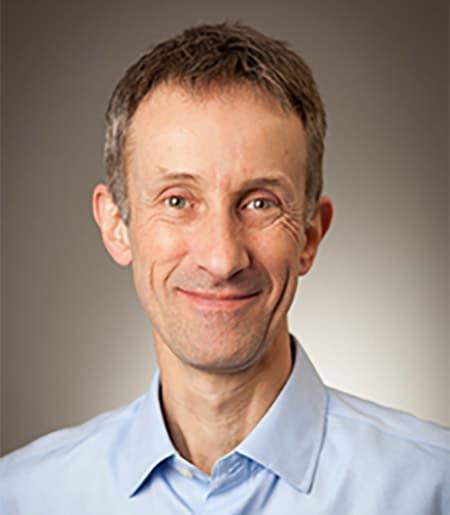
Prof. Philip K. Maini is a Professor at the University of Oxford in the Mathematical Institute , specializing in Mathematical Biology. His research spans cancer evolution, angiogenesis, and ocular pharmacokinetics. Research Focus: Mathematical modeling of biological systems, particularly tumor dynamics, pattern formation, and biomedical applications. Publications Trends: Recent work emphasizes reducing complex PDE models to ODE systems for cancer evolution, tumor response to therapies, and nonlocal models of pattern formation. Scientific Awards: FRS (Fellow of the Royal Society) FMedSci (Fellow of the Academy of Medical Sciences) FRSB (Fellow of the Royal Society of Biology) Labs & Teams: Leads research within the Mathematical Biology group at the Mathematical Institute, focusing on interdisciplinary collaborations.
Professor Dr. Martin Grepl is a faculty member at RWTH Aachen University, where he holds the Lehr- und Forschungsgebiet Optimierung mit partiellen Differentialgleichungen (Teaching and Research Area in Optimization with Partial Differential Equations). He has been affiliated with RWTH Aachen since 2009, first as a Professor (W1) and since 2014 as a Professor (W2). Education: Diplom-Ingenieur (Aerospace Engineering), University of Stuttgart (2000) Master of Science (Mechanical Engineering), MIT (2001) Doctor of Philosophy (Mechanical Engineering), MIT (2005) His research focuses on numerical methods for partial differential equations (PDEs) , particularly model order reduction , reduced basis methods , finite element methods , and optimal control for parametrized PDEs. He also investigates parameter estimation , inverse problems , and control constraints in elliptic and parabolic PDE systems. The scientific awards he has received include the Studienstiftung des deutschen Volkes (1997-2000), a Fellowship from the Dr. Jürgen Ulderup-Stiftung (1998-1999), and the Lehrpreis der Fachschaft Mathematik/Physik/Informatik (2011). His work spans applications in manufacturing , medical physics , and fluid dynamics , as evidenced by his patents and collaborative research. His publications demonstrate expertise in reduced basis methods for nonaffine/nonlinear PDEs , trust region optimization , and error bounds for real-time and many-query scenarios. His collaborations often involve interdisciplinary applications, including thermal conduction , welding processes , and glomerular filtration modeling .
Morten Hovd is a Professor at the Department of Engineering Cybernetics, Norwegian University of Science and Technology (NTNU). His work focuses on advanced control systems, particularly in model predictive control, optimization, and power electronics. He has contributed to control design for uncertain systems, bilinear models, and modular multilevel converters. Research Interests Control Theory and Model Predictive Control (MPC) Optimization Techniques in Control Systems Power Electronics and Smart Grid Applications Stability Analysis of Hybrid and Discrete-Time Systems Teaching TTK4210 - Advanced Control of Industrial Processes TK8118 - Mini-seminar in Cybernetics
Hao Shen is a Professor in the Department of Mathematics at the University of Wisconsin-Madison. His academic work focuses on stochastic partial differential equations and their connections with quantum field theory, statistical mechanics, and geometric flows. Dr. Shen's educational background includes a PhD from Princeton University in 2013 under the supervision of Weinan E. He completed postdoctoral training at the University of Warwick with Martin Hairer (2014-2015) and served as a Ritt Assistant Professor at Columbia University with Ivan Corwin (2015-2018) before joining UW-Madison. Hao Shen's research interests span multiple areas of mathematical physics and probability theory: Stochastic partial differential equations (SPDEs) Quantum field theory, particularly Yang-Mills theory and gauge theories Statistical mechanics and interacting particle systems Geometric flows, including Ricci flow Stochastic quantization methods Renormalization theory for singular SPDEs His recent publications demonstrate a strong focus on the mathematical foundations of quantum field theories through stochastic methods, with particular attention to Yang-Mills theory in various dimensions and the O(N) sigma model. Shen's work often bridges rigorous mathematical analysis with physical applications, employing advanced techniques from regularity structures, paracontrolled distributions, and stochastic analysis. Simons Fellow in Mathematics (2024-2025) NSF CAREER DMS-2044415 (2021-2026) NSF DMS-1954091 (2020-2023) NSF DMS-1712684 / DMS-1909525 (2017-2020) As an academic leader, Dr. Shen serves on the editorial boards of prestigious journals including Annals of Probability, Stochastics and Partial Differential Equations: Analysis and Computations, and Annales de l'Institut Henri Poincaré. He actively contributes to the mathematical community through organizing conferences and summer schools, such as the 2024 MSRI/SLMath Summer Graduate School on "Stochastic quantization" and the upcoming 2025 SLMath semester program "Recent Trends in Stochastic Partial Differential Equations." Dr. Shen's teaching portfolio includes advanced courses in probability theory, stochastic analysis, and specialized topics in stochastic partial differential equations. His commitment to education is evident in his development of graduate-level courses that bridge theoretical mathematics with applications in physics.
Julia Chuzhoy is the Manuel Blum Professor at the Toyota Technological Institute at Chicago (TTIC) and holds a part-time Professor appointment in the Department of Computer Science at the University of Chicago . She completed her Ph.D. at the Technion under the supervision of Seffi Naor , followed by postdoctoral positions at MIT , University of Pennsylvania , and the Institute for Advanced Study . She also served as a Weizmann Institute Weston Visiting Professor in 2018-2019. Her research in theoretical computer science focuses on graph-related optimization problems , including approximation algorithms, dynamic algorithms, fast graph algorithms, and hardness of approximation. She has received major funding through NSF grants (CCF-1318242, CCF-1616584, CCF-2006464, CCF-2402283) and the NSF HDR TRIPODS award (2216899). Her recent publications highlight advancements in approximation algorithms (e.g., maximum bipartite matching), dynamic graph algorithms (e.g., decremental shortest paths), and structural graph theory (e.g., excluded grid theorem). These works span both algorithmic improvements and theoretical lower bounds. Scientific recognition includes NSF Career Award (2013) Alfred P. Sloan Research Fellowship (2011) She has advised numerous TTIC and University of Chicago Ph.D. students, including Rachit Nimavat , Zihan Tan , and Parinya Chalermsook (now faculty at Aalto University ).
Carolyn Conner Seepersad serves as the J. Mike Walker Professor of Mechanical Engineering at the University of Texas at Austin and directs the Center for Additive Manufacturing and Design Innovation. She holds membership in the U.T. System Academy of Distinguished Teachers and maintains active leadership in the additive manufacturing community through roles such as co-organizer of the Solid Freeform Fabrication Symposium and ASME Design Engineering Division Executive Committee membership. Her academic credentials include: PhD in Mechanical Engineering from Georgia Tech (2004) MA/BA in Philosophy, Politics and Economics from Oxford University (1998, Rhodes Scholar) BS in Mechanical Engineering from West Virginia University (1996) Dr. Seepersad's research centers on computational design methodologies and additive manufacturing innovation , with particular expertise in simulation-based design of complex systems, environmentally conscious product development, and materials engineering. Her work bridges theoretical design frameworks with practical manufacturing applications, emphasizing sustainability and performance optimization across aerospace, automotive, and energy systems. Current projects explore reactive extrusion additive manufacturing, negative stiffness materials, and machine learning integration for process-aware design. Analysis of her 15 most recent publications reveals a dominant focus on process innovation in additive manufacturing (70%), particularly stereolithography and selective laser sintering, with growing emphasis on data-driven design approaches (20%) and sustainable engineering applications (10%). Her work demonstrates consistent progression from fundamental material design toward integrated system optimization and industrial scalability. Her scientific recognition includes: International Outstanding Young Researcher Award in Freeform and Additive Manufacturing (2009) UT System Regents’ Teaching Award (2010) ASME Design Automation Committee Outstanding Young Investigator Award (2010) ASEE Outstanding New Mechanical Engineering Educator Award (2013) Multiple ASME and ASEE best paper awards U.T. System Academy of Distinguished Teachers membership Dr. Seepersad maintains an extensive advising portfolio with 48 graduate students (16 PhD, 24 MS, and 8 current) plus 2 postdoctoral researchers, reflecting sustained research productivity and educational impact. Her Product, Process, and Materials Design Lab fosters interdisciplinary collaboration between mechanical engineering, materials science, and computational design teams.
Nikolce Murgovski is an Assistant Professor at Chalmers University of Technology, specializing in Mechatronics . He focuses on electric and hybrid vehicle energy management , autonomous driving systems , and optimization algorithms for powertrain design. His work bridges control theory , battery technology , and transport electrification . Current projects include CHARGE (2023–2026) for charging and trip planning , and EcoPilot (2022–2026) for energy-efficient autopilot development. Collaborates with institutions like Volvo Cars , Swedish Electromobility Centre , and VINNOVA on autonomous vehicle control and thermal energy systems . His recent publications emphasize convex optimization , eco-driving strategies , and collision avoidance in complex environments. He has contributed to tools like CONES for electromobility studies and has led research on hybrid powertrains and predictive energy management .
William Newman is a Professor in the Department of Earth, Planetary, and Space Sciences at the University of California, Los Angeles (UCLA), currently on sabbatical at the Institute for Advanced Study in Princeton. His primary academic home resides within UCLA's geoscience and planetary science division. His educational credentials include: B.Sc. (Hon.) in Physics from the University of Alberta, Canada (1971) M.Sc. in Physics from the University of Alberta, Canada (1972) M.S. in Astronomy and Space Science from Cornell University (1975) Ph.D. in Astronomy and Space Science from Cornell University (1979) Professor Newman applies theoretical physics and applied mathematics to solve critical real-world problems across multiple disciplines. His research spans statistical techniques for climate change assessment, earthquake hazard modeling, solar system evolution (including collision risks from trans-Jovian bodies), astrophysical jet dynamics, and pattern emergence in complex systems. This interdisciplinary work bridges geophysics, planetary science, and astrophysics through rigorous mathematical frameworks. His publication record (2024-2016) reveals three dominant research thrusts: (1) Semiconductor electron emission physics (GaAs nanotips, photoemission sources), (2) Solar system dynamics and celestial mechanics (N-body simulations, impact hazards), and (3) Complex systems analysis (earthquake patterns, statistical record-breaking events). These intersect physics, earth sciences, and computational mathematics through shared methodologies in statistical modeling and nonlinear dynamics. At UCLA, Newman developed innovative courses including a natural disasters undergraduate GE course (satisfying diversity requirements) and graduate-level planetary atmospheres and continuum mechanics curricula. His academic contributions include over 100 refereed papers and graduate textbooks published by Princeton and Cambridge University Presses, focusing on mathematical methods for geophysics and space physics.
Farzin Zareian is a Professor in Civil and Environmental Engineering at the Samueli School of Engineering, University of California, Irvine. His research focuses on performance-based earthquake engineering, collapse analysis, structural reliability, and structural control. Ph.D. in Structural Engineering, Stanford University (2006) M.S. and B.S. in Civil/Earthquake Engineering, Sharif University of Technology (1997, 1995) Zareian's research integrates analytical and experimental approaches to advance earthquake resilience in structural systems. Key areas include base plate connections, seismic response of asymmetric structures, and validation of simulated ground motions. His work with the Performance Based Earthquake Engineering Laboratory emphasizes practical applications in structural safety. Recent publications highlight innovations in column base modeling, seismic demand prediction, and infrastructure recovery frameworks. Notable trends in his 2021–2025 articles include machine learning for ground motion prediction, resettable structural systems, and probabilistic drift profile analysis for multistory buildings.
Dr. Prineha Narang is a Professor of Physical Sciences and Electrical and Computer Engineering at the University of California, Los Angeles (UCLA). Previously, she held positions as an Assistant Professor at Harvard University and a Research Scholar at MIT. Her research focuses on quantum materials, quantum information science, and non-equilibrium dynamics, with interdisciplinary contributions to photonics, topological materials, and cavity quantum electrodynamics (QED). She leads the Narang Lab, which develops theoretical and computational methods to design quantum systems and explores applications in quantum networks and energy conversion. Dr. Narang has held leadership roles in major initiatives such as the DOE Quantum Science Center and the NSF Center for Quantum Networks. She is also the founder and CTO of Aliro Quantum, a company advancing quantum networking technologies. Education: M.S. and Ph.D. in Applied Physics from the California Institute of Technology (Caltech). Her work has been recognized with prestigious awards, including the Mildred Dresselhaus Prize, NSF CAREER Award, and being named a Moore Inventor Fellow. She serves on editorial boards for journals like ACS Nano and Applied Physics Letters , and chairs international conferences. Outside academia, she advises organizations like arXiv and actively engages in promoting quantum technologies through industry collaborations. Research Interests: Quantum materials engineering, quantum networks, non-equilibrium phenomena, topological quantum states, and quantum defect physics. Current projects include designing scalable quantum repeaters, developing error-corrected quantum systems, and studying light-matter interactions in novel materials. Her lab’s SpaRTaNS code enables spatially-resolved transport simulations, advancing understanding of electron and phonon dynamics. Awards and Grants: Over 20 major awards, including the Guggenheim Fellowship (2023), ONR Young Investigator Award (2022), and leadership roles in DOE and NSF-funded centers. Her work bridges academia and industry, with partnerships at companies like Applied Materials and Northrop Grumman.
Carlijn Bouten is Full Professor of Cell-Matrix Interactions in Cardiovascular Regeneration at Eindhoven University of Technology. She leads the Soft Tissue Engineering & Mechanobiology group, investigating cellular interactions with extracellular environments in tissue growth, adaptation, and regeneration. Her research develops biodegradable heart valve prostheses that enable in vivo tissue regeneration, applying tissue engineering approaches to cardiovascular medicine. Professor Bouten holds an MSc from Vrije Universiteit Amsterdam and a PhD from TU/e. She completed postdoctoral research at Université Laval and University of London before joining TU/e's faculty. She directs the national Gravitation program 'Materials-Driven Regeneration' and received an ERC Advanced Grant for cardiac tissue organization research. Research Focus: Her interdisciplinary program spans: Mechanobiological cues in tissue regeneration Development of living heart valve replacements Advanced biomaterials for cardiovascular applications In vitro models for tissue development Soft robotic systems for cardiac assistance Recent publications demonstrate innovations in biohybrid devices, standardized biomaterial testing, and novel tissue patterning techniques. Her work integrates engineering, materials science, and clinical translation through collaborations with medtech spin-offs. Leadership and Recognition: Fellow of the European Alliance for Medical and Biological Engineering President-elect of the Heart Valve Society Member of AcademiaNet for Outstanding Female Scientists Recipient of NWO VICI grant and Aspasia award She leads multinational consortia in regenerative medicine and teaches courses on heart/blood physiology and regeneration. Her lab develops model systems spanning cellular to tissue levels to quantify mechanobiological processes.
Dr. Zhihua Xie is a Reader in the School of Engineering at Cardiff University. He holds a PhD in Computational Fluid Dynamics from the University of Leeds, funded by the Marie Curie EST Fellowship. His career includes research roles at Cardiff University and Imperial College London. His research focuses on computational fluid dynamics, multiphase flows, and environmental fluid mechanics, supported by grants from EPSRC, Royal Society, and others. He has been awarded the Alexander von Humboldt Research Fellowship and multiple Baker Medals. Education: BEng in Environmental Engineering (Dalian Maritime University, 2003), Postgraduate study in Hydrodynamics (Dalian Maritime University, 2006), PhD in CFD (University of Leeds, 2010). Research interests span development and application of CFD codes for multiphase flows, turbulence modelling, and numerical methods. He is actively involved in editorial boards and professional societies like IAHR and ISOPE. Key contributions include adaptive moment-of-fluid methods, Cartesian cut-cell techniques, and large-eddy simulations. Awards include the Alexander von Humboldt Fellowship (2023), Baker Medal (2021, 2022), and EPSRC funding for wave energy converter modeling (EP/V040235/1). Grants and projects include ARCHER2 eCSE, Newton Advanced Fellowship, and collaborations on coastal engineering and offshore energy systems. His work addresses challenges in wave-structure interaction, fluid-structure dynamics, and environmental hydraulics.
Professor Meghan S. Miller is an academic at the Australian National University (ANU), serving as a Professor in the Research School of Earth Sciences, specializing in Geophysics. She holds an ARC Future Fellowship, focusing on advancing Distributed Acoustic Sensing (DAS) technology for seismic imaging. Her research emphasizes observational seismology, particularly at critical tectonic plate boundaries such as subduction zones and continental collision zones. Education: Ph.D. in Geophysics from ANU (2006), M.Eng. from Cornell University (2000), M.S. from Columbia University (1999), and B.A. from Whittier College (1997). Research interests include seismic imaging of Earth’s structure, dynamics of subduction zones, and the application of novel techniques like DAS for high-resolution subsurface imaging. She has led projects such as the Southwest Australia Seismic Network (SWAN) and the SISSLE experiment in New Zealand. Key achievements include over 100 peer-reviewed publications, supervising numerous graduate students, and leading international collaborations in Indonesia, Alaska, and Morocco. Awards include the ARC Future Fellowship (2022–2026). Labs/Teams: Active in the AuScope Earth Imaging Program and collaborates with institutions like Geoscience Australia and Macquarie University.
Adrian Lewis is the Samuel B. Eckert Professor of Engineering at Cornell University, affiliated with the College of Engineering and the Department of Operations Research and Information Engineering . He specializes in variational analysis and nonsmooth optimization, focusing on eigenvalue optimization and semi-algebraic geometry. His research has been supported by NSF grants, including DMS-1613996. He holds prestigious awards like the SIAM Fellow and the Lagrange Prize. Research interests include optimization algorithms, convex analysis, and the interplay between geometry and optimization. Notably, his work on eigenvalue optimization and nonsmooth problems has advanced theoretical and computational methods. He has contributed to journals like Mathematical Programming and SIAM Journal on Optimization , and serves as Co-Editor of Mathematical Programming A . Professional achievements include the 1995 Aisenstadt Prize, SIAM Outstanding Paper Award (2005), and the INFORMS Computing Society Prize (2018). He has held leadership roles, such as Director of ORIE (2010–2013), and editorial positions across multiple journals. His research also explores metric spaces, subgradient methods, and nonsmooth algorithms, reflecting a commitment to foundational and applied optimization challenges.
Abigail C. Cohn is a Professor of Linguistics at Cornell University, affiliated with the College of Arts and Sciences and the Southeast Asia Program. Her research bridges phonetics, phonology, and sociolinguistics, with a focus on Austronesian languages of Indonesia and language shift dynamics. She investigates the interplay between abstract sound patterns (phonology) and their physical realization (phonetics), emphasizing laboratory phonology methods. Her work on Indonesian sociolinguistics examines how young Indonesians' shift to using Indonesian as a first language impacts local languages' structural integrity. Dr. Cohn's Fulbright Senior Research Scholarship (2012-2013) supported her project at Unika Atma Jaya on language contact in Indonesia, analyzing Sundanese-Indonesian interactions. She co-edited The Oxford Handbook of Laboratory Phonology and serves as co-editor-in-chief of Linguistics Vanguard . Her teaching spans foundational and advanced courses like Phonology I and II, guiding students in independent research and honors theses. Her research methodologies include experimental phonetics, sociolinguistic surveys, and corpus analysis. Current projects address language endangerment in majority-spoken languages and the role of multilingualism in structural language change. Awards: Fulbright Senior Research Scholar (2012-2013) Key Projects: Language Contact in Indonesia, Indonesian Language Shift Dynamics Editorial Roles: Co-Editor-in-Chief, Linguistics Vanguard ; Co-Editor, Oxford Handbook of Laboratory Phonology