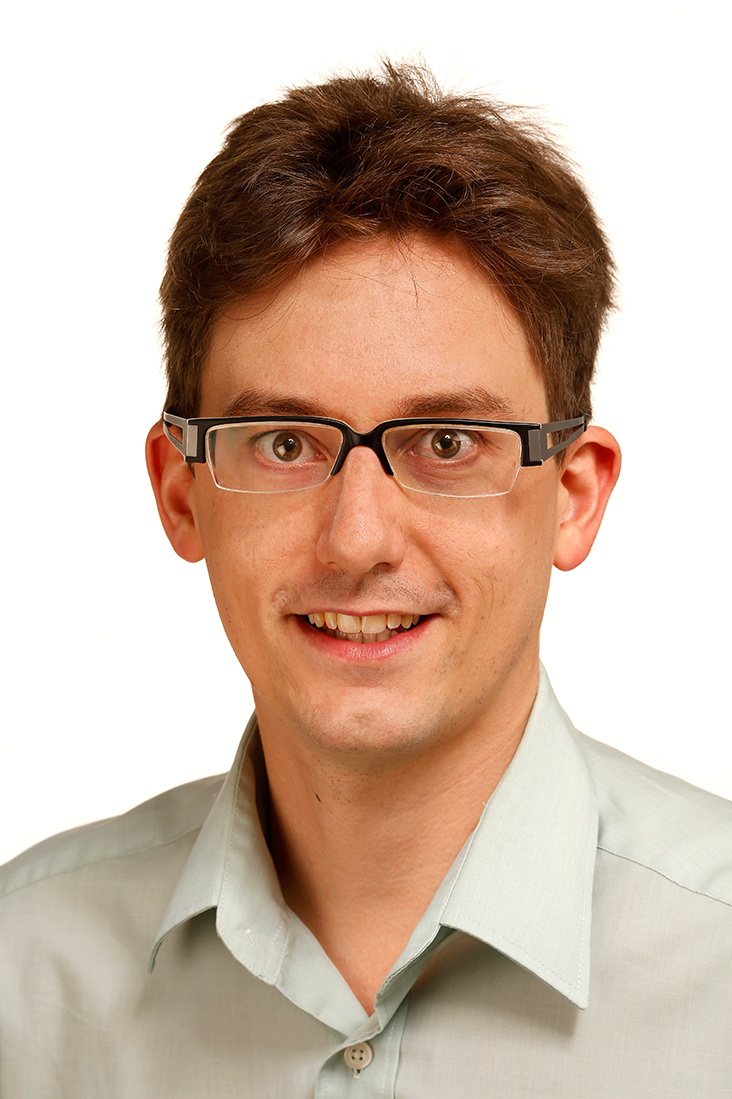
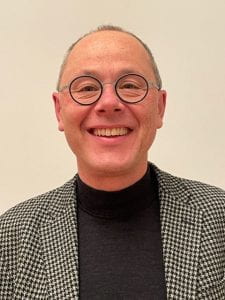
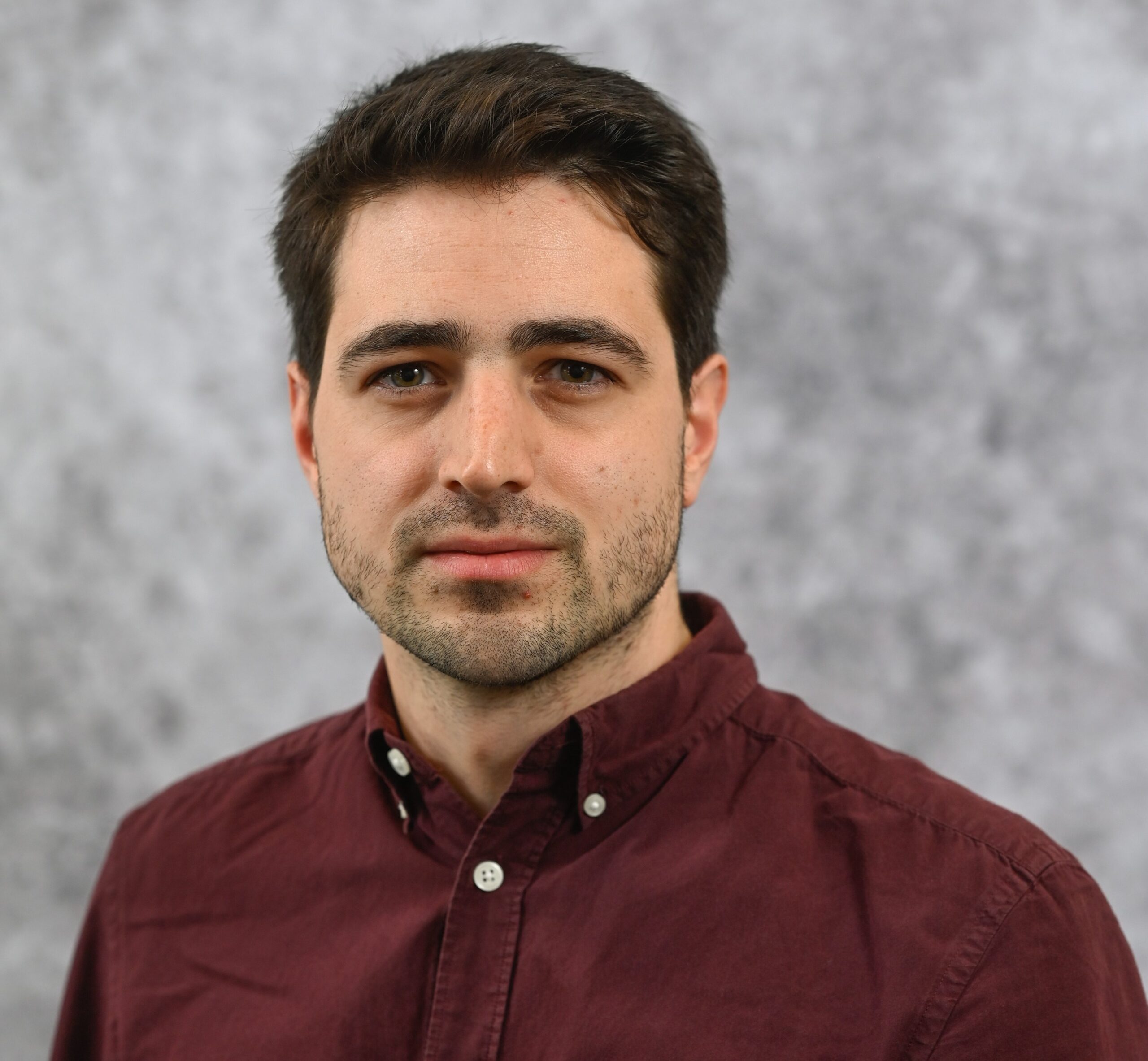
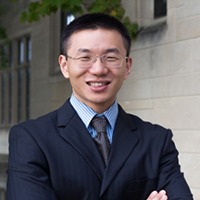
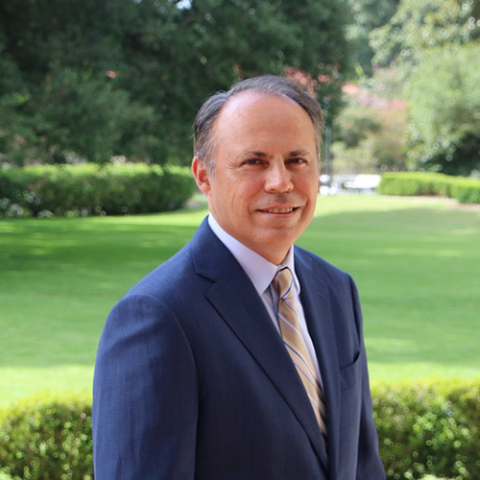
Paolo Giovanni Piacquadio is an Associate Professor at the University of Oslo's School of Economics and Political Science, within the Department of Economics. His research focuses on bridging welfare economics and public economics, particularly in distributive justice and optimal taxation frameworks. He leads the ESOP Centre for Equality, Social Organization, and Performance and coordinates the TaxFair project on fair taxation systems. Piacquadio holds a PhD in Economics from Université catholique de Louvain (2008-2013). Education: PhD in Economics from CORE/IRES, Université catholique de Louvain, Belgium (2008-2013) Research Interests: Microeconomic Theory, Public Economics, Environmental Economics, Intergenerational Equity, and Policy Design His work emphasizes ethical dimensions of economic policies, including intergenerational risk allocation and equity-efficiency trade-offs. Recent research explores fairness criteria in social welfare functions and the distribution of opportunities. Piacquadio’s projects include ERC-funded VALURED (justice principles in taxation) and TaxFair (empirical taxation analysis). His publications span topics like voluntary power transitions, institutional change, and climate policy. He collaborates with institutions such as the Research Council of Norway and co-organizes the Normative Economics & Economic Policy webinar series. Piacquadio is affiliated with the CREE Center for Environmentally Friendly Energy and INSIST project on inequality and crisis management.
Dr. Utso Bhattacharya is a Visiting Scientist at ICFO - The Institute of Photonic Sciences, specializing in quantum optics theory and condensed matter physics. He holds a PhD in Physics from the Indian Institute of Technology, Kanpur. His research focuses on ultra-cold atomic gases, attosecond physics, and quantum many-body systems, with a particular emphasis on topological phases, high-harmonic generation, and light-induced phase transitions. Key contributions include studies on synthetic quantum matter in nonstandard geometries and the dynamics of quantum phase transitions using tensor network approaches. His work explores the interplay between topology and quantum thermodynamics, with applications to materials like vanadium dioxide and TiSe. He investigates ultrafast electron dynamics, multifractality in quasiperiodic systems, and quantum many-body scars in random circuits. Bhattacharya's research bridges theoretical frameworks with experimental techniques, advancing understanding of non-equilibrium dynamics in quantum systems. Education : PhD in Physics from IIT Kanpur (2014). Key Areas : Quantum Optics, Topological Materials, Ultrafast Phenomena, Quantum Thermodynamics. Methods : Tensor networks, high-harmonic spectroscopy, and synthetic quantum simulators.
Frank Schorfheide is the Christopher H. Browne Distinguished Professor of Economics at the University of Pennsylvania's Department of Economics. His research focuses on macroeconomics, econometrics, and dynamic stochastic general equilibrium (DSGE) models. He specializes in Bayesian methods, policy analysis under uncertainty, and the evaluation of economic forecasting models. Schorfheide's work addresses topics such as monetary policy effects, income heterogeneity, model misspecification, and real-time forecasting during crises like the pandemic. Key contributions include advancements in DSGE model estimation, analysis of zero lower bound (ZLB) constraints, and methodologies for handling sparse heterogeneity in panel data. His research emphasizes robustness in decision-making under partial identification and explores the aggregation of microeconomic heterogeneity into macroeconomic outcomes. Publications highlight innovations in sequential Monte Carlo techniques, mixed-frequency VAR models, and clustering approaches for multi-dimensional heterogeneity. Schorfheide collaborates on projects involving financial frictions, nonlinearities in macroeconomic dynamics, and improving GDP measurement accuracy.
Afzal Siddiqui is a Professor at the Department of Computer and Systems Sciences, Stockholm University, and holds adjunct roles at Aalto University and HEC Montréal. His research focuses on applying operational research to energy economics, particularly decision-making under uncertainty in renewable integration, market design, and climate policy. He has led projects like STRING (Nordic hydro-renewable interactions) and SCORES (sector coupling analysis). Education: PhD in Industrial Engineering & Operations Research from UC Berkeley, with minors in Economics and Energy Resources. Notable academic roles include Professorships at University College London and Visiting appointments at Berkeley Lab and NTNU Trondheim. Research emphasizes strategic behavior in energy markets, including hydro operations, transmission planning, and CO2 pricing. Recent work examines prosumer impacts, storage economics, and policy coordination in decarbonization. Over 10 doctoral students supervised across multiple institutions. Key contributions include DER-CAM optimization tools, analysis of EU energy policies, and models for emission leakage in regional markets. Current affiliations include the EU-funded PlanFES project and leadership in Nordic energy transition studies.
Rubén Poblete-Cazenave is a Research Fellow at the Erasmus School of Economics and Tinbergen Institute, Erasmus University Rotterdam. He holds a PhD in Economics from University College London (UCL) and previously worked at the World Bank and Central Bank of Chile. His research focuses on Political Economy, Development Economics, Law & Economics, and Climate Change, with emphasis on corruption, crime, gender-based violence, and institutional accountability. Education: PhD in Economics, University College London (2015–2019) MSc in Economics, University of Chile (2008–2010) Affiliations: Erasmus Center for Economic and Financial Governance (ECEFG) Center for Experimental Social Sciences (CESS), Nuffield College His work investigates how social norms and institutions shape crime, political accountability, and environmental outcomes. Notable studies include the impact of public festivities on violence against women, judicial bias toward elected officials in India, and the effects of lockdowns on criminal activity. His research has been published in Journal of Political Economy , Nature Human Behavior , and American Journal of Political Science . Awards: Emergent Ventures Grant (2021) Royal Economic Society Conference Grant (2019) Teaching: Lecturer in Advanced Public Economics (MSc, Erasmus University) TA for Behavioral Economics and Public Choice at UCL/LSE Rubén is affiliated with multiple research networks and actively contributes to policy debates on crime prevention, electoral integrity, and climate policy.
Valerio Lucarini is a Professor of Climate Dynamics at the University of Reading's Department of Meteorology. His research focuses on the theoretical foundations of climate science, nonlinear dynamics, and statistical mechanics, with particular emphasis on climate tipping points, extreme events, and the application of dynamical systems theory to geophysical flows. He has contributed to understanding the response of climate systems to external forcings and the development of novel methods for climate model evaluation. Key research areas include: Climate sensitivity and predictability Non-equilibrium thermodynamics in atmospheric and oceanic systems Extreme event analysis using large deviation theory Mathematical frameworks for climate variability His recent work investigates multistability in ocean circulation, stochastic parameterization techniques, and the interplay between climate forcings and system response. Lucarini collaborates extensively with international teams and contributes to interdisciplinary projects on climate resilience and Earth system modeling.
Dario Cecchini is a Research Fellow in the Department of Philosophy and Religious Studies at North Carolina State University, affiliated with the NeuroComputational Ethics research group. His postdoctoral role began in November 2022 under Dr. Veljko Dubljević's NSF-funded project on virtual reality simulations for autonomous vehicle ethics. He holds a Ph.D. in moral philosophy from the University of Genoa (2022), an MA from the University of Pisa (2017), and a BA from the University of Florence (2015). His research focuses on intersections of moral psychology, applied ethics, and AI ethics. Key areas include moral judgment mechanisms, AI alignment challenges, and ethical frameworks for autonomous systems. Recent work advances the Agent-Deed-Consequences (ADC) model for traffic ethics and critiques reductionist views of moral intuitions as emotions. Published in journals like Science and Engineering Ethics , AI & Society , and Neuroethics , his scholarship bridges empirical research and philosophical theory. Current projects address moral complexity in low-stakes traffic scenarios and the feasibility of moral bioenhancement through neurotechnological interventions.
Nick Pretnar serves as an Adjunct Professor of Economics at Carnegie Mellon University's Tepper School of Business while concurrently holding a postdoctoral position at the Laboratory for Aggregate Economics and Finance (LAEF) at the University of California, Santa Barbara. He teaches Macroeconomics for the Master of Computational Finance program and Principles of Macroeconomics for undergraduates, leveraging his expertise in household finance and structural economic change. His academic credentials include: Ph.D. in Economics, Carnegie Mellon University (2020) M.S. in Economics, Carnegie Mellon University (2018) B.A. in English, University of Missouri (2015) B.S. in Mathematics, University of Missouri (2015) B.S. in Economics, University of Missouri (2015) Pretnar's research program integrates micro-foundational behavioral phenomena with macroeconomic modeling, focusing on how time allocation and consumption decisions shape growth, inequality, and structural transformation. His work examines spatial and sectoral distributions of economic activity, market power dynamics, and policy impacts on consumer behavior across health, environmental, and labor domains. This interdisciplinary approach bridges household finance with aggregate economic outcomes through rigorous quantitative methods. Analysis of his 15 most recent publications (2019-2024) reveals concentrated research trajectories in health sector structural change, renewable energy subsidy effectiveness, and time-use economics. These works demonstrate consistent application of structural modeling to investigate how micro-level behavioral mechanisms—including mental accounting, liquidity constraints, and time allocation—generate macroeconomic phenomena like market concentration, inequality patterns, and sectoral shifts, with particular emphasis on policy-relevant questions in environmental and health economics. No scientific awards or fellowships were explicitly documented in the source materials. Research funding has been secured from the National Science Foundation (NSF), the PNC Center for Financial Services at Carnegie Mellon University, and LAEF at UCSB. While actively mentoring through teaching roles, no formal PhD or Master's advisees were listed in the provided documentation. His experimental work occurs within UCSB's Laboratory for Aggregate Economics and Finance, which specializes in macroeconomic modeling using large-scale datasets and structural estimation techniques to analyze business cycles, growth dynamics, and policy impacts.
Simon Mongey is a Principal Research Economist at the Federal Reserve Bank of Minneapolis (since 2021) and a Faculty Research Fellow at the National Bureau of Economic Research (NBER, since 2018). Previously, he served as an Assistant Professor in the Department of Economics at the University of Chicago (2018–2021). He holds a PhD in Economics from New York University (NYU). His research focuses on labor economics, macroeconomics, and market power dynamics. Key themes include monopsony effects in labor markets, tax policy implications, and the interplay between market structure and economic outcomes. He has analyzed wage transparency in online job postings, the impact of minimum wage policies, and the role of progressive taxation in labor markets. His work integrates theoretical models with empirical evidence, often using large-scale datasets to study aggregate labor market trends and business cycle fluctuations. His publications appear in top-tier journals such as Econometrica , American Economic Review , and Review of Economic Studies . Collaborations include prominent economists like David Berger, Kyle Herkenhoff, and Gianluca Violante. He has contributed policy analyses to institutions like the Financial Times and New York Times, focusing on post-pandemic labor market dynamics and merger guidelines. Mongey’s research emphasizes policy relevance, particularly in addressing labor market inefficiencies and inequality. He has been recognized for his innovative approaches to measuring recruiting intensity and evaluating the economic consequences of social distancing measures during the pandemic.
Donald W. Katzner is a Professor of Economics at the University of Massachusetts Amherst, where he has been a faculty member since 1975. His academic career includes prior appointments at the University of Waterloo, University of California San Diego, and the University of Pennsylvania, alongside distinguished visiting positions at MIT, the University of Paris, Osaka University, and the Swedish Collegium for Advanced Study. He has conducted international academic outreach through USIA and Fulbright grants in Poland, Mongolia, and Taiwan. His educational background includes: Ph.D. in Economics, University of Minnesota, 1965 M.A. in Mathematics, University of Minnesota, 1962 B.A. in Mathematics, Oberlin College, 1959 Katzner's research centers on microeconomic theory, methodology, and cultural dimensions of economic behavior. He is renowned for critiquing the misuse of measurement in economics, analyzing decision-making under ignorance and historical time, and conducting comparative studies of economic systems—particularly the Japanese economy. His work consistently challenges neoclassical orthodoxy while exploring philosophical foundations of economic science, emphasizing non-quantifiable elements and institutional contexts. His five-decade publication record reveals persistent engagement with foundational microeconomic issues. Key themes include limitations of probability in economic modeling, ordinal utility theory, general equilibrium critiques, and cultural variations in organizational behavior. Recent works intensify scrutiny of neoclassical assumptions while developing alternative frameworks incorporating historical time and uncertainty, reflecting his lifelong commitment to methodological rigor and contextual economic analysis. Katzner has received significant honors: Recognition for distinguished academic outreach, University of Massachusetts, 2002 The Order of Merit, Poznan University of Economics, 2000 University Medal, Mongolian National University, 1994 Inducted into Phi Kappa Phi Honors Society, 1992 His research has been supported by major grants including Ford Foundation and NSF funding for demand theory and unemployment studies, Fulbright Senior Specialist grants for lectures in Mongolia (2002) and Taiwan (2007), and Five College consortium support for cross-cultural economic behavior research (1996-97). These grants facilitated international collaborations and advanced theoretical work on micro-macro economic linkages, cultural influences on choice behavior, and institutional analyses of economic organization.
Bill Lovejoy is the Raymond T. J. Perring Family Professor of Business Administration and Professor of Technology and Operations at the University of Michigan’s Ross School of Business, with a joint appointment in the School of Art and Design. He holds a B.S. in Industrial Engineering (Cornell University, 1973), M.E. in Nuclear Engineering (Cornell University, 1974), and a Ph.D. in Operations Research (University of Delaware, 1983). His career includes roles at General Electric, the National Marine Fisheries Service, and academic appointments at Georgia Tech, Stanford University, and currently the University of Michigan. Lovejoy’s research focuses on operations research, supply chain dynamics, healthcare operations, and urban development. He has pioneered work on incentive design in startups, bargaining in supply chains, and holistic development strategies for Detroit neighborhoods. His work integrates innovation management, entrepreneurship, and public policy, emphasizing practical solutions for complex systems. Recent articles highlight his expertise in equity contracting, hospital efficiency, and competitive market dynamics. His interdisciplinary approach bridges business, engineering, and public policy, addressing challenges such as healthcare resource allocation and urban revitalization. Lovejoy collaborates with corporations and nonprofits to improve operational processes, new product development, and community-driven strategies.
Kelly Neill is a Lecturer (equivalent to Assistant Professor) in the School of Economics at The University of Sydney. She also serves as a Non-resident Scholar at the Center for Energy Studies, Rice University's Baker Institute for Public Policy. She earned her PhD in Economics from Rice University in 2022. Her research focuses on empirical industrial organization and energy economics , with specific expertise in natural gas markets. Key areas include competition dynamics, electricity-gas market interactions, vertical integration of retailers, LNG export restrictions, and electricity reliability. Her work combines econometric analysis with policy evaluation to address energy sector challenges. Her publications analyze Western Australia's domestic gas reservation policies using advanced economic modeling techniques, highlighting impacts on markets and resource allocation. This research underscores her focus on energy policy design and regional economic consequences. She currently advises two research students: Songze Qu : The feasibility analysis of using battery and pumped hydro energy storage systems as firming capacity in Australia. Jiaxi Song : Renewable Energy and Grid Congestion in Australia.
Zhao Han is an Assistant Professor in the Economics Department at the College of William and Mary’s College of Arts & Sciences. His research focuses on macroeconomics, monetary economics, fiscal policy, and asset pricing, with an emphasis on incomplete information and policy uncertainties. He teaches intermediate macroeconomic theory and macroeconomics for public policy. Education: Ph.D. in Economics from Indiana University (2017). No listed grants, labs, or awards. His teaching and research emphasize theoretical and empirical analysis of policy uncertainties and their impacts on economic outcomes. Recent articles (2014–2025) explore topics ranging from fiscal policy foresight to monetary policy learning effects, with a strong emphasis on information asymmetry and expectation dynamics in macroeconomic systems. His work bridges theoretical modeling with empirical applications in policy design and market behavior analysis.
Felix K. Rioja is a Professor of Economics at Tulane University, holding the Scott and Marjorie Cowen Chair in Latin American Social Sciences within the School of Liberal Arts. He serves as a core faculty member at the Stone Center for Latin American Studies, where he contributes to interdisciplinary research on Latin America and the Caribbean. His academic career spans over 25 years with significant contributions to understanding economic development in Latin America. His educational qualifications include: Ph.D. in Economics from Arizona State University (1997) M.A. in Economics from the University of Virginia (1992) B.S. in Economics from James Madison University (1989) Professor Rioja's research centers on Latin American economic development with three interconnected pillars: First, he investigates how public infrastructure investment (roads, highways, water systems) affects wealth and income distribution across income quintiles, demonstrating that financing mechanisms (income taxes, consumption taxes, or government borrowing) critically determine whether poorer households benefit significantly. Second, he analyzes the relationship between financial system expansion and economic outcomes, revealing that while middle-income groups gain from banking access, the poorest remain excluded—highlighting financial inclusion as essential for poverty reduction. Third, he examines microfinance institutions' dual objectives of profitability and social outreach. His work consistently emphasizes policy implications for equitable growth. His publication record shows sustained focus on infrastructure, public finance, and financial development across Latin America since 2001. Recent works (2024-2020) explore microfinance performance over institutional life cycles, fuel market regulation, and welfare effects of infrastructure using heterogeneous agent models. Earlier studies (2018-2001) established foundational insights on public debt sustainability, structural change, and diminishing returns to infrastructure investment. Methodologically, he blends quantitative analysis, general equilibrium modeling, and empirical research across Argentina, Brazil, Colombia, Mexico, Paraguay, Peru, and Venezuela. His recognition includes: Scott and Marjorie Cowen Chair in Latin American Social Sciences Professor Rioja has extensive academic leadership experience, having directed PhD and masters programs at Georgia State University for many years. While specific grant details aren't provided in the source text, his research scope indicates substantial involvement in funded projects related to Latin American economic development. He teaches undergraduate and graduate courses in Latin American economic development, macroeconomics, and global economics, leveraging his Spanish fluency and fieldwork experience across eight Latin American and Caribbean nations. As a core member of Tulane's Stone Center, he participates in interdisciplinary initiatives promoting research and education on Latin America. His international fieldwork spans Argentina, Brazil, Mexico, Paraguay, Jamaica, and Cape Verde, providing empirical grounding for his research on regional development challenges.
Martin Kliem is an Economist in the Research Centre of the Deutsche Bundesbank since 2009. His work focuses on Macroeconomics, Monetary Policy, Asset Pricing, and Bayesian Econometric methods. He holds a PhD from Humboldt-Universität zu Berlin (2009). His research explores the interaction between fiscal and monetary policies, low-frequency inflation dynamics, and financial repression mechanisms. Education: Dr. rer. pol. in Economics from Humboldt-Universität zu Berlin's Faculty of Economics and Business Administration (2009). Research Interests: Macroeconomics, Asset Pricing, Time Series Analysis, Bayesian Econometrics, and Fiscal-Monetary Policy Interaction. Notable contributions include studies on U.S. financial repression (2024), Euro Area rebalancing (2021), and the historical correlation between public deficits and inflation (2016). Presentations and Engagement: Active participant in global conferences such as the Society for Computational Economics Annual Conference (2013–2017), European Economic Association Congresses (2011–2015), and Bundesbank-hosted workshops. Refereed for journals including the Journal of Monetary Economics and the Review of Economics and Statistics. Labs/Teams: Part of the Bundesbank's Research Centre team, collaborating on projects like the Panel on Household Finances and the Survey on Consumer Expectations (BOP-HH).