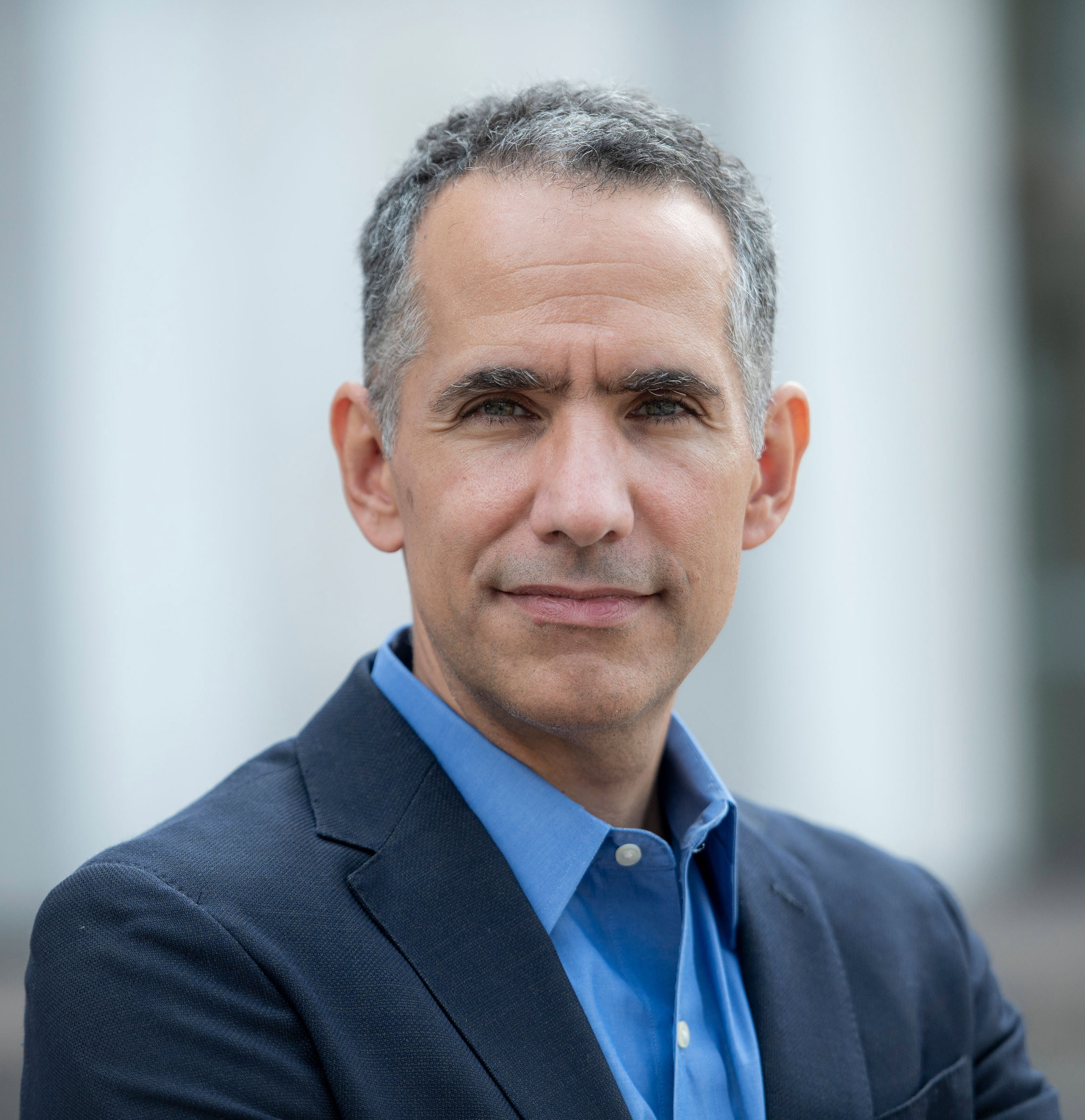
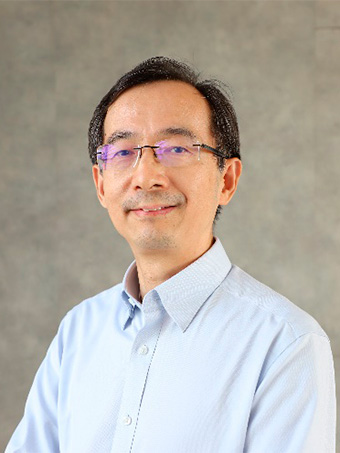
Esteban Rossi-Hansberg is the Glen A. Lloyd Distinguished Service Professor of Economics at the University of Chicago's Kenneth C. Griffin Department of Economics (since 2021). Previously, he held professorships at Princeton University (2005–2021) and Stanford University (2002–2005). He earned his Ph.D. in Economics from the University of Chicago in 2002. He serves as a Research Associate at the National Bureau of Economic Research (NBER) and a Research Fellow at the Center for Economic Policy Research (CEPR). He co-directs the Becker Friedman Institute's International Economics and Economic Geography Initiative and is Lead Editor of the Journal of Political Economy . His research focuses on international trade, regional and urban economics, growth, organizational economics, and climate change. Key topics include city structure, offshoring impacts, spatial frictions, climate adaptation, and agglomeration effects. His work has been published in major economics journals, and he has received prestigious awards such as the Alfred Sloan Fellowship (2007), August Lösch Prize (2010), and election to the American Academy of Arts and Sciences (2022). Recent work explores the economic geography of climate change, including adaptation strategies and migration dynamics. He has analyzed spatial distribution of economic activity under climate scenarios and the role of carbon taxes in reshaping global economies. His studies often use dynamic spatial models to quantify local and global economic impacts. His contributions span theoretical frameworks and empirical analyses, addressing policy questions like optimal industrial strategies, spatial equity, and adaptation to environmental challenges. He collaborates widely, with co-authors including Klaus Desmet, Stephen Redding, and others, producing influential papers on migration, trade, and urban systems.
Rebecca Schulman is an Associate Professor in the Department of Chemical and Biomolecular Engineering at the Whiting School of Engineering, Johns Hopkins University. She holds secondary appointments in Chemistry and Computer Science and is affiliated with multiple interdisciplinary institutes, including the Institute for NanoBioTechnology, the Hopkins Extreme Materials Institute, the Chemistry-Biology Interface Program, the Center for Cell Dynamics, and the Laboratory for Computational Sensing and Robotics. She currently co-directs the Passport to Future Technology Leadership program for PhD students. Research Interests: Schulman's research lies at the intersection of DNA nanotechnology, synthetic biology, and smart materials. Her group develops intelligent, adaptive biomolecular materials and nanostructures by integrating concepts from materials science, biochemistry, circuit design, and soft matter physics. The team focuses on engineering dynamic self-assembly processes using DNA to create reconfigurable materials, molecular circuits, and autonomous soft micro-robots. Key themes include self-healing nanostructures, feedback-regulated crystallization, programmable hydrogels, and synthetic genetic networks for materials control. Publication Trends: Her recent publications demonstrate a consistent focus on using DNA-based chemical reaction networks to program spatial and temporal behavior in materials. The work spans from fundamental mechanisms like catalytic polymerization and crystal growth regulation to applications in soft robotics, self-wiring circuits, and synthetic pattern formation. The research is highly interdisciplinary, combining synthetic biology with materials engineering to achieve life-like functionalities in non-living systems. Scientific Awards: AIMBE Fellowship Award Vannevar Bush Faculty Fellowship Award Hartwell Individual Biomolecular Research Award President’s Early Career Award in Science and Engineering (PECASE) DARPA Young Faculty Award DARPA Directors Fellowship NSF CAREER Award Turing Scholar Award DOE Early Career Award Advising and Grants: Schulman mentors graduate students and leads a vibrant research group focused on next-generation biomolecular engineering. Her work is supported by major federal grants, including the NSF CAREER, DOE Early Career, DARPA, and the Vannevar Bush Fellowship—a prestigious Department of Defense award for basic research. She is actively involved in training future leaders through programs like the Passport to Future Technology Leadership. Labs and Teams: The Schulman Lab at Johns Hopkins is a multidisciplinary team working on DNA-powered materials and molecular programming. The lab is embedded within several collaborative centers, enabling strong cross-departmental and cross-institutional research. Their work combines experimental biochemistry with theoretical modeling to design and implement complex molecular systems.
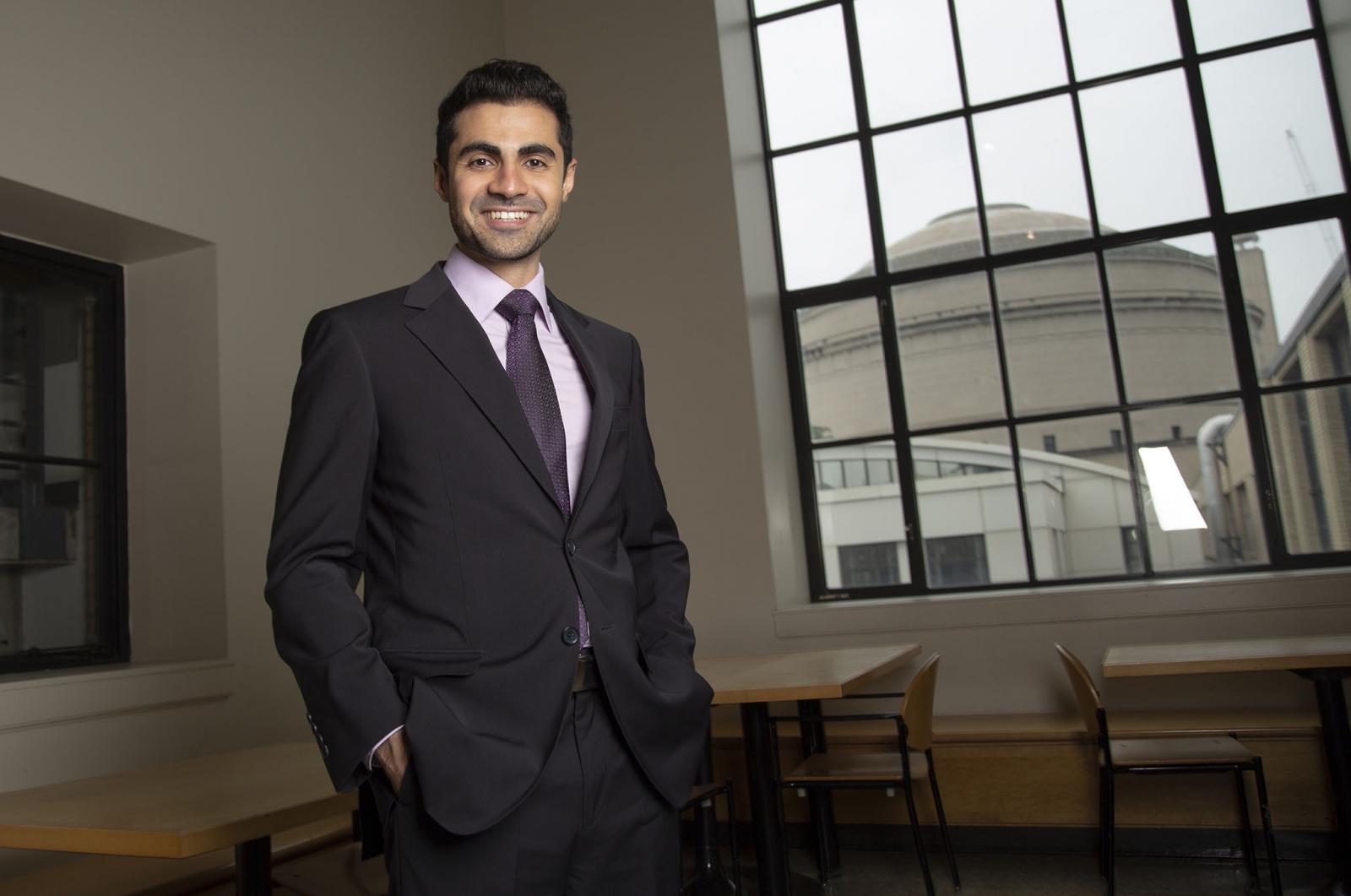
Navid Azizan is the Alfred H. (1929) and Jean M. Hayes Career Development Assistant Professor at Massachusetts Institute of Technology (MIT), holding dual appointments in the Department of Mechanical Engineering (in Control, Instrumentation & Robotics) and the Schwarzman College of Computing's Institute for Data, Systems & Society (IDSS). He is also a Principal Investigator in the Laboratory for Information & Decision Systems (LIDS), and a faculty member of the MIT Statistics and Data Science Center, the Center for Computational Science and Engineering, and the Operations Research Center. Dr. Azizan received his PhD in Computing and Mathematical Sciences from the California Institute of Technology (Caltech) in 2020, his MSc in Electrical Engineering from the University of Southern California in 2015, and his BSc in Electrical Engineering with a minor in Physics from Sharif University of Technology in 2013. Prior to joining MIT, he completed a postdoc at Stanford University's Autonomous Systems Laboratory and was a research scientist intern at Google DeepMind. His research spans the intersection of machine learning, systems and control, mathematical optimization, and network science. Dr. Azizan's work focuses on developing principled learning and optimization algorithms for reliable intelligent systems, with applications to autonomy and sociotechnical systems. His research has significant implications for creating trustworthy AI systems that can operate effectively in complex, uncertain environments. Dr. Azizan's recent publications demonstrate a strong focus on uncertainty quantification, reliable AI systems, constrained optimization, and control-oriented learning. His work bridges theoretical foundations with practical applications, particularly in autonomous systems where safety and reliability are paramount. His research group has made notable contributions to areas including neural network verification, multi-agent reinforcement learning, and adaptive inference techniques for large language models, with several papers featured on MIT News and selected for oral presentations at top conferences. Alfred H. (1929) and Jean M. Hayes Career Development Professorship (2025-present) Frank E. Perkins Award for Excellence in Graduate Advising (2025) List of Outstanding Academic Leaders in Data from the CDO Magazine (2024, 2023) Amazon Science Hub Research Award (2023) Outstanding UROP Faculty Mentor (2023) Esther and Harold E. Edgerton (1927) Career Development Chair (2022-2025) Information Theory and Applications (ITA) Gold Graduation Award (2020) Dr. Azizan has been recognized for his excellence in graduate advising, receiving the Frank E. Perkins Award for Excellence in Graduate Advising in 2025. During the pandemic, he founded and co-organized the 'Control meets Learning' virtual seminar series, connecting researchers across disciplines. His work has attracted significant research funding from industry partners including Google, Amazon, and MathWorks, supporting both fundamental research and practical applications in reliable intelligent systems. The Azizan Lab at MIT brings together researchers from mechanical engineering, computer science, and applied mathematics to tackle challenges at the intersection of learning and control. The lab emphasizes both theoretical foundations and practical implementations, with a particular focus on developing algorithms that provide guarantees of performance and safety. Current research directions include uncertainty quantification in AI systems, constrained optimization for neural networks, and control-oriented learning for autonomous systems, with applications spanning robotics, transportation, and complex sociotechnical systems.
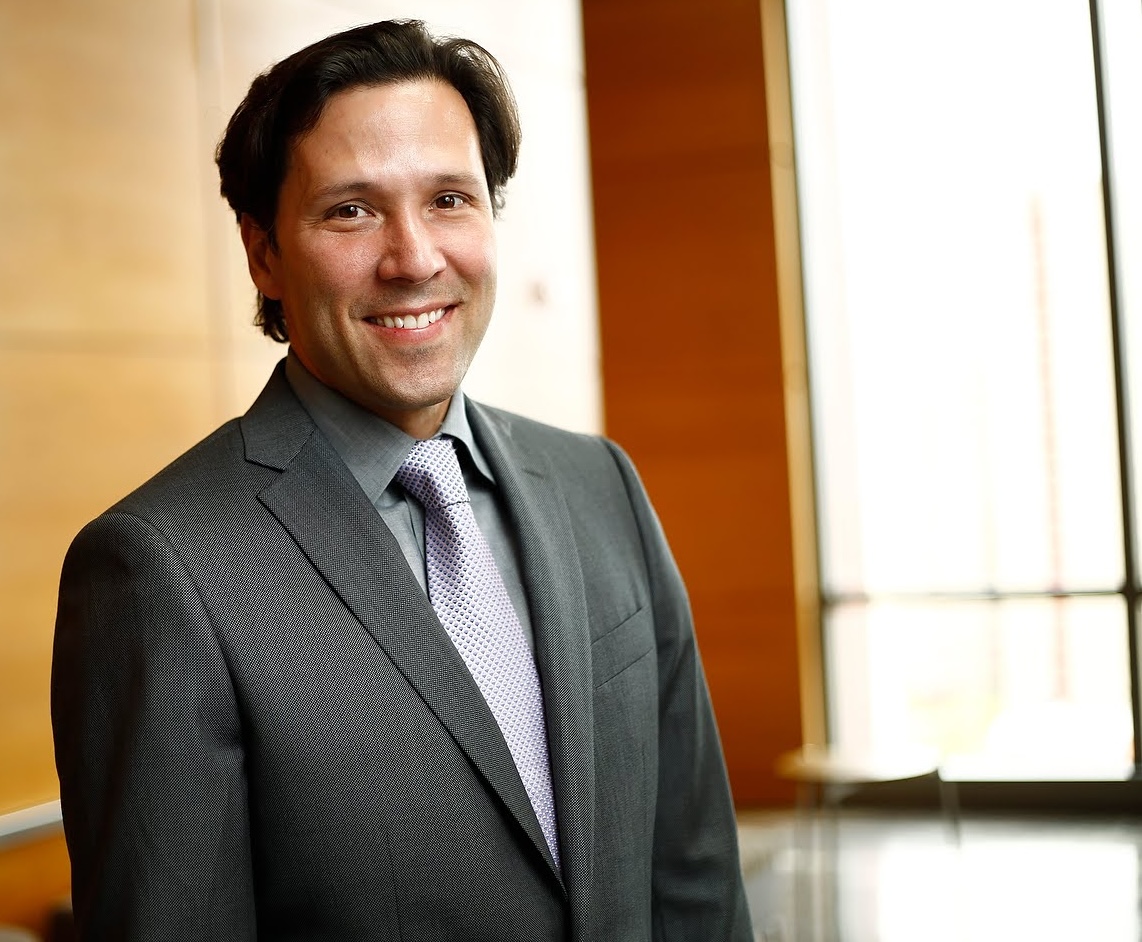
Christian Wolf is an Assistant Professor at the Massachusetts Institute of Technology (MIT) Department of Economics and a Faculty Research Fellow at the National Bureau of Economic Research (NBER). His work bridges macroeconomics, monetary economics, and econometric methodology. Research Interests: Wolf specializes in macroeconomics and monetary policy , with a focus on econometric techniques like structural vector autoregressions (VARs) and local projections . His research explores policy counterfactuals, heterogeneous-agent models, and fiscal-monetary interactions. Recent Publications: His work spans topics such as equivalence between fiscal and monetary tools in HANK models, robust identification in VARs, and the interplay between inequality and macroeconomic dynamics. Articles appear in journals like Econometrica , Journal of Political Economy , and American Economic Review . Awards: Faculty Research Fellow, NBER Contact: ckwolf@mit.edu | Office: E52-554, MIT
Jordi Galí is a Professor at the Department of Economics and Business at Universitat Pompeu Fabra (UPF), a Senior Researcher at the Center for Research in International Economics (CREI), and a Research Professor at the Barcelona School of Economics (BSE). He holds a PhD from MIT and has played a central role in shaping modern macroeconomic theory, particularly the New Keynesian framework used by central banks worldwide. Education: PhD in Economics, Massachusetts Institute of Technology (MIT), 1989 Master in International Management, ESADE, 1985 Bachelor in Economics, Universitat Pompeu Fabra, 1994 His research focuses on macroeconomic theory, monetary economics, and macroeconometrics. He is best known for his work on the New Keynesian Phillips Curve, optimal monetary policy rules, and the role of technology and expectations in business cycles. His influential book, Monetary Policy, Inflation and the Business Cycle , is a standard reference in graduate programs globally. The most recent articles highlight a continued focus on critical issues in modern macroeconomics: the implications of a low natural rate of interest (r*), the effectiveness of monetary policy at the zero lower bound, the role of wage and price flexibility, and the interaction between fiscal and monetary policy. His work increasingly integrates heterogeneity, financial frictions, and experimental methods, reflecting the evolving frontiers of the field. Scientific Awards: BBVA Foundation Frontiers of Knowledge Award (2025) Yrjo Jahnsson Award (2005) Premi Rei Jaume I d'Economia (2004) Premio Nacional de Investigación “Pascual Madoz” (2022) Three ERC Advanced Grants Foreign Honorary Member, American Economic Association (2020) Galí has advised numerous central banks, including the ECB, Federal Reserve, and Banque de France. He has held leadership roles as President of the European Economic Association (2012), co-editor of the Journal of the European Economic Association , and co-director of the CEPR International Macroeconomics Programme. He is a Research Fellow at CEPR, a Research Associate at NBER, and a Fellow of the Econometric Society. He has also been actively involved in public policy debates in Spain and Europe, particularly on issues of productivity, labor market reform, and fiscal policy. His research program continues to explore the design of stabilization policies in open and currency union economies.
Eduardo Azevedo is the John M. Bendheim and Thomas L. Bendheim Professor of Business Economics and Public Policy at the Wharton School , University of Pennsylvania. He holds a courtesy appointment as Professor of Economics and was awarded the 2016 Sloan Foundation Fellowship. His research integrates economic theory with practical applications across science and business domains. His research interests include: Market design Selection markets Social science genetics Experimental economics Game theory Recent publication trends focus on: Economic theory applications to healthcare and digital markets Empirical Bayes methods in A/B testing Adverse selection in insurance markets Strategic behavior in two-sided matching Evolutionary behavioral economics He serves as an instructor for BEPP2500 - Managerial Economics , emphasizing real-world application of microeconomic theory to business problems. His work also involves software development for economic research, including MATLAB-based empirical Bayes tools for analyzing treatment effects in large-scale experiments. Scientific awards : Sloan Foundation Fellow (2016)
Andre Wibisono serves as Assistant Professor in Yale University's Department of Computer Science with a secondary appointment in Statistics & Data Science, joining the faculty in 2021 after postdoctoral research at University of Wisconsin-Madison and Georgia Institute of Technology. His educational background includes: Ph.D. in Computer Science, UC Berkeley M.A. in Statistics, UC Berkeley M.Eng. in Computer Science, MIT S.B. in Mathematics and Computer Science, MIT Wibisono's research focuses on algorithm design for machine learning through optimization, sampling, and game theory , leveraging dynamical systems and information theory to develop accelerated discrete-time algorithms from continuous dynamics. His work provides theoretical foundations for efficient machine learning systems with applications in generative modeling and constrained optimization. Recent publications (2023-2025) demonstrate consistent innovation in Hamiltonian-based optimization , constrained-space sampling , and min-max game convergence , characterized by rigorous mathematical analysis connecting continuous dynamics to discrete algorithms. Key trends include randomized integration for acceleration, phi-divergence convergence guarantees, and symplectic geometry applications to mirror descent. Scientific recognition includes: NSF CAREER Award for developing algorithmic frameworks bridging continuous and discrete dynamics He actively mentors current students (Siddharth Mitra, Kaylee Yang, Jane Lee, Qiang Fu, Peter Wang) and has guided two postdocs to faculty positions. Research is funded through the NSF CAREER award and collaborative CIF grants focused on Hamiltonian dynamics for sampling and optimization. His Yale research group develops theoretical foundations for next-generation machine learning algorithms, emphasizing mathematical rigor in optimization and sampling with applications to generative modeling and constrained inference problems.
Carolin Pflueger is an Associate Professor at the Harris School of Public Policy , University of Chicago, and holds affiliations as a NBER Faculty Research Fellow and CEPR Research Affiliate . Her work bridges macroeconomics and finance, focusing on inflation dynamics, monetary policy impacts, and financial market risk perception. University: University of Chicago School: Harris School of Public Policy Affiliations: NBER, CEPR Role: Associate Professor Her research explores how inflation and monetary policy influence financial markets, including models connecting Treasury bond risk to stagflation drivers and analyzing economic agents' perceptions of policy uncertainty. Recent work leverages cross-sectional data of stock prices and economic forecasts to quantify macrofinancial linkages. Notable scientific recognitions include the Fama DFA Prize (2023), AQR Insight Award Finalist (2018), and the Arthur Warga Award (2014). She has received NSF Grant 2149193 for macrofinance research. Contact: cpflueger@uchicago.edu | GitHub Code Repositories
Dylan Hadfield-Menell is an Assistant Professor in the Department of Electrical Engineering and Computer Science at the Massachusetts Institute of Technology, holding the Bonnie and Marty (1964) Tenenbaum Career Development Professorship. His research focuses on AI alignment and human-AI interaction within MIT's School of Engineering. His research interests center on agent alignment problems in AI systems, particularly examining uncertainty in objective optimization for human-robot teams and societal oversight of machine learning systems. Key areas include the principal-agent alignment problem , assistance games frameworks , and robust preference learning that accounts for hidden contextual factors in reinforcement learning from human feedback. His recent publications reveal strong trends toward multi-agent cooperation , formal contract mechanisms for resolving social dilemmas, and advanced evaluation methodologies for AI safety. The research spans theoretical frameworks like open-universe assistance games while addressing practical challenges in language model alignment and cultural bias assessment. Scientific awards include: AI2050 Early Career Fellowship from Schmidt Futures Berkeley Fellowship NSF Graduate Research Fellowship C.V. Ramamoorthy Distinguished Research Award His work bridges theoretical computer science with real-world AI governance challenges, as demonstrated through MIT's participation in AI policy white papers. Current research directions include developing frameworks for transparent AI systems and addressing fundamental limitations in aligning recommender systems with human values through interdisciplinary synthesis.
Beverley J. McKeon is a Professor of Mechanical Engineering at Stanford University, previously holding the Theodore von Kármán Professorship in Aeronautics at Caltech. Her research focuses on fluid mechanics, particularly turbulence, flow control, and boundary layer dynamics. She earned her B.A. and M.Eng. from the University of Cambridge, and her Ph.D. from Princeton University. McKeon's work integrates experimental and theoretical approaches to manipulate wall-bounded flows for drag reduction and performance enhancement. Her research interests include resolvent analysis, high Reynolds number turbulence, and the application of machine learning to fluid dynamics. She has led interdisciplinary projects on morphing surfaces and viscoelastic turbulence. Awarded the Vannevar Bush Faculty Fellowship and PECASE, McKeon has been recognized for her teaching and mentoring. Her honors include Fellowships from the APS and AIAA. She chairs editorial boards for journals like Physical Review Fluids and has served on national committees for theoretical and applied mechanics. Her academic leadership includes roles as Deputy Chair of Caltech’s Division of Engineering and Applied Science and Associate Director of GALCIT. She advises numerous students and collaborates globally on initiatives like the Stories of Women in Fluids.
Zach Y. Brown is an Assistant Professor of Economics at the University of Michigan’s Department of Economics within the College of Literature, Science, and the Arts (LSA), and a Faculty Research Fellow at the National Bureau of Economic Research (NBER). He holds a tenure-track position and focuses on Industrial Organization and Health Economics, with an emphasis on information frictions and healthcare market dynamics. Education: Ph.D. in Economics from Columbia University (2017), B.A. in Economics and Physics (minor) from University of California - Berkeley (2007). His research interests include algorithmic pricing strategies, healthcare policy, and the economic implications of market structures. For instance, he explores how pricing algorithms affect competition in digital markets and investigates disparities in healthcare access and outcomes, particularly in Medicare. His work frequently bridges theoretical models with empirical analysis to inform policy debates. Recent studies highlight his contributions to understanding the effects of hospital payment caps on pricing, the role of broadband access in healthcare, and racial disparities in medication for opioid use disorder. His 2023 paper on algorithmic pricing won the American Economic Journal’s Best Paper Award in Microeconomics, underscoring his impact on digital market research. Teaching includes courses like Government Regulation of Industry (undergraduate) and Industrial Organization II (Ph.D. level), reflecting his expertise in applied economics and policy analysis. Prior to his academic role, he served as a Staff Economist at the Council of Economic Advisers, bringing practical policy experience to his academic work. Brown is affiliated with the NBER, contributing to their research initiatives. His current projects include examining market power in index funds and insurer competition in Medicaid markets, further expanding his interdisciplinary approach to economic challenges.
Dr. Lucas Pahl is a Lecturer in Economics at the University of Sheffield, School of Economics since 2024. His research specializes in mathematical game theory, particularly in equilibrium refinements, fixed point theory, and real algebraic geometry. He holds a PhD in Economics from the University of Rochester, an MSc in Mathematics from IMPA (Brazil), and a BSc in Social Sciences from the University of São Paulo. Previous positions: Postdoctoral Scholar at Hausdorff Institute for Mathematics and Institute for Microeconomics, University of Bonn His research interests include advanced topics like fixed point theory applications in game theory, algebraic topology intersections with economic models, and equilibrium refinement methodologies. Recent work explores information spillover in zero-sum games and polytope-form game structures. Key publications focus on O’Neill’s theorem extensions, sustainable equilibria analysis, and finite characterizations of perfect equilibria. He serves as a reviewer for top journals including Econometrica and Games and Economic Behavior. No scientific awards explicitly mentioned. His advisory and grant activities remain unspecified in current records. Labs/teams: No lab affiliations explicitly stated in provided information.
Emilio Frazzoli is a Full Professor at ETH Zurich’s Department of Mechanical and Process Engineering. He leads the Institute for Dynamic Systems and Control and the Center for Sustainable Future Mobility, focusing on autonomous systems, robotics, and socio-technical control frameworks. Current affiliations: ETH Zurich (Dynamic Systems and Control, Sustainable Future Mobility) Research: Autonomous mobility-on-demand, game theory for resource allocation, and safety verification in multi-agent systems His work bridges robotics, control theory, and economics, with projects like the open-source AMoDeus simulation framework for autonomous taxis and karma-based resource allocation systems. Recent publications emphasize trustworthy AI, reproducibility in autonomous vehicle control, and human-robot interaction challenges. Notable projects include nuReality (VR-based pedestrian interaction studies) and CARSI II (context-driven vehicle interfaces).
Freddy Bouchet is a Directeur de Recherche at CNRS and a Professeur attaché at École Normale Supérieure de Paris (ENS-PSL). His work bridges mathematical physics, climate science, data science, and statistical mechanics , focusing on turbulent flows, climate extremes, and large deviation theory . He will lead the Laboratoire de Météorologie Dynamique (LMD) starting 2025. Research Themes : Statistical mechanics of geophysical flows (Jupiter's jets, ocean currents). Large deviation theory for rare events in turbulence and climate. Non-equilibrium phase transitions in atmospheric/oceanic systems. Ensemble inequivalence in systems with long-range interactions. Scientific Awards : Three Physicists Prize Collaborations : Tapio Schneider, Antoine Venaille, J. Laurie, O. Zaboronski, B. Dubrulle, A. Venaille. Labs & Teams : Climate and Statistical Mechanics group at ENS de Lyon Future director of Laboratoire de Météorologie Dynamique (LMD/IPSL) Publications span climate dynamics, turbulence, statistical mechanics, and large deviation theory , with applications to Jupiter's atmosphere, ocean vortices, and non-equilibrium systems . His work often challenges paradigms like Tsallis non-extensive statistics.
GONG Jiangbin serves as Professor and Head of Department at the National University of Singapore (NUS), holding the prestigious Provost's Chair Professorship (2020-2026). He is a Principal Investigator at the Centre for Quantum Technologies (CQT) with office S12-02-10 and contact email phygj@nus.edu.sg. Education: PhD, University of Toronto, Canada (2001) His research program centers on topological quantum phenomena, with primary focus on novel topological phases of matter and their applications in quantum computation and information transfer. The group actively investigates quantum dynamics control, quantum simulation frameworks for metrology/sensing applications, disorder physics in few/many-body systems, quantum chaos, and emerging quantum machine learning paradigms to bridge theoretical advances with practical quantum technologies. Analysis of recent publications (2018-2024) reveals consistent expertise in topological quantum systems, spanning non-Abelian braiding in Majorana time crystals, Thouless pumping with single spins, exotic Floquet semimetals, acoustic topological platforms, and KPZ physics in Anderson localization - demonstrating deep integration of theoretical modeling with experimental quantum platforms. Scientific Awards: Provost's Chair Professorship (2020-2026) National Research Foundation Investigatorship (class of 2017) No explicit information regarding student advising or specific research grants was provided in the source material, though his leadership role suggests significant mentorship responsibilities and grant oversight. Gong leads a multidisciplinary research group at CQT/NUS that synergizes theoretical quantum physics with experimental quantum technologies, maintaining active collaborations across quantum simulation, topological materials, and quantum information science to advance next-generation quantum computing architectures.