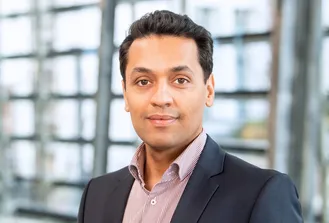
Prof. Jalal Etesami is an Assistant Professor in the Department of Computer Science at Technical University of Munich (TUM), leading the Decision Sciences & Systems group. He holds a Ph.D. in Industrial and Systems Engineering from the University of Illinois at Urbana-Champaign and was a Postdoctoral Fellow at EPFL in Switzerland. His research focuses on machine learning, causal inference, multi-agent systems, and game theory, with applications to systemic risk modeling and market design. He teaches advanced courses such as Causal Inference in Time Series , Algorithmic Game Theory , and Optimization, Learning, and Market Design . Notable contributions include work on causal structure learning, stochastic optimization, and non-Gaussian causal models. Recent research explores causal effect identification under confounding, neural networks for market analysis, and optimal experiment design. Prof. Etesami’s work appears in top venues like NeurIPS, AAAI, and IEEE journals. He actively contributes to the academic community, organizing seminars and workshops on topics ranging from causal reasoning to computational social choice.
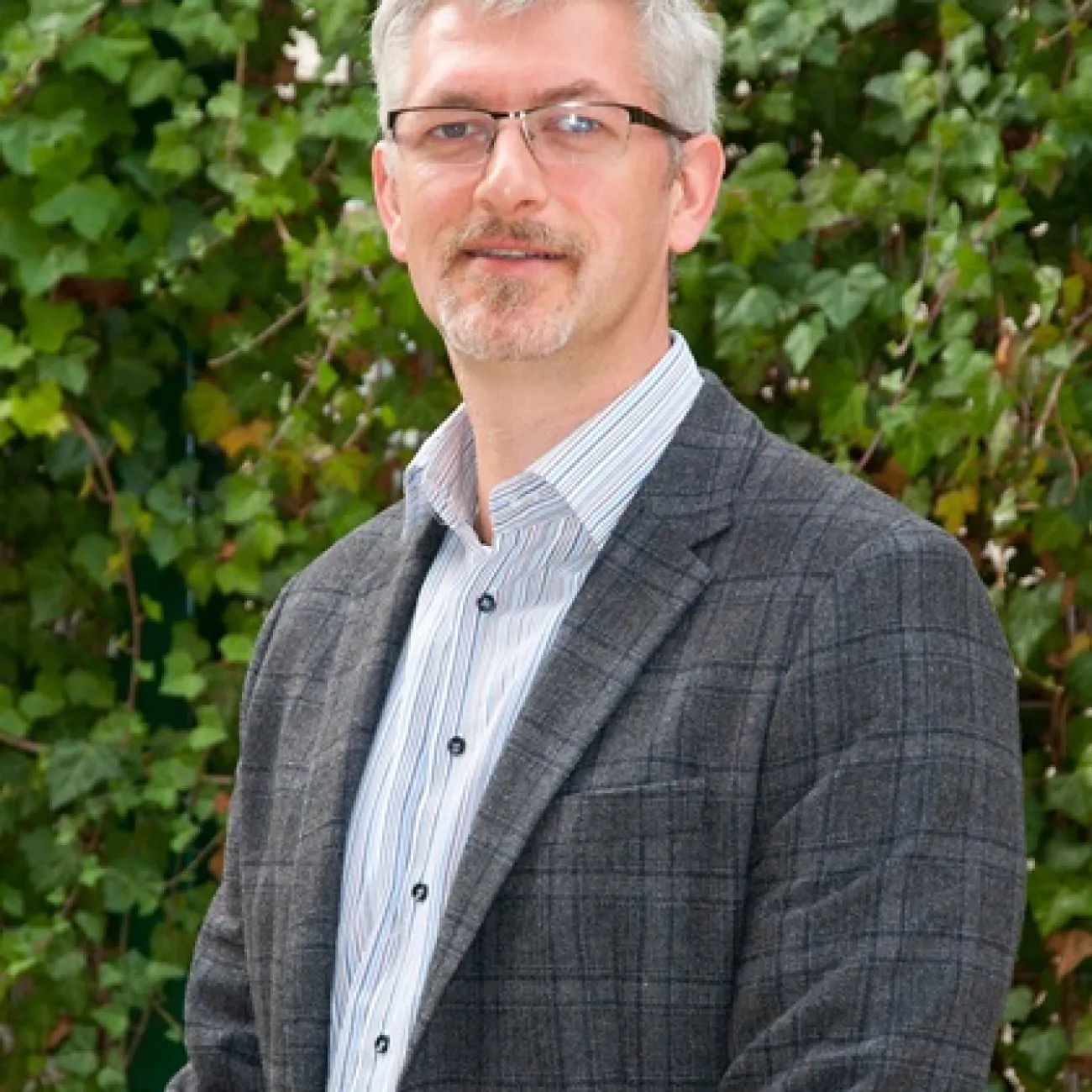
Dr. Patrick Beullens is an Associate Professor in Operational Research and Management Science at the University of Southampton's Southampton Business School. He specializes in applied research across ocean shipping, retail supply chains, logistics, and inventory control. His work integrates mathematical techniques such as stochastic processes, optimization algorithms, and game theory to address real-world challenges like environmental performance in shipping and food waste reduction. Key roles include Principal Investigator on EC-funded projects (e.g., SEABILLA, LOGMAN) and supervision of PhD students like Fangsheng Ge. Current projects focus on maritime emission abatement and economic ship speed models. He teaches Supply Chain Management, Risk Management, and Optimization courses. Research Groups: CORMSIS, Southampton Marine and Maritime Institute, Supply Chain Excellence Centre. Grants: Over £200k from Shell and SMMI for PhD scholarships, MoD-funded inventory projects, and EU initiatives. His research spans maritime economics, reverse logistics, and decision-making under risk. Collaborations include BAE Systems, EDF Energy, and international institutions like the Joint Research Centre.
Zhu-Tian Chen is an Assistant Professor in the Department of Computer Science and Engineering at the University of Minnesota, Twin Cities, where he leads research in data visualization, human-computer interaction, and augmented reality. Prior to this, he held postdoctoral positions at Harvard University and UC San Diego, working with leading researchers in visual computing and interactive design. Ph.D. in Computer Science, Hong Kong University of Science and Technology B.Eng. in Software Engineering, South China University of Technology His research focuses on augmenting human intelligence through hybrid human-AI systems, particularly in everyday and outdoor environments. He specializes in designing intelligent AR interfaces, embedded visualizations, and language-oriented interactions for applications in sports analytics, education, and data analysis. His work integrates human-centered design with applied machine learning to create intuitive and effective visualization tools. The recent trend in his publications shows a strong emphasis on intelligent AR systems for dynamic scenes, LLM-based code generation interfaces, and real-time augmentation of sports videos using natural language and gaze-based interactions. His work frequently appears in top-tier venues such as IEEE VIS, ACM CHI, and UIST. Best Paper Award, ACM CHI'23 Best Short Paper Honorable Mention, EuroVis'23 Best Paper Honorable Mention, IEEE VIS'22 (twice) Certificate of Distinction and Excellence in Teaching, Harvard University Hong Kong Ph.D. Fellowship Dr. Chen actively mentors undergraduate, master’s, and PhD students, as well as visiting scholars and interns, and is building a new research lab focused on visualization for intelligent AR systems. He has served on program committees for major conferences including ACM CHI, IEEE VIS, and EuroVis, and has been invited to speak at institutions such as Apple, JP Morgan, and multiple universities worldwide. He also contributes to the academic community through grant reviewing for NSF and the Department of Energy. He leads research projects in intelligent AR systems for sports, language-oriented interactions with LLMs, and immersive data visualization, often in collaboration with institutions like Harvard, UC San Diego, and HKUST. His lab welcomes students and collaborators interested in visualization, HCI, and applied AI.
Tianyi Lin serves as an Assistant Professor in the Department of Industrial Engineering and Operations Research (IEOR) at Columbia Engineering, Columbia University, a position he assumed in 2024. He holds dual affiliations as a verified Data Science Institute (DSI) Member and an Affiliated Member of both the Financial and Business Analytics Center and the Foundations of Data Science Center. His academic credentials include: Ph.D. in Electrical Engineering and Computer Science, UC Berkeley Postdoctoral Researcher, Laboratory for Information & Decision Systems (LIDS), MIT (2023-2024) M.S. in Operations Research, UC Berkeley M.S. in Pure Mathematics and Statistics, University of Cambridge B.S. in Mathematics, Nanjing University Dr. Lin's research spans optimization theory , game-theoretic models , and machine learning algorithms , with emphasis on nonconvex minimax problems , variational inequalities , and data science applications . His work bridges theoretical guarantees with practical implementations in high-dimensional settings, particularly focusing on convergence properties and computational efficiency in complex systems. Analysis of his 15 most recent publications (2022-2025) reveals dominant themes in high-order optimization methods , no-regret learning in games , and optimal transport algorithms . His contributions demonstrate consistent innovation in developing doubly optimal algorithms for monotone games, spectral regularization techniques for policy optimization, and structure-driven approaches for nonconvex problems, reflecting strong interdisciplinary connections between operations research, computer science, and applied mathematics. No scientific awards or honors were documented in the provided source material. Information regarding student advising and research grants remains unspecified in the current documentation, though his center affiliations suggest active participation in collaborative research initiatives. Dr. Lin maintains significant interdisciplinary engagement through his affiliations with Columbia's Data Science Institute and specialized research centers, positioning his work at the intersection of theoretical optimization and real-world data science applications.
Arash Asadpour Rahimabadi is an Associate Professor at the N. P. Loomba Department of Management within the Zicklin School of Business at Baruch College, CUNY . His research bridges Operations Research and Management Science , focusing on algorithmic design, dynamic pricing, and optimization in gig economy platforms. Education: Ph.D. in Operations Research, Stanford University (2010) BSc in Computer Engineering, Sharif University of Technology (2004) His research interests include stochastic optimization , submodular maximization , marketplace stability , and fair allocation . Recent work explores dynamic pricing in extreme value regimes , shared ride sustainability , and regulation of gig economy platforms . His scientific contributions span algorithmic game theory, combinatorial optimization, and resource allocation, with key publications in Management Science and Operations Research . Current projects analyze escrow payment mechanisms , shared mobility efficiency , and hotel reservation systems . Scientific Awards Best Paper Award, ACM-SIAM Symposium on Discrete Algorithms (SODA), 2010 1st Rank in Iran’s National Graduate Entrance Exam in Computer Engineering, 2004 Silver Medals in Iranian National Olympiads in Informatics, 1999–2000 He serves on graduate and PhD committees at CUNY and has reviewed for journals including Management Science and Operations Research . His teaching includes courses like Decision Models and Analytics and Advanced Discrete Optimization .
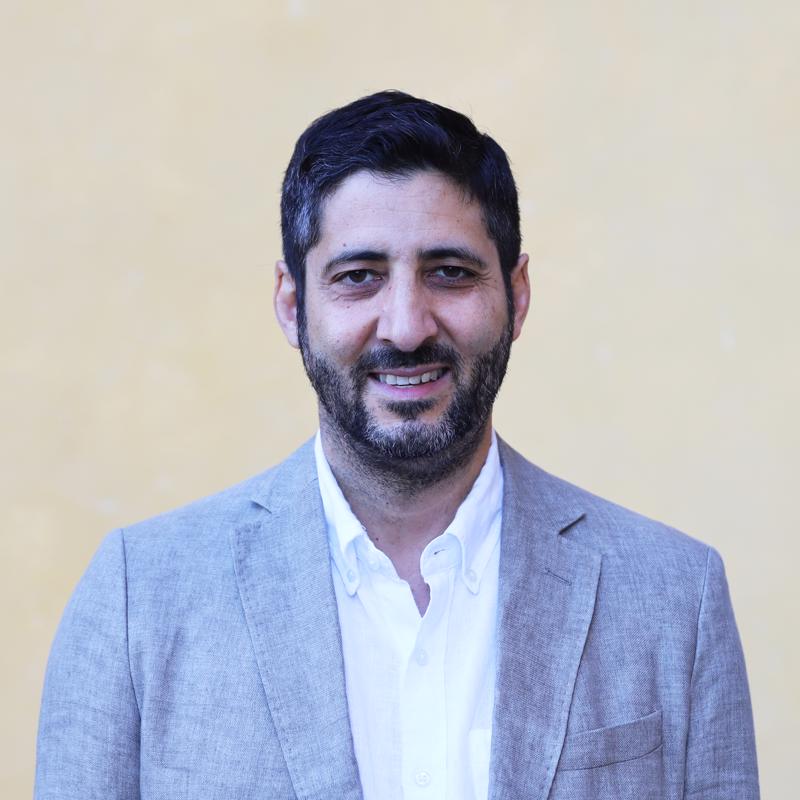
Giancarlo Casale is a Full-time Professor and Head of the Department of History at the European University Institute (EUI) in Florence, Italy, a leading institution for advanced research in the social sciences and humanities. He is a specialist in the early modern Ottoman Empire and its global connections, particularly with Renaissance Europe, focusing on intellectual, diplomatic, and maritime history. His research interests include early modern history, Ottoman studies, intellectual history, cartography, cosmography, travel literature, ethnographic writing, maritime technology, and comparative empire studies. He is especially interested in the intersections between Ottoman intellectual life and Renaissance Italy, as well as the broader dynamics of global diplomacy and knowledge exchange in the early modern world. His work contributes significantly to decentering Eurocentric narratives in global history. His recent publications reveal a strong thematic focus on Ottoman intellectual practices (such as taḥqīq), cross-cultural scientific exchange, and innovative methodologies in historical research, including reflections on digital media and video games as tools for historical engagement. These works span disciplines including history of science, diplomatic history, and cultural history, with recurring sub-themes of spatial thinking, knowledge networks, and transcultural encounters. He serves on the editorial boards of several major journals, including Renaissance Quarterly , Medieval Encounters , and Arabic Humanities , and has been Executive Editor of the Journal of Early Modern History since 2011. He supervises a large cohort of PhD students, indicating an active and international research group. He is fluent in English, Italian, Turkish, French, Portuguese, and Arabic, underscoring his transnational scholarly profile. His leadership roles, editorial work, and ongoing research projects—such as the Working Group on Methods in Early Modern History and the Diplomatic/International History Working Group—highlight his central role in shaping contemporary historical scholarship.
Prof. Dr. Christian Breunig is a Professor of Comparative Politics at the Department of Politics and Public Administration, University of Konstanz, and serves on the Board of the Cluster of Excellence "The Politics of Inequality." He previously held academic positions as Associate Professor at the University of Toronto and Postdoctoral Researcher at the Max-Planck Institute for the Study of Societies. His research focuses on political representation, public policy in advanced democracies, and comparative political economy. Projects: Political elites and inequality (2019-2025) Conditional Responsiveness in France/Germany (2016-2020) Comparative Agendas Project (2014) Key research areas: Political methodology Legislative dynamics Policy institutionalization Public opinion estimation Redistribution preferences His recent work analyzes: Political misrepresentation of marginalized groups Redistribution mechanisms in pension systems Legislative bargaining behaviors Policy venue creation dynamics Public opinion estimation accuracy Awarded three American Political Science Association prizes, he has conducted comparative studies across Germany, Belgium, Canada, Switzerland, and the Netherlands, with methodological innovations in legislative ideology measurement.
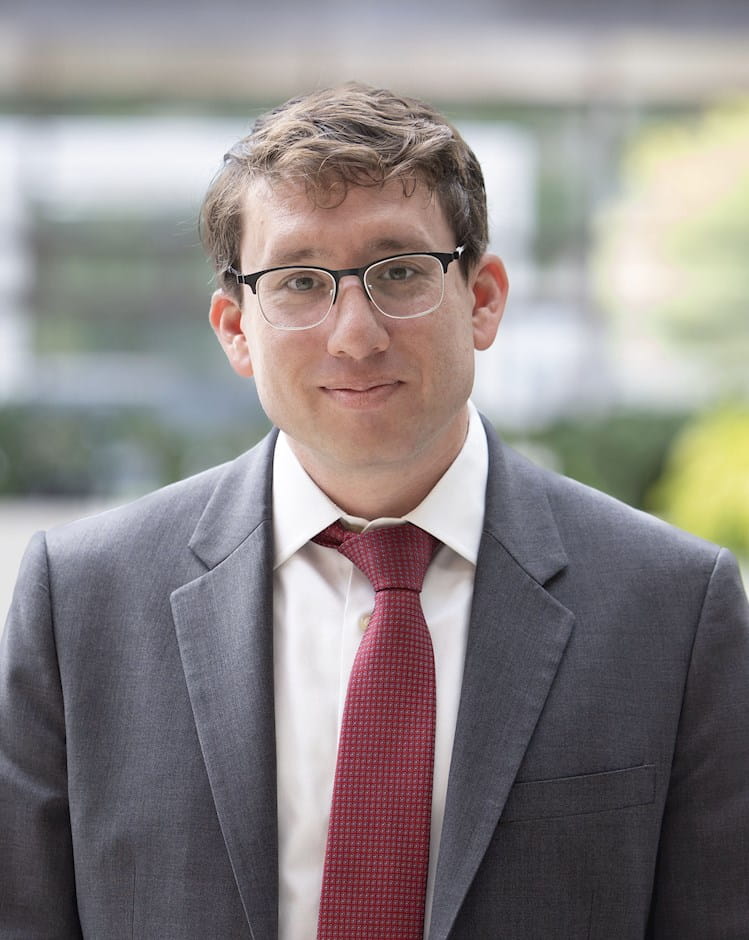
Alexander P. Frankel is the Isidore Brown and Gladys J. Brown Professor of Economics at the University of Chicago Booth School of Business. His research focuses on mechanism design, game theory, and contracting, with applications across various economic domains. Previously, he worked at Yahoo! Research and has published in top economics journals including the American Economic Review and Journal of Political Economy. Education: BS in Mathematics from the University of Chicago BA in Economics from the University of Chicago PhD in Economic Analysis and Policy from Stanford Graduate School of Business Frankel specializes in information economics, mechanism design, and contract theory. His work explores how information structures affect economic outcomes, with applications to delegation, signaling, and strategic communication. He has made significant contributions to understanding how information is designed and used in strategic settings, particularly in areas such as R&D investment, admissions policy, and central banking. Frankel's publication record demonstrates a consistent focus on information design and its applications across diverse contexts. His work spans theoretical developments in signal structures and information hierarchies to practical applications in education policy, corporate decision-making, and monetary policy. The research shows increasing sophistication in modeling information environments and their economic consequences, with recent work addressing contemporary issues like test-optional admissions while maintaining strong theoretical foundations. As a faculty member at Chicago Booth, Frankel teaches Microeconomics (33001) and The Economics of Contracts (33931). His research has received attention in major media outlets including the New York Times, Chicago Tribune, and Freakonomics blog, indicating the broader relevance of his theoretical work to practical economic issues.
Sasha Indarte is an Assistant Professor of Finance at The Wharton School, University of Pennsylvania. His research focuses on Household Finance, Financial Intermediation, and Macroeconomics, with a particular interest in the intersection of social policy, consumer credit, and financial stability. PhD in Economics from Northwestern University His work examines how financial intermediaries’ reputations affect sovereign debt markets, the role of liquidity and moral hazard in household bankruptcy, and the impact of social insurance programs like Medicaid on household credit behavior. His recent research highlights racial disparities in bankruptcy outcomes and the design of optimal debt relief policies. Key trends in his publications include empirical analysis of historical financial systems, econometric modeling of consumer behavior, and policy evaluation of social programs. His articles have appeared in top journals such as the Journal of Finance and the Review of Financial Studies . Scientific Awards and Honors: National Science Foundation Grant (2021) Wharton Teaching Excellence Award (2020) NBER Small Grant (2020) Rodney L. White Center Grant (2020) Macro Financial Modeling Fellowship (2017) Susan Schmidt Bies Prize (2016) Marshall Blume Prize (1970) Brattle Prize (2024) Indarte teaches courses in Corporate Finance (FNCE1000, FNCE6110) and Empirical Methods (FNCE9260). His empirical research often leverages quasi-experimental designs and large datasets, including a race imputation model trained on 30 million observations.
Lukasz Szpruch serves as Professor at the University of Edinburgh's School of Mathematics and Programme Director for Finance and Economics at The Alan Turing Institute. He leads the FAIR research programme on responsible AI adoption in financial services and co-investigates the UK Centre for Greening Finance & Investment (CGFI), directing partnerships with the National Office for Statistics, Accenture, Bill & Melinda Gates Foundation, and HSBC. He maintains affiliations with the Oxford-Man Institute for Quantitative Finance. His research focuses on probability theory , stochastic analysis , and theoretical machine learning , with current investigations into deep learning foundations, mean-field models, reinforcement learning, game theory, multiagent systems, and computational optimal transport. These theoretical frameworks are rigorously applied to financial economics problems including market dynamics, risk modeling, and regulatory compliance, emphasizing mathematical precision in AI system design. Recent publications reveal a strategic shift toward responsible AI deployment in finance , addressing large language model governance, synthetic data privacy, and non-asymptotic sampling theory. His work consistently bridges abstract mathematics with financial sector applications, particularly through the FAIR programme's industry collaborations that translate theoretical advances into practical frameworks for trustworthy AI adoption. As Principal Investigator of FAIR and CGFI co-Investigator, Szpruch manages significant research funding streams focused on AI ethics in financial services and sustainable finance. His academic leadership drives cross-sector initiatives where theoretical research directly informs regulatory policy development and industry best practices, though specific student mentoring details remain unspecified in source materials. Szpruch operates at the nexus of three critical research ecosystems: the FAIR programme's industry partnerships, CGFI's sustainability-focused finance research, and the Oxford-Man Institute's quantitative finance initiatives. These interconnected teams combine mathematical rigor with real-world financial applications, developing frameworks for AI assurance, green finance metrics, and synthetic data validation that address systemic challenges in modern financial systems.
Thomas W. Malone is the Patrick J. McGovern Professor of Management at the MIT Sloan School of Management. He holds joint appointments as Professor of Information Technology and Professor of Work and Organizational Studies. As founding director of the MIT Center for Collective Intelligence, he leads pioneering research on how people and computers can connect intelligently. Previously, he founded the MIT Center for Coordination Science and co-directed the MIT Initiative on 'Inventing the Organizations of the 21st Century'. His teaching focuses on organizational design, IT, and leadership. His research examines how new organizations leverage information technology, with groundbreaking predictions about electronic business in 1987. Major works include the influential books The Future of Work (2004) and Superminds (2018). Research areas span: Collective Intelligence: Designing systems combining human and machine intelligence Organizational Structure: Decentralization, coordination, and future work models Climate Solutions: Crowdsourcing through Climate CoLab AI Implications: Human-AI collaboration in business strategy His publications demonstrate consistent focus on collective problem-solving, with recent emphasis on AI-workforce integration, remote team intelligence, and computational group metrics. Key research projects include the Collective Intelligence Design Lab, Minglr, Climate CoLab, and Measuring Collective Intelligence. Honors include an honorary doctorate from the University of Zurich . He co-founded four software companies and holds 11 patents in collaboration systems and organizational modeling. He directs the MIT Center for Collective Intelligence, leading interdisciplinary teams on global challenges. Current initiatives explore AI-enhanced prediction markets, collective intelligence genomes, and hybrid human-machine systems for organizational design.
Professor Matthew Elliott is a leading academic in the Faculty of Economics at the University of Cambridge , where he serves as Professor of Economics , Faculty Executive Director of Research , and Director of the Keynes Fund . His work bridges Networked Markets , Game Theory , and Microeconomic Policy , with applications to Supply Chains , Systemic Risk , and Labor Markets .
Atrisha Sarkar is an Assistant Professor in the Department of Electrical and Computer Engineering at Western University , Canada, and heads the Humans and Autonomous Agents Lab . She is also a faculty member of the Rotman Institute of Philosophy and a Faculty Affiliate at the Schwartz Reisman Institute for Technology and Society . Her research integrates empirical and behavioral game theory with software engineering to design human-centric AI systems that prioritize safety and societal well-being. Education: Atrisha holds a PhD and has previously served as a postdoctoral fellow at the Schwartz Reisman Institute for Technology and Society at the University of Toronto under the supervision of Prof. Gillian Hadfield. Research Focus: Her work centers on human-centric multiagent systems , combining methods from: Behavioral and empirical game theory Software engineering Human-AI and human-robot interaction AI safety and reliability She applies these to domains such as autonomous driving, cooperative AI, and social media dynamics, aiming to ensure AI systems align with human values and societal norms. Publications and Impact: Atrisha has published extensively in top-tier venues including AAAI , AAMAS , ICRA , NeurIPS , and EC . Her work spans from theoretical models of strategic behavior to practical frameworks for validating autonomous systems, with a strong emphasis on real-world applicability. Labs and Teams: She leads the Humans and Autonomous Agents Lab at Western University, where her team focuses on designing AI agents that can cooperate effectively with humans in complex, dynamic environments.
Giorgio Fagiolo is a Full Professor of Economics at Sant'Anna School of Advanced Studies. His work spans agent-based computational economics, economic networks, and macroeconomic policy analysis. University: Sant'Anna School of Advanced Studies (Scuola Superiore Sant'Anna) Department: Economics Email: giorgio.fagiolo@sssup.it Research interests focus on agent-based modeling , macroeconomic instability , and climate-economy interactions . He develops computational models to study industrial dynamics, financial integration, and policy design in complex systems. Key themes: Endogenous growth cycles, R&D network stability, and green transition policies. Methodological emphasis: Empirical validation of agent-based models and nonlinear economic dynamics. Scientific awards include collaboration with leading institutions like ETH Zurich, Columbia University, and OFCE Sciences Po. His publications appear in journals such as Journal of Economic Dynamics and Control and Ecological Economics .
Maria Rita D’Orsogna is a Professor of Mathematics at California State University, Northridge (CSUN) and holds an Adjunct Associate Professor appointment in the Department of Computational Medicine at UCLA. She earned her PhD in Theoretical Physics from UCLA in 2003 and has since bridged mathematical modeling with interdisciplinary research in biology, social dynamics, and criminology. Her work utilizes statistical mechanics and applied mathematics to study collective behavior, viral dynamics, and societal challenges. Her research spans Biological swarming and self-organization Crime pattern modeling and policy analysis Drug addiction relapse dynamics Environmental activism against offshore oil drilling Recent publications focus on Medical decision-making optimization Age-specific overdose mortality forecasting Radicalization and social network dynamics Criminal career empirical studies Hematopoiesis modeling . She has secured funding from the NSF and Army Research Office. Teaching experience includes differential equations, multivariable calculus, and mathematical biology at CSUN and UCLA. She has mentored students through RIPS, IPAM, and PUMP programs. As Associate Director of UCLA’s Institute for Pure and Applied Mathematics (2018–2021), she promoted interdisciplinary research. Her environmental advocacy in Italy led to national policy changes banning coastal oil drilling, earning her recognition as the "Erin Brockovich of Italy".