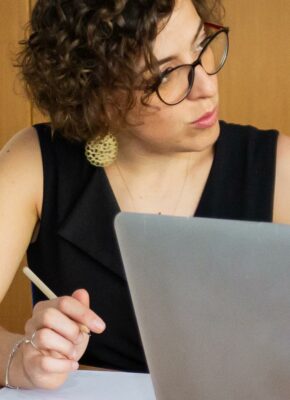
Domenico De Giovanni is an Associate Professor at the Department of Economics, Statistics and Finance 'Giovanni Anania' (DESF) at the University of Calabria. His research spans economics, finance, and actuarial science, focusing on quantitative methods and strategic decision-making. He teaches Computer Lab for Finance and Mathematical Methods for Economics in the university's graduate programs. Email: ddegiovanni@unical.it Research Groups: Quantitative Methods for Economics, Finance, and Management His work explores dynamic harvesting, capacity investment under uncertainty, tax evasion dynamics, and energy market modeling. Recent publications analyze mortality dependencies, spread options in commodity markets, and semi-Markov disability transitions.
Dr. Esterina Pascale is an Associate Professor at the Sapienza University of Rome , holding a position in the Department of Medical-Surgical Sciences and Biotechnologies . Her academic career spans decades, with affiliations including leadership roles in degree programs and research commissions. Current President of the Paritetic Commission (Faculty-Students) at Sapienza Member of CORET Commission (2022-2023) Previously headed Diagnostic Health Professions degree courses (2006-2019) Research Focus : Genetic and epigenetic factors in neurodegenerative diseases (Parkinson’s, MS) and psychiatric disorders (ADHD, addiction). Key areas include: DAT1 gene methylation patterns in ADHD diagnosis Epigenetic biomarker development for therapy monitoring Gene-environment interactions in behavioral disorders Scientific Contributions : Over 25 publications (2009-2025), with high-impact works in Addiction Biology (IF:5.929) and Frontiers in Immunology (IF:7.3). Holds Italian/European patents for ADHD diagnostic methods.
Alberto De Santis is an Associate Professor in the Department of Computer, Automatic and Management Engineering A. Ruberti at the University of Rome La Sapienza, Faculty of Information Engineering, Computer Science and Statistics. He has maintained this position since 1998 in the sector ING-INF04 - Automatica, following his progression from researcher positions at both the National Research Council and the university's Department of Computer and System Engineering. His educational background includes a degree in Electronic Engineering from University of Rome La Sapienza (1984, with honors) and a Specialization in Control Systems and Automatic Computing Engineering (1985-86). His academic journey included a visiting scholar position at UCLA's School of Engineering and Applied Mathematics (1990-91) and research fellowships at the Institute of Systems Analysis and Informatics. Professor De Santis teaches Fundamentals of Automatic Control for Management Engineering undergraduate programs and Modeling and Identification for Master's degree students. His research spans theoretical and applied domains with particular emphasis on filtering and control theory, signal processing, and system identification. He's also a member of Continuous Optimization research group and since 2011 has been associated with the university spin-off ACTOR SRL focused on Analytics, Control Technologies and Operations Research. His recent publications (2022-2024) demonstrate remarkable interdisciplinary reach, connecting traditional control engineering with aerospace systems, nutrition science, healthcare optimization, and sports medicine. This reflects a research trajectory that has evolved from core control theory to practical applications across diverse fields including aircraft formation, sustainable diet planning, emergency department operations, and dietary supplement usage patterns. He maintains active academic engagement through regular teaching (with documented 2024/25 course schedules), ongoing research collaborations, and participation in university spin-off initiatives. His office is located in room A204 at the university's Department of Computer, Automatic and Management Engineering.
Daniele Gervasio is Associate Professor of Business Economics in the Department of Management at the University of Bergamo, Italy. He holds a Master’s degree in Law and a Master’s degree in Economics & Commerce from the University of Bergamo, and completed two years of PhD studies in Economics and Business Strategy at the University of Milan-Bicocca. Research Focus Impact of Italian Legislative Decree 231/2001 on corporate governance and internal controls Adoption and consequences of IAS/IFRS in financial reporting Sustainability reporting and business ethics Valuation of startups and SMEs Tax evasion modeling and fiscal policy His work has been published in leading journals such as Accounting, Auditing & Accountability Journal , Computational Management Science , and International Business Research . Professional Practice Beyond academia, Gervasio serves as statutory auditor and president of supervisory bodies under Legislative Decree 231/2001 for several companies, and acts as a business valuation expert. Teaching He teaches a broad spectrum of accounting and governance courses, including Advanced Accounting, International Accounting, Accounting Governance & Sustainability, and Financial Accounting, at both undergraduate and master’s levels.
Professor Ji-Dong Gu is a Full Professor in the Environmental Science and Engineering department at Guangdong Technion-Israel Institute of Technology in Shantou, China. With an extensive academic background including a PhD in Soil Sciences - Microbial Ecology from Virginia Tech, he has established himself as a leading researcher in environmental microbiology with a particular focus on cultural heritage protection. His educational background includes: PhD in Soil Sciences - Microbial Ecology from Virginia Tech (1988-1991) MSc in Soil Microbiology and Biochemistry from University of Alberta (1985-1988) BSc in Agronomy from Heilongjiang August First Land Reclamation University (1979-1983) Professor Gu's research spans multiple critical areas in environmental microbiology. His work on microbial ecology related to cultural heritage protection has been particularly influential, examining how microorganisms contribute to the biodeterioration of stone monuments and wall paintings at sites like the Maijishan and Mogao Grottoes. He has made significant contributions to understanding nitrogen cycling processes, particularly anaerobic ammonium oxidation (anammox) bacteria, and their applications in wastewater treatment. His research also extends to microbial communities in oil reservoirs and bioremediation of environmental pollutants. With 878 publications that have garnered 28,846 citations, Professor Gu has established himself as a prolific researcher whose work spans fundamental microbial ecology and practical applications. His recent publications show a continued focus on cultural heritage protection, nitrogen cycling, and microbial community analysis in diverse environments with numerous papers published through 2025. His scientific achievements include: Charles Rich Fellowship (1991) Extensive publication record with significant impact in environmental microbiology Organization of international symposia on cultural heritage biodeterioration and protection Leadership in establishing research collaborations across multiple institutions Professor Gu maintains an active research program with numerous ongoing projects related to environmental microbiology and cultural heritage protection. His laboratory investigates microbial communities on stone monuments, develops strategies for cultural heritage conservation, and studies fundamental microbial processes in environmental systems. He has supervised numerous students and researchers throughout his career, contributing to the training of the next generation of environmental microbiologists.
Simone Orlandini is a Full Professor and Department Director at the Department of Agricultural, Food, Environmental and Forestry Sciences and Technologies (DAGRI) at the University of Florence. He holds multiple leadership positions including President of the Collegio dei Direttori di Dipartimento dell'Università di Firenze, Vice President of Conferenza Nazionale per la Didattica Universitaria di AG.R.A.R.I.A, and Director of the Centro di Bioclimatologia. His extensive affiliations include editorial roles as Field Editor for the International Journal of Biometeorology and Director of the Italian Journal of Agrometeorology, along with membership in numerous scientific committees and societies. Professor Orlandini's research focuses on agronomy, agrometeorology, and agroclimatology with particular emphasis on soil-plant-atmosphere interactions, climate change impacts on agriculture, sustainable farming practices, and precision agriculture technologies. His work examines the dynamics between biotic and abiotic factors in cropping systems, with special attention to modeling techniques, remote sensing applications, and decision support systems for agricultural management. A significant portion of his research addresses water and carbon footprint assessments, renewable energy in agriculture, and climate change adaptation strategies. His recent publications (2024-2025) demonstrate a strong focus on sustainable agricultural practices, with particular attention to soil health improvement through cover crops, precision irrigation technologies using electrical resistivity tomography, nitrogen management for greenhouse gas reduction, and wheat variety selection for dryland environments. His research spans both fundamental scientific inquiry and practical applications for farmers, with studies conducted in diverse environments including Italy, Afghanistan, and West Africa. Ordinary Academic of Accademia dei Georgofili di Firenze Former chair of COST Action 734 CLIVAGRI (2006-2011) National delegate to World Meteorological Organization's Commission for Agricultural Meteorology Extensive editorial service for major international journals Professor Orlandini actively supervises graduate students as a member of the PhD Program in 'Scienze Agrarie e Ambientali' at the University of Florence and has evaluated numerous research projects for national and international funding agencies. His leadership in the Centro di Bioclimatologia provides students with opportunities to work on cutting-edge research in climate-smart agriculture, with access to both field and laboratory facilities for conducting innovative agricultural research.
Dr. Chiaradonna Ferdinando is an Associate Professor of Biochemistry at the University of Milano-Bicocca's Department of Biotechnology and Biosciences. His research investigates cancer metabolism, focusing on pancreatic cancer, signal transduction, and metabolic rewiring mechanisms. He leads the Chiaradonna Lab, which explores the hexosamine biosynthetic pathway's role in tumor resistance and develops strategies to overcome chemotherapeutic limitations. Research Interests: Key areas include metabolic adaptation in tumors, mitochondrial dysfunction in chemoresistance, and systems biology approaches to identify novel therapeutic targets. His work bridges biochemistry and oncology to address unresolved challenges in pancreatic cancer treatment. Projects & Collaborations: PRIN 2022: Modulating glycolytic pathways to induce 'BRCAness' in pancreatic cancer (2023-2025) Italy-China BIOMED Program: Preclinical validation of PGM3 inhibitors (2019-2021) International partnerships with institutions in China, Germany, Finland, and Italy Research Team: Advises PhD and Master's students working on metabolic inhibition strategies and 3D tumor modeling. Lab members include Virginia Brancato (Assistant Professor) and five graduate researchers focused on cancer metabolism.
Barabino Silvia is an Associate Professor of Molecular Biology at the University of Milan-Bicocca's Department of Biotechnology and Biosciences. She leads the Barabino Lab (#BarabinoLab_BtBS), specializing in RNA biology and neurodegeneration research. Her work investigates RNA-binding proteins in transcription/RNA processing and their links to human diseases. Current projects focus on: miRNA dysregulation in amyotrophic lateral sclerosis (ALS) pathogenesis FET protein functions in DNA damage response and genome stability Molecular mechanisms connecting RNA metabolism to neurodegeneration Experimental approaches include biochemical assays, advanced microscopy, and transgenic mouse models. Recent publications demonstrate broad impact across molecular neuroscience and RNA biology, including therapeutic target identification for ALS (2020), leukemia proliferation mechanisms (2019), and oxidative stress regulation of RNA processing (2017). She maintains active collaborations with European institutions including King's College London and Stockholm University.
Francesco Rea is a Senior Technician at Istituto Italiano di Tecnologia (IIT) and holds adjunct/teaching positions at University of Lethbridge and University of Genova. He leads the Cognitive Architecture for Interactive Technology (CONTACT) lab, focusing on humanoid perception, cognitive skills, and industrial applications. Education: B.Sc. Information Engineering, Università di Bergamo (2004) Specialization in Computer Engineering, Università di Bergamo (2007) M.Sc. Robotics and Automation, University of Salford (2008) Ph.D. Robotics, University of Genoa (2012) Research: His work bridges cognitive neuroscience and robotics, developing systems for auditory awareness, adaptive tutoring, and human-robot collaboration in manufacturing/healthcare. Key projects include VOJEXT, APRIL, and PROMEN-AID, funded by EU H2020 and Human Brain Project. Publications: Recent works (2025) explore LLM-based tutoring architectures, visuo-motor learning, and social robotics, demonstrating consistent focus on AI-driven human interaction and cognitive modeling. Awards: Canada-Italy Innovation Award (2017, 2021) Best Paper Award at ROMAN2020 Mitacs Globalink Research Award (2018) AI for Robotics Award (2020) Grants & Teams: Secured €multi-million funding for 5+ EU projects. Leads a 10+ member team at CONTACT lab developing cognitive architectures for industrial robots and healthcare applications.
Arash Ajoudani is a tenured Senior Researcher and Principal Investigator at the Italian Institute of Technology (IIT), where he directs the Human-Robot Interfaces and Interaction (HRI²) laboratory. He holds affiliations with the European Lab for Learning and Intelligent Systems (ELLIS) and leads joint labs like R4M (Robotics for Manufacturing) and JOiiNT. His research bridges: Physical human-robot interaction Mobile manipulation Adaptive control systems Assistive and tele-robotics He coordinates flagship projects including ERC grants (Ergo-Lean, Real-Move), Horizon Europe initiatives (Tornado), and industrial collaborations. His awards include the IEEE RAS Early Career Award 2021, KUKA Innovation Award 2018, and multiple best paper recognitions at top robotics conferences. As an editor, he serves the International Journal of Robotics Research (IJRR) and IEEE RAS committees, driving advancements in collaborative automation and human-centered AI.
Consuelo R. Nava is Associate Professor of Economic Statistics at the University of Aosta Valley (University of Valle d'Aosta) in the Department of Economic and Political Sciences. She also serves as a visiting professor at the Catholic University of the Sacred Heart in Milan and the University of Turin. Additionally, she is a member of the Cross-Border Center on Tourism and Mountain Economies. Dr. Nava earned her undergraduate degree (laurea triennale) in Business Economics from the University of Aosta Valley and Economics from the University of Turin, both with highest honors (110 e lode). She completed her PhD in Economics with a focus on applied mathematics and statistics at the University of Turin's Vilfredo Pareto Doctoral School in 2014. Following her doctorate, she worked as a research fellow at the Department of Economics and Statistics Cognetti de Martiis at the University of Turin (2014-2016) and as a research grant recipient with the Department of Translational Medicine at the University of Eastern Piedmont (2016-2017). Dr. Nava's research focuses on econometrics, time series analysis in the frequency domain, price indices, Bayesian inference, and discrete choice models. Her work bridges theoretical statistical methods with practical applications in economics, energy markets, tourism, and public health. She has developed innovative approaches to price index construction, switching behavior analysis in electricity markets, and Bayesian methods for modeling complex economic phenomena. Her publications demonstrate a strong interdisciplinary approach, with research spanning economic statistics, public health applications, tourism economics, and energy market analysis. Recent work shows an increasing focus on applying machine learning techniques alongside traditional econometric methods, particularly in analyzing startup survival during economic crises and modeling consumer behavior in liberalized markets. Dr. Nava has received several prestigious awards and recognitions: TEM Summer School Grant, Aosta, Italy Civil Society Talents Fellowship, Giovanni Goria Foundation, Asti, Italy Junior DESPINA Fellow, Big Data Lab, Turin, Italy Google Early Career Researchers Travel Grant, ISBA Socialis Prize, 7th edition, for her thesis on Corporate Social Responsibility Honor Student Scholarship, Collegio Carlo Alberto, Moncalieri, Italy As an educator, Dr. Nava has taught extensively across multiple institutions including Statistics, Quantitative Methods for Management, Econometrics, and Bayesian Statistics. She has served as a reviewer for several academic journals including Economics of Innovation and New Technology, Italian Journal of Applied Statistics, L'Industria, and Bayesian Analysis. Her research projects include studies on cruise ship impacts on destinations, illegal gambling analysis, switching behavior in European electricity markets, and Bayesian methods for analyzing asbestos exposure effects on mesothelioma risk. Her work with the Cross-Border Center on Tourism and Mountain Economies reflects her commitment to regional economic development research.