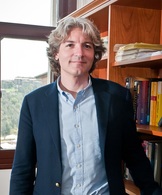
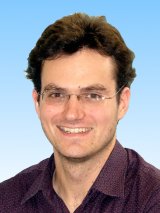
Trine Krogh Boomsma is a Professor in the Department of Insurance and Economics at the University of Copenhagen's Department of Mathematical Sciences. Her research focuses on optimization under uncertainty with significant applications in energy systems, particularly electricity markets, renewable energy investments, and power system planning. PhD in Mathematics-Economics, Aarhus University (2003-2007) Visiting PhD at University of Duisburg-Essen (2004) Academic career includes positions at Risø National Laboratory for Renewable Energy and Imperial College London Her work spans stochastic programming, real options analysis, and dynamic programming to address energy sector challenges. Key areas include support schemes for renewables, market risk modeling, and operational optimization of hybrid conventional-renewable systems. Recent research explores policy impacts on investment decisions and advanced scenario generation techniques. Major publications (2012-2020) cover renewable energy policy frameworks, power plant valuation models, and sequential market bidding strategies. These works emphasize electricity market dynamics, investment risk quantification, and robust planning under uncertainty. She teaches linear programming, integer programming, and stochastic programming applications in operational analysis, contributing to energy economics education at the department.
Sarah Dean is an Assistant Professor in the Computer Science Department at Cornell University, affiliated with the College of Engineering. Her research focuses on the interplay of machine learning, optimization, and dynamics in real-world systems, particularly in control theory, recommendation systems, and ethical AI. Education: PhD in EECS, University of California, Berkeley (2021) Postdoctoral Research, University of Washington (2021-2022) Research Interests: Data-driven control systems, reinforcement learning, recommendation systems, user dynamics, algorithmic fairness, and the societal impacts of AI. She emphasizes foundational understanding of how learning systems interact with human and social processes. Recent Work Trends: Her articles explore topics like bilinear system identification, user participation dynamics in recommendation platforms, and ethical considerations in AI development. Recent work includes harm mitigation strategies and mathematical modeling of AI-human feedback loops. Awards: AI2050 Early Career Fellow (2024) Best Paper at ICML 2018 (Delayed Impact of Fair Machine Learning) Best Student Paper in Imaging Systems (OSA Congress 2018) Advising & Labs: Advises over 15 graduate and undergraduate students. Leads research on interactive ML systems, with contributions to projects like the 'MSGD' repository for streaming data learning. Active in the GEESE group, promoting socially responsible computing.
Professor Todd Squires is a distinguished faculty member in the Department of Chemical Engineering at the University of California, Santa Barbara, within the Robert Mehrabian College of Engineering. His research focuses on the fundamental principles of transport phenomena as applied to interfaces, membranes, and complex fluids, employing theoretical, computational, and experimental approaches to address significant challenges in micro-scale fluid mechanics. Dr. Squires' educational background includes: BS in Physics, UCLA (1995) BA in Russian Language and Literature, UCLA (1995) PhD in Physics, Harvard University (2002) His research interests span microfluidics and electrokinetics, active and nonlinear microrheology of complex materials, polymer dynamics and sensors, with particular emphasis on non-linear electrokinetic flows, interfacial rheology, and the self-assembly of nanostructured materials. His work bridges fundamental fluid mechanics with practical applications in microfluidic devices, energy storage, and biomedical systems, demonstrating the versatility of this fascinating field. Analysis of Professor Squires' recent publications reveals a consistent focus on interfacial phenomena, with particular attention to the rheological properties of fluid interfaces, particle dynamics in complex fluids, and novel microfluidic techniques for measuring and manipulating these systems. His research demonstrates strong interdisciplinary connections between chemical engineering, physics, and materials science, with applications spanning energy storage, biomedical engineering, and environmental systems. Professor Squires has received numerous prestigious awards and honors: 2018 Robert W. Vaughan Lecture in Chemical Engineering, Caltech 2015 Elected Fellow of the American Physical Society 2013 Mid-Career Award, American Electrophoresis Society 2012 The Dudley Saville Memorial Lecture at Princeton 2010 Pierre Gilles de Gennes Prize 2010 Allan P. Colburn Memorial Lectureship, University of Delaware 2009 Francois Frenkiel Award for Fluid Mechanics 2009 Camille Dreyfus Teacher-Scholar Award 2008 Beckman Young Investigator 2007 NSF CAREER Award 2005 'Rising Star' - Chronicle of Higher Education As principal investigator of the Squires Group, Professor Squires leads a dynamic research team that combines experimental, theoretical, and computational approaches to investigate transport phenomena at interfaces. His work has been supported by major funding agencies including the National Science Foundation, with his CAREER award indicating early recognition of his potential as both researcher and educator. While specific grant details aren't provided in the source material, his extensive publication record and prestigious awards suggest robust and sustained research funding. The Squires Group maintains state-of-the-art laboratory facilities for studying micro-scale fluid mechanics, including specialized equipment for microrheology measurements, microfluidic device fabrication, and interfacial characterization. Their research environment fosters collaboration across disciplines, with connections to materials science, physics, and biomedical engineering researchers at UCSB and beyond.
Professor Hendrik Vollmer is a faculty member in the Accounting Group at Warwick Business School , University of Warwick, since 2020. He previously served as Head of the Accounting Division at the University of Leicester (2015–2020) and worked at Bielefeld University in Germany for 16 years. His research bridges accounting, sociology, and environmental studies, focusing on accounting as a social practice and its role in addressing ecological challenges. Senior Fellow of the Higher Education Academy Associate Editor of European Accounting Review Member of editorial boards for Zeitschrift für Soziologie, Accounting, Organizations and Society, and Social and Environmental Accountability Journal Active in sustainability accounting research and education Contributor to interdisciplinary accounting literature Recent publications explore accounting's role in climate change mitigation, public value creation, and the spatialization of worth. His teaching modules include Accounting for Sustainability, People, Planet and Financial Accounting: Theory and Context .
Athanasios TRIANTAFYLLOU is an Associate Professor of Finance at IÉSEG School of Management in France. He holds a Ph.D. in Economics from the University of Athens (2017) and has held academic positions including Visiting Professor at Cornell University (2019), Lecturer at the University of Essex (2017–2022), and General Equilibrium Modeler at the National Technical University of Athens (2015). His research focuses on commodity markets, volatility forecasting, risk management, and monetary economics. Key contributions include analyzing commodity price uncertainty's impact on economic activity and financial markets. He has published extensively in journals like Journal of Futures Markets , Economics Letters , and International Journal of Finance and Economics . Education includes a BSc in Mathematics (2008), MSc in Accounting and Finance (2010), and M.Phil. in Economics (2013), all from Greek institutions. Professional experience includes risk management consulting at Ernst & Young (2016–2017). His teaching covers financial derivatives, multinational finance, and commodity markets. Research highlights include exploring the role of commodity price uncertainty in global economic dynamics and the predictive power of market information in corporate defaults. His work often bridges theoretical econometrics with practical policy implications, addressing issues like inflation dynamics driven by oil market risks and the tourism-led growth hypothesis in the Eurozone. TRIANTAFYLLOU’s publications emphasize volatility modeling, commodity market linkages, and the interplay between economic uncertainty and financial stability.
Craig Davis is a Professor and holds the Bollenbach Chair in Wildlife Management at Oklahoma State University's Department of Natural Resource Ecology & Management. He has been a faculty member since 2001, advancing from Assistant Professor (2001-2007) to Associate Professor (2007-2012), and has served as Bollenbach Chair since 2014. Davis earned his PhD in Wildlife Science from Texas Tech University (1996), an MS from Iowa State University (1991), and a BS from Ohio State University (1988). He is also a Certified Wildlife Biologist through The Wildlife Society. His research focuses on avian ecology, wetland restoration, and gamebird management, with specific interests in fire-grazing interactions, invertebrate communities, and climate change impacts on ecosystems. Key areas include grassland bird survival, wetland classification systems, and the effects of anthropogenic development on wildlife habitats. Davis actively collaborates with conservation organizations and agencies, addressing challenges like invasive species management and water infrastructure resilience. Teaching responsibilities include undergraduate courses on Wildlife Management Techniques and Wetland Ecology, as well as graduate courses like Advanced Wetland Ecology. His grants emphasize wetland restoration outreach, climate adaptation strategies, and studies on northern bobwhite and wild turkey populations. Notable projects include evaluating cellular transmission technology in wildlife monitoring and assessing the impact of extreme weather on gamebird survival. Grants (Selected): Expansion of potential wetland restoration opportunities in Oklahoma (2024-2027) Linking Research and Stakeholder Engagement for Wetland Conservation (2024-2026) Effects of Extreme Weather and Hunting on Northern Bobwhite (2023-2025) Research Themes: Aligns with UN Sustainable Development Goals 15 (Life on Land), 13 (Climate Action), 6 (Clean Water), 11 (Sustainable Cities), 14 (Life Below Water), and 9 (Industry/Infrastructure).
Mungo Wilson is a Professor of Finance at the Saïd Business School , University of Oxford, and an associate member of the Oxford-Man Institute of Quantitative Finance. He holds a PPE degree from Oxford, an MSc in Economics from LSE, and a PhD in Economics from Harvard. His research focuses on asset pricing, credit risk, mutual funds, and macroeconomic influences on financial markets. He has published extensively in top journals and engages actively with industry through board roles and advisory work. Education : Bachelor's in Philosophy, Politics & Economics (PPE), University of Oxford MSc Economics, London School of Economics PhD in Economics, Harvard University Research Interests : Assesses how macroeconomic conditions and credit risk shape asset prices Analyzes mutual fund behavior and market information transmission mechanisms Explores political dynamics' impact on financial markets His professional engagements include board memberships with funds like EA Asia Absolute Return Master Fund and advisory roles at Broadwell Capital. Teaching focuses on microeconomics for MBA programs, covering game theory, market structures, and price discrimination. Advisory & Grants : Supervises doctoral students at Saïd Business School and serves on programme committees for major finance conferences (e.g., European Finance Association, CEPR Annual Spring Symposium). Awards : While no specific prizes are listed, his impactful research has been widely cited and presented globally.
Andrew Postlewaite is the Harry P. Kamen Professor of Economics and Professor of Finance at the University of Pennsylvania's School of Arts and Sciences. He holds dual roles in the Department of Economics and the Ronald O. Perelman Center for Political Science and Economics. As a distinguished academic, he is a member of the American Academy of Arts and Sciences and serves as a director at the National Bureau of Economic Research (NBER). Additionally, he is the founding editor of the American Economic Journal: Microeconomics and a research associate at Penn's Population Studies Center and Institute for Law and Economics. Postlewaite's research focuses on game theory, behavioral economics, and social norms, with contributions to mechanism design, repeated games, and intergenerational transmission of preferences. His work bridges theoretical foundations with applied economic analysis, particularly in areas like consumer behavior, decision-making, and institutional design. He has held visiting positions at institutions including Caltech, Harvard, and Stanford, reflecting his academic prominence. His scholarly contributions include pioneering studies on future-oriented decision-making, interdependent valuations in markets, and equilibrium concepts in repeated games. Recent publications explore topics such as the impact of local media accessibility in the digital age and the welfare implications of consumption fluctuations. His editorial leadership at journals like Econometrica and International Economic Review underscores his influence in shaping economic discourse. Awarded prestigious fellowships and editorial roles, Postlewaite's career exemplifies a blend of rigorous theoretical research and practical applications in economics. His current research trends emphasize behavioral insights and the methodological underpinnings of economic models, reflecting a commitment to advancing both theory and real-world relevance.
Yaojun Zhang is an Assistant Professor in the Department of Physics & Astronomy and the Department of Biophysics at Johns Hopkins University. She earned her PhD in Physics from the University of California, San Diego (2015), followed by postdoctoral fellowships at the Princeton Center for Theoretical Science (2015-2018) and the Princeton Center for the Physics of Biological Function (2018-2021). Her research focuses on biological physics, particularly the complex behaviors of biomolecules and their assemblies across scales—from single-molecule folding to intracellular transport and biomolecular phase separation. She employs theoretical, mathematical, and computational tools to bridge biological questions with physical principles. Education PhD in Physics, University of California, San Diego (2015) Postdoctoral Fellowships: Princeton University (2015-2021) Research Interests Her group studies biomolecular condensates and liquid-liquid phase separation, exploring how microscopic interactions determine macroscopic properties of cellular compartments. Key areas include: Biomolecular condensate formation and dynamics Phase separation in cellular environments Interactions between biomolecules and cellular components Biophysics of intracellular transport Collaborations & Tools Zhang collaborates with experimentalists to validate theoretical models and develops frameworks for understanding condensate functions, such as surface tension, stoichiometry, and phase diagrams. Her work addresses challenges like condensate stability, molecular exclusion, and biological function regulation. Labs & Resources She leads the Zhang Lab , which integrates experimental and computational approaches. Her team’s research is supported by resources at the Bloomberg Center for Physics and Astronomy.
David Alvarez-Melis is an Assistant Professor of Computer Science at Harvard University's John A. Paulson School of Engineering and Applied Sciences (SEAS). He leads the Data-Centric Machine Learning (DCML) group and holds affiliations with the Kempner Institute, Harvard Data Science Initiative, and the Center for Research on Computation and Society. His research focuses on making machine learning more data-efficient and trustworthy, with applications in natural and medical sciences. He also serves as a researcher at Microsoft Research New England. Affiliations: SEAS, Kempner Institute, Harvard Data Science Initiative, CRCS Education: PhD in Computer Science (MIT), MS in Mathematics (NYU Courant), BSc in Applied Mathematics (ITAM) Research Interests: Optimal Transport, dataset distillation, interpretable AI, medical imaging, robustness, and large language models. His work bridges theory and applications, emphasizing geometric and probabilistic methods. Recent Trends in Publications: Focused on advancing optimal transport for data manipulation, distributional deep equilibrium models, and repurposing LLMs for specialized domains. Key themes include synthetic dataset generation, gradient flows in probability spaces, and robust interpretability frameworks. Awards: Aramont Fellowship, Dean’s Competitive Fund, Top Reviewer awards at major conferences (ICLR, NeurIPS, ICML). Grants: Supported by the Aramont Fund and Harvard’s Dean’s Fund. His lab advises students across Harvard and MIT, with notable contributions to medical imaging, NLP, and foundational ML theory. He actively mentors interns and fosters collaborations with industry and academia.
Alp Atakan Overview Alp Atakan is a Professor and Head of School in the School of Economics and Finance at Queen Mary University of London. He holds a PhD from Columbia University and previously served as an Assistant Professor at Northwestern University and Associate Professor at Koç University. His research focuses on Microeconomic Theory, Game Theory, Auction Design, and Information Economics. Key contributions include studies on reputation dynamics, search markets, and information aggregation in auctions. Education PhD in Economics (with distinction), Columbia University, 2003 MA in Economics, Columbia University, 2000 MBA, Columbia University, 1997 BS in Economics, University of Pennsylvania, 1993 Research & Grants Recipient of an ERC Consolidator Grant (2016–2021) for 'Market Selection, Frictions, and the Information Content of Prices'. Notable research includes work on bargaining dynamics, price discovery mechanisms, and the role of information asymmetry in auctions. He has published in top journals like Econometrica , Journal of Economic Theory , and American Economic Review . Teaching spans MBA/EMBA courses on managerial economics and microeconomic theory, alongside advanced graduate courses in game theory and dynamic programming. Grants & Projects ERC Consolidator Grant: Market Selection & Price Information (€1,089,000) Tubitak Grants: Sequential Debate (2014–2015) and Auctions & Information (2012–2014) His work bridges theoretical economics with practical market design, emphasizing strategic interactions in decentralized systems.
Grégoire Ithier is a Senior Lecturer in Physics at the Department of Physics, Royal Holloway, University of London. His research focuses on quantum engineering, decoherence, thermalization, mesoscopic physics, and random matrix theory. He leads the 'TypDyn' project exploring typical dynamics of embedded quantum systems, and co-leads the Leverhulme Trust-funded 'Generation and detection of quantum signals' initiative. His work bridges theoretical and experimental domains, including superconducting circuits and cryogenic microwave engineering. Ithier's research tools include advanced numerical methods (e.g., exact diagonalization) and statistical techniques (e.g., random matrix theory). Key Projects: TypDyn: Studies typical dynamics in embedded quantum systems (2015–present) QSimFP: Quantum simulators for fundamental physics (2020–2024) A new statistical theory of disordered quantum systems (2020–2024) His experimental work involves superconducting qubits, Josephson devices, and nano-superfluidic cavities. Grants include STFC and Leverhulme Trust funding. Recent publications address quantum thermalization, many-body systems, and random Hamiltonian analysis.
Ming Hu is a Professor and University of Toronto Distinguished Professor of Business Operations and Analytics at Rotman School of Management, University of Toronto. He serves as Area Coordinator for the Operations Management & Statistics Area and holds editorial leadership roles including Editor-in-Chief of Naval Research Logistics and Associate Editor for multiple top journals. MS in Applied Mathematics, Brown University (2003) PhD in Operations Research, Columbia University (2009) His research focuses on sharing economy , social operations , and platform economics , examining how operational decisions can maximize societal benefit. Key areas include crowdfunding , two-sided markets , crowdsourcing , and group buying , with applications to DEI , sustainability , and AI-empowered operations . Recent work analyzes spatial operations in delivery systems, algorithmic fairness , and climate change adaptation in agricultural supply chains. His publications span top journals like Management Science and Operations Research , covering topics from blockchain traceability to quantum-inspired optimization . Scientific recognitions include: Wickham Skinner Early-Career Research Award (2016) Best Operations Management Paper in Management Science (2017) 2018 Poets & Quants Best 40 Under 40 MBA Professors As an Amazon Scholar (2022–) and Chair of Chain Analytics Institute (2023–), he bridges academic research with industry applications in AI-driven logistics and sustainable operations.
Amy R Greenwald is a Professor of Computer Science at Brown University. Her research spans artificial intelligence, algorithmic game theory, and computational economics, with a focus on multiagent reinforcement learning and market equilibrium computation. Education PhD, New York University (1999) MS, Cornell University (1995) MS, Oxford University (1992) BS, University of Pennsylvania (1991) Research Focus Greenwald's work explores strategic interactions in computational systems, including: Game-theoretic modeling of multiagent systems Algorithmic approaches to market equilibrium Simulation-based equilibrium learning Stackelberg game formulations for hierarchical decision making Applications to supply chain negotiations and economic design Her recent publications emphasize tractable equilibrium computation, social influence in economic models, and advanced reinforcement learning techniques for strategic settings. Teaching CSCI 0100 - Data Fluency for All CSCI 0180 - Computer Science: An Integrated Introduction CSCI 1440 - Algorithmic Game Theory CSCI 2440 - Advanced Algorithmic Game Theory CSCI 2951Z - Advanced Algorithmic Game Theory
Dr. Michael Boyd is a prominent archaeologist affiliated with the Department of Archaeology at the University of Cambridge and serves as an Honorary Research Associate at the McDonald Institute for Archaeological Research and a Senior Research Affiliate at The Cyprus Institute . His work centers on the prehistoric Aegean, with expertise in material culture, mortuary studies, ritual practices, and landscape archaeology. Research Interests : Boyd's scholarship interrogates the theoretical and methodological foundations of archaeology, emphasizing the dynamic interplay between landscapes, tombs, and human agency. His studies span Early Bronze Age Cycladic cultures, environmental archaeology, and the emergence of ritualized spaces in the Aegean. Publications : Boyd has co-directed the Keros Seaways Project and authored seminal works on Aegean ritual deposits, including the Keros Sanctuary volumes (2016–2018) and Staging Death (2016). His 2021 edited volume Far from Equilibrium critiques contemporary archaeological theory and advocates for reorienting the discipline. Methodological Contributions : He pioneers interdisciplinary and geo-ethnoarchaeological approaches, integrating soil micromorphology and phytolith analysis to reconstruct degradable architectural elements in the Cyclades.