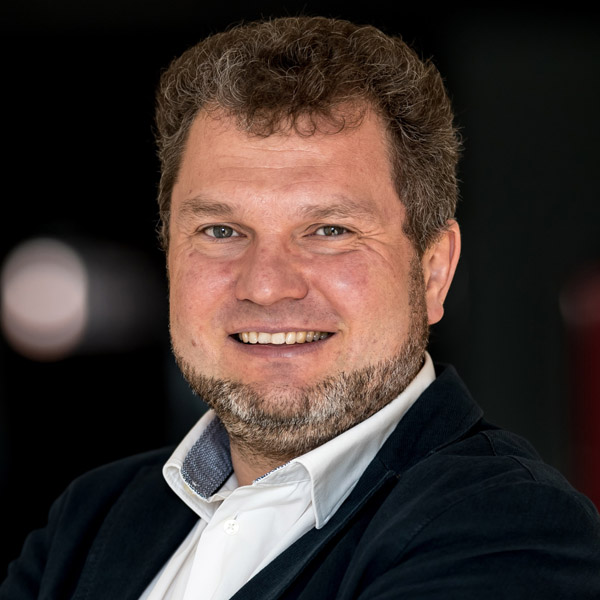
Dr. Aris Dimeas is a Researcher at the National Technical University of Athens in the Department of Electric Power and Industrial Applications . He holds a diploma and PhD in Electrical and Computer Engineering from NTUA and has extensive experience in power systems operations, renewable energy integration, and smart grid technologies. Specialized in AI applications for power systems Developed control software for demand side management Consultant for PPC (2007-2012) Research Focus : Smart grids and digital twin implementations Renewable energy market dynamics Microgrid optimization and control algorithms Collaborations : Active participant in EU research projects, collaborating with HEDNO and other energy grid operators on electronic meters and intelligent network deployments. Teaching : Instructs courses on electric energy systems, power system analysis, and energy management.
Prof. Dr. Michael Voigtländer serves as Honorary Professor of Economics at Bonn-Rhein-Sieg University of Applied Sciences since 2011, while simultaneously leading the Competence Field for Finance and Real Estate Markets at the Cologne Institute of Economic Research (IW Köln) since 2015. He also holds teaching positions at ebs Business School Oestrich-Winkel, irebs Immobilienakademie, Bergische Universität Wuppertal, and Akademie deutscher Genossenschaften. PhD in Economics from University of Cologne Studies in Economics at University of Münster and University of Cologne Scientific Assistant at Economic Policy Seminar, University of Cologne (2000-2005) Voigtländer's research centers on the complex interrelationships between economic conditions, financial markets, and real estate markets, with particular focus on how demographic changes impact property markets and the formulation of effective housing policies. His work bridges theoretical economic principles with practical real estate market applications, examining how macroeconomic trends translate into specific housing market dynamics across German regions. His recent publications demonstrate consistent focus on German real estate market stability, with particular attention to rent control policies, commercial property valuation methodologies, and sustainability integration in real estate practices. The research shows evolving emphasis from pure market analysis toward policy impact assessment and sustainability considerations, reflecting broader industry trends toward environmental and social responsibility in property markets. Voigtländer actively contributes to industry knowledge through his leadership of the CSR in real estate industry research project with Dr. Rosemarie Stibbe at Bonn-Rhein-Sieg University. His advisory work extends across multiple academic institutions and industry organizations, where he provides expert guidance on real estate economics, financial markets, and housing policy matters. His institutional affiliations include the Cologne Institute of Economic Research (IW Köln) where he has worked since 2005, progressing to lead the Finance and Real Estate Markets competence field. He maintains strong connections with multiple academic institutions through his teaching roles, creating a bridge between academic research and industry practice in the German real estate sector.
Niels Agatz is a Full Professor of last-mile supply chain analytics at Rotterdam School of Management (RSM), Erasmus University Rotterdam, within the Department of Technology and Operations Management. He serves as the scientific director of TKI Dinalog, the Dutch national institute for collaborative logistics research, and as an area editor for Transportation Science . His academic career includes a Ph.D. from RSM and an M.Sc. in industrial engineering from Eindhoven University of Technology, with visiting positions at Georgia Tech and the Pontifical Catholic University of Chile. Professor Agatz's research focuses on developing innovative and sustainable last-mile supply chains through advanced analytics, with particular expertise in transportation-enabled services, urban delivery systems, and demand management. His work bridges theoretical operations research with practical applications in logistics and transportation. The breadth of his research is evident in his publications spanning topics from drone delivery optimization to sustainable time slot management and truck platooning. His publications demonstrate significant impact in the field of transportation and logistics, with several highly cited papers on ride-sharing systems, drone delivery optimization, and sustainable logistics practices. The research consistently addresses practical industry challenges while advancing methodological approaches in operations research. NWO Rubicon Grant INFORMS TSL Stella Dafermos Achievement Award Professor Agatz teaches courses on distribution networks and management science at RSM. His research has been widely featured in leading academic journals and international media outlets, reflecting the practical relevance of his work to industry challenges in last-mile delivery and sustainable logistics. He collaborates extensively with industry partners to translate academic insights into practical solutions for complex logistics problems.
Univ.-Prof. Katja Corcoran serves as Professor of Psychology and Vice Dean for Research at the University of Graz's Faculty of Natural Sciences, leading the Institute of Psychology. She directs the university's 'Smart Regulation' profile area and participates in the 'Brain and behavior' research network, with leadership roles including former Head of Psychology Institute (2017-2019) and Deputy Head of Doctoral School of Psychology (2021-2023). Her research centers on social psychological mechanisms in sustainability transitions, particularly: Energy citizenship frameworks and prosumer behavior Goal contagion dynamics in social networks Intergroup contact interventions in educational settings Regulatory psychology for sustainable systems Recent publications (2023-2025) demonstrate interdisciplinary integration of psychological, legal, and economic perspectives, featuring field experiments across Austria and multi-lab European collaborations examining energy citizenship scales, behavioral nudges for appliance usage, and prejudice reduction in schools. Honors include: Feodor Lynen Research Fellowship (Alexander von Humboldt Foundation, 2004) She currently directs major funded initiatives: EU: 'Energy Citizenship and Energy Communities for Clean-Energy Transition' (2021-2024) FFG: 'FIWARE Driven Energy Communities for the Future' (2023-2026) International: 'Active User Participation for Smart Energy Services' (2020-2023) Corcoran serves on editorial boards of Social Psychology (since 2016) and Social Cognition (since 2013), and her work operates within the 'Brain and behavior' network fostering neuroscience-psychology-economics collaborations for complex decision-making research.
Prof. Dr. Christian Merkl holds the Chair of Economics, specializing in Macroeconomics at Friedrich-Alexander University Erlangen-Nuremberg (FAU) within the Department of Business, Economics, and Social Sciences. He has been in this position since 2010 and also serves as a research professor at the Institute for Employment Research since 2012. Prof. Merkl is one of the coordinators of the institutional network "Ensuring Economic and Employment Stability" and has held editorial positions at prominent economics journals, including serving as co-editor of the open-access journal Economics from 2015 to 2024 and as associate editor of the Journal for Labour Market Research since 2024. Education: Studied business administration and economics from 1998 to 2004 at the University of Erlangen-Nuremberg, the Institut d'Etudes Politiques, Strasbourg (France), and Wayne State University, Detroit (USA) Doctorate: Received from Kiel University in 2007 after working as a research associate at Kiel University and the Kiel Institute for the World Economy from 2004 to 2007 Prof. Merkl's research focuses on macroeconomics and labor market research, with particular emphasis on labor market dynamics, unemployment, business cycles, and labor market policy. His work combines theoretical modeling with empirical analysis of German and international labor markets, examining issues such as matching efficiency, wage cyclicality, gender earnings gaps, and the effects of labor market institutions and reforms. Analysis of his publication history reveals strong trends in studying German labor market institutions like Hartz IV reforms, short-time work policies (Kurzarbeit), and public employment agency effectiveness. Research spans theoretical labor economics, empirical analysis of German labor markets, and policy evaluation Recent work focuses on gender-specific application behavior, establishment-level wage dynamics, and business cycle asymmetries Prof. Merkl maintains an extensive international research network, having served as a visiting researcher at prestigious institutions including the Banque de France, the Federal Reserve Bank of San Francisco, the International Monetary Fund, the National Bureau of Economic Research, the University of Melbourne, and the University of Texas at Austin. His research has significant policy relevance for German labor market institutions and reforms, contributing to debates on unemployment insurance, labor market efficiency, and economic stabilization policies.
Michael Hyland is an Associate Professor in the Department of Civil and Environmental Engineering at the Samueli School of Engineering, University of California, Irvine. His research focuses on the modeling, analysis, and optimization of smart urban transportation systems, with particular emphasis on shared autonomous vehicles, microtransit integration with fixed-route transit, and sustainable mobility solutions. He employs methodologies from operations research (optimization, Markov decision processes), statistical modeling (discrete choice, regression), and economic analysis to address challenges in urban mobility. Education: Ph.D., Civil and Environmental Engineering (Transportation), Northwestern University, 2018 M.Eng., Civil and Environmental Engineering (Transportation), Cornell University, 2013 B.S. Civil and Environmental Engineering, Cornell University, Magna Cum Laude, 2013 His recent research explores emerging mobility paradigms through topics such as dynamic fleet management, vehicle miles traveled (VMT) impacts, equity in job accessibility, electricity demand implications of e-bikes, and human-machine collaborative planning frameworks. The work often combines large-scale simulation with interpretable modeling techniques. Hyland leads the Hyland Lab , which develops computational tools for evaluating integrated transportation systems. The lab's work spans theoretical modeling (e.g., state-space representations, decomposition heuristics) and applied policy analysis (e.g., assessing Senate Bill 1 infrastructure projects, AV-era parking reforms, and micromobility deployment strategies).
Wenlong Jin is a Professor in the Department of Civil and Environmental Engineering at the Samueli School of Engineering, University of California, Irvine. His research focuses on intelligent transportation systems , traffic flow theory , and transportation network analysis , with applications to evacuation control, eco-driving algorithms, and connected/autonomous vehicle systems. Ph.D., Applied Mathematics, University of California, Davis (2003) M.S., Applied Mathematics, University of California, Davis (2000) B.S., Automatic Control, University of Science and Technology of China (1998) Recent research trends include: Developing generalized bathtub models for network trip flows and evacuation control Advancing car-following models with safety guarantees for autonomous vehicles Optimizing dynamic pricing schemes for high-occupancy toll lanes Investigating capacity drop phenomena at traffic bottlenecks Creating eco-driving algorithms using vehicle-to-infrastructure communication He actively contributes to transportation network resilience and cybersecurity in intelligent transportation systems .
Associate Professor Zhidong Li is a prominent researcher at the Data Science Institute within the Faculty of Engineering and Information Technology at University of Technology Sydney (UTS), Australia. With over a decade of experience in data science and machine learning, he leads impactful research bridging theoretical advancements with practical applications across multiple critical infrastructure domains. Dr. Li earned his PhD from the University of New South Wales, Sydney, Australia, and previously served as a senior engineer at Data61, CSIRO (Commonwealth Scientific and Industrial Research Organisation), Australia's federal government agency for scientific research. His research spans machine learning, data mining, pattern recognition, image processing, and human-computer interaction with applications in water, gas, traffic, urbanization, visitor economy, agriculture, environment, finance, property market, railway, law, electric and health sectors. His work particularly focuses on developing interpretable AI models, temporal point processes, and practical applications for smart infrastructure management. His extensive publication record reveals strong thematic consistency in applying advanced machine learning techniques to infrastructure management problems, with particular emphasis on water systems. His research demonstrates progression from fundamental algorithm development toward increasingly sophisticated applications with real-world impact, especially in temporal modeling, graph neural networks, and fairness in AI systems. Scientific Awards 2022 R&D Excellence Award NSW Water Award 2021 UTS Medal for Research Impact for the Vice-Chancellor's Awards for Research Excellence 2018 Australian Museum Eureka Prize for Excellence in Data Science 2019 Victorian iAwards - Industrial & Primary Industries Merit for 'Predictive Analytics for Water Pipe Maintenance' Multiple AWA research innovation awards (NSW, National, QLD) Dr. Li actively supervises Masters and PhD students and leads numerous funded research projects across diverse sectors. His collaborative approach is evident through partnerships with water utilities, transport agencies, and various CRC projects focusing on Food Agility, Digital Finance, and Smartcrete. His work on the world's first independently-audited ethical talent AI in partnership with Reejig demonstrates his commitment to translating research into real-world solutions that address societal challenges while maintaining ethical standards.
Lionel WILNER is a senior researcher at CREST (Centre de Recherche en Économie et Statistique) and teaches economics at ENSAE Paris. He earned his PhD from Université Paris 1 (Panthéon-Sorbonne) and an accreditation to supervise research (HDR) from École Normale Supérieure (ENS). Affiliated with CESifo, he contributes to empirical industrial organization, social insurance economics, and policy evaluation methods. Education: PhD (Université Paris 1), HDR (ENS) His research spans empirical industrial organization (focusing on healthcare markets and demand estimation), social insurance economics (health, labor, pensions), and policy evaluation using microsimulation, reduced-form, and structural econometric models. Recent work includes analyzing child penalties, wealth accumulation, and fuel price inflation compensation mechanisms. He has published in top journals like ILR Review , Journal of Environmental Economics and Management , and Oxford Economic Papers . His studies often integrate empirical rigor with policy implications, influencing debates on gender disparities, public finance, and healthcare access. Scientific Awards: Certificate of Excellence in Reviewing, International Journal of Industrial Organization (2015) WILNER actively engages in policy analysis, serving as a substitute member of France’s Conseil d'Orientation des Retraites (2018–2024). He is a referee for journals including American Economic Journal: Microeconomics and Journal of Health Economics , and participates in international workshops and seminars on topics like aging, taxation, and healthcare reform.
Wusheng Yu is a full-time Professor in the Department of Food and Resource Economics at the Faculty of Science, University of Copenhagen, holding this position since March 2018 after serving as Associate Professor from 2005-2018. His academic foundation includes a PhD in Agricultural Economics from Purdue University (2000) and an MSc in Economics from Renmin University of China (1995). Educational background: PhD in Agricultural Economics, Purdue University, West Lafayette, IN, USA (2000) MSc in Economics, Renmin University of China, Beijing, China (1995) Professor Yu's research centers on international trade, agricultural policy, computable general equilibrium modeling, and climate-food security intersections. He employs advanced quantitative methods to analyze global trade dynamics and environmental policy impacts, with recent work emphasizing geopolitical dimensions of food systems under climate stress. His methodological approach combines empirical analysis with scenario-based modeling to address real-world policy challenges. Analysis of his 2023-2025 publications reveals three dominant trends: (1) Geostrategic assessments of food security amid global tensions, (2) Climate-agriculture policy integration through emission modeling, and (3) Trade mechanism innovations like carbon border adjustments. His work bridges theoretical economics with actionable policy insights, particularly for EU and developing economies. Professor Yu coordinates graduate courses in Advanced International Trade and Applied Trade and Climate Policy Models. His research is funded by the European Union, Danish governmental bodies, and international organizations, operating under an advisory committee with private sector representatives as specified by departmental Terms of Reference. He maintains strict institutional alignment as a full-time permanent employee without external remuneration. His collaborative network spans seven countries with significant engagement in Danish animal food sectors and public authorities. The Section for Production, Markets and Policy at IFRO serves as his primary research hub, facilitating cross-border studies on trade-displacement effects and food demand elasticity modeling under socioeconomic pathways.
Costas Markides is Professor of Strategic and International Management and Chairman of the Strategy Department at London Business School. With 88 publications and 9,493 citations, he is a globally recognized authority in strategic management and business model innovation. His work bridges academic research and practical business application, influencing both scholarly discourse and executive decision-making worldwide. Markides' research focuses on: Business model innovation and its strategic implications Disruptive innovation and competitive response strategies Strategic thinking frameworks for executives Innovation management in established organizations Global strategy and emerging market innovations Strategic ambidexterity in competing business models His publication record reveals a consistent exploration of how organizations can strategically innovate while maintaining core business operations. Markides' work on 'competing with dual business models' and 'strategic innovation at the base of the pyramid' has been particularly influential, offering practical frameworks for managing the tension between exploitation of existing business models and exploration of new ones. Markides' educational background includes a B.A. and M.A. in economics from Boston University, and an M.B.A. and D.B.A. from Harvard Business School. As Chairman of the Strategy Department, he has shaped one of the world's premier strategy research units while maintaining an active research agenda that continues to produce significant scholarly contributions. His work consistently addresses real-world strategic challenges, providing theoretically grounded yet practically applicable insights that have made him one of the leading voices in contemporary strategic management.
Professor Sebastian Stein is a faculty member in the Electronics and Computer Science department at the University of Southampton, specializing in artificial intelligence and multi-agent systems. He holds a PhD from the University of Southampton (2008) and an MEng in Computer Science from the University of Warwick. His research focuses on citizen-centric AI, mechanism design, and applications in smart energy, transportation, and disaster response. He leads or collaborates on projects such as the EPSRC-funded 'Citizen-Centric Artificial Intelligence Systems' and 'Future Electric Vehicle Energy networks supporting Renewables (FEVER)'. Education: PhD in Multi-Agent Systems (University of Southampton, 2008), MEng Computer Science (University of Warwick) Research Groups: Agents, Interaction and Complexity research group His work emphasizes incentive engineering in dynamic systems, sequential decision-making under uncertainty, and societal challenges like smart mobility and electric vehicle infrastructure. Key awards include the Blue Sky Ideas Award (AAMAS-2021) and Best Demonstration Award (AAMAS 2025). He currently supervises multiple PhD students in computer science and engineering.
Antonio RIBBA is a Full Professor of Economic Policy at the Department of Economics 'Marco Biagi', University of Modena and Reggio Emilia. His research focuses on macroeconomic policy analysis, structural VAR modeling, and the effects of monetary/fiscal policies on inflation, unemployment, and business cycles. He teaches courses on public policy analysis, financial scenarios, and macroeconomic policies. Research interests include monetary policy transmission mechanisms, fiscal multipliers in Eurozone economies, oil price shocks, and the long-run relationship between inflation and unemployment. His work employs advanced econometric techniques like structural VARs to disentangle the impacts of supply and demand shocks. Recent publications analyze fiscal dominance in the US, oil price effects on Eurozone small economies, and unemployment responses to policy shocks in peripheral Euro-area countries. He collaborates with scholars like Cavallo and Dallari on topics such as Eurozone inflation dynamics and policy spillovers.
Rafał Weron is a Full Professor at Wrocław University of Science and Technology, where he has held leadership roles since 2015, including Head of the Department of Operations Research and Business Intelligence and Chairman of the Scientific Discipline Council for Management and Quality Sciences. His expertise spans electricity price forecasting, computational economics, and risk management, with significant contributions to probabilistic forecasting methods. As a globally recognized scholar, he has received prestigious awards such as the Hugo Steinhaus Prize (2018) and the Tao Hong Award (2017). Key Affiliations : Wrocław University of Science and Technology; Polish Academy of Sciences (Statistics and Econometrics Committee); Polish Mathematical Society. Research Trends: Weron's work focuses on electricity price forecasting, leveraging machine learning and statistical models to enhance accuracy and reliability. His publications emphasize probabilistic forecasting frameworks, quantile regression, and hybrid modeling techniques, reflecting a commitment to methodological rigor and practical applications in energy markets. Scientific Awards: Top 1% globally ranked economist (IDEAS/RePEc, 2013-2022) World's Top 2% Most Widely Cited Scientist (2019-2021) 'Hugo Steinhaus' Prize (2018) Tao Hong Award (2017) Emerald Citation of Excellence (2017) Minister of Science & Higher Education Prize (2016) Commission of National Education Medal (2016)
Dr. Yuanto KUSNADI is an Associate Professor (Education) at the School of Accountancy (SOA), Singapore Management University (SMU), and serves as the Academic Director of SMU-X. With over ten years of teaching experience, he specializes in accounting for entrepreneurs, financial management, and experiential learning through real consultancy projects. His research focuses on corporate finance, accounting, corporate governance, and innovative teaching methodologies. He has published in prestigious journals such as the Journal of Corporate Finance , Journal of Business Ethics , and Journal of Contemporary Accounting and Economics . Education: PhD in Finance, Hong Kong University of Science and Technology Master of Science (Management), National University of Singapore Bachelor of Business Administration (Honours), National University of Singapore Research Interests: Dr. KUSNADI investigates corporate finance dynamics, international accounting practices, governance structures, and pedagogical innovations in higher education. His work emphasizes real-world applications, such as experiential learning through SMU-X programs and digital transformation strategies for SMEs. He has been recognized for contributions to teaching excellence and curriculum development, including the SMU Educational Research Fellowship (2021-2023). Recent Research Trends: His recent publications highlight digital transformation in education, governance challenges in politically connected firms, and the impact of insider trading regulations on corporate behavior. These studies bridge theoretical frameworks with practical industry applications. Awards & Grants: Recipient of multiple SMU Teaching Excellence Awards (2016-2021) SMU MOE-Tier 1 Research Grant (2013-2015, 2018-2020) Journal of Corporate Finance Reviewing Excellence (2015) Advising & Outreach: Dr. KUSNADI mentors SMU-X projects and serves on academic committees, including the SOA Undergraduate Admission Outreach and SMU Peer Coach program. He actively engages with industry partners to design curriculum aligned with global business needs. Labs & Initiatives: His work integrates SMU-X’s global student consulting programs, fostering partnerships that enhance cultural intelligence and digital literacy among students. These initiatives aim to prepare future accountants for evolving industry demands.