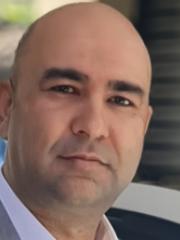
Troy Clifford Dargin is a Clinical Assistant Professor at Yeshiva University , affiliated with the Katz School of Science and Health . He is a certified practitioner in the Arthur Lessac Voice/Body technique and holds a Vocology certificate from the National Center for Voice and Speech. Education: B.S. in Vocal Music Education and Theatre Performance, with graduate degrees in Music, Speech-Language Pathology, Political Science, and Finance. Research interests include Voice Disorders and the Performing Voice , focusing on semi-occluded vocal tract exercises and their impact on vocal function. His scientific awards include the Ringle Health Professions Scholarship and the Margaret L. Anderson Graduate Teaching Award. Key publications explore vocal rehabilitation techniques, stroboscopic imaging, and aerodynamic measurements. His work bridges music , speech therapy , and clinical research , often involving collaborations with Dr. J. Searl. Scientific Awards: Ringle Health Professions Scholarship ($5000) University of Kansas Academic Merit Scholarship Margaret L. Anderson Graduate Teaching Award Troy teaches Voice Disorders , Anatomy and Physiology of the Speech Mechanism , and Research Methods at Yeshiva University. He also leads continuing education programs through his initiative "Visions in Voice" .
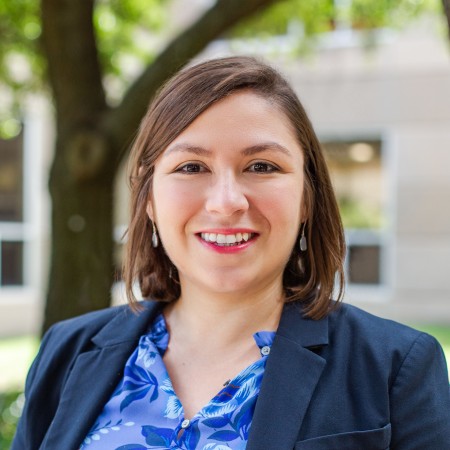
Ihtisham Malik is an Honorary Senior Lecturer in Finance at the University of Queensland (UQ), where he earned his PhD in 2020. With over a decade of teaching experience, he specializes in finance courses such as Portfolio Management and Public Financial Management, delivered in both traditional and online formats. He has served as Academic Director for UQ's joint public sector finance program with the Queensland Treasury Corporation (2021–2024), bridging academic theory with practical industry insights. His research focuses on Sustainable Finance, Asset Pricing, and Climate Policy Uncertainty, with publications in top-tier journals like International Review of Financial Analysis and Corporate Governance: An International Review . Recognized for his teaching excellence, he received the Student Engagement Award for fostering dynamic learning environments. His research explores the intersection of natural disasters, corporate governance, and financial markets, including studies on insider trading during extreme weather events and board diversity's impact on eco-innovation. Recent work addresses climate policy uncertainty's effects on stock returns and corporate default risk. He actively engages in capacity-building initiatives for public sector professionals through Executive Education programs. Key awards: Student Engagement Award (UQ) Grants/Advising: His academic leadership in the UQ-Queensland Treasury program exemplifies his commitment to applied research. He collaborates with global peers on topics like board gender reforms and CSR's role in disaster resilience. Labs/Teams: Engaged with UQ Business School's research hubs focusing on Sustainable Finance and Financial Markets Analysis.
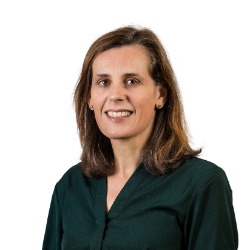
Professor Hazel Bateman is a Professor and Deputy Dean in the School of Risk and Actuarial Studies at UNSW Sydney’s Business School. She also serves as Deputy Director of the ARC Centre of Excellence in Population Ageing Research (CEPAR). Her research focuses on pension economics, behavioral retirement finance, and lifecycle financial decisions, particularly exploring how choice architecture, financial literacy, and information influence retirement planning, superannuation, and housing wealth utilization. Roles: Deputy Dean (Business School), CEPAR Deputy Director, Professor of Risk & Actuarial Studies Research Themes: Pension systems, long-term care insurance demand, reverse mortgages, behavioral economics in retirement finance Her work addresses critical issues such as the role of housing wealth in retirement portfolios, intergenerational wealth transfer dynamics, and the impact of financial advice on consumer decisions. She has contributed to policy debates on retirement income strategies and public reverse mortgage schemes in Australia. Key Trends in Publications: Recent studies emphasize behavioral factors in financial decision-making, the intersection of health and retirement finance, and policy design for aging populations. Her research often combines experimental methodologies with longitudinal data to assess consumer preferences and systemic impacts. Grants & Collaborations: Involved in CEPAR’s multidisciplinary projects, though specific grant details are not listed here. Research partnerships include analyses of aging demographics in China and Australia. Labs/Teams: Leads research initiatives within the School of Risk and Actuarial Studies and collaborates with CEPAR teams on population aging challenges.
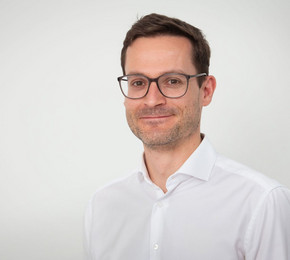
Professor Poul Alberg Østergaard is affiliated with Aalborg University's Department of Sustainability and Planning, focusing on sustainable energy planning and smart energy systems. His work aligns with UN Sustainable Development Goals, emphasizing energy transition, renewable integration, and decarbonization strategies. Professor in Energy Planning Expertise: Energy Systems Analysis, District Heating, Renewable Energy Transition Key Projects: Sustainable Heating Roadmaps, Municipal Energy Planning (e.g., Aalborg 2020-2050 Strategy) Research interests include 100% renewable energy systems, smart grids, energy storage, and policy frameworks. He has contributed to over 287 publications and 25 projects since 1996, with notable work on island energy transitions, hydrogen pathways, and district heating optimization. Media engagements highlight his role as an advisor on energy pricing, district heating dynamics, and nuclear energy debates. He organizes international conferences like the Smart Energy Systems series and collaborates globally on energy policy and modeling tools like EnergyPLAN. Labs/Teams: Member of the Sustainable Energy Planning Research Group and contributor to initiatives like the Smart Island Energy Systems (SMILE) project.
Irina Panovska is an Associate Professor of Economics at the University of Texas at Dallas (UT Dallas), affiliated with the School of Economic, Political, and Policy Sciences. Her research focuses on macroeconomic policy responses, business cycle dynamics, and economic recoveries. She teaches macroeconomics, forecasting, and business cycles at both undergraduate and graduate levels. Education includes a PhD (2013) and MA (2009) in Economics from Washington University in St. Louis, and a BS in Economics and Mathematics from Ohio University (2007). She holds visiting scholar positions at the University of Zagreb (2023–2026) and has collaborated with institutions in Australia and Croatia. Research interests emphasize modeling policy impacts on economies, labor market dynamics, and time series analysis. Recent work addresses business cycle synchronization in the EU, jobless recoveries, and the effects of the pandemic on financial markets. She has presented at conferences including the Society for Economic Measurement and the Southern Economic Association. Professional activities include serving as Treasurer of the Society for Nonlinear Dynamics and Econometrics (2019–2024) and organizing academic sessions. In 2023, she received the School’s Teaching Comet Award for excellence in instruction. Her work bridges theoretical frameworks with policy relevance, addressing issues like fiscal policy effectiveness, inflation dynamics, and maternal labor force participation. Current projects include keynote talks on commercial real estate and mentoring initiatives for junior economists.
Mara Teresa da Silva Madaleno is an Associate Professor with Habilitation at the University of Aveiro (UA), Department of Economics, Management, Industrial Engineering and Tourism (DEGEIT). She holds a Ph.D. in Economics from UA (2011) and currently coordinates the Research Unit on Governance, Competitiveness and Public Policies (GOVCOPP). Her roles include lecturing in Finance and Economics at undergraduate, MSc, and PhD levels, and serving as vice-director of the Master in Data Science for Social Sciences. Her research focuses on Financial Economics, Energy and Environmental Economics, and Behavioral Finance. She has co-authored numerous peer-reviewed articles in journals such as Renewable and Sustainable Energy Reviews, Environment, Development and Sustainability, and Energy Economics. She actively contributes to initiatives like APEEN’s Fiscal Council and is a member of the Portuguese Economists Order (OE), representing the university and Aveiro district. Her work bridges academic research with policy, emphasizing sustainable development, energy transition, and financial inclusion.
Jee Eun (Jamie) Kang is an Associate Professor in the Department of Industrial and Systems Engineering at the University at Buffalo's School of Engineering and Applied Sciences. Research focuses on transportation modeling and applied operations research, with applications in urban mobility, shared autonomous vehicles, and sustainable transportation systems. Education includes a PhD from UC Irvine. Research emphasizes data-driven approaches to travel behavior, electric vehicle adoption, and humanitarian logistics. Publications consistently address mobility innovation, including pricing strategies for emerging services, predictive analytics for transit, and optimization of shared transportation systems.
Alain Bensoussan is the Lars Magnus Ericsson Chair Professor of Operations Management at the University of Texas at Dallas and Director of the International Center for Decision and Risk Analysis. His work spans stochastic control, mathematical finance, and mean field games. He holds a PhD from the University of Paris (1969) and advanced degrees from École Polytechnique (1962) and École Nationale de la Statistique et de l’Administration Economique (1965). Research interests include inventory control under uncertainty, risk management frameworks, and applications of mean field theory to control problems. Recent work focuses on stochastic control in financial systems, machine learning integration with control theory, and optimal policies in dynamic environments. Notable awards: Legion d’Honneur (Officier), NASA Distinguished Public Service Medal, Member of French Academies of Sciences/Technology, and SIAM Charter Fellowship. Key grants: NSF-funded projects on mean field control theory (2016–2019) and mean field games (2023–present). Teaches advanced courses: Game Theory, Risk Analysis, Stochastic Dynamic Programming. His 2023–2025 publications emphasize theoretical advancements in stochastic control, mean field games, and machine learning applications. Ongoing work addresses infrastructure investment, wind farm optimization, and multi-agent system dynamics.
Benjamin Lev is a Professor in the Department of Decision Sciences and Management Information Systems (DS&MIS) at the LeBow College of Business, Drexel University. He previously served as Trustee Professor (2014–2021) and Department Head (2009–2014) at Drexel. His academic leadership extends to prior roles as Professor, Department Head, and Dean at the University of Michigan-Dearborn (1990–2009), Professor and Department Head at Worcester Polytechnic Institute (1987–1990), and Professor and Department Head at Temple University (1970–1987). He has held short appointments at institutions in China and the U.S., including the Wharton School and Tel Aviv University. Lev’s research spans Operations Research, Management Science, and Decision Sciences , with expertise in mathematical programming, operations planning, inventory control, supply chain management, and optimization under uncertainty. His recent work focuses on applications in disaster management, sustainable supply chains, AI in operations, water resource allocation, and emergency logistics. He has published over 150 journal articles and authored or edited 18 books, with a strong emphasis on real-world problem-solving using quantitative methods. The trends in his recent publications (2022–2025) reflect a focus on complex optimization under uncertainty , particularly in humanitarian logistics, environmental sustainability, and digital commerce. His work frequently employs advanced methodologies such as bi-level programming, stochastic optimization, fuzzy logic, and data envelopment analysis (DEA), often applied to critical societal challenges like disaster response, air pollution, and resource scarcity. Lev is an INFORMS Fellow (2003) and has received several honors, including the 2023 Top Cited Article award in Naval Research Logistics and the 2023 First Prize from the Jiangxi Province Social Science Outstanding Achievement Award. His editorial leadership is most notably demonstrated by his 23-year tenure as Editor-in-Chief (2002–2025) of OMEGA – The International Journal of Management Science , one of the premier journals in the field. He has advised numerous scholars and presented his work globally, particularly on his experience as EiC of OMEGA . He has been actively involved in academic collaborations, especially in China, serving on advisory boards and as an external reviewer for institutions like Sichuan University. He has also received significant grant funding from the U.S. National Institutes of Health, U.S. Public Health Service, and U.S. Air Force for research in medical information systems and operations research applications. Lev has been instrumental in organizing major international conferences and has served on the editorial boards of over 20 journals, including Interfaces, IIE Transactions, OR Journal, and Financial Innovation . His role as Vice President of TIMS and INFORMS further underscores his leadership in the global operations research community.
Joanna O’Riordan is a Researcher at the Institute of Public Administration (IPA), Ireland, affiliated with the Whitaker School of Government and Management. Since joining IPA in 2000, she has specialized in public management reform, particularly in human resource management (HRM) within the public sector. Her work bridges academic research and practical policy implementation, focusing on organizational culture, workforce planning, and institutional restructuring. Education: Joanna holds an MA in Public Policy from University College Dublin (UCD) and an MBS in Human Resource Management from Dublin City University (DCU). Research Interests: Her studies emphasize public sector reform, HRM challenges, organizational culture transformation, and governance models. She explores how public institutions adapt to evolving demands, with a focus on merging theoretical frameworks with real-world policy outcomes. Publications: Her work spans case studies on agency mergers (e.g., Tusla), workforce strategies, and public service motivation. She also analyzes disability equity in civil service careers and Irish business involvement in international development aid. Labs/Teams: As editor of Administration (IPA’s journal), she curates scholarly discourse on public administration. Her consultancy role involves advising on HR strategies and public service restructuring.
Bernhard Schmidpeter is an Assistant Professor (tenure track) at the Department of Economics, WU Vienna University of Economics and Business. He specializes in institutional economics and labor economics, focusing on topics such as labor market dynamics, public policy impacts, and behavioral economics. His teaching includes courses like 'Specialization Course - Institutional Economics' in the Bachelor's program. Research interests span labor market effects of immigration, wage disparities, and health economics. He actively publishes in peer-reviewed journals and engages in policy-relevant studies. Currently affiliated with the university, he contributes to both teaching and applied research in economics and public policy.
Awi Federgruen is the Charles E. Exley Professor of Management and Chair of the Decision, Risk, and Operations (DRO) Division at Columbia University’s Graduate School of Business. He joined Columbia’s faculty in 1979 after earning his DSc in Operations Research from the University of Amsterdam and holding roles as a Research Fellow at the Mathematical Centre in Amsterdam and faculty member at the University of Rochester. He also holds a courtesy appointment in Columbia’s School of Engineering and Applied Sciences. Education: BA, University of Amsterdam, 1972 MS, University of Amsterdam, 1975 DSc (Operations Research), University of Amsterdam, 1978 Research Interests: Federgruen’s work focuses on optimizing supply chain and service systems through advanced operations research methodologies. Key areas include supply chain coordination, inventory management under uncertainty, service system design, and dynamic pricing. His theoretical contributions span applied probability, queuing models, and dynamic programming. Recent applications include pharmaceutical supply chains, healthcare operations, and vaccine distribution strategies. Awards & Recognition: 2004 Distinguished Fellowship Award (MSOM Society) INFORMS Presidential Fellow (highest honor) National Science Foundation & ARPA grants Consulting & Industry Impact: Federgruen advises companies in pharmaceuticals, consumer electronics, and logistics. Notably, he developed marketing mix models for the pharmaceutical industry and advised the Israeli Air Force on logistics policies. His work bridges academic theory with real-world applications in industries like retail, healthcare, and transportation. Editorial Roles: Editor-in-Chief of Naval Research Logistics ; former Departmental Editor for Manufacturing & Service Operations Management and Associate Editor of Operations Research .
Tim Baldenius serves as the Paul M. Montrone Professor of Private Enterprise in the Accounting Division of Columbia Business School at Columbia University. He rejoined Columbia in 2017 after serving as Chair of NYU Stern's Accounting Department (2011-2016), and previously held faculty positions at Columbia Business School (1998-2011) where he chaired the Accounting Division (2009-2011). His teaching portfolio includes MBA courses in Financial Planning & Analysis, PhD seminars on managerial accounting, and executive education programs. His academic credentials include a Diploma in Business Administration from the University of Hamburg and a PhD in Accounting from the University of Vienna. Baldenius maintains editorial leadership as Associate Editor of Management Science and serves on the editorial boards of The Accounting Review , Review of Accounting Studies , and Review of Managerial Sciences . Professor Baldenius's research centers on managerial accounting systems, performance measurement frameworks, and corporate governance structures. His work examines how accounting information drives organizational decision-making, incentive design, and resource allocation. Key themes include transfer pricing mechanisms, cost allocation methodologies, and the interplay between managerial and tax objectives within multidivisional firms. His theoretical models often integrate contract theory with organizational economics to address real-world coordination challenges. His publication record spans top-tier journals in accounting, finance, and economics, revealing consistent focus on performance measurement systems (35%), transfer pricing (25%), corporate governance (20%), and incentive design (20%). The research demonstrates strong methodological diversity, employing game theory (40%), mathematical modeling (30%), and empirical analysis (30%) to investigate organizational decision processes. Baldenius has held significant leadership roles including Accounting Division Chair at Columbia (2009-2011) and Accounting Department Chair at NYU Stern (2011-2016). His teaching spans MBA, MS, PhD, and executive education programs with courses covering Financial Planning & Analysis, Accounting for Consultants, and Analytical Models in Accounting. His case studies on Sub-Micron Devices Inc. and Beanie Kids Holiday Camp are widely used in accounting pedagogy.
Srinivas (Sri) Talluri is the John Hoagland - Richard Metzler Professor in Purchasing and Supply Management at the Department of Supply Chain Management, Michigan State University (Broad College of Business). He holds the title of DSI Fellow and served as the faculty director of the Axia Institute, focusing on advancing supply chain research and education. His work emphasizes supply chain resilience, risk management, and sustainability through innovative applications of blockchain, generative AI, and quantum computing. Dr. Talluri's research spans demand-supply uncertainty modeling, sustainable supply chain design, and strategic sourcing. Notable contributions include frameworks for blockchain integration in logistics, eco-efficient vaccine distribution during pandemics, and data-driven optimization for remanufacturing systems. His work frequently addresses macroeconomic disruptions, geopolitical risks, and environmental compliance under carbon tax schemes. His scholarly recognition includes the Fulbright-Hanken Distinguished Chair (2016-2017) and top 100 Operations Management scholar rankings. His research has been published in leading journals such as International Journal of Production Research and IEEE Transactions on Engineering Management . Key Professional Contributions: Over 140 peer-reviewed articles, leadership in supply chain education, and industry collaborations addressing global supply chain challenges. Labs/Initiatives: Active in the Axia Institute, focusing on supply chain innovation and policy.
Professor James S. Cotton is a faculty member in the Department of Mechanical Engineering at McMaster University , specializing in Thermo-Fluid Sciences with a focus on energy sustainability and thermal management. Current research explores thermal energy harvesting , non-thermal plasma flue gas cleaning , and smart electrohydrodynamic heat exchangers . Active in community energy planning as a member of the Burlington Climate Action Plan (2019-2021) and Green Venture board (2016-2021). Research spans both fundamental and applied domains, including two-phase flow , electrohydrodynamic heat transfer modulation , and flow accelerated corrosion analysis. His work integrates modeling and experimental validation for real-world thermal systems. Scientific Contributions: Developed two novel patents for advanced thermal management and soot removal systems during his industrial career at Dana Corp. (until 2007). Current projects involve community energy corridors and next-generation sustainable energy solutions , including the 2025 Hamilton Energy Harvesting Study . Active mentor in graduate education, teaching courses like MECH ENG 4O04: Sustainable Energy Systems and MECH ENG 708: Two Phase Flow and Heat Transfer .